Artwork
Count Palatine Christian III from Zweibrücken-Birkenfeld
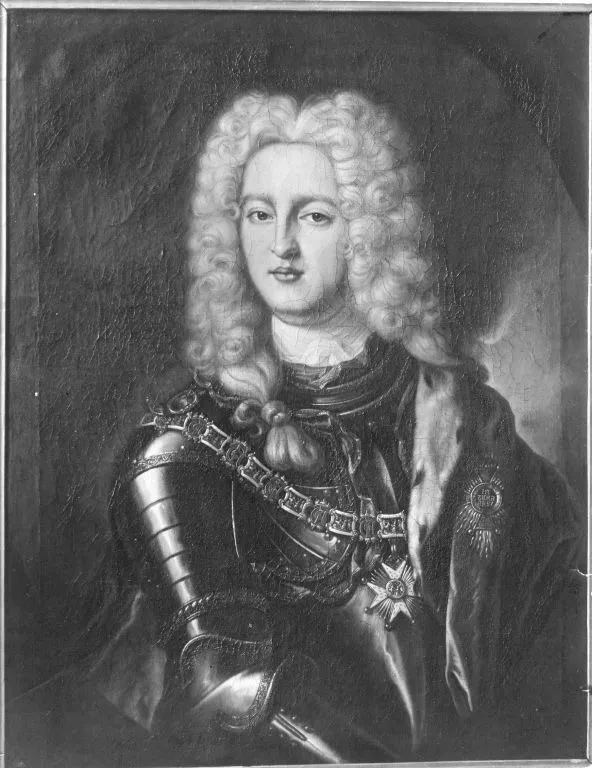
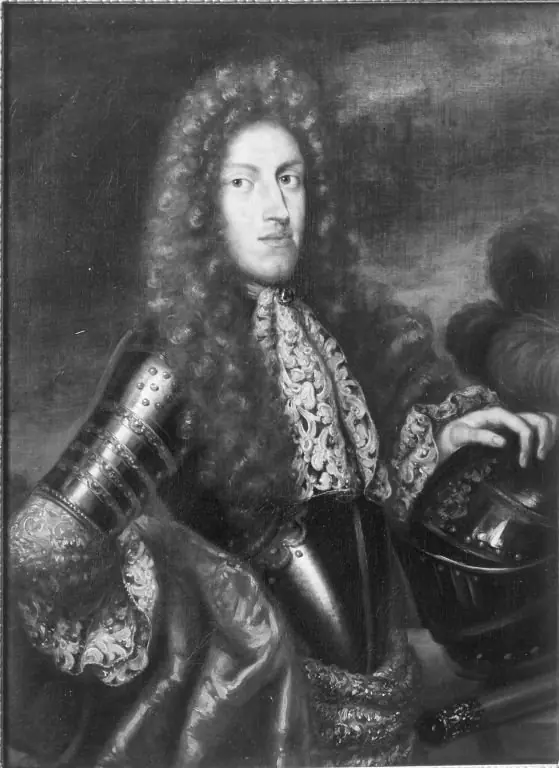
Count Palatine Christian III from Zweibrücken-Birkenfeld is an unspecified painting by the Rococo painting artist Unknown. It dates from 1722 and is held in the collection of the Bavarian State Painting Collections. The work is a portrait of Count Palatine Christian III of Zweibrücken-Birkenfeld, rendered in oil on canvas.
About this work
Overview
The work is a portrait of Count Palatine Christian III of Zweibrücken-Birkenfeld, rendered in oil on canvas. He is depicted in a formal pose, his face illuminated against a dark backdrop, emphasizing his features and attire. The composition centers on the count’s dignified bearing, with a focus on his elaborate wig, armor, and the objects he holds, conveying his status and authority.
Subject & Meaning
The folded document in his left hand may allude to diplomatic duties or legal authority, reinforcing his position as a ruler.
The sitter, Christian III, was a member of the German nobility, holding the title of Count Palatine. His stern expression and the inclusion of military accoutrements—such as a sword hilt and a silver cuirass—suggest both his martial role and his governance responsibilities. The folded document in his left hand may allude to diplomatic duties or legal authority, reinforcing his position as a ruler.
Technique & Style
The painter employs chiaroscuro, using strong contrasts between light and shadow to model the figure and draw attention to the count’s face and richly detailed costume. The white, curled wig and the gleaming metal of the armor are rendered with fine brushwork, while the dark, featureless background isolates the subject, a common device in 17th‑century court portraiture to convey gravitas.
History & Provenance
The portrait was likely commissioned during Christian III’s lifetime to commemorate his rank and achievements. It has remained within collections associated with the Zweibrücken-Birkenfeld line, eventually entering a public museum inventory where it serves as a visual record of the family’s lineage and the visual culture of German princely courts.
Context
Created in the Baroque period, the painting reflects the era’s emphasis on power, order, and theatrical presentation. Noble portraiture of this time often combined military symbols with regal attire to project both martial prowess and sovereign legitimacy, aligning with broader European trends in aristocratic representation.
Artist & collection

 Domestic Scene
 Giacomo and Cardinal Marco, investing Andrea, Abbot of San Zeno, with his Benefice
 The Nymph of Fontainebleau
 Portrait of a Woman
 Madonna and Child with Saints in the Enclosed Garden
 Venus and Minerva
 Family Group of Four on Sofa
 Wall painting from Room H of the Villa of P. Fannius Synistor at Boscoreale
 Bildnis des Kurfürsten Max Emanuel von Bayern
 Kong Christian VI som prins
 Kong Christian VI som prins
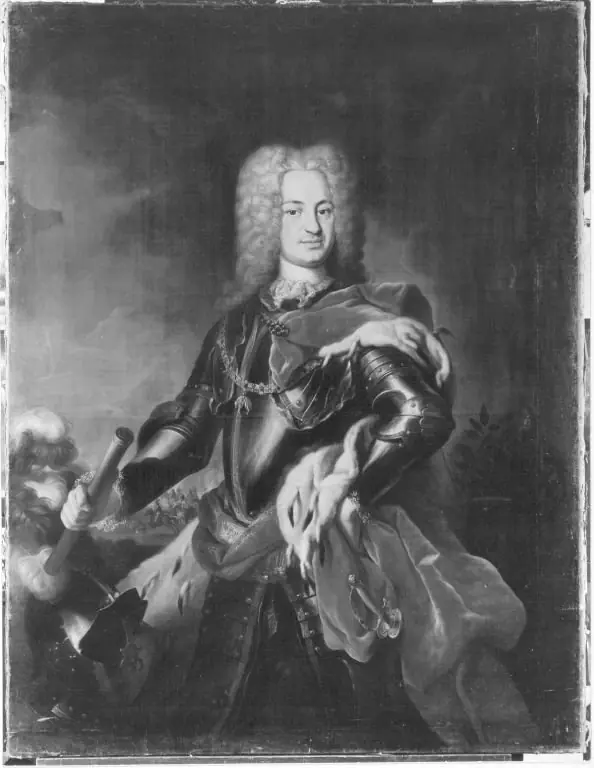 Bildnis des Joseph Karl Emanuel von Sulzbach als Feldherr (1694-1729)
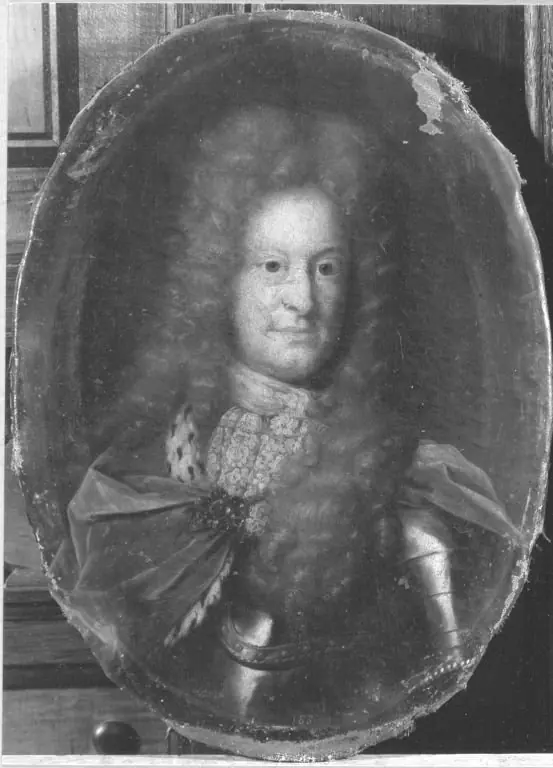 Bildnis eines unbekannten Fürsten
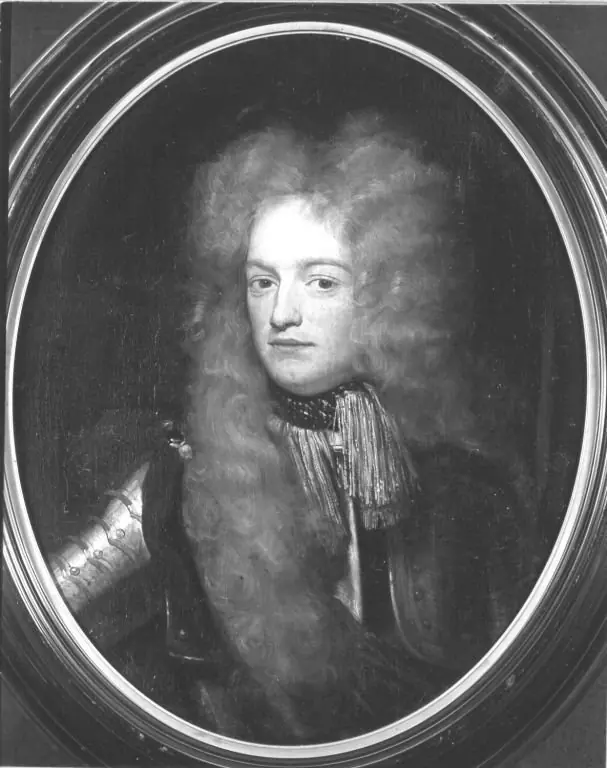 Bildnis des Kurfürsten Karl III. Philipp von der Pfalz (1661-1742)
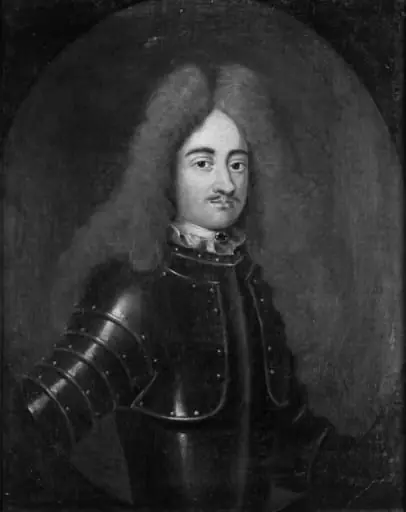 Portrait of a Man
 Ludwig Anton in goldverzierter Rüstung