Artwork
Portrait of Genrikh V. (Antoine-Henri) Jomini (1779-1869)
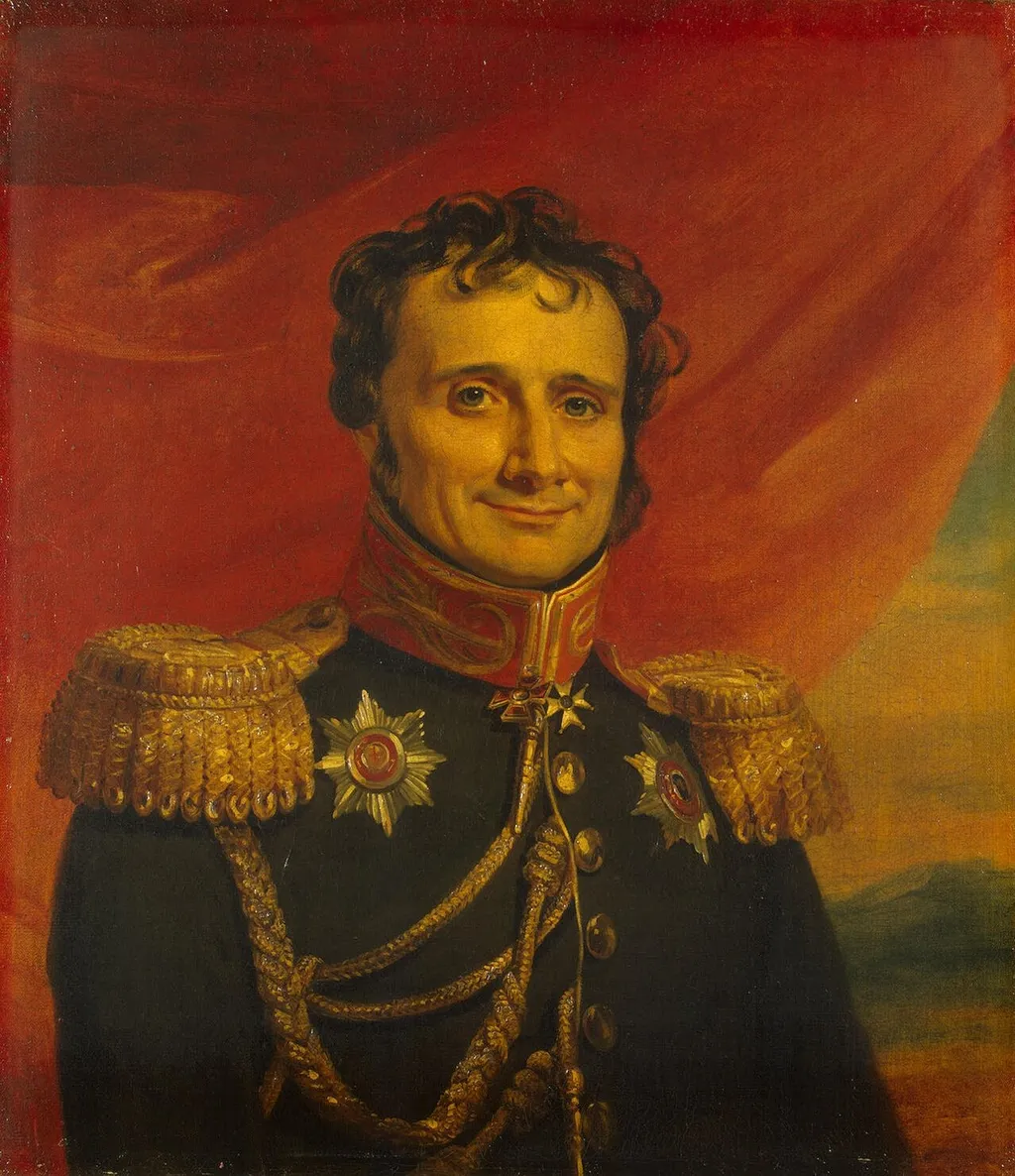
Portrait of Genrikh V. (Antoine-Henri) Jomini (1779-1869) is an oil painting by Unknown. It dates from 1822 and is held in the collection of the Hermitage Museum. This oil painting depicts Genrikh V.
About this work
Overview
This oil painting depicts Genrikh V. Jomini, a Swiss military theorist who served in the French and Russian armies. Rendered in a formal portrait style, the subject is shown in full uniform, emphasizing his high rank and military distinction. The composition is restrained, focusing attention on the figure against a simple, luminous background that enhances the richness of his attire.
Subject & Meaning
Jomini is portrayed with the insignia of his rank: gold epaulets, a red collar, a sash, and a star-shaped medal. These elements signify his service and honors, particularly within the Russian imperial military. The portrait conveys authority and composure, reflecting his reputation as a strategic thinker rather than a battlefield commander, aligning his image with intellectual prestige.
Technique & Style
The artist employs smooth brushwork to render the textures of fabric and metal, with careful attention to the sheen of gold embroidery and the depth of the red sash. The background’s warm yellow glow contrasts subtly with the dark jacket and red wall, creating a sense of depth without distraction. Lighting is even and controlled, typical of 19th-century official portraiture.
History & Provenance
Painted during Jomini’s service in the Russian Empire, the portrait likely originated in Saint Petersburg, where he held advisory roles after leaving French service. Its preservation suggests it was commissioned by or for a military institution or state patron. No record of early ownership is widely documented, but its formal style aligns with state-sponsored portraits of the period.
Context
Jomini was one of the most influential military writers of his time, known for systematizing Napoleonic tactics. His portrait reflects the era’s practice of honoring military intellectuals through visual representation. Unlike battlefield portraits, this image emphasizes status and intellect, mirroring the growing institutionalization of military science in early 19th-century Europe.
Legacy
The portrait endures as a visual record of a key figure in military theory. While Jomini’s writings influenced generations of officers, this image anchors his public identity in the formal traditions of European military portraiture. It remains a reference for understanding how military authority was visually constructed in the post-Napoleonic era.
Artist & collection

 Domestic Scene
 Giacomo and Cardinal Marco, investing Andrea, Abbot of San Zeno, with his Benefice
 The Nymph of Fontainebleau
 Portrait of a Woman
 Madonna and Child with Saints in the Enclosed Garden
 Venus and Minerva
 Family Group of Four on Sofa
 Wall painting from Room H of the Villa of P. Fannius Synistor at Boscoreale
 Portrait of Konstantin Kh. von Benckendorf (1785-1828) (2nd)
 Portrait of Alexander F. Michaud de Beauretour (1771-1841)
 Portrait of Iosif N. (Gabriel) Gallatte (1760 - after 1849)
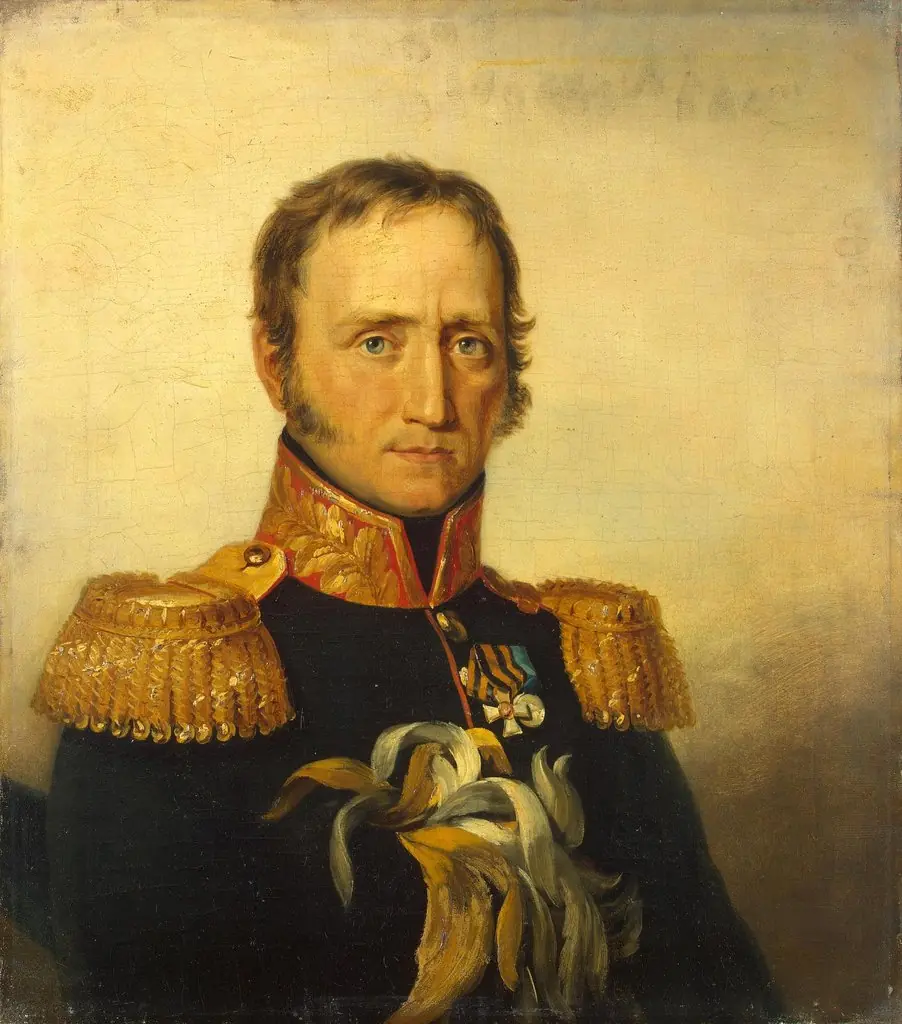 Portrait of Mikhail I. (Francois Michel) Poncet (1778-1829)
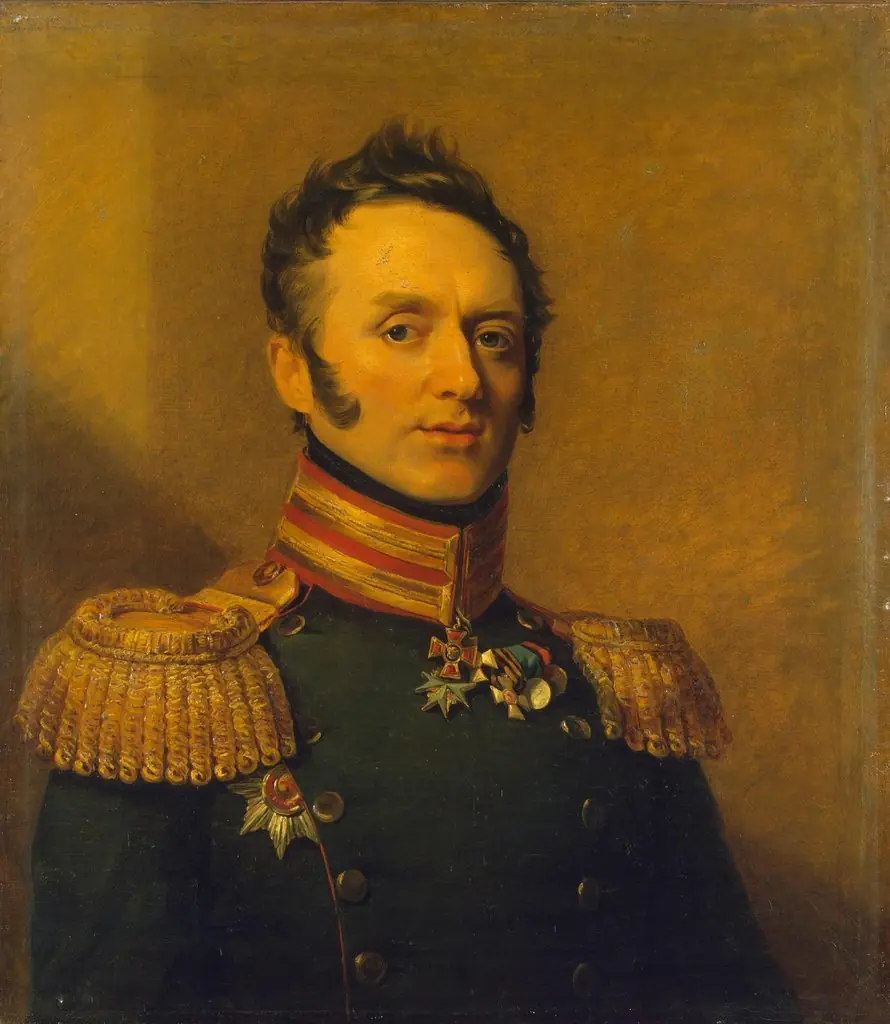 Portrait of Ivan F. Udom (1769-1821) (1st)
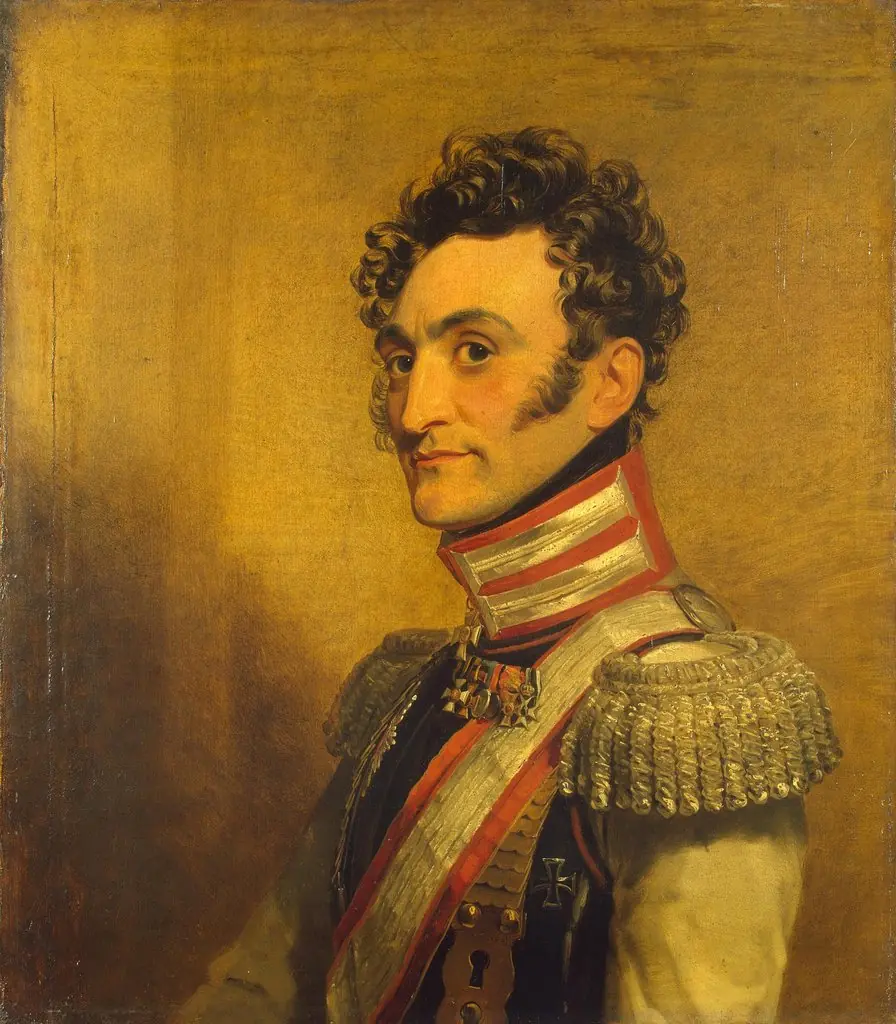 Portrait of Vladimir I. Kablukov (1780-1848) (2nd)
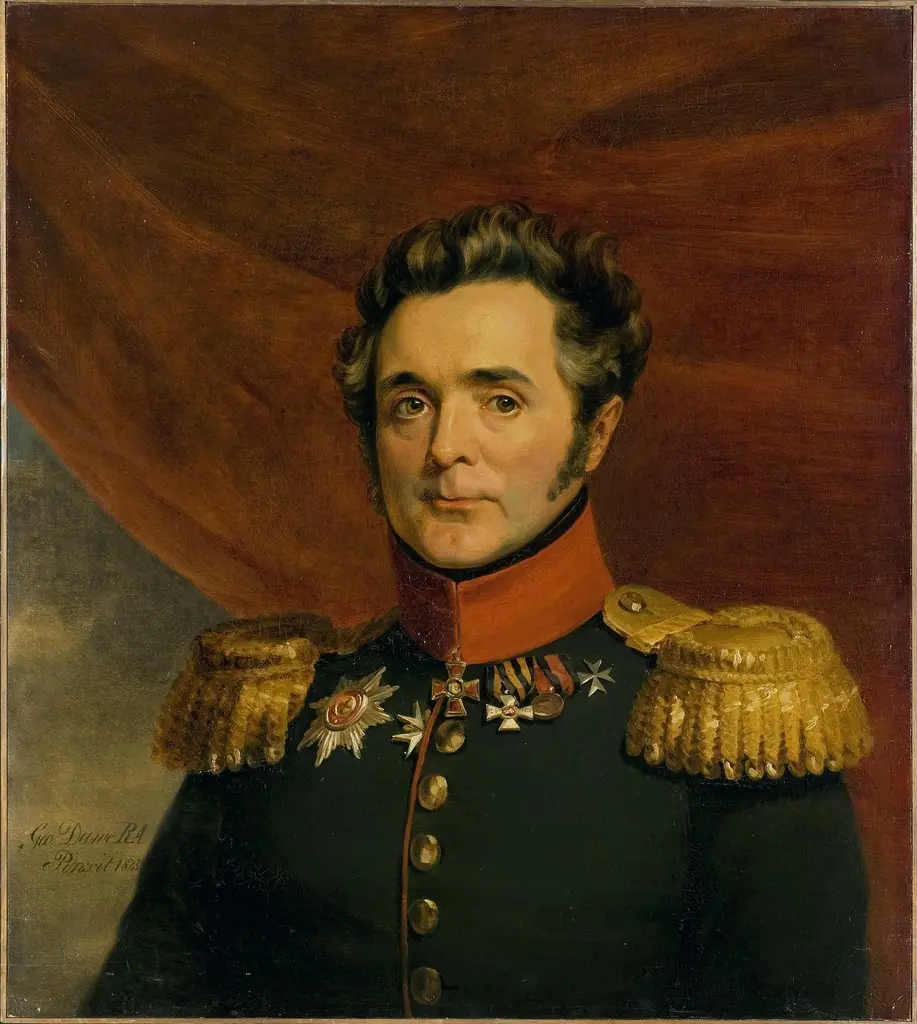 Portrait of Alexander P. Aledinsky (1775-1841)
 Portrait of Pavel A. Filisov (1769-1821)
 Portrait of Yegor K. Sievers (1779-1827) (3rd)
 Portrait of Fyodor I. Saunders (1755-1836)