Artwork
Tantric Manuscript "Sangrahani Sutra"
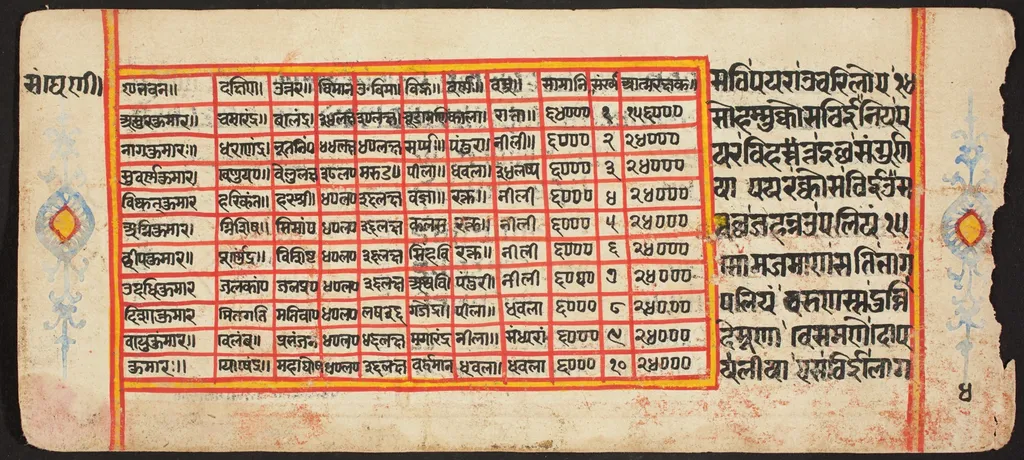
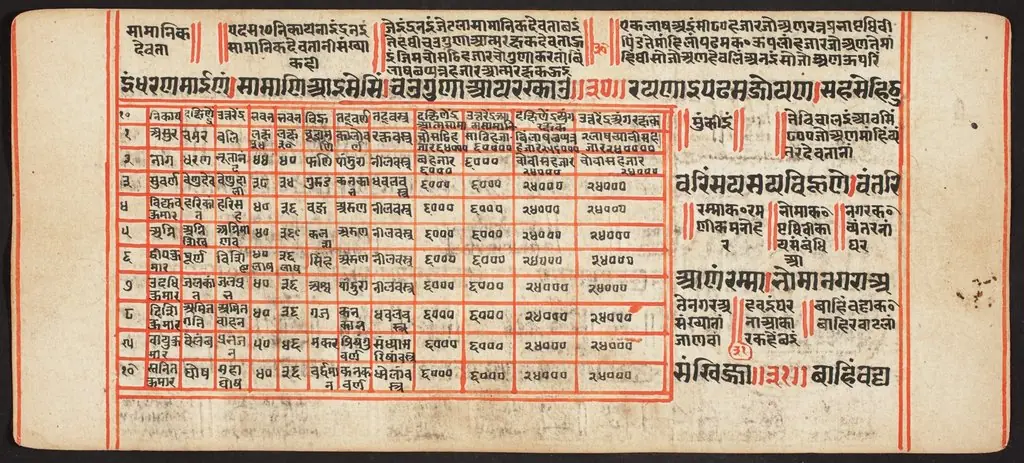
Tantric Manuscript "Sangrahani Sutra" is an unspecified painting by Unknown. It is held in the collection of the Detroit Institute of Arts.
About this work
Overview
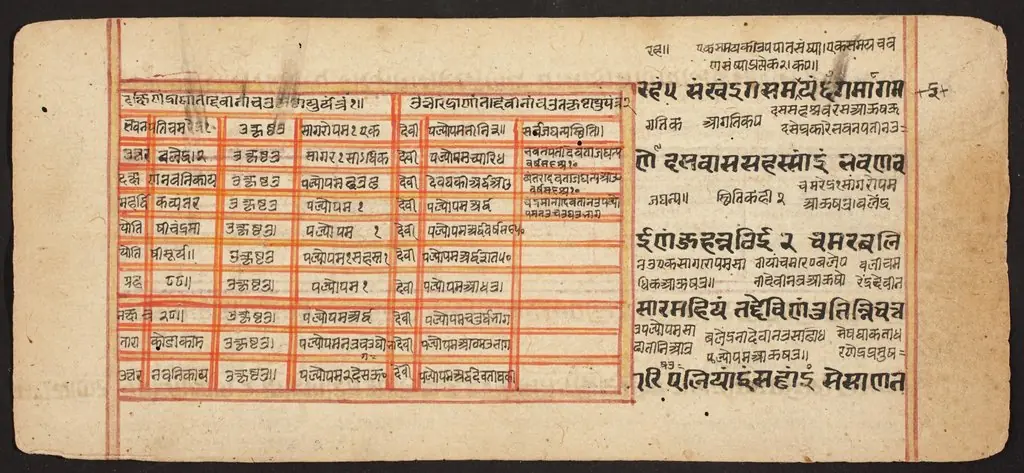
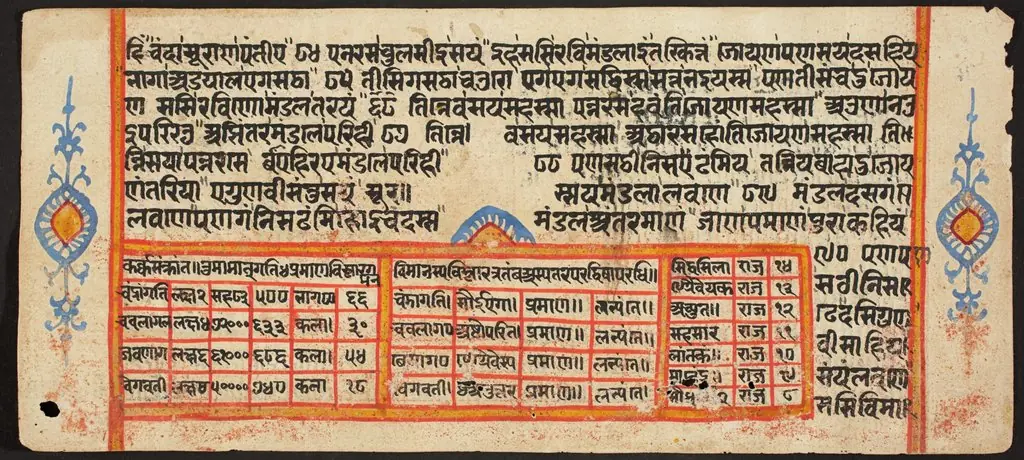
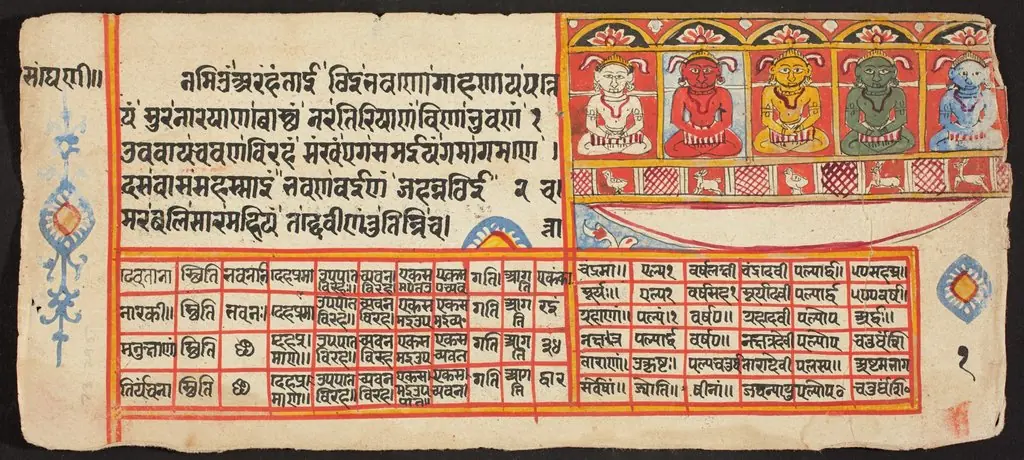
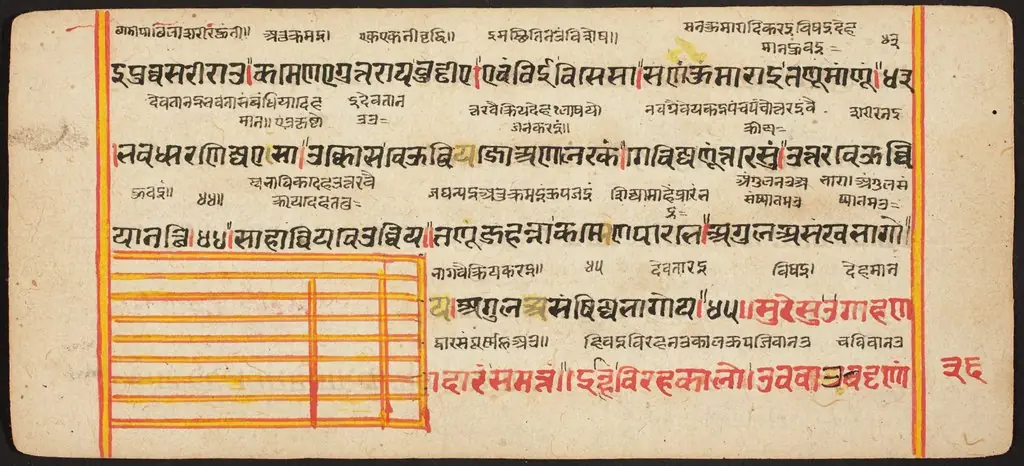
This painted manuscript fragment contains sacred text arranged in a structured grid, surrounded by a red border and accented with yellow pigment.
This painted manuscript fragment contains sacred text arranged in a structured grid, surrounded by a red border and accented with yellow pigment. The primary script, written in black ink, includes selective characters highlighted in red and yellow, suggesting ritual significance. A secondary, cursive script extends to the right, indicating a continuous textual passage. The light beige background shows natural aging through faint stains, consistent with centuries of handling and storage.
Subject & Meaning
The content appears to be a liturgical or doctrinal passage, likely from a tantric Buddhist or Hindu tradition. The use of color-coded emphasis—red and yellow—points to sacred syllables, mantras, or key doctrinal phrases. The layout implies a meditative or ritual function, where visual structure aids recitation or contemplation. The script’s flow and variation suggest it was copied by a trained scribe for devotional use rather than scholarly study.
Technique & Style
The text was applied with fine brushes using iron-gall ink, with pigments for red and yellow accents likely derived from vermilion and orpiment. The grid format reflects a disciplined layout common in ritual manuscripts, while the cursive extension demonstrates fluid, hand-written continuity. The surface shows minimal embellishment beyond ink and color, prioritizing textual clarity over decorative flourish, aligning with ascetic traditions of manuscript production.
History & Provenance
The manuscript likely originated in the eastern Indian subcontinent between the 10th and 14th centuries, a period of flourishing tantric textual culture. Its condition—stains, fading, and wear—indicates prolonged use in monastic or household rituals. No definitive record of its early ownership exists, but its material and script align with manuscripts preserved in Tibetan and Nepalese collections, suggesting transmission along religious trade routes.
Context
This piece belongs to a broader tradition of tantric manuscripts that combined visual structure with sacred language to facilitate spiritual practice. Similar texts were used in meditation, initiation rites, or as objects of veneration. The integration of color as a mnemonic device reflects an understanding of visual symbolism in ritual performance, where form and content were inseparable in conveying spiritual authority.
Legacy
Though not widely known outside specialist circles, this manuscript exemplifies the quiet precision of tantric textual culture. Its survival offers insight into how sacred knowledge was physically encoded and transmitted across generations. Modern scholars study such fragments to reconstruct liturgical practices and linguistic evolution in pre-modern South Asian religious communities.
Artist & collection

 Domestic Scene
 Giacomo and Cardinal Marco, investing Andrea, Abbot of San Zeno, with his Benefice
 The Nymph of Fontainebleau
 Portrait of a Woman
 Madonna and Child with Saints in the Enclosed Garden
 Venus and Minerva
 Family Group of Four on Sofa
 Wall painting from Room H of the Villa of P. Fannius Synistor at Boscoreale
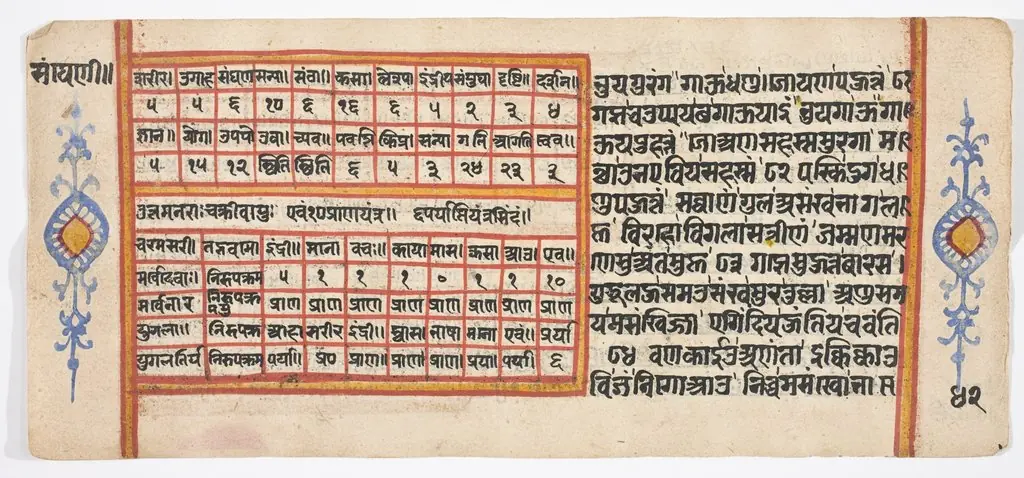 Tantric Manuscript "Sangrahani Sutra"
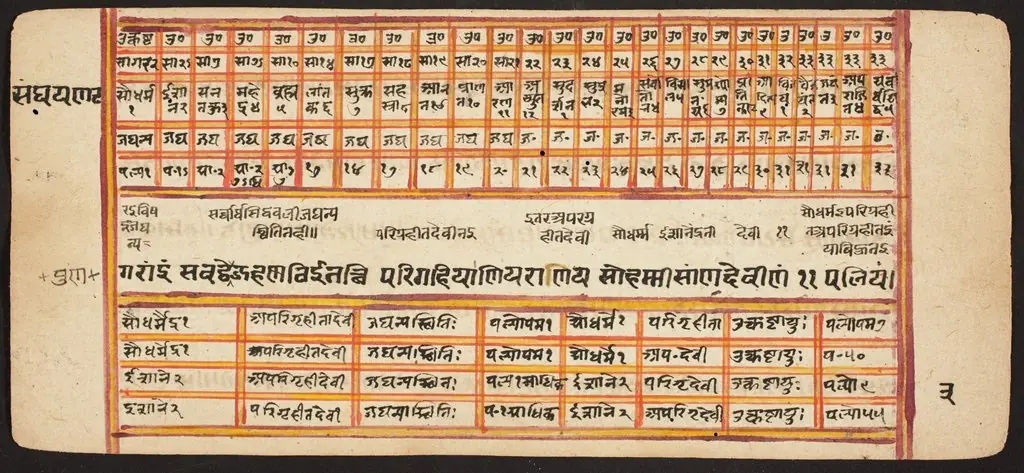 Tantric Manuscript "Sangrahani Sutra"
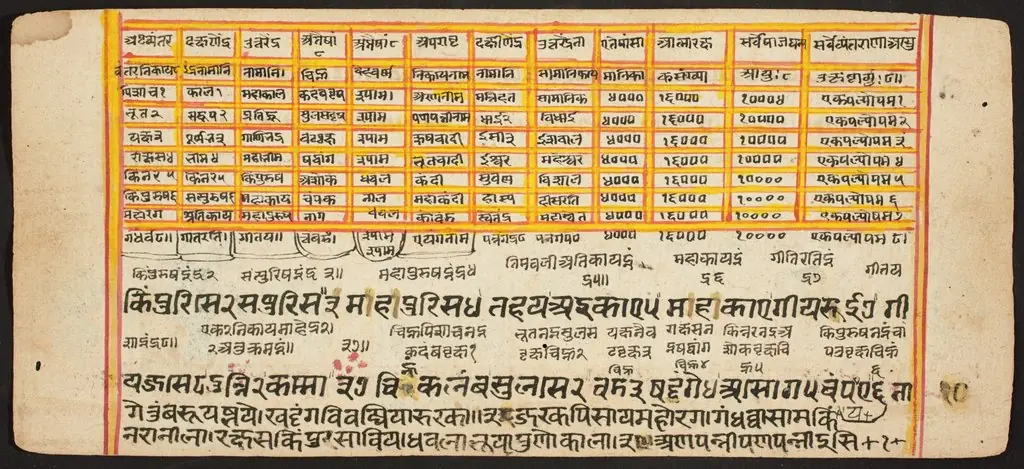 Tantric Manuscript "Sangrahani Sutra"
 Tantric Manuscript "Sangrahani Sutra"
 Tantric Manuscript "Sangrahani Sutra"
 Tantric Manuscript "Sangrahani Sutra"
 Tantric Manuscript "Sangrahani Sutra"
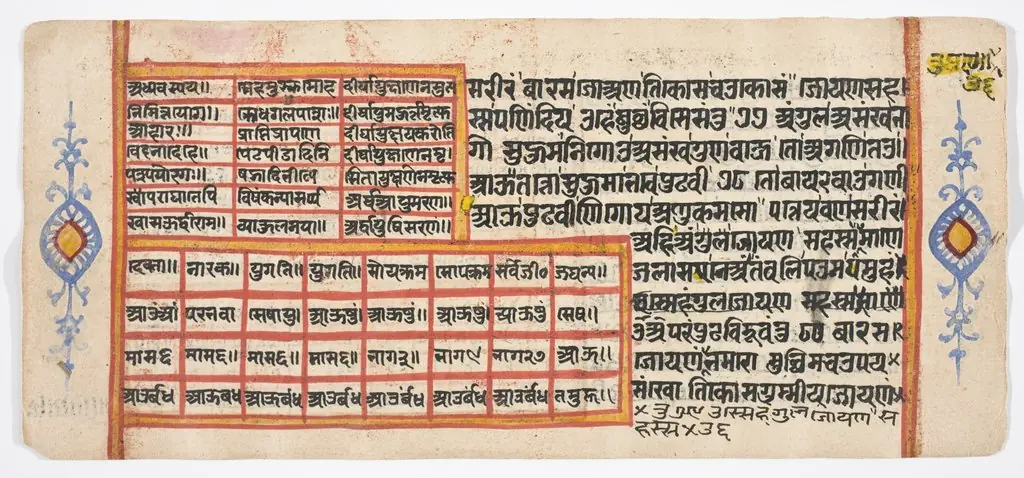 Tantric Manuscript "Sangrahani Sutra"
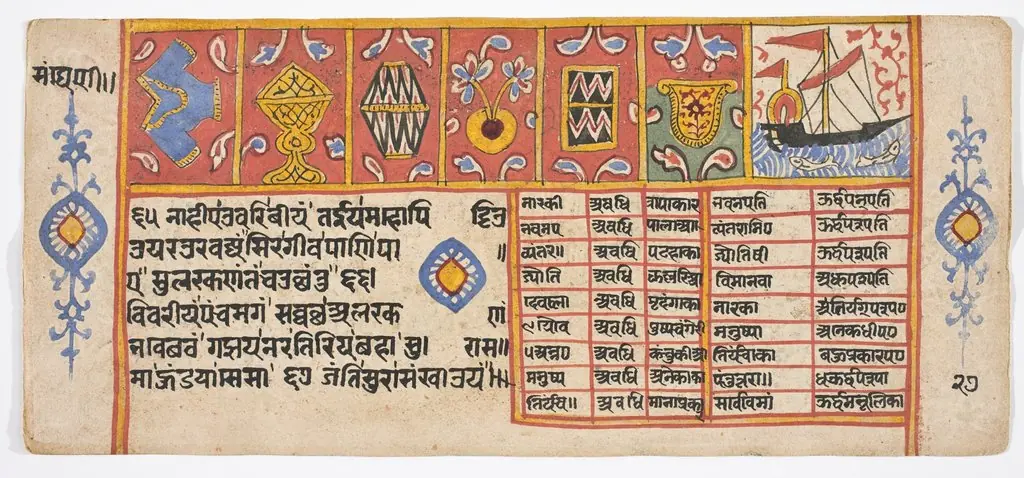 Tantric Manuscript "Sangrahani Sutra"
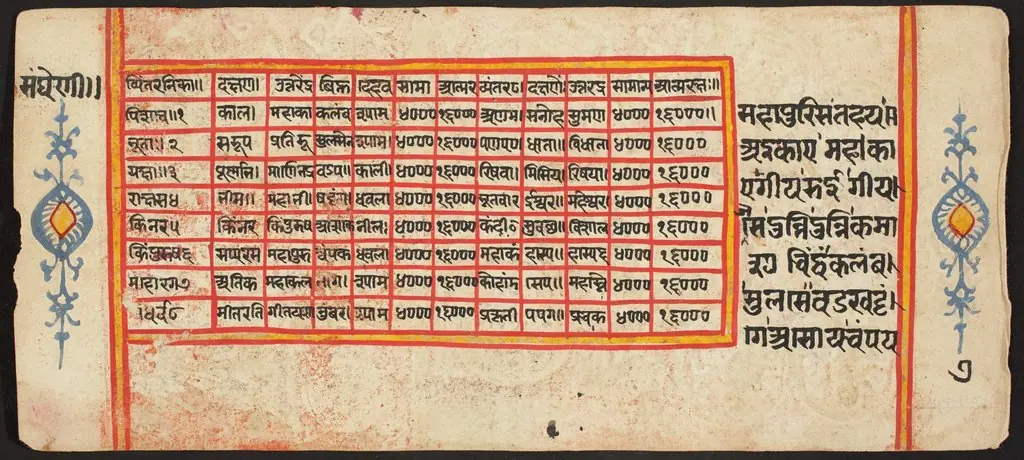 Tantric Manuscript "Sangrahani Sutra"
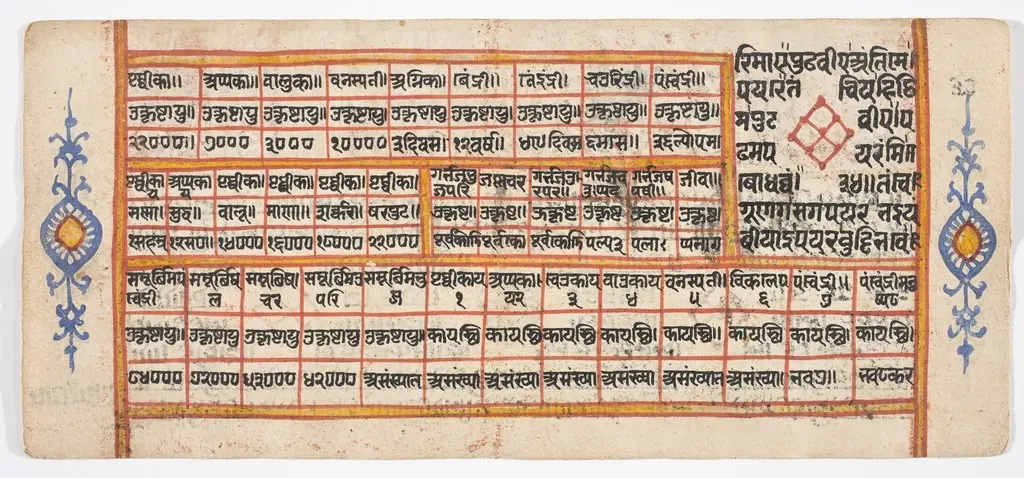 Tantric Manuscript "Sangrahani Sutra"
 Tantric Manuscript, "Sangrahani Sutra"