Artwork
The Rape of the Sabines
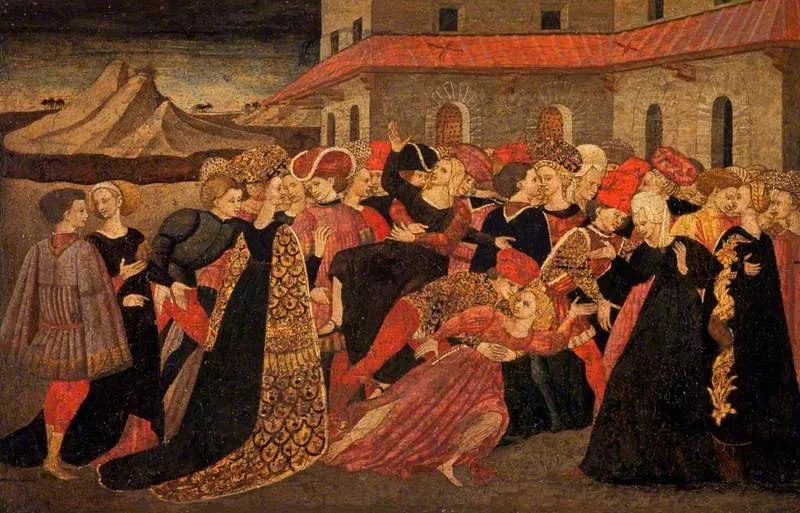
The Rape of the Sabines is an unspecified painting by the Early Renaissance artist Unknown. It dates from 1455 and is held in the collection of the National Galleries Scotland. The canvas depicts a tumultuous assembly of figures rendered in vivid, unmodulated hues.
About this work
Overview
The canvas depicts a tumultuous assembly of figures rendered in vivid, unmodulated hues. Central to the composition are men clothed in red and black garments seizing women whose gowns cascade in fluid drapery. The surrounding architecture and a distant hill frame the frenetic mass, emphasizing the dense intertwining of bodies rather than any clear landscape.
Subject & Meaning
The work visualizes the legendary episode in which early Romans abducted women from the neighboring Sabine community to secure wives for the fledgling city’s male population. While the narrative traditionally casts the women as victims, the painting presents a complex tableau of resistance, fear, and forced incorporation, reflecting the violent origins of Roman societal foundations.
Technique & Style
Executed with flat, saturated color fields, the artist abandons gradual shading in favor of stark tonal contrasts that heighten the scene’s immediacy. The figures are outlined with decisive brushwork, and the composition relies on overlapping silhouettes to convey depth, creating a dynamic, almost theatrical arrangement that foregrounds movement over realistic detail.
Context
The subject draws from a well‑known myth of the early Roman kingdom, a story frequently revisited in Western art to explore themes of conquest and civic identity. By choosing this narrative, the painter aligns the work with a tradition of historical and mythological scenes that served both educational and moralizing purposes in the visual culture of their time.
Artist & collection

 Domestic Scene
 Giacomo and Cardinal Marco, investing Andrea, Abbot of San Zeno, with his Benefice
 The Nymph of Fontainebleau
 Portrait of a Woman
 Madonna and Child with Saints in the Enclosed Garden
 Venus and Minerva
 Family Group of Four on Sofa
 Wall painting from Room H of the Villa of P. Fannius Synistor at Boscoreale
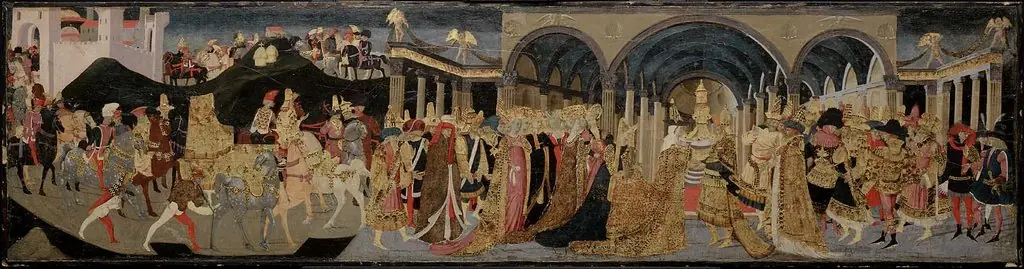 Meeting of Solomon and the Queen of Sheba
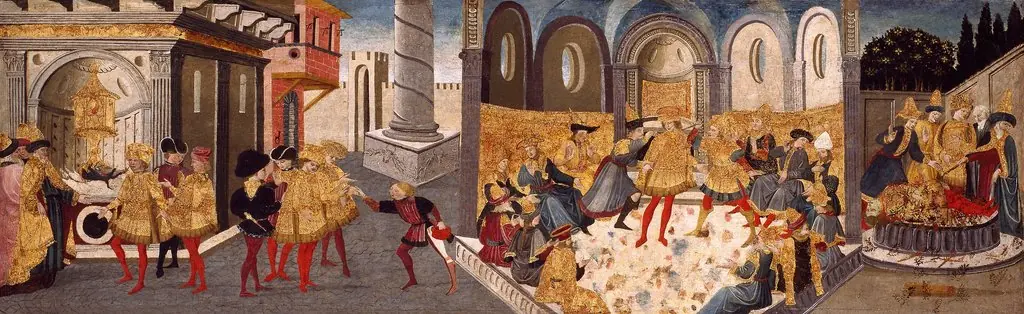 The Assassination and Funeral of Julius Caesar
 The Assassination and Funeral of Julius Caesar
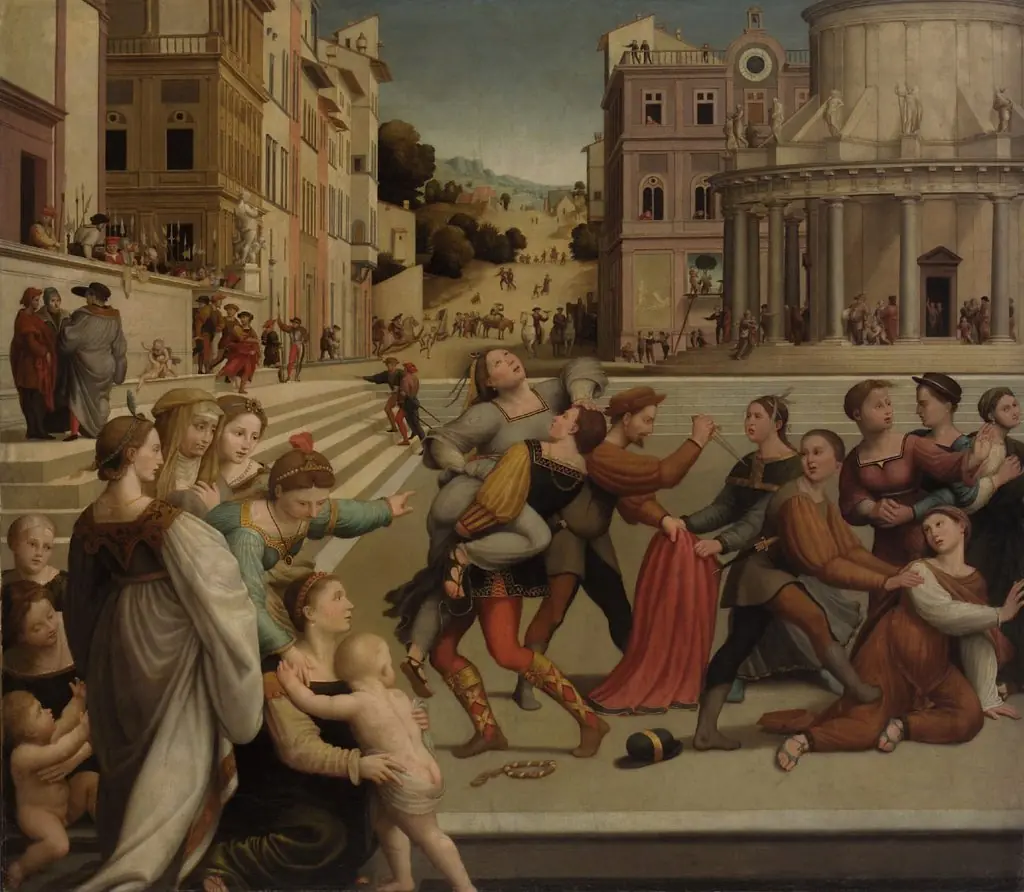 Rape of Dinah
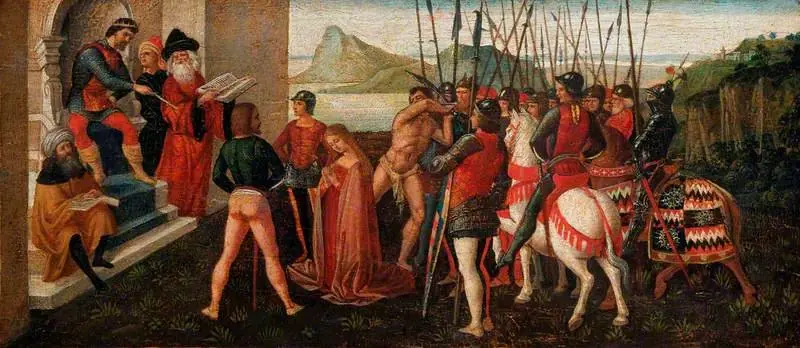 The Martyrdom of Saint Catherine
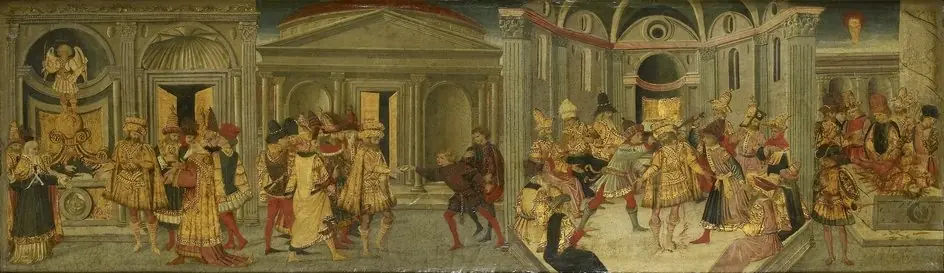 The Assassination and Funeral of Julius Caesar
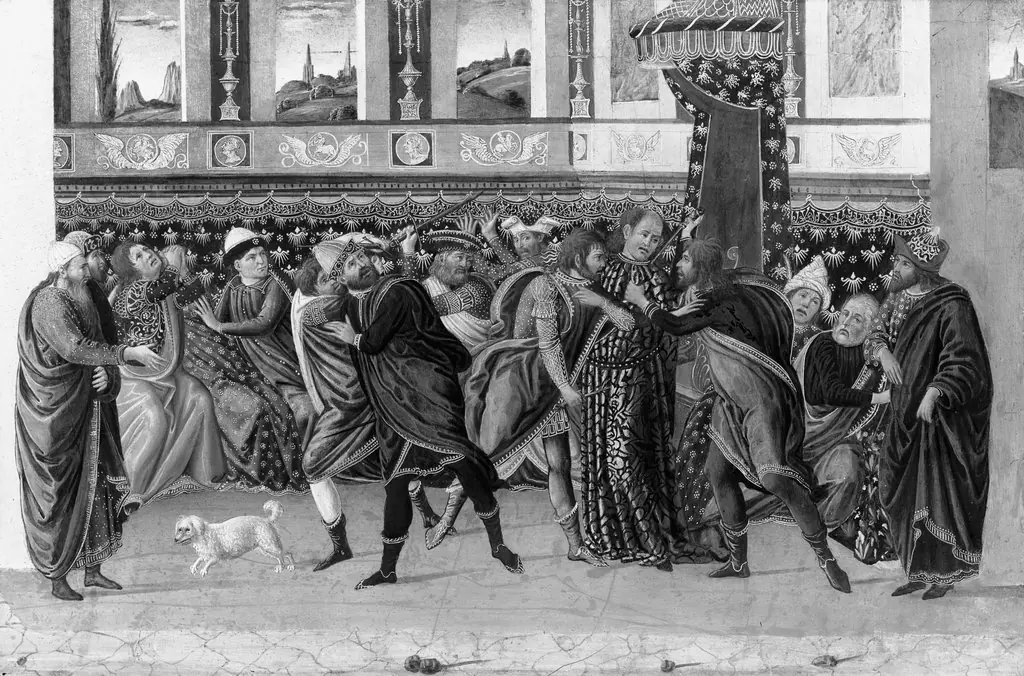 Julius Caesar's assassination
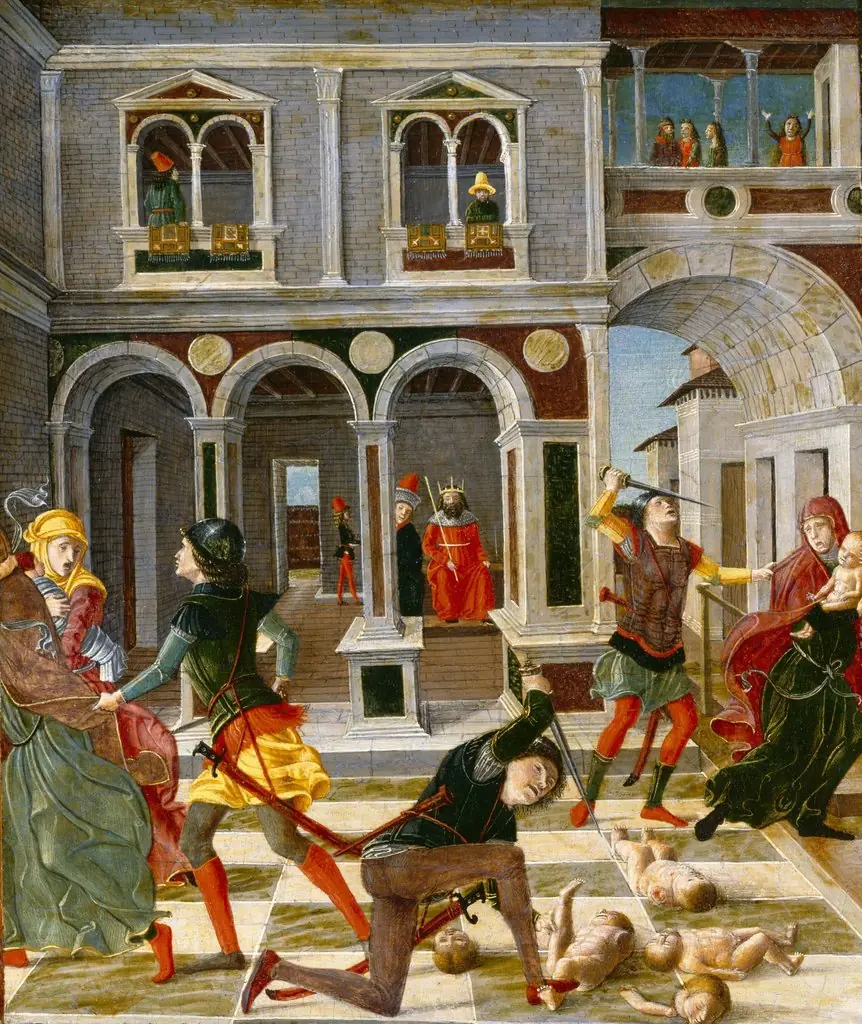 The Massacre of The Innocents
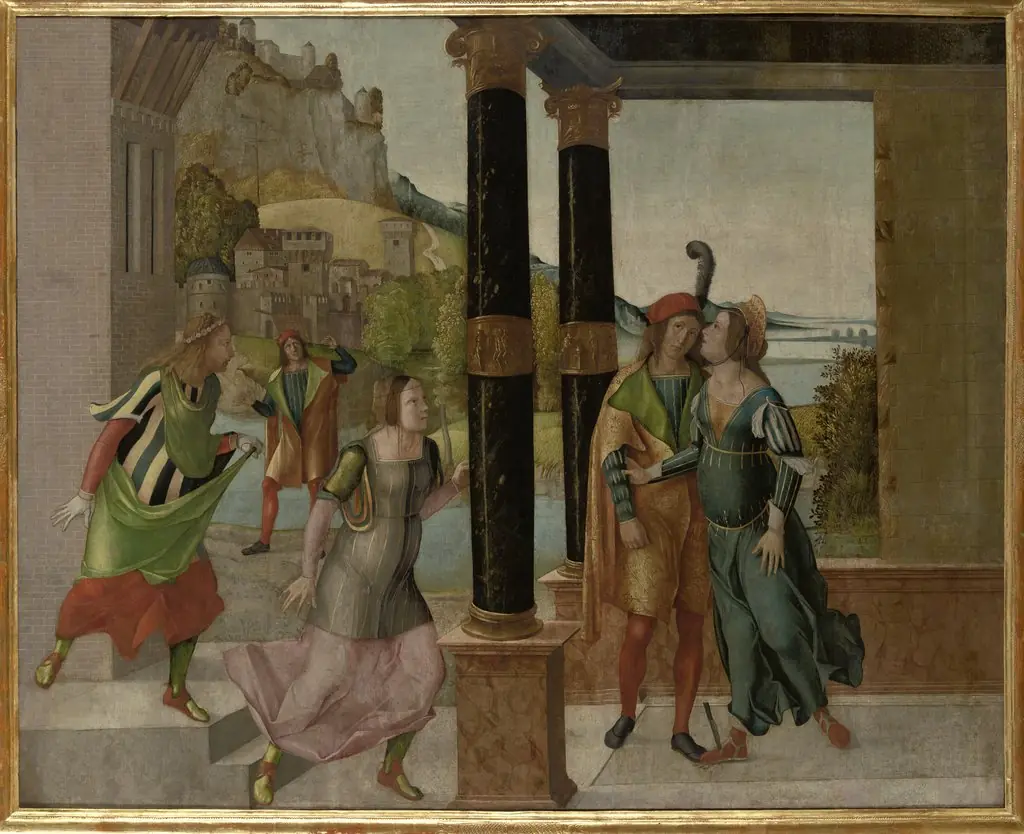 Brutus and Porcia
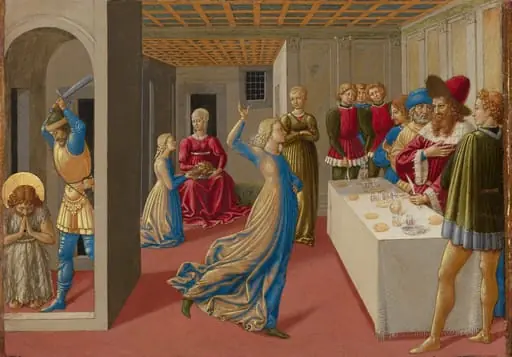 The Feast of Herod and the Beheading of Saint John the Baptist