Artwork
The Martyrdom of Saint Catherine

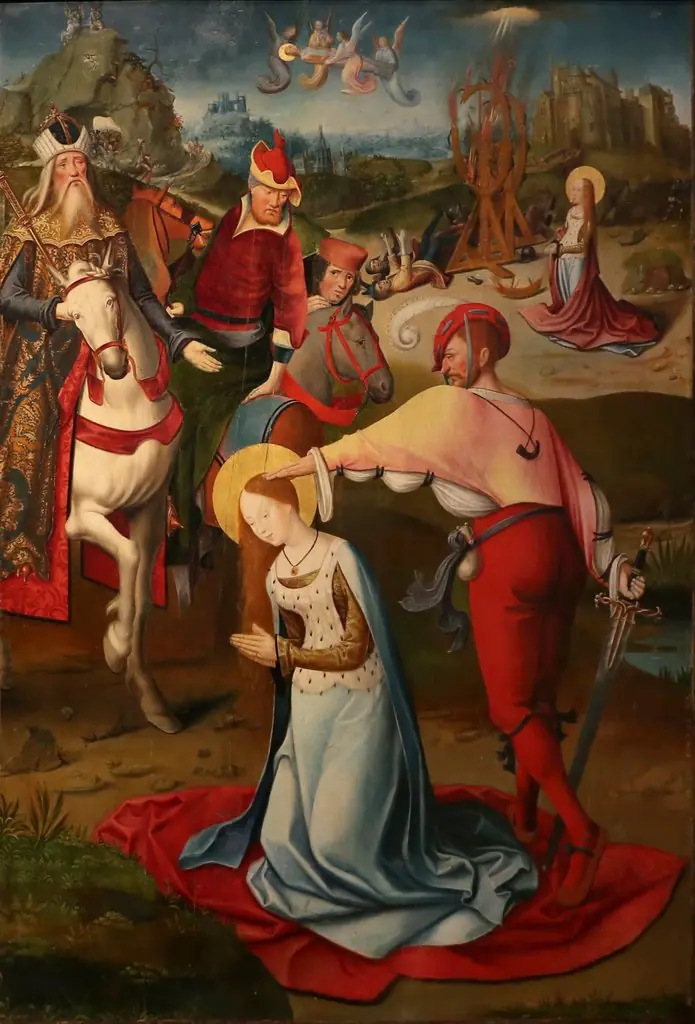
The Martyrdom of Saint Catherine is an oil painting by the Northern Renaissance artist Unknown. It dates from 1510 and is held in the collection of the Victoria and Albert Museum. This oil painting portrays the execution of Saint Catherine, a Christian martyr traditionally associated with the wheel of her torture.
About this work
Overview
This oil painting portrays the execution of Saint Catherine, a Christian martyr traditionally associated with the wheel of her torture.
This oil painting portrays the execution of Saint Catherine, a Christian martyr traditionally associated with the wheel of her torture. The composition centers on her bound figure in the foreground, surrounded by armed figures preparing to carry out her death. A distant landscape of rolling hills and water recedes behind, framing the violence with calm naturalism. The medium allows for nuanced modeling of flesh, fabric, and atmosphere.
Subject & Meaning
Saint Catherine is depicted at the moment before her execution, her posture conveying resignation rather than anguish. Her binding and the presence of weapons reference her legendary punishment by the spiked wheel, which miraculously shattered before her death. The scene underscores her steadfast faith amid persecution, a common theme in Counter-Reformation devotional art meant to inspire endurance.
Technique & Style
Oil paint is used to build layered textures—delicate highlights on skin, crisp folds in clothing, and atmospheric perspective in the background. The artist avoids dramatic chiaroscuro, favoring even light to emphasize clarity and emotional restraint. Brushwork is controlled, with attention to surface detail that enhances realism without sensationalism.
History & Provenance
The painting’s origin is undocumented, but its style and subject align with late 16th- or early 17th-century Northern European religious works. No known patron or commission is recorded, suggesting it may have been produced for private devotion or a small chapel. Its survival implies continued veneration, though its early ownership remains unknown.
Context
During the period this work likely originated, depictions of martyrdom were common in Catholic regions, serving both spiritual and didactic purposes. Artists often balanced graphic subject matter with compositional harmony to avoid overt brutality. Saint Catherine, as a learned virgin martyr, was especially venerated by women’s religious orders and scholarly communities.
Legacy
Though not widely attributed to a major master, the painting reflects broader trends in devotional painting of its time. Its quiet intensity and technical competence place it within a tradition of modestly scaled religious works that sustained personal piety outside grand ecclesiastical commissions. It remains a quiet testament to the endurance of martyr narratives in early modern visual culture.
Artist & collection

 Domestic Scene
 Giacomo and Cardinal Marco, investing Andrea, Abbot of San Zeno, with his Benefice
 The Nymph of Fontainebleau
 Portrait of a Woman
 Madonna and Child with Saints in the Enclosed Garden
 Venus and Minerva
 Family Group of Four on Sofa
 Wall painting from Room H of the Villa of P. Fannius Synistor at Boscoreale
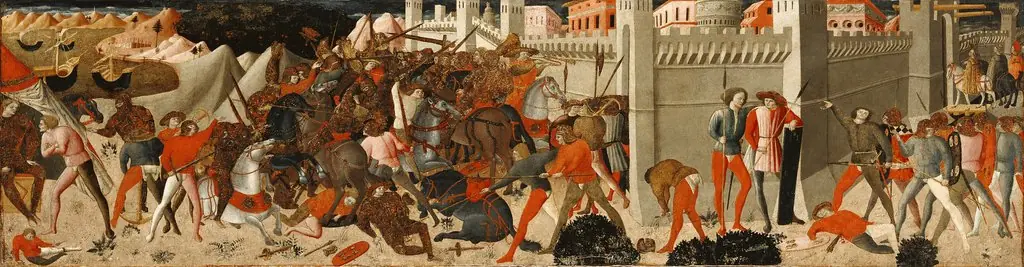 Battle Before a Walled City
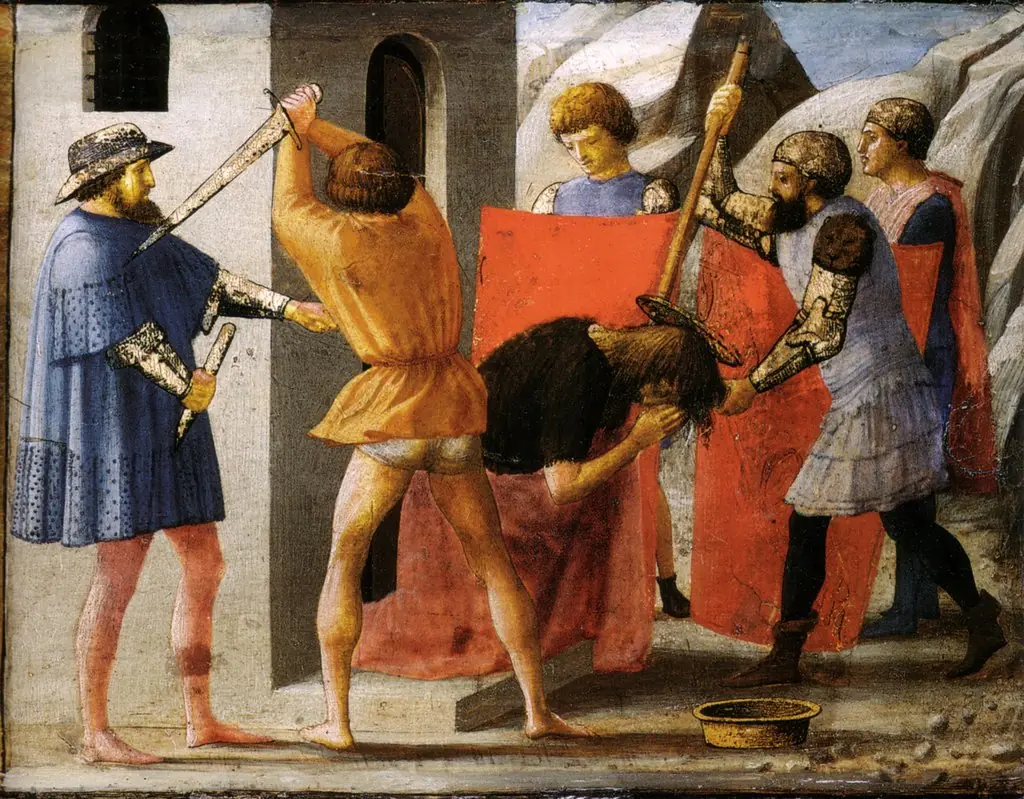 The Decapitation of Saint John the Baptist
 The Adoration of the Magi
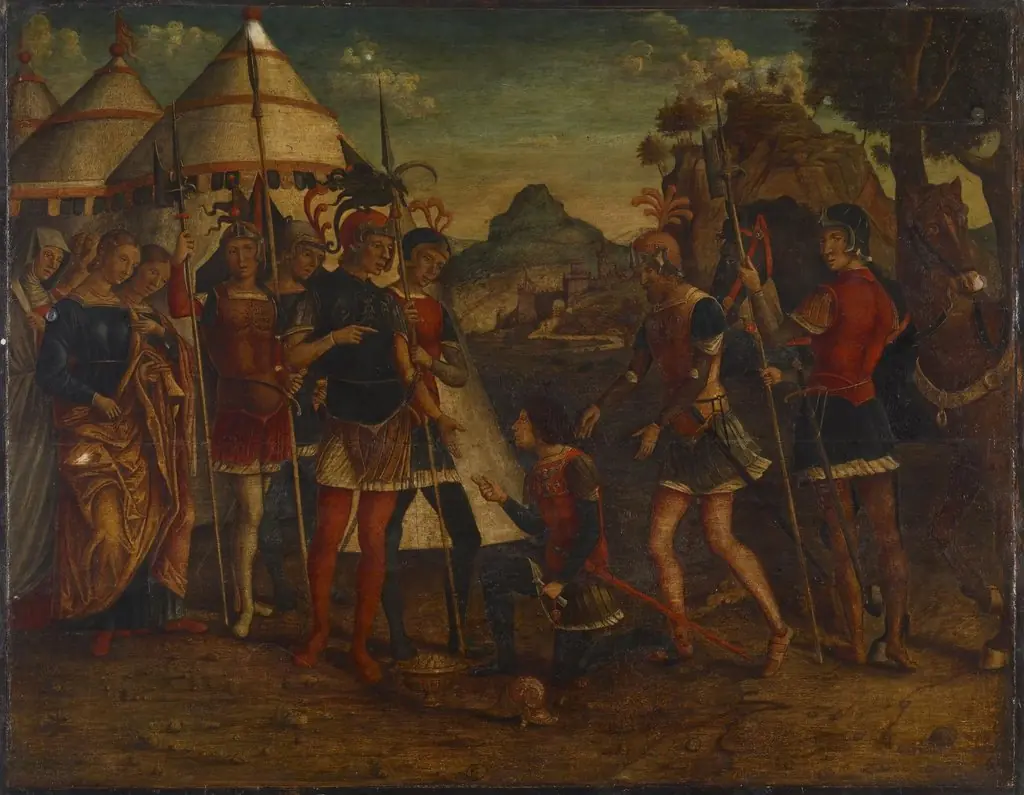 The Magnanimity of Scipio
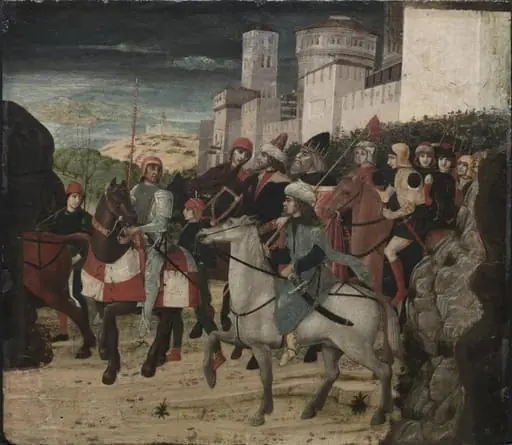 Procession of the Magi
 Tarquinius Priscus Entering Rome
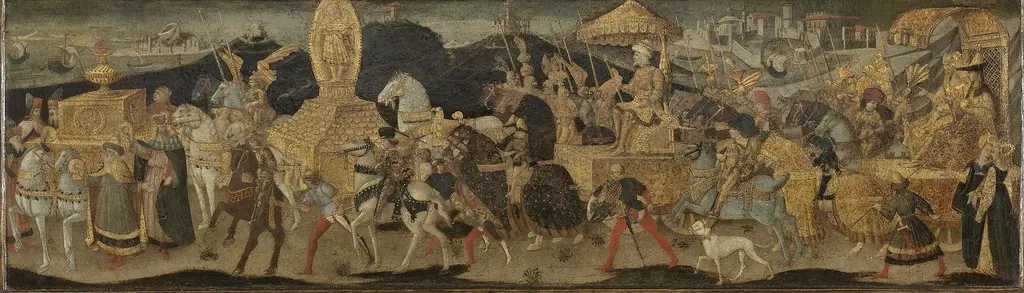 Darius Marching to the Battle of Issus
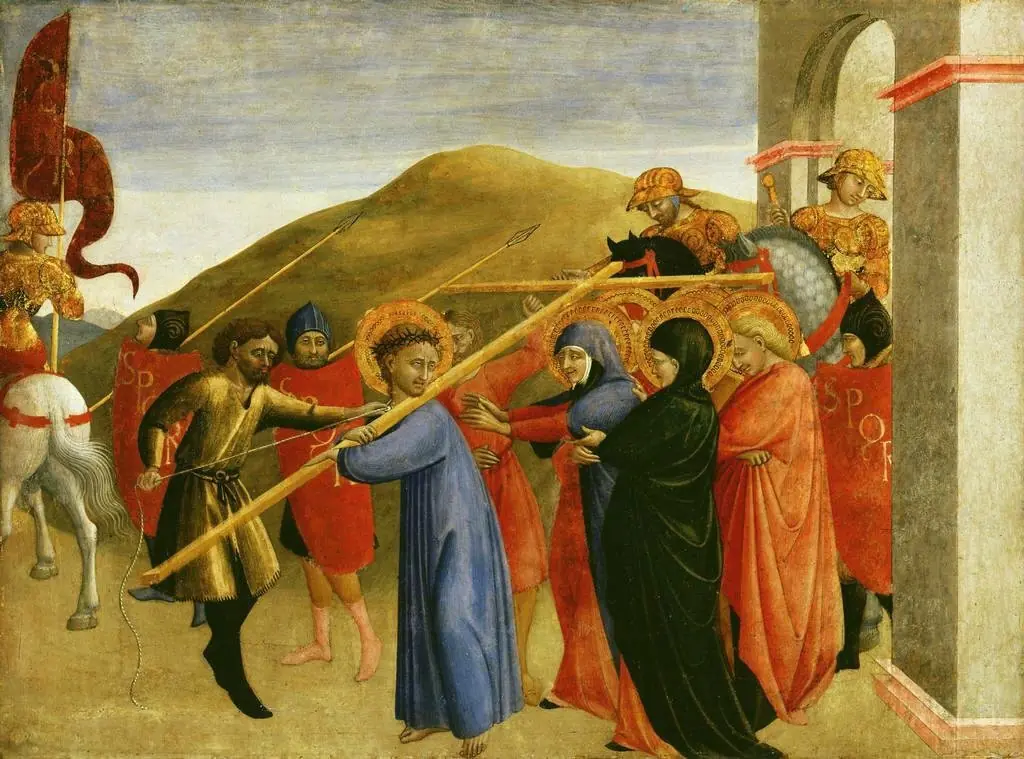 The Procession to Calvary
 Julius Caesar and the Crossing of the Rubicon (scene from the story of Alexander the Great)
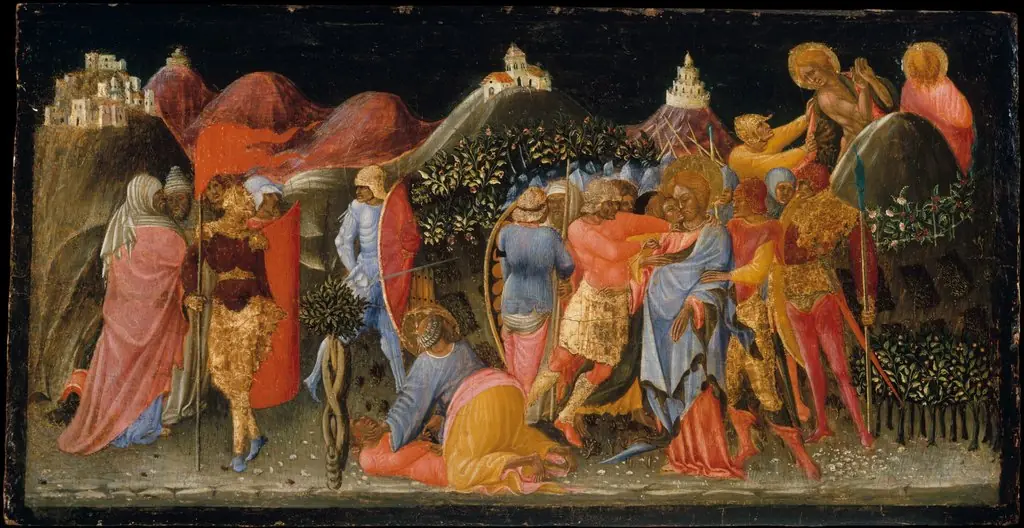 The Betrayal of Christ
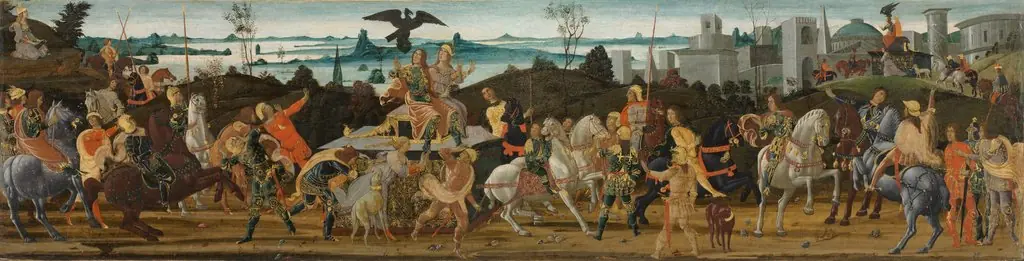 Tarquinius Priscus Entering Rome
 Beheading of Saint Catherine