Artwork
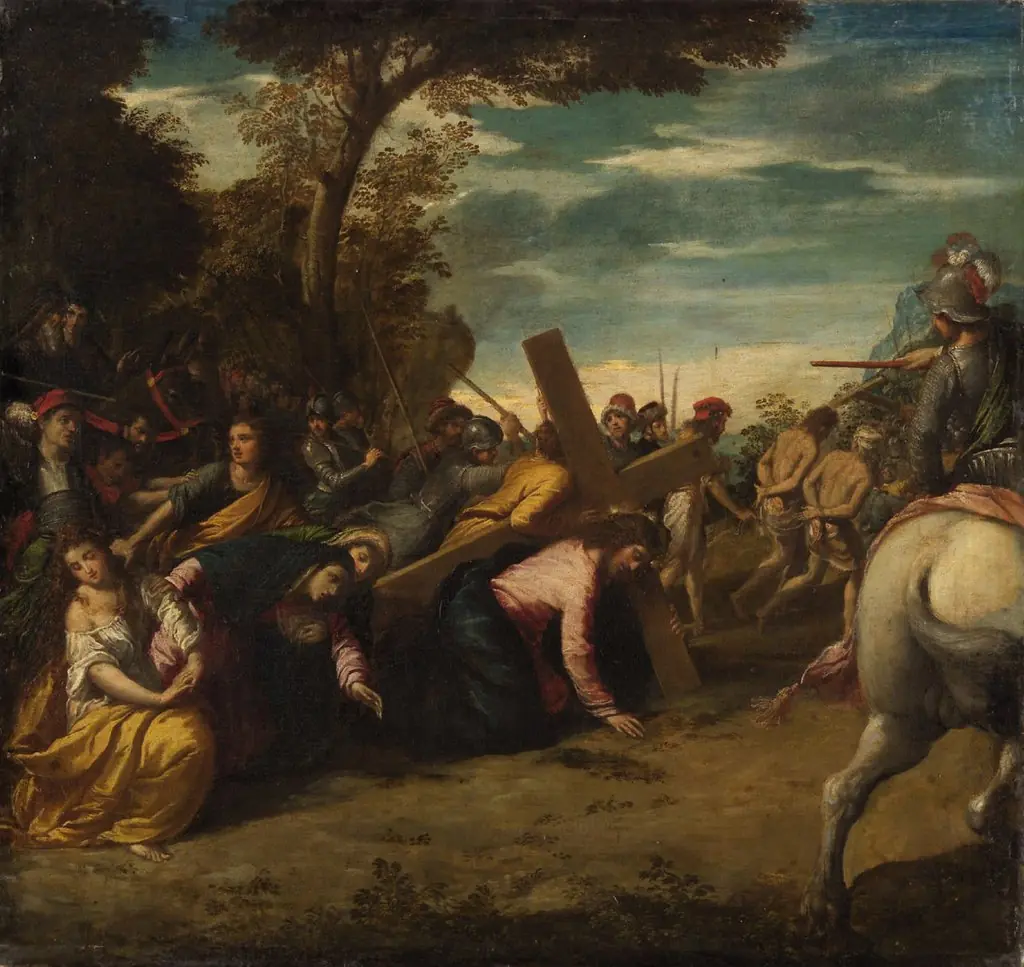
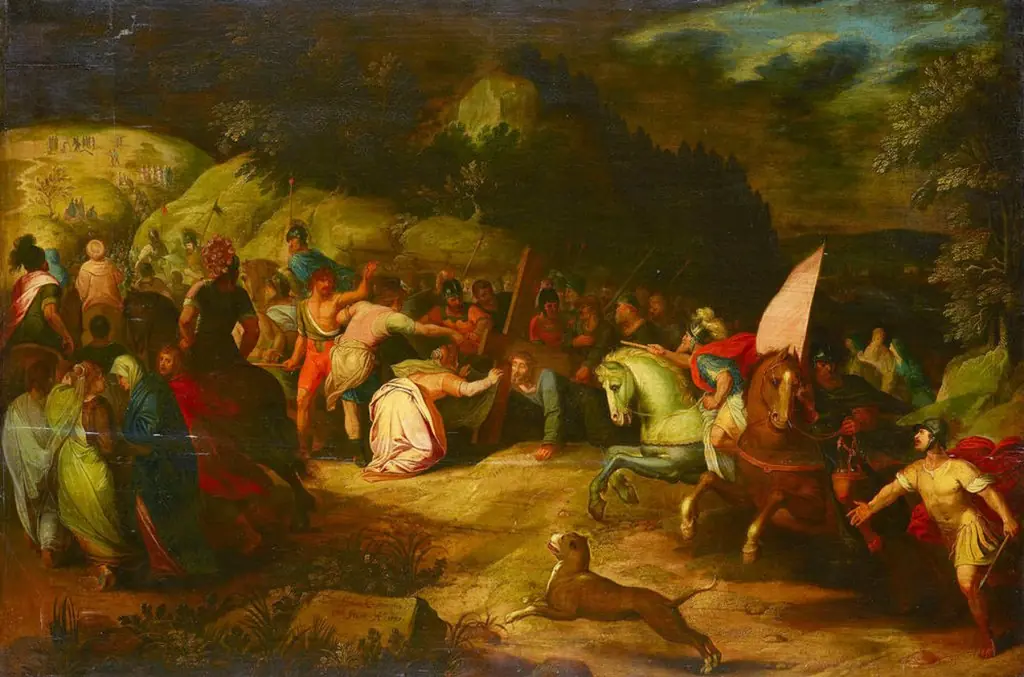
Die Heilige Veronika reicht Christus das Schweißtuch
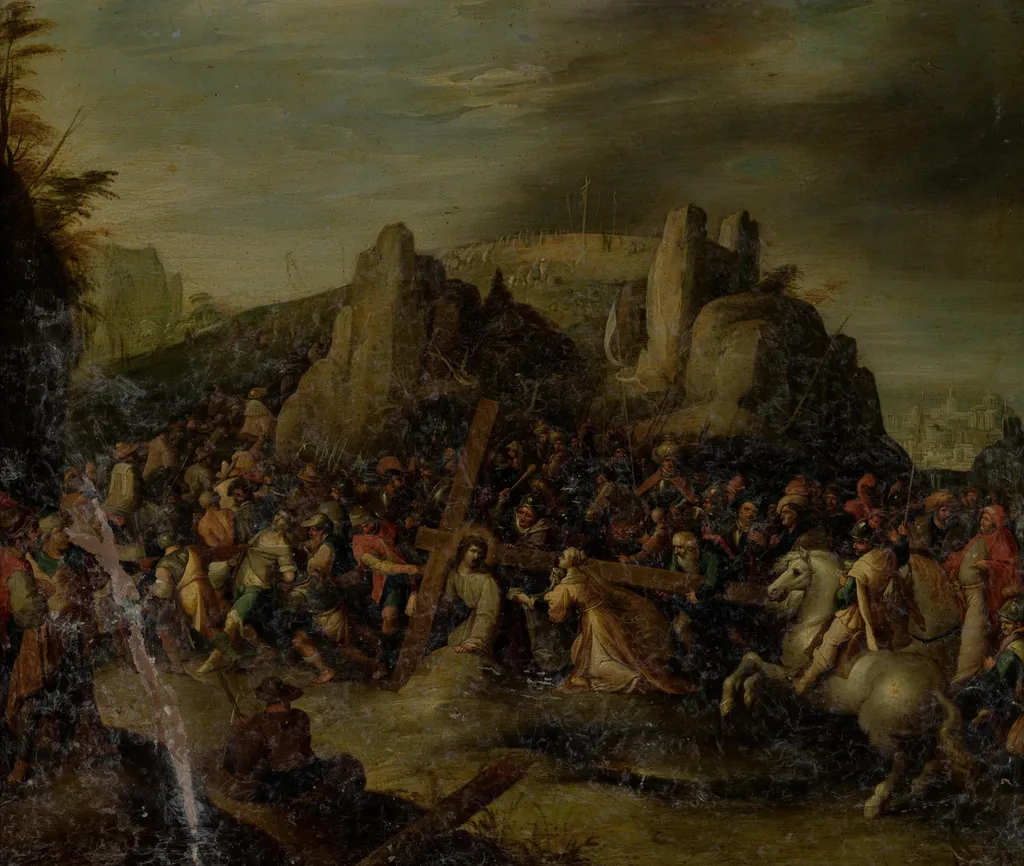
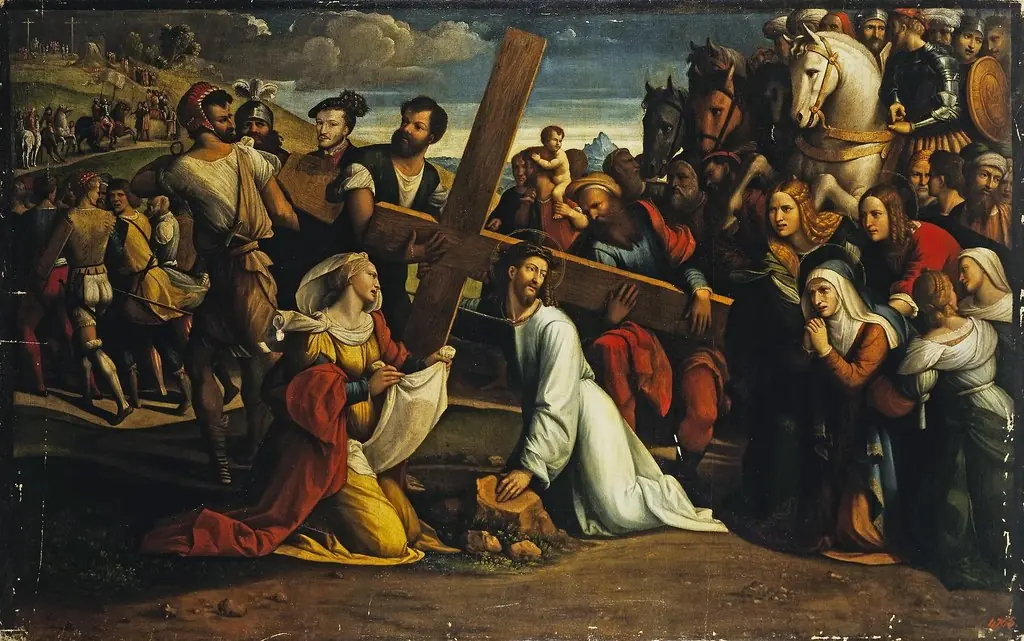
Die Heilige Veronika reicht Christus das Schweißtuch is a paint painting by the Early Baroque Italian artist Unknown. It dates from 1610 and is held in the collection of the Gemäldegalerie Berlin.
About this work
Overview
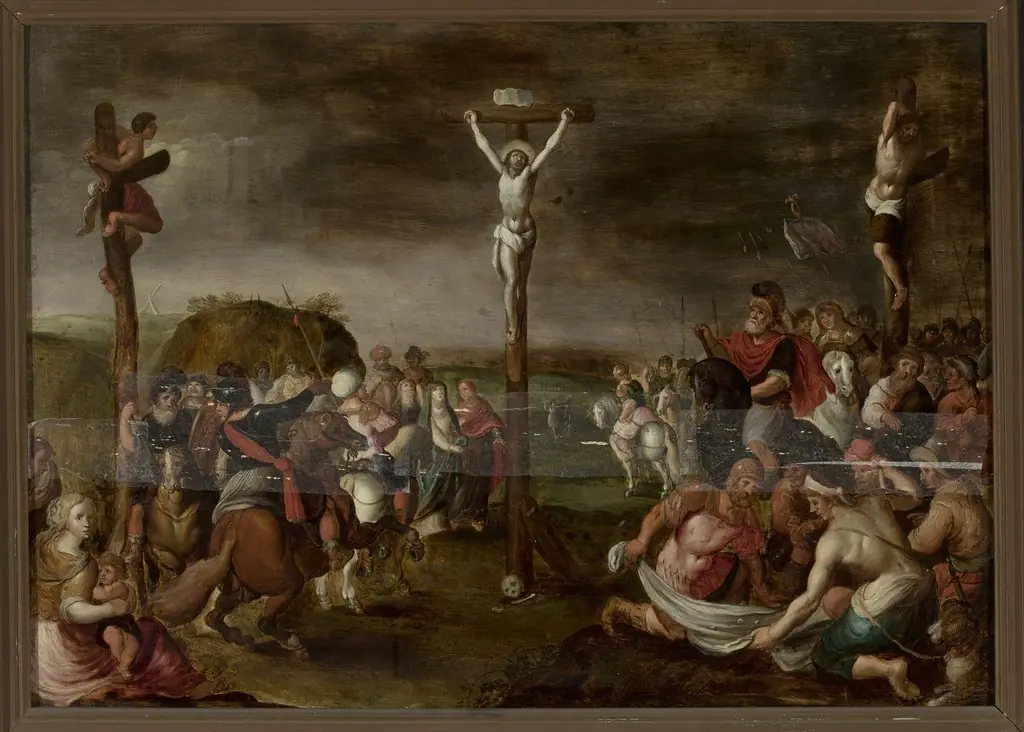
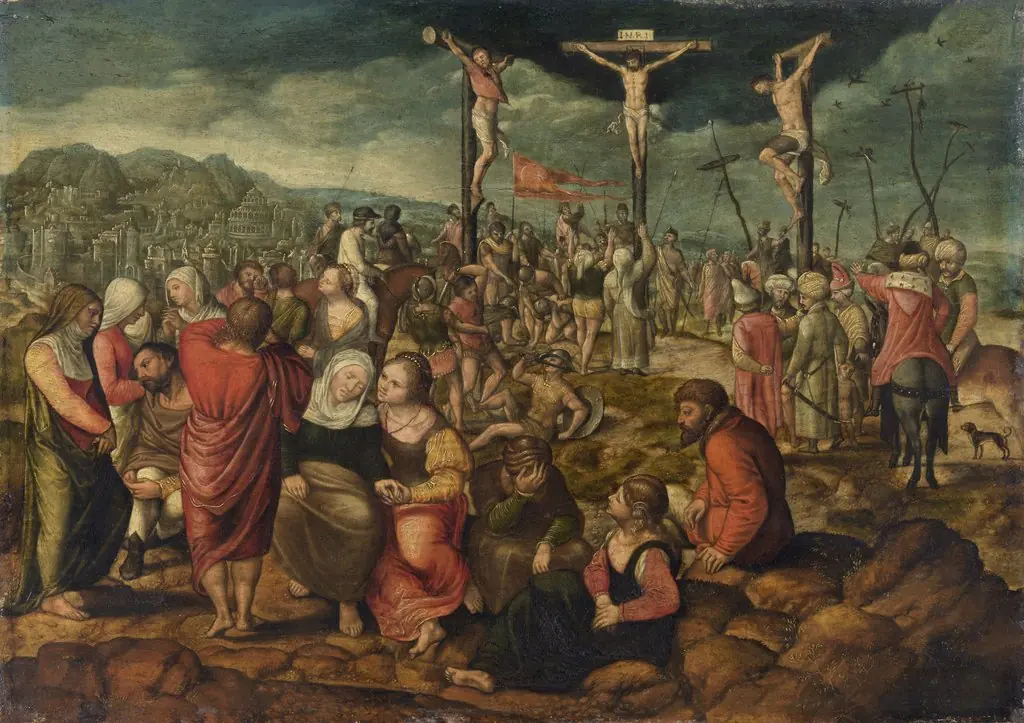
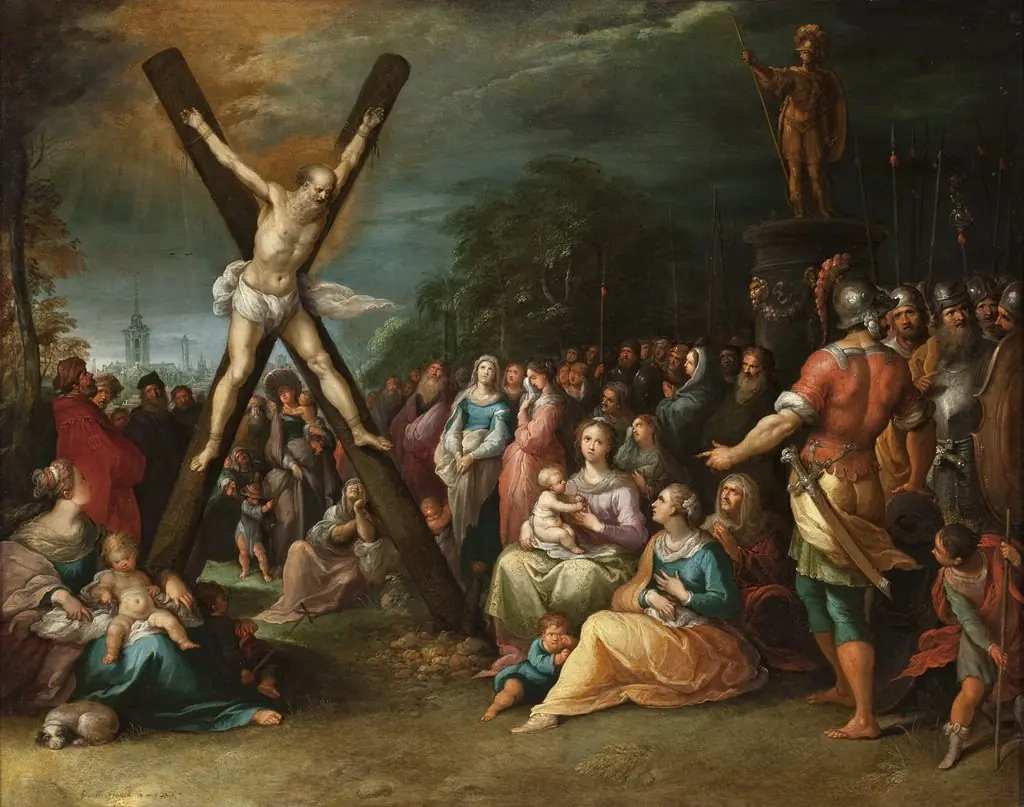
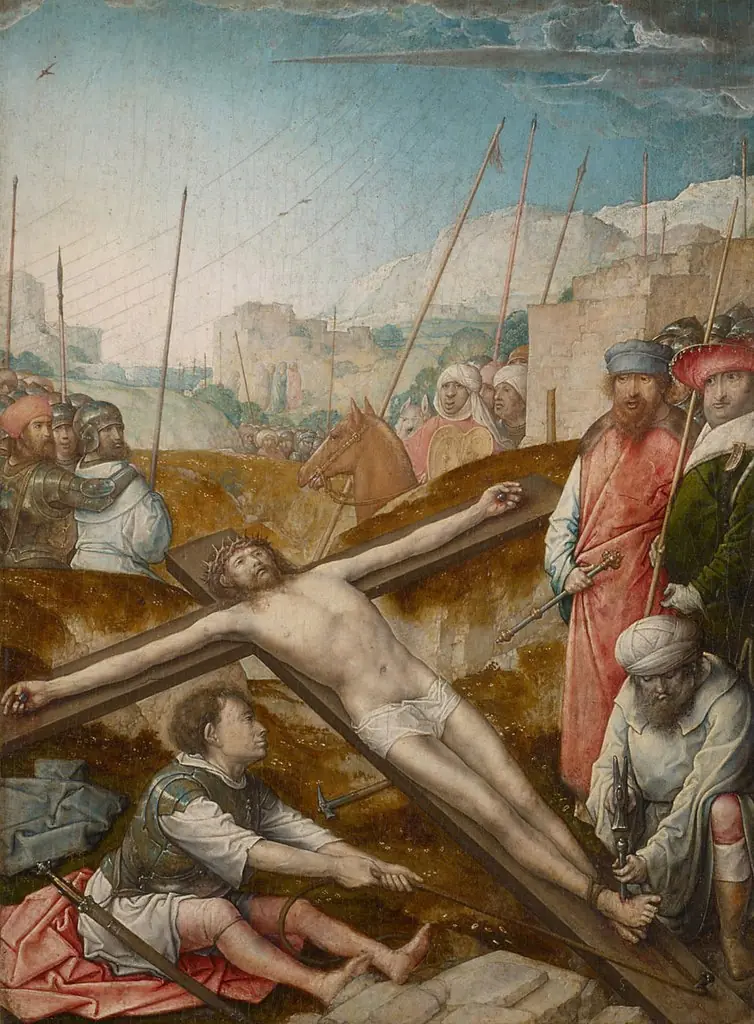
Die Heilige Veronika reicht Christus das Schweißtuch is a copper painting depicting a tumultuous scene set against a rocky landscape and distant cityscape. Figures on horseback and on foot, clad in diverse attire, fill the composition, with a prominent white-clad figure in the foreground.
Subject & Meaning
The painting's central subject revolves around Saint Veronica offering Christ the sweat cloth, a moment of religious significance. Amidst the chaotic crowd, this act of devotion is underscored, contrasting serene religious intent with the tumultuous surroundings.
Technique & Style
The artist employs chiaroscuro to achieve depth and volume, leveraging strong light and dark contrasts. This is evident in the highlighted figures and shadowed backgrounds, enhancing the scene's dramatic intensity.
Context
The use of a copper medium and the depiction of a religious scene within a dynamic, everyday backdrop reflect artistic practices of its time, blending religious narrative with secular, detailed observation.
History & Provenance
Unfortunately, specific historical ownership or creation date details for 'Die Heilige Veronika reicht Christus das Schweißtuch' are not provided in the available information.
Legacy
While the painting's direct influence or widespread recognition is not outlined in the provided facts, its use of chiaroscuro and detailed composition reflect broader artistic techniques of its era, contributing to the continuum of religious art.
Artist & collection

 Domestic Scene
 Giacomo and Cardinal Marco, investing Andrea, Abbot of San Zeno, with his Benefice
 The Nymph of Fontainebleau
 Portrait of a Woman
 Madonna and Child with Saints in the Enclosed Garden
 Venus and Minerva
 Family Group of Four on Sofa
 Wall painting from Room H of the Villa of P. Fannius Synistor at Boscoreale