Artwork
Erzherzogin Eleonore (1582-1620) im Alter von 5 Jahren, Halbfigur
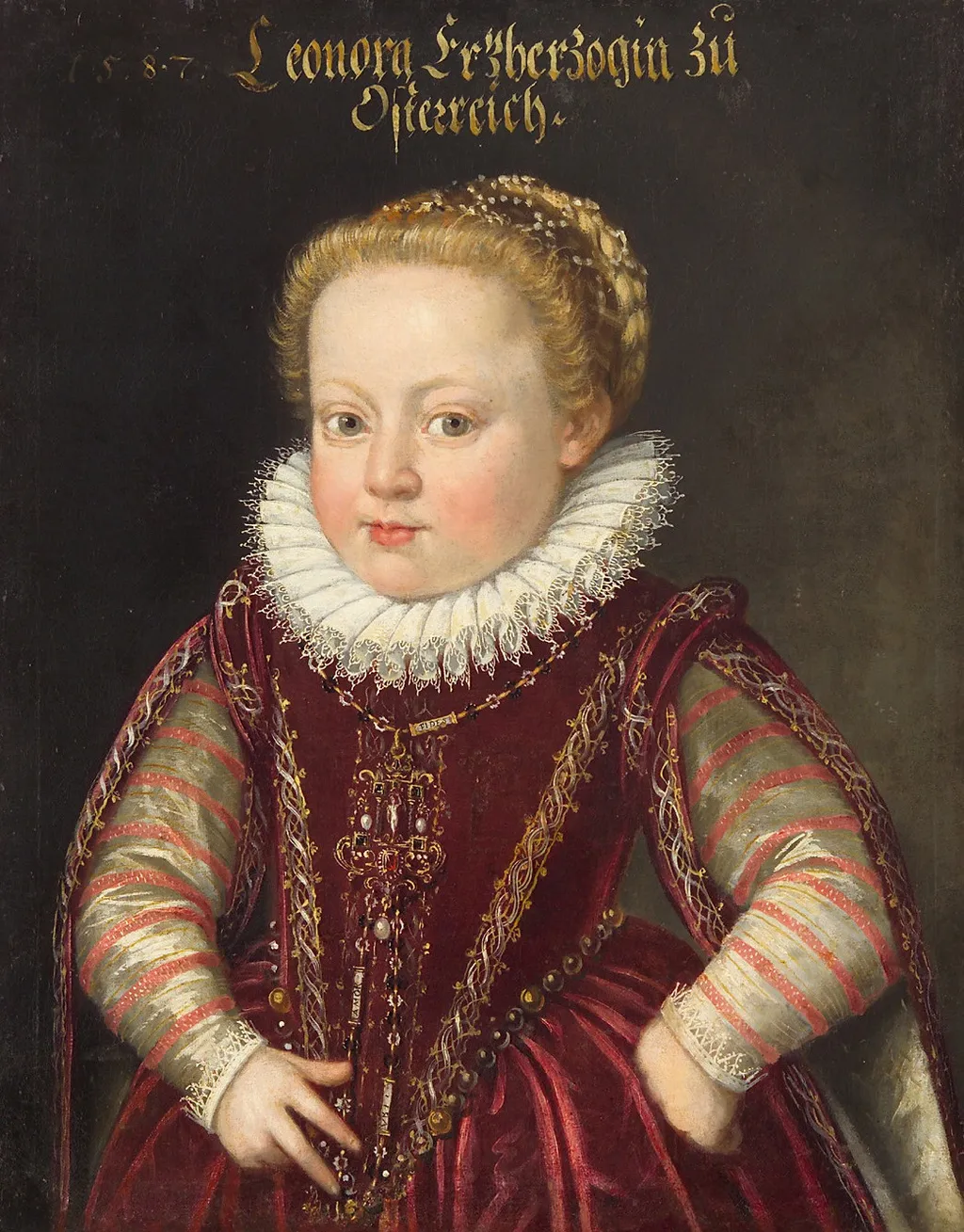
Erzherzogin Eleonore (1582-1620) im Alter von 5 Jahren, Halbfigur is an oil painting by the Early Baroque Italian artist Unknown. It dates from 1594 and is held in the collection of the Kunsthistorisches Museum. This oil painting depicts Archduchess Eleonore of Austria at age five, rendered in a formal half-length portrait.
About this work
Overview
Her clothing and accessories signal noble lineage, while the restrained lighting suggests an early use of chiaroscuro to define form.
This oil painting depicts Archduchess Eleonore of Austria at age five, rendered in a formal half-length portrait. She stands against a dark, unadorned background, emphasizing her figure and attire. The composition follows courtly conventions of the late 16th century, prioritizing status over individual expression. Her clothing and accessories signal noble lineage, while the restrained lighting suggests an early use of chiaroscuro to define form.
Subject & Meaning
The subject is Eleonore, daughter of Holy Roman Emperor Ferdinand I, portrayed not as a child but as a miniature noblewoman. Her calm demeanor and slight smile reflect expected composure for royal children in portraiture. The gold chain and rich red fabric with gold trim are symbols of Habsburg authority and wealth, not personal adornment. The inscription identifies her by title, reinforcing her political identity over personal identity.
Technique & Style
The artist employs subtle chiaroscuro to model the child’s face and hands, creating volume against the dark background. The stiff, starched ruff and striped sleeves are rendered with precise brushwork, highlighting textile detail. Oil paint allows for smooth transitions in skin tones and luminous highlights on the gold chain and fabric edges. The palette is restrained—dominated by red, white, and gold—conveying formality and hierarchy.
History & Provenance
Painted around 1587, the work likely originated in the Habsburg court, possibly commissioned to document Eleonore’s status before her marriage. It remained within imperial collections, later entering a public museum. Its survival is notable, as many child portraits of this era were lost or repainted. The inscription in Latin confirms its official purpose as a dynastic record.
Context
In late Renaissance Austria, portraits of royal children served political ends: affirming lineage, securing alliances, and projecting continuity. Eleonore’s depiction aligns with similar portraits of Habsburg heirs, where age was downplayed in favor of dignity. The rigid posture and elaborate dress reflect contemporary ideals of nobility, influenced by Spanish court fashion, which emphasized formality and restraint.
Legacy
The portrait stands as an early example of Habsburg visual propaganda, where childhood was framed through the lens of power. Its preservation offers insight into how noble families cultivated public image from infancy. While not widely known today, it contributes to the broader understanding of how portraiture functioned as institutional memory in early modern Europe.
Artist & collection

 Domestic Scene
 Giacomo and Cardinal Marco, investing Andrea, Abbot of San Zeno, with his Benefice
 The Nymph of Fontainebleau
 Portrait of a Woman
 Madonna and Child with Saints in the Enclosed Garden
 Venus and Minerva
 Family Group of Four on Sofa
 Wall painting from Room H of the Villa of P. Fannius Synistor at Boscoreale
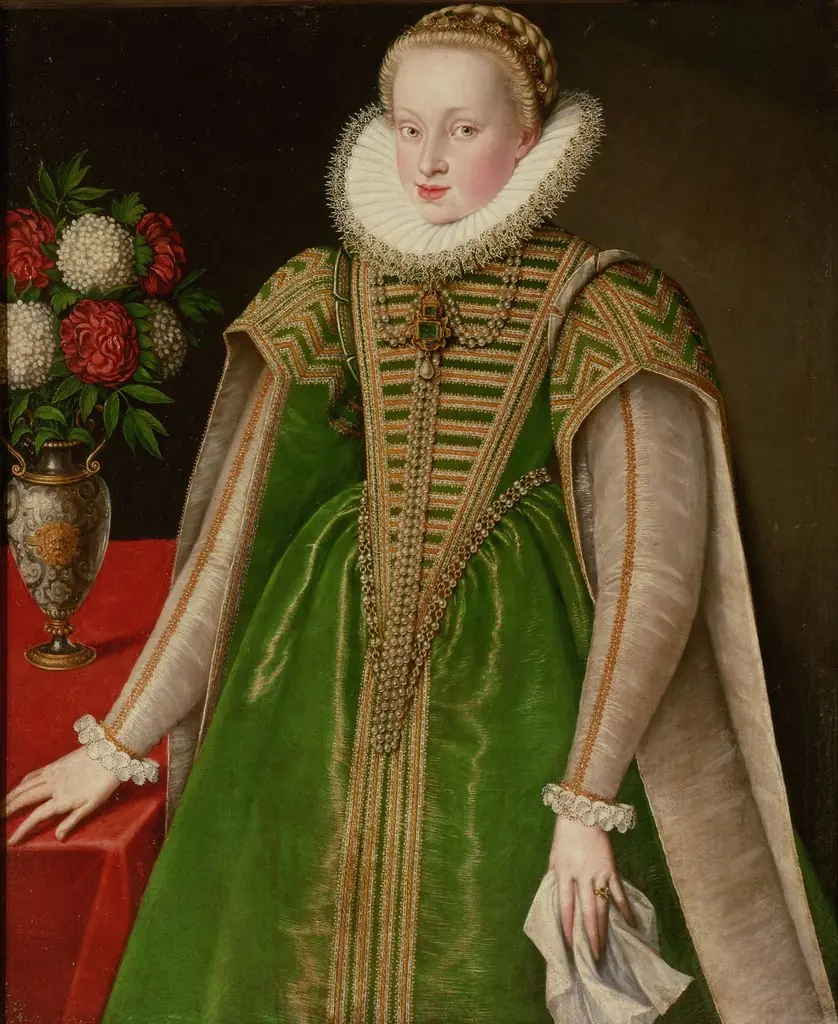 Erzherzogin Maria Christierna (1574-1621) in grünem Gewand, Kniestück
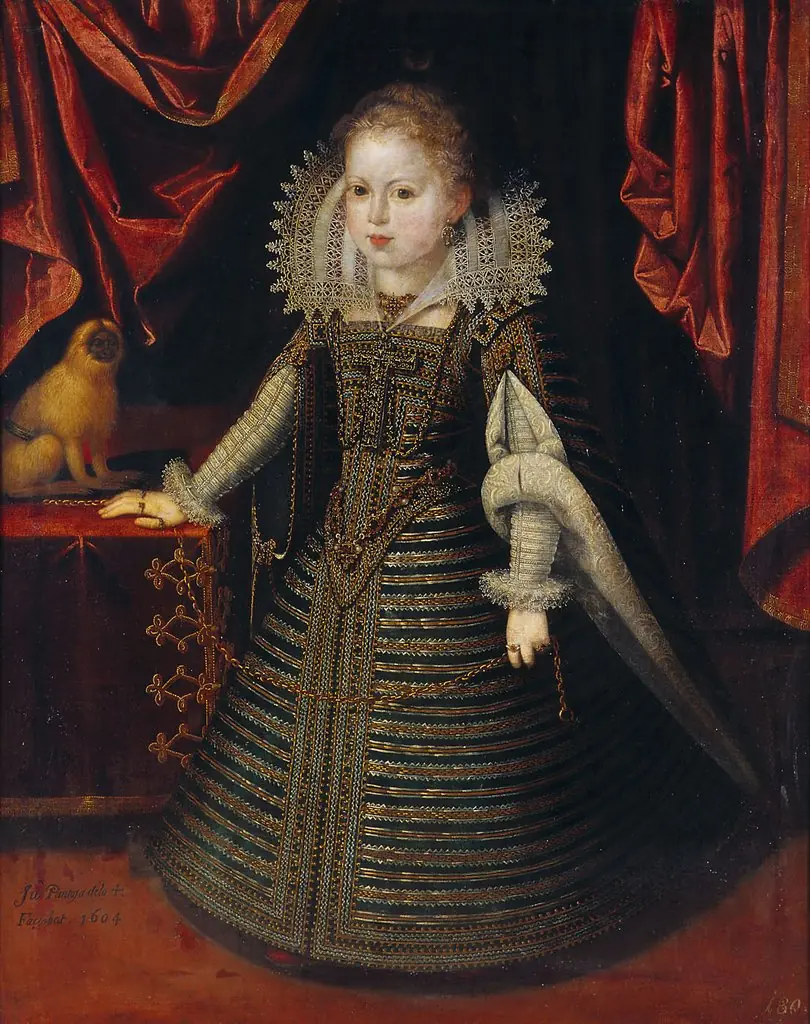 Infantin Anna (1601-1666), Königin von Frankreich, Bildnis in ganzer Figur mit einem Löwenäffchen
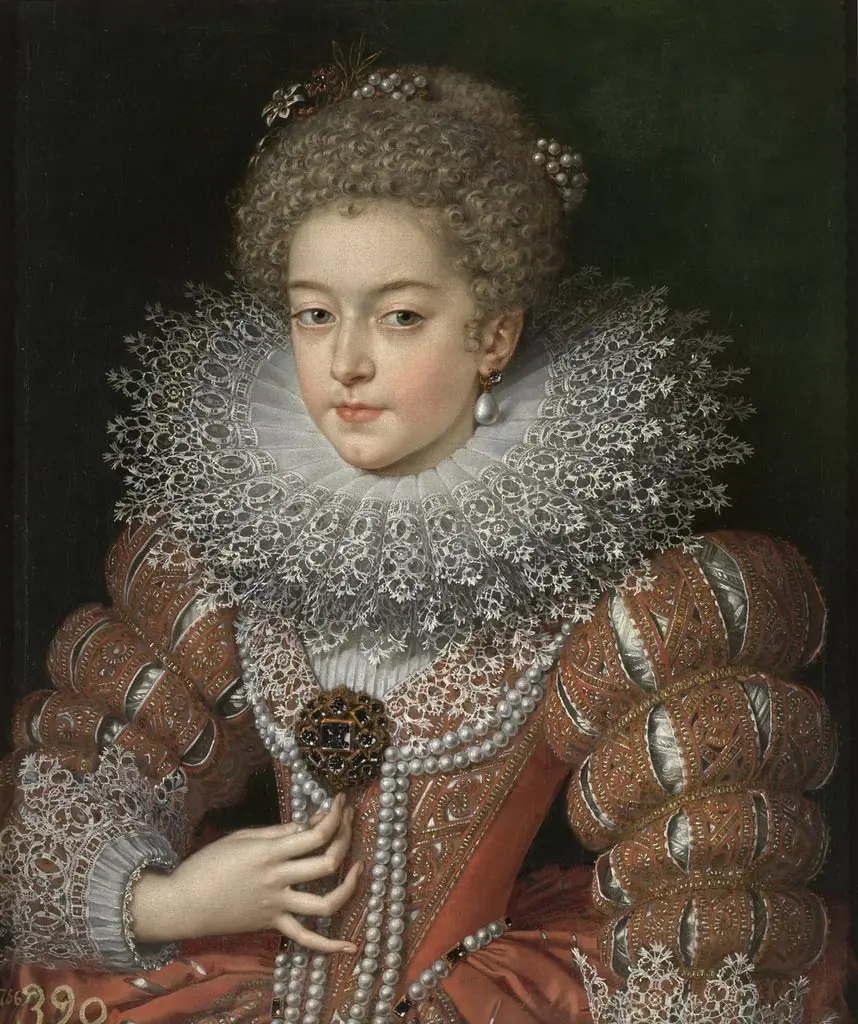 Isabella of France Queen of Spain
 Archduchess Maria Magdalena of Austria
 Portrait of a lady in a rich costume leaning on the armchair
 Portrait of Anne of Austria, Queen of Poland (1573-1598)
 Eleonora Gonzaga (1598-1655), Empress, at the age of two, knee-length portrait