Artwork
Legend of Durga
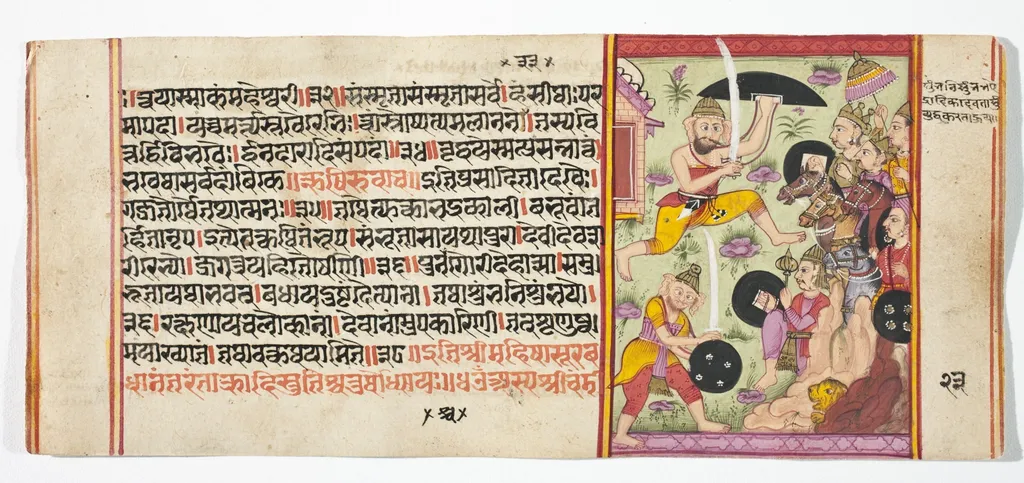
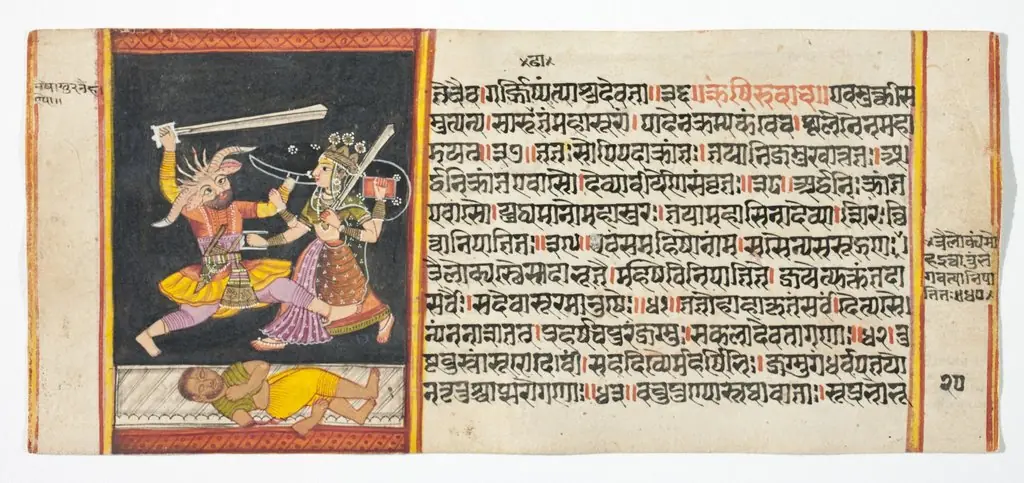
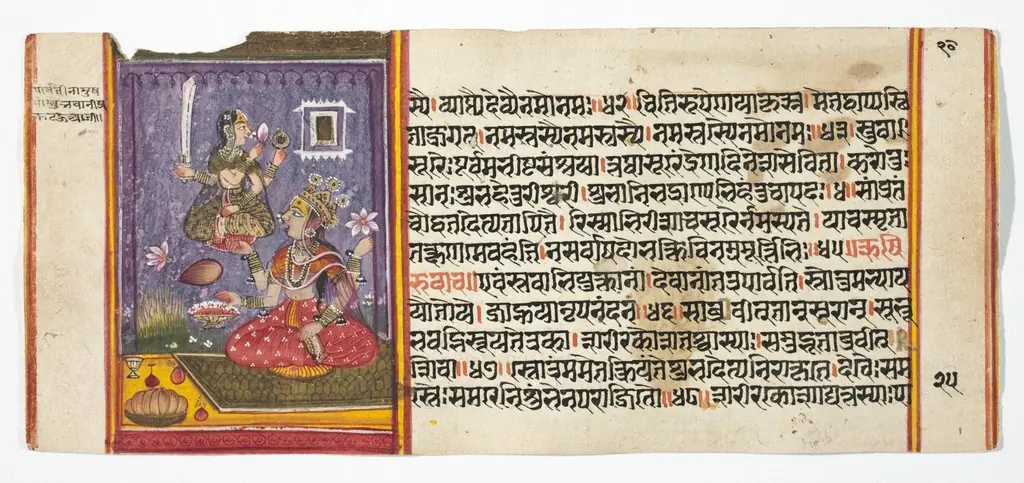
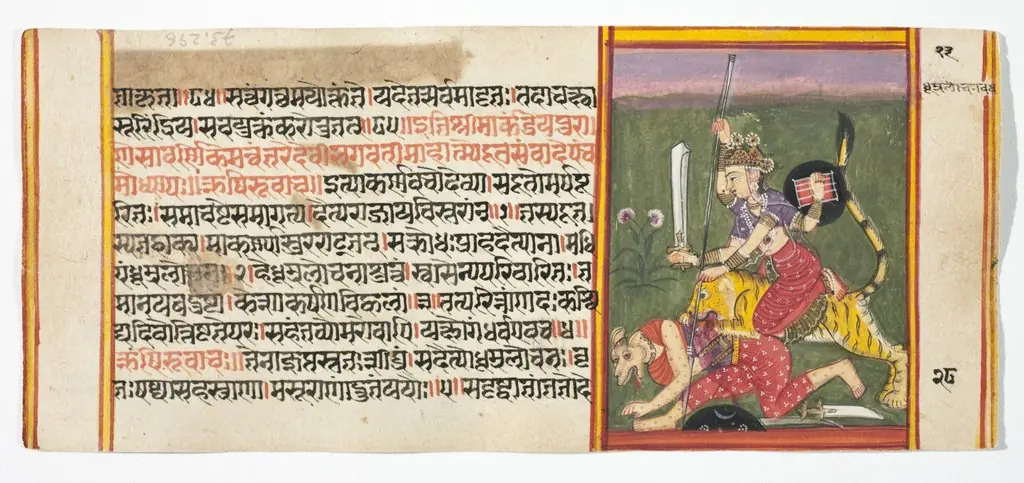
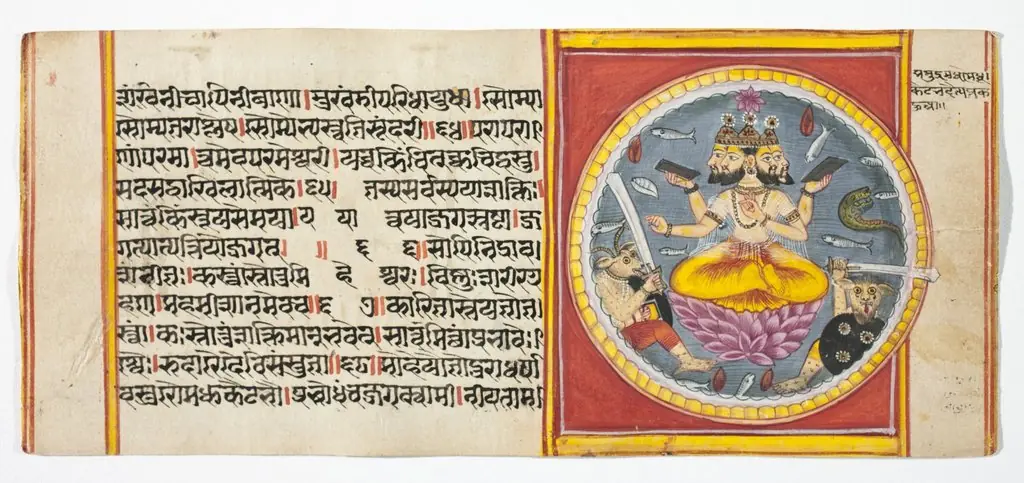
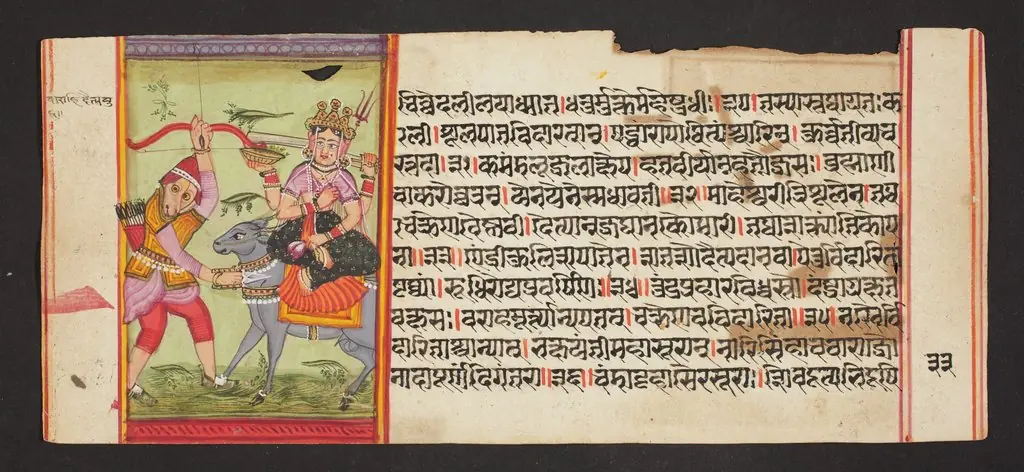
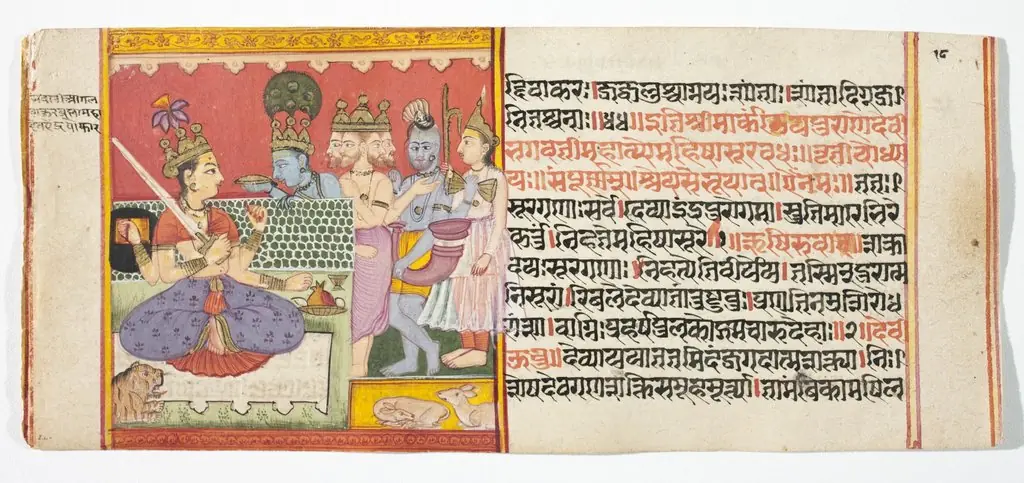
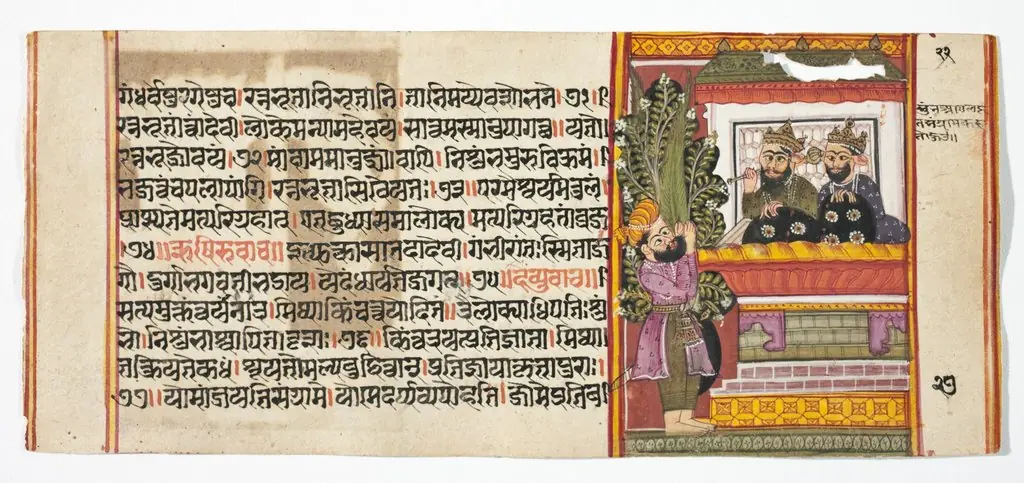
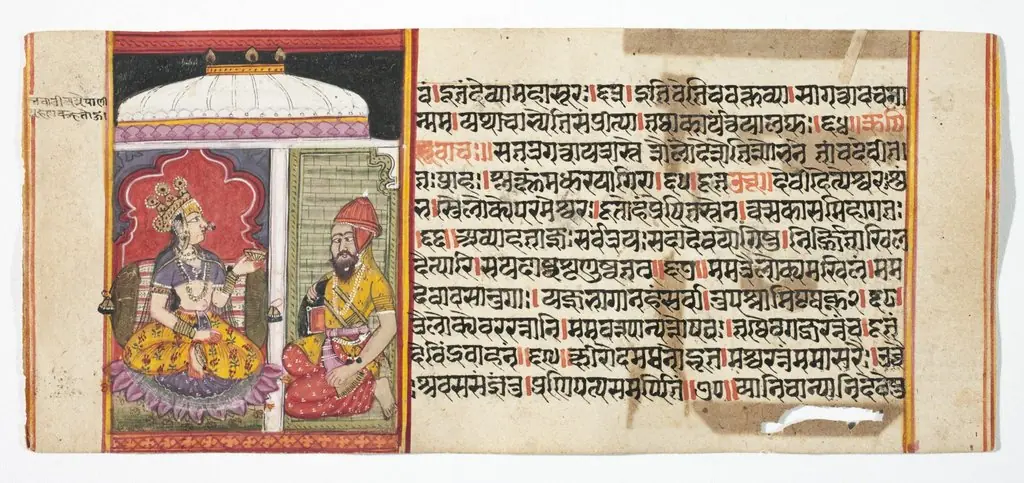
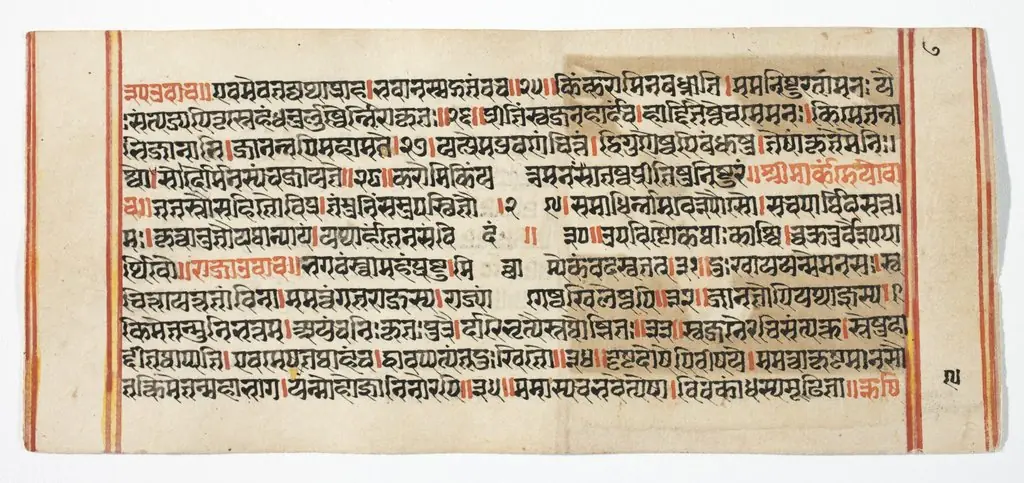
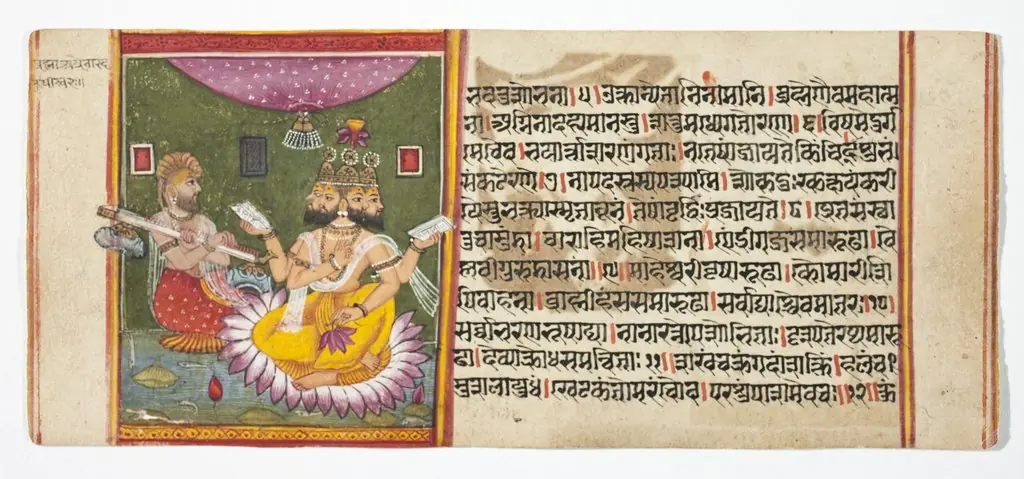
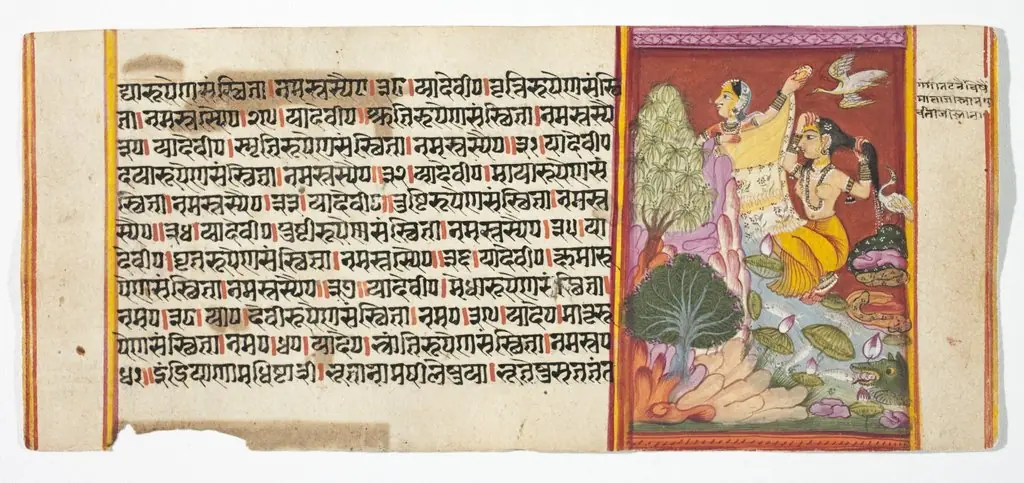
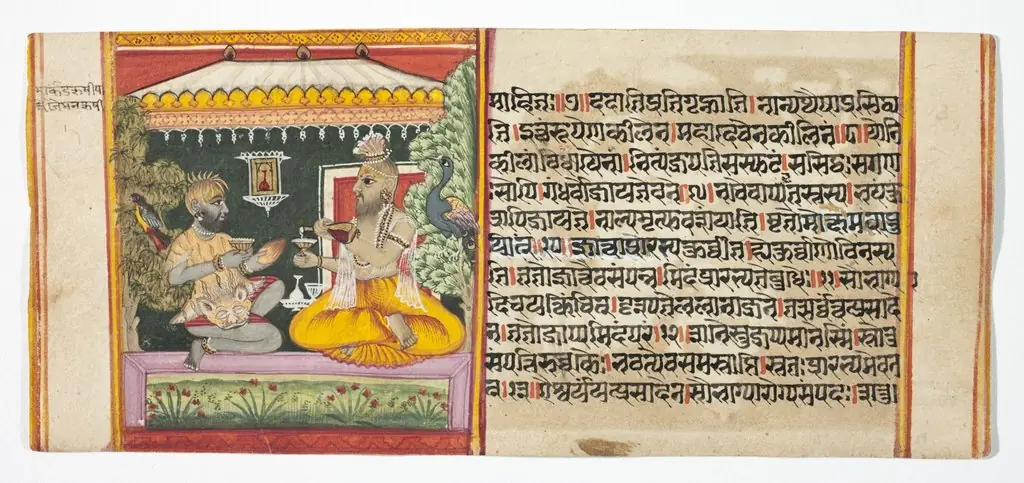
Legend of Durga is an unspecified painting by Unknown. It is held in the collection of the Detroit Institute of Arts. This painting illustrates episodes from the Hindu myth of Durga, the warrior goddess who defeats the buffalo demon Mahishasura.
About this work
Overview
This painting illustrates episodes from the Hindu myth of Durga, the warrior goddess who defeats the buffalo demon Mahishasura. Created in the Pahari style, it belongs to a tradition of miniature paintings produced in the Himalayan foothills during the 18th century. The work combines narrative sequence with decorative detail, typical of regional courtly art commissioned by Hindu rulers.
Subject & Meaning
The painting depicts Durga in her divine form, mounted on a lion, wielding multiple weapons as she pierces the demon Mahishasura. Scenes around her show the battle’s progression, symbolizing the triumph of cosmic order over chaos. Each element—weapons, animals, postures—carries theological significance, reinforcing Durga’s role as protector and embodiment of shakti, or divine feminine power.
Technique & Style
Executed in opaque watercolor on paper, the painting features fine brushwork, flat planes of color, and intricate patterns in clothing and architecture.
Executed in opaque watercolor on paper, the painting features fine brushwork, flat planes of color, and intricate patterns in clothing and architecture. Figures are stylized with elongated eyes and graceful contours, characteristic of Pahari aesthetics. Backgrounds are minimal, focusing attention on the central action, while gold leaf accents highlight divine elements without excessive ornamentation.
History & Provenance
The work likely originated in a royal atelier in the Kangra or Guler region, where patronage of Hindu epics flourished under local rulers. It was probably part of a larger illustrated manuscript or album, later separated and collected by European or Indian private owners in the 19th century. Its current location reflects 20th-century museum acquisitions from private collections.
Context
Produced during a period when Pahari courts cultivated devotional art, this painting reflects the fusion of Bhakti spirituality with courtly aesthetics. Similar themes appeared in poetry and music of the time, as regional rulers aligned themselves with Vaishnavite and Shaivite traditions. The depiction of Durga resonated with local identities, reinforcing religious and political authority through visual narrative.
Legacy
This painting contributes to a broader corpus of Indian miniature art that preserved mythological narratives across generations. While less widely known than Mughal works, Pahari depictions of Durga influenced later regional styles and remain important for understanding the interplay of religion, art, and patronage in pre-colonial North India.
Artist & collection

 Domestic Scene
 Giacomo and Cardinal Marco, investing Andrea, Abbot of San Zeno, with his Benefice
 The Nymph of Fontainebleau
 Portrait of a Woman
 Madonna and Child with Saints in the Enclosed Garden
 Venus and Minerva
 Family Group of Four on Sofa
 Wall painting from Room H of the Villa of P. Fannius Synistor at Boscoreale