Artwork
Legend of Durga
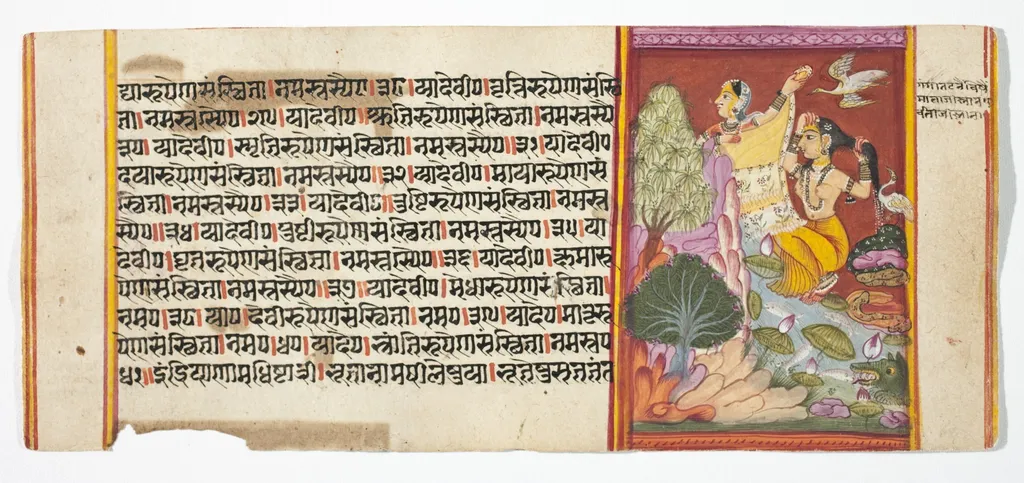
Legend of Durga is an unspecified painting by Unknown. It is held in the collection of the Detroit Institute of Arts.
About this work
Overview
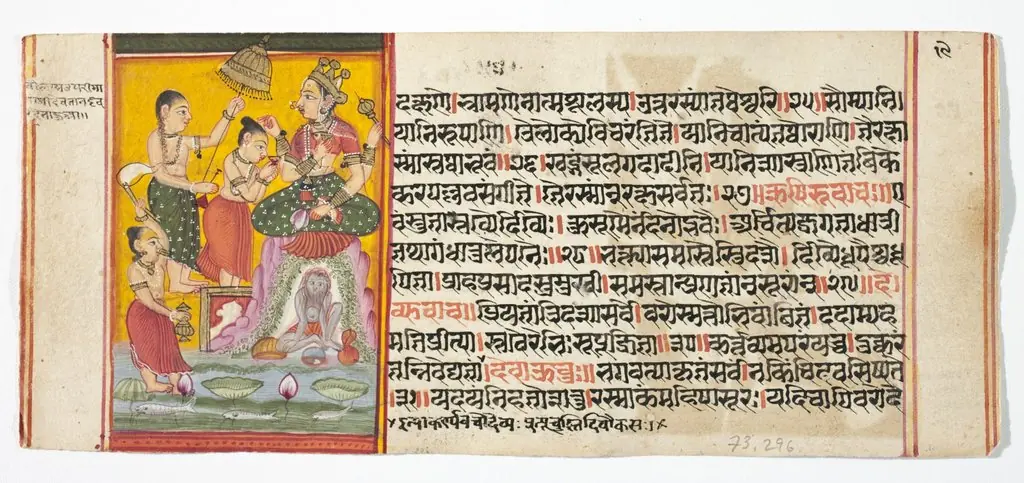
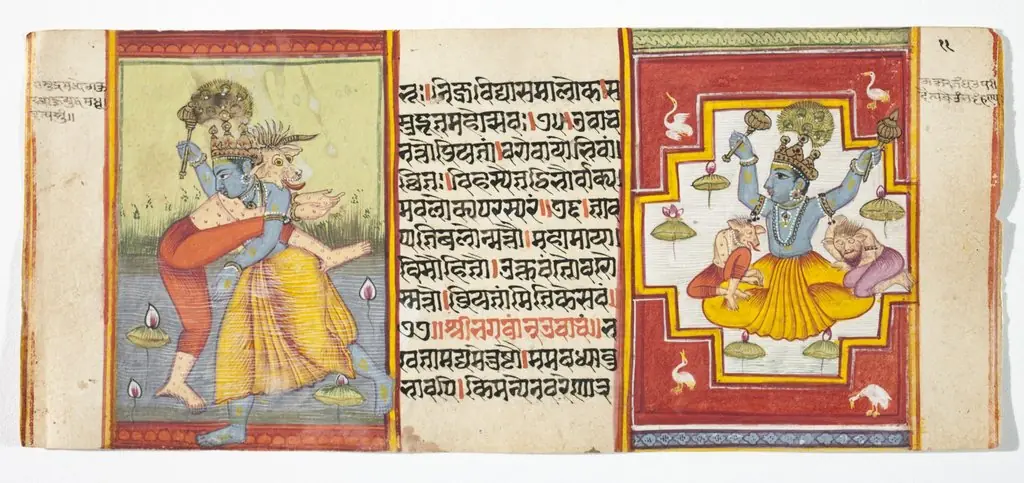
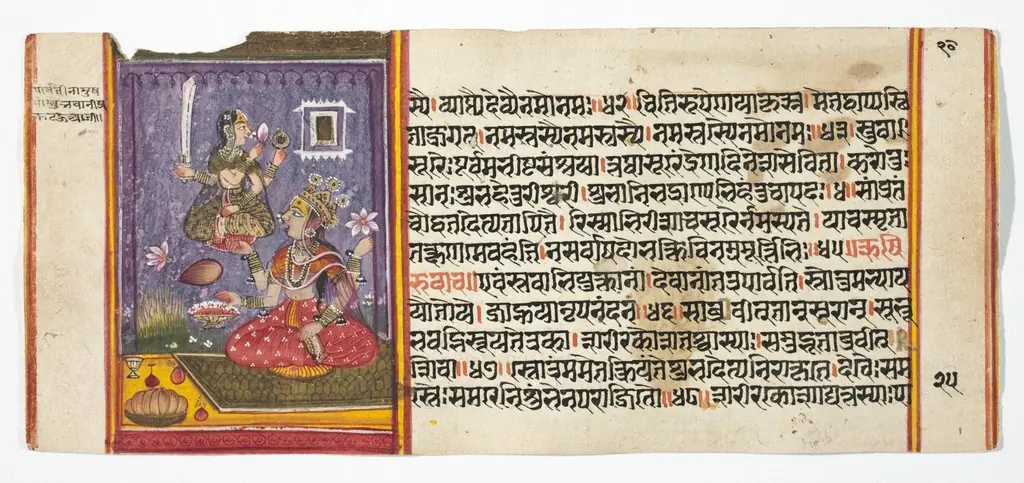
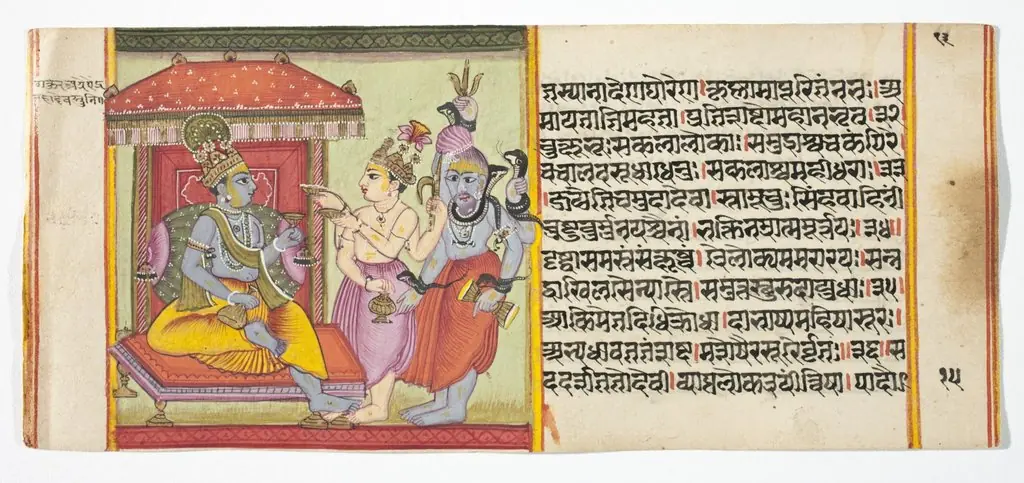
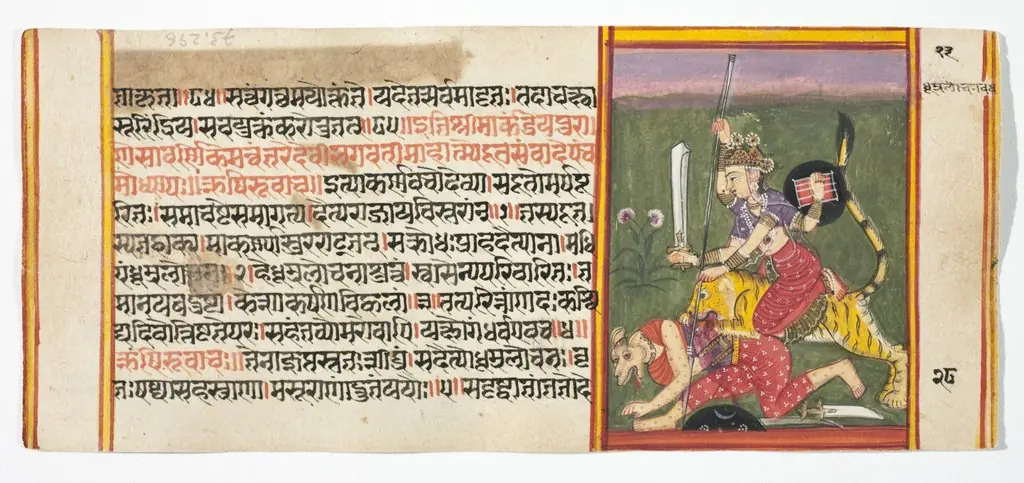
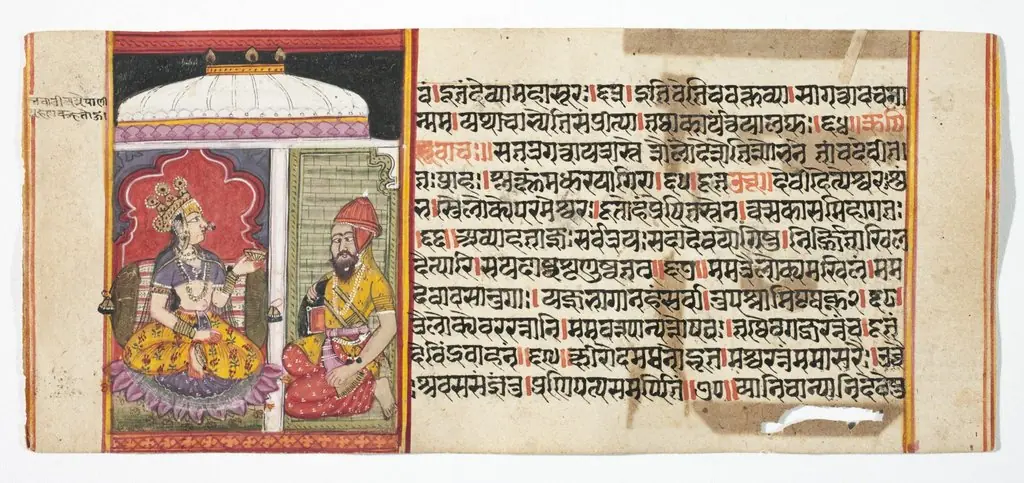
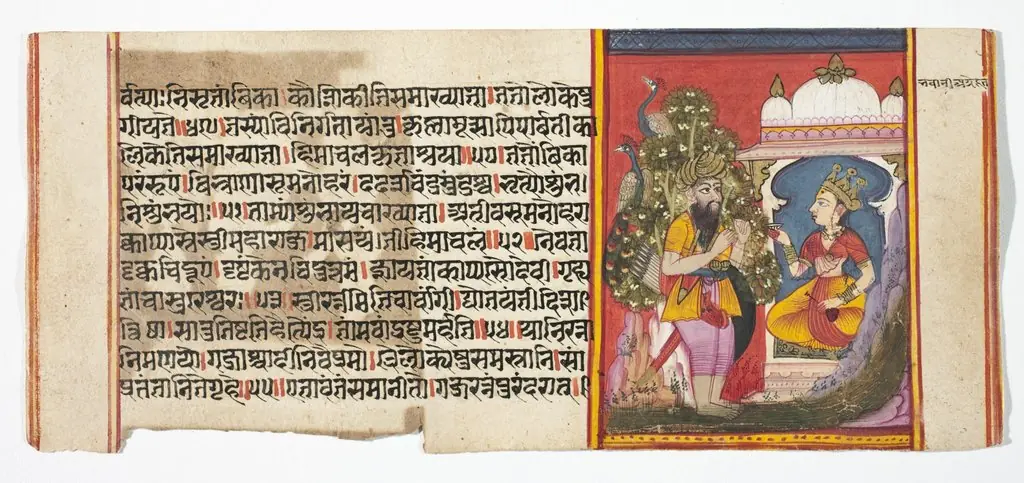
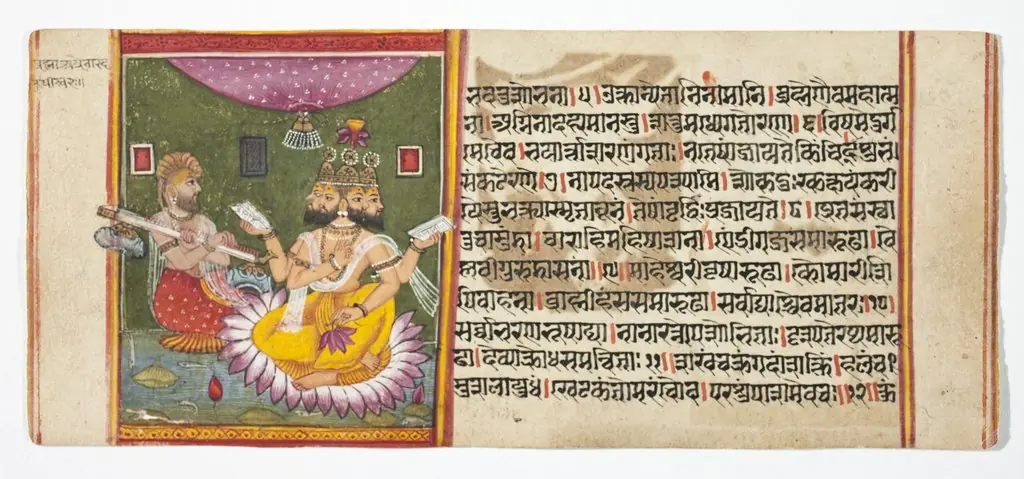
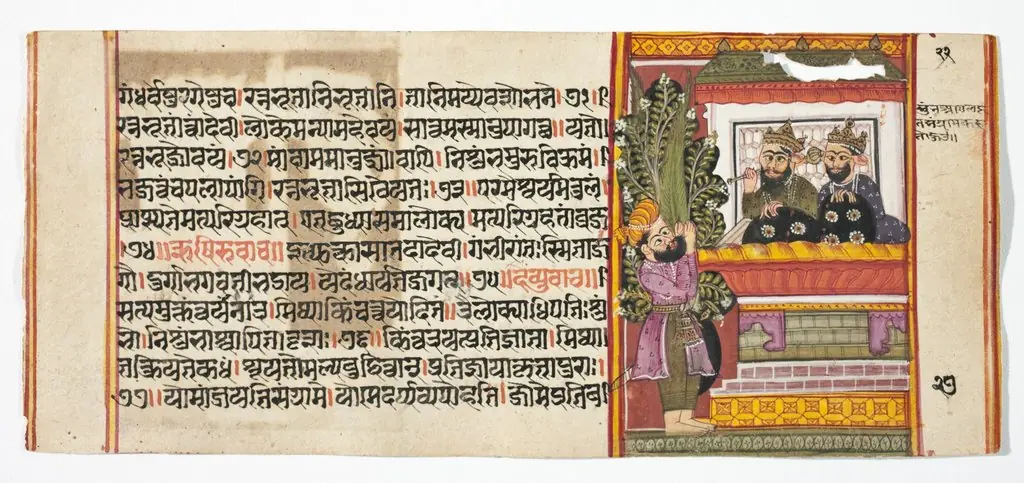
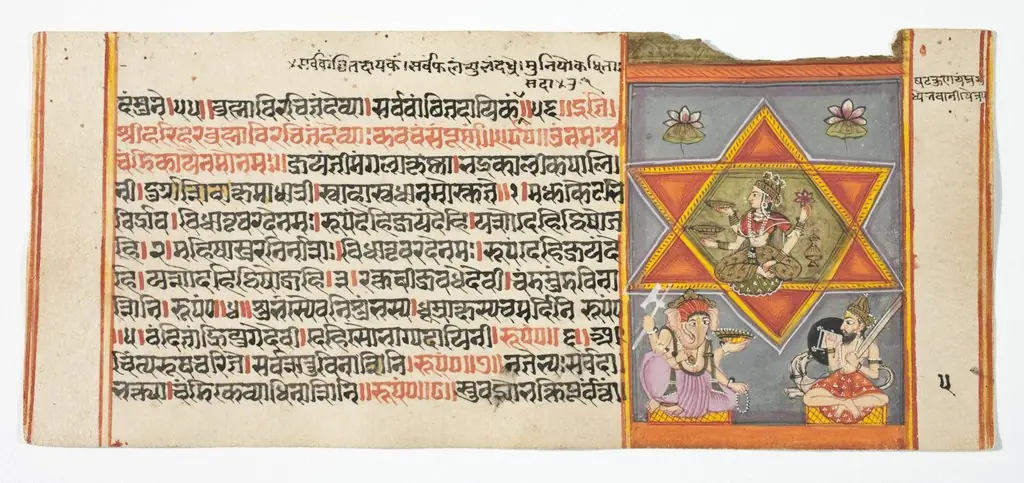
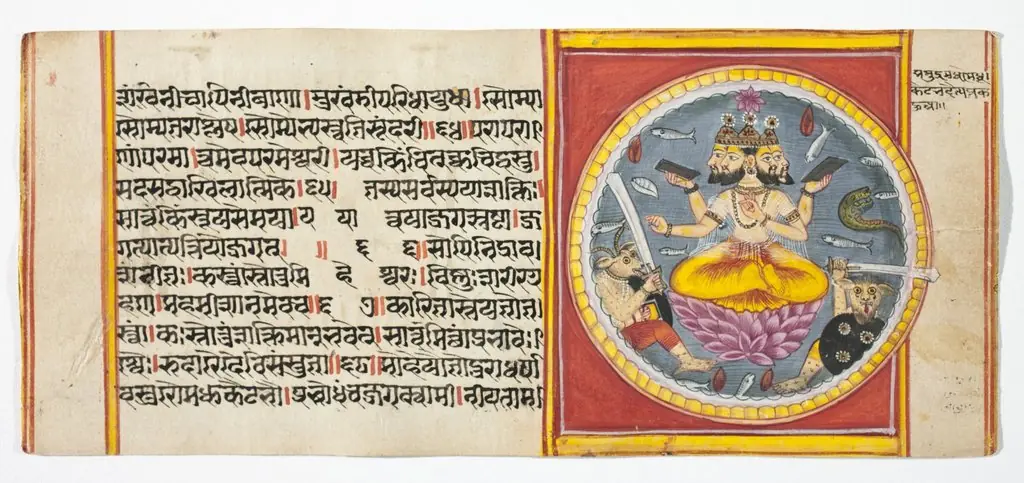
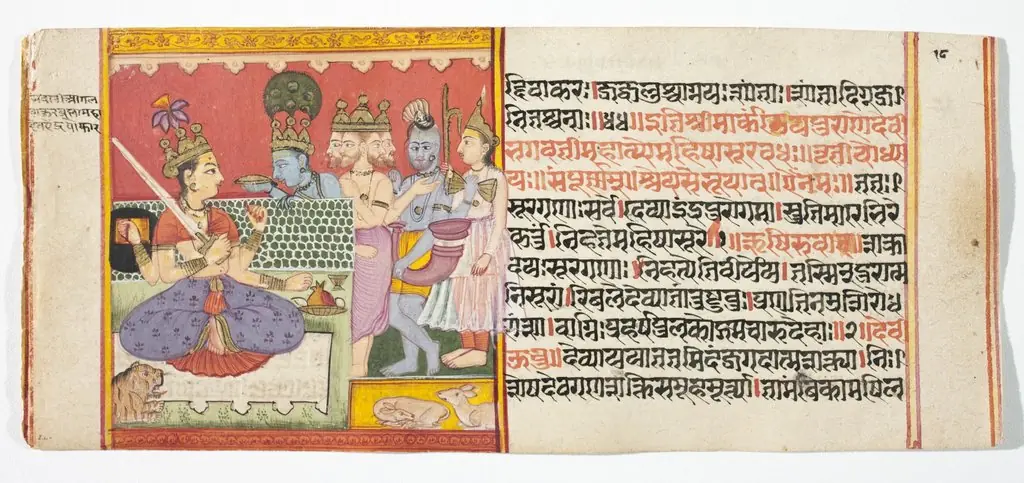
This painting depicts a scene from the legend of Durga, rendered in a vibrant, detailed style typical of Indian miniature traditions.
This painting depicts a scene from the legend of Durga, rendered in a vibrant, detailed style typical of Indian miniature traditions. The central figure is adorned with elaborate jewelry and wears a yellow skirt, holding a bird in her right hand. The background features bold washes of red, green, and blue, complemented by stylized floral motifs. A dense column of text in an Indic script appears along the left edge, suggesting a narrative inscription.
Subject & Meaning
The figure represents Durga, a Hindu goddess associated with power and protection. The bird she holds may symbolize peace or divine messenger, while her smiling expression conveys benevolence. The surrounding flora and rich ornamentation reflect her cosmic authority and connection to nature. The accompanying text likely recounts a specific episode from her mythological victories over demons, reinforcing her role as a guardian of dharma.
Technique & Style
The work employs fine brushwork and layered pigments to achieve vivid color saturation and intricate detail. Gold and red accents highlight jewelry and decorative elements, while the background’s flat, non-perspectival space aligns with traditional Indian painting conventions. The script is rendered in black ink with red highlights, indicating careful calligraphic execution, possibly by a separate scribe.
History & Provenance
Though specific origins are unrecorded, the style and script suggest a late 18th- to early 19th-century origin from North India, possibly from a Pahari or Rajasthani court workshop. Such paintings were often commissioned for devotional use or as illustrated manuscripts. The Detroit Institute of Arts holds similar works, indicating possible acquisition through early 20th-century collections of South Asian art.
Context
This painting belongs to a broader tradition of illustrated religious narratives in South Asia, where visual art and textual storytelling were closely intertwined. Devotional imagery like this was used in temples, royal courts, and private worship, serving both aesthetic and pedagogical purposes. The fusion of myth, ornament, and script reflects a cultural emphasis on the sacredness of form and language.
Legacy
Works of this type continue to inform contemporary understandings of Indian visual culture and religious iconography. They are studied for their artistic precision and as records of regional stylistic evolution. Museums preserve them not only as aesthetic objects but as cultural artifacts that bridge textual tradition and visual representation in pre-colonial India.
Artist & collection

 Domestic Scene
 Giacomo and Cardinal Marco, investing Andrea, Abbot of San Zeno, with his Benefice
 The Nymph of Fontainebleau
 Portrait of a Woman
 Madonna and Child with Saints in the Enclosed Garden
 Venus and Minerva
 Family Group of Four on Sofa
 Wall painting from Room H of the Villa of P. Fannius Synistor at Boscoreale