Artwork
Apotheosis of Saint Catherine
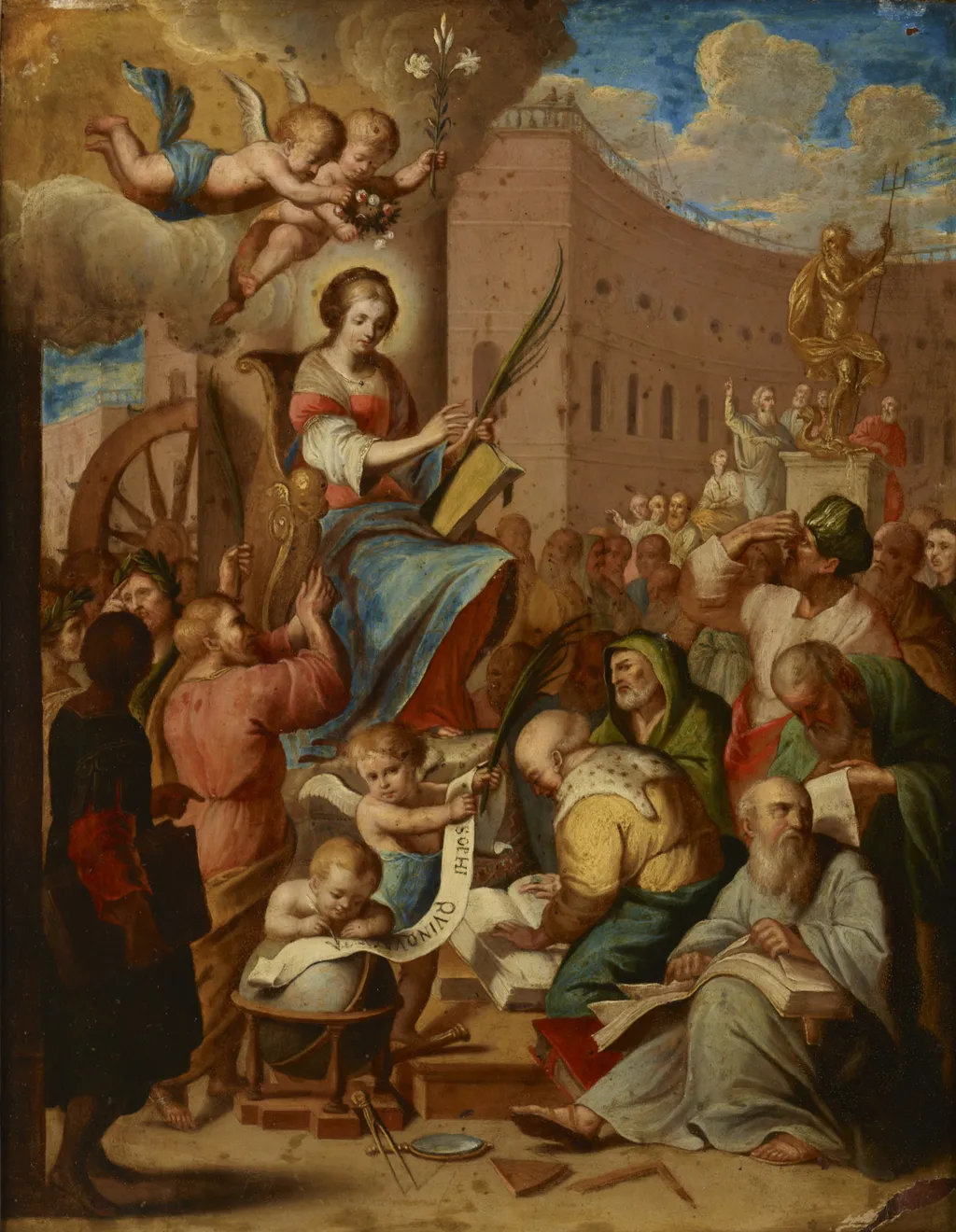
Apotheosis of Saint Catherine is an unspecified painting by the Early Baroque Italian artist Unknown. It dates from 1650 and is held in the collection of the National Museum in Kraków. This large-scale painting depicts the heavenly elevation of Saint Catherine of Alexandria, rendered in vivid color and intricate detail.
About this work
Overview
This large-scale painting depicts the heavenly elevation of Saint Catherine of Alexandria, rendered in vivid color and intricate detail. Set against a luminous sky, the saint ascends among angels and earthly observers, embodying divine favor. The composition balances celestial grandeur with grounded human figures, creating a dynamic interplay between the sacred and the mortal.
Subject & Meaning
Saint Catherine is shown in glory, holding a palm branch symbolizing martyrdom and a book representing her scholarly wisdom. The halo and cloud signify her sanctity and ascension. Below, two figures in rich robes gaze upward, likely representing patrons or devotees. The trident-bearing statue alludes to Neptune or a pagan deity, contrasting her Christian triumph over worldly powers.
Technique & Style
The work employs rich pigments and fine brushwork to render textures of fabric, skin, and cloud. Figures are arranged in a diagonal flow, guiding the eye upward toward the saint. Drapery moves with energy, and the sky is layered with translucent hues, enhancing the illusion of divine light. The detailed foreground and atmospheric background reflect late Renaissance Mannerist tendencies.
History & Provenance
The painting resides in the National Museum in Kraków, where it has been documented since at least the 19th century. Its origin is likely tied to a Polish or Central European religious commission, possibly for a convent or chapel dedicated to Saint Catherine. No definitive artist attribution exists, though stylistic traits suggest a regional workshop active in the late 1500s or early 1600s.
Context
Created during a period when Catholic devotional imagery was emphasized following the Council of Trent, the painting aligns with Counter-Reformation ideals. Saint Catherine, revered for her intellect and martyrdom, served as a model of piety for educated women. The inclusion of classical elements like the trident statue reflects the era’s blending of Christian and classical symbolism.
Legacy
The painting remains a representative example of regional religious art in Poland, illustrating how local artists adapted broader European iconographic traditions. While not widely known outside institutional circles, it contributes to the understanding of how saintly veneration was visually constructed in early modern Central Europe, preserving both theological and cultural narratives.
Artist & collection

 Domestic Scene
 Giacomo and Cardinal Marco, investing Andrea, Abbot of San Zeno, with his Benefice
 The Nymph of Fontainebleau
 Portrait of a Woman
 Madonna and Child with Saints in the Enclosed Garden
 Venus and Minerva
 Family Group of Four on Sofa
 Wall painting from Room H of the Villa of P. Fannius Synistor at Boscoreale
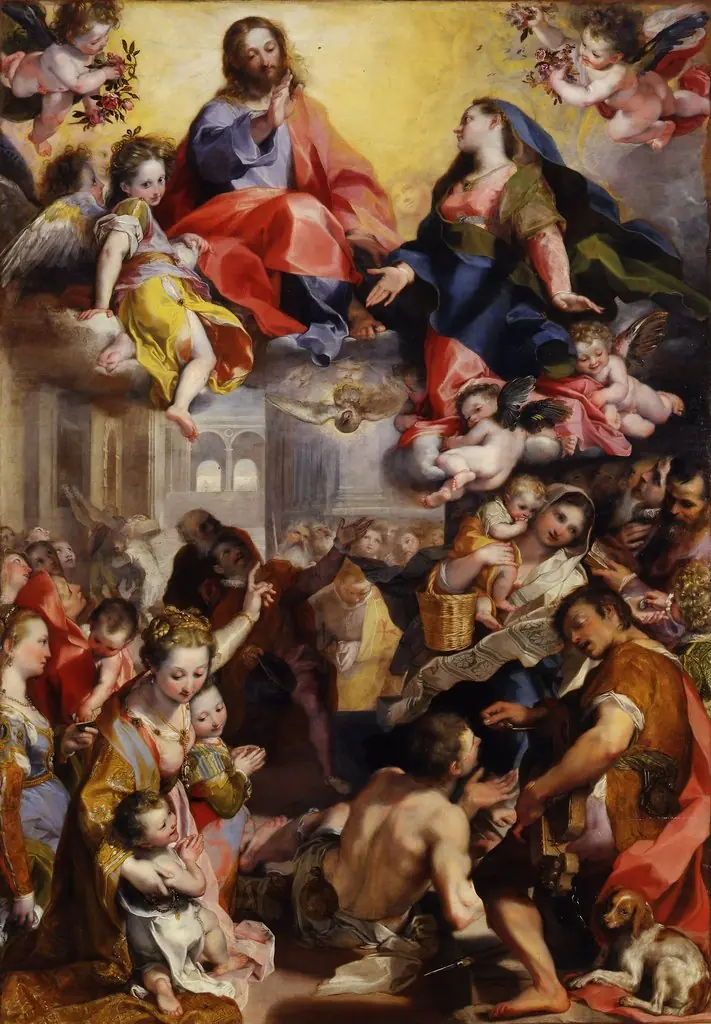 Madonna of the people
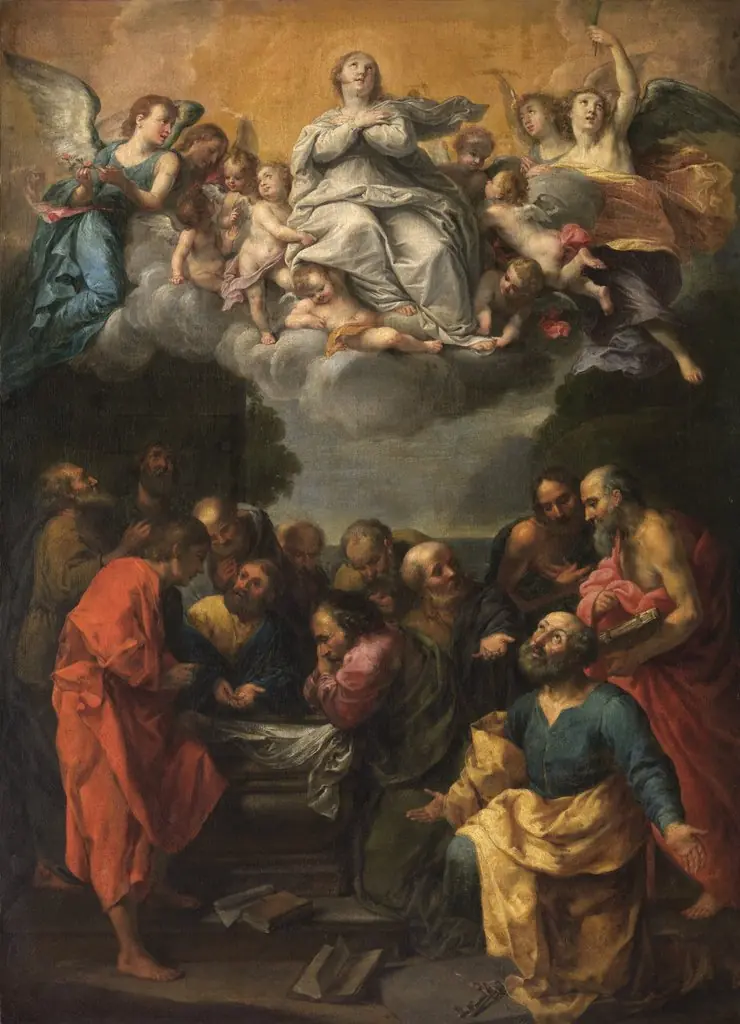 The Assumption of Mary
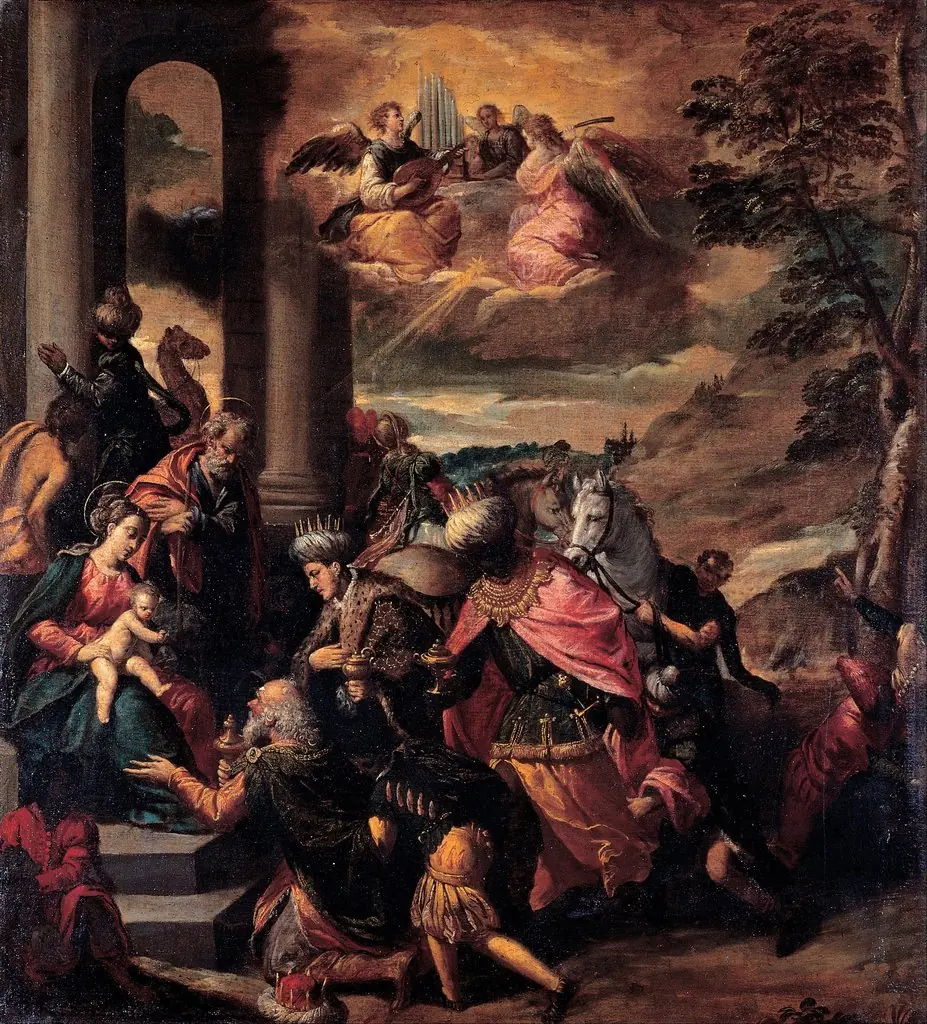 Adoration of the Magi
 Marter der Hl. Dorothea
 Alms donation from St. Elizabeth of Portugal
 The Adoration of the Magi
 Then give to Caesar what is Caesar's
 Presentation Sketch for "The Holy Family with Saints Anne, Joachim, and John the Baptist" (for Santa Maria in Via Lata, Roma)
 Adoración de los Reyes Magos
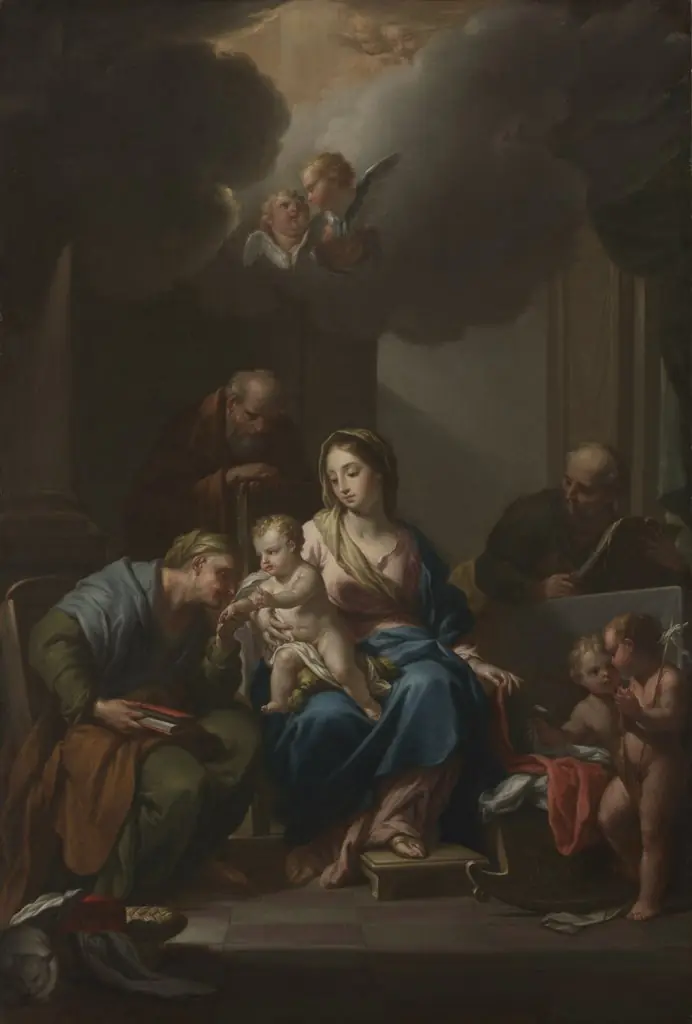 Presentation Sketch for "The Holy Family with Saints Anne, Joachim, and John the Baptist" (for Santa Maria in Via Lata, Roma)
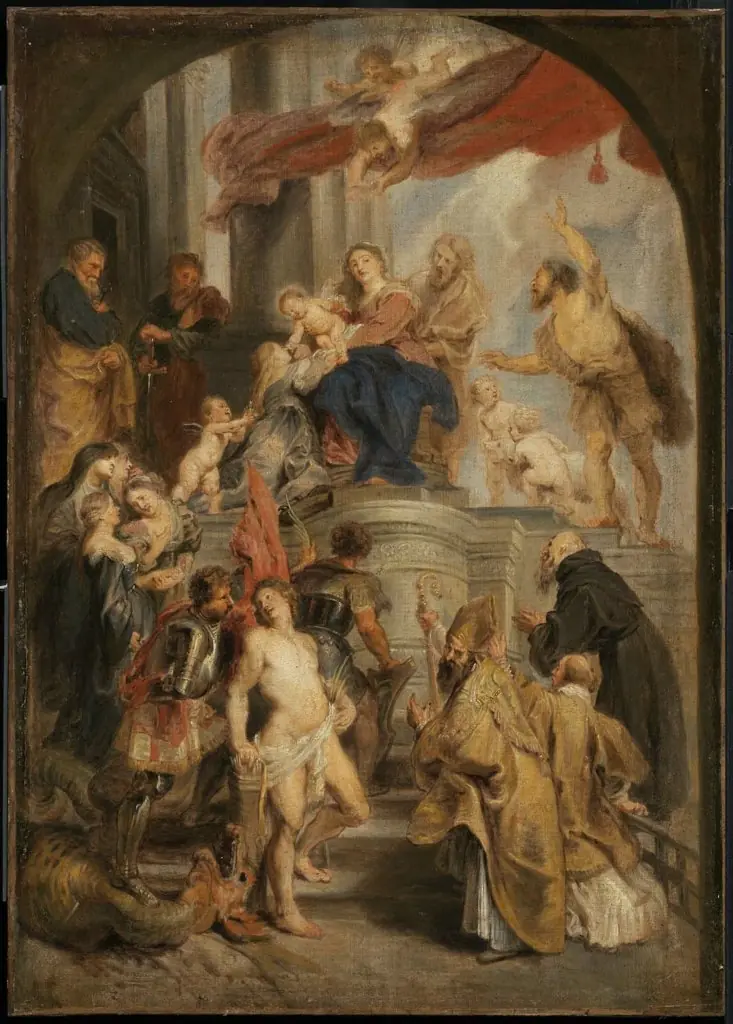 Virgin and Child Adored by Saints
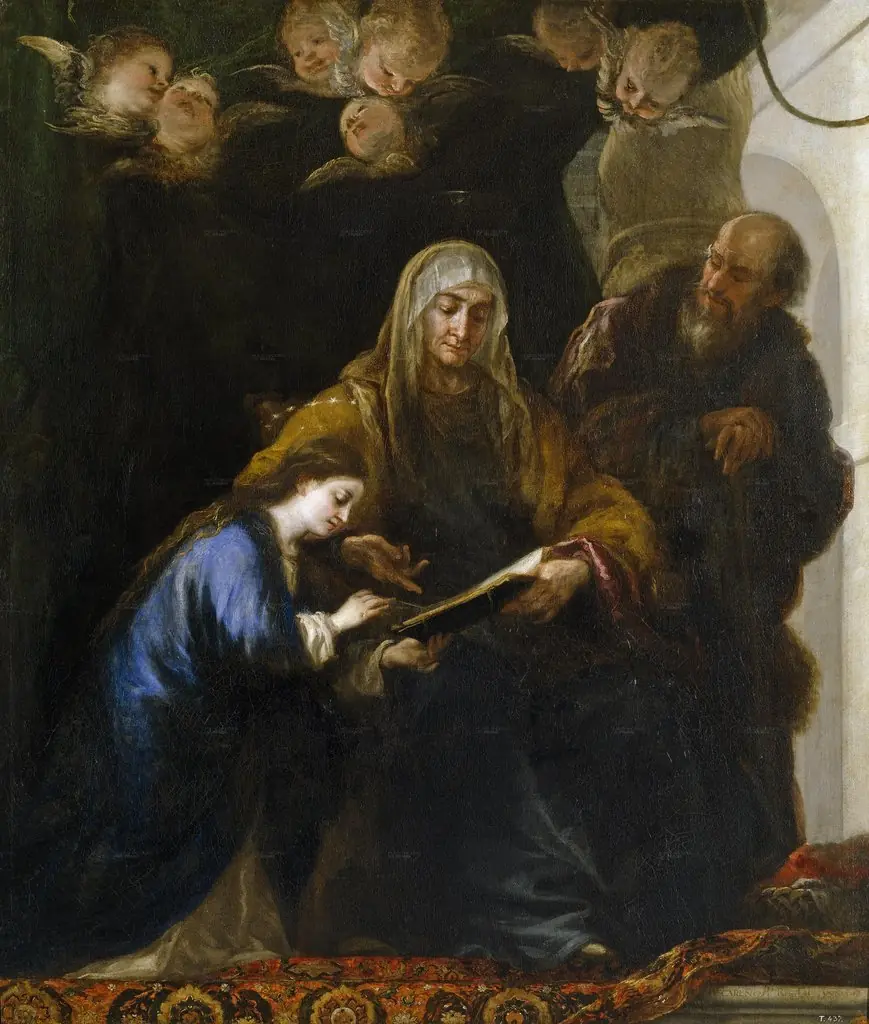 Saint Anne teaching the Virgin to read