Artwork
Interior of St. John’s church in Warsaw
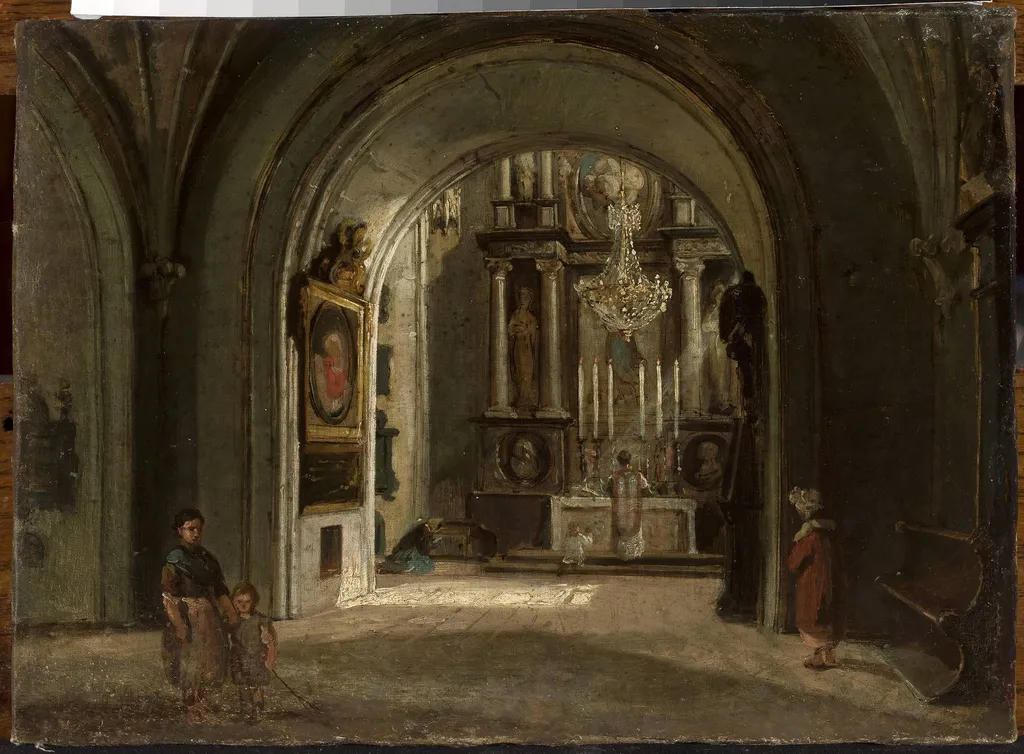
Interior of St. John’s church in Warsaw is an oil painting by Unknown. It dates from 1850 and is held in the collection of the National Museum in Warsaw. This oil painting captures the interior of St.
About this work
Overview
The composition emphasizes the architectural grandeur of the nave, with soaring arches and vertical columns receding into the distance.
This oil painting captures the interior of St. John’s Church in Warsaw, rendered with careful attention to spatial depth and atmospheric lighting. The composition emphasizes the architectural grandeur of the nave, with soaring arches and vertical columns receding into the distance. A central altar anchors the background, flanked by statues and a suspended chandelier, while a few figures move subtly through the space, grounding the scene in quiet daily life.
Subject & Meaning
The painting presents a devotional space not as a ceremonial stage but as a lived environment. Figures are engaged in ordinary actions—standing, conversing, observing—suggesting the church as a place of both worship and community. The absence of dramatic religious narrative shifts focus to the quiet dignity of routine presence within sacred architecture, reflecting a contemplative, rather than didactic, approach to faith.
Technique & Style
The artist employs chiaroscuro to model form and depth, with light filtering through high windows casting soft gradients across stone surfaces and wooden pews. Darker tones dominate the palette, yet the interplay of ambient illumination and shadow creates a sense of warmth and volume. Brushwork is restrained, favoring smooth transitions over visible texture, enhancing the illusion of real space and natural light.
History & Provenance
Painted in the early 19th century, the work likely originated from a Polish artist familiar with Warsaw’s ecclesiastical architecture following the city’s reconstruction after periods of conflict. It may have been commissioned by a local patron or created as a study for architectural documentation. The painting remained in private or institutional collections in Poland, with no record of public exhibition until the late 1800s.
Context
During the early 1800s, Warsaw’s churches were central to civic identity amid political upheaval and foreign occupation. Depictions of interiors like this one reflected a growing interest in national heritage and the preservation of cultural landmarks. Such works often served as visual records of sacred spaces that had endured through war and change, reinforcing continuity through art.
Legacy
The painting contributes to a modest but significant tradition of Polish interior church views, distinguishing itself through its understated realism and emotional restraint. It influenced later artists who sought to portray sacred spaces without idealization, prioritizing authenticity over spectacle. Today, it remains a quiet testament to the role of architecture in shaping spiritual and communal experience.
Artist & collection

 Domestic Scene
 Giacomo and Cardinal Marco, investing Andrea, Abbot of San Zeno, with his Benefice
 The Nymph of Fontainebleau
 Portrait of a Woman
 Madonna and Child with Saints in the Enclosed Garden
 Venus and Minerva
 Family Group of Four on Sofa
 Wall painting from Room H of the Villa of P. Fannius Synistor at Boscoreale
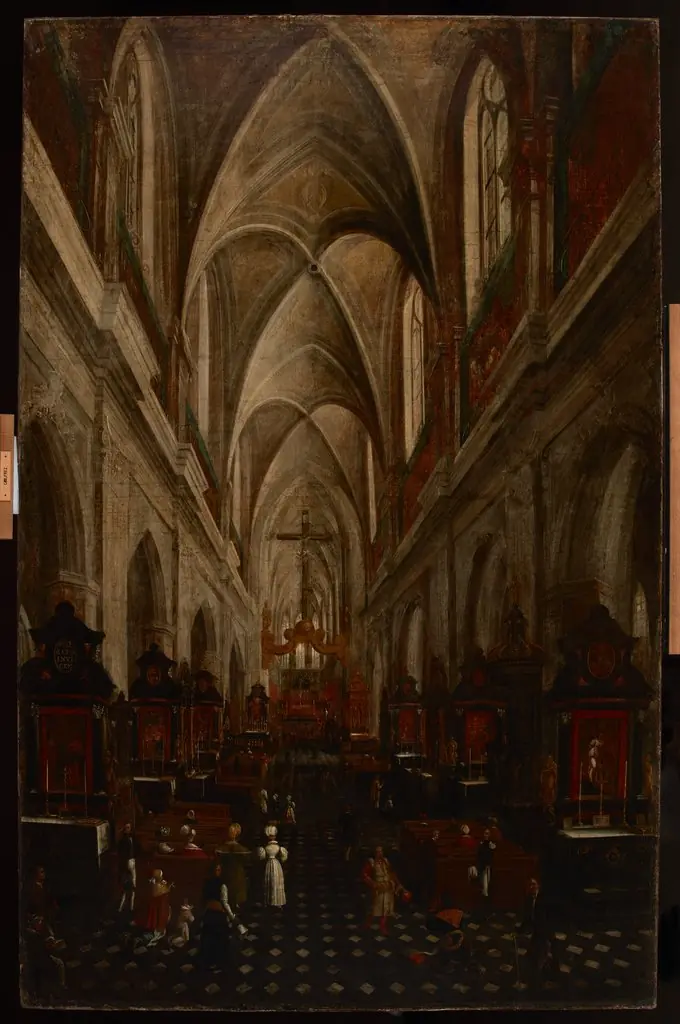 Interior of St Mary's Church in Krakow
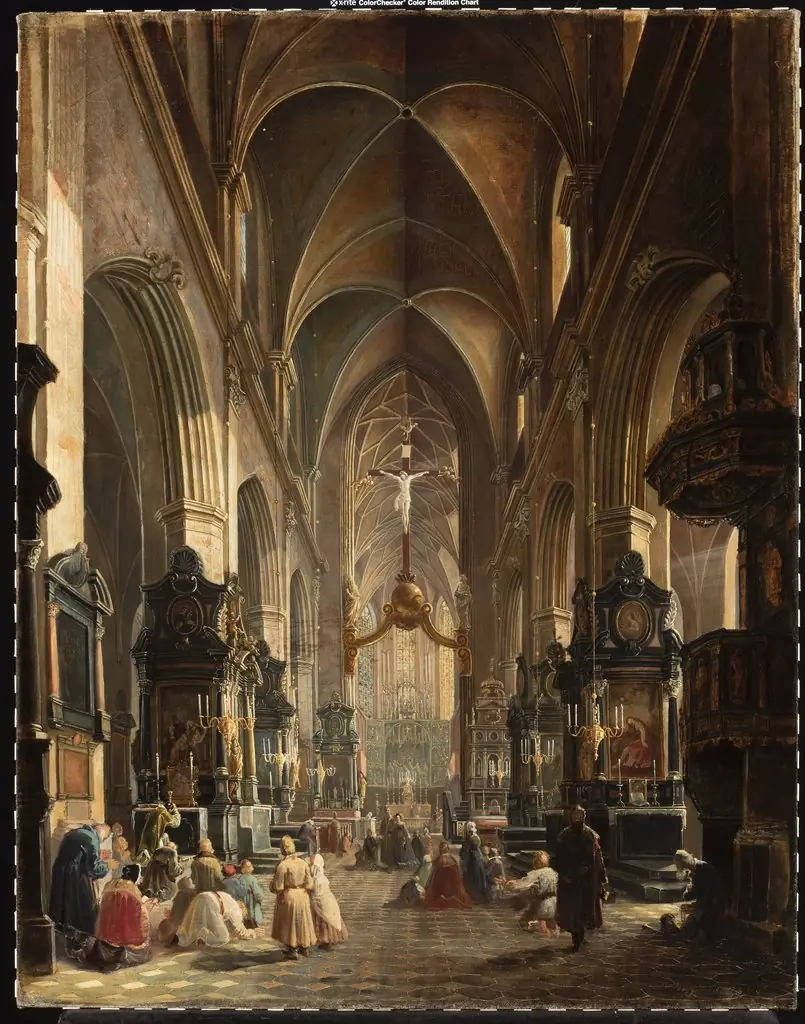 Interior of the Church of Virgin Mary in Kraków
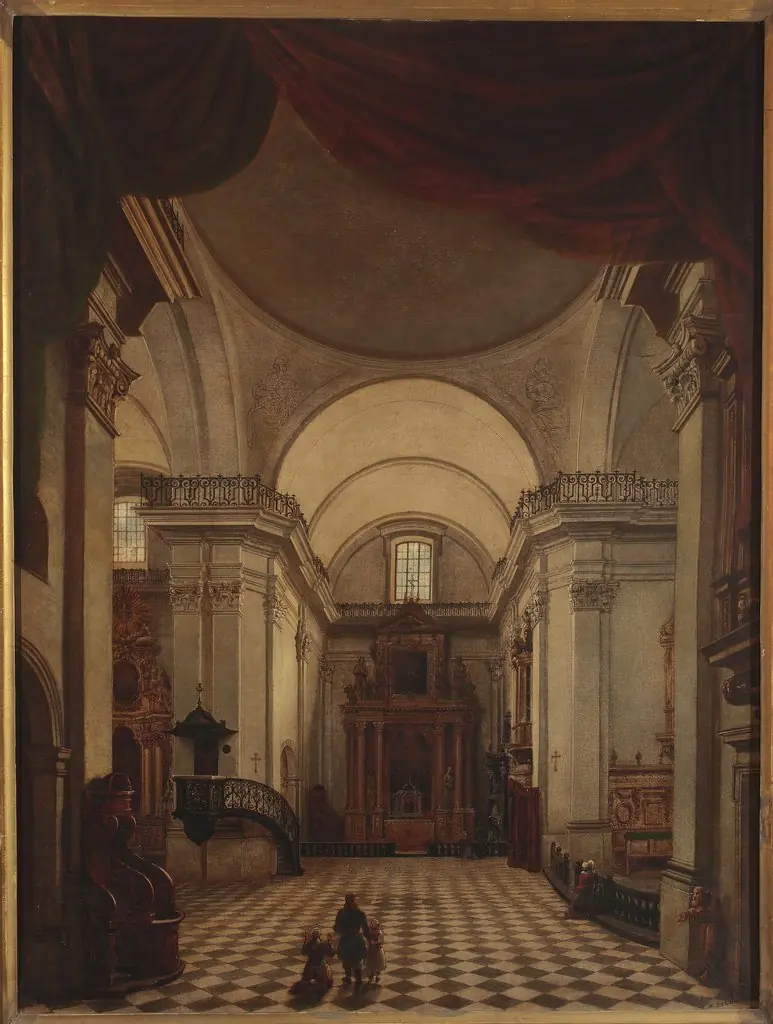 Interior of the Holy Cross Church in Warsaw
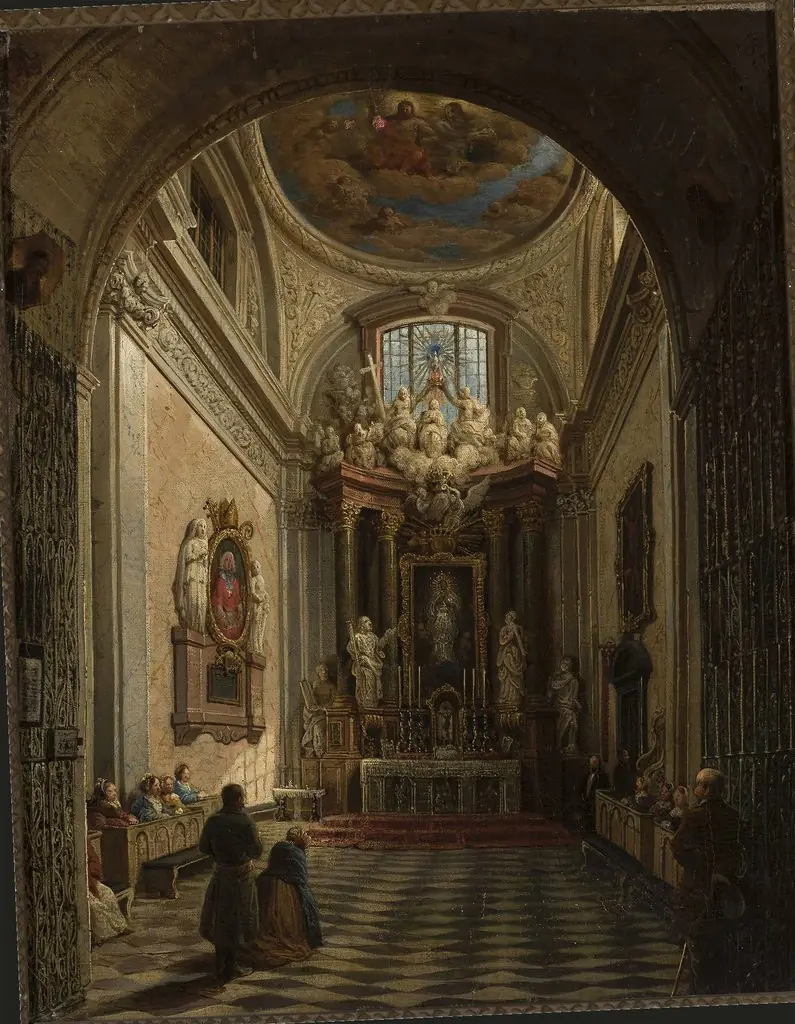 Literary Chapel in St. John’s Cathedral in Warsaw
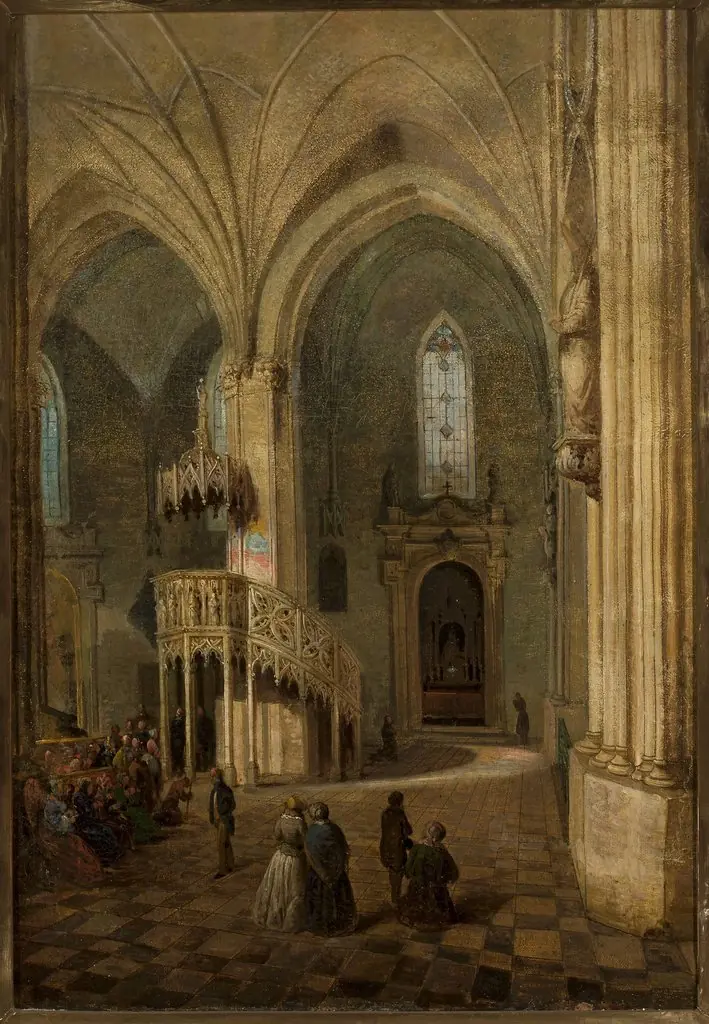 Interior of St. John’s Cathedral in Warsaw
 Interior of a Church
 Interior of a Church
 An Interior of a Church
 Interior of Saint Mary’s Basilica in Kraków