Artwork
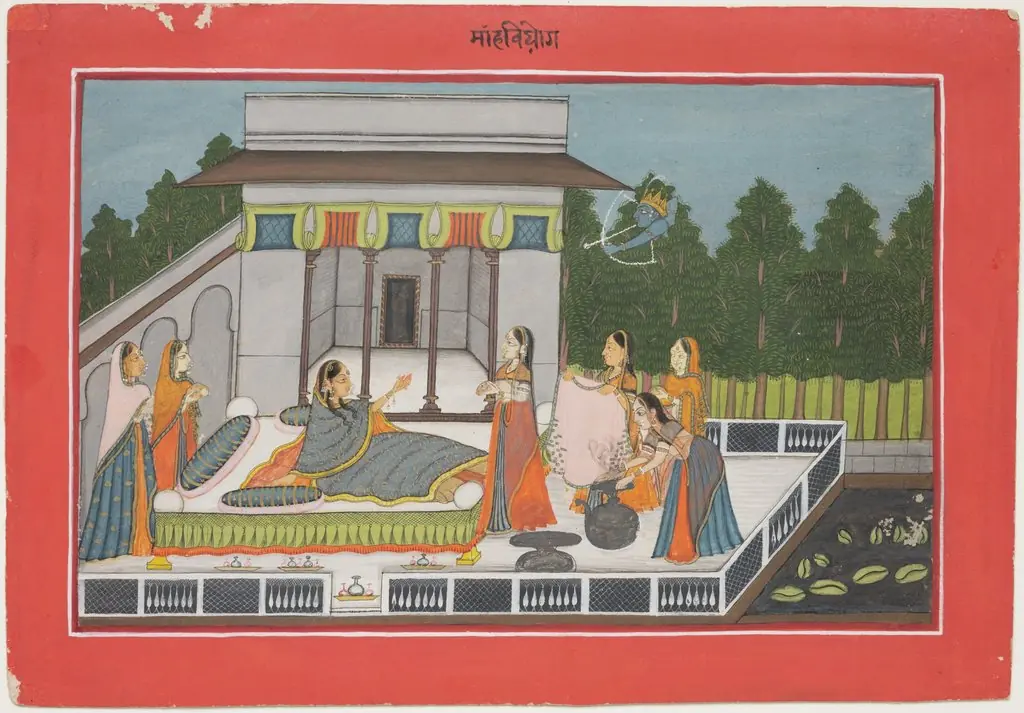
The Month of Ashvin (September-October), from a manuscript of the Barahmasa ("Twelve Months")
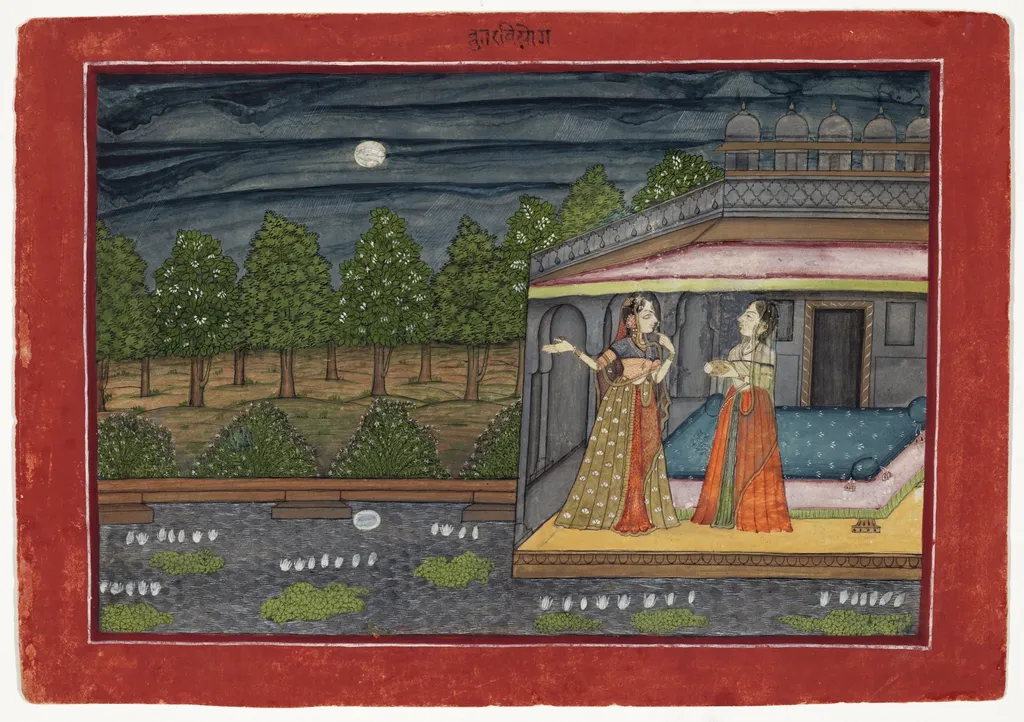
The Month of Ashvin (September-October), from a manuscript of the Barahmasa ("Twelve Months") is an unspecified painting by Unknown. It is held in the collection of the Detroit Institute of Arts. The work depicts a tranquil evening in the month of Ashvin, part of a Barahmasa manuscript illustrating the twelve months.
About this work
Overview
The work depicts a tranquil evening in the month of Ashvin, part of a Barahmasa manuscript illustrating the twelve months. Two women in richly patterned garments stand on a balcony that opens onto a garden with trees, a pond, and floating white blossoms. A full moon pierces a dark sky, casting gentle light over the scene and emphasizing the calm atmosphere.
Subject & Meaning
The figures appear engaged in quiet conversation, a motif often used to convey seasonal rituals or domestic life during Ashvin, a month associated with harvest and festivals in the Indian calendar. The moonlit garden setting underscores themes of renewal and the passage of time, aligning the visual narrative with the poetic verses traditionally accompanying Barahmasa illustrations.
Technique & Style
Executed in miniature painting tradition, the piece employs fine brushwork to render intricate textile patterns and delicate foliage.
Executed in miniature painting tradition, the piece employs fine brushwork to render intricate textile patterns and delicate foliage. A limited yet vibrant palette highlights the contrast between the darkened sky and the luminous moon, while subtle shading gives depth to the pond and surrounding vegetation. The composition balances detailed foreground figures with an expansive, atmospheric background.
Context
Barahmasa cycles were popular in medieval Indian manuscript culture, pairing verses for each month with corresponding visual scenes. This particular illustration belongs to the Ashvin segment, reflecting seasonal changes and associated cultural activities. Such manuscripts were often produced for courtly or religious patrons, serving both educational and decorative purposes.
History & Provenance
The painting originates from a manuscript collection whose precise origin remains uncertain, though stylistic analysis places it within the late medieval period of northern India. The work has been preserved as part of a larger codex of Barahmasa illustrations, now housed in a museum collection dedicated to South Asian art, where it contributes to the study of regional manuscript illumination.
Artist & collection

 Domestic Scene
 Giacomo and Cardinal Marco, investing Andrea, Abbot of San Zeno, with his Benefice
 The Nymph of Fontainebleau
 Portrait of a Woman
 Madonna and Child with Saints in the Enclosed Garden
 Venus and Minerva
 Family Group of Four on Sofa
 Wall painting from Room H of the Villa of P. Fannius Synistor at Boscoreale
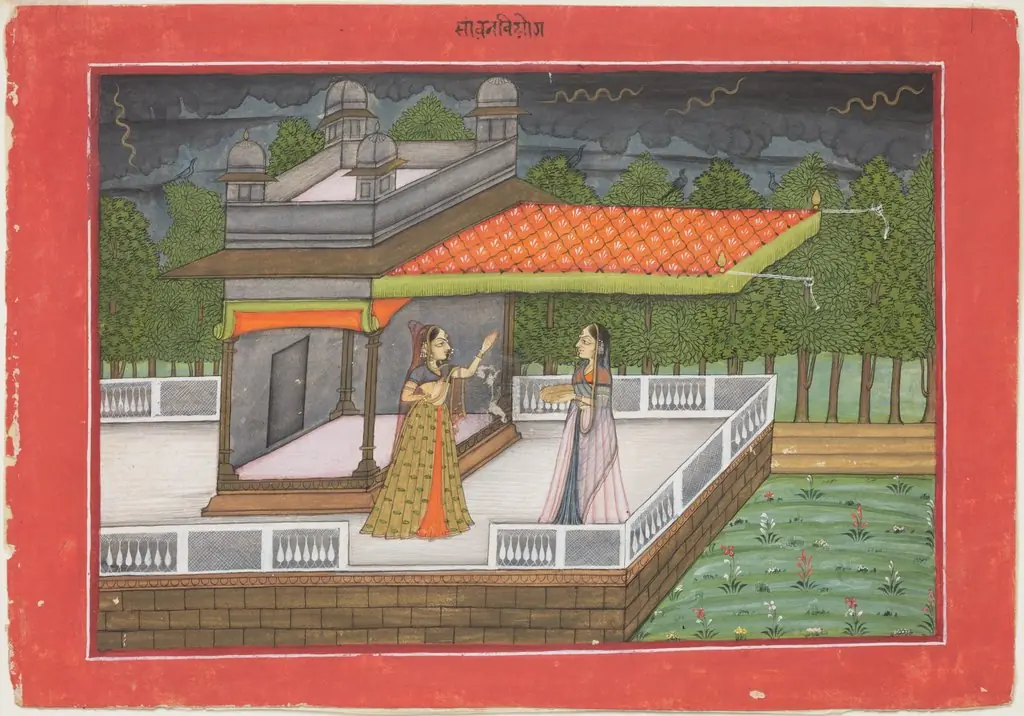 The Month of Shravana (July-August), from a manuscript of the Barahmasa ("Twelve Months")
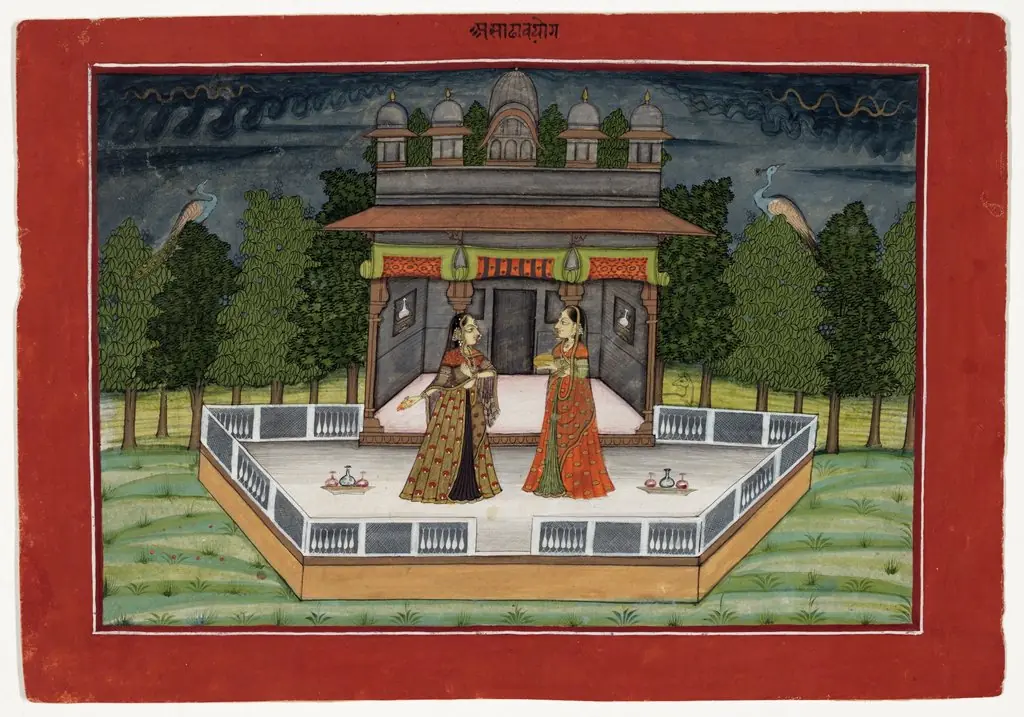 The Month of Asadha (June-July), from a manuscript of the Barahmasa ("Twelve Months")
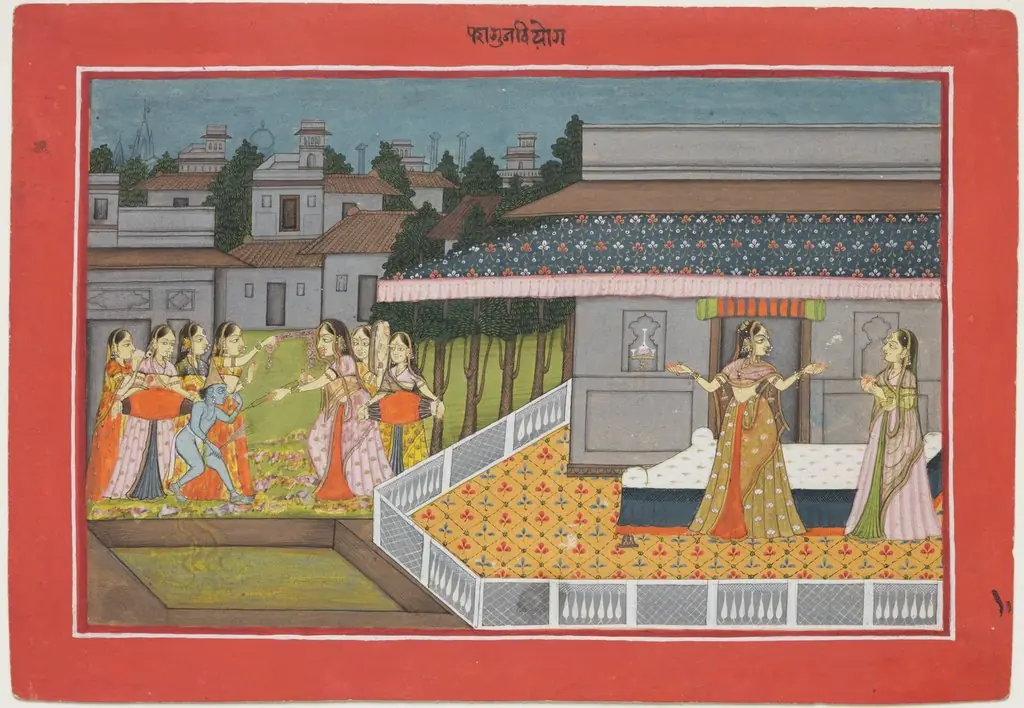 The Month of Phalguna (February-March), from a manuscript of the Barahmasa ("Twelve Months")
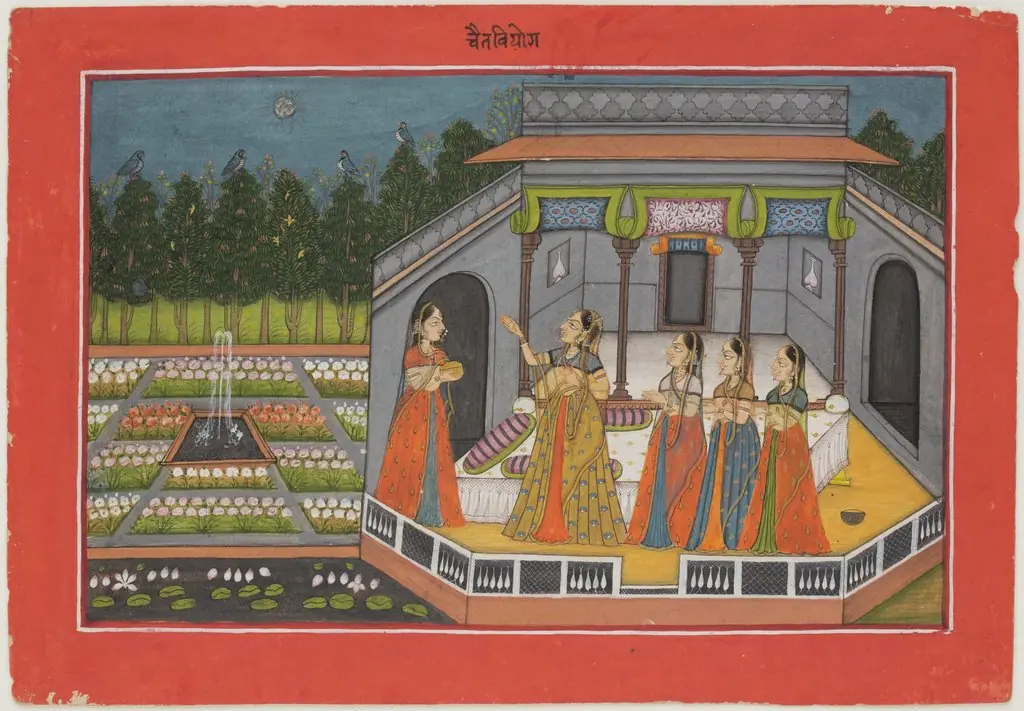 The Month of Chaitra (March-April), from a manuscript of the Barahmasa ("Twelve Months")
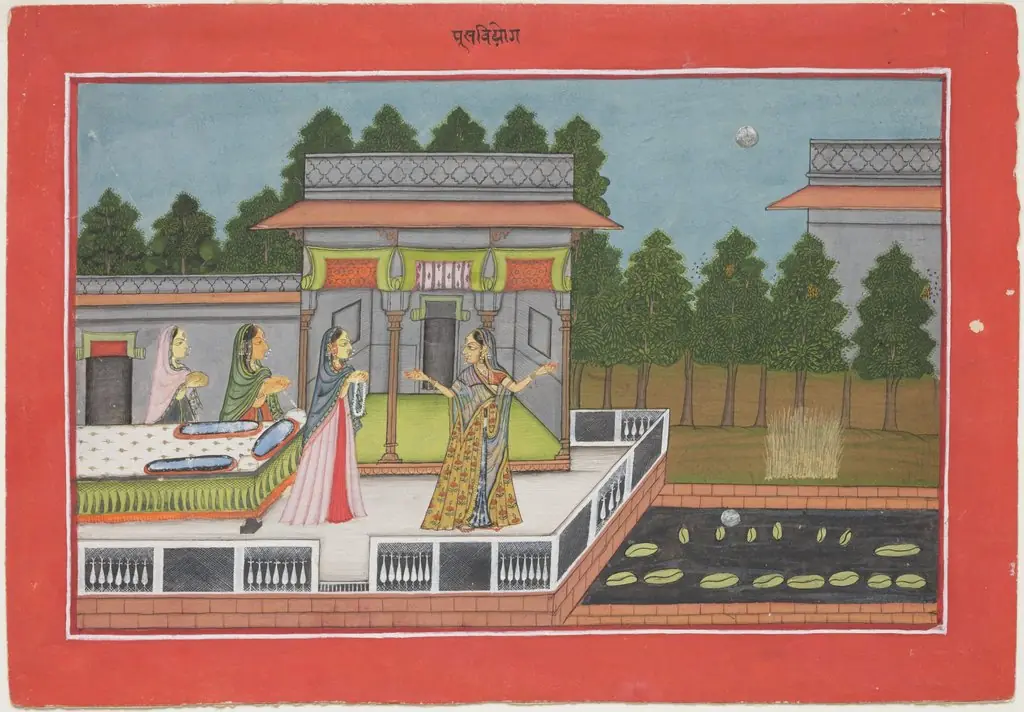 The Month of Pusa (December-January), from a manuscript of the Barahmasa ("Twelve Months")
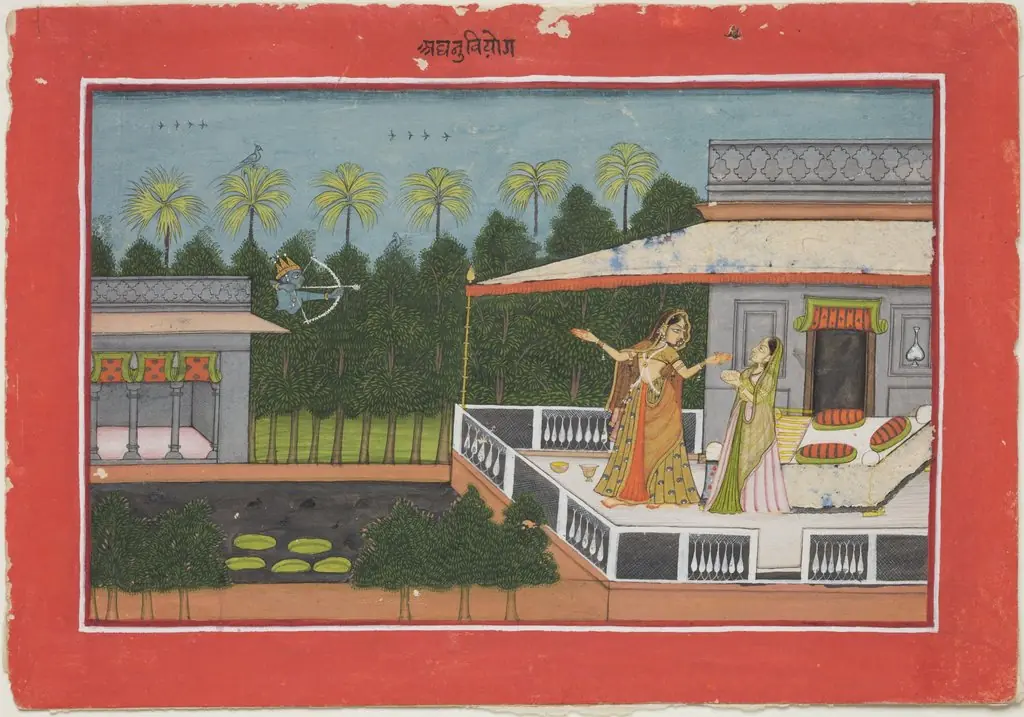 The Month of Aghan (November-December), from a manuscript of the Barahmasa ("Twelve Months")
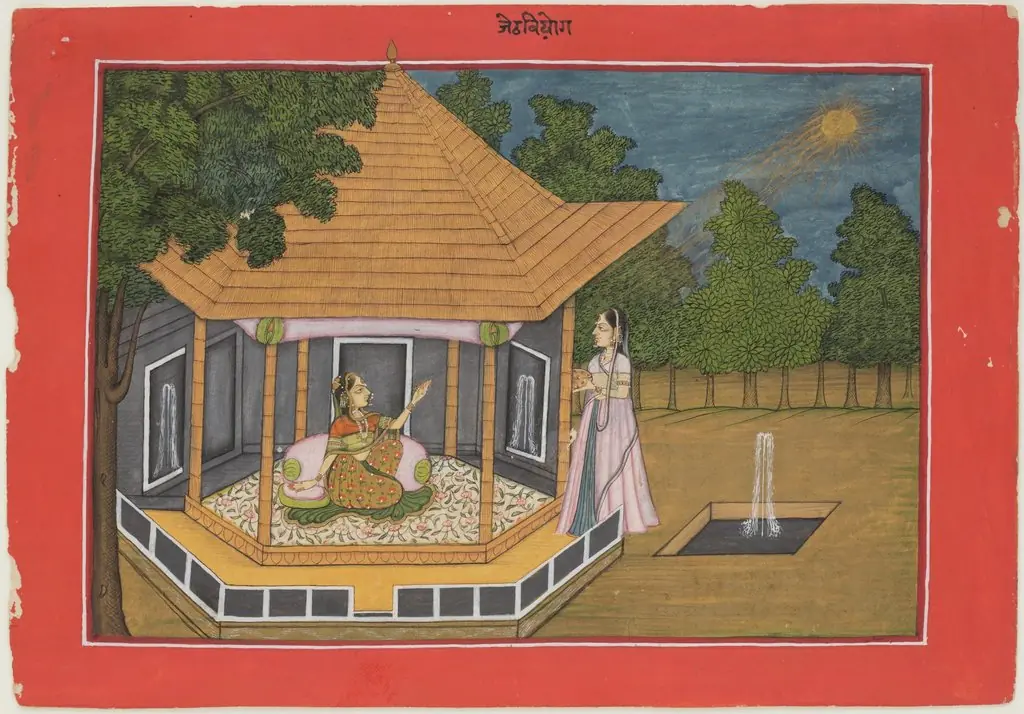 The Month of Jyeshtha (May-June), from a manuscript of the Barahmasa ("Twelve Months")
 The Month of Magha (January-February), from a manuscript of the Barahmasa ("Twelve Months")