Artwork
Versuchung des hl. Antonius (Kopie nach)
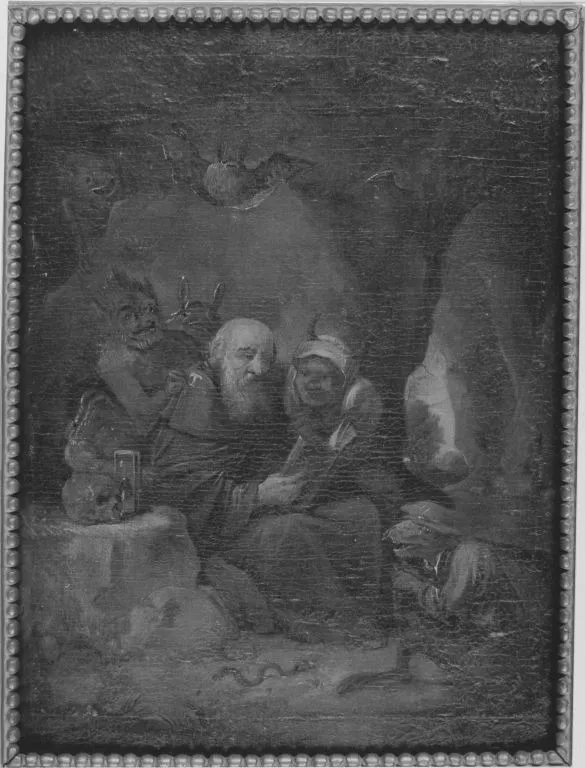
Versuchung des hl. Antonius (Kopie nach) is an unspecified painting by the Early Baroque Italian artist Unknown. It dates from 1615 and is held in the collection of the Bavarian State Painting Collections. The work, titled *Versuchung des hl.
About this work
Overview
The composition relies on stark contrasts that isolate each character against the shadowy background.
The work, titled *Versuchung des hl. Antonius* (Copy after), depicts a dimly lit interior populated by four unusual figures. A bearded man grips a glass, another leans forward with a grin, a partially concealed figure appears to play a small instrument, and a creature resembling a monkey or goblin crouches near a flickering light source. The composition relies on stark contrasts that isolate each character against the shadowy background.
Subject & Meaning
The scene references the medieval motif of Saint Anthony’s temptation, a narrative in which the hermit is beset by bizarre and demonic apparitions. The presence of grotesque beings and surreal objects suggests an allegorical warning against vice and illusion, inviting viewers to contemplate the boundary between the sacred and the profane.
Technique & Style
Executed in a chiaroscuro manner, the painting employs pronounced light‑dark juxtapositions to model forms and heighten drama. The limited palette and focused illumination draw attention to the figures’ expressions and gestures, while the overall atmosphere remains somber and theatrical.
History & Provenance
The piece is identified as a copy after an earlier composition, indicating that it was reproduced for study or devotional purposes. Details of its original creator, date, and ownership remain undocumented, and the work currently resides in a private collection.
Context
Depictions of Saint Anthony’s trials were popular in Northern European art from the 15th to 17th centuries, often serving as moral exempla. This rendition aligns with that tradition, employing fantastical imagery to convey spiritual struggle, a theme recurrent in both religious and secular visual culture of the period.
Artist & collection

 Domestic Scene
 Giacomo and Cardinal Marco, investing Andrea, Abbot of San Zeno, with his Benefice
 The Nymph of Fontainebleau
 Portrait of a Woman
 Madonna and Child with Saints in the Enclosed Garden
 Venus and Minerva
 Family Group of Four on Sofa
 Wall painting from Room H of the Villa of P. Fannius Synistor at Boscoreale
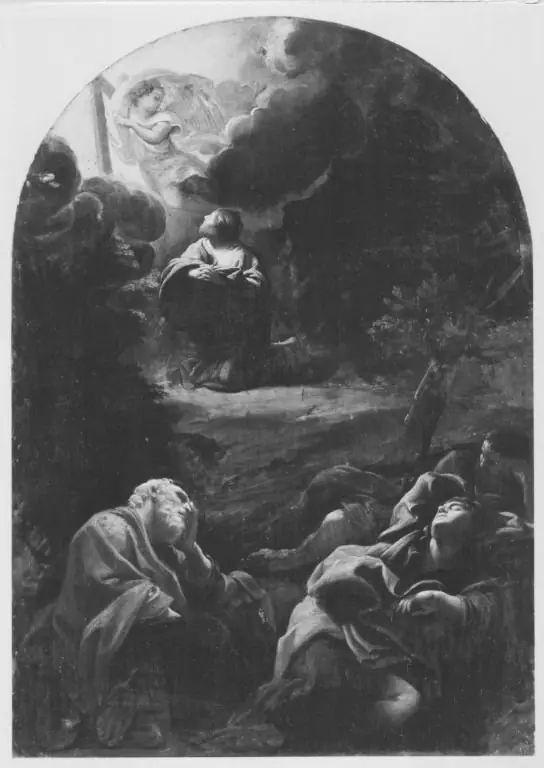 Christus am Ölberg
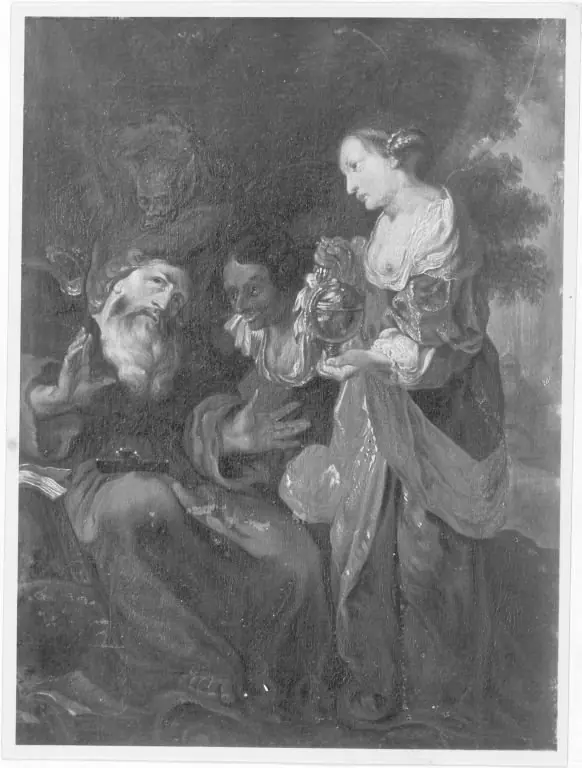 Versuchung des hl. Antonius (Werkstattkopie)
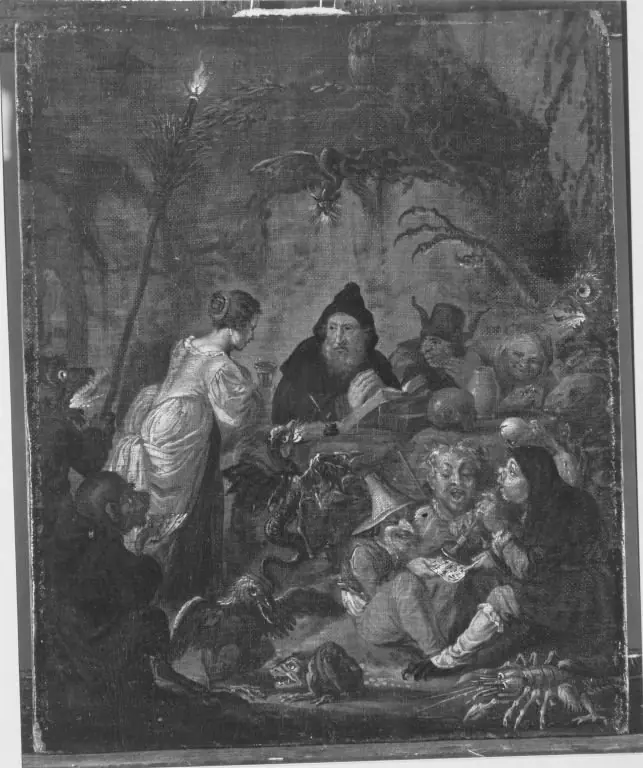 Temptation of St. Antony
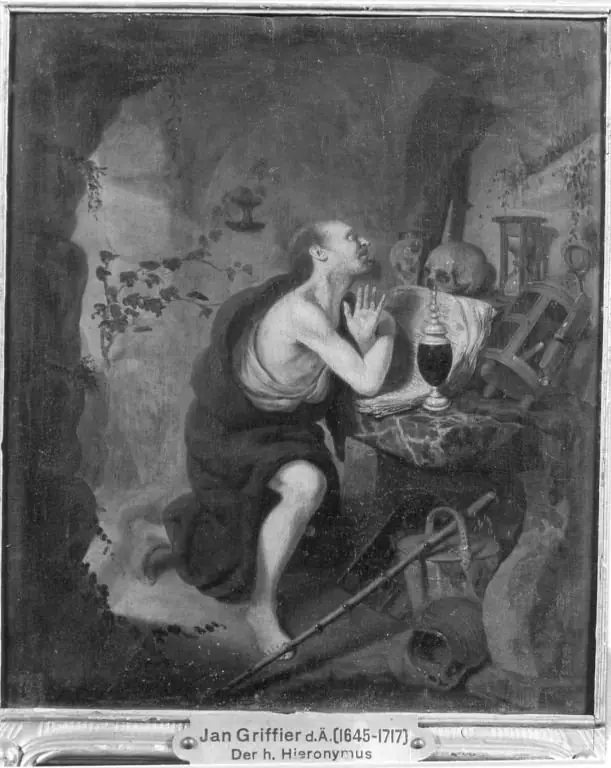 Saint Jerome
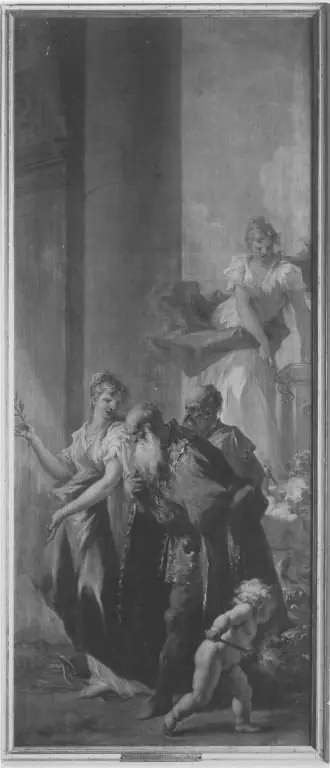 Allegorie der Befreiung vom Joch des Islam (Frieden und Glück unter Johann Wilhelm von der Pfalz)
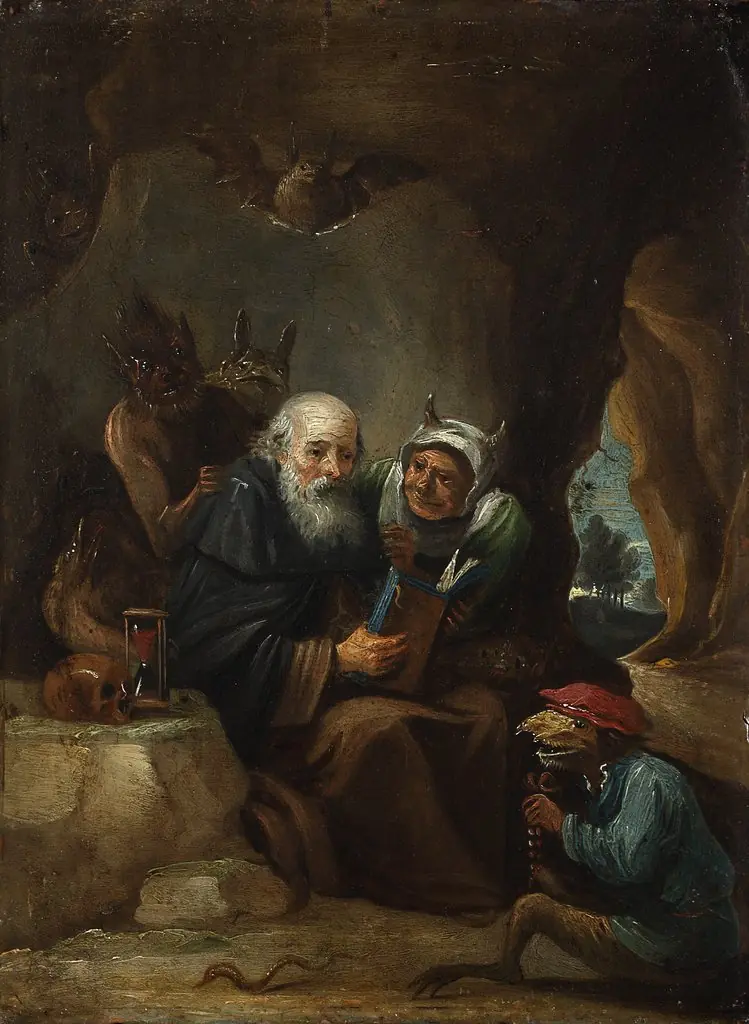 The Temptation of St. Antony
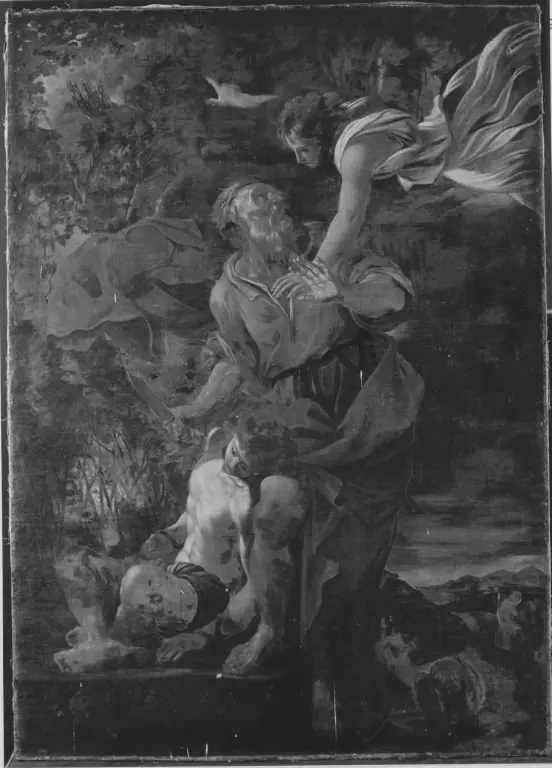 Abrahams Opfer (zugeschrieben)
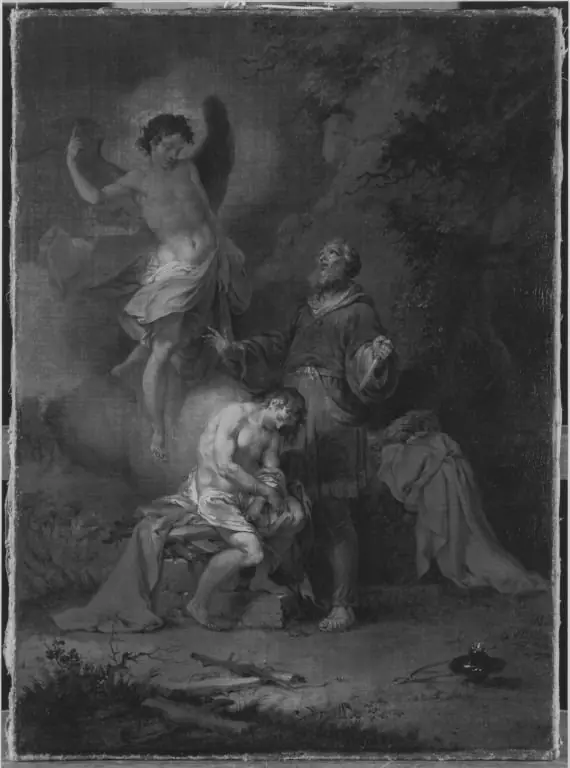 Abraham opfert Isaak
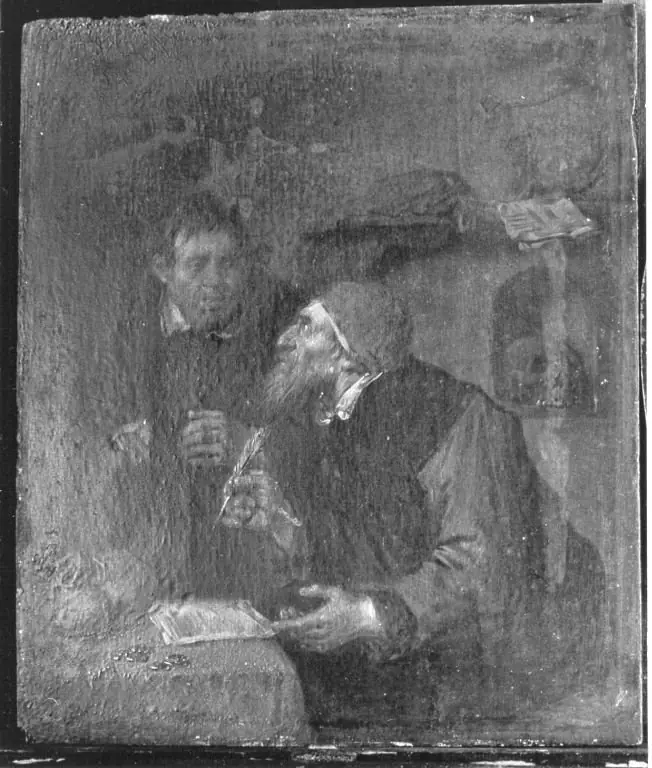 Beim Makler
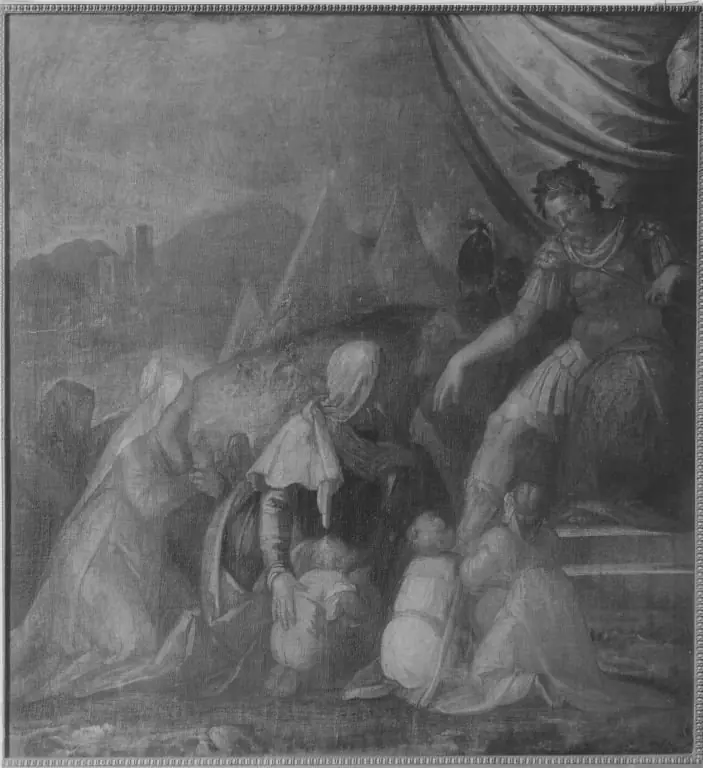 Coriolan lässt sich von seiner Familie bereden
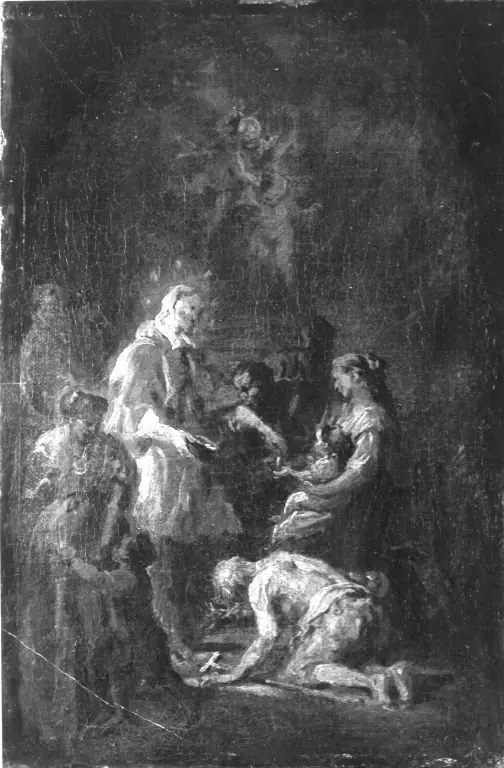 Der hl. Nepomuk Almosen spendend
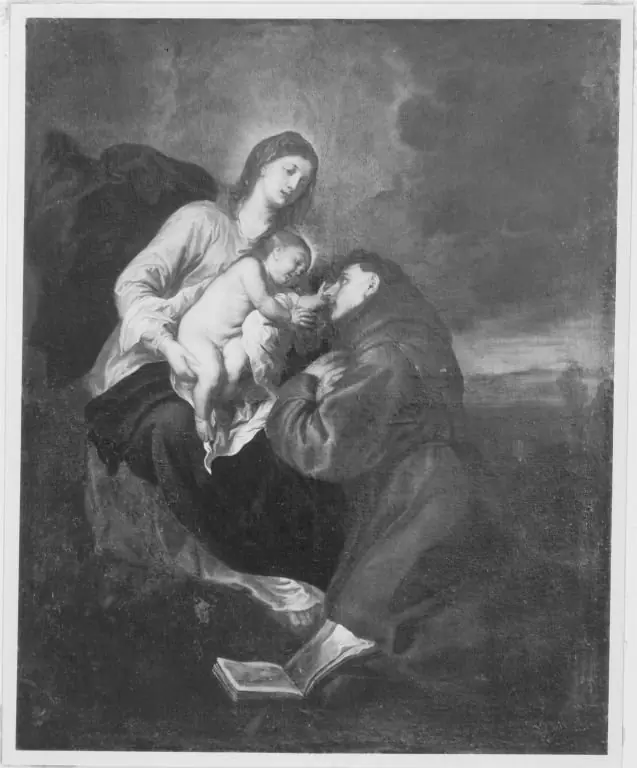 Vision des hl. Antonius von Padua