Artwork
Equestrian portrait of Philippe de France
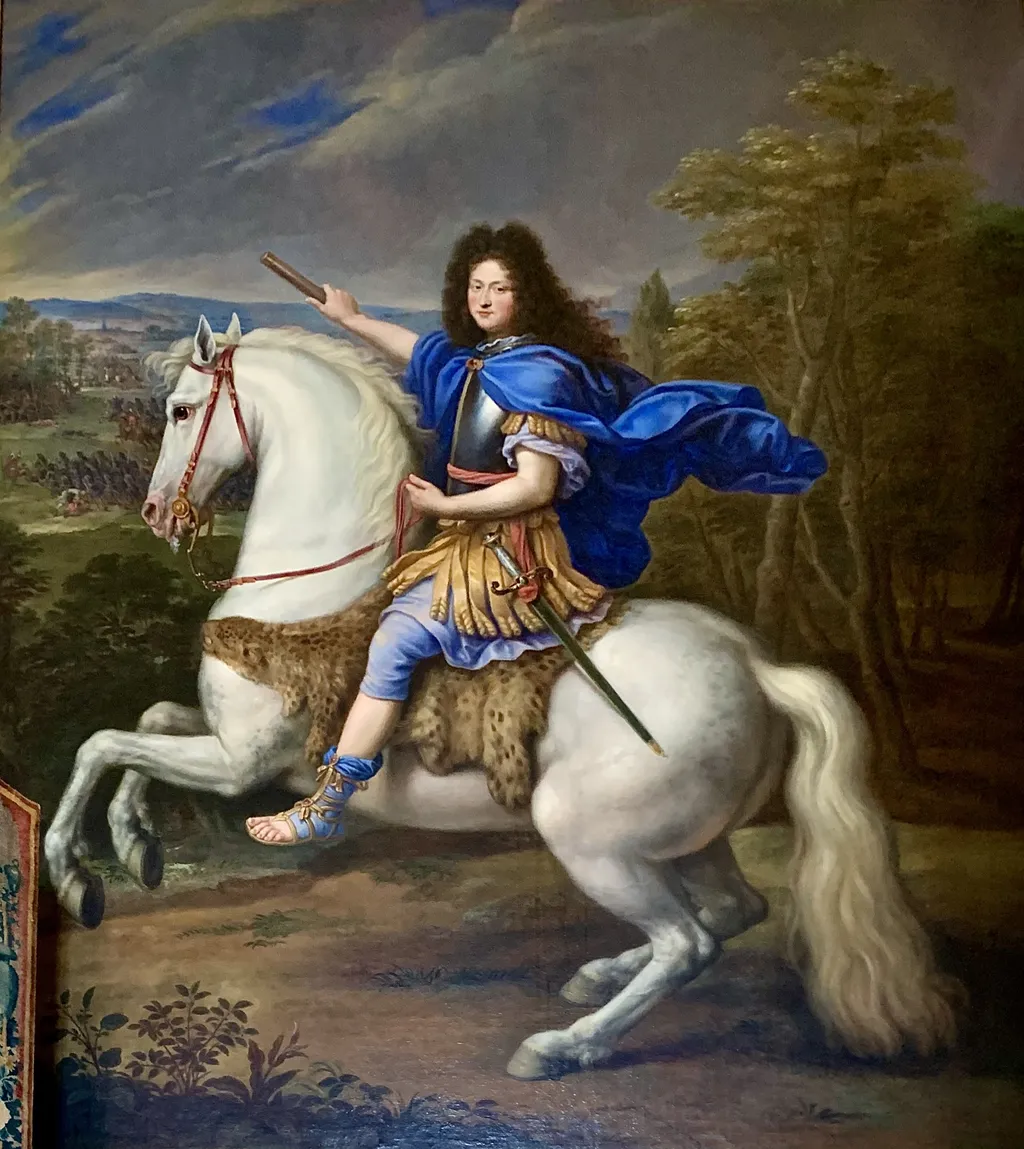
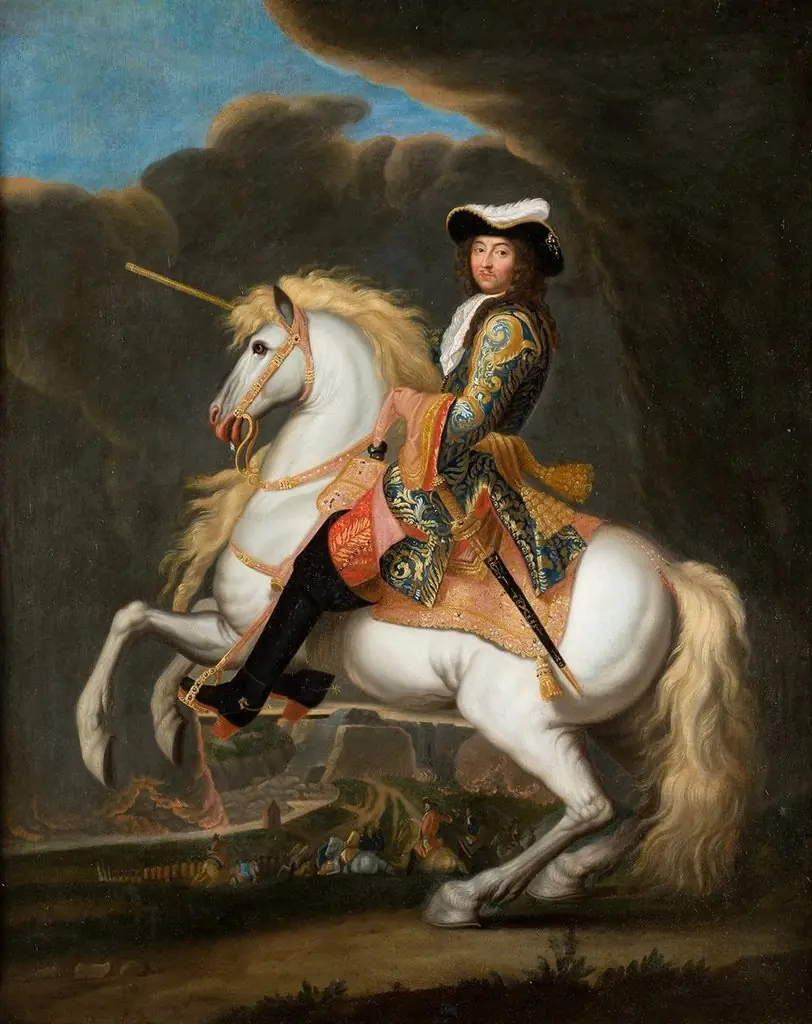
Equestrian portrait of Philippe de France is an oil painting by the Rococo painting artist Unknown. It dates from 1697 and is held in the collection of the Palace of Versailles. This oil painting depicts a nobleman on horseback in a moment of motion, captured mid-rear with sword raised.
About this work
Overview
The background features a muted landscape of hills and trees beneath a cloudy sky, enhancing the sense of movement without distracting from the central figures.
This oil painting depicts a nobleman on horseback in a moment of motion, captured mid-rear with sword raised. The subject is dressed in ornate armor and a blue cape lined with gold, while the horse, white with a brown mane, wears a red bridle. The background features a muted landscape of hills and trees beneath a cloudy sky, enhancing the sense of movement without distracting from the central figures.
Subject & Meaning
The figure is identified as Philippe de France, likely a member of the French royal family. The pose—rearing horse, drawn sword—suggests martial authority and dynastic power. The obscured face may reflect a deliberate choice to emphasize status over individuality, aligning with conventions of court portraiture that prioritized symbolic representation over personal likeness.
Technique & Style
The artist employs dynamic composition to convey energy: the horse’s lifted forelegs and the rider’s angled sword create diagonal tension. Brushwork is precise in the metallic details of armor and bridle, while the landscape recedes softly, using atmospheric perspective. The contrast between the white horse and richly colored garments heightens visual focus on the central figures.
History & Provenance
Commissioned during the 17th century, the painting was likely intended for royal display, possibly in a palace or private chamber. Its survival through centuries suggests it remained in aristocratic hands, though specific ownership records before modern cataloging are sparse. It entered public collections in the 19th century, where it was cataloged as a representative example of French equestrian portraiture.
Context
Equestrian portraits were standard for European royalty and military leaders, symbolizing command and nobility. This work aligns with traditions established by artists like Rubens and Velázquez, who used horses to convey power. In France, such images reinforced the monarchy’s martial identity during periods of political consolidation and external conflict.
Legacy
The painting remains a reference for studies of 17th-century French court imagery. Its blend of theatricality and restraint reflects evolving ideals of aristocratic representation. Though not widely reproduced, it contributes to understanding how visual language was used to project authority beyond literal likeness, influencing later ceremonial portraiture.
Artist & collection

 Domestic Scene
 Giacomo and Cardinal Marco, investing Andrea, Abbot of San Zeno, with his Benefice
 The Nymph of Fontainebleau
 Portrait of a Woman
 Madonna and Child with Saints in the Enclosed Garden
 Venus and Minerva
 Family Group of Four on Sofa
 Wall painting from Room H of the Villa of P. Fannius Synistor at Boscoreale