Artwork
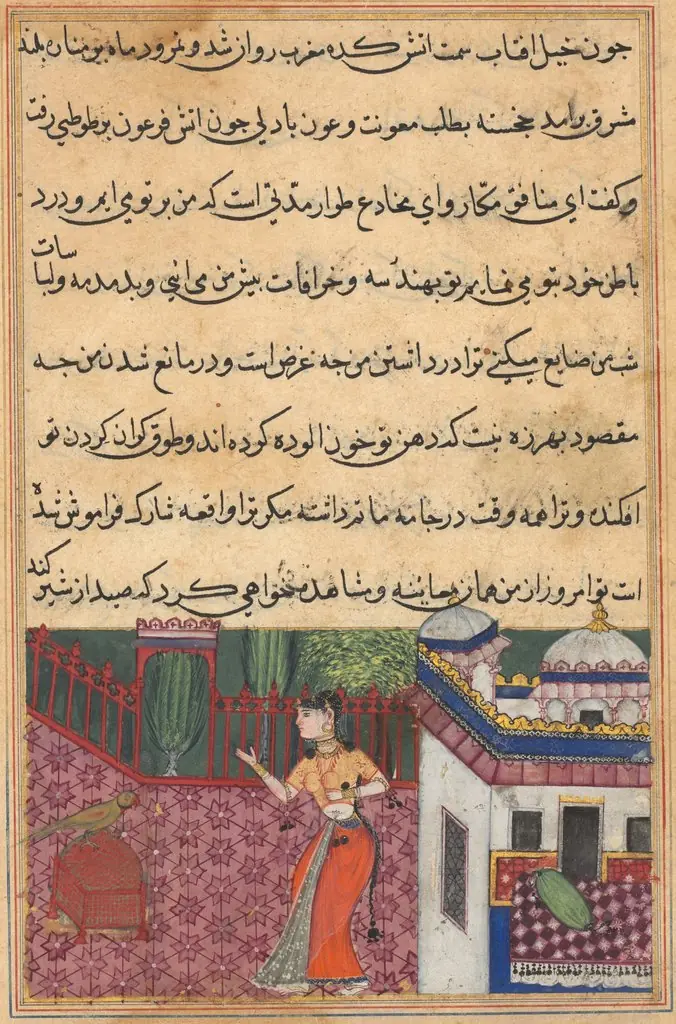
The gardener seizes and beats a donkey who insisted on braying, while the deer, its companion flees to safety, from a Tuti-nama (Tales of a Parrot): Forty-first Night
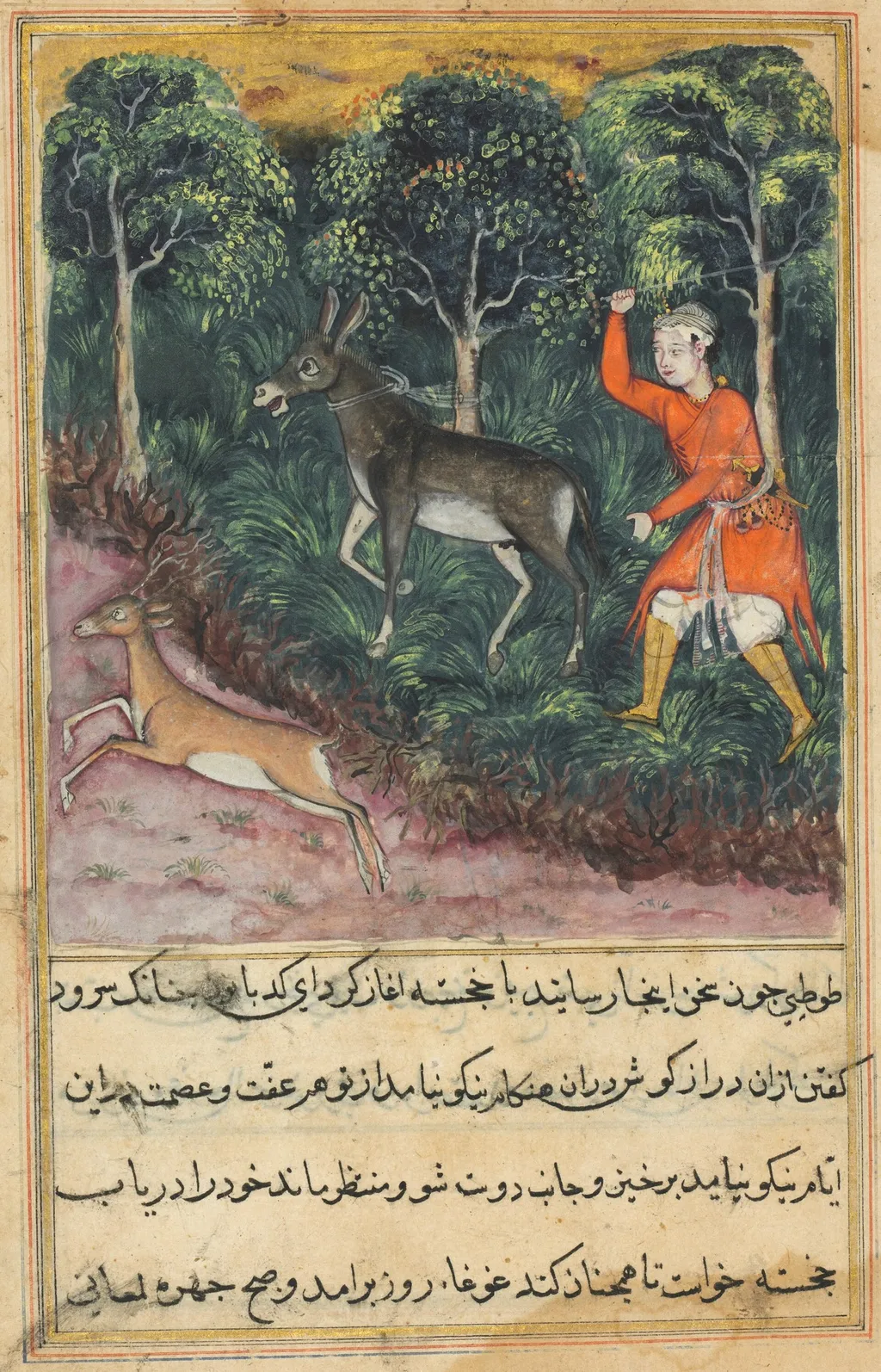
The gardener seizes and beats a donkey who insisted on braying, while the deer, its companion flees to safety, from a Tuti-nama (Tales of a Parrot): Forty-first Night is an unspecified painting. It dates from 1560 and is held in the collection of the Cleveland Museum of Art.
About this work
Overview
The work depicts a vivid forest scene in which a man dressed in bright orange seizes a donkey by the neck as the animal rears, its eyes wild. A deer watches from nearby foliage, its posture tense. The composition is framed by dense green foliage and a ground rendered in pinkish tones, while a line of Persian script runs along the lower edge.
Subject & Meaning
The episode illustrates a moment from the Persian narrative collection *Tuti‑nama* (Tales of a Parrot), in which animals are anthropomorphized to convey moral lessons. Here the donkey’s defiant braying provokes the gardener’s violent response, while the deer’s flight underscores the danger inherent in the chaotic encounter.
Technique & Style
Executed in oil on canvas, the painting combines bold coloration—most notably the orange garment—with delicate rendering of foliage and earth tones. The artist employs strong contrasts of light and shadow to heighten the tension, while the inclusion of Persian calligraphy integrates textual narrative directly into the visual field.
History & Provenance
The piece originates from the illustrated tradition of Persian manuscript art, where scenes from literary works were commonly painted for deluxe copies. It is now part of the collection of the Cleveland Museum of Art, which acquired it through a mid‑20th‑century donation of Persian miniatures.
Context
During the period when the *Tuti‑nama* was popular, illustrated books served both educational and decorative purposes, often featuring moralizing stories about animal behavior. This painting reflects that cultural milieu, merging literary content with visual storytelling in a format intended for elite patrons.
Artist & collection

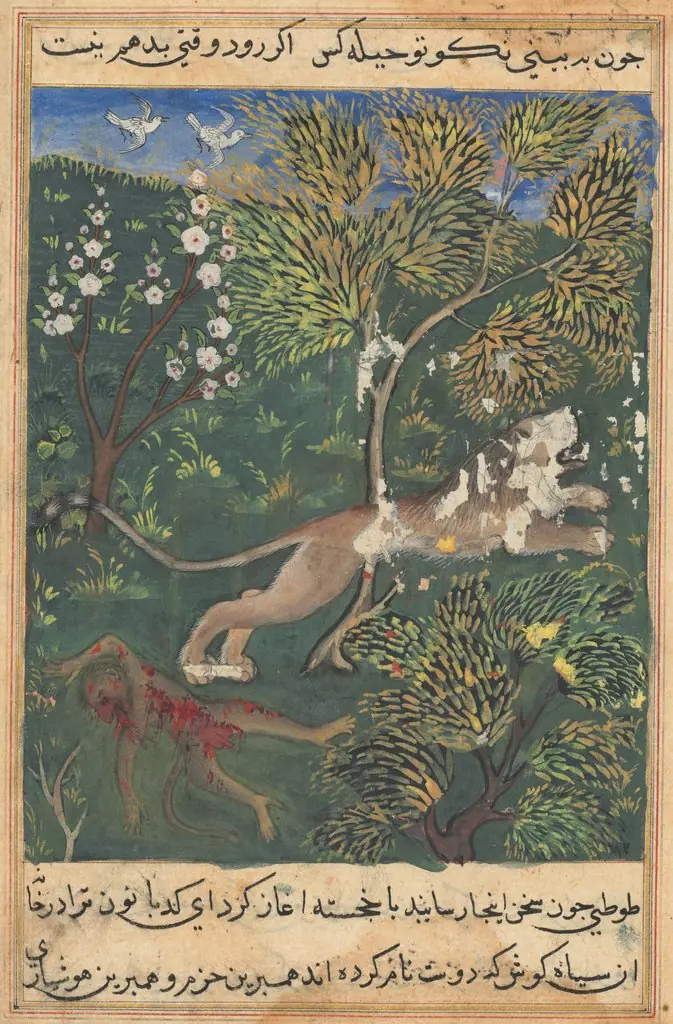 The lion, suspecting treachery on the part of the monkey, slays him and flees, from a Tuti-nama (Tales of a Parrot): Twenty-ninth Night
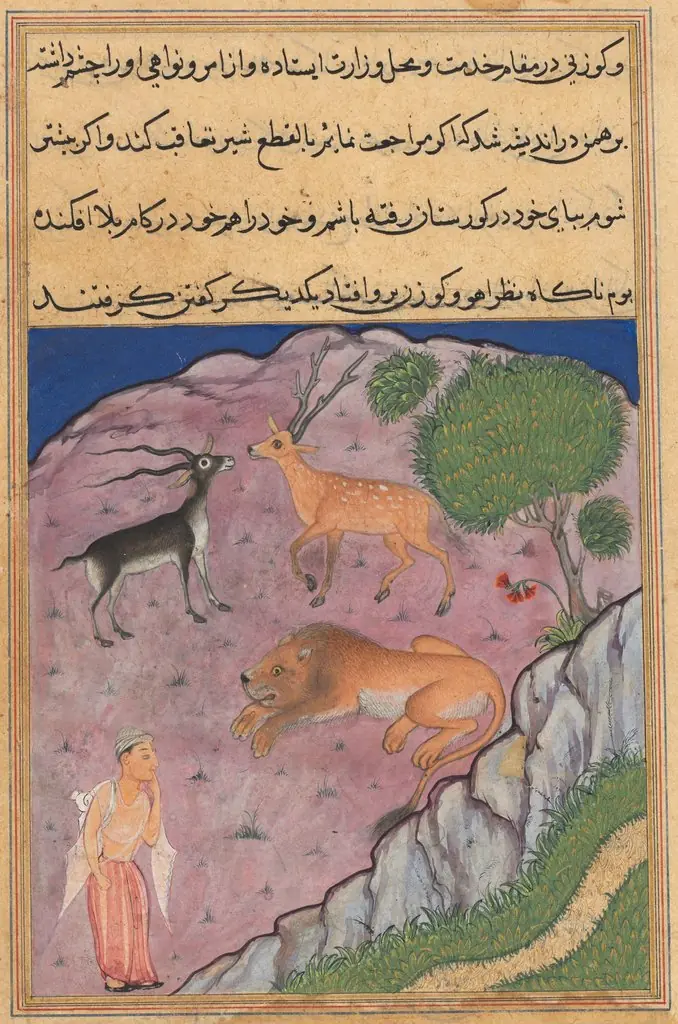 The Brahman comes upon a lion who has a deer and a gazelle as his viziers, from a Tuti-nama (Tales of a Parrot): Twenty-first Night
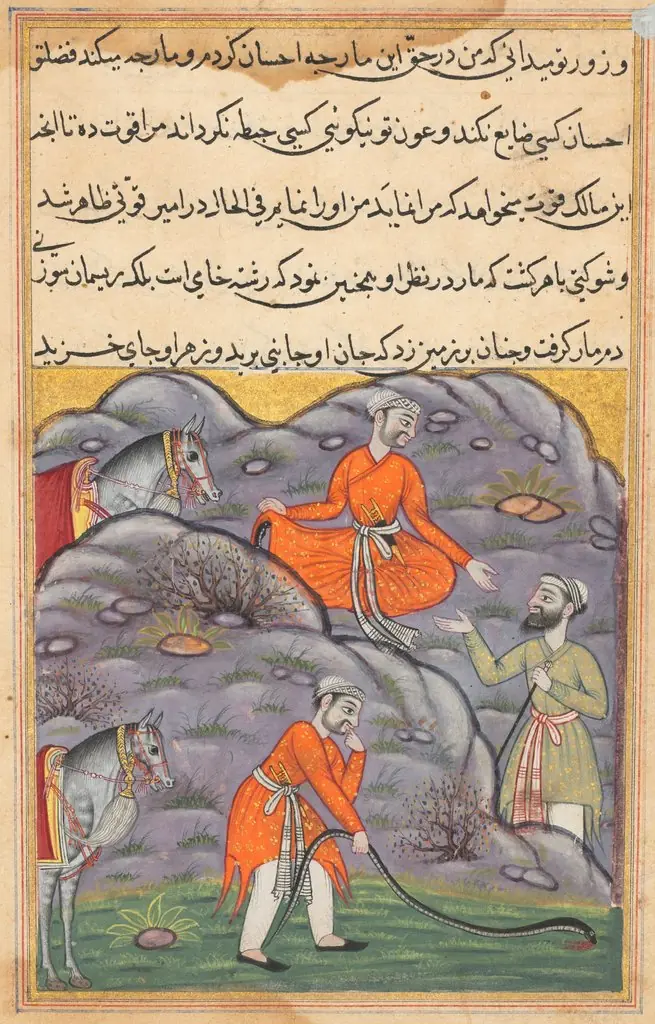 The Emir slays the snake after giving it shelter, from a Tuti-nama (Tales of a Parrot): Forty-fifth Night
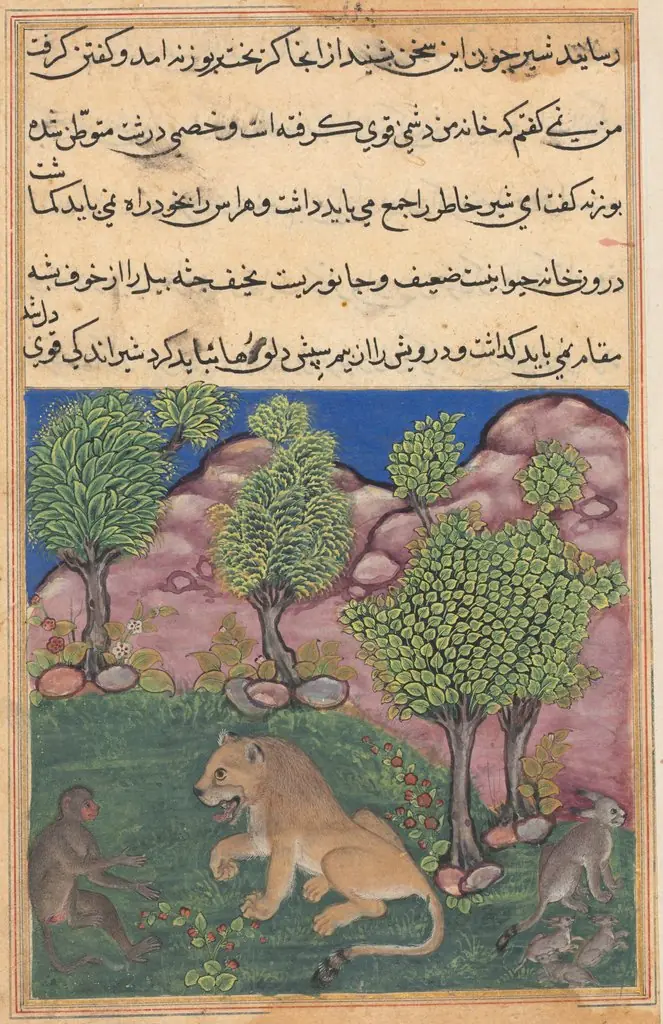 The monkey advises the suspicious lion to cast off fear and take possession of his territory, from a Tuti-nama (Tales of a Parrot): Twenty-ninth Night
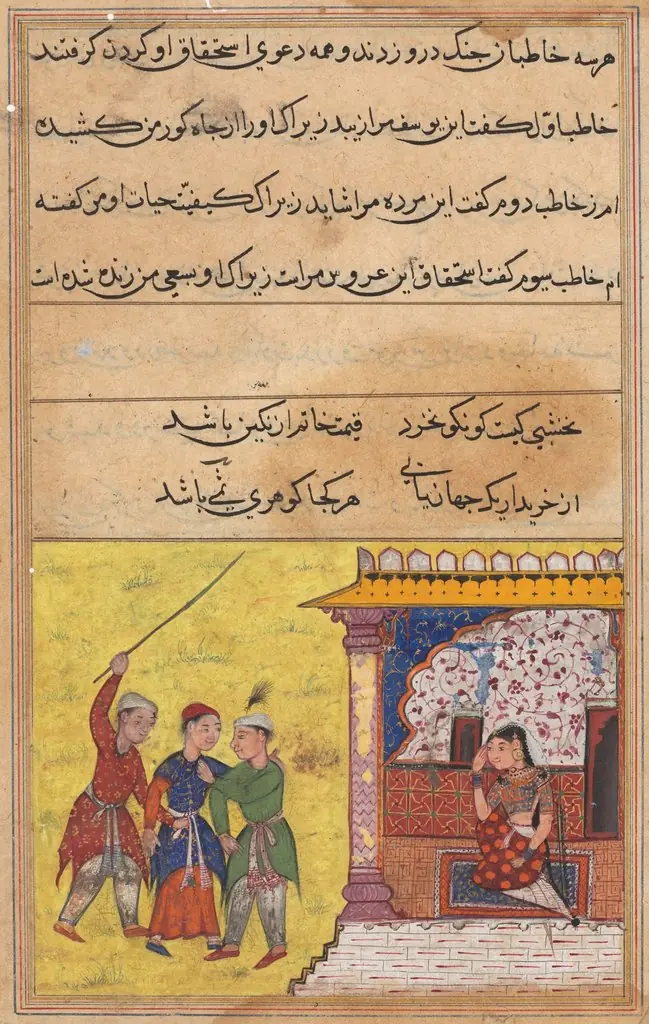 The three suitors again begin to quarrel among themselves for the hand of the devotee’s daughter, from a Tuti-nama (Tales of a Parrot): Twentieth Night
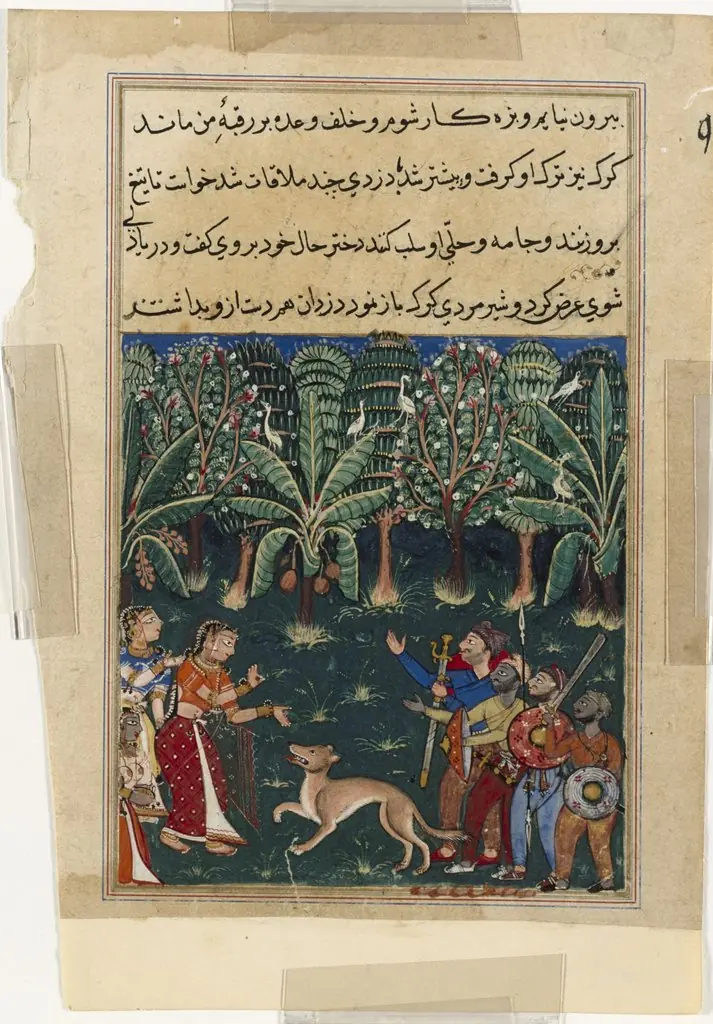 The merchant’s daughter encounters a wolf and bandits on her way to meet the gardener in order to keep her promise, from a Tuti-nama (Tales of a Parrot): Twelfth Night
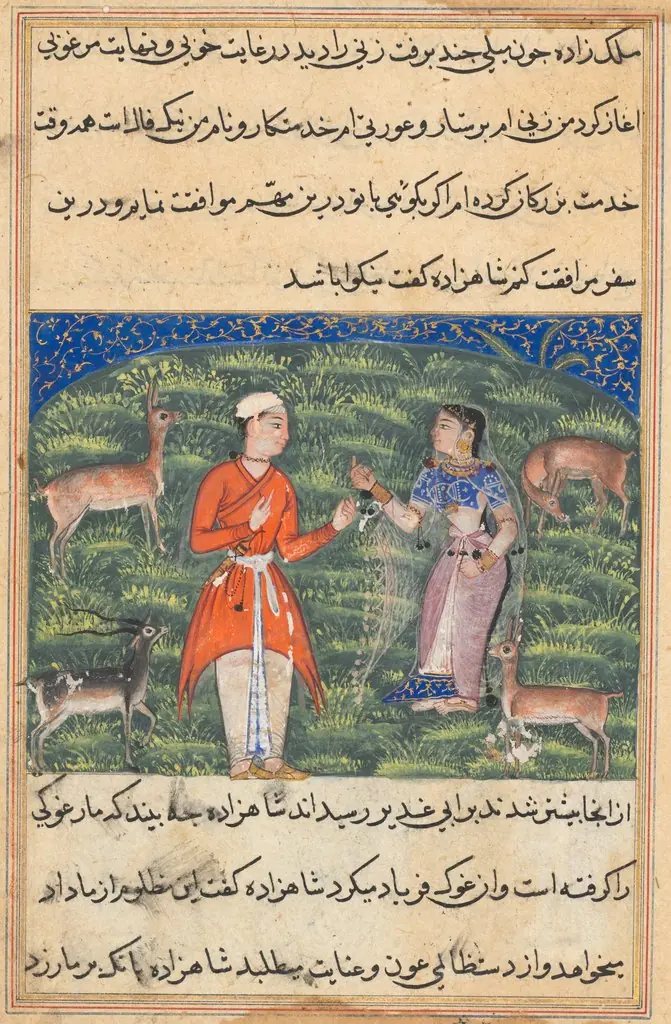 Nikfal, the fortune of the prince in the form of a woman, offers to accompany him, from a Tuti-nama (Tales of a Parrot): Eighteenth Night
 The parrot addresses Khujasta at the beginning of the thirty-third night, from a Tuti-nama (Tales of a Parrot)