Artwork
Nikfal, the fortune of the prince in the form of a woman, offers to accompany him, from a Tuti-nama (Tales of a Parrot): Eighteenth Night
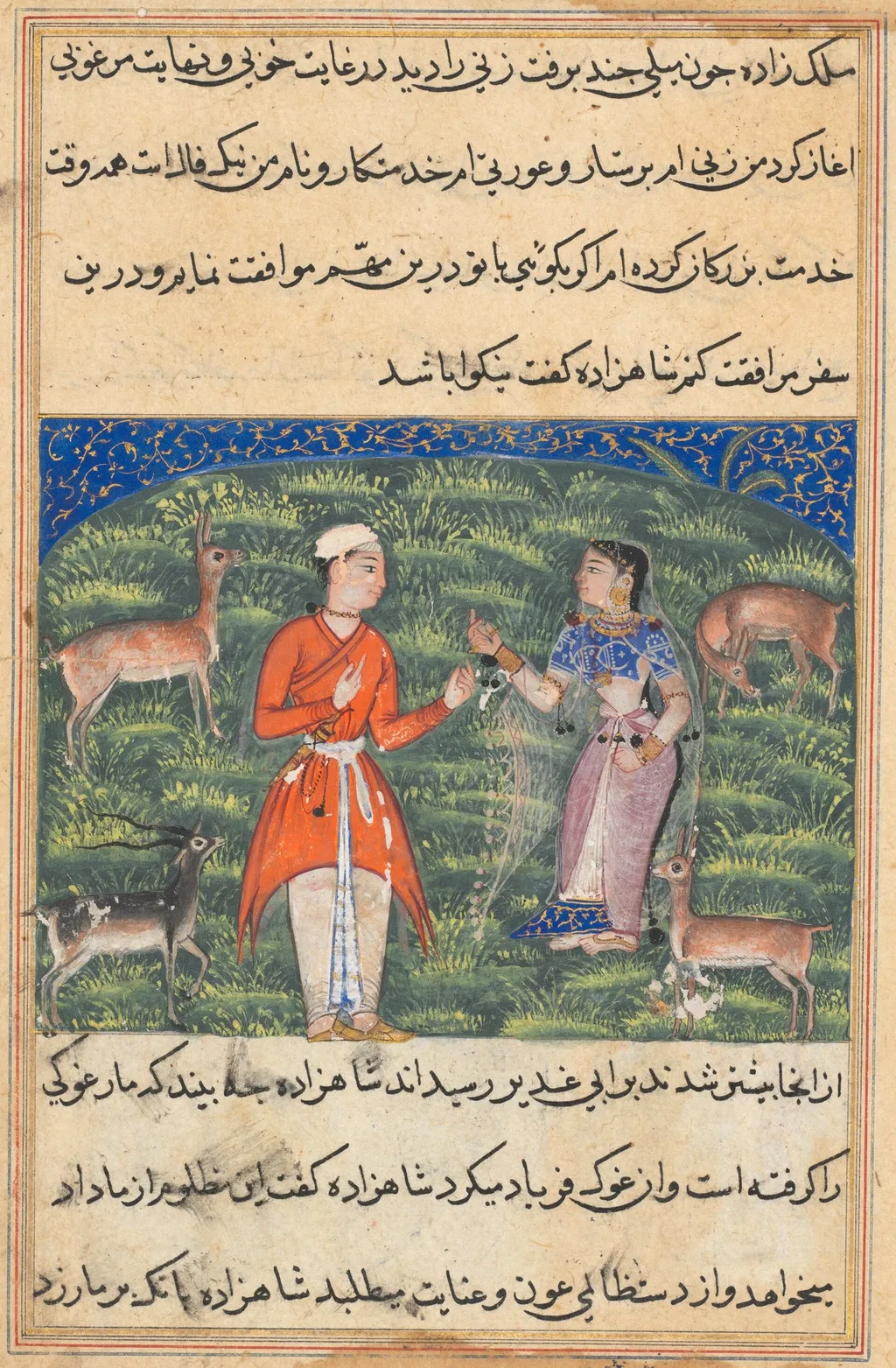
Nikfal, the fortune of the prince in the form of a woman, offers to accompany him, from a Tuti-nama (Tales of a Parrot): Eighteenth Night is an unspecified painting. It dates from 1560 and is held in the collection of the Cleveland Museum of Art.
About this work
Overview
The work illustrates a princely figure in orange robes and a white turban, accompanied by a woman in blue‑white attire and a pink skirt, standing together in a verdant meadow populated by deer. A clear blue sky arches above the scene, while trees frame the composition, creating a tranquil pastoral setting.
Subject & Meaning
The tableau derives from the eighteenth night of the Persian narrative collection Tuti‑nama, in which a fortune personified as a woman offers her companionship to a prince. The presence of the deer and the open landscape underscores themes of harmony between royalty and nature, while the small objects held by each figure suggest an exchange or promise.
Technique & Style
Executed with a balanced palette of saturated orange, cool blues, and soft pinks, the painting employs careful layering to convey depth in the grassy foreground and distant foliage. Delicate brushwork renders the animals and foliage, while the figures are delineated with precise outlines that emphasize their ceremonial dress.
History & Provenance
The piece originates from the tradition of illustrated Persian manuscripts, where narrative scenes were rendered as standalone paintings. Its exact date and creator remain undocumented, but it aligns with the stylistic conventions of 16th‑ to 18th‑century courtly illustration.
Context
Within the Tuti‑nama, each night presents a moral or allegorical episode; the eighteenth night focuses on the concept of destiny as a benevolent guide. The visual representation reflects the manuscript’s didactic purpose, translating literary symbolism into a visual dialogue between human agency and fate.
Artist & collection

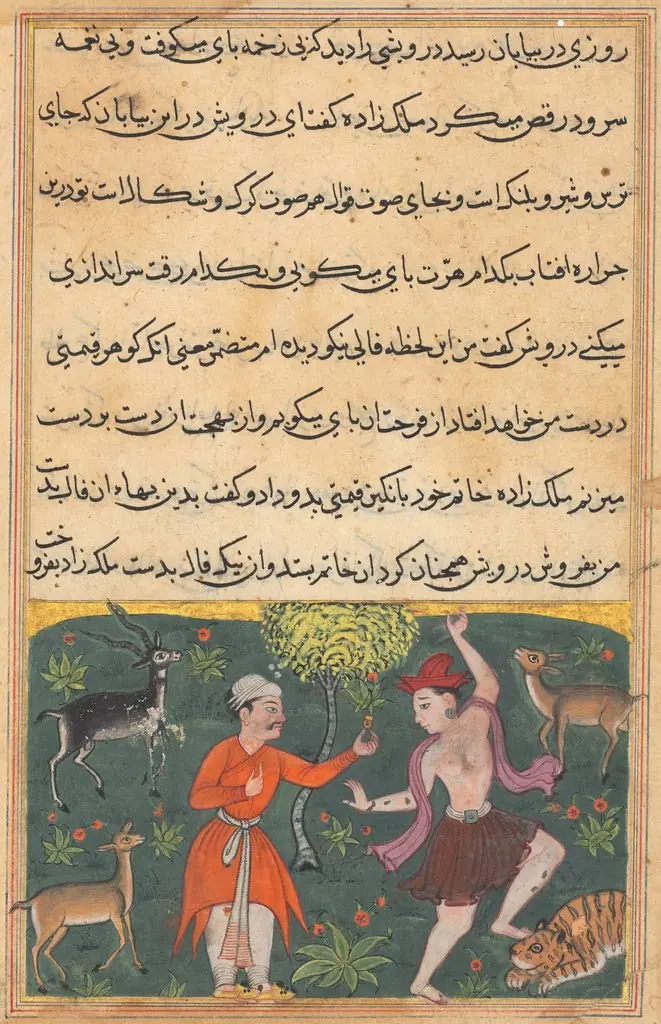 The prince meets a carefree dancing dervish whose good fortune he purchases for his ring, from a Tuti-nama (Tales of a Parrot): Eighteenth Night
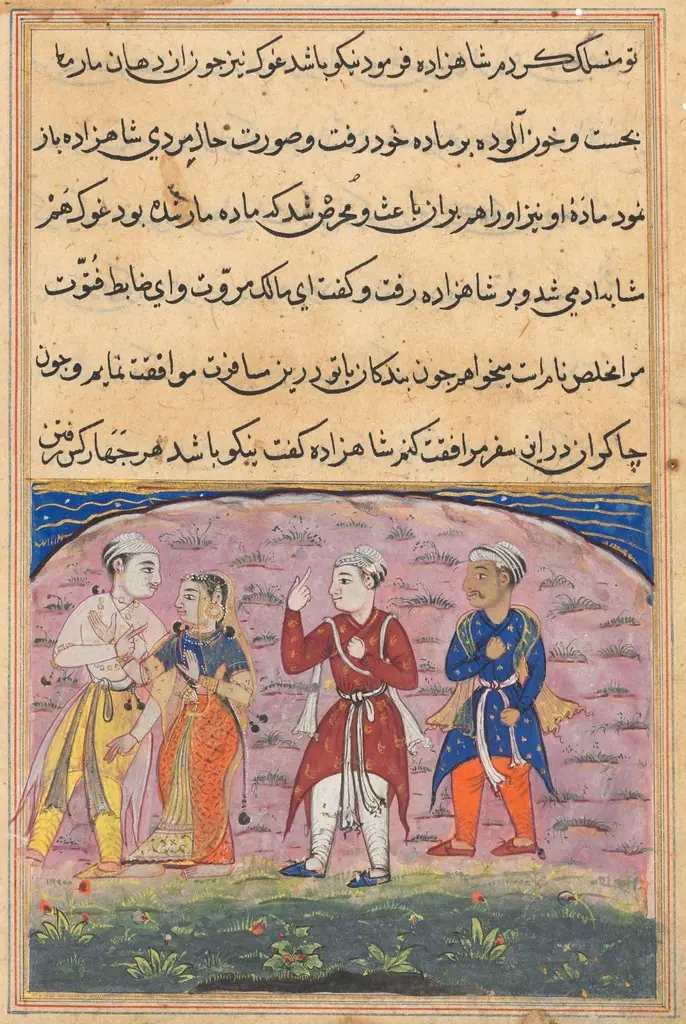 The prince and Nikfal are joined by Khalis and the Mukhlis who are the grateful snake and frog in human form, from a Tuti-nama (Tales of a Parrot): Eighteenth Night
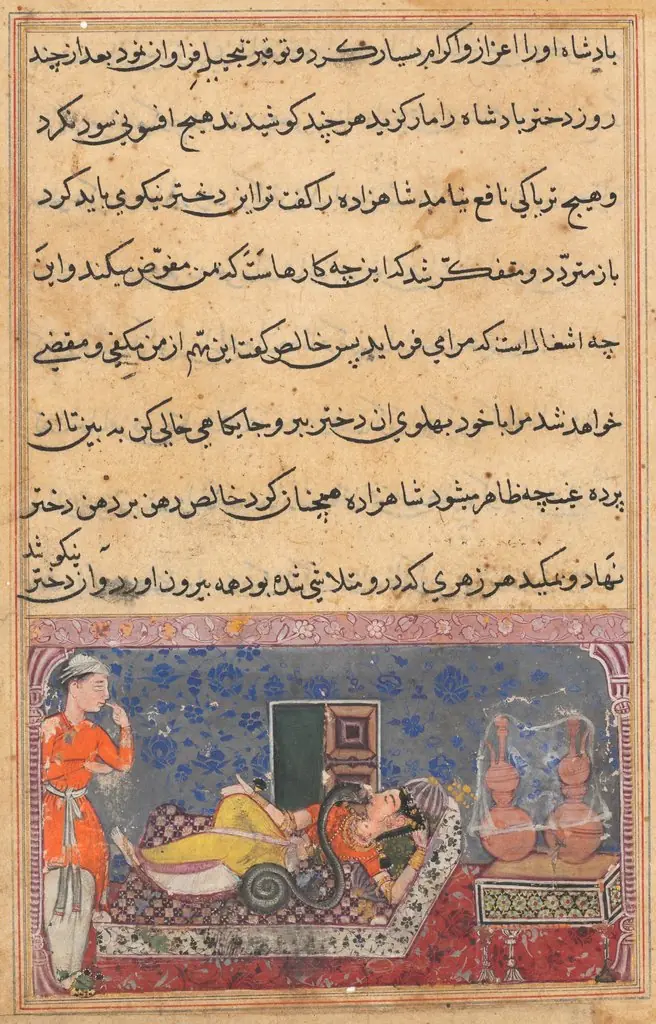 Khalis repays the prince for his kindness by changing into a snake and sucking the poison from the king’s daughter, from a Tuti-nama (Tales of a Parrot): Eighteenth Night
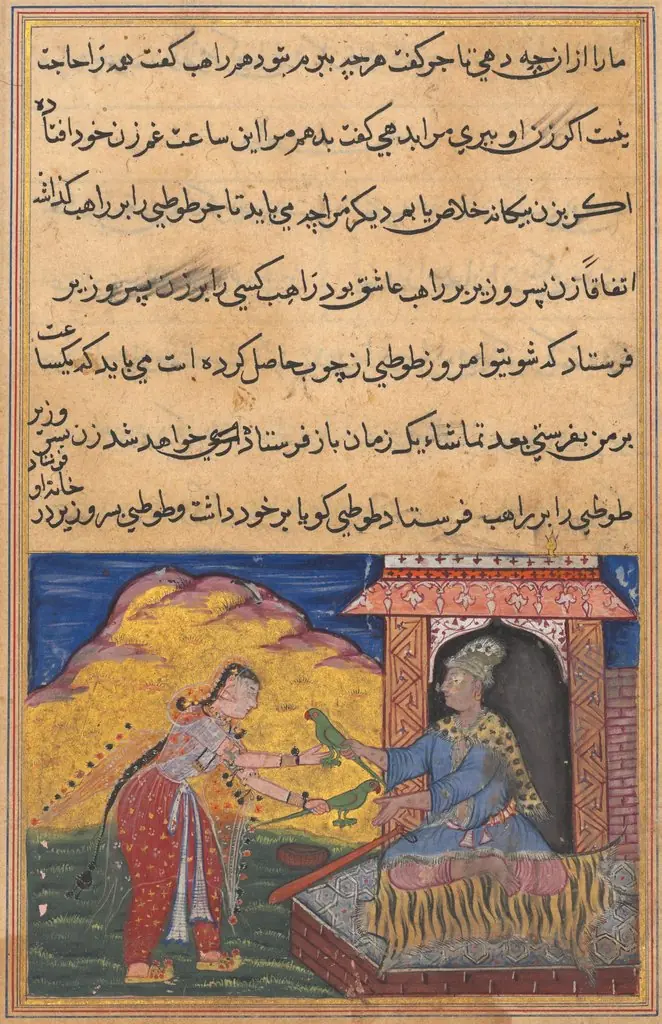 The wife of the son of the vizier brings the magic wooden parrot to her lover, the monk, who exchanges it for the replica, from a Tuti-nama (Tales of a Parrot): Tenth Night
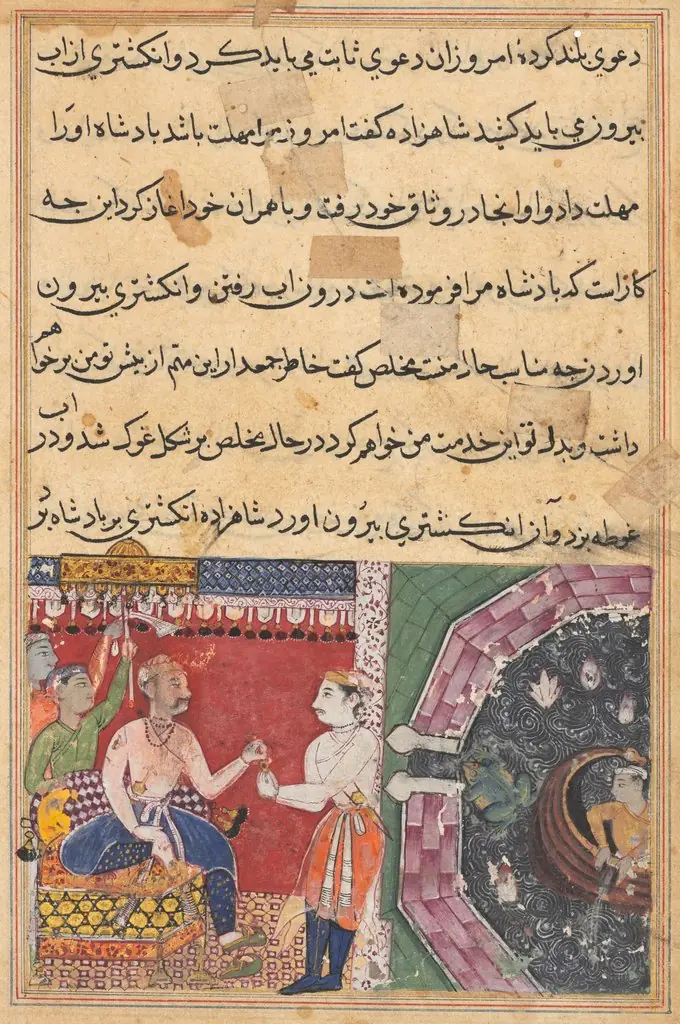 The prince, with the help of Mukhlis who changes into a frog, recovers the ring lost in the sea, and returns it to the king, from a Tuti-nama (Tales of a Parrot): Eighteenth Night
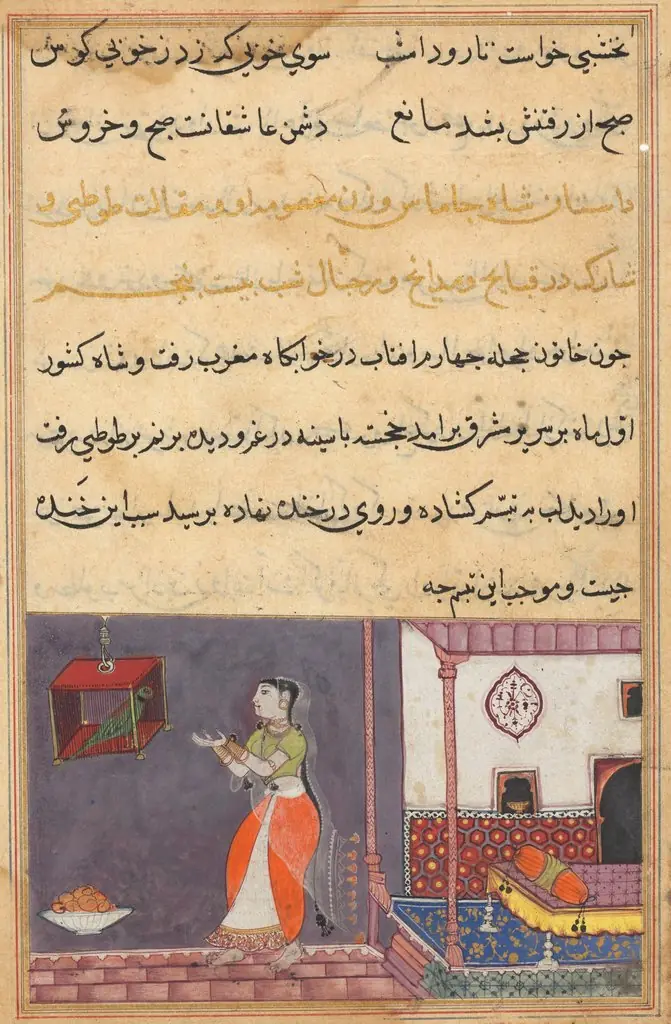 The Parrot Addresses Khujasta at the Beginning of the Twenty-fifth Night, from a Tuti-nama (Tales of a Parrot)
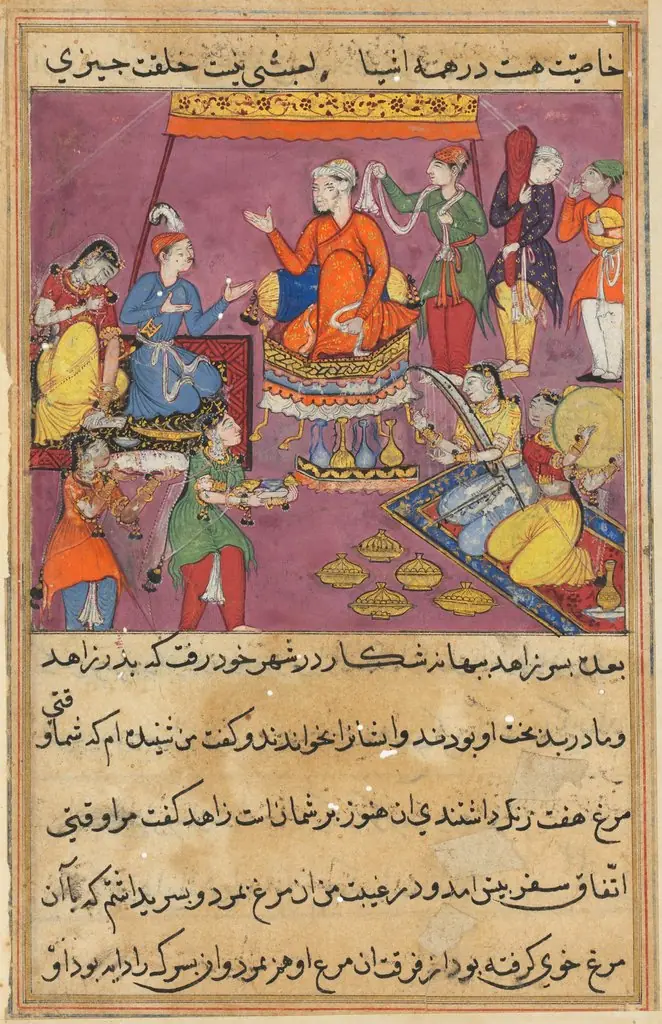 The king gives his daughter in marriage to the pious man’s son, from a Tuti-nama (Tales of a Parrot): Fifty-second Night
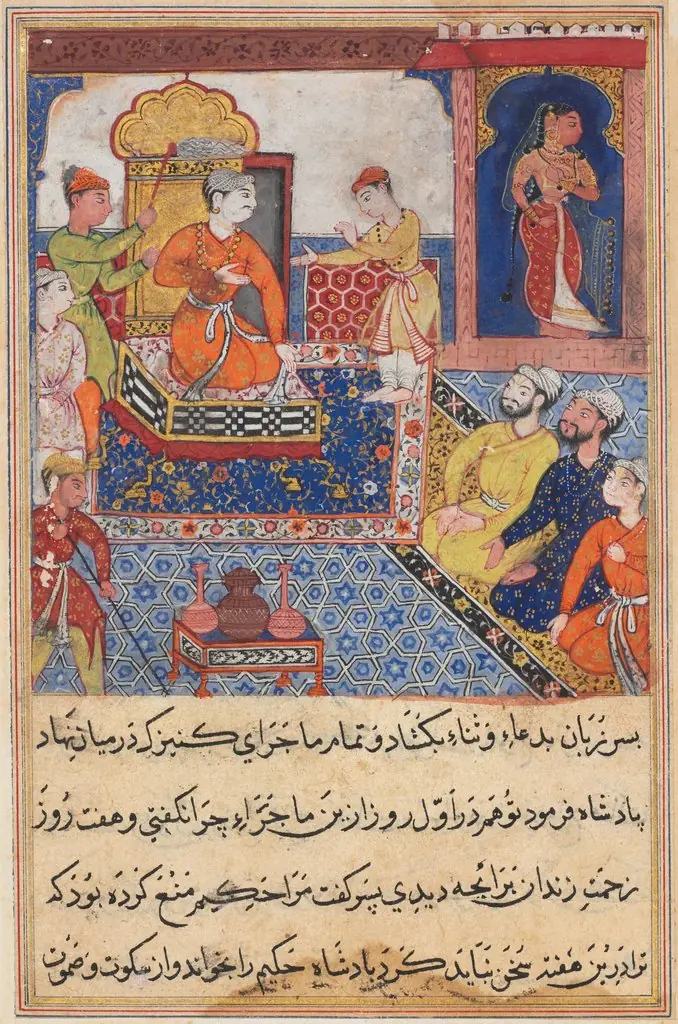 The young prince recounts his experiences to his father, the king, from a Tuti-nama (Tales of a Parrot): Eighth Night
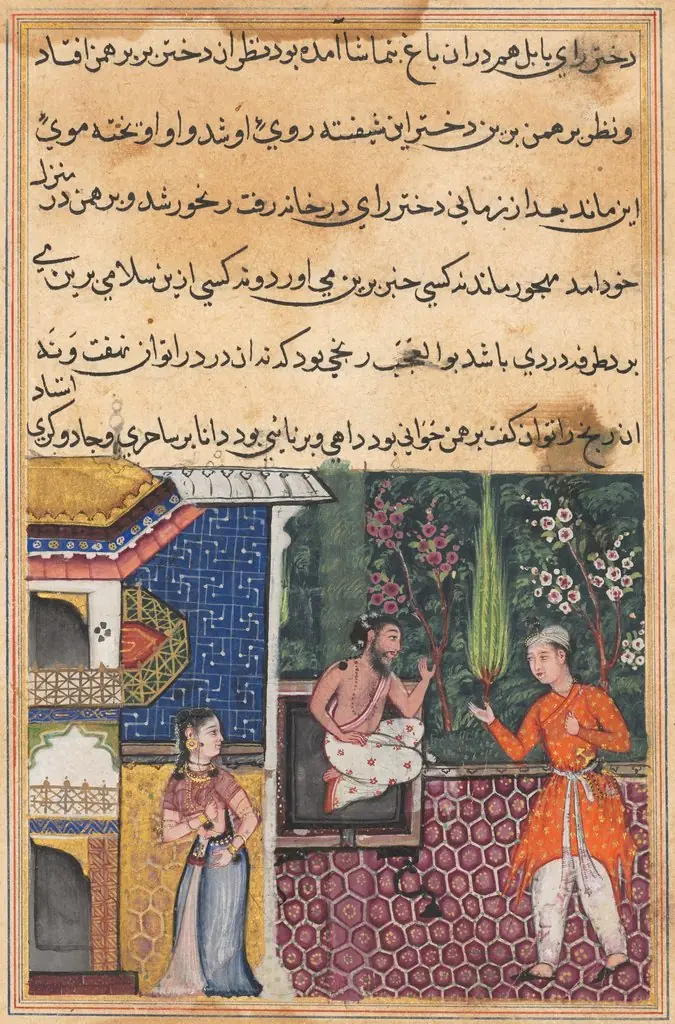 The Brahman gives an account of his falling in love with the king of Babylon’s daughter to his friend, the magician, from a Tuti-nama (Tales of a Parrot): Thirty-fifth Night
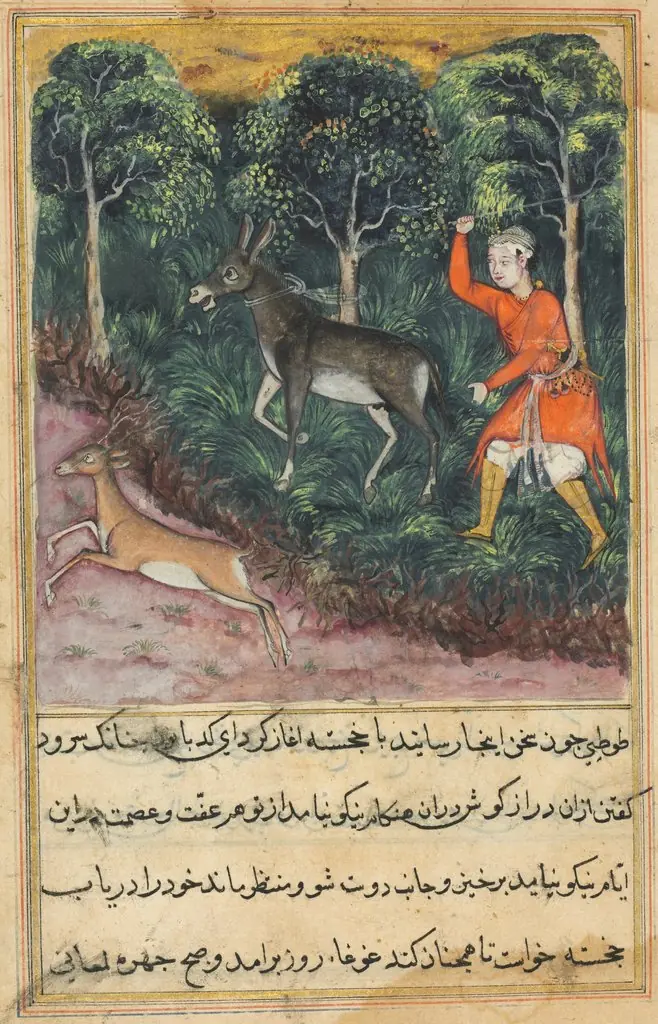 The gardener seizes and beats a donkey who insisted on braying, while the deer, its companion flees to safety, from a Tuti-nama (Tales of a Parrot): Forty-first Night
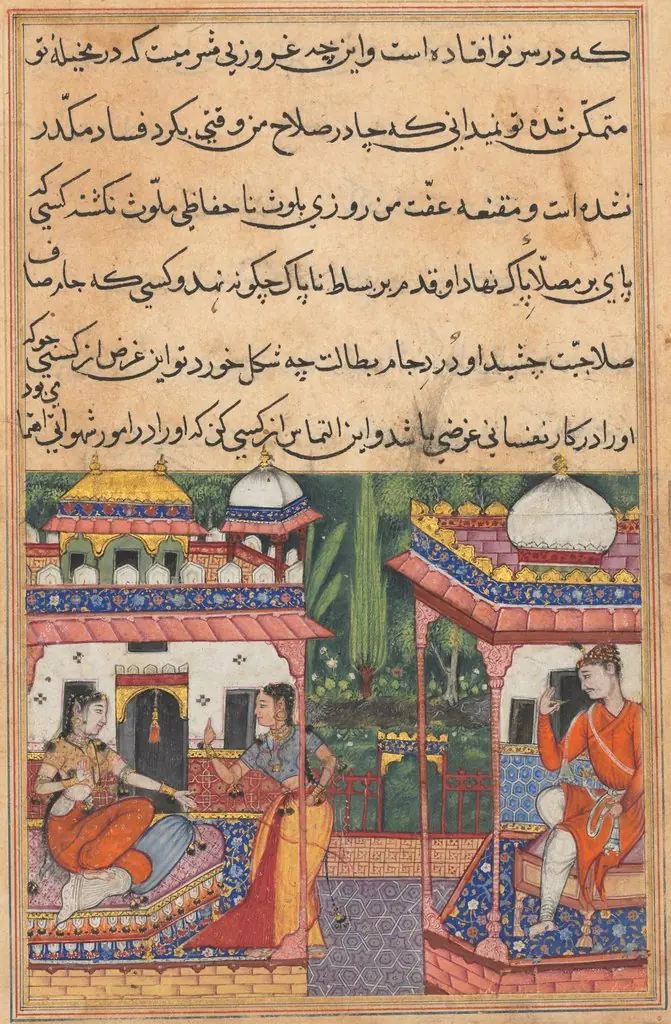 Kaiwan sends a message of love to Khurshid, wife of his brother Utarid who is away on a journey, from a Tuti-nama (Tales of a Parrot): Thirty-second Night
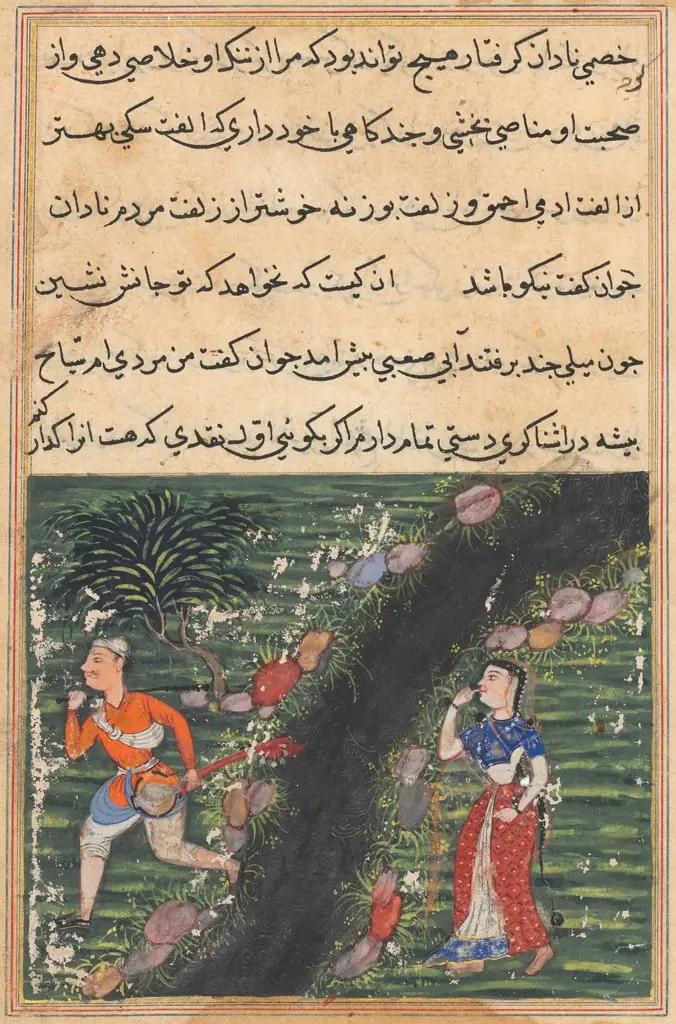 The vagabond crosses a stream with the possessions of the daughter-in-law of the king of Banaras and absconds, from a Tuti-nama (Tales of a Parrot): Sixteenth Night
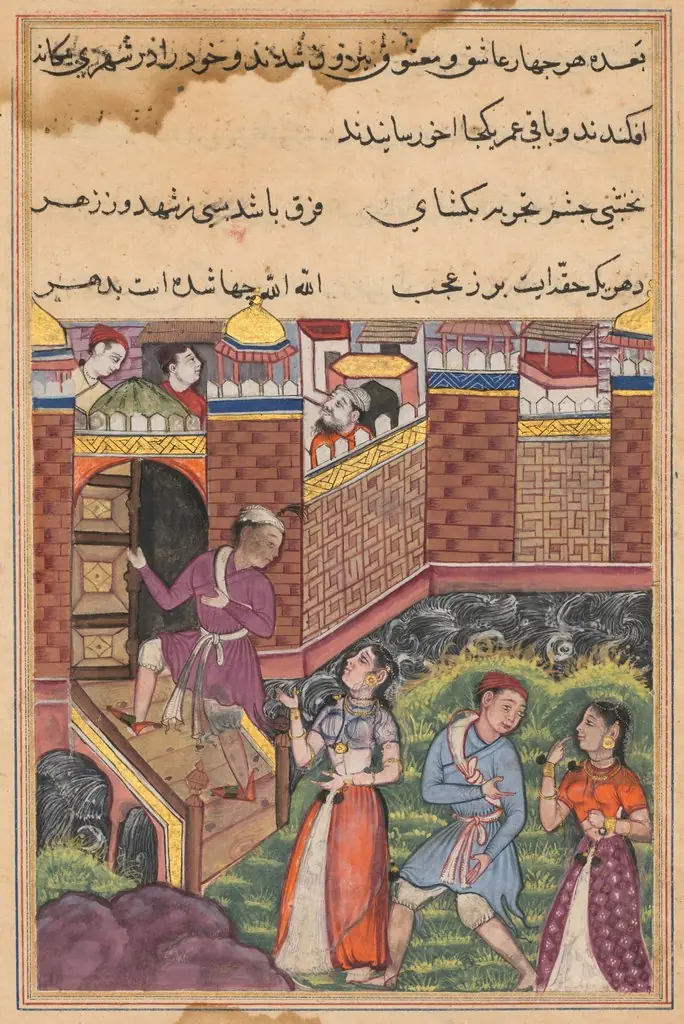 The two couples reach a foreign city where they make their home, from a Tuti-nama (Tales of a Parrot): Thirty-third Night