Artwork
The Continence of Scipio
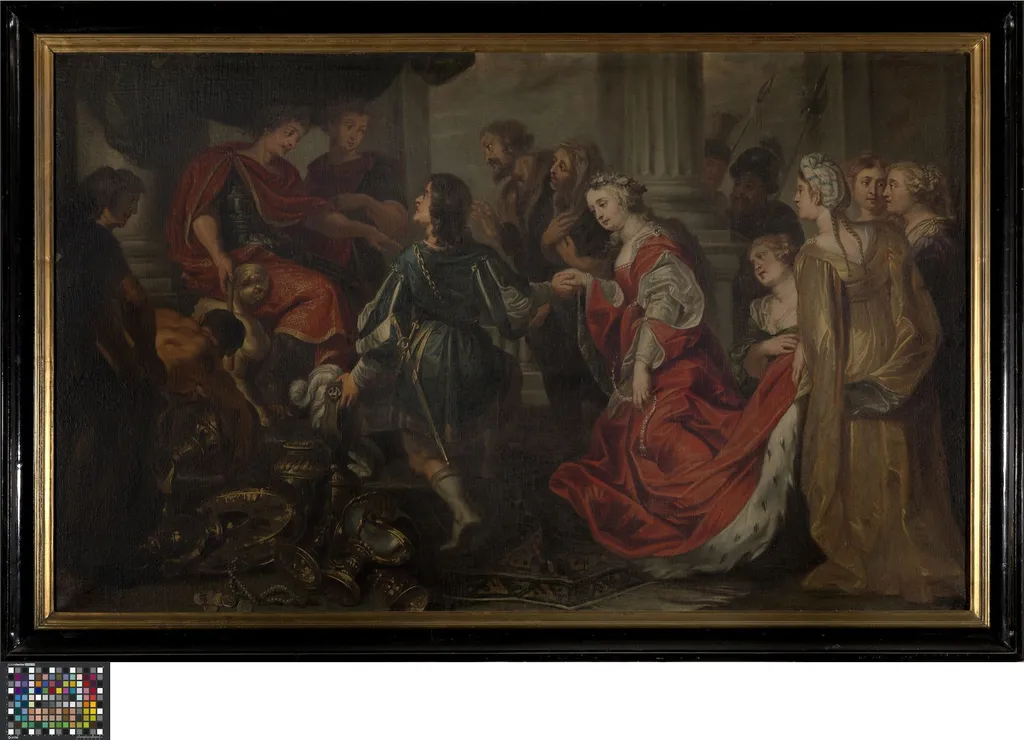
The Continence of Scipio is an oil painting by the Early Baroque Italian artist Unknown. It dates from 1620 and is held in the collection of the Groeningemuseum.
About this work
Overview
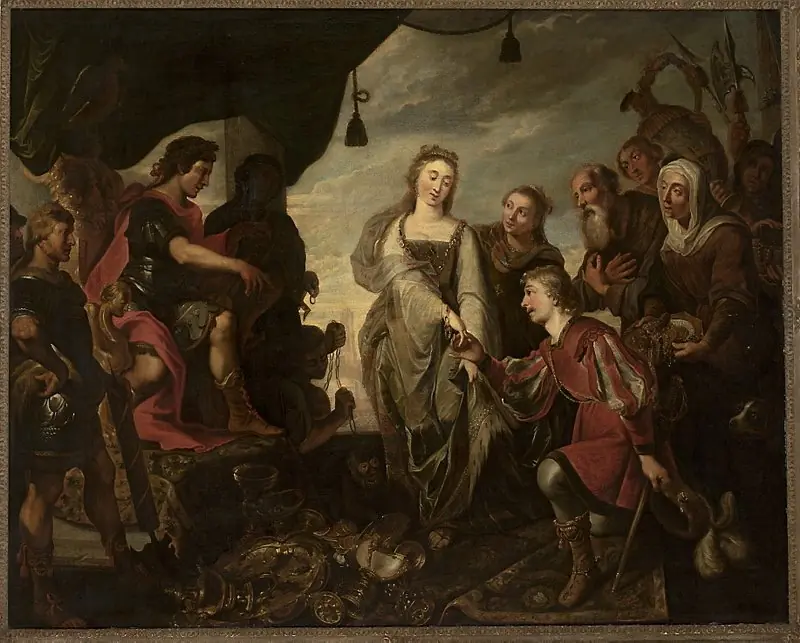
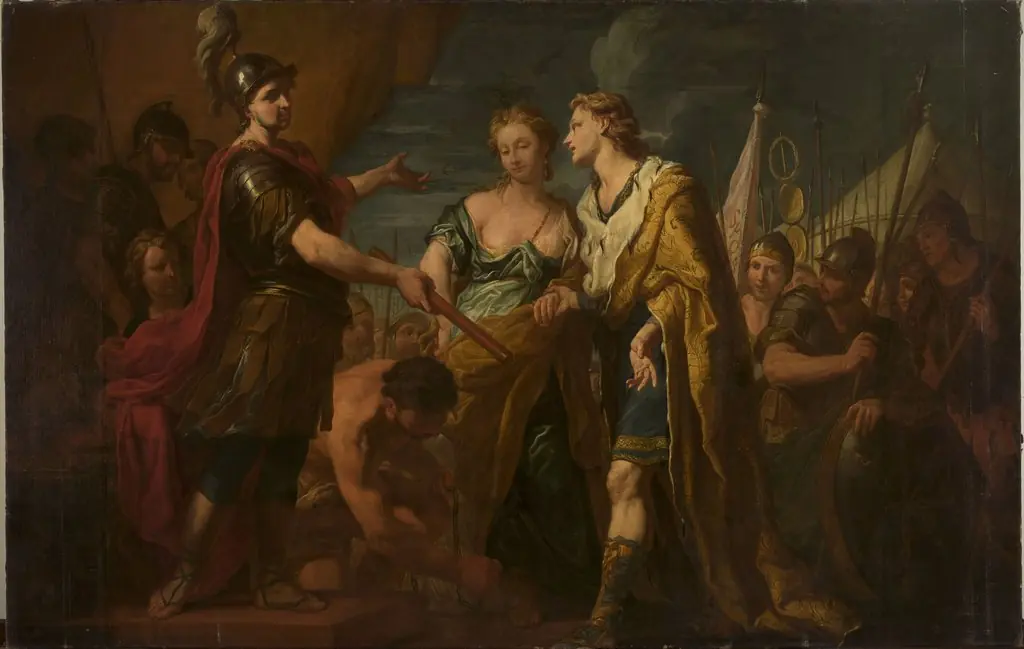
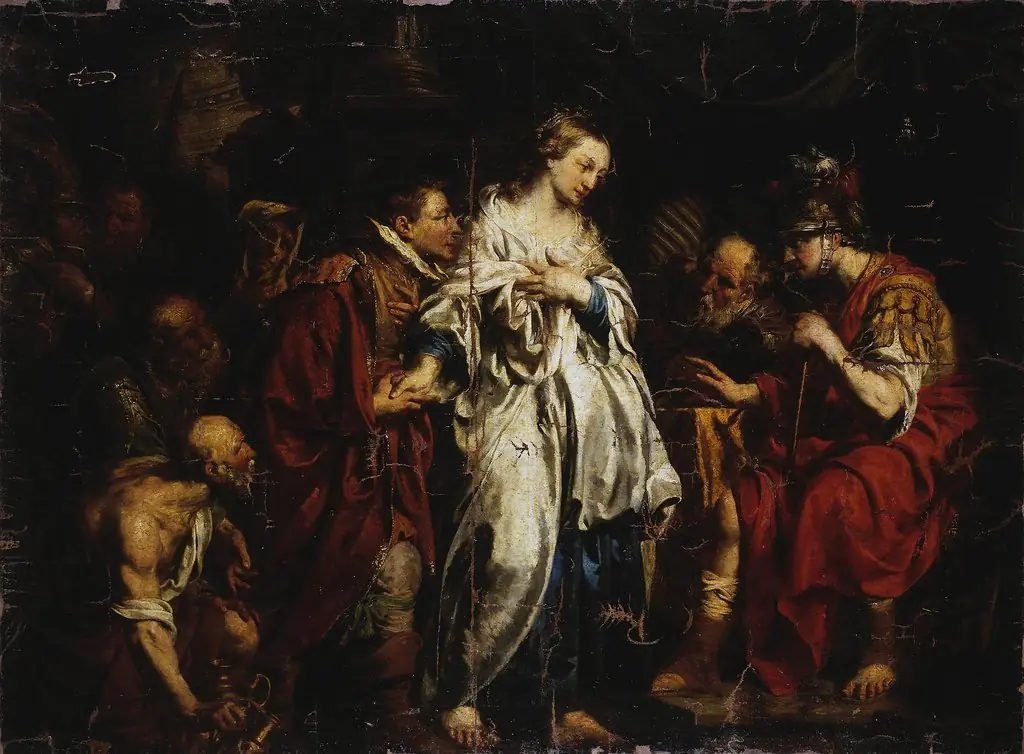
An oil painting depicting a historical moment of moral restraint, this work captures a scene from ancient Rome involving the Roman general Scipio Africanus.
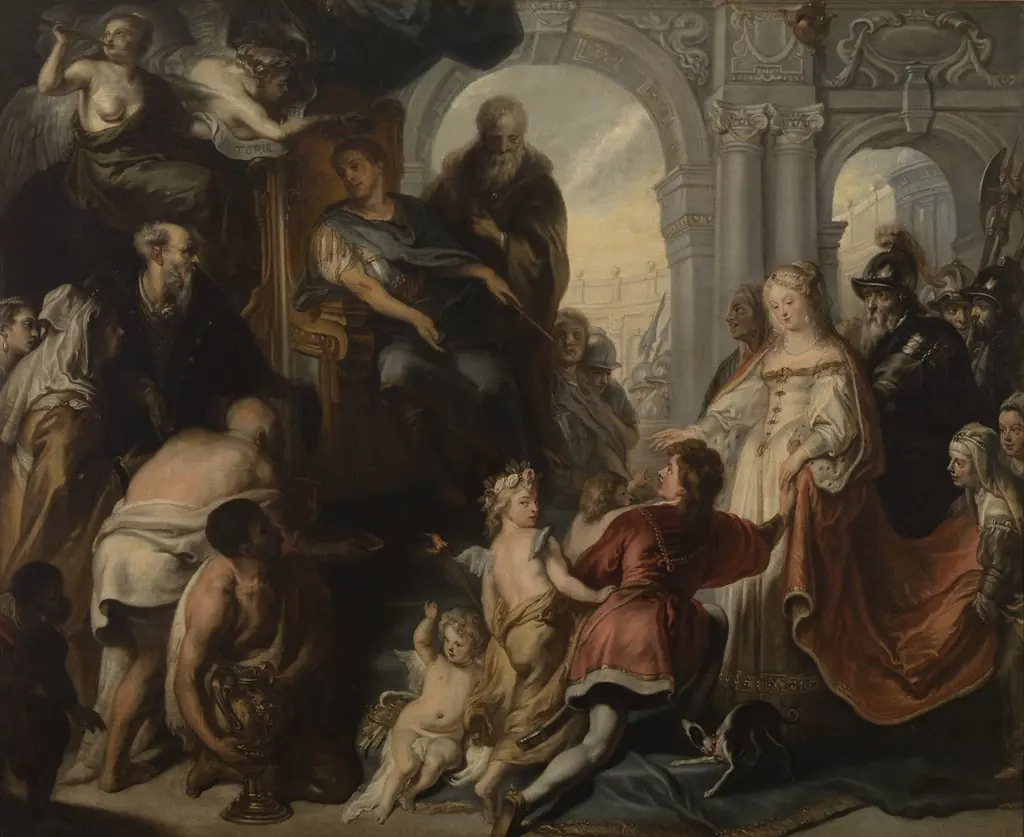
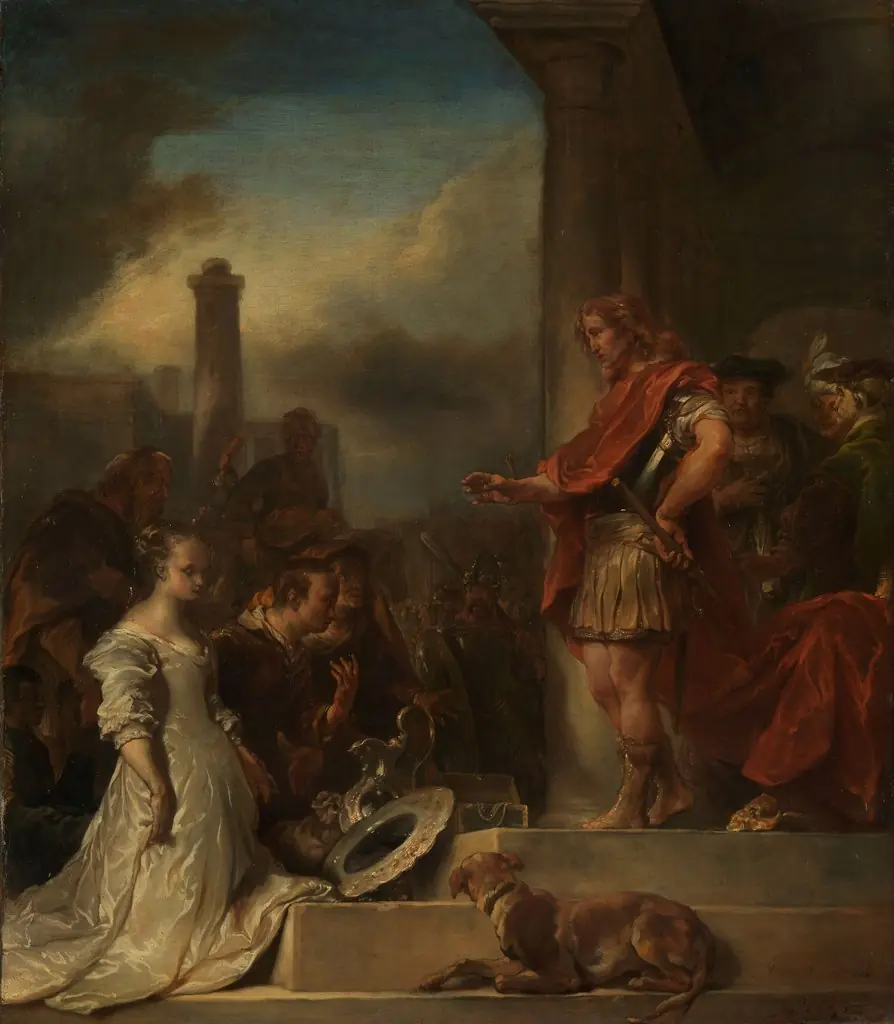
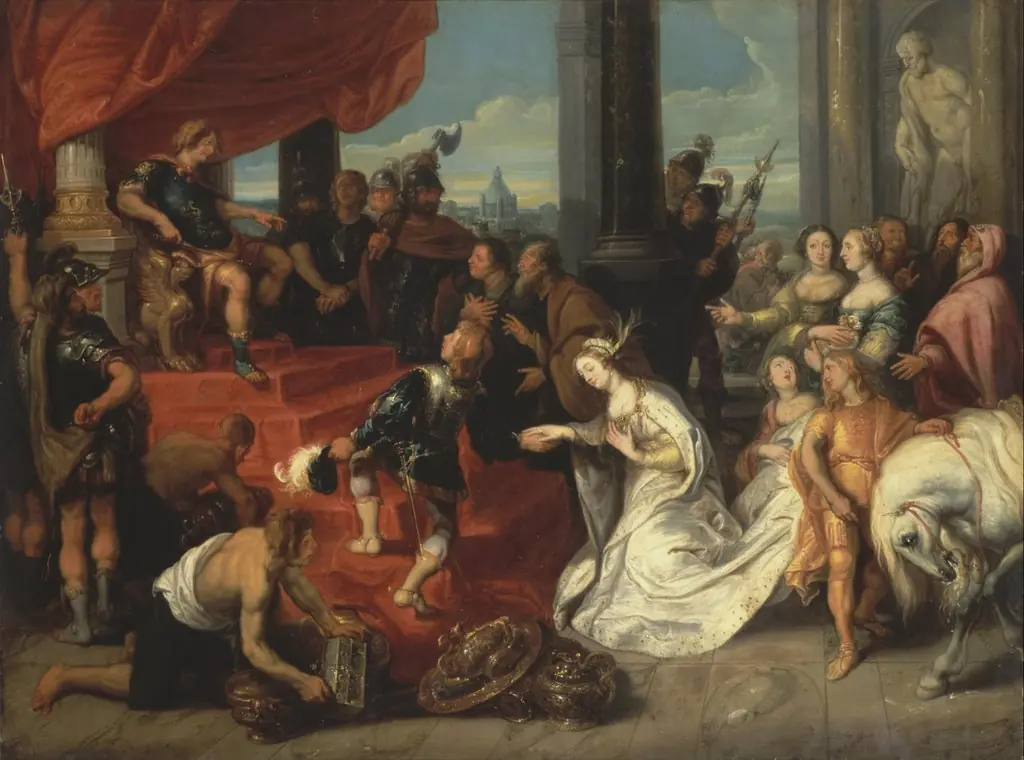
An oil painting depicting a historical moment of moral restraint, this work captures a scene from ancient Rome involving the Roman general Scipio Africanus. Set within a richly detailed interior, the composition centers on a seated figure in a red robe receiving a supplicant. The scene is populated by multiple figures in classical attire, arranged to emphasize hierarchy and emotional tension. The palette is vibrant, with careful attention to fabric textures and spatial depth.
Subject & Meaning
The painting illustrates the moment when Scipio Africanus returns a captured noblewoman to her family without harm or demand for ransom. Her kneeling posture and the cloth she holds suggest her status as a prisoner of war, while Scipio’s seated authority and the sword beside him underscore his power. The act of restraint, rather than conquest, is the narrative’s focus, celebrating virtue over vengeance in a context where such choices were rare.
Technique & Style
The artist employs precise brushwork to render the textures of silk, metal, and stone, enhancing the realism of the scene. Light falls naturally across the figures, modeling their forms and defining the architectural space. The composition is balanced yet dynamic, with gestures and glances guiding the viewer’s eye toward the central interaction. Colors are rich but controlled, avoiding theatricality in favor of dignified clarity.
History & Provenance
The painting was created in the early 18th century, likely in a European academy steeped in classical ideals. It reflects the period’s fascination with Roman virtue as a moral model for contemporary leadership. Its early ownership remains undocumented, but it entered public collections by the late 19th century, where it was recognized for its adherence to historical narrative conventions of the time.
Context
During the 17th and 18th centuries, European artists frequently turned to Roman history to explore themes of civic virtue and enlightened leadership. This painting aligns with a broader trend of moralizing history painting, favored by academies and patrons who valued art as a vehicle for ethical instruction. The choice of Scipio’s act of mercy resonated with Enlightenment ideals of reason and self-control.
Legacy
Though not widely reproduced today, the painting remains a representative example of neoclassical historical painting. It contributes to the visual language of moral restraint in Western art, influencing later depictions of leadership and justice. Its preservation in institutional collections ensures its continued role as a reference for studies in ethics, gender, and classical reception in art.
Artist & collection

 Domestic Scene
 Giacomo and Cardinal Marco, investing Andrea, Abbot of San Zeno, with his Benefice
 The Nymph of Fontainebleau
 Portrait of a Woman
 Madonna and Child with Saints in the Enclosed Garden
 Venus and Minerva
 Family Group of Four on Sofa
 Wall painting from Room H of the Villa of P. Fannius Synistor at Boscoreale