Artwork
The Lamentation over the Dead Christ
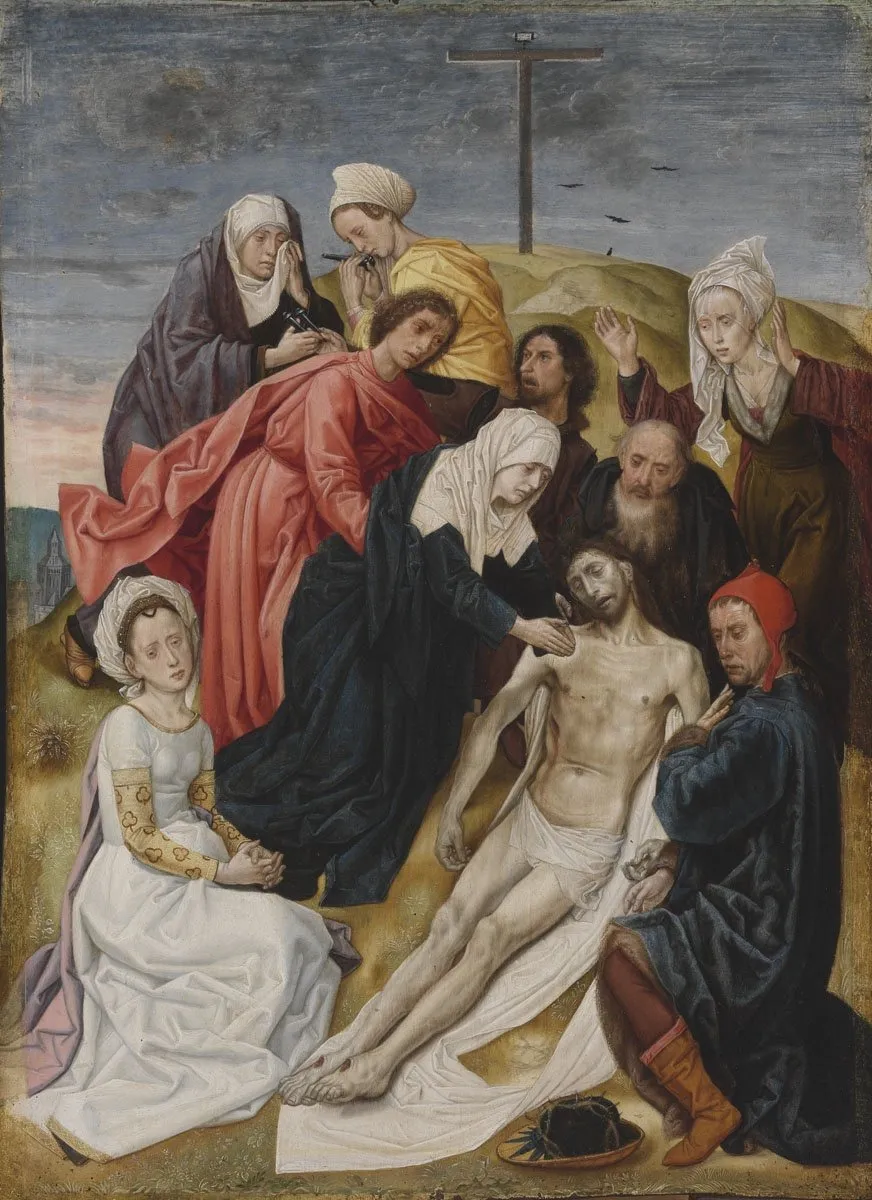
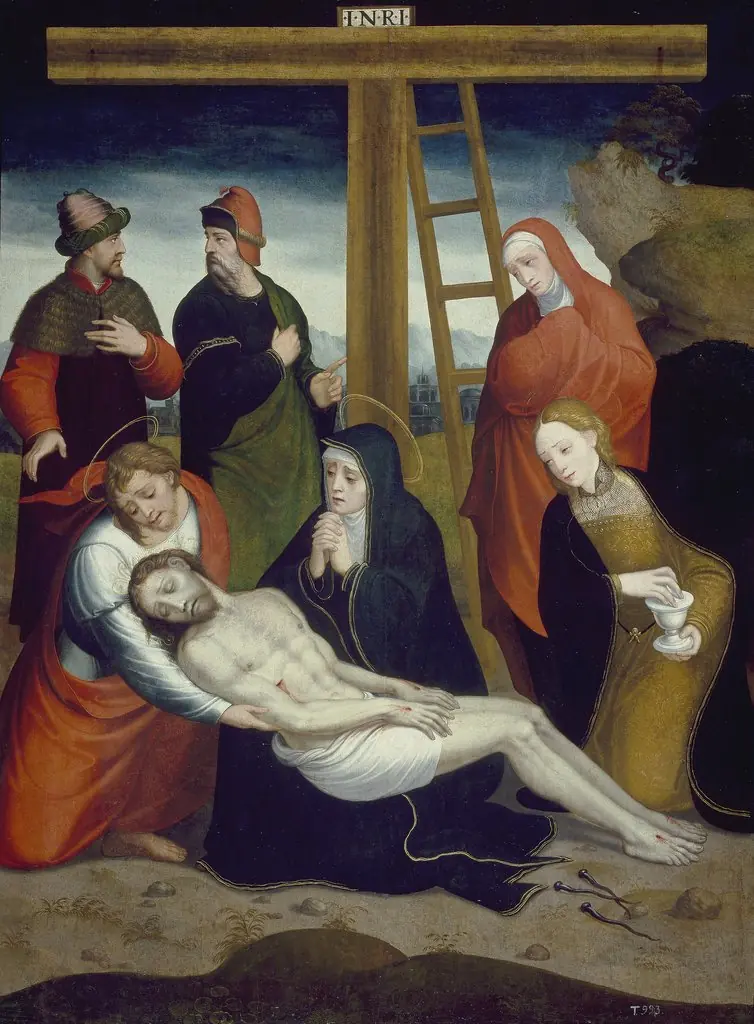
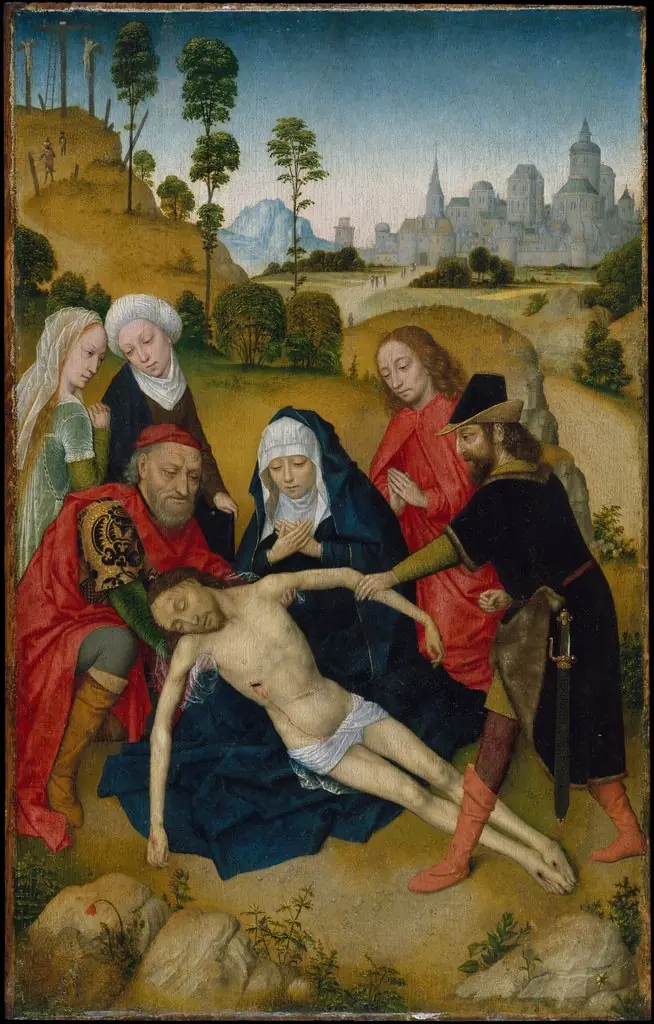
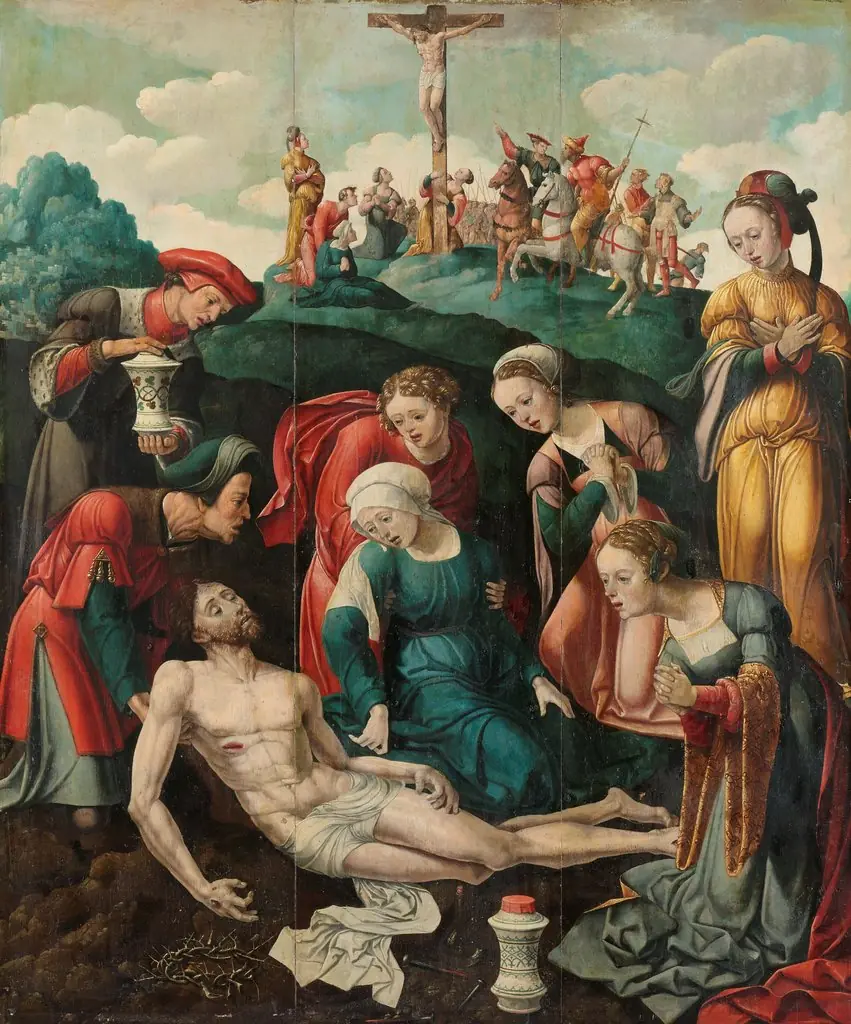
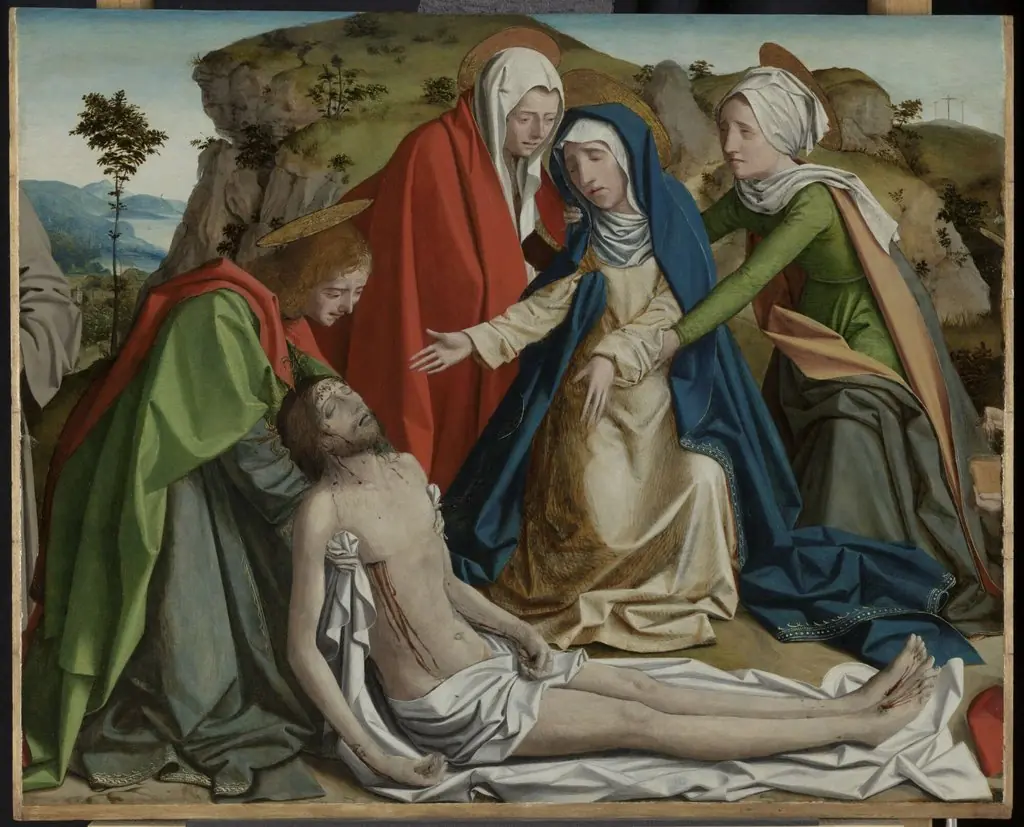
The Lamentation over the Dead Christ is an oil painting by the Early Baroque Italian artist Unknown. It dates from 1600 and is held in the collection of the Museum of Fine Arts, Budapest. This small copper painting depicts the moment after Christ’s crucifixion, as his body is mourned by a group of figures gathered around him.
About this work
Overview
This small copper painting depicts the moment after Christ’s crucifixion, as his body is mourned by a group of figures gathered around him. Rendered in muted earth tones, the scene unfolds against a quiet, barren landscape. The subdued palette and stillness of the composition convey a sense of quiet grief, emphasizing the physical and emotional weight of loss rather than dramatic spectacle.
Subject & Meaning
The distant cross on the hill anchors the scene in the narrative of the Passion, suggesting both death and the promise of resurrection.
The central figure is Christ, wrapped in a pale shroud, lying on the ground as mourners surround him. One woman covers her face in sorrow, another gently touches his arm, while others stand in silent contemplation. The distant cross on the hill anchors the scene in the narrative of the Passion, suggesting both death and the promise of resurrection. The absence of overt miracles or divine light focuses attention on human grief.
Technique & Style
Executed on copper, the painting benefits from the metal’s smooth surface, allowing for fine detail and subtle gradations in tone. The figures are rendered with restrained brushwork, their garments rendered in soft folds and muted hues. The background is simplified—hills, sky, and a lone cross—creating a sense of isolation. The lack of vivid color enhances the meditative, introspective mood of the scene.
History & Provenance
The work is attributed to a Northern European artist active in the late 15th or early 16th century, a period when small devotional panels on copper were common among private patrons. Its survival in relatively intact condition suggests it was carefully preserved, likely in a domestic or ecclesiastical setting. No definitive record of its early ownership exists, but its scale and subject point to personal piety rather than public display.
Context
Created during a time of heightened religious devotion in Northern Europe, this painting reflects the growing emphasis on intimate, emotional engagement with Christ’s suffering. Unlike large altarpieces meant for churches, such works were often owned by individuals for private prayer. The quiet composition aligns with devotional practices that encouraged reflection on mortality and redemption through personal contemplation.
Legacy
Though not widely known today, this painting exemplifies a quiet tradition of Northern Renaissance devotional art that prioritized emotional restraint over theatricality. Its focus on human grief and minimalism influenced later generations of artists seeking to convey spiritual depth through understated means. It remains a testament to the power of simplicity in sacred imagery.
Artist & collection

 Domestic Scene
 Giacomo and Cardinal Marco, investing Andrea, Abbot of San Zeno, with his Benefice
 The Nymph of Fontainebleau
 Portrait of a Woman
 Madonna and Child with Saints in the Enclosed Garden
 Venus and Minerva
 Family Group of Four on Sofa
 Wall painting from Room H of the Villa of P. Fannius Synistor at Boscoreale