Artwork
Copy of Painting inside the Caves of Ajanta (cave 2)
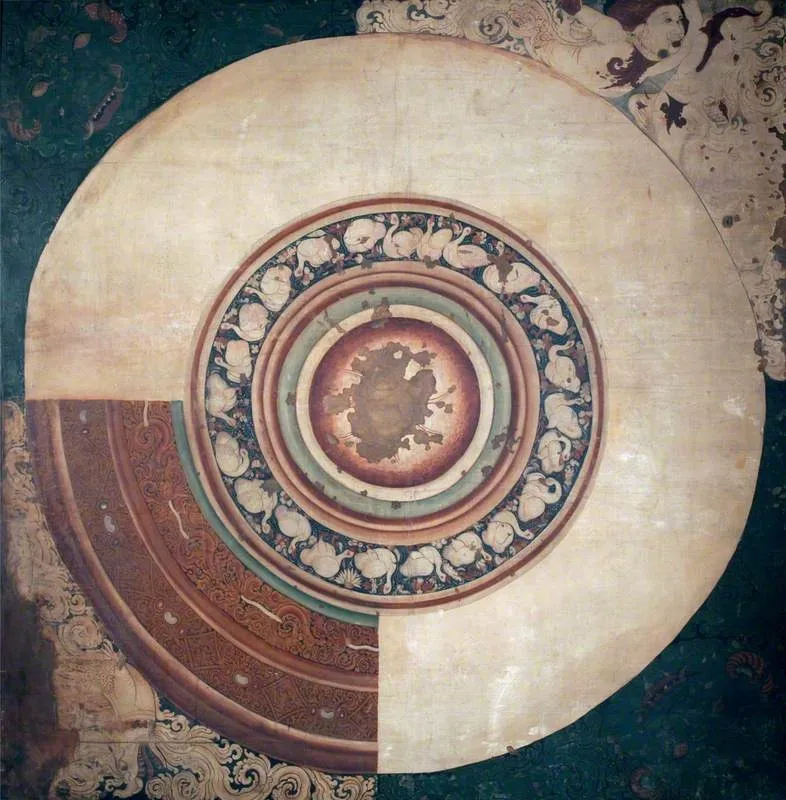
Copy of Painting inside the Caves of Ajanta (cave 2) is an oil painting by the Orientalist artist Unknown. It dates from 1890 and is held in the collection of the Victoria and Albert Museum. This oil painting reproduces a decorative motif discovered in the second cave of the Ajanta rock‑cut complex.
About this work
Overview
The dominant field is a light beige tone, while the innermost circle is rendered in dark brown, creating a focal point within the layered geometry.
This oil painting reproduces a decorative motif discovered in the second cave of the Ajanta rock‑cut complex. The composition is organized around a central circle, surrounded by multiple concentric rings that display a range of hues and patterned designs. The dominant field is a light beige tone, while the innermost circle is rendered in dark brown, creating a focal point within the layered geometry.
Subject & Meaning
The original Ajanta design is part of a broader Buddhist visual program that adorns the cave walls, where geometric and symbolic motifs often serve meditative or narrative functions. By copying this pattern, the work reflects the aesthetic vocabulary of the 5th‑century Indian monastic environment, emphasizing harmony, balance, and the cyclical nature of spiritual practice.
Technique & Style
Executed in oil on canvas, the copy employs careful brushwork to convey the subtle gradations of color and the intricate line work of the concentric circles. The medium allows for a richer surface texture than the original fresco, giving the forms a modest three‑dimensional presence while preserving the precise, almost diagrammatic quality of the source design.
History & Provenance
The source motif originates from the Ajanta Caves, a UNESCO World Heritage site in Maharashtra, India, renowned for its 2nd‑century BCE to 6th‑century CE Buddhist murals. The present oil rendition was produced later, likely as a study or decorative reference, though specific details of its creation date and ownership remain undocumented.
Context
Ajanta’s cave paintings are celebrated for their sophisticated use of narrative and decorative elements, integrating Buddhist iconography with local artistic traditions. The circular motif reproduced here exemplifies the site’s penchant for geometric ornamentation, which complemented figurative scenes and contributed to the overall spiritual ambience of the monastic chambers.
Legacy
Copies such as this have played a role in disseminating the visual language of Ajanta beyond its geographic confines, informing later artistic and scholarly engagements with Indian Buddhist art. By translating a fresco motif into oil, the work illustrates how traditional designs can be reinterpreted across media while retaining their original symbolic resonance.
Artist & collection

 Domestic Scene
 Giacomo and Cardinal Marco, investing Andrea, Abbot of San Zeno, with his Benefice
 The Nymph of Fontainebleau
 Portrait of a Woman
 Madonna and Child with Saints in the Enclosed Garden
 Venus and Minerva
 Family Group of Four on Sofa
 Wall painting from Room H of the Villa of P. Fannius Synistor at Boscoreale
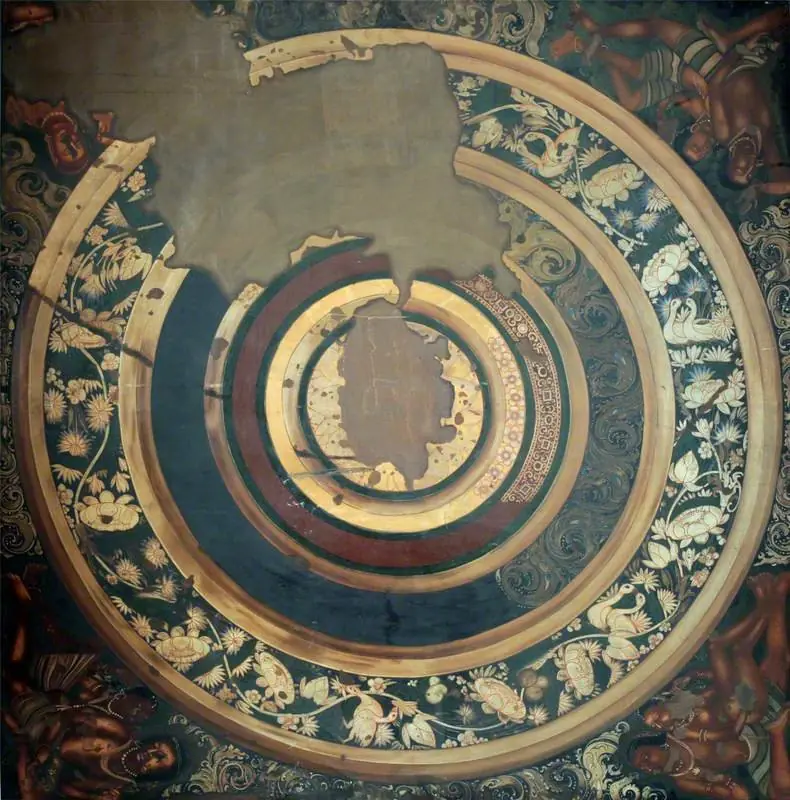 Copy of Painting inside the Caves of Ajanta (cave 2)
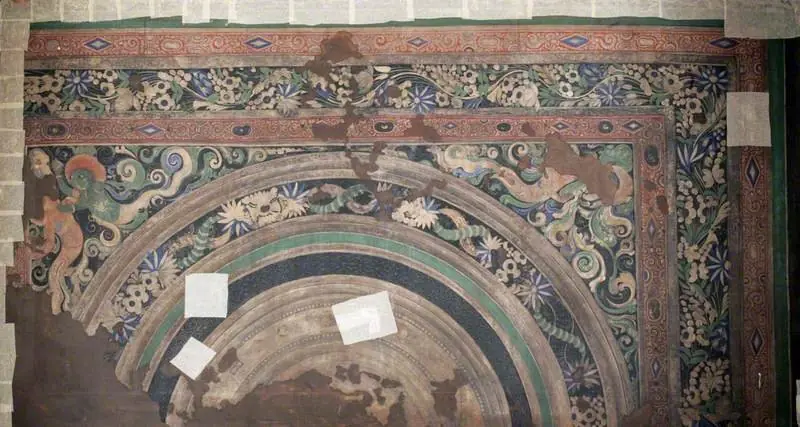 Copy of Painting inside the Caves of Ajanta (cave 21)
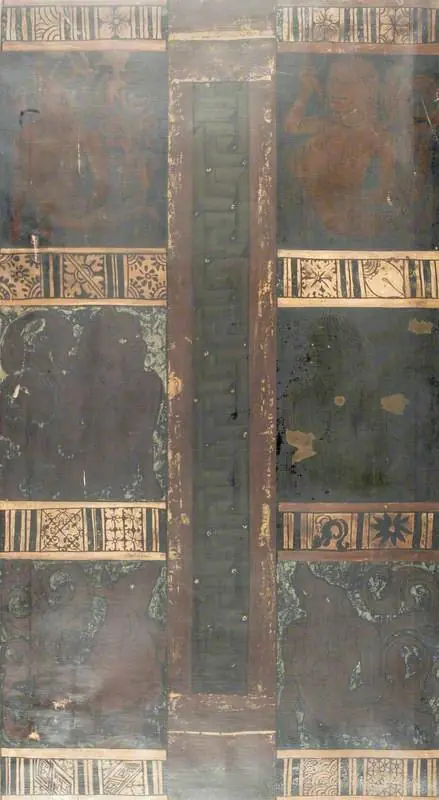 Copy of Painting inside the Caves of Ajanta (cave 2)
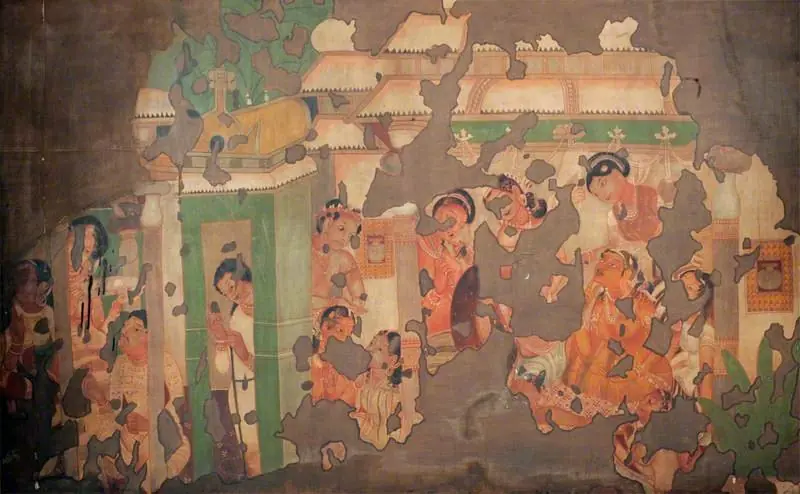 Copy of Painting inside the Caves of Ajanta (cave 1)
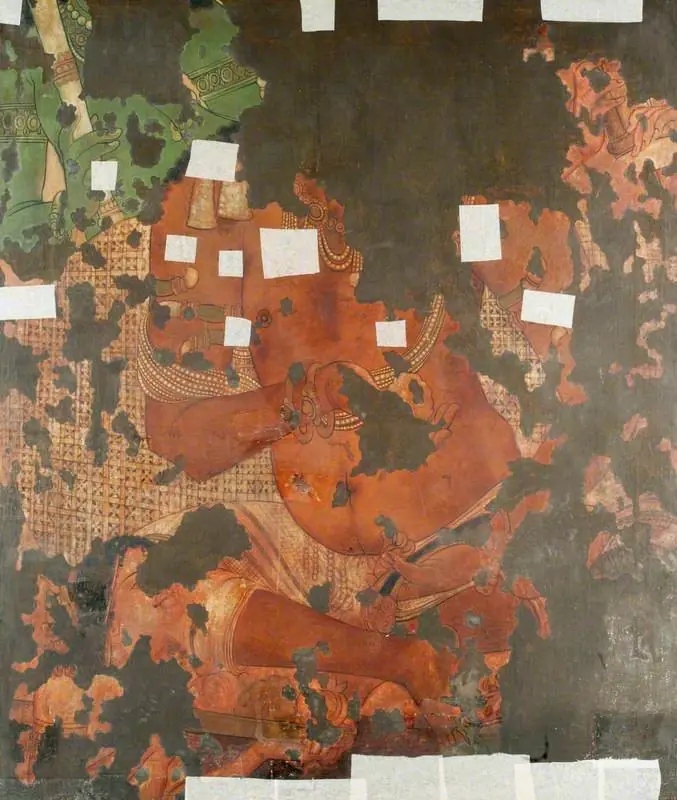 Copy of Painting inside the Caves of Ajanta (cave 16)
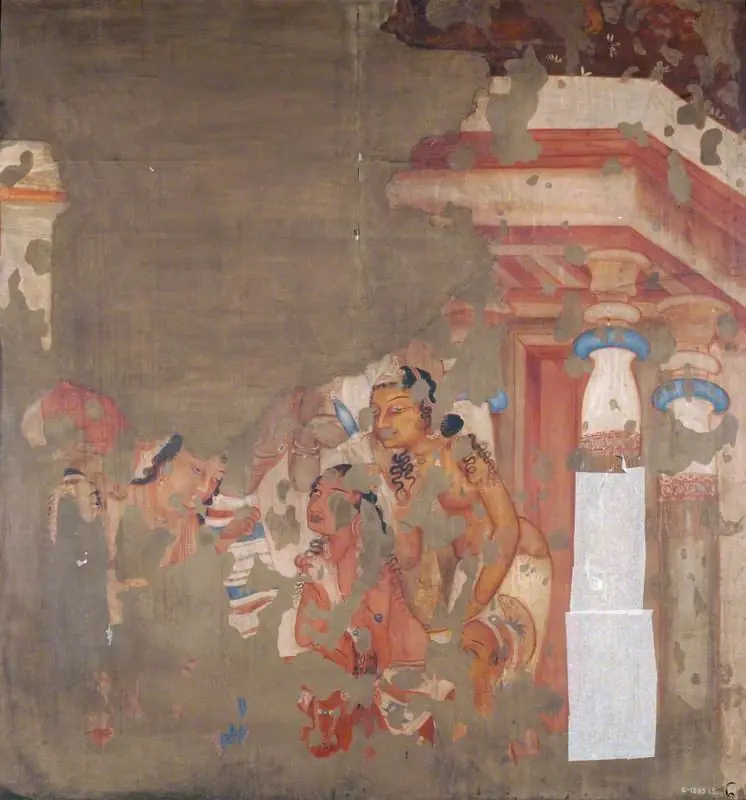 Copy of Painting inside the Caves of Ajanta (cave 1)
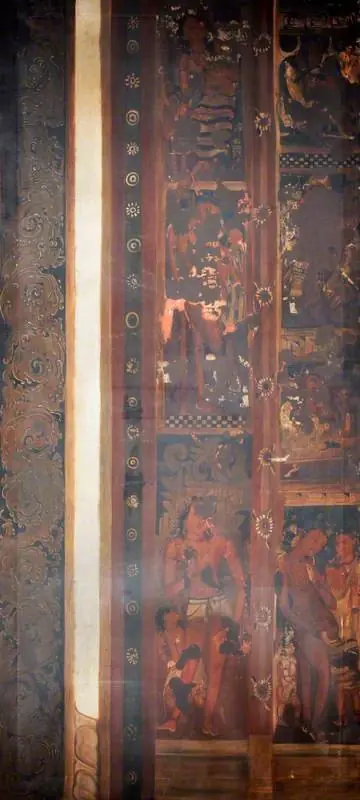 Copy of Painting inside the Caves of Ajanta (cave 6)