Artwork
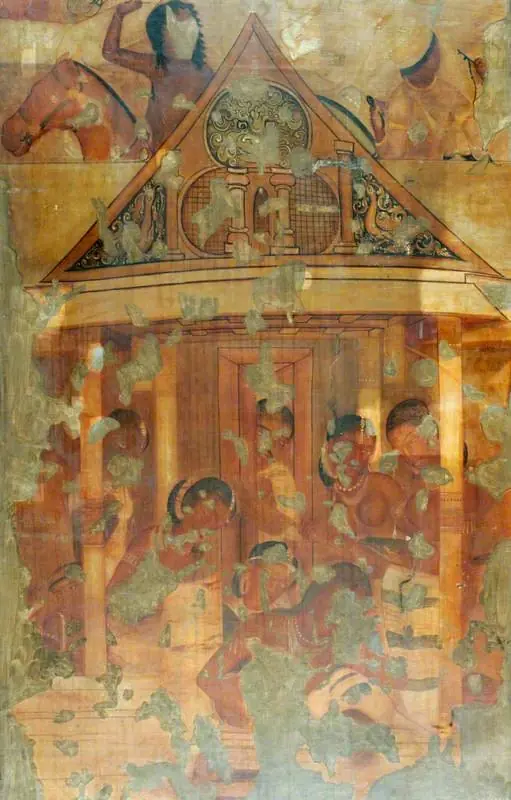
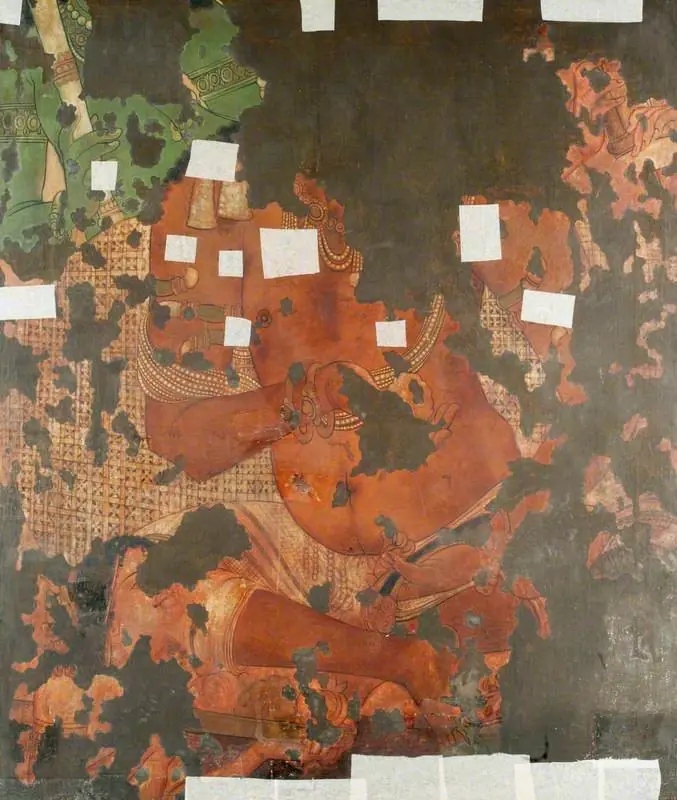
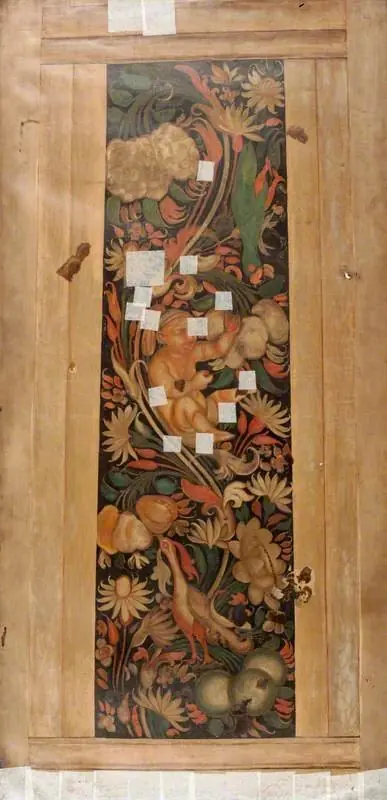
Copy of Painting inside the Caves of Ajanta (cave 2)
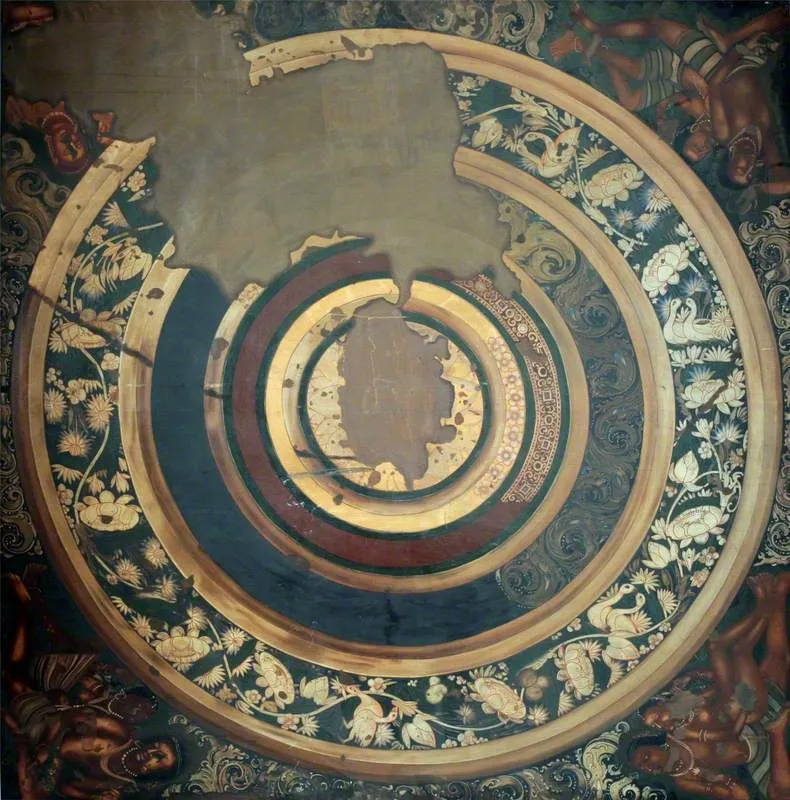
Copy of Painting inside the Caves of Ajanta (cave 2) is an oil painting by the Orientalist artist Unknown. It dates from 1890 and is held in the collection of the Victoria and Albert Museum. This oil painting, executed in 1878, reproduces a mural originally located in Cave 2 of the Ajanta rock‑cut complex.
About this work
The image is a circular composition with a central spiral design, surrounded by floral patterns and figures of people.
This painting is a copy of one found inside the Caves of Ajanta, specifically cave 2. It's an oil painting made in 1878. The image is a circular composition with a central spiral design, surrounded by floral patterns and figures of people. The colors are muted, with shades of brown, gold, and black. A notable detail is the use of chiaroscuro, a technique that creates a strong contrast between light and dark areas. This adds depth and dimension to the painting.
Overview
This oil painting, executed in 1878, reproduces a mural originally located in Cave 2 of the Ajanta rock‑cut complex. The work presents a circular composition centered on a spiral motif, encircled by stylized floral ornamentation and human figures. Its palette is restrained, dominated by earthy browns, muted golds and deep blacks, giving the piece a subdued tonal quality.
Subject & Meaning
The central spiral likely symbolizes the cyclical nature of existence, a theme common in Buddhist visual culture. The surrounding figures, rendered in profile, appear engaged in ritual or narrative activity, suggesting a depiction of devotional practice or mythic storytelling associated with the original Ajanta frescoes.
Technique & Style
The artist employed chiaroscuro, contrasting illuminated areas with shadowed zones to model forms and suggest three‑dimensional space. This approach, combined with the flat decorative borders, reflects a 19th‑century Western interpretation of Indian mural conventions, merging academic oil techniques with the ornamental vocabulary of the original fresco.
History & Provenance
Created as a copy of the Ajanta mural, the painting was produced during a period of heightened European interest in Indian art following the British colonial presence. Its date of 1878 places it within the broader context of Orientalist scholarship and the circulation of reproductions for study and exhibition in Europe.
Context
The Ajanta caves, carved between the 2nd century BCE and 6th century CE, house some of the most celebrated Buddhist wall paintings in the world. By the late 19th century, these sites had been documented by explorers and artists, prompting the creation of copies such as this one to disseminate their visual language beyond the remote gorge.
Legacy
Copies like this oil work contributed to the Western academic understanding of Indian mural art and informed subsequent artistic movements that incorporated Eastern motifs. While not an original fresco, the painting serves as a historical artifact reflecting cross‑cultural exchange and the 19th‑century effort to preserve and study the Ajanta heritage.
Artist & collection

 Domestic Scene
 Giacomo and Cardinal Marco, investing Andrea, Abbot of San Zeno, with his Benefice
 The Nymph of Fontainebleau
 Portrait of a Woman
 Madonna and Child with Saints in the Enclosed Garden
 Venus and Minerva
 Family Group of Four on Sofa
 Wall painting from Room H of the Villa of P. Fannius Synistor at Boscoreale
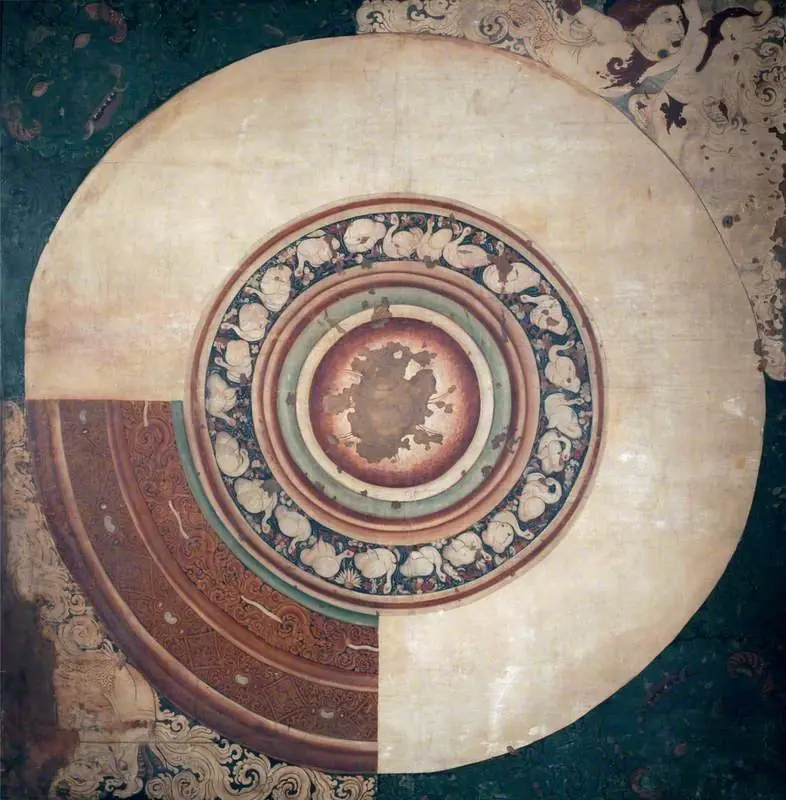 Copy of Painting inside the Caves of Ajanta (cave 2)
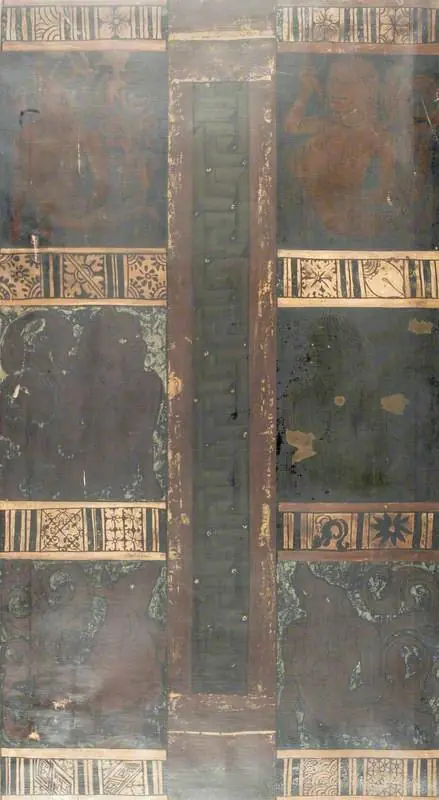 Copy of Painting inside the Caves of Ajanta (cave 2)
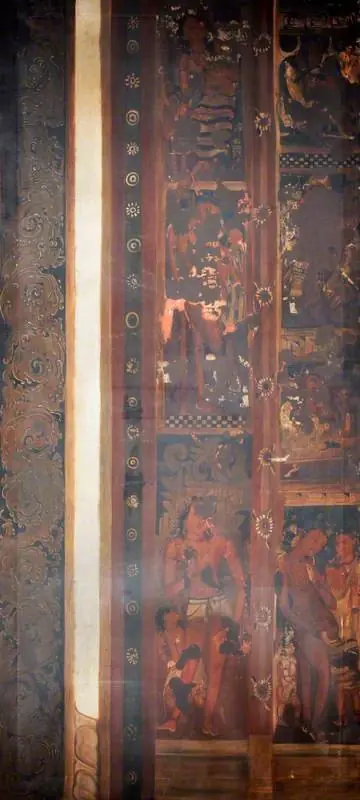 Copy of Painting inside the Caves of Ajanta (cave 6)
 Copy of Painting inside the Caves of Ajanta (cave 17)
 Copy of Painting inside the Caves of Ajanta (cave 6)
 Copy of Painting inside the Caves of Ajanta (cave 16)
 Copy of Painting inside the Caves of Ajanta (cave 1)