Artwork
Copy of Painting inside the Caves of Ajanta (cave 6)
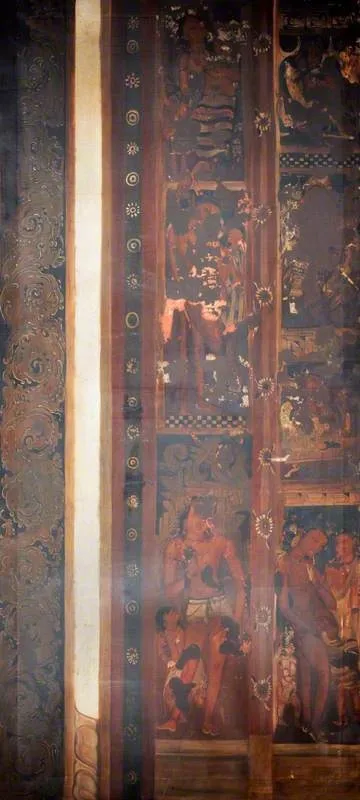
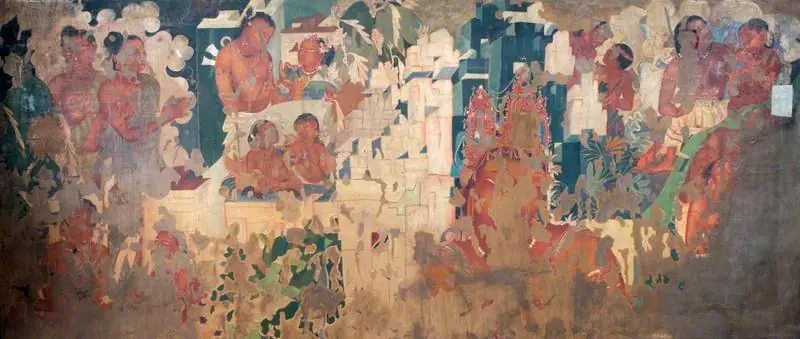
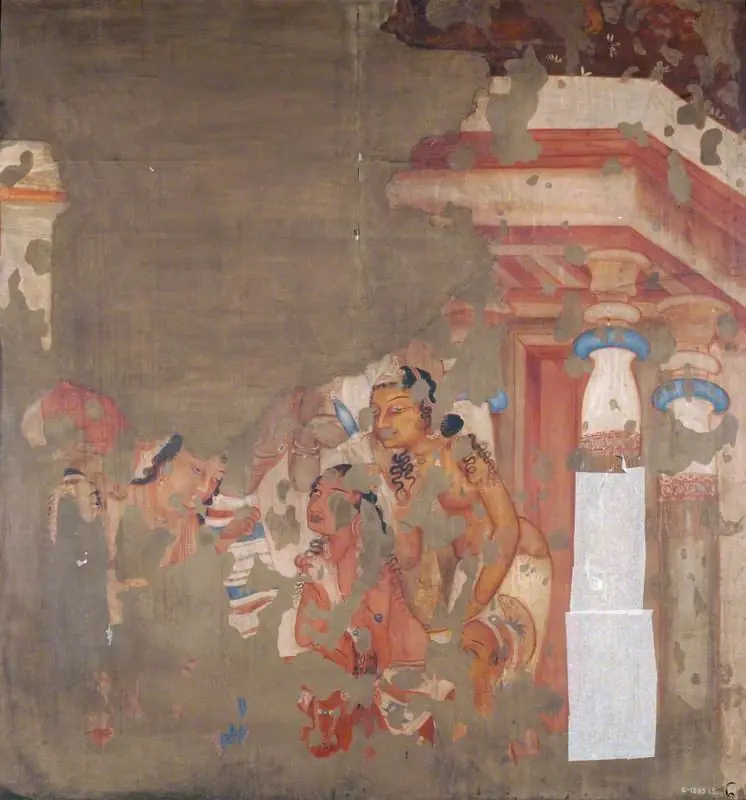
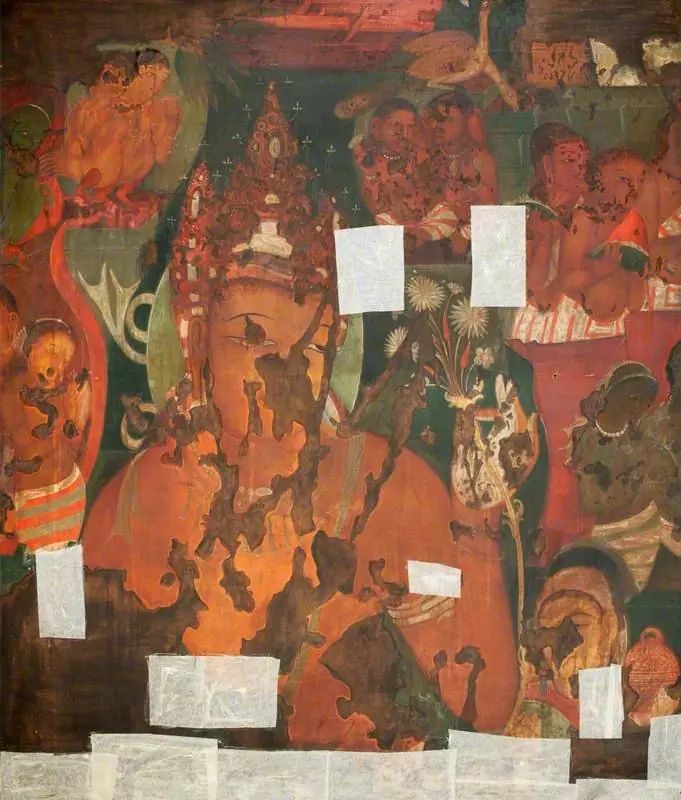
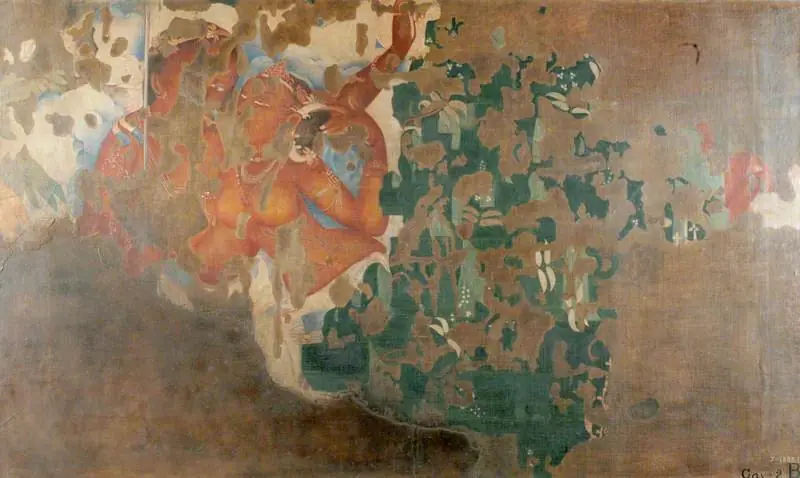
Copy of Painting inside the Caves of Ajanta (cave 6) is an oil painting by the Orientalist artist Unknown. It dates from 1890 and is held in the collection of the Victoria and Albert Museum. This oil painting, created in 1878, is a copy of a mural from Cave 6 at Ajanta.
About this work
The painting's use of chiaroscuro, a technique that uses strong contrasts between light and dark, adds to its sense of depth and dimensionality.
This painting is a copy of artwork inside the Caves of Ajanta, specifically cave 6. It's an oil painting created in 1878. The artwork is held at the Victoria and Albert Museum.
The painting features a variety of figures, with some in the foreground and others in the background. The colors are muted, with shades of brown and red dominating the palette. The overall effect is one of depth and texture, with the figures blending into the background.
The painting's use of chiaroscuro, a technique that uses strong contrasts between light and dark, adds to its sense of depth and dimensionality. This technique was often used in Renaissance art to create a sense of volume and space.
Overview
This oil painting, created in 1878, is a copy of a mural from Cave 6 at Ajanta. It is now part of the Victoria and Albert Museum's collection.
Subject & Meaning
The painting depicts multiple figures, layered in the foreground and background, conveying a sense of depth. The dominant brown and red hues create a muted palette, while the figures merge with the surroundings.
Technique & Style
The artist employed chiaroscuro, a technique characterized by strong light-dark contrasts, to achieve a sense of volume and spatial depth, a method commonly used in Renaissance art.
Artist & collection

 Domestic Scene
 Giacomo and Cardinal Marco, investing Andrea, Abbot of San Zeno, with his Benefice
 The Nymph of Fontainebleau
 Portrait of a Woman
 Madonna and Child with Saints in the Enclosed Garden
 Venus and Minerva
 Family Group of Four on Sofa
 Wall painting from Room H of the Villa of P. Fannius Synistor at Boscoreale
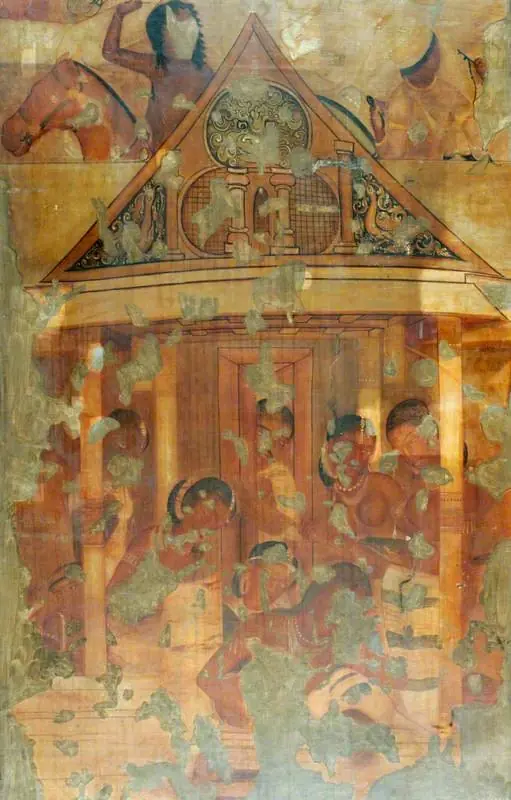 Copy of Painting inside the Caves of Ajanta (cave 17)
 Copy of Painting inside the Caves of Ajanta (cave 6)
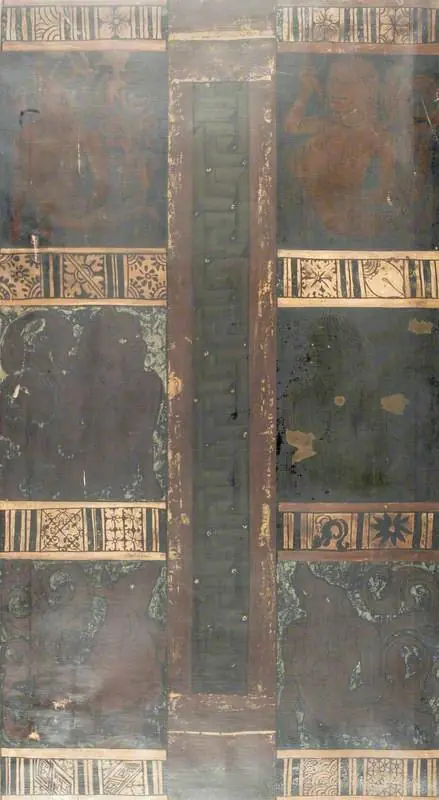 Copy of Painting inside the Caves of Ajanta (cave 2)
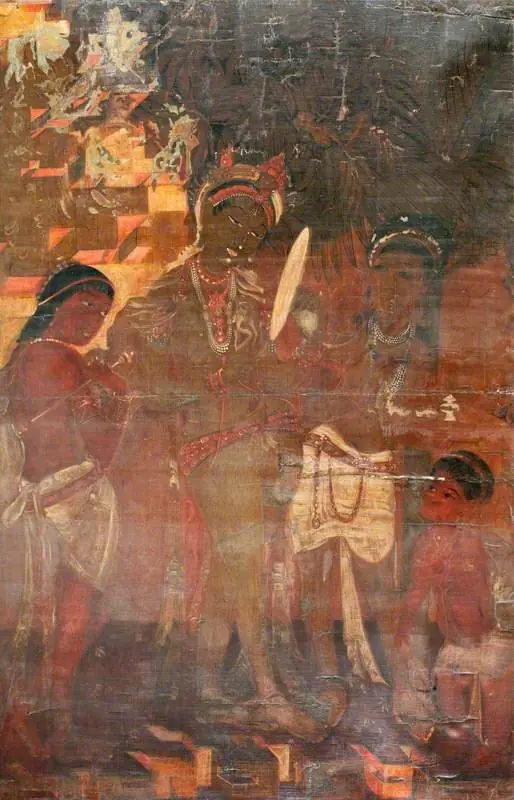 Copy of Painting inside the Caves of Ajanta (cave 17)
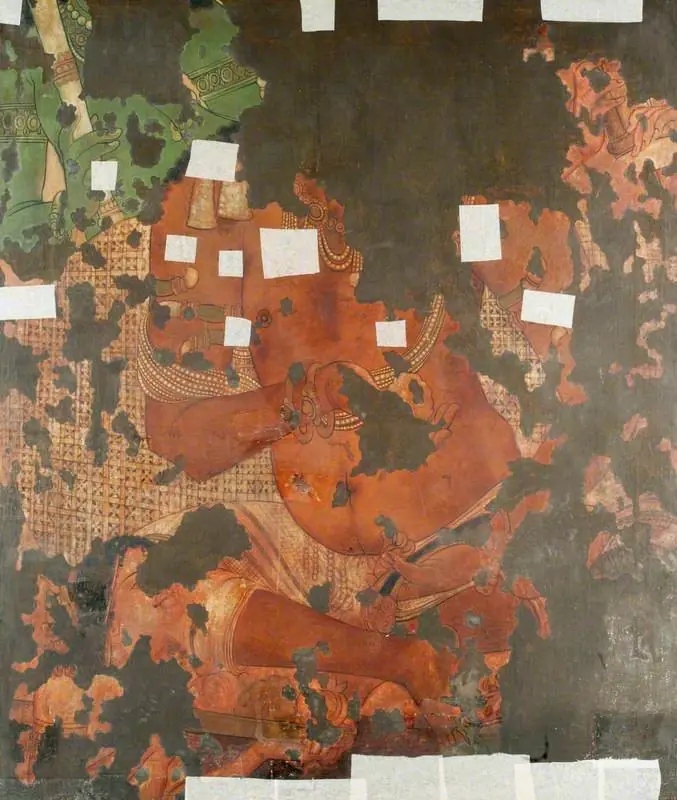 Copy of Painting inside the Caves of Ajanta (cave 16)
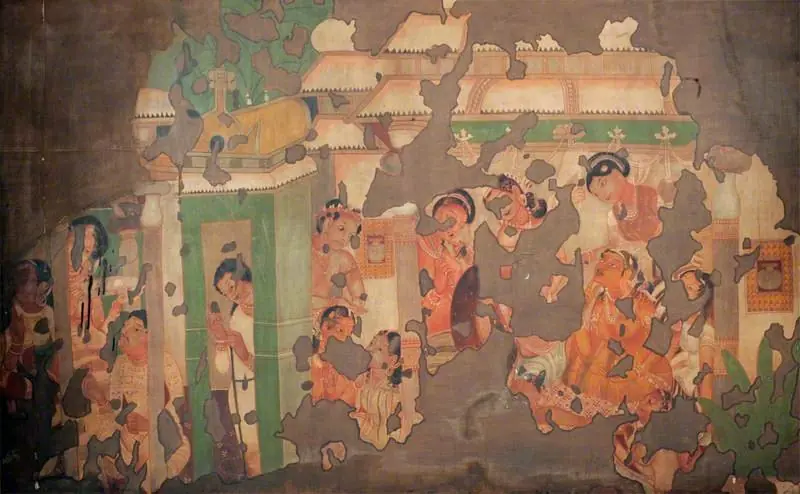 Copy of Painting inside the Caves of Ajanta (cave 1)
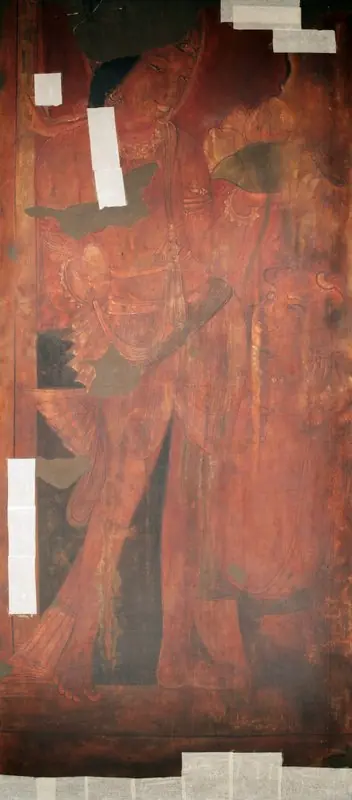 Copy of Painting inside the Caves of Ajanta (cave 17)
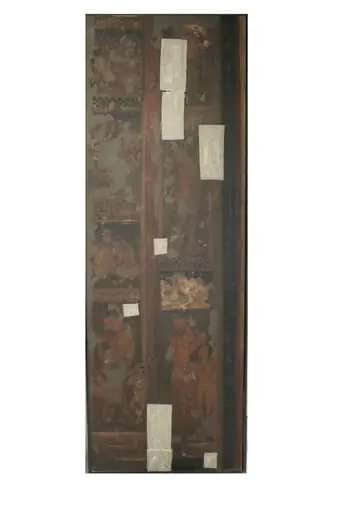 Copy of painting in the caves of Ajanta (cave 6)
 Copy of Painting inside the Caves of Ajanta (cave 2)
 Copy of Painting inside the Caves of Ajanta (cave 1)
 Copy of Painting inside the Caves of Ajanta (cave 11)
 Copy of Painting inside the Caves of Ajanta (cave 2)