Artwork
Mahakala Panjarnata (Lord of the Pavilion)
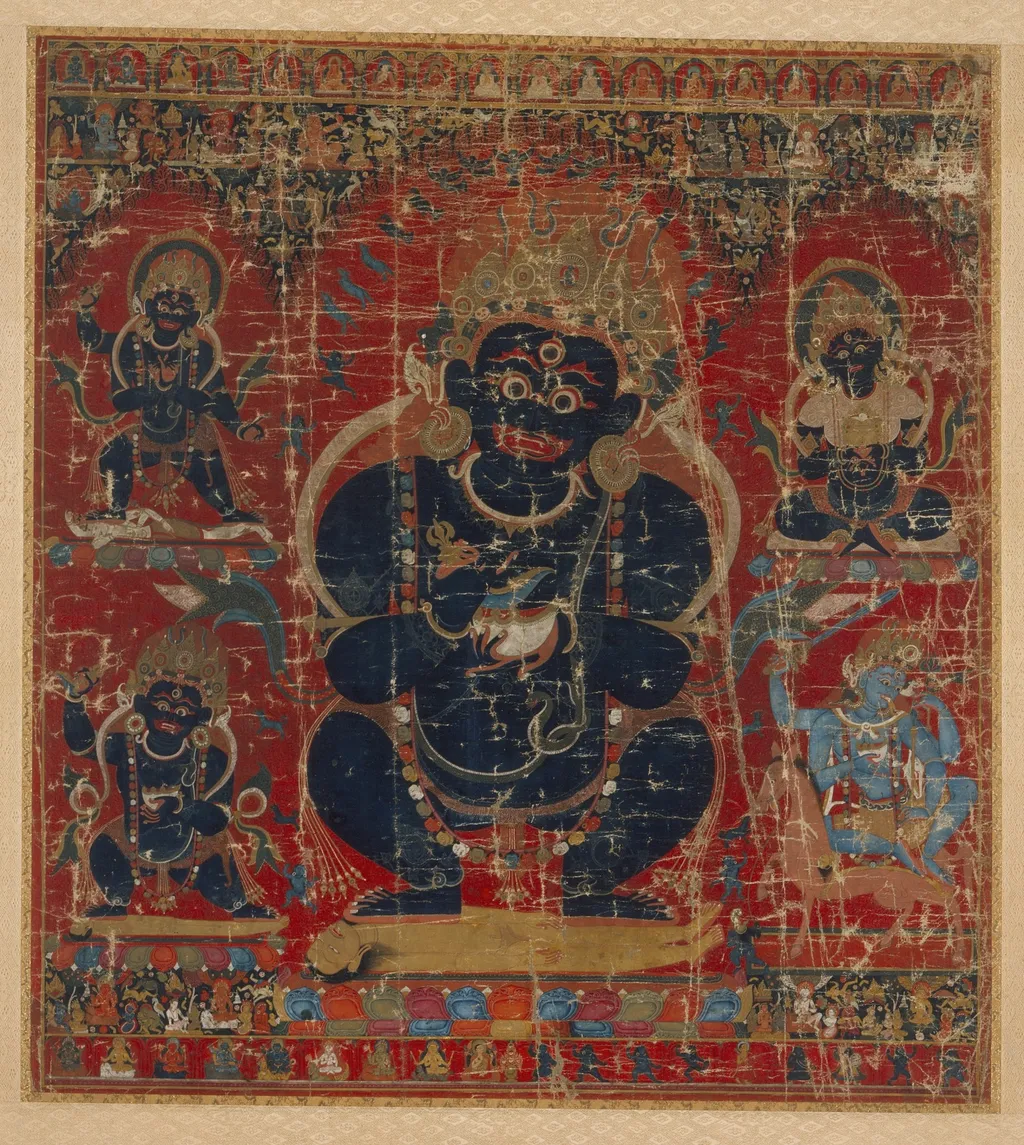
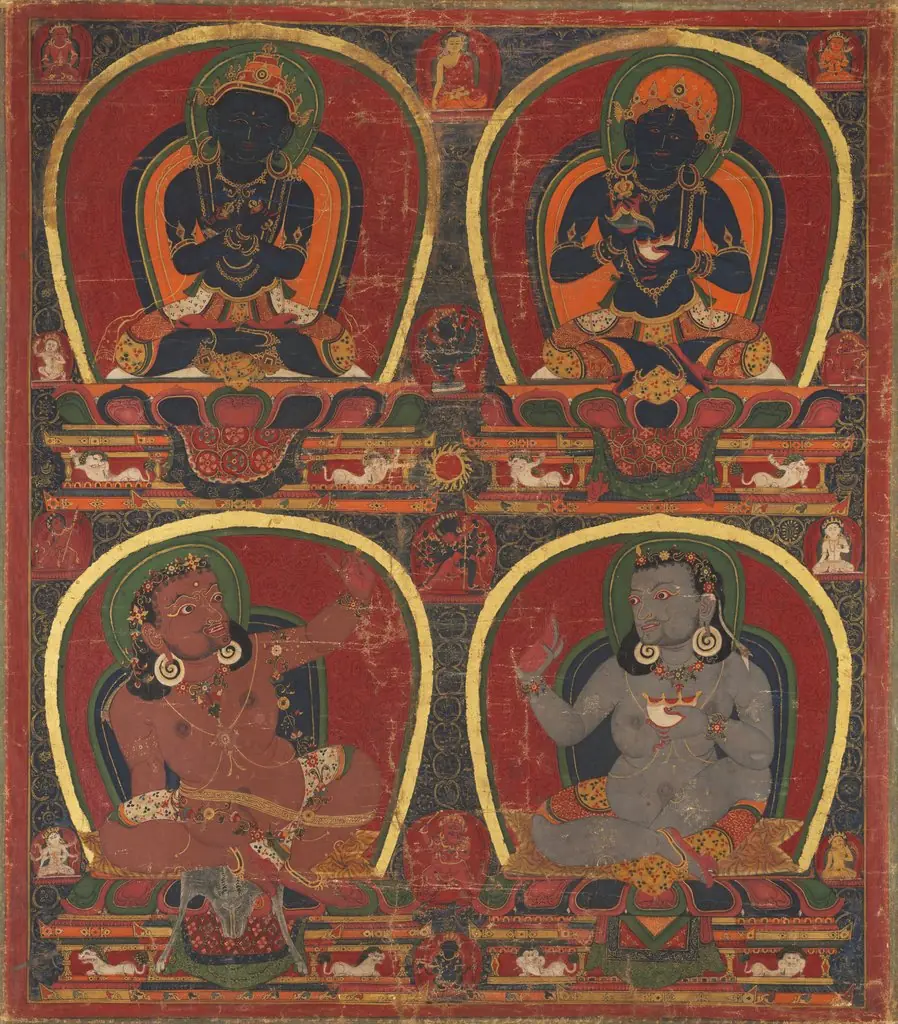
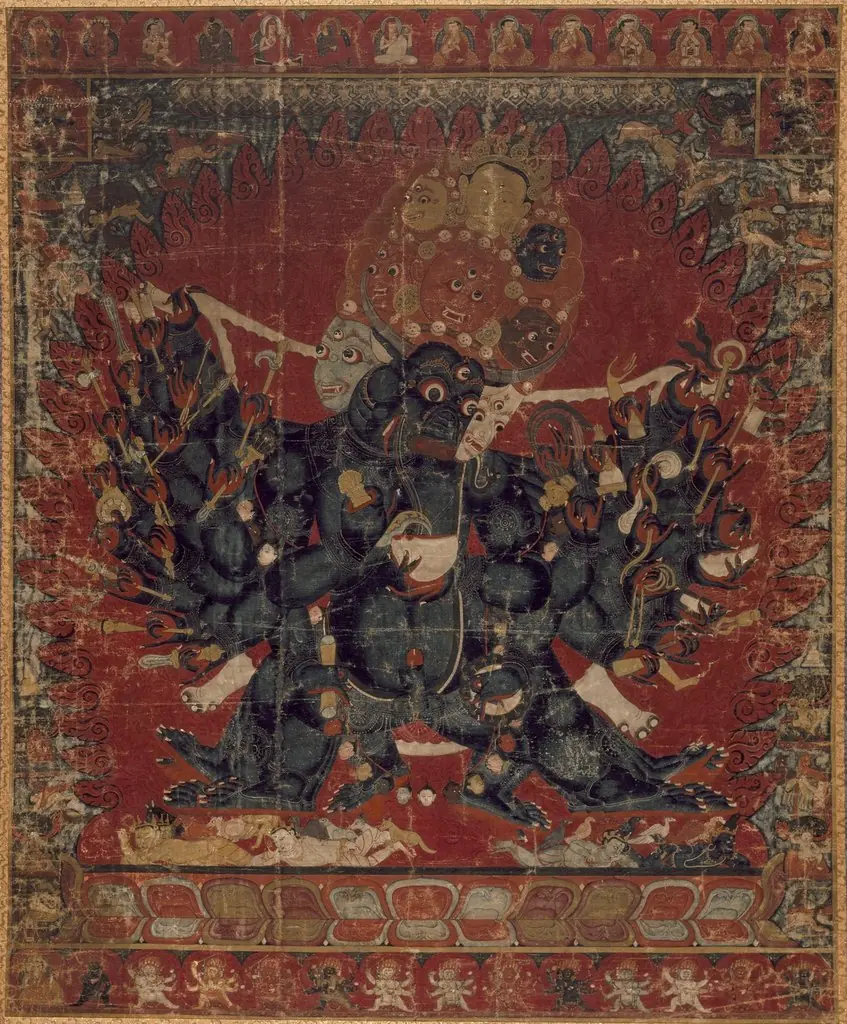
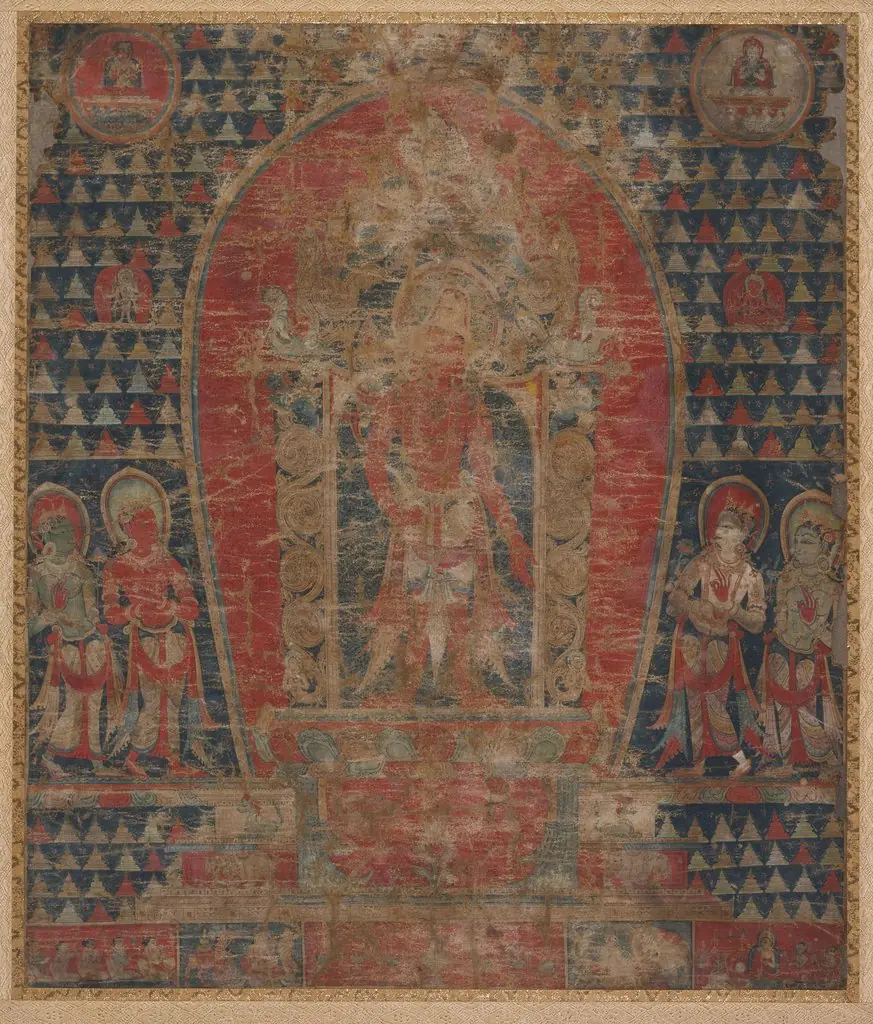
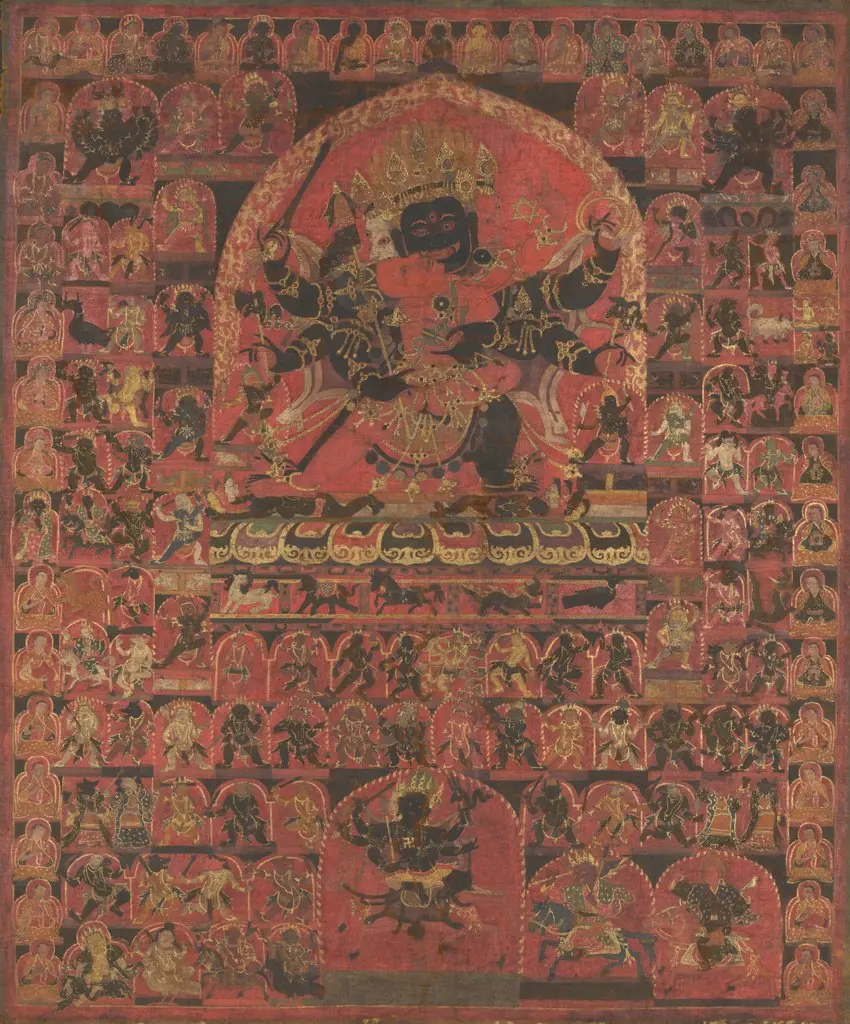
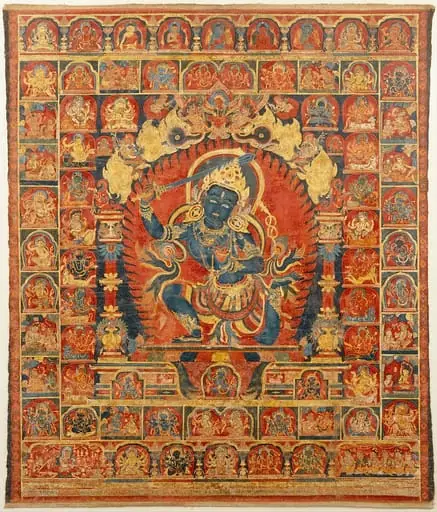
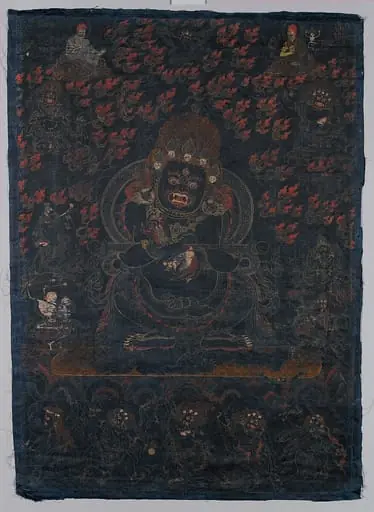
Mahakala Panjarnata (Lord of the Pavilion) is an unspecified painting by Unknown. It is held in the collection of the Los Angeles County Museum of Art. This Tibetan Buddhist painting depicts Mahakala in his form as Panjarnata, the Lord of the Pavilion.
About this work
Overview
This Tibetan Buddhist painting depicts Mahakala in his form as Panjarnata, the Lord of the Pavilion. Rendered in mineral pigments on cloth, it functions as a ritual object used in meditation and protection ceremonies. The composition follows traditional iconographic rules, emphasizing symbolic elements over naturalistic representation to convey spiritual authority and cosmic order.
Subject & Meaning
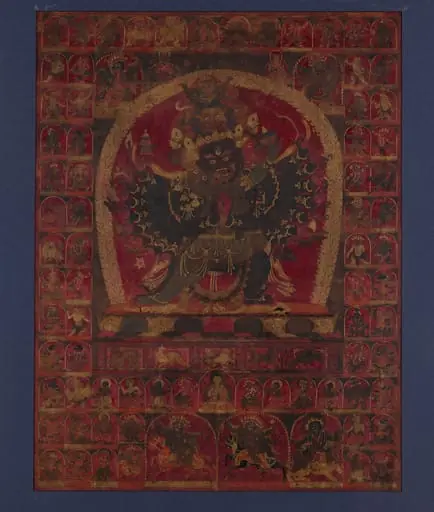
Mahakala, a wrathful protector deity, is shown within a pavilion-like structure symbolizing sacred space and divine enclosure. His dark blue form, multiple arms, and fierce expression signify the destruction of ignorance and obstacles. The pavilion represents the boundary between samsara and enlightenment, reinforcing his role as guardian of the Dharma and practitioner’s spiritual path.
Technique & Style
Gold leaf highlights accentuate divine attributes, while the rigid symmetry and hierarchical scaling reflect canonical Tibetan Buddhist art conventions.
The painting employs precise line work and flat, saturated colors derived from ground minerals and organic pigments. Gold leaf highlights accentuate divine attributes, while the rigid symmetry and hierarchical scaling reflect canonical Tibetan Buddhist art conventions. Background patterns and ornamental borders follow established motifs, reinforcing ritual function over individual artistic expression.
History & Provenance
Created likely in the 17th or 18th century in Tibet, the work was probably commissioned by a monastery or high-ranking lama for use in tantric rituals. It remained within monastic collections until the 20th century, when it entered a private or institutional collection outside Tibet, preserving its original condition and iconographic integrity.
Context
Mahakala worship intensified in Tibet during the later medieval period, especially under the influence of the Kagyu and Gelug schools. Paintings like this served as visual aids in complex meditative practices, helping practitioners visualize deities and internalize protective energies. Such works were not merely decorative but integral to liturgical life and spiritual discipline.
Legacy
This painting continues to be studied as an example of Tibetan Buddhist visual theology. Its preservation allows scholars to trace the transmission of iconographic traditions across regions and centuries. While no longer used in active ritual, it remains a key reference for understanding the intersection of art, religion, and cosmology in Himalayan Buddhist culture.
Artist & collection

 Domestic Scene
 Giacomo and Cardinal Marco, investing Andrea, Abbot of San Zeno, with his Benefice
 The Nymph of Fontainebleau
 Portrait of a Woman
 Madonna and Child with Saints in the Enclosed Garden
 Venus and Minerva
 Family Group of Four on Sofa
 Wall painting from Room H of the Villa of P. Fannius Synistor at Boscoreale