Artwork
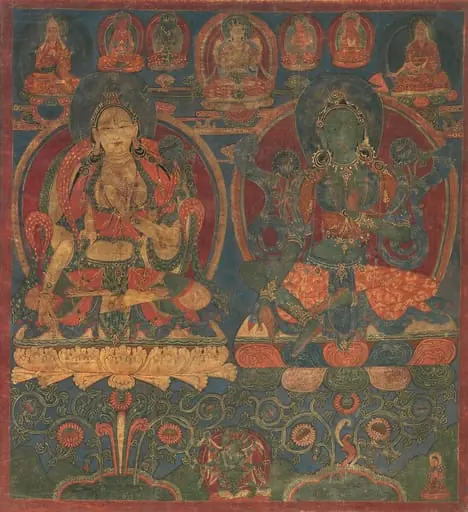
Vajradhara, Nairatmya, and mahasiddhas Virupa and Kanha
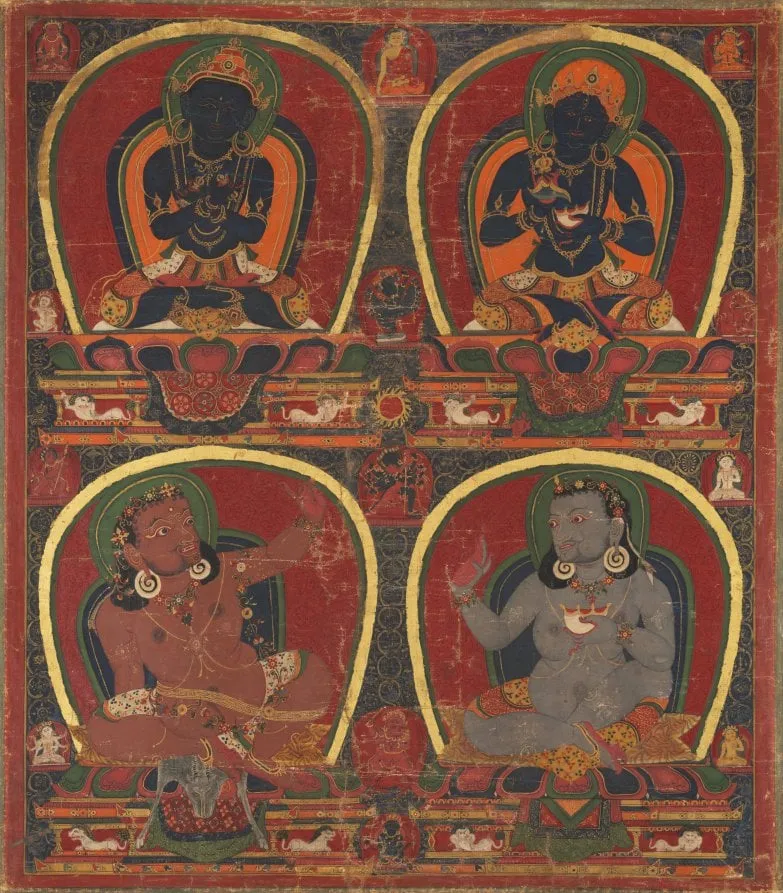
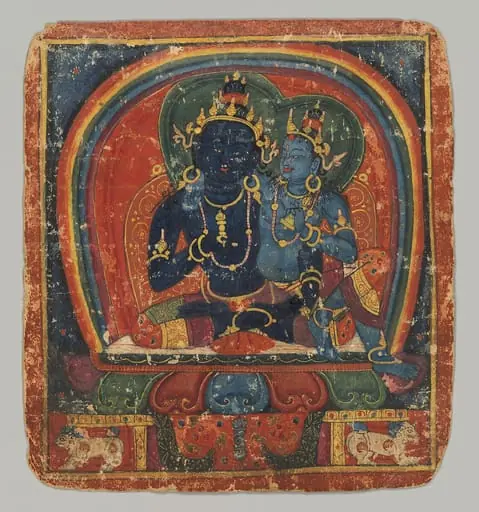
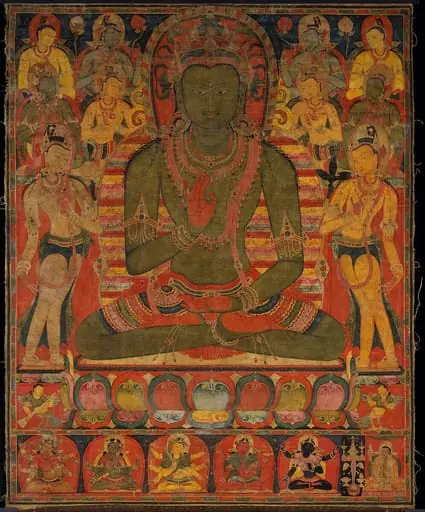
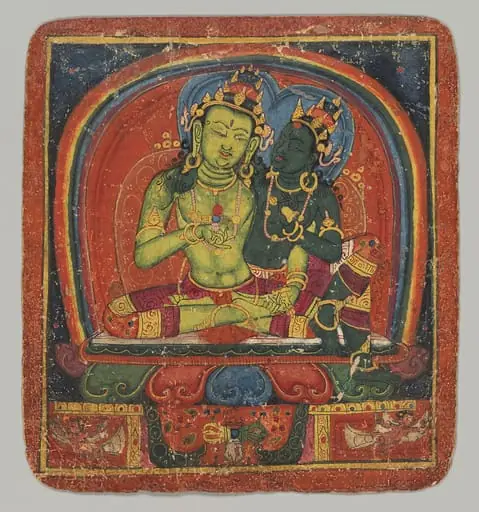
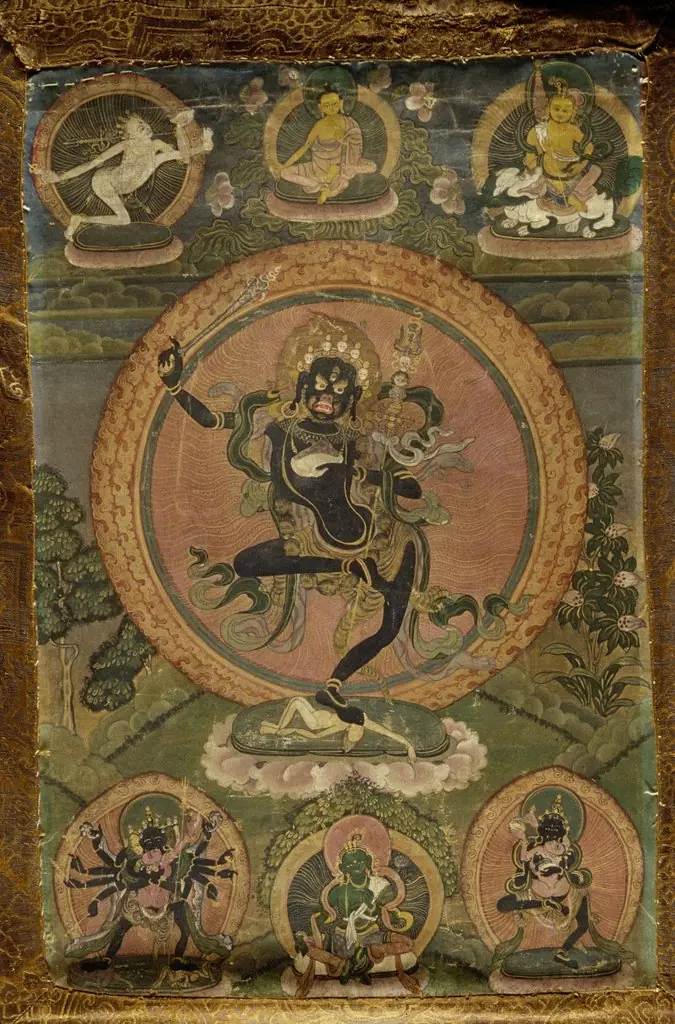
Vajradhara, Nairatmya, and mahasiddhas Virupa and Kanha is an unspecified painting by the Renaissance artist Unknown. It dates from 1450 and is held in the collection of the Cleveland Museum of Art. This Tibetan Buddhist painting initiates a series illustrating the lineage of enlightenment teachings.
About this work
Overview
This Tibetan Buddhist painting initiates a series illustrating the lineage of enlightenment teachings. Four key figures are depicted against a golden backdrop: Vajradhara, Nairatmya, Virupa, and Kanha, each playing a role in the transmission of spiritual wisdom.
Subject & Meaning
The composition conveys a lineage of enlightenment. Vajradhara, embodying the essence of all Buddhas, is shown at the upper left. Nairatmya, a female enlightened being, sits at the upper right, having received teachings from Vajradhara. She then transmits these teachings to Virupa, an Indian yogi, through a vision, and Virupa passes them to his disciple Kanha.
Technique & Style
The painting features a characteristic Tibetan Buddhist style, with figures set against a solid gold background. The use of distinct colors for each figure (blue for Vajradhara, red for Nairatmya, brown for Virupa and Kanha) visually differentiates their roles within the spiritual lineage.
History & Provenance
This work is the first in a series associated with the spiritual lineage teachings. While specific details about its creation date and artist are not provided, it is linked to the artistic traditions of Ngor Monastery, suggesting a 15th- to 17th-century origin, given the monastery's flourishing period.
Context
The painting reflects the importance of lineage in Tibetan Buddhism, where the direct transmission of teachings from master to disciple is revered. The inclusion of both Indian (Virupa, Kanha) and Tibetan (implied through Vajradhara and Nairatmya) figures highlights the cross-cultural exchange of Buddhist teachings.
Legacy
As part of a series mapping a spiritual family tree, this painting contributes to the visual and philosophical heritage of Tibetan Buddhism. Its style and thematic focus on lineage have influenced subsequent artistic depictions of Buddhist transmission lineages.
Artist & collection

 Domestic Scene
 Giacomo and Cardinal Marco, investing Andrea, Abbot of San Zeno, with his Benefice
 The Nymph of Fontainebleau
 Portrait of a Woman
 Madonna and Child with Saints in the Enclosed Garden
 Venus and Minerva
 Family Group of Four on Sofa
 Wall painting from Room H of the Villa of P. Fannius Synistor at Boscoreale