Artwork
The lover’s son makes an elephant of the pastry dough carried by the unfaithful wife and puts it in her basket, from a Tuti-nama (Tales of a Parrot): Eighth Night
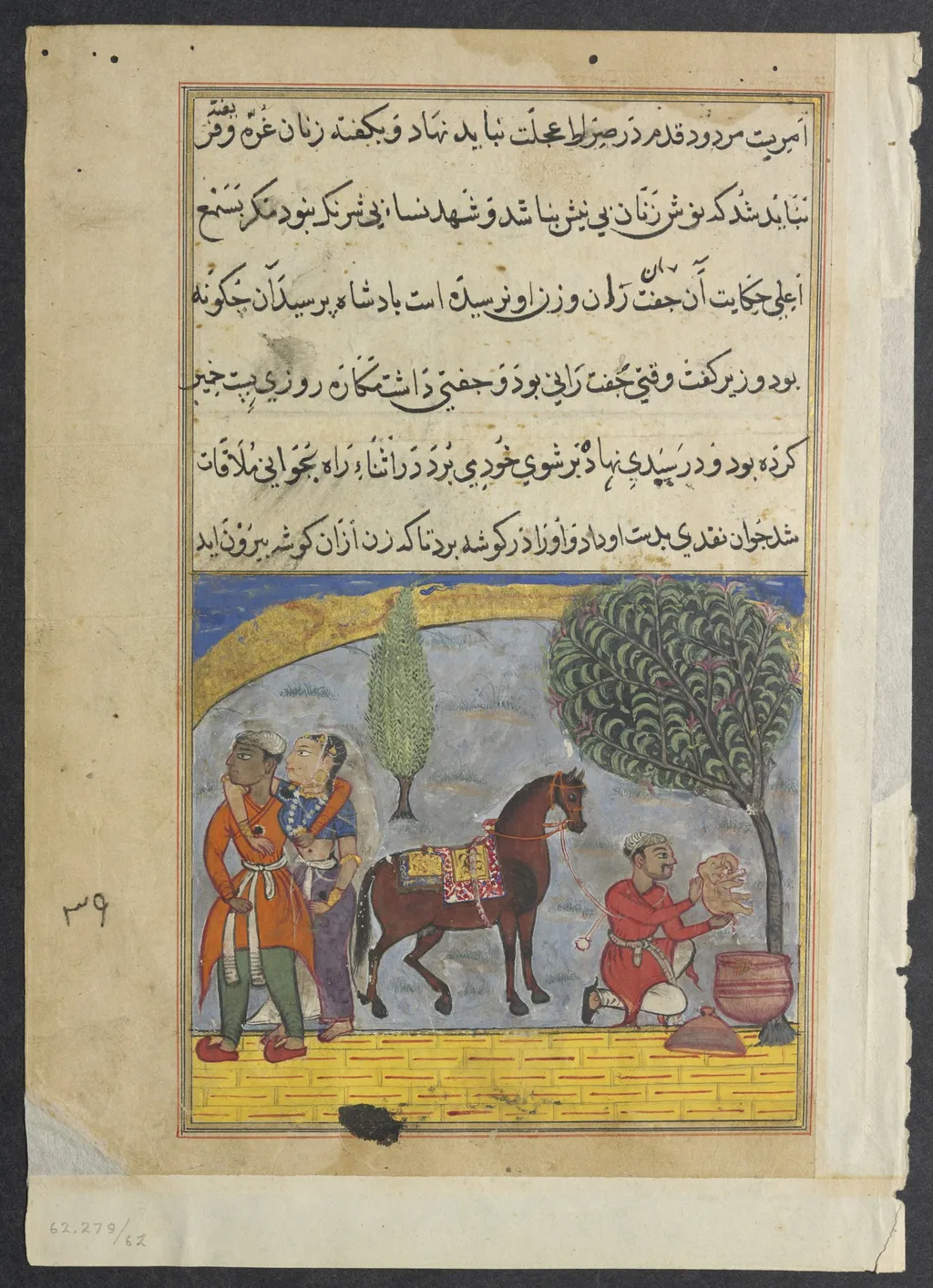
The lover’s son makes an elephant of the pastry dough carried by the unfaithful wife and puts it in her basket, from a Tuti-nama (Tales of a Parrot): Eighth Night is an unspecified painting. It dates from 1560 and is held in the collection of the Cleveland Museum of Art.
About this work
Overview
The work depicts a compact, brightly coloured tableau drawn from the eighth night of the Persian illustrated manuscript *Tuti‑nama* (Tales of a Parrot).
The work depicts a compact, brightly coloured tableau drawn from the eighth night of the Persian illustrated manuscript *Tuti‑nama* (Tales of a Parrot). A kneeling man in a red garment presents a dough figure shaped like an elephant to a startled man in orange, while a woman in blue watches. A horse with an ornate saddle, a basket, a pot and a leafy tree complete the scene, which is set on a floor of yellow‑brick tiles.
Subject & Meaning
The narrative illustrates a mischievous episode in which a son, having learned of his wife’s infidelity, fashions a pastry elephant and places it in her basket as a symbolic rebuke. The exaggerated dough animal serves as a visual metaphor for the absurdity of the wife's betrayal, while the reactions of the surrounding figures underscore the moral lesson embedded in the tale.
Technique & Style
Executed in miniature painting tradition, the piece employs fine brushwork and a vivid palette to delineate each figure and decorative element. The composition is tightly arranged, with a shallow spatial depth that emphasizes the narrative action. Gold leaf accents on the horse’s saddle and the woman’s attire highlight the manuscript’s luxurious production.
History & Provenance
The painting originates from a Persian illustrated manuscript produced in the 16th‑17th century, a period when *Tuti‑nama* enjoyed wide circulation across the Islamic world. The specific folio illustrating the eighth night was later separated from its codex and entered a European collection, eventually becoming part of a museum’s decorative arts holdings.
Artist & collection

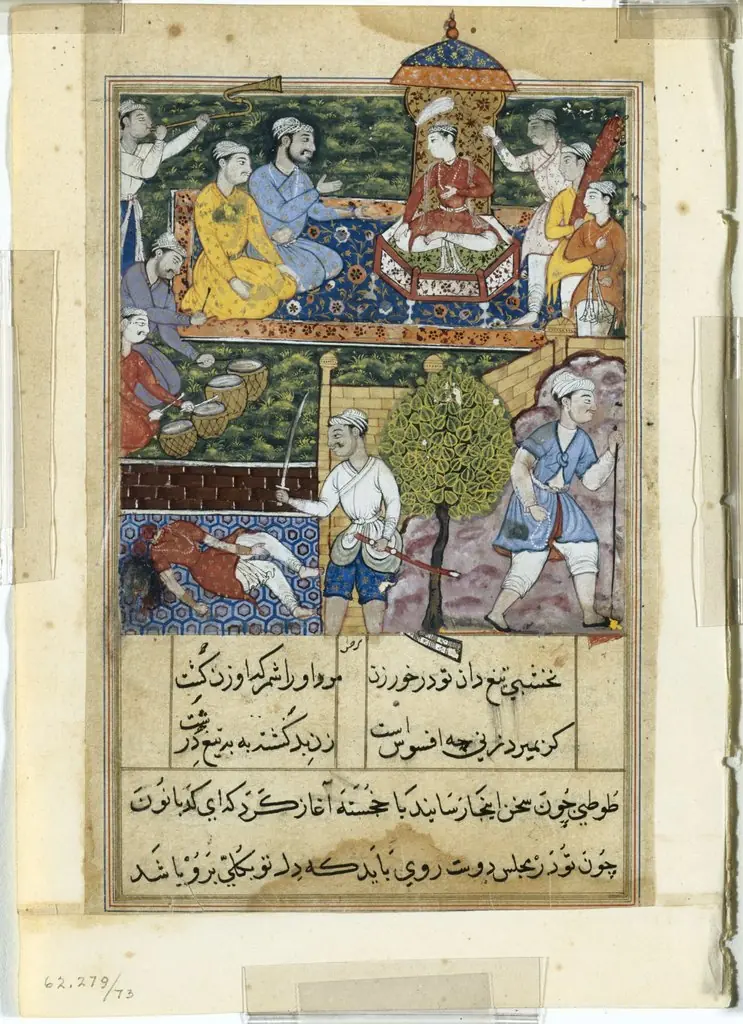 The young prince is crowned and the wicked handmaiden is executed, from a Tuti-nama (Tales of a Parrot): Eighth Night
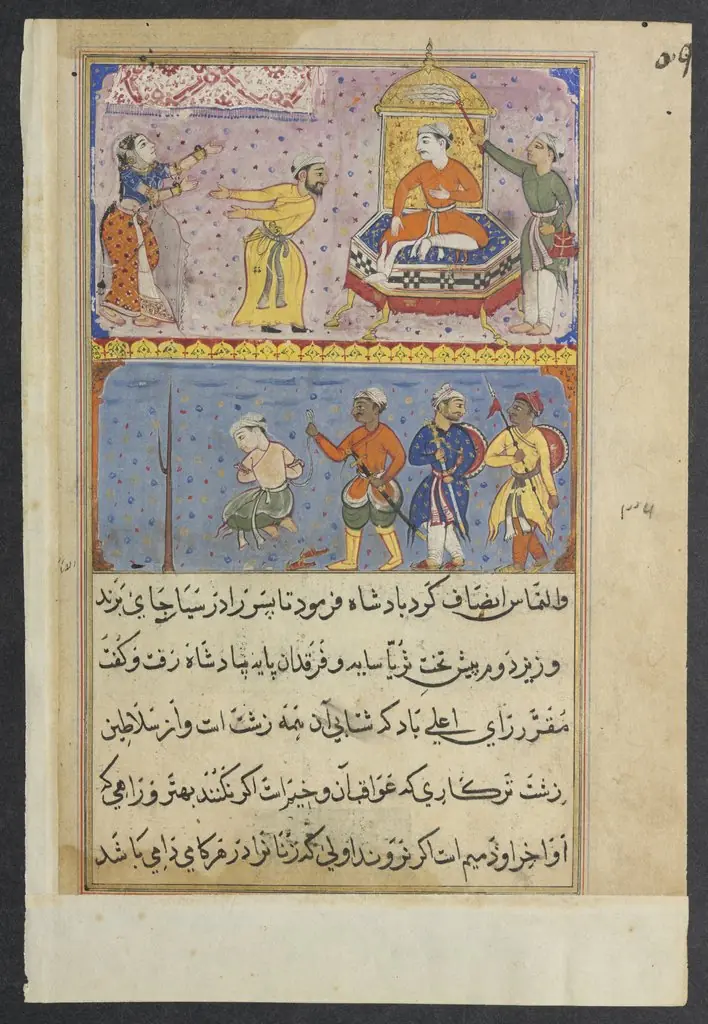 The prince, once reprieved, is returned to the palace of execution a second time on the plea of the king’s handmaiden, from a Tuti-nama (Tales of a Parrot): Eighth Night
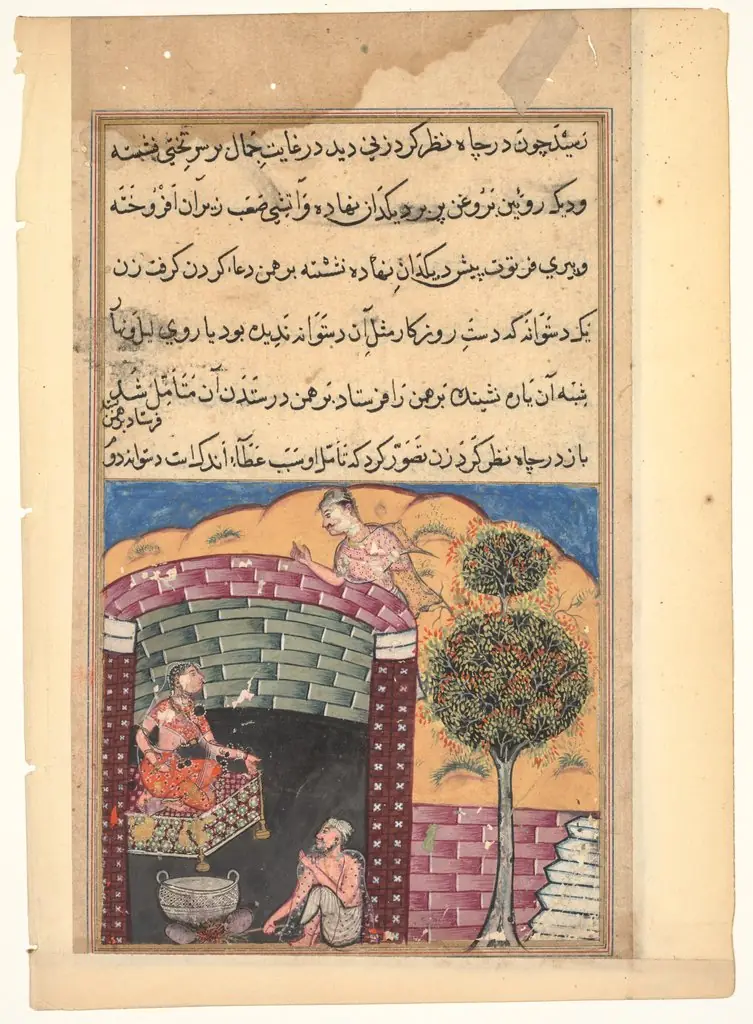 The Brahman gambler sees the daughter of the king of the jinns in a pit together with an old man and a cauldron of boiling oil, from a Tuti-nama (Tales of a Parrot: Seventh Night)
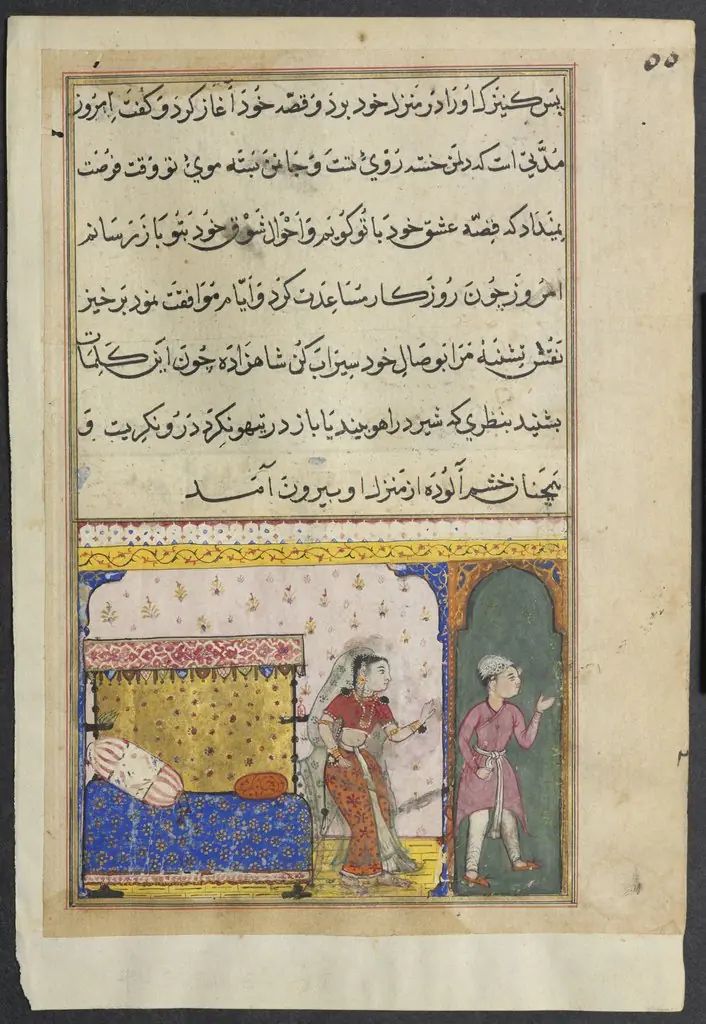 The prince rejects the amorous advances of the king’s handmaiden, from a Tuti-nama (Tales of a Parrot): Eighth Night
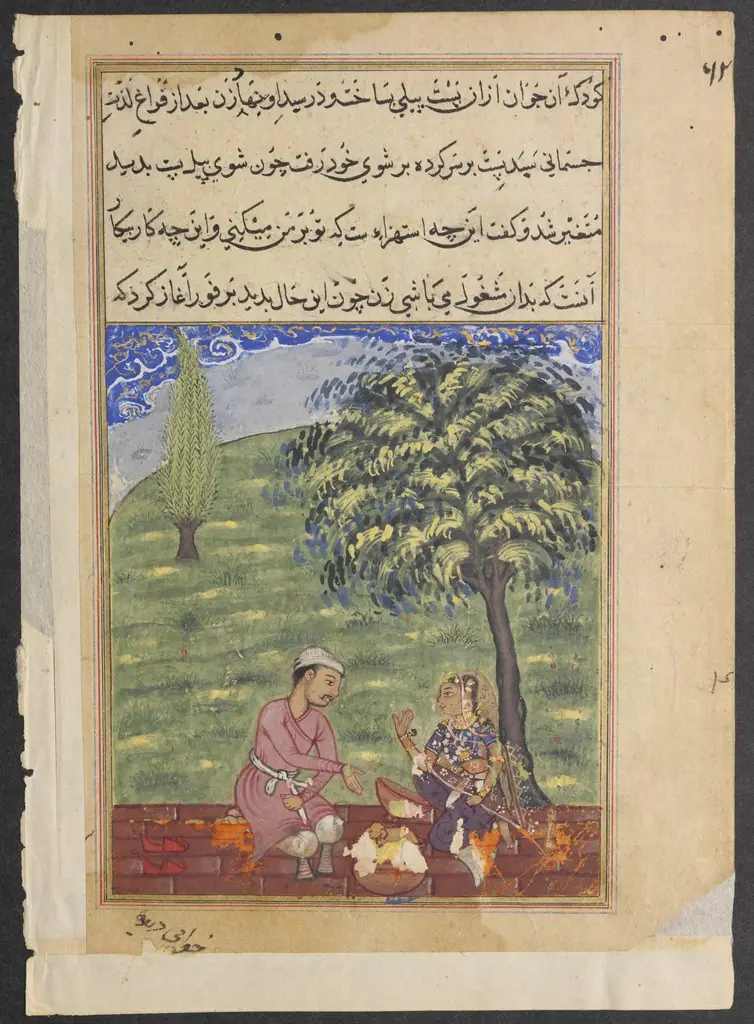 The unfaithful wife explaining away the presence of the dough elephant, from a Tuti-nama (Tales of a Parrot): Eighth Night
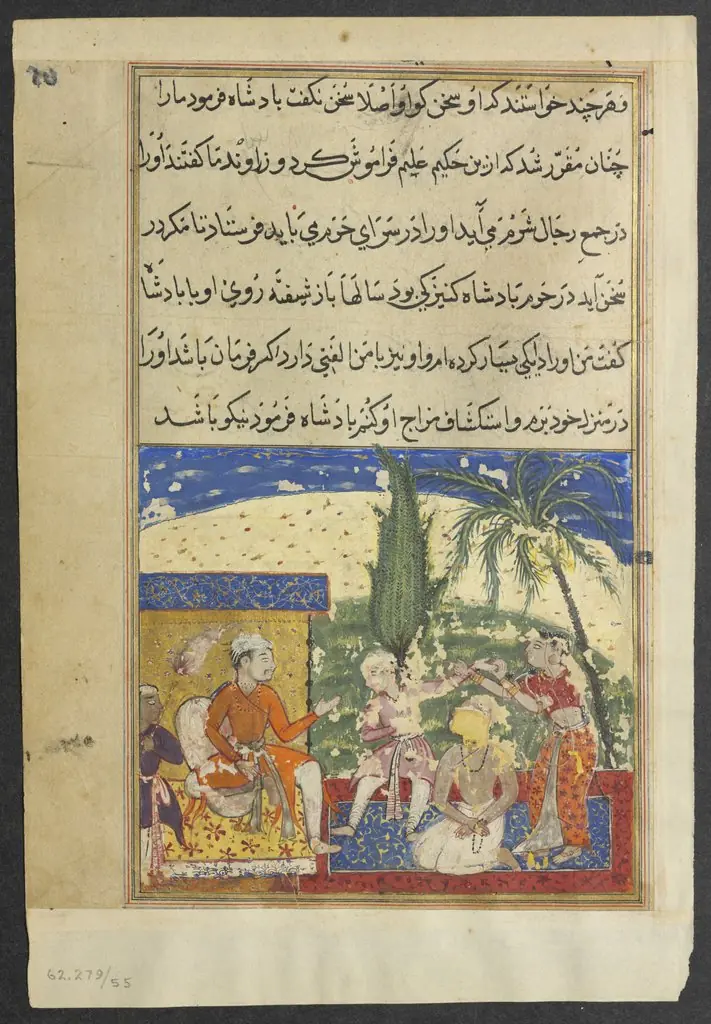 The king’s handmaiden takes the prince away to the harem, from a Tuti-nama (Tales of a Parrot): Eighth Night
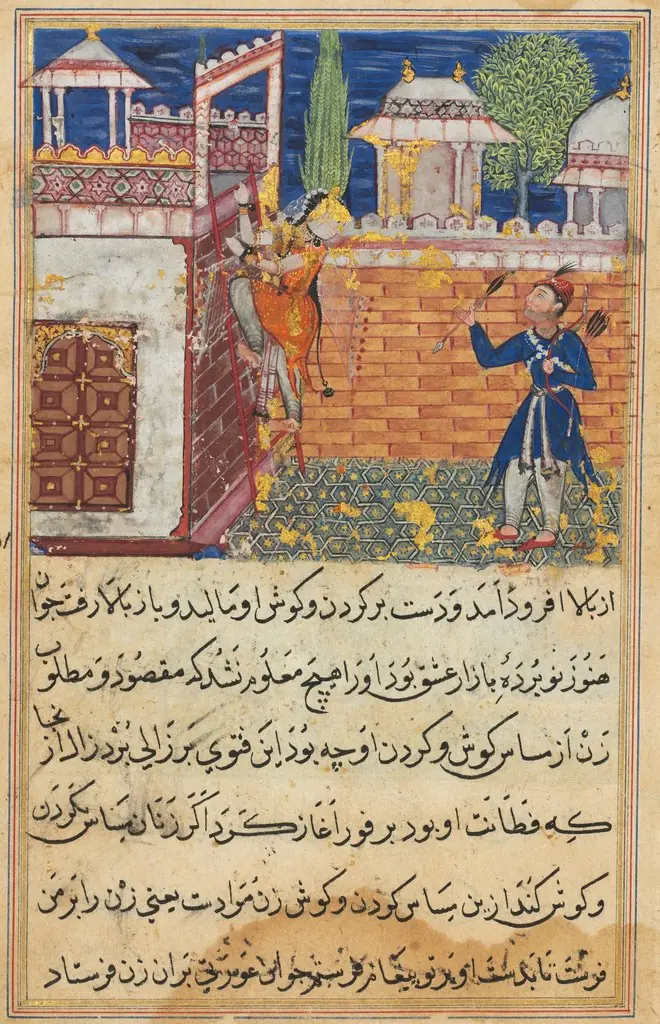 The deceitful wife returns to her terrace after caressing her lover, from a Tuti-nama (Tales of a Parrot): Eighth Night