Artwork
The king’s handmaiden takes the prince away to the harem, from a Tuti-nama (Tales of a Parrot): Eighth Night
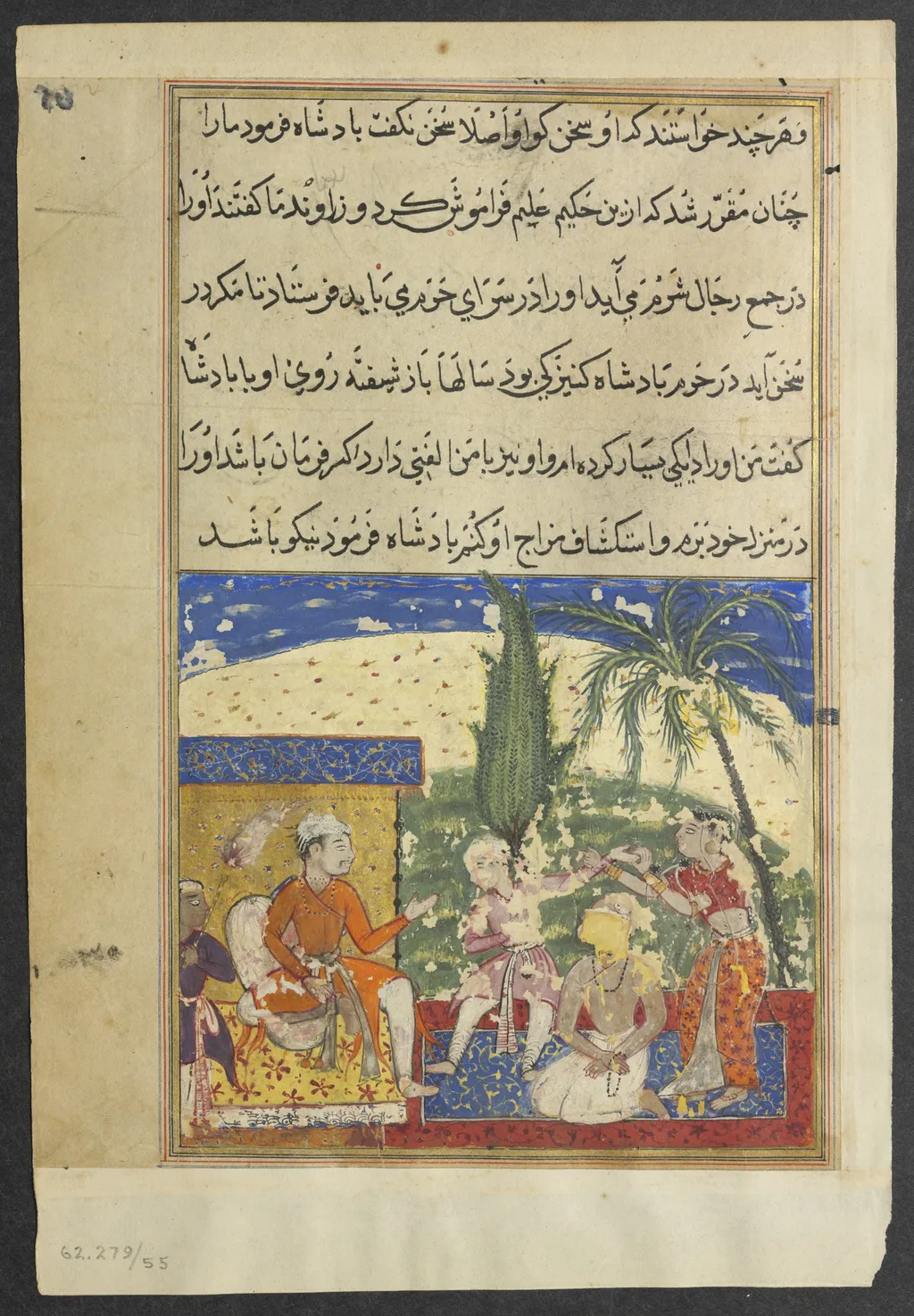
The king’s handmaiden takes the prince away to the harem, from a Tuti-nama (Tales of a Parrot): Eighth Night is an unspecified painting. It dates from 1560 and is held in the collection of the Cleveland Museum of Art. This miniature illustration originates from the eighth night of the Persian manuscript known as the Tuti‑nama, or "Tales of a Parrot.
About this work
Overview
This miniature illustration originates from the eighth night of the Persian manuscript known as the Tuti‑nama, or "Tales of a Parrot." Rendered in vivid pigments, it depicts a scene beneath a solitary palm tree where a group of figures in elaborate, patterned garments are gathered on a sandy floor beneath a clear, lightly clouded sky.
Subject & Meaning
The composition narrates a moment from the story in which the king’s handmaiden escorts the prince to a harem. Central to the scene is a man in an orange robe seated on a raised platform, surrounded by attendants whose colorful robes and headpieces suggest courtly rank and service. The accompanying Arabic inscription likely provides the narrative context for this episode.
Technique & Style
Executed in the traditional Persian miniature style, the work employs fine brushwork and a rich palette of reds, blues, and golds. The figures are rendered with delicate linear outlines, while the patterned textiles and ornamental details reflect the sophisticated decorative conventions of Safavid court painting.
History & Provenance
The miniature was created as part of a deluxe illustrated manuscript commissioned for Prince Salim, a member of the Mughal royal family, to enhance his literary education. The Tuti‑nama was a popular didactic text, and its lavishly illustrated copies were often produced for elite patrons in the early 17th century.
Context
Within the broader tradition of Persian narrative art, scenes such as this one combine literary storytelling with visual spectacle, serving both as entertainment and moral instruction. The depiction of royal intrigue and domestic spaces reflects the courtly concerns of the period, while the inclusion of Arabic script underscores the manuscript’s scholarly purpose.
Legacy
Miniatures from the Tuti‑nama continue to be studied for their insight into Mughal patronage and the cross‑cultural exchange between Persian and Indian artistic practices. The work exemplifies the high level of craftsmanship achieved in courtly manuscript production during the era.
Artist & collection

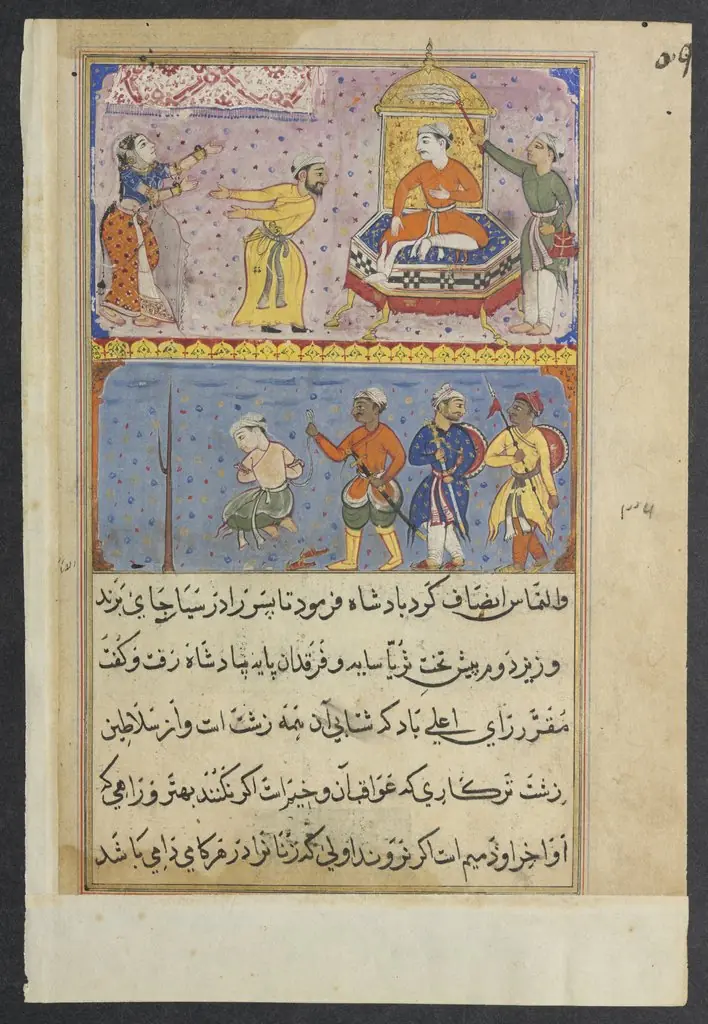 The prince, once reprieved, is returned to the palace of execution a second time on the plea of the king’s handmaiden, from a Tuti-nama (Tales of a Parrot): Eighth Night
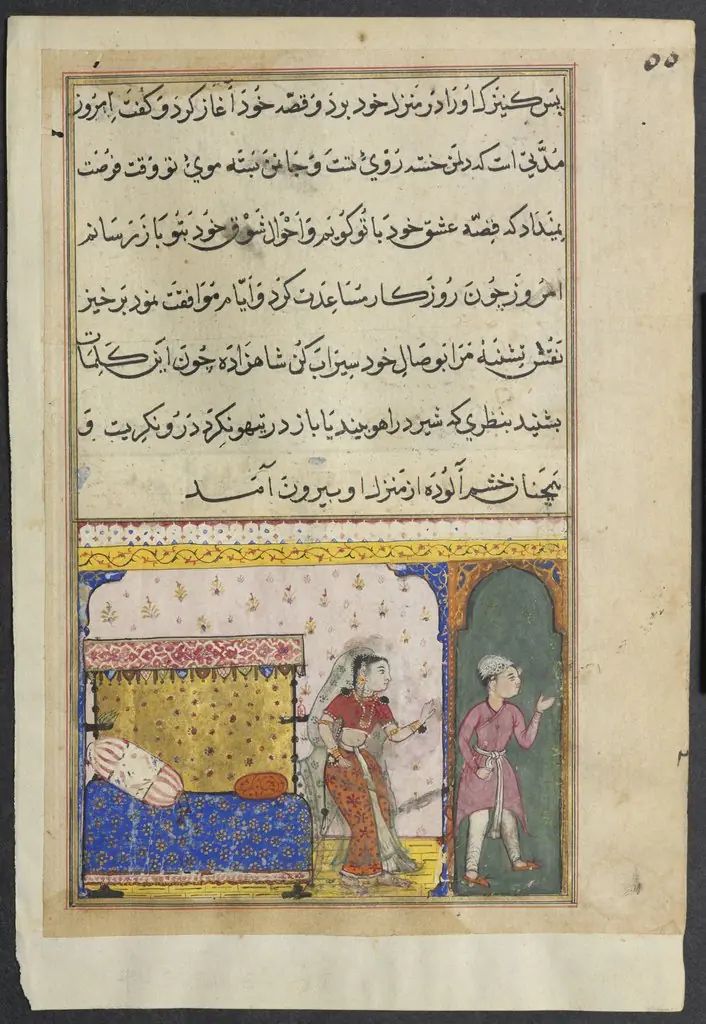 The prince rejects the amorous advances of the king’s handmaiden, from a Tuti-nama (Tales of a Parrot): Eighth Night
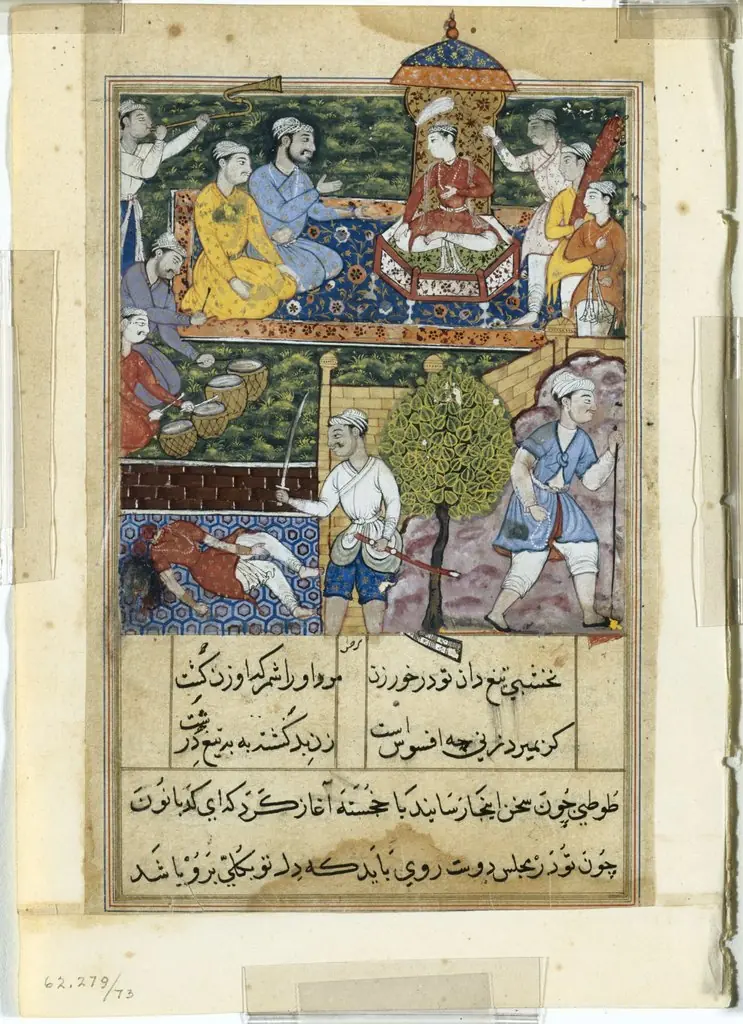 The young prince is crowned and the wicked handmaiden is executed, from a Tuti-nama (Tales of a Parrot): Eighth Night
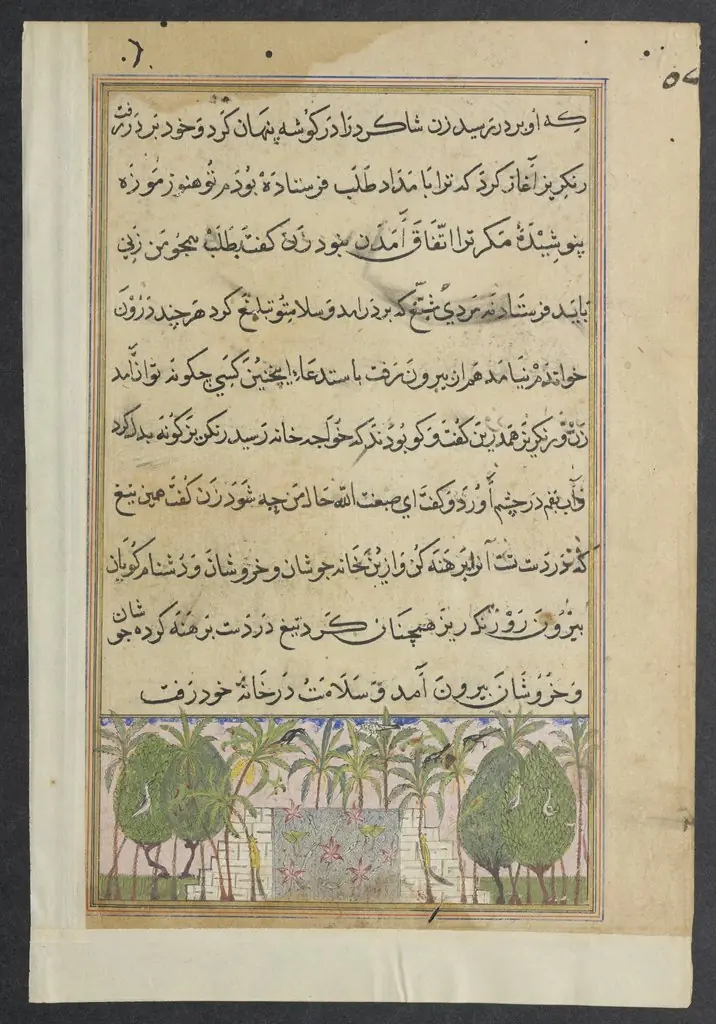 Landscape with a lotus pool, from a Tuti-nama (Tales of a Parrot): Eighth Night
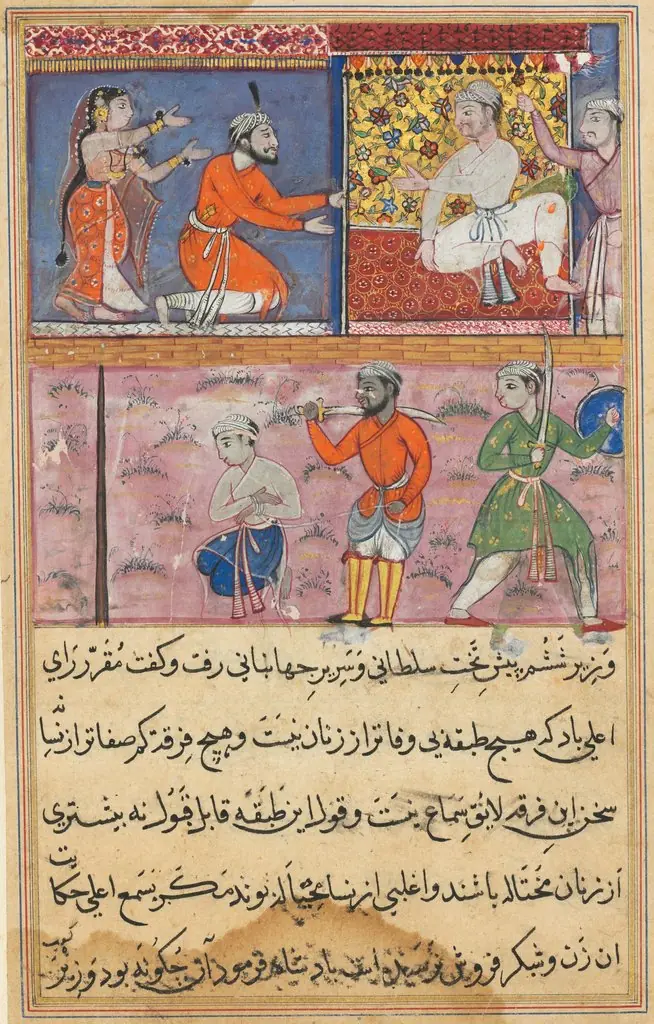 The prince sent back to the place of execution for the sixth time, from a Tuti-nama (Tales of a Parrot): Eighth Night
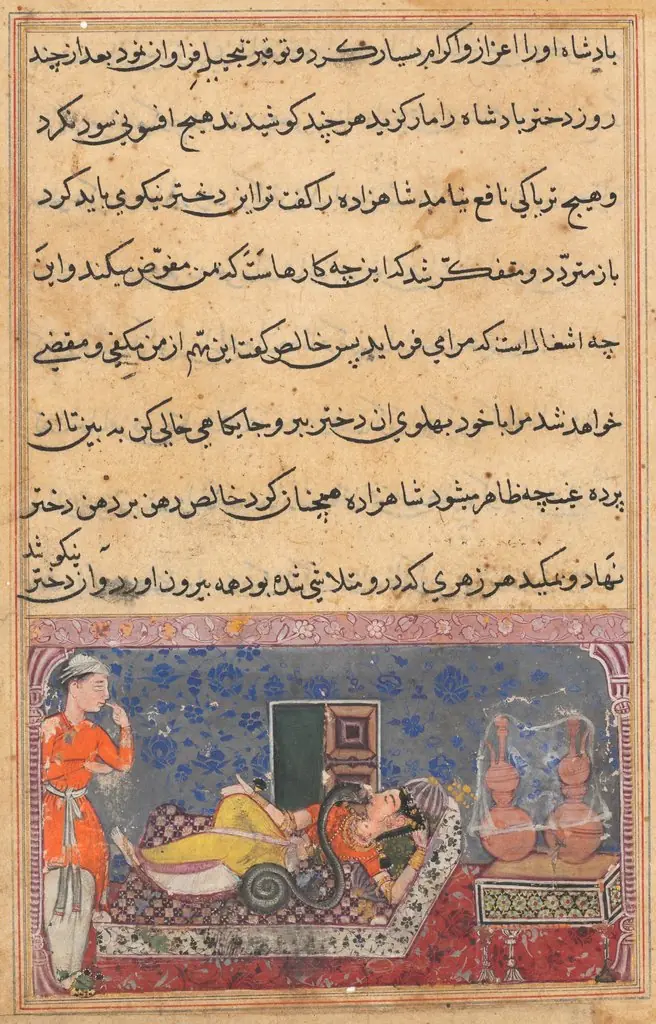 Khalis repays the prince for his kindness by changing into a snake and sucking the poison from the king’s daughter, from a Tuti-nama (Tales of a Parrot): Eighteenth Night
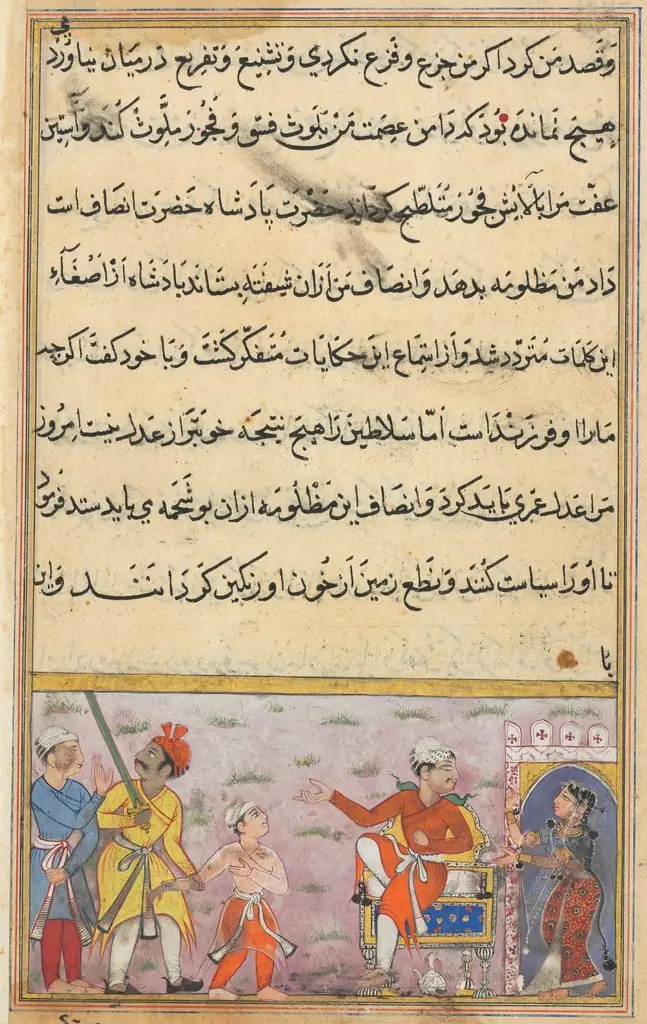 The prince being taken away for execution on the false complaint of the handmaiden, from a Tuti-nama (Tales of a Parrot): Eighth Night
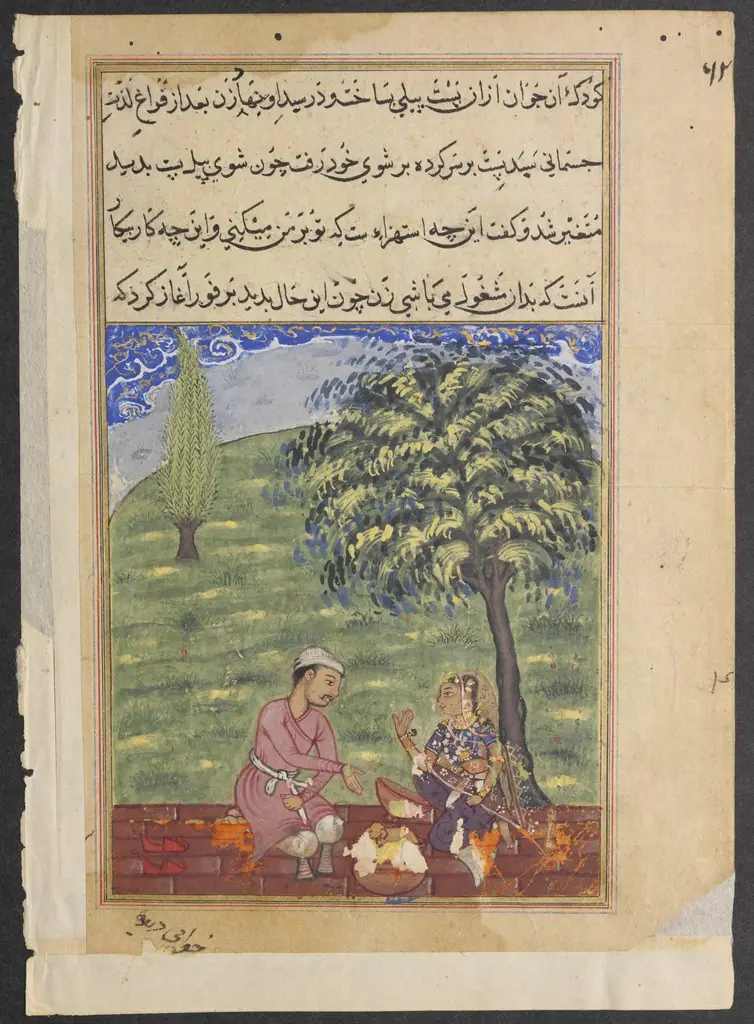 The unfaithful wife explaining away the presence of the dough elephant, from a Tuti-nama (Tales of a Parrot): Eighth Night
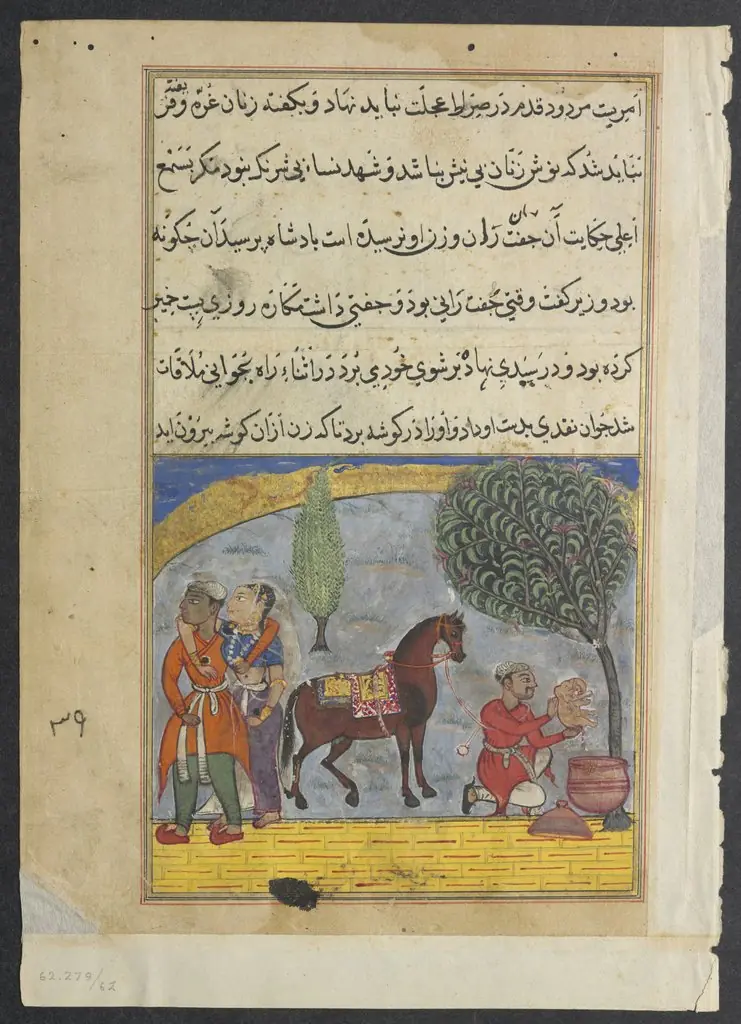 The lover’s son makes an elephant of the pastry dough carried by the unfaithful wife and puts it in her basket, from a Tuti-nama (Tales of a Parrot): Eighth Night
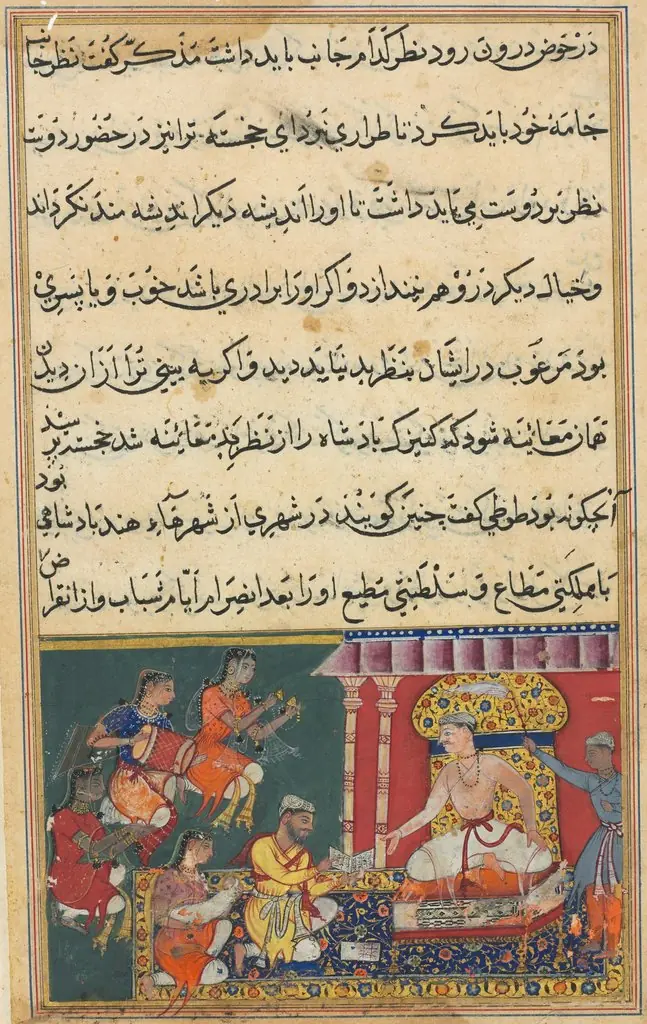 The astrologer predicts a calamity for the newly born prince in his thirteenth year, but one which he would be able to overcome, from a Tuti-nama (Tales of a Parrot): Eighth Night
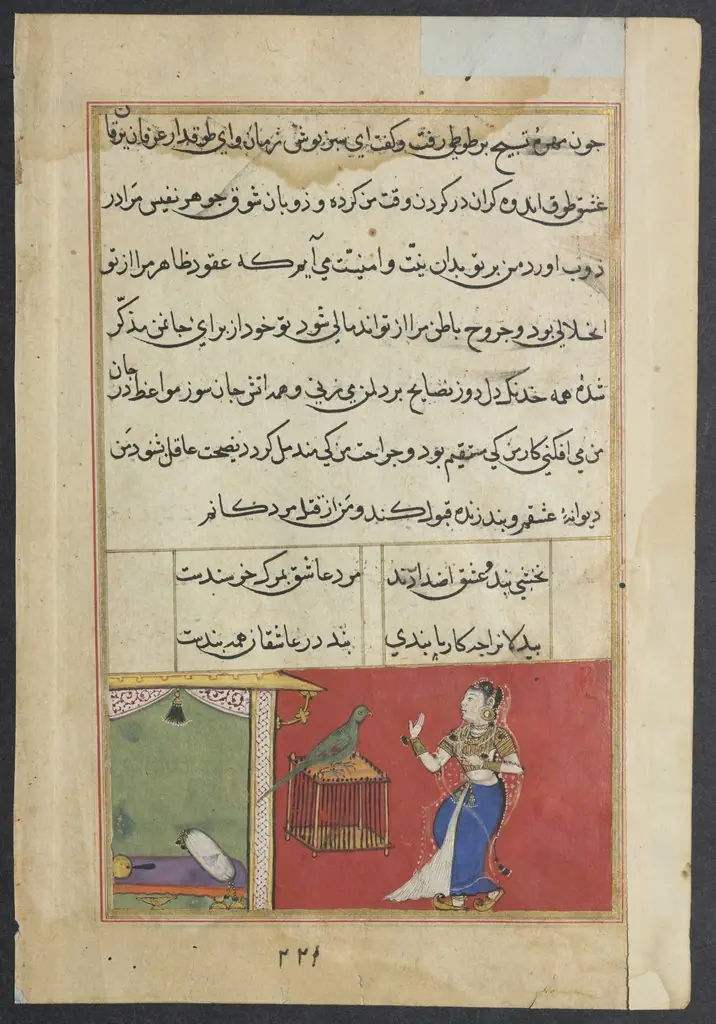 The parrot addresses Khujasta at the beginning of the forty-seventh night, from a Tuti-nama (Tales of a Parrot): Forty-seventh Night
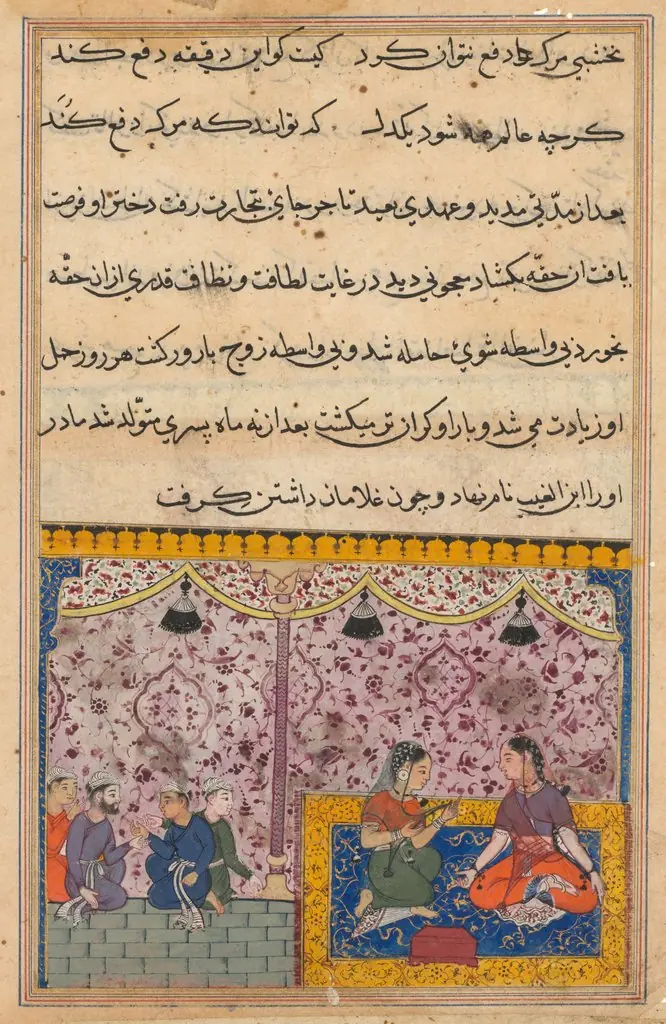 The merchant’s daughter gives birth to a son as a result of eating out of the box. The clever child recognizes the false gems from true, from a Tuti-nama (Tales of a Parrot): Twenty-third Night
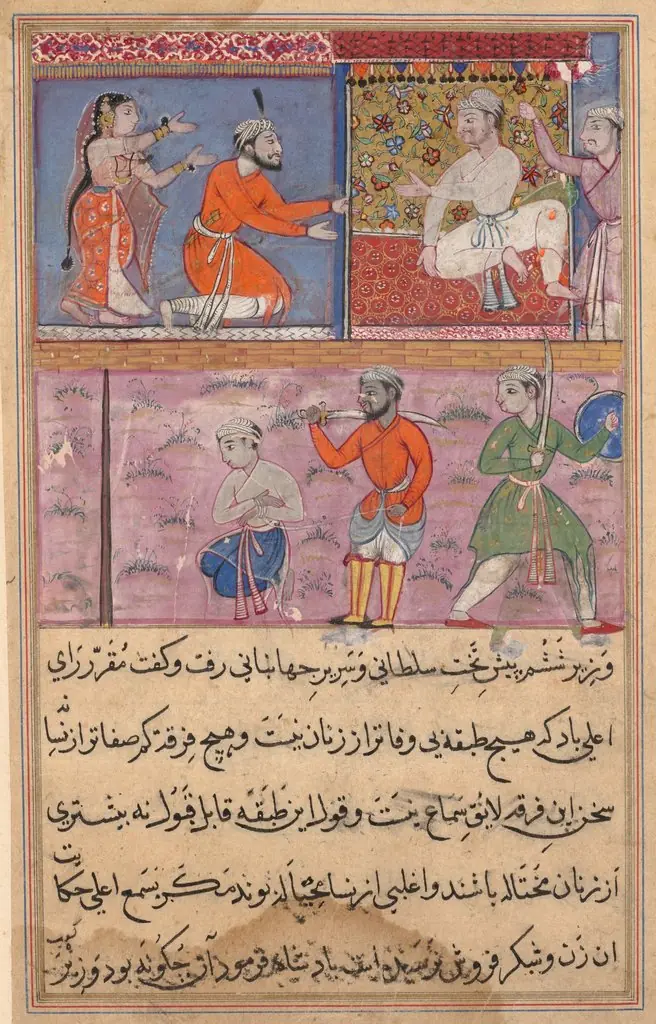 Page from Tales of a Parrot (Tuti-nama): text page