Artwork
The Brahman gambler sees the daughter of the king of the jinns in a pit together with an old man and a cauldron of boiling oil, from a Tuti-nama (Tales of a Parrot: Seventh Night)
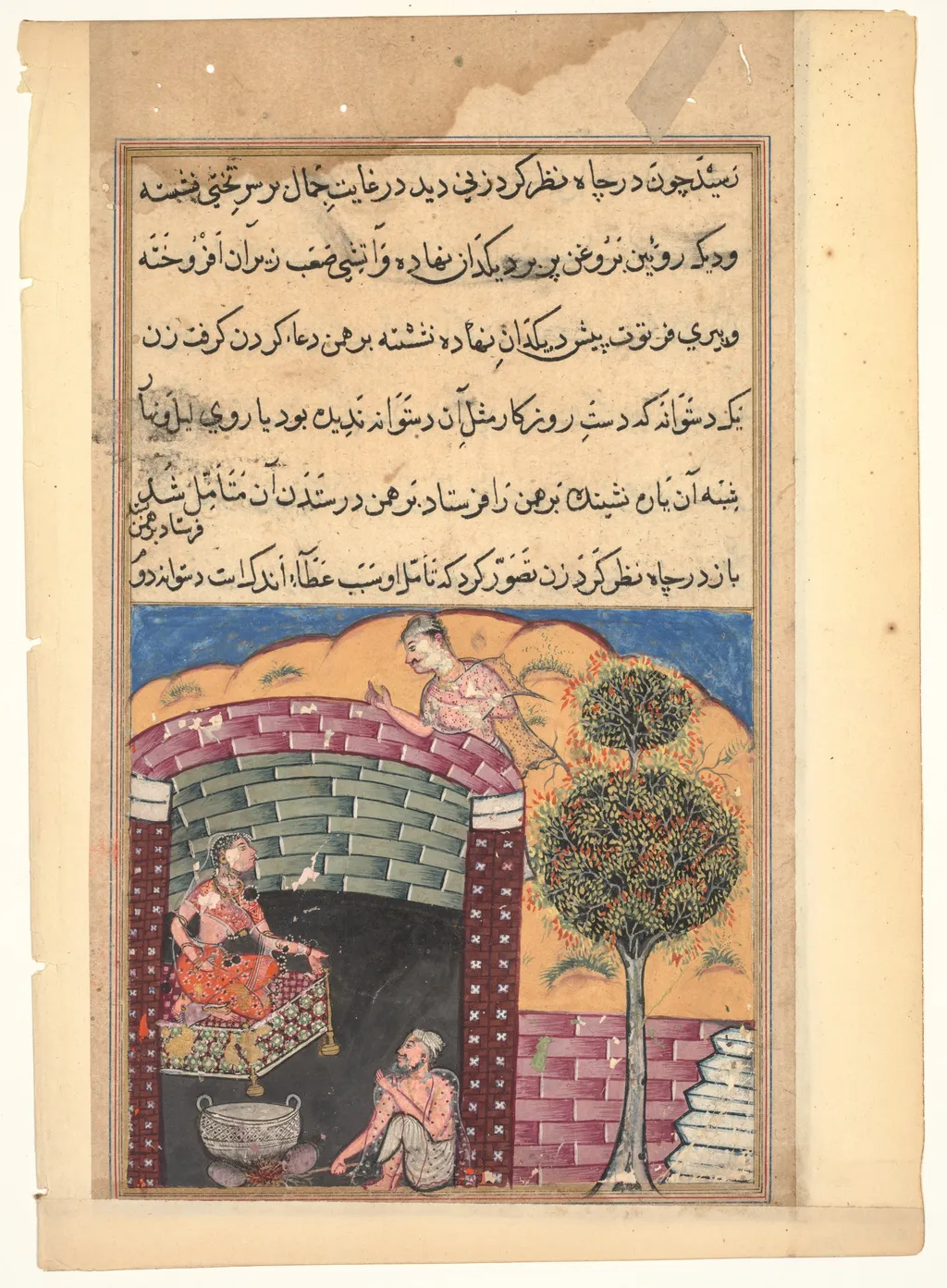
The Brahman gambler sees the daughter of the king of the jinns in a pit together with an old man and a cauldron of boiling oil, from a Tuti-nama (Tales of a Parrot: Seventh Night) is an unspecified painting. It dates from 1560 and is held in the collection of the Cleveland Museum of Art.
About this work
Overview
The work illustrates a dramatic episode from the seventh night of the Persian collection Tuti‑nama, in which a Brahman gambler encounters the daughter of a jinn king within a pit. The composition centers on a man and a woman surrounded by an elderly figure and a cauldron of boiling oil, set against a sky that shifts from yellow to blue and a solitary tree on the right.
Subject & Meaning
The narrative captures a moment of peril and intrigue: the gambler, identifiable by his white turban and draped garment, faces the jinn princess, distinguished by a vivid red dress, while an old man—perhaps a guardian or witness—stands nearby. The presence of the oil cauldron suggests a test of courage or a threat, echoing the tale’s themes of risk and supernatural encounter.
Technique & Style
Executed with meticulous detail, the painting employs a bright palette of reds, whites, yellows, and blues. Contrasting hues delineate figures and background, creating spatial depth. Fine brushwork renders the textures of clothing, the sheen of the oil, and the foliage of the tree, reflecting the intricate illustrative tradition of Persian manuscript art.
History & Provenance
The image originates from a manuscript of the Tuti‑nama, a 14th‑century Persian anthology of fables narrated by a parrot. Though the exact date of this particular illustration is not recorded, it belongs to the broader tradition of illuminated books produced for elite patrons in the Islamic world, later entering museum collections through acquisitions of Persian manuscript holdings.
Context
The scene belongs to a larger literary cycle in which human protagonists interact with jinn, reflecting cultural fascination with the unseen realm. Such depictions served both decorative and didactic purposes, visualizing moral lessons about greed, bravery, and the consequences of dealing with supernatural forces.
Artist & collection

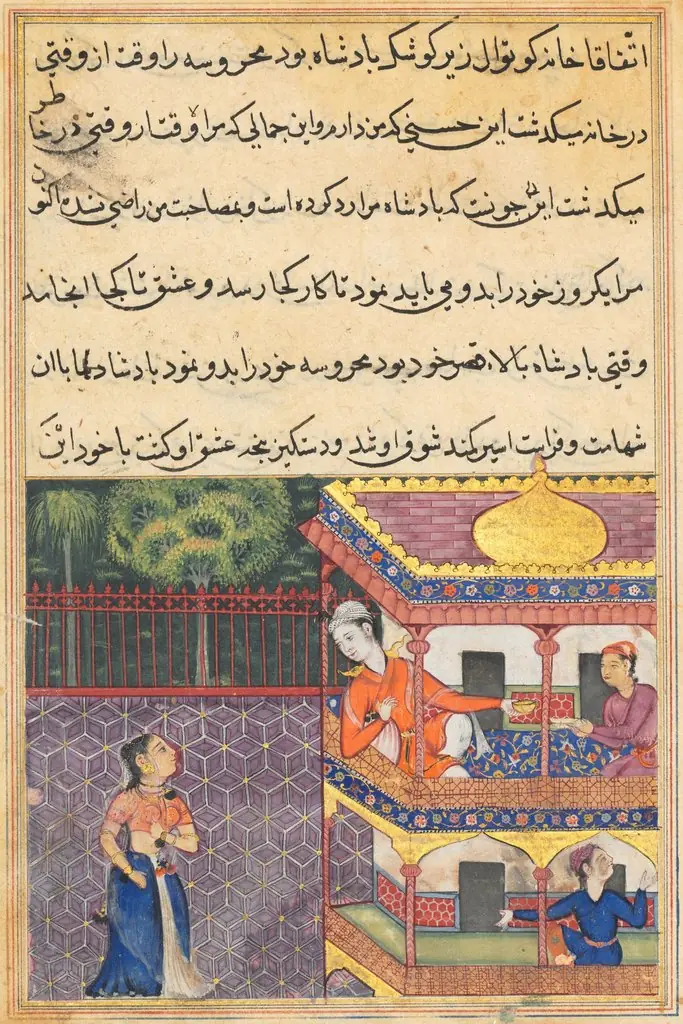 The king of Zabul sees Mahrusa from his palace balcony, from a Tuti-nama (Tales of a Parrot): Thirty-sixth Night
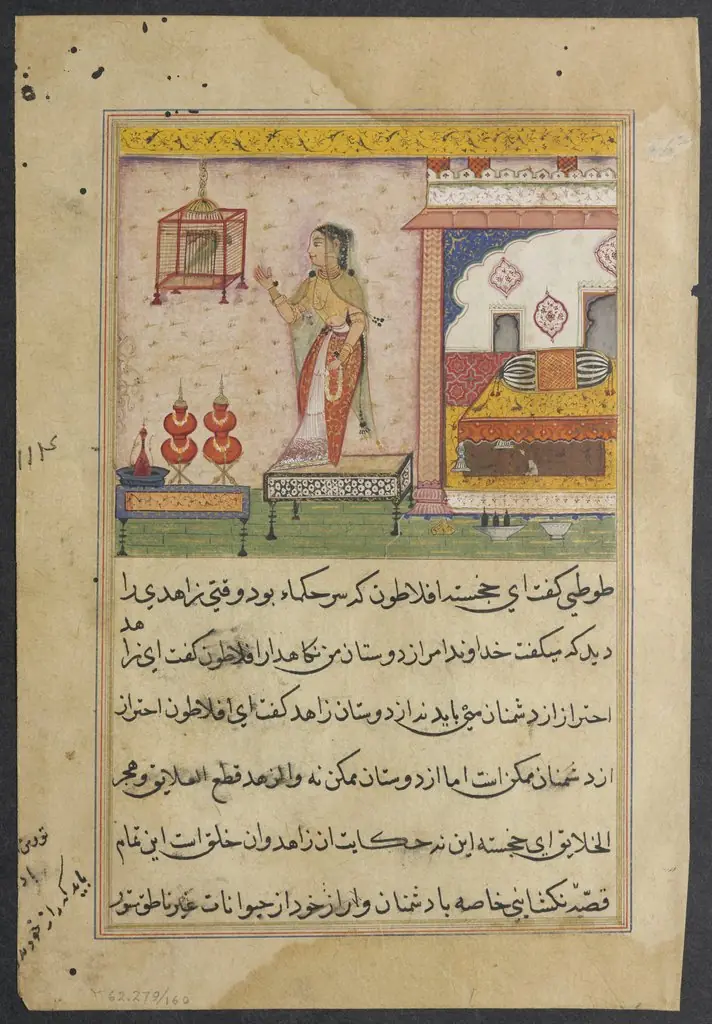 The Parrot Addresses Khujasta at the Beginning of the Twenty-third Night, from a Tuti-nama (Tales of a Parrot)
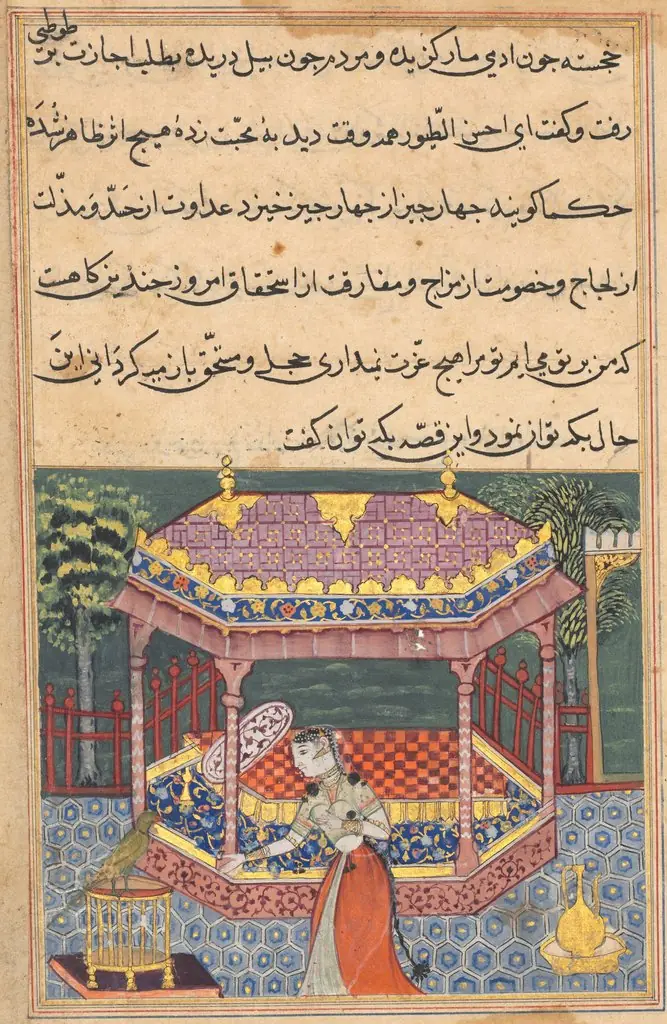 The parrot addresses Khujasta at the beginning of the thirty-seventh night, from a Tuti-nama (Tales of a Parrot)
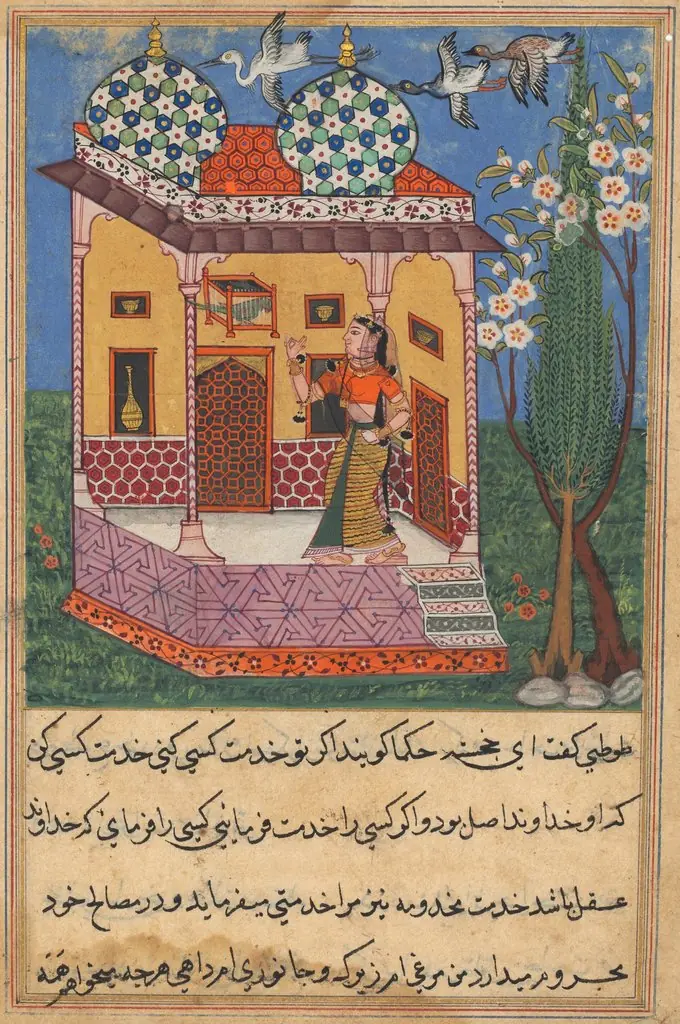 The Parrot Addresses Khujasta at the Beginning of the Twenty-sixth Night, from a Tuti-nama (Tales of a Parrot)
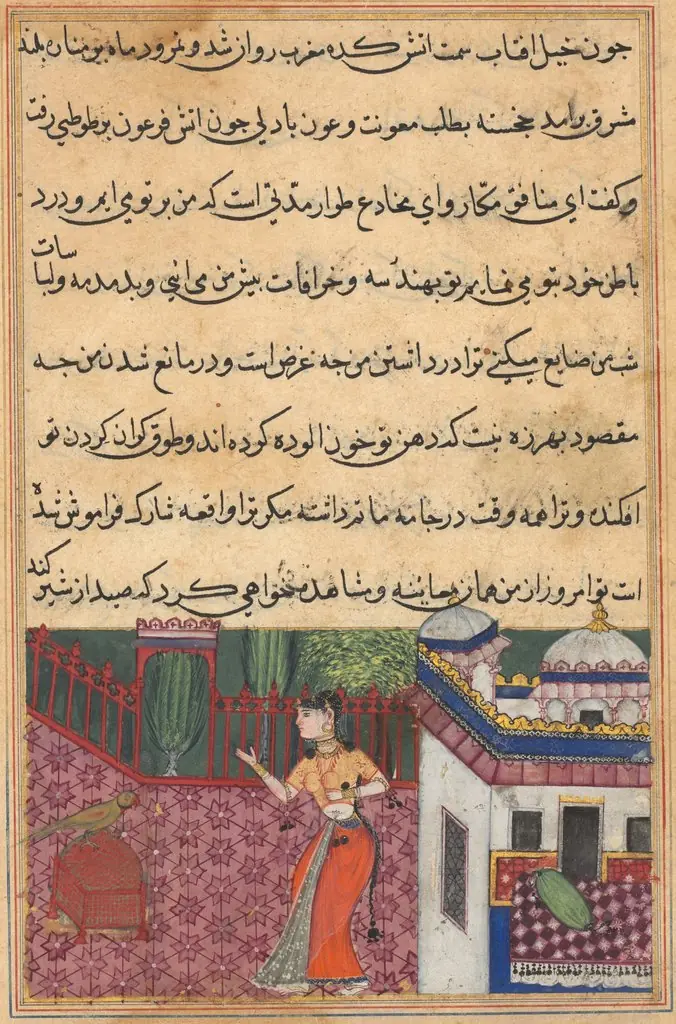 The parrot addresses Khujasta at the beginning of the thirty-third night, from a Tuti-nama (Tales of a Parrot)
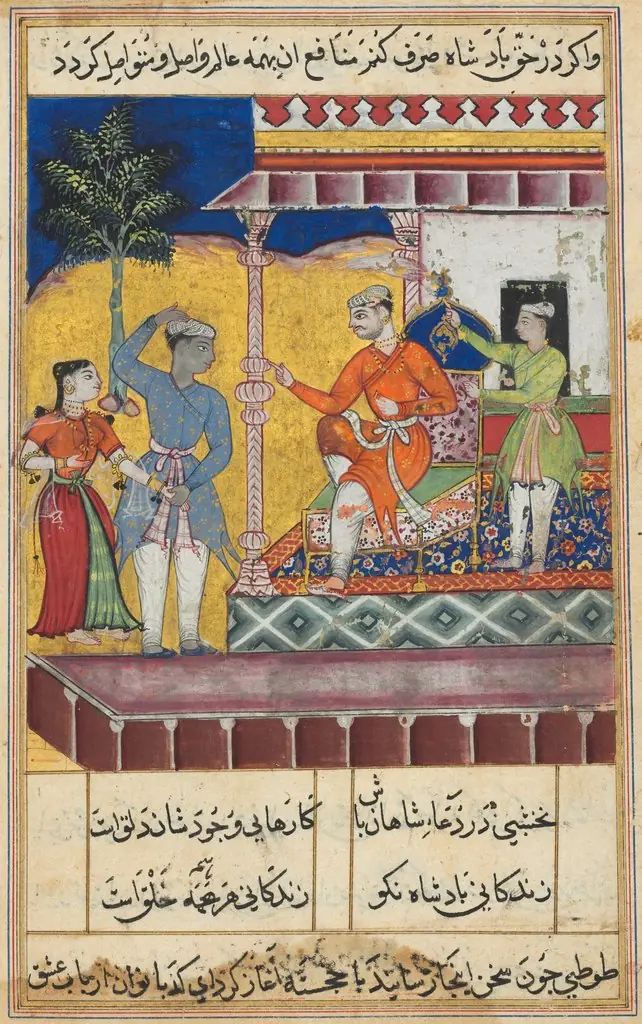 The rejuvenated old man and the daughter of the king of the jinns take leave of the King of Kings, from a Tuti-nama (Tales of a Parrot): Seventh Night
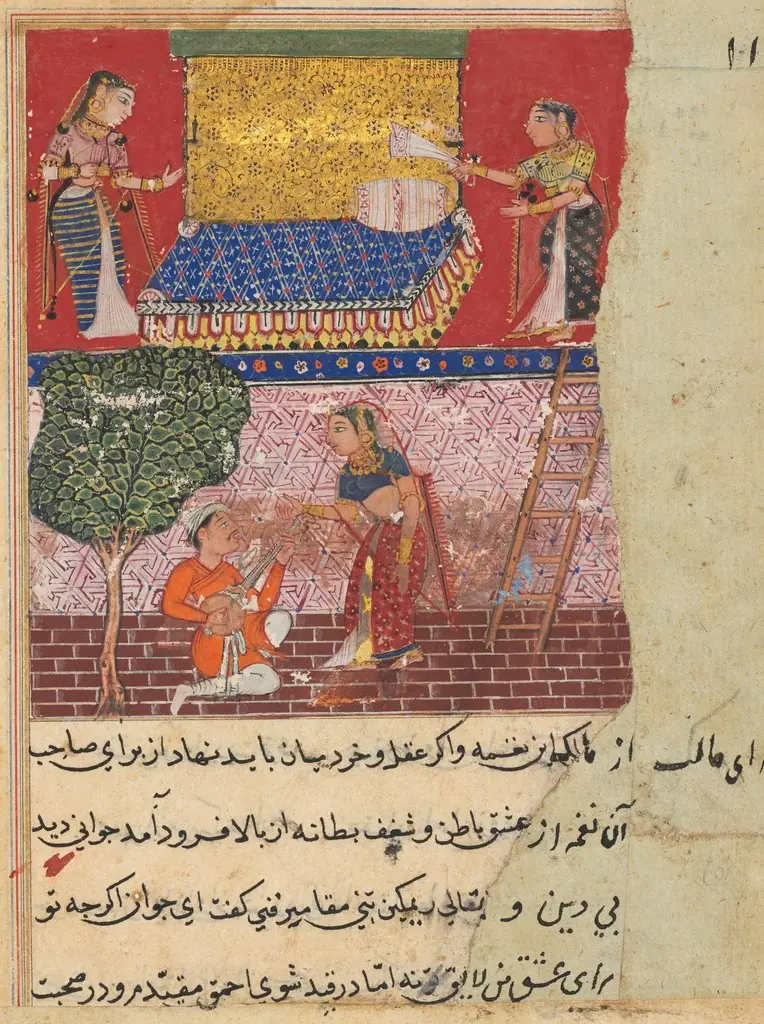 The daughter-in-law of the king of Banaras, charmed by the music of a vagabond, comes down to meet him, from a Tuti-nama (Tales of a Parrot): Sixteenth Night
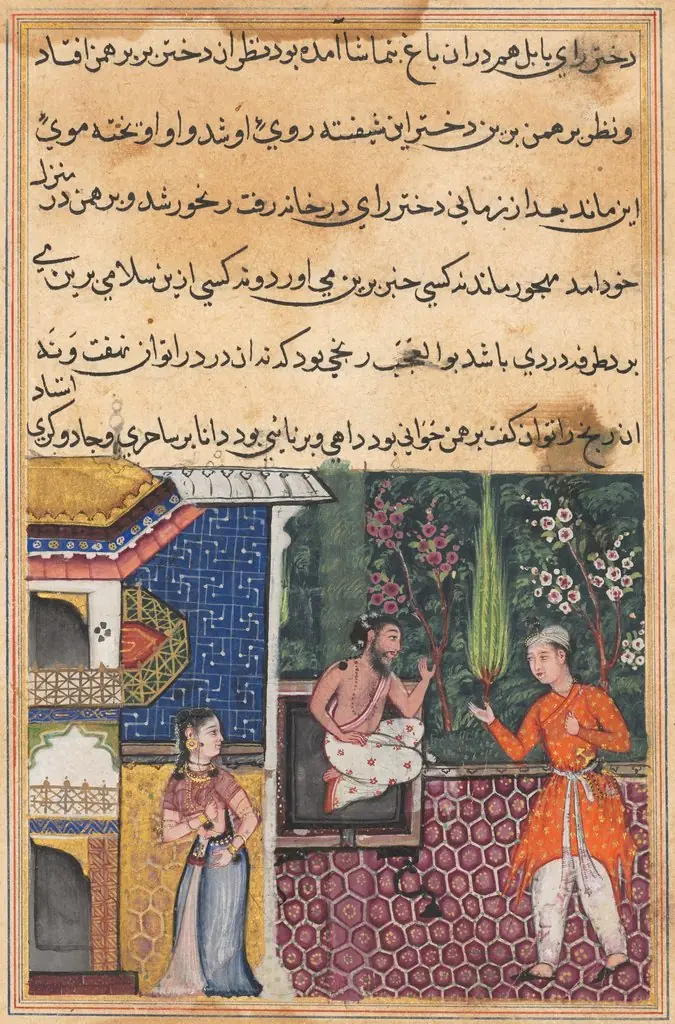 The Brahman gives an account of his falling in love with the king of Babylon’s daughter to his friend, the magician, from a Tuti-nama (Tales of a Parrot): Thirty-fifth Night
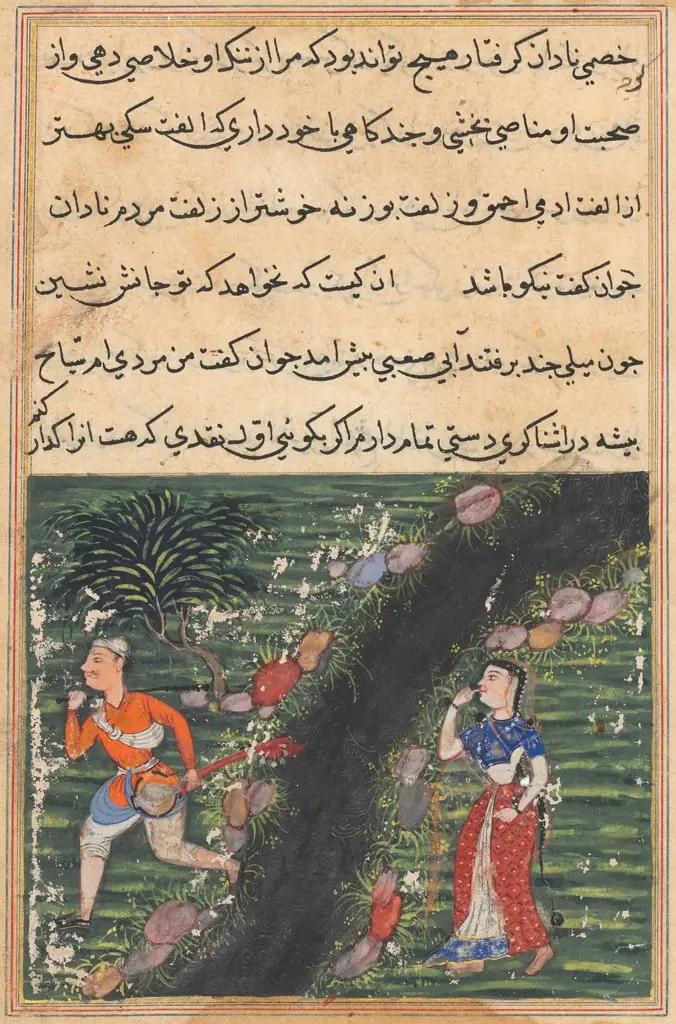 The vagabond crosses a stream with the possessions of the daughter-in-law of the king of Banaras and absconds, from a Tuti-nama (Tales of a Parrot): Sixteenth Night