Artwork
Orpheus Charming the Beasts
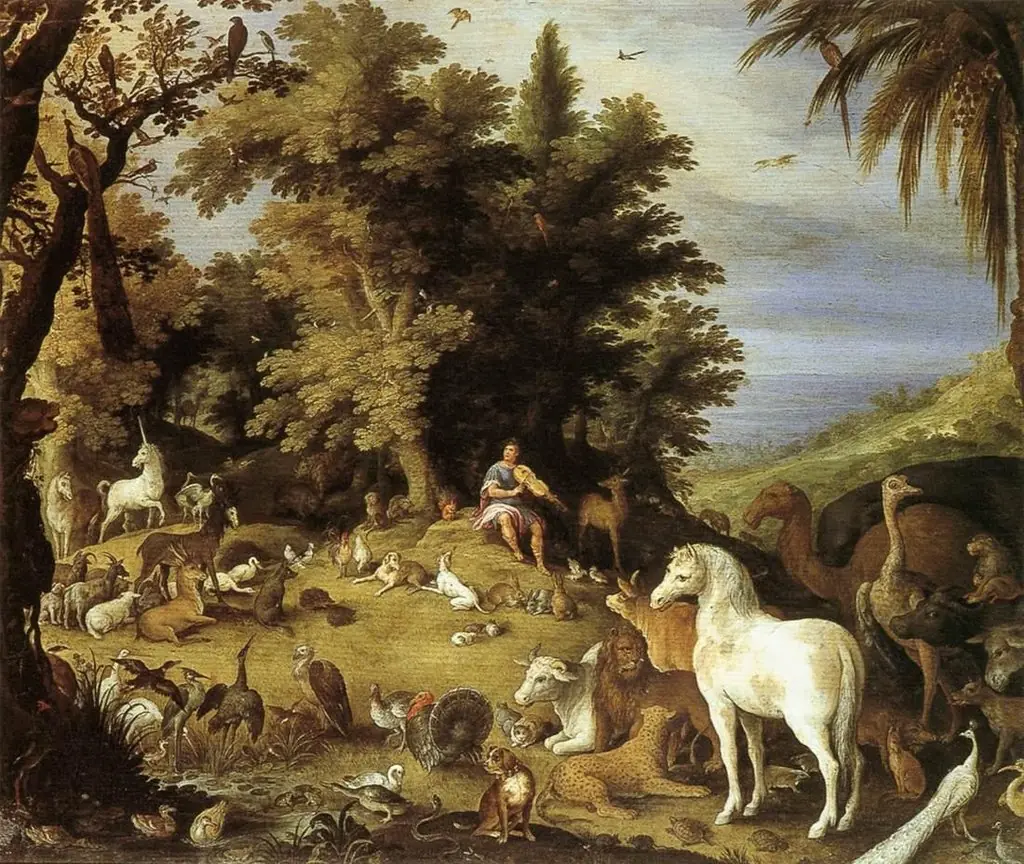
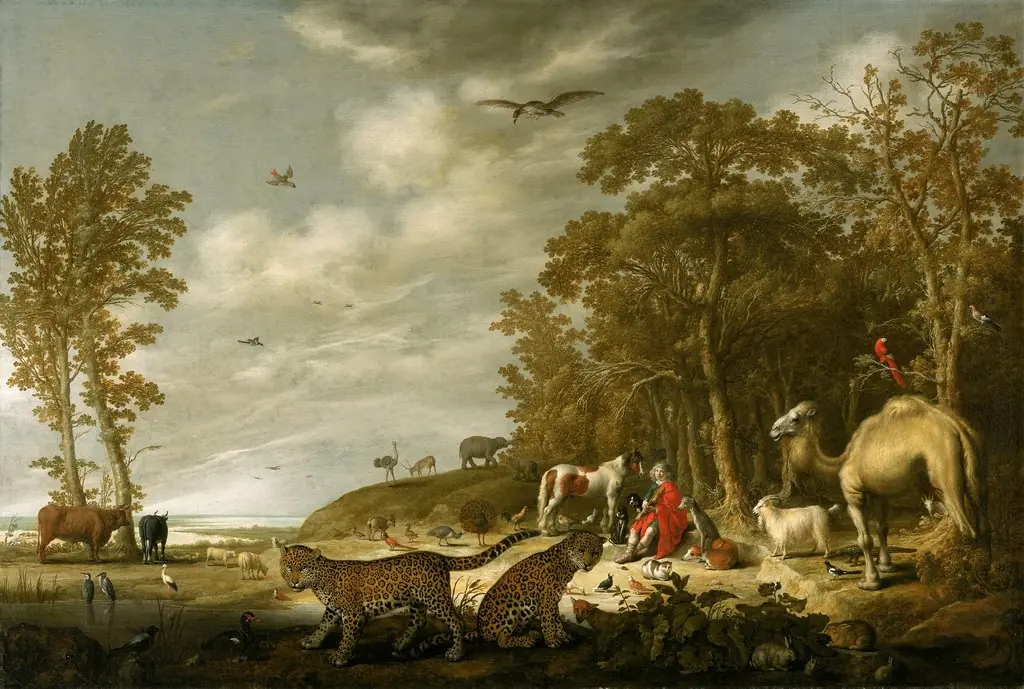
Orpheus Charming the Beasts is an oil painting by Unknown. It dates from 1658 and is held in the collection of the Nationalmuseum. The canvas portrays a solitary female figure seated upon a stone amid a verdant woodland.
About this work
Overview
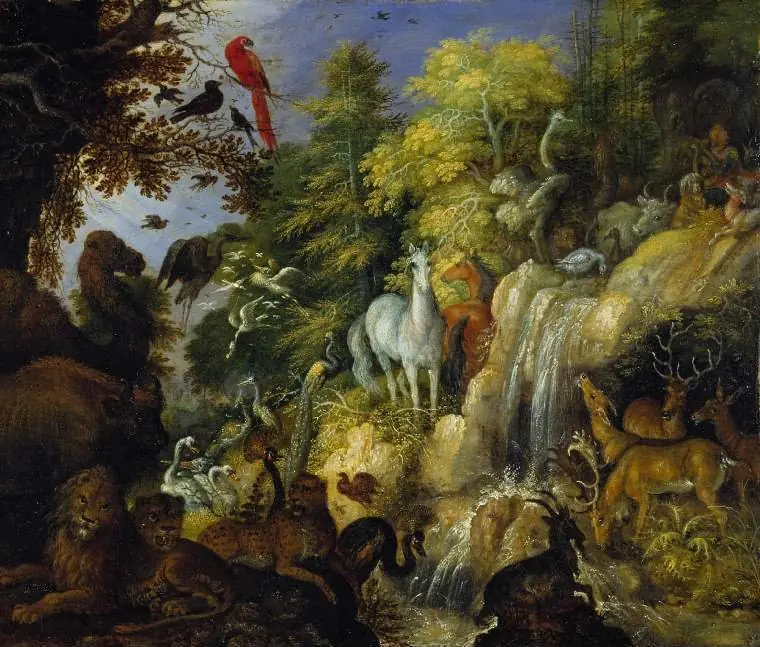
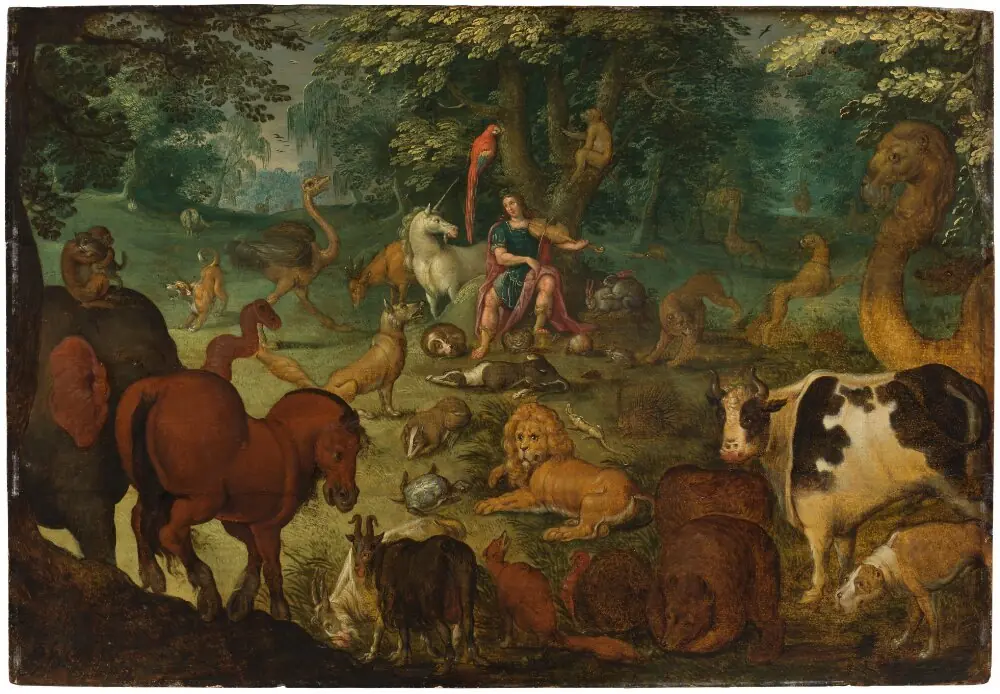
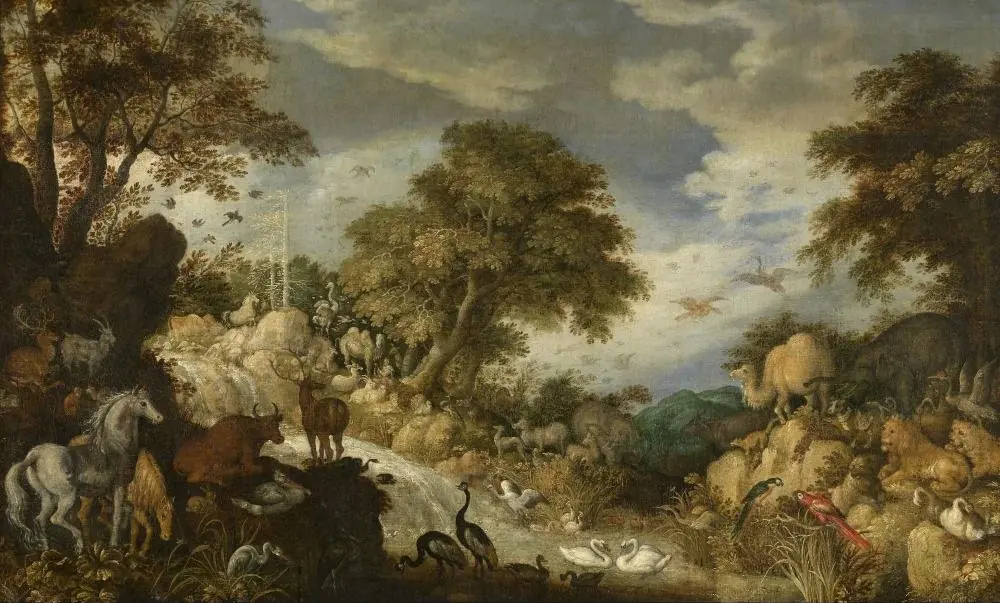
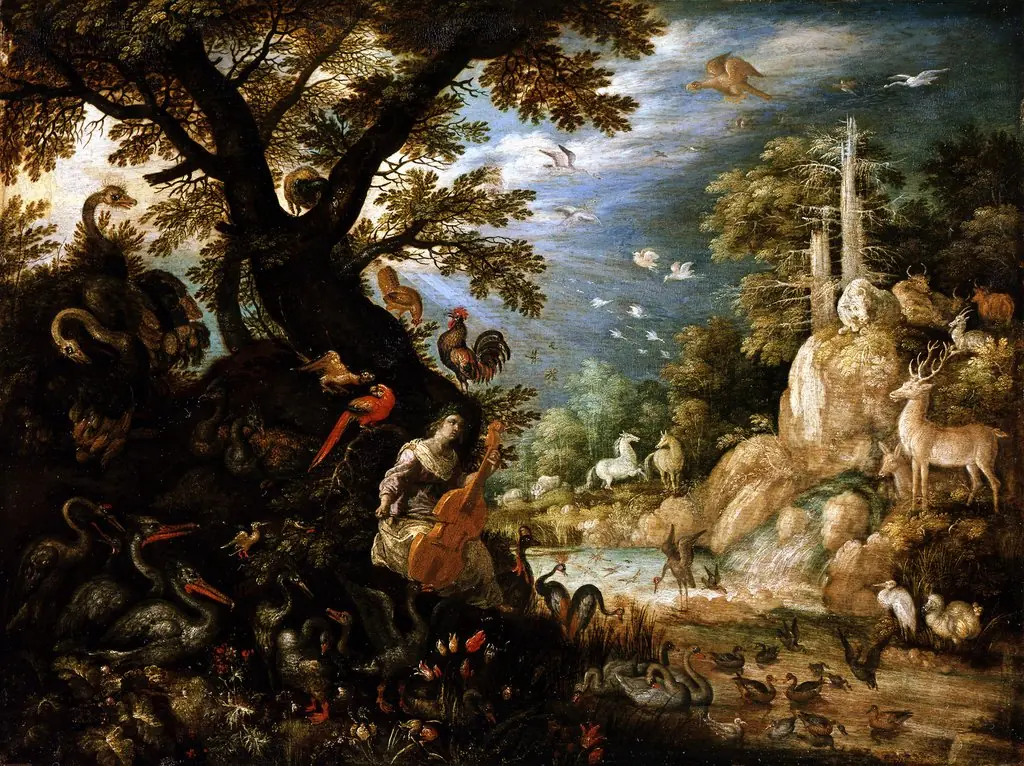
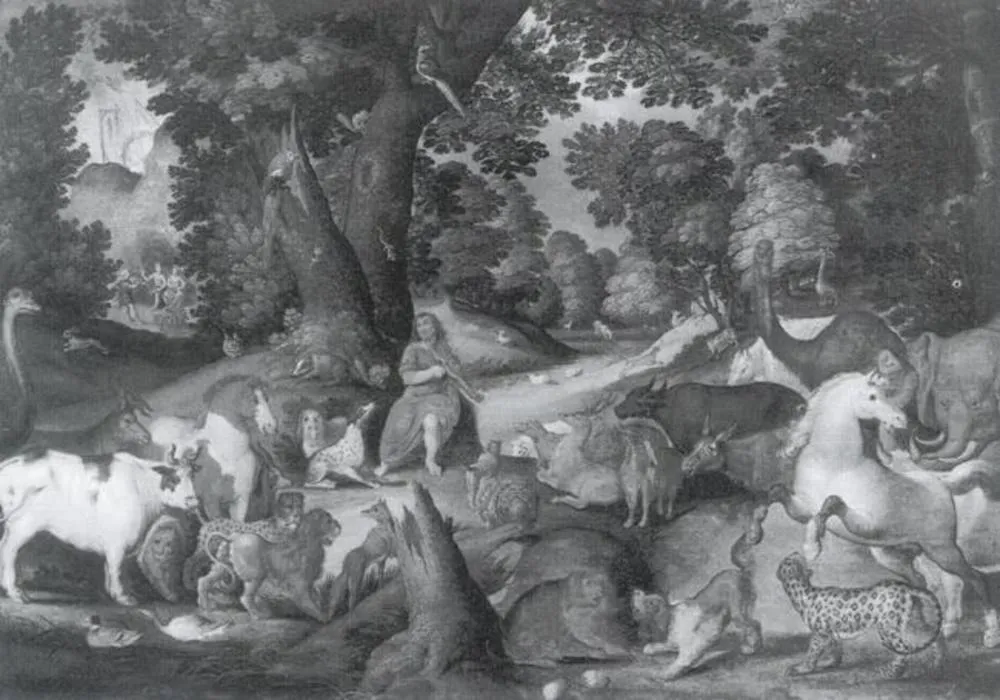
The canvas portrays a solitary female figure seated upon a stone amid a verdant woodland. She is attired in a flowing garment and appears to be playing a stringed instrument, likely a lyre. A variety of animals—birds, deer, and a leopard among them—gather around her, their attention fixed on the music. The composition invites the viewer into a tranquil, enchanted forest scene.
Subject & Meaning
The work draws on the myth of Orpheus, whose music was said to tame wild creatures. By placing a woman in the role of the musician, the painter emphasizes the universal power of melody to soothe and unite disparate beings. The inclusion of both gentle herbivores and a predatory leopard underscores the breadth of this calming influence across the animal kingdom.
Technique & Style
Executed in oil, the painting employs a naturalistic approach to render the flora and fauna with anatomical accuracy. Layered glazes create depth, while subtle shifts in light illuminate the figures and foliage, producing a sense of atmospheric perspective. The palette balances rich greens with warm earth tones, enhancing the immersive quality of the forest setting.
Context
The subject aligns with a longstanding artistic tradition of illustrating classical myths to explore themes of harmony between humanity and nature. Such depictions were popular in European art from the Renaissance through the 19th century, reflecting contemporary interests in antiquity, moral allegory, and the idealization of pastoral landscapes.
Artist & collection

 Domestic Scene
 Giacomo and Cardinal Marco, investing Andrea, Abbot of San Zeno, with his Benefice
 The Nymph of Fontainebleau
 Portrait of a Woman
 Madonna and Child with Saints in the Enclosed Garden
 Venus and Minerva
 Family Group of Four on Sofa
 Wall painting from Room H of the Villa of P. Fannius Synistor at Boscoreale