Artwork
Forest landscape
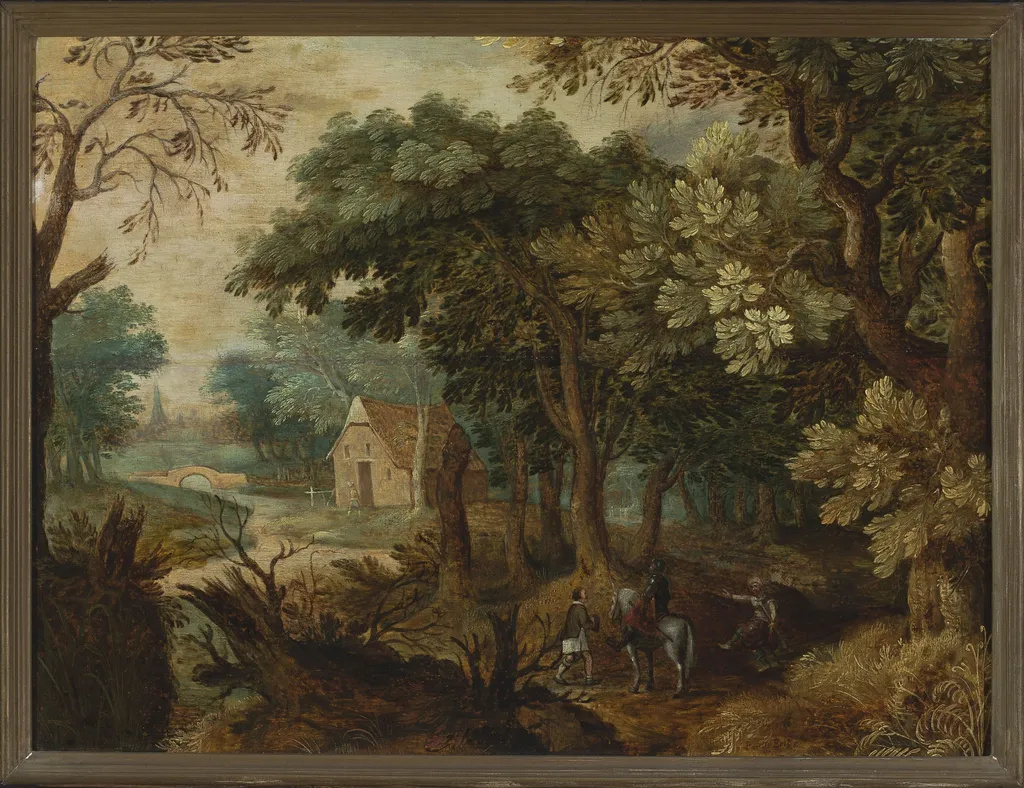
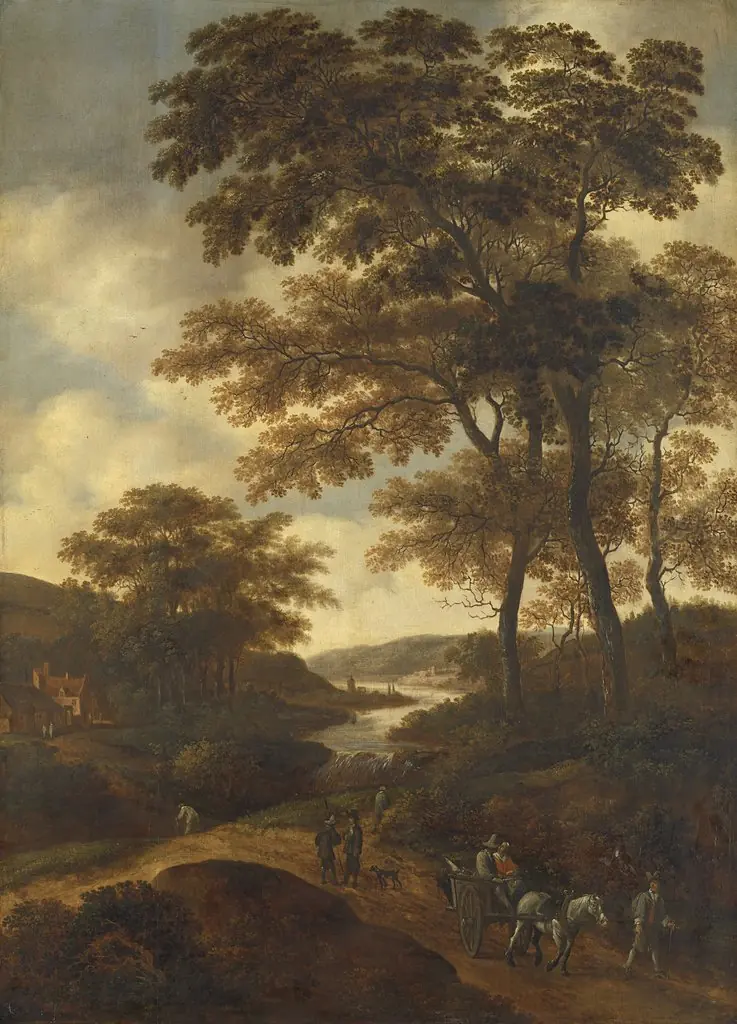
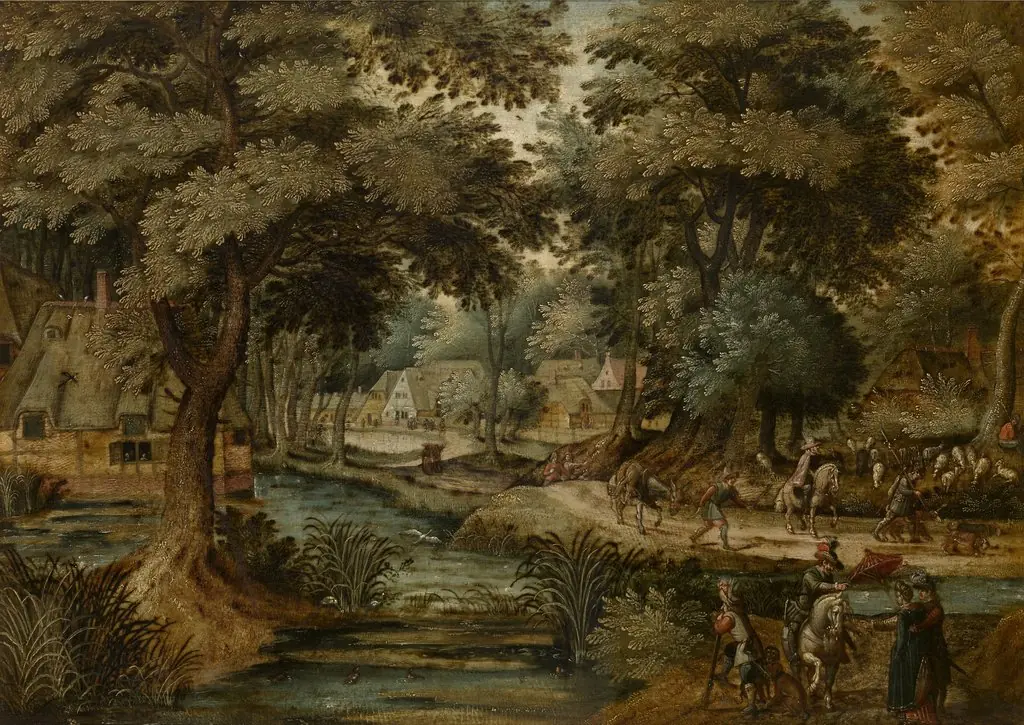
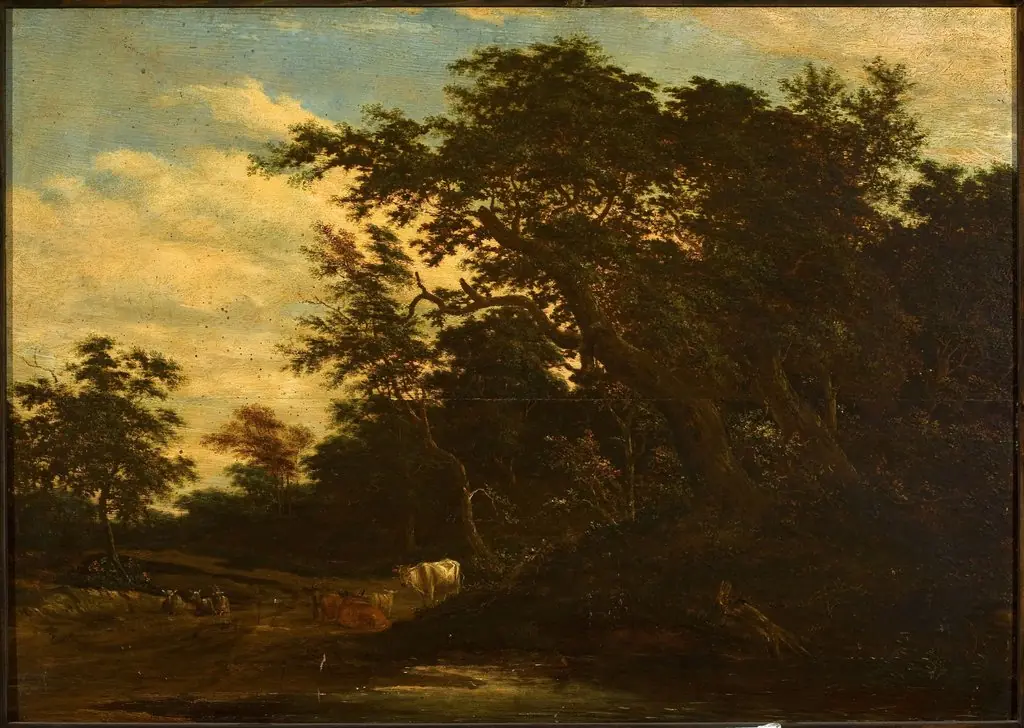
Forest landscape is an oil painting by the Dutch Golden Age artist Unknown. It dates from 1615 and is held in the collection of the National Museum in Warsaw. This oil painting depicts a quiet woodland scene, framed by dense trees and underbrush.
About this work
In the foreground, there are several figures, including a man on horseback and another man walking alongside him.
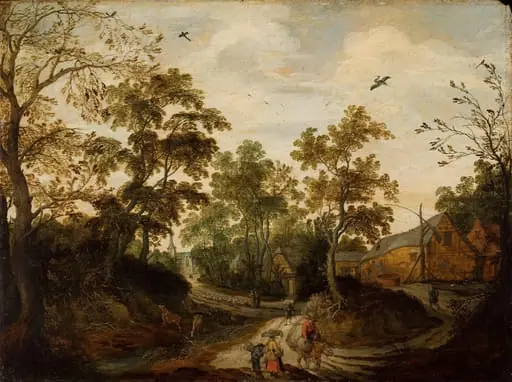
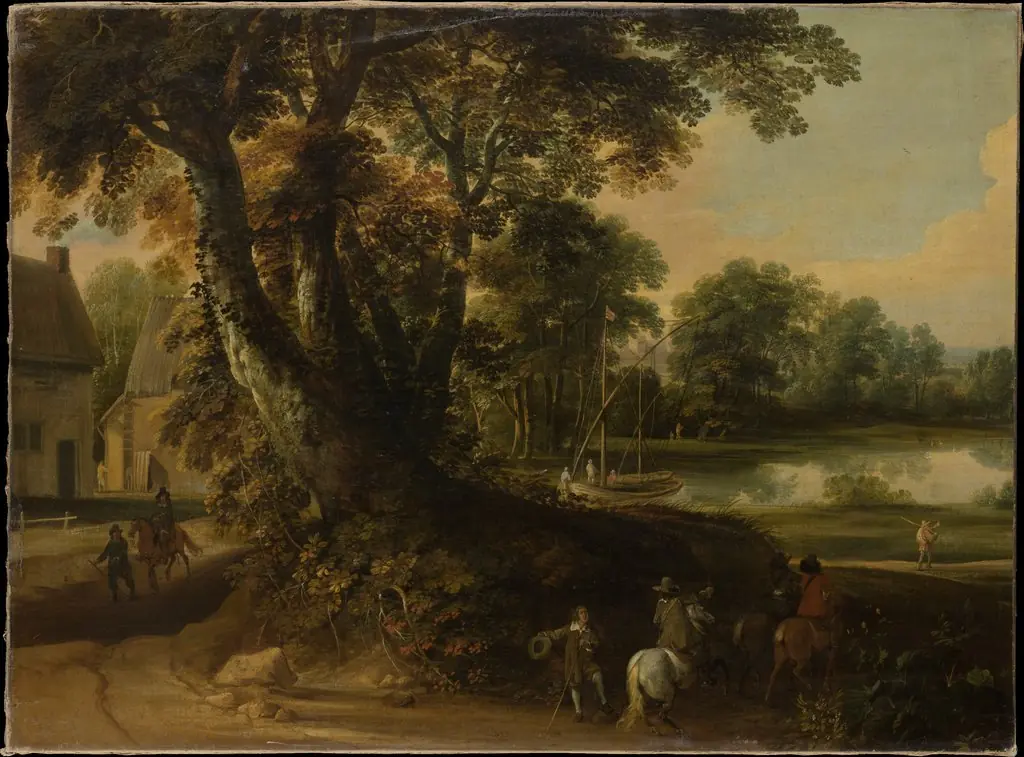
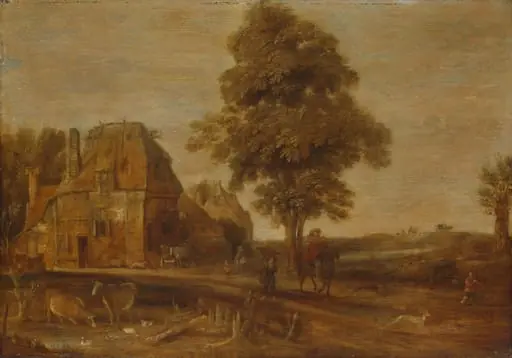
This painting is a forest landscape, with a small house and a bridge in the background. The scene is set in a wooded area, with trees and bushes surrounding the house and bridge.
In the foreground, there are several figures, including a man on horseback and another man walking alongside him. The men are dressed in clothing from the 17th century, and the horse is depicted in a naturalistic style.
The painting is an example of the work of the artist, whose style is characterized by the use of chiaroscuro, a technique that uses strong contrasts between light and dark to create a sense of depth and volume.
Overview
This oil painting depicts a quiet woodland scene, framed by dense trees and underbrush. A modest house and a narrow bridge appear in the distance, partially obscured by foliage. In the foreground, two figures—a man on horseback and a pedestrian—are rendered with attention to period dress, suggesting a 17th-century setting. The composition balances naturalism with a subdued narrative, inviting contemplation rather than drama.
Subject & Meaning
The scene presents a tranquil moment in a rural landscape, devoid of overt symbolism. The figures, dressed in 17th-century attire, suggest travel or daily movement through the woods. Their presence implies human interaction with nature without disrupting it. The house and bridge hint at habitation and connection, reinforcing themes of quiet endurance and the rhythm of rural life.
Technique & Style
The artist employs chiaroscuro to model forms through sharp contrasts between light and shadow, lending volume to the trees, figures, and terrain. Brushwork is precise yet unobtrusive, allowing natural textures to emerge without flourish. The lighting appears to originate from a single, diffused source, enhancing the depth of the forest and grounding the scene in a believable atmosphere.
History & Provenance
The painting’s early ownership is undocumented, but its style aligns with Northern European landscape traditions of the mid-1600s. It likely originated in the Dutch or Flemish region, where such scenes were common among collectors seeking serene, morally neutral depictions of the countryside. Its survival through centuries suggests it was valued for its craftsmanship rather than its fame.
Context
During the 17th century, landscape painting gained prominence in the Low Countries as a reflection of civic pride and a growing interest in the natural world. Unlike grand historical or religious works, these scenes celebrated ordinary environments. This painting fits within that trend, offering a quiet, unidealized view of woodland life without mythological or allegorical overtones.
Legacy
Though not widely known today, the painting exemplifies the quiet sophistication of early modern landscape art. Its restrained use of light and focus on everyday subjects influenced later generations of painters who sought authenticity over spectacle. It remains a representative example of how nature was observed and rendered with dignity in pre-industrial Europe.
Artist & collection

 Domestic Scene
 Giacomo and Cardinal Marco, investing Andrea, Abbot of San Zeno, with his Benefice
 The Nymph of Fontainebleau
 Portrait of a Woman
 Madonna and Child with Saints in the Enclosed Garden
 Venus and Minerva
 Family Group of Four on Sofa
 Wall painting from Room H of the Villa of P. Fannius Synistor at Boscoreale