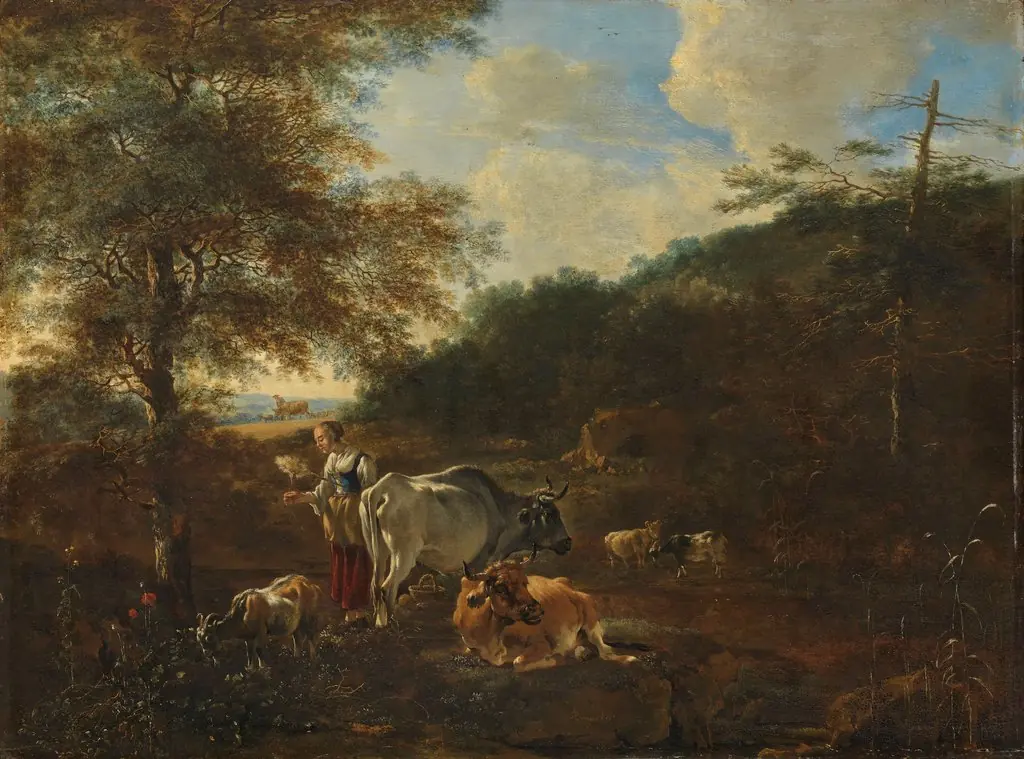
Artwork
Landscape with a creek and cattle
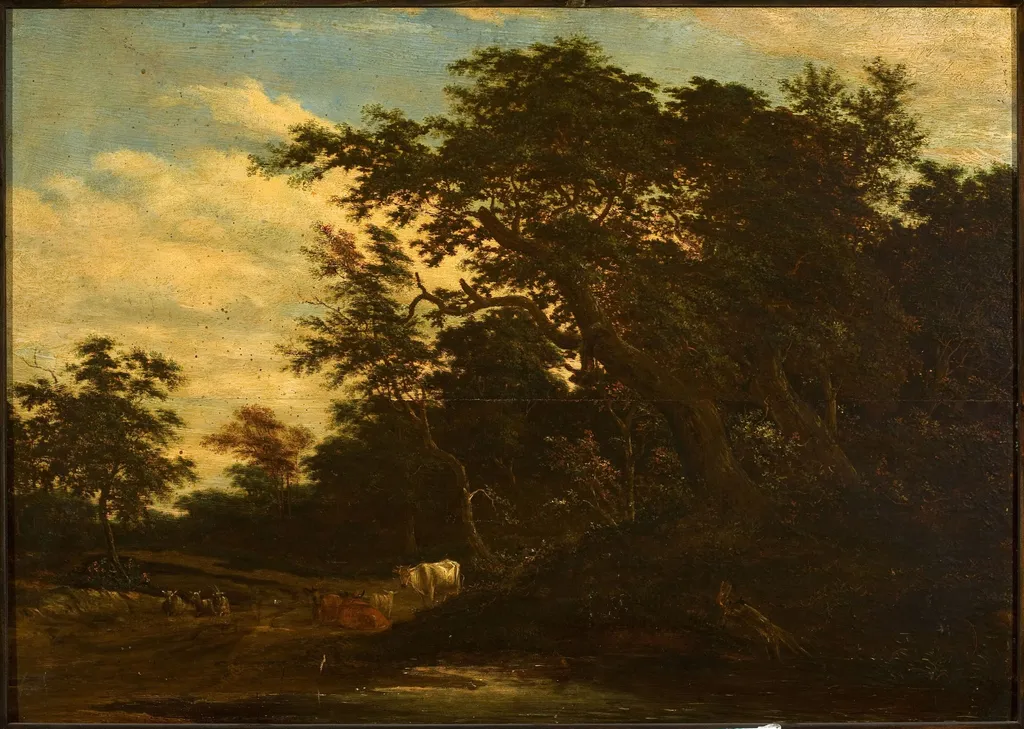
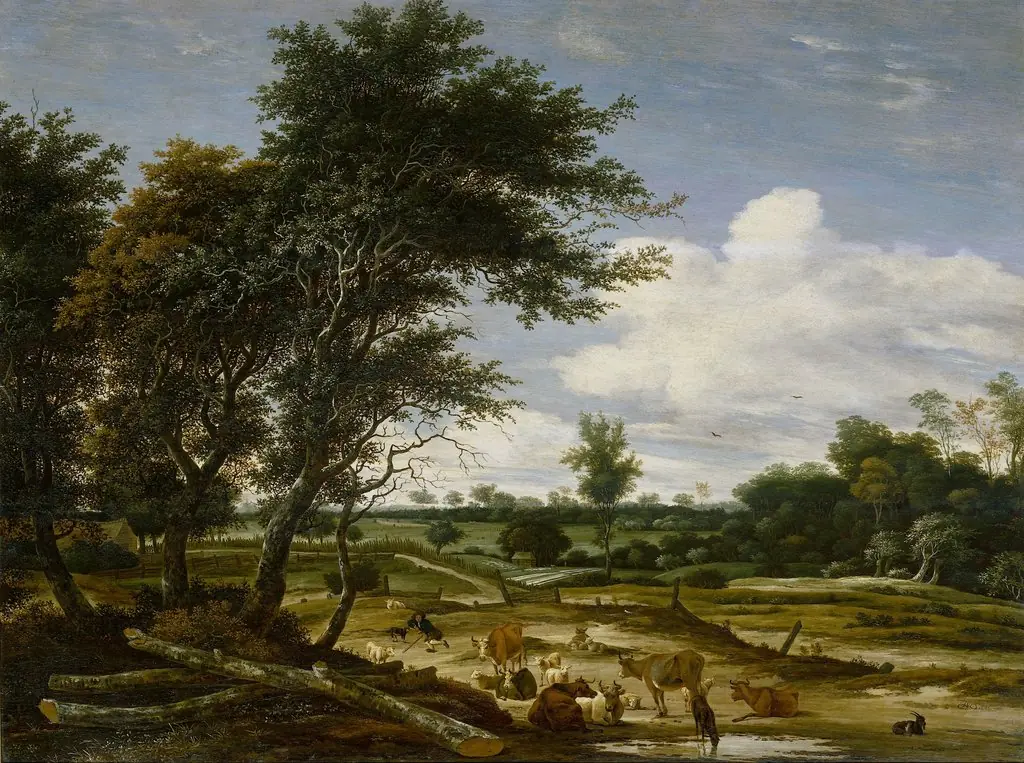
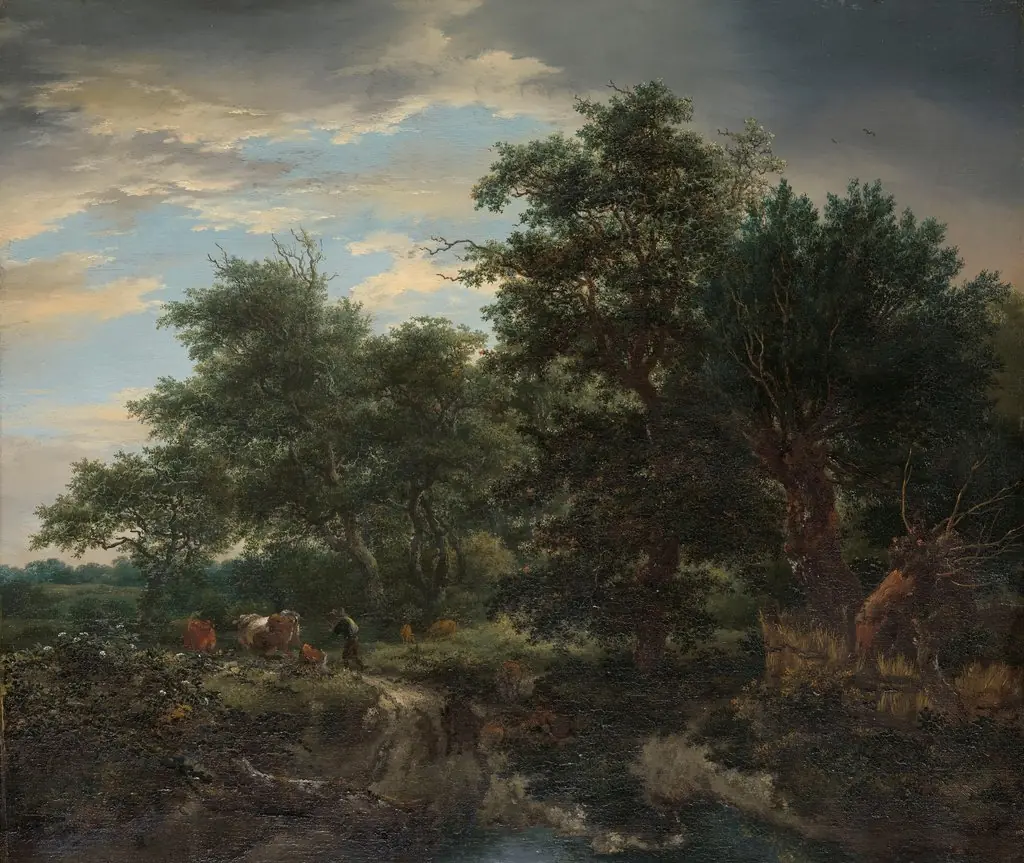
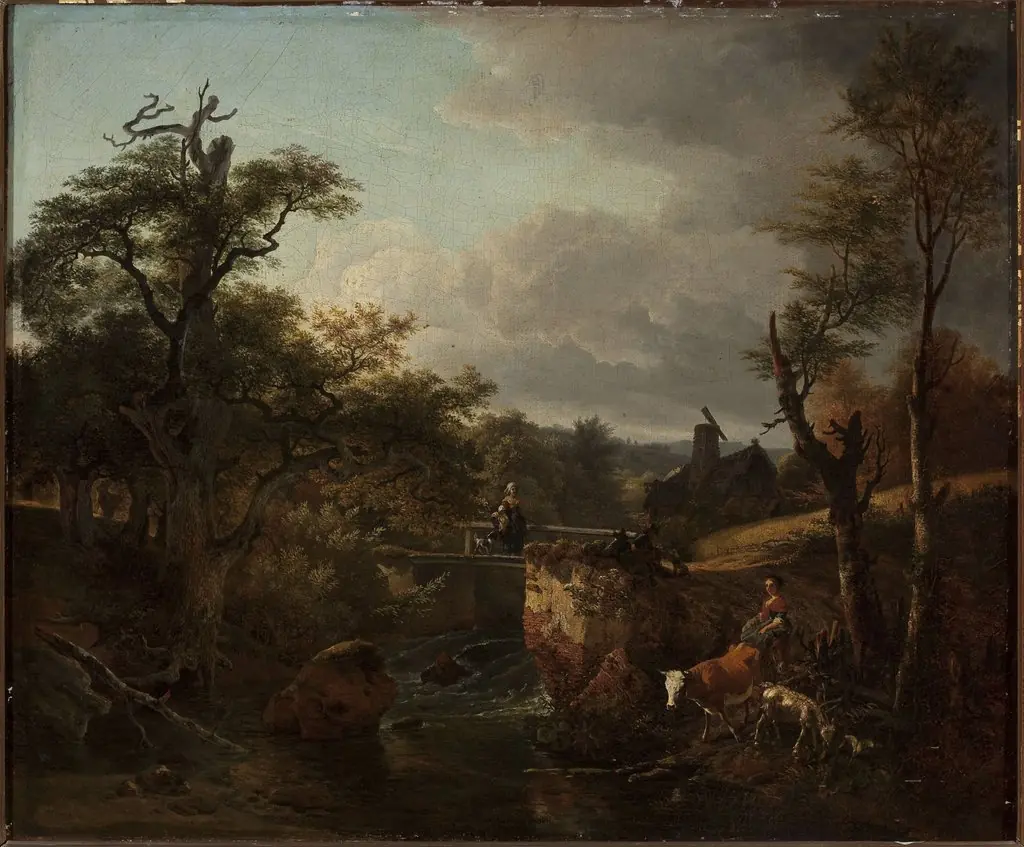
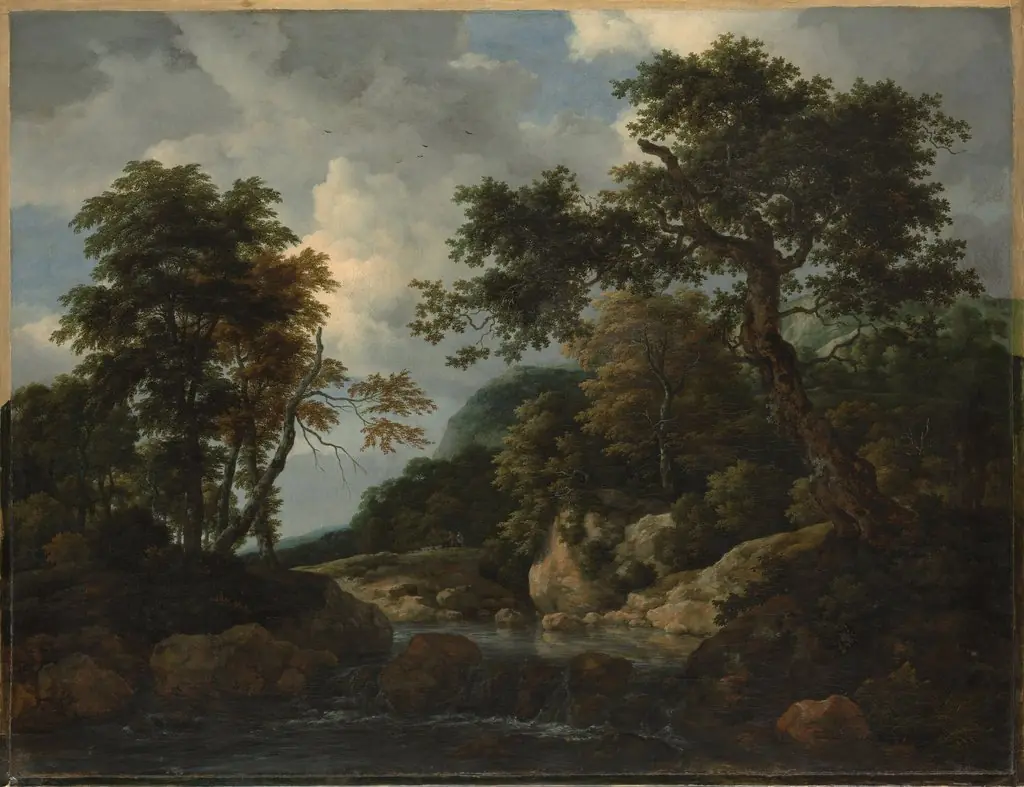
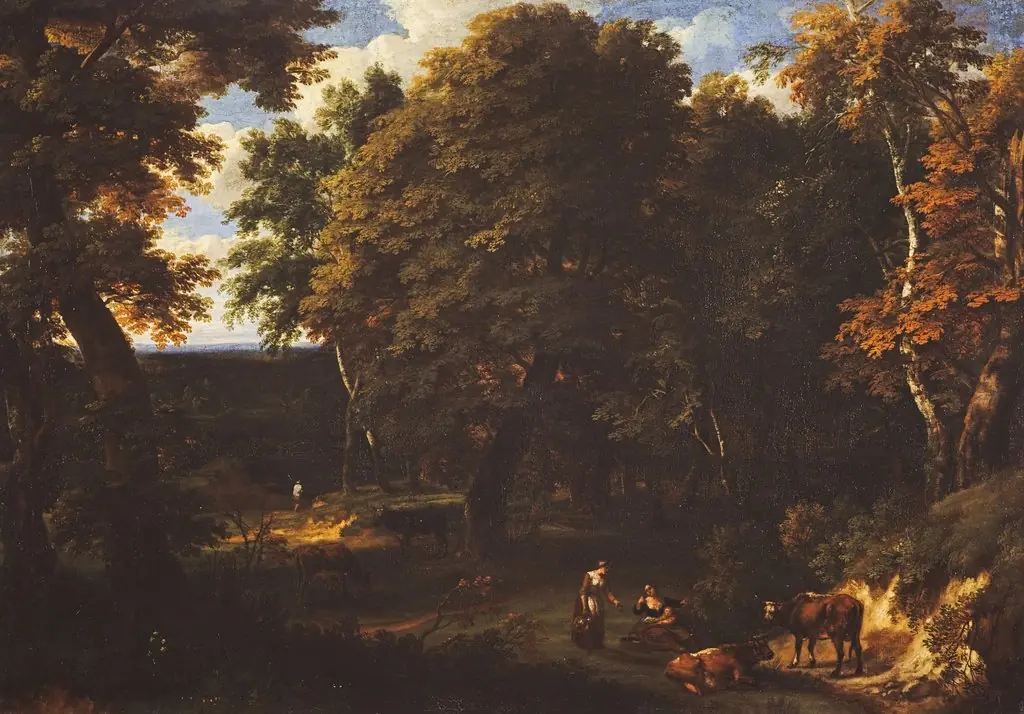
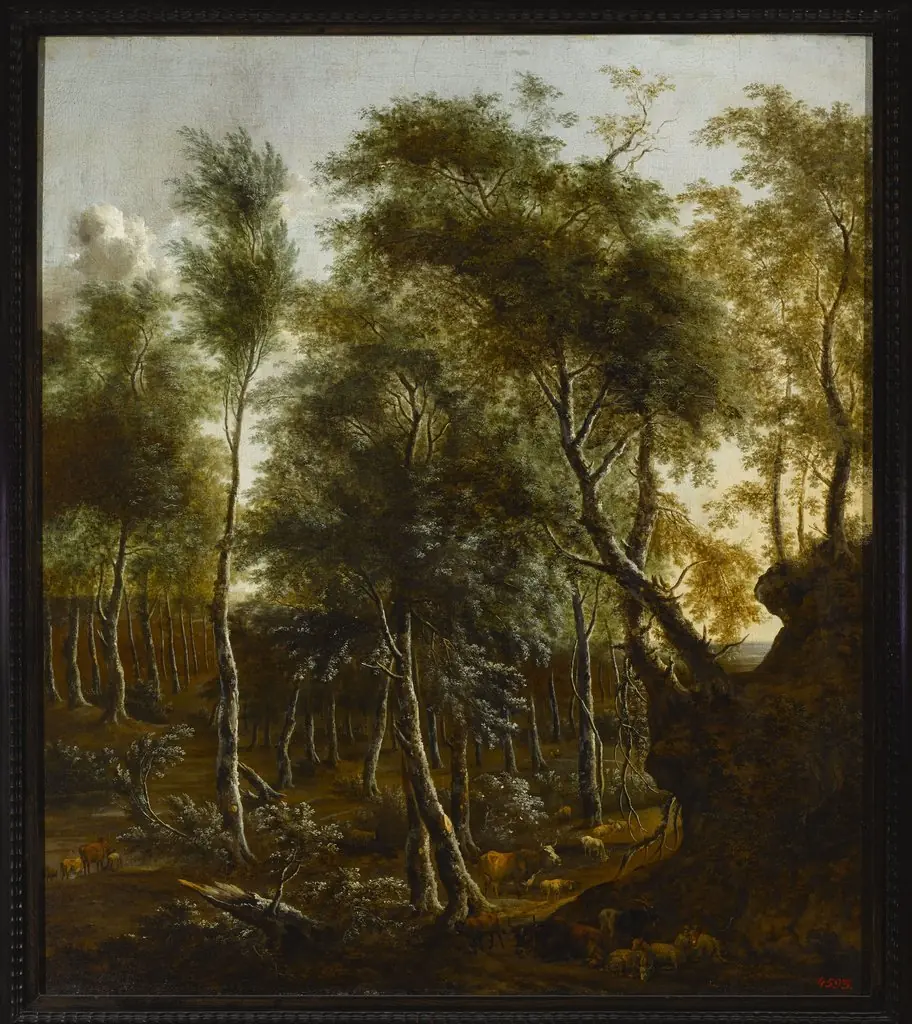
Landscape with a creek and cattle is an oil painting by the Dutch Golden Age artist Jacob Salomonsz. van Ruysdael. It dates from 1665 and is held in the collection of the National Museum in Warsaw. Painted around 1665, this oil-on-canvas work by Jacob Salomonsz.
About this work
Overview
It belongs to the broader tradition of Dutch Golden Age landscape painting, emphasizing natural observation over idealization.
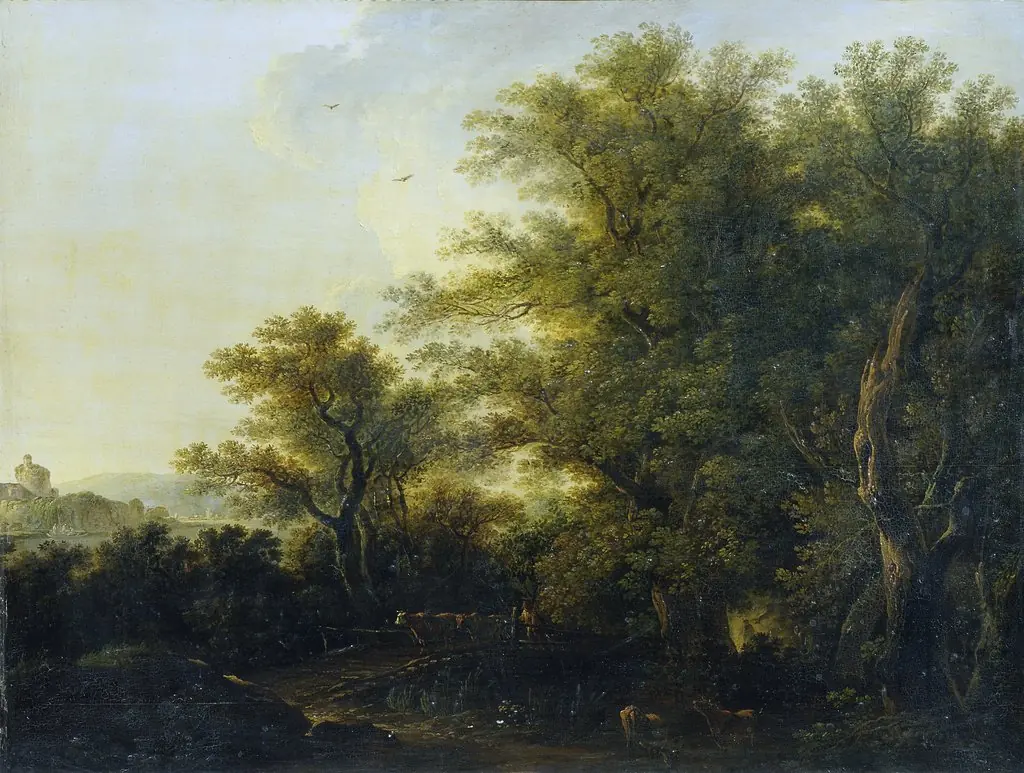
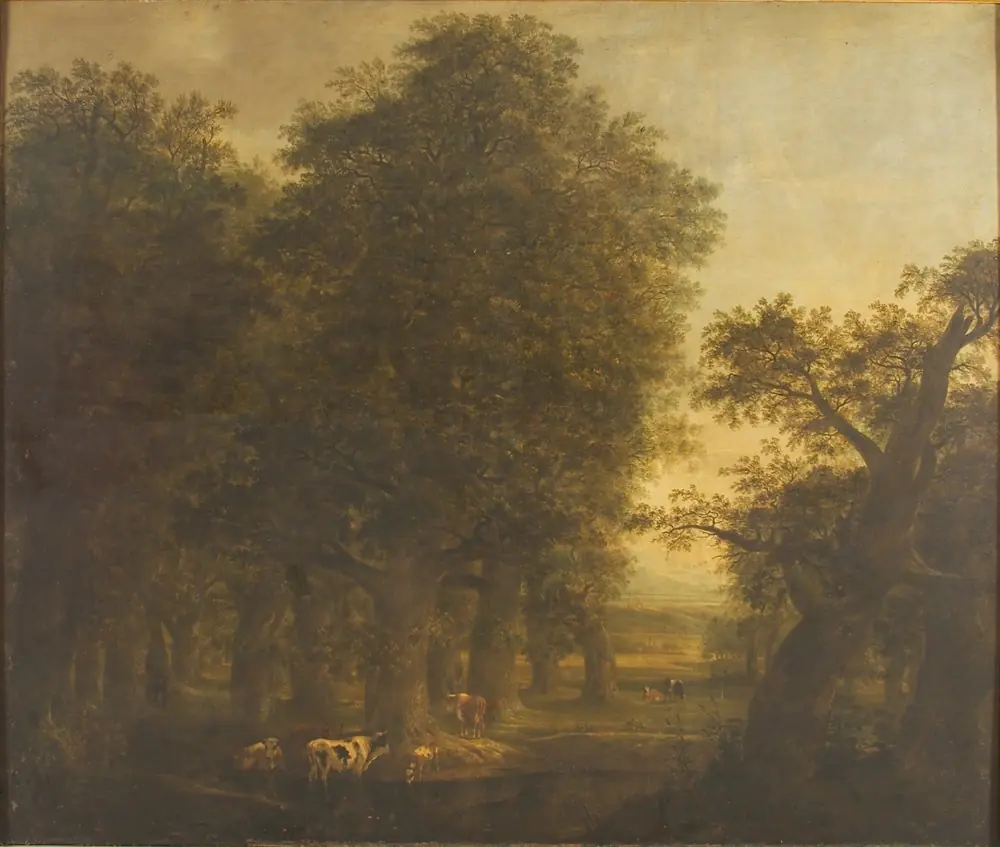
Painted around 1665, this oil-on-canvas work by Jacob Salomonsz. van Ruysdael captures a quiet rural scene in the Dutch countryside. It belongs to the broader tradition of Dutch Golden Age landscape painting, emphasizing natural observation over idealization. The composition centers on a winding creek bordered by dense vegetation, with cattle scattered across the foreground and midground, suggesting a tranquil, everyday moment in agricultural life.
Subject & Meaning
The painting presents a humble, unidealized view of the Dutch countryside, where cattle graze near a shallow stream beneath a muted sky. There is no human presence, reinforcing a sense of solitude and natural rhythm. The scene reflects a cultural appreciation for land and livestock as pillars of Dutch identity, valuing quiet productivity over grandeur. The absence of narrative or drama invites contemplation of the land’s quiet endurance.
Technique & Style
Van Ruysdael employed fine brushwork to render individual leaves and branches, creating texture without excess detail. The sky, partially obscured by tree canopies, uses layered washes of gray and pale blue to suggest atmospheric depth. Light filters unevenly through the foliage, casting soft shadows that guide the eye toward the water’s edge. The palette is restrained—earthy greens, browns, and muted ochres—enhancing the painting’s quiet realism.
History & Provenance
The painting entered the collection of the National Museum in Warsaw, though its earlier ownership history remains undocumented. It likely traveled to Poland in the 19th or early 20th century, possibly through private collections or art dealers. Its presence in Warsaw reflects broader European patterns of art acquisition during periods of cultural exchange, rather than direct Dutch-Polish ties.
Context
Created during the height of the Dutch Golden Age, this work aligns with a surge in landscape painting fueled by urban prosperity and a growing middle class interested in domestic scenes. Haarlem, where van Ruysdael lived and worked, was a center for such art. Unlike dramatic or mythological subjects, these landscapes catered to local pride in the cultivated countryside, celebrating the land as both resource and refuge.
Legacy
Van Ruysdael’s approach influenced later generations of Dutch and German landscape painters through his emphasis on naturalism and atmospheric effect. While less celebrated than his uncle or nephew, his quiet, observant style contributed to the evolution of landscape as a serious genre. This painting endures as a modest but precise example of 17th-century Dutch visual culture, valued for its restraint and fidelity to observed reality.
Artist & collection
Artist
Jacob Salomonsz. van Ruysdael (1629, Haarlem – 1681, Haarlem) was a Dutch Golden Age landscape painter who was the son of Salomon van Ruysdael and the cousin of the more famous Jacob Isaakszoon van Ruisdael.