Artwork
The Nieuwe Kerk in Delft with the Tomb of William the Silent
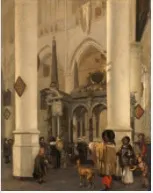
The Nieuwe Kerk in Delft with the Tomb of William the Silent is an unspecified painting by Unknown. It is held in the collection of the National Gallery of Ireland.
About this work
Overview
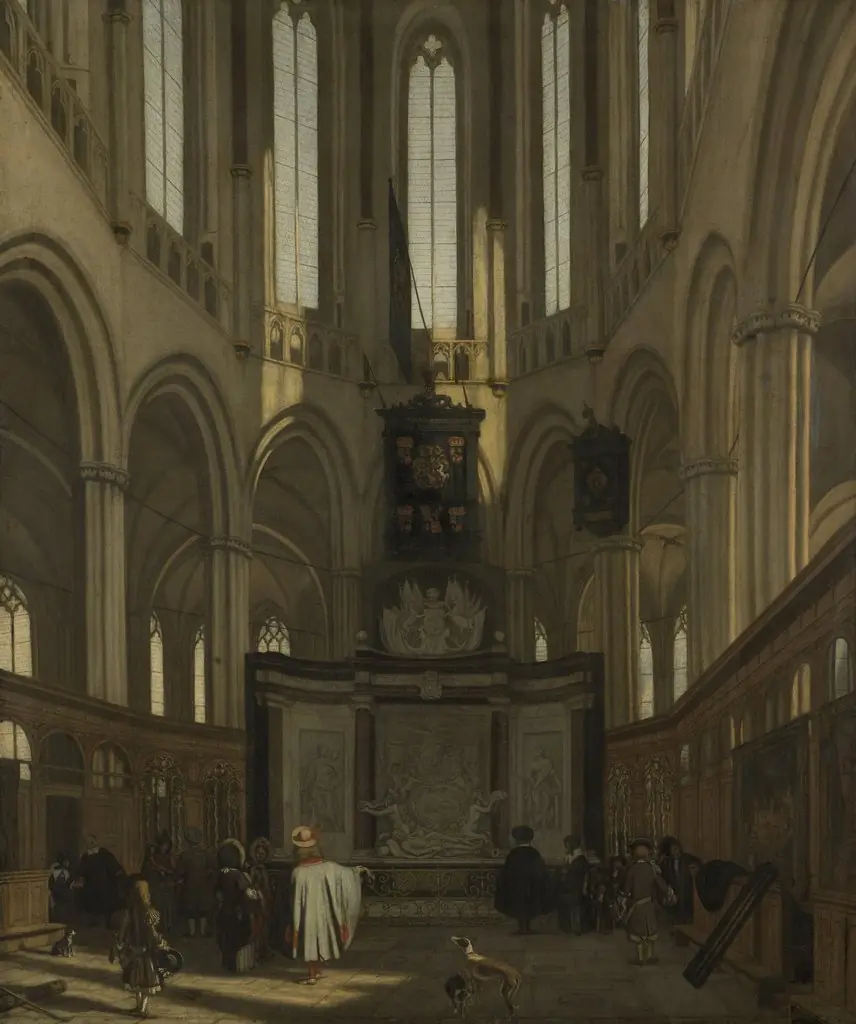
This painting depicts the interior of the Nieuwe Kerk in Delft, a prominent Dutch Reformed church, with particular focus on the tomb of William the Silent.
This painting depicts the interior of the Nieuwe Kerk in Delft, a prominent Dutch Reformed church, with particular focus on the tomb of William the Silent. The architecture dominates the composition—tall columns rise toward a shadowed vaulted ceiling, while the dark stone floor grounds the scene. A group of figures in formal dress gather around the tomb, their presence suggesting a ceremonial or commemorative moment within the sacred space.
Subject & Meaning
The tomb of William the Silent, leader of the Dutch Revolt against Spanish rule, serves as both a political and religious symbol. His burial in the Nieuwe Kerk reinforced the church’s role as a national monument. The gathered figures, likely dignitaries or mourners, emphasize the tomb’s significance as a site of collective memory, blending civic duty with spiritual reverence in the early Dutch Republic.
Technique & Style
The artist employs chiaroscuro to model the interior’s vastness, using subtle gradations of light to draw attention to the tomb. The architectural details are rendered with precision, while the figures are minimized in scale to underscore the monumentality of the space. Brushwork remains restrained, favoring clarity and atmospheric depth over expressive flourish, aligning with the sober aesthetic of Dutch interior painting of the period.
History & Provenance
The painting likely dates to the mid-17th century, a time when the Nieuwe Kerk was already established as a burial site for the House of Orange. It may have been commissioned by civic or religious authorities to document the tomb’s prominence. Its early provenance is tied to Delft’s civic collections, and it remained in the Netherlands, reflecting local interest in preserving historical memory through visual record.
Context
In post-reformation Holland, churches were repurposed as sites of civic identity as much as worship. The Nieuwe Kerk, once a Catholic church, became a Protestant space where political figures like William the Silent were honored. This painting reflects a broader cultural shift: religious architecture now served national narratives, merging devotion with historical commemoration in a newly independent republic.
Legacy
The painting contributes to a visual tradition documenting Dutch civic and religious spaces as repositories of collective memory. It helped solidify the Nieuwe Kerk’s status as a national landmark and influenced later depictions of historical interiors. Though not widely exhibited outside the Netherlands, it remains a key reference in studies of Dutch art, architecture, and the intersection of politics and sacred space.
Artist & collection

 Domestic Scene
 Giacomo and Cardinal Marco, investing Andrea, Abbot of San Zeno, with his Benefice
 The Nymph of Fontainebleau
 Portrait of a Woman
 Madonna and Child with Saints in the Enclosed Garden
 Venus and Minerva
 Family Group of Four on Sofa
 Wall painting from Room H of the Villa of P. Fannius Synistor at Boscoreale
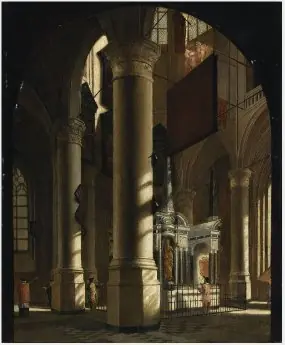 Interior of the Nieuwe Kerk in Delft with the Tomb of William the Silent
 Interior of the Oude Kerk, Delft
 Interior of the Oude Kerk, Delft
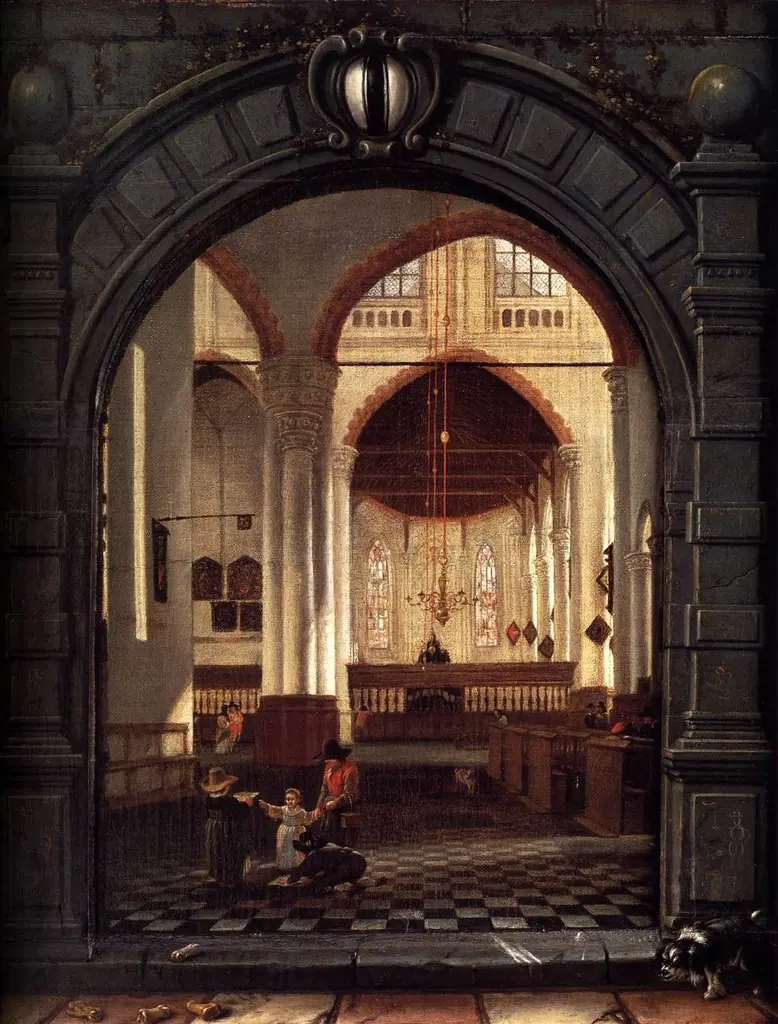 Interior of the Oude Kerk, Delft, Seen through a Stone Archway
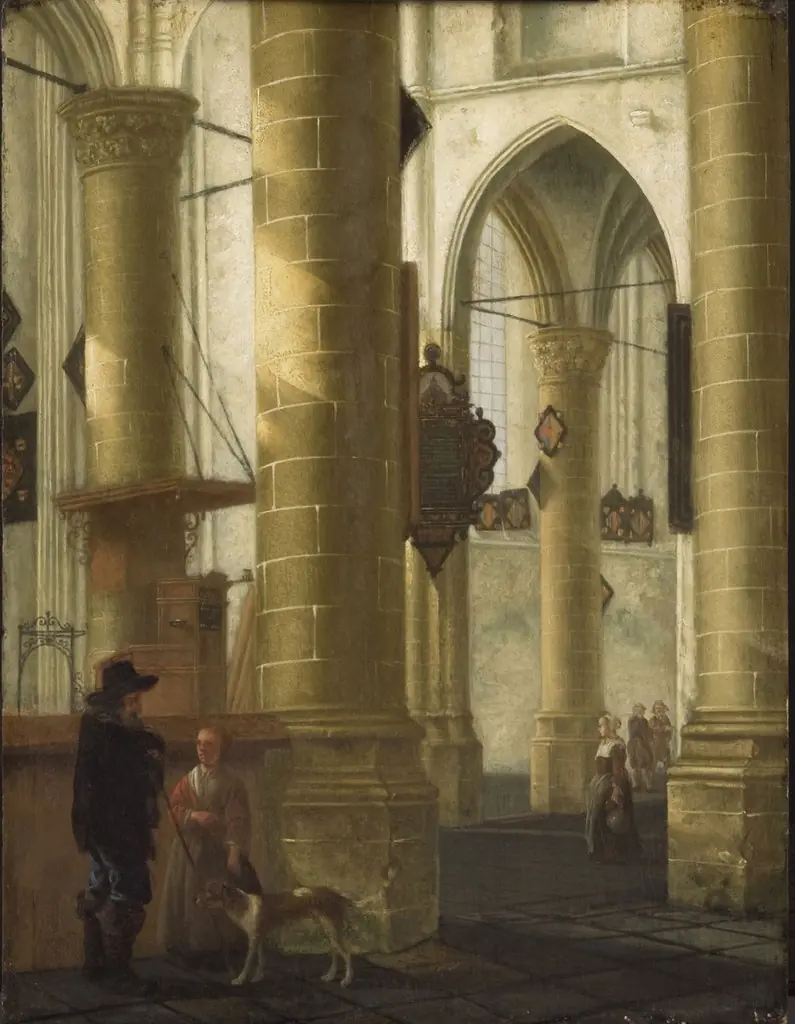 Interior of the Groote Kerk, Dordrecht
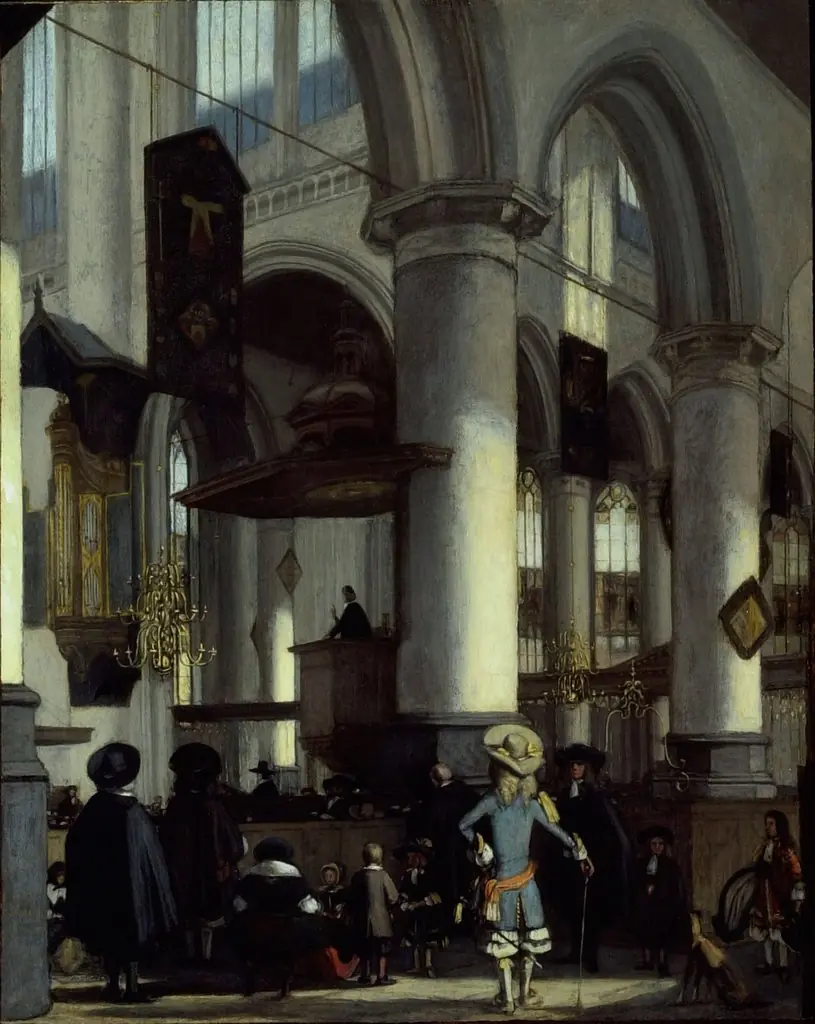 Interior of the Oude Kerk, Delft
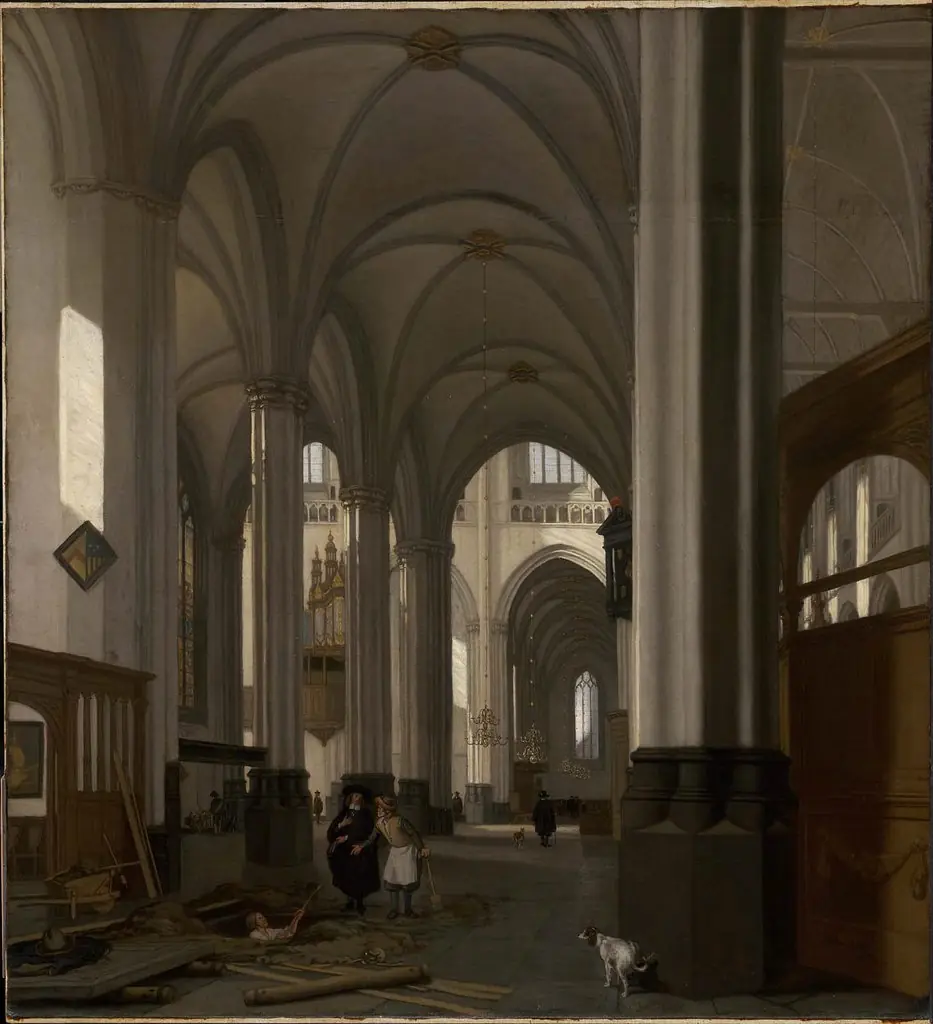 Interior of the Nieuwe Kerk, Amsterdam
 The Tomb of Michiel de Ruyter in the Nieuwe Kerk, Amsterdam
 Interior of the Oude Kerk, Delft
 Old Church (Oudekerk) in Delft with the Tomb of Admiral Pieter Pieterszoon Hein (Heyn)
 Interior of an old church in Delft
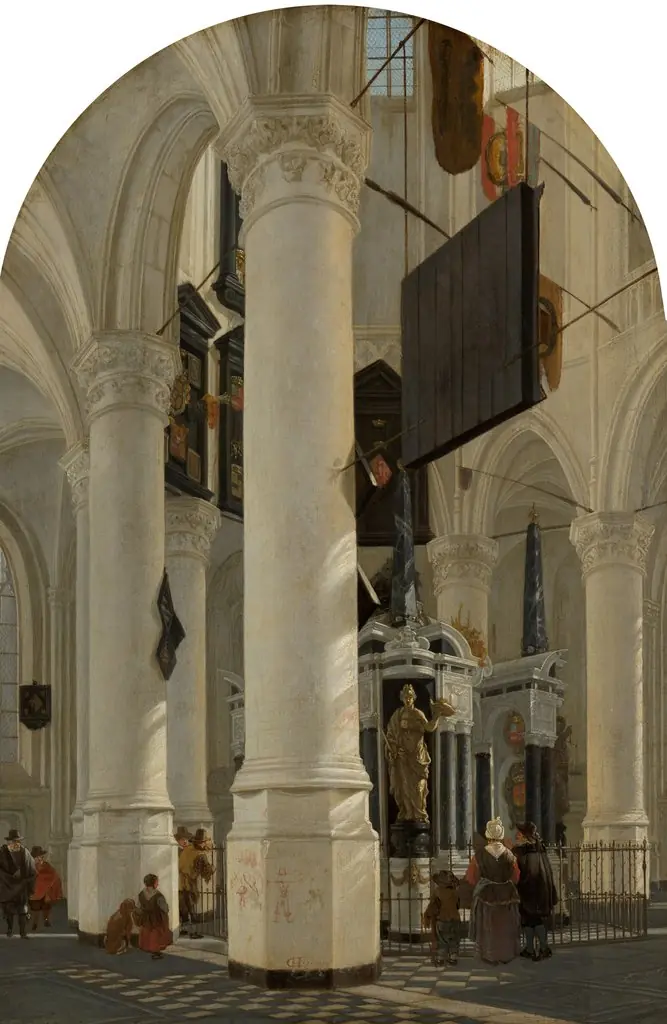 The Tomb of William the Silent in the Nieuwe Kerk in Delft