Artwork
Interior of the Oude Kerk, Delft, Seen through a Stone Archway
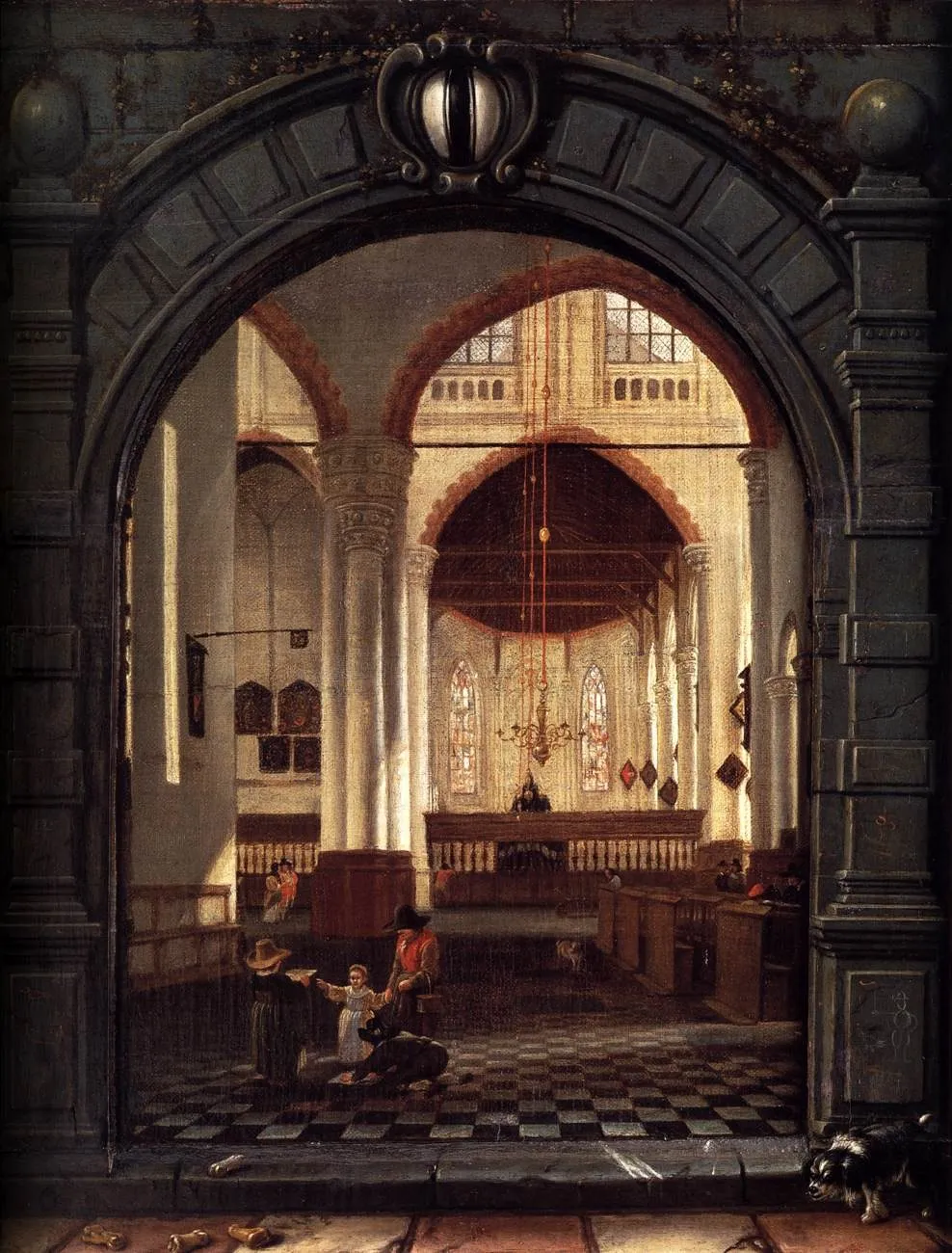
Interior of the Oude Kerk, Delft, Seen through a Stone Archway is an unspecified painting by the Dutch Golden Age artist Louwijs Aernouts Elsevier. It dates from 1653 and is held in the collection of the National Museum of Ancient Art.
About this work
Overview
Painted in 1653 by Louwijs Aernouts Elsevier, this work captures a view of the Oude Kerk in Delft as seen through a stone archway. The composition frames the church’s interior with architectural precision, emphasizing spatial depth and quiet domesticity within a sacred space. It is currently held in the collection of the National Museum of Ancient Art.
Subject & Meaning
The scene presents an ordinary moment inside a functioning church: worshippers sit and stand in quiet contemplation, while a dog rests near the floor, and everyday objects lie scattered. These details suggest a lived-in religious space, not an idealized sanctuary. The inclusion of mundane elements underscores the intersection of spiritual life with daily routine in 17th-century Dutch society.
Technique & Style
The play of light through high windows creates a luminous interior, contrasting with the shadowed archway that frames the view, guiding the viewer’s eye inward.
Elsevier employs chiaroscuro to model the vaulted ceiling and carved stonework, enhancing the sense of volume and atmosphere. Fine brushwork renders intricate architectural details—moldings, window tracery, and wall decorations—with meticulous care. The play of light through high windows creates a luminous interior, contrasting with the shadowed archway that frames the view, guiding the viewer’s eye inward.
History & Provenance
The painting was completed in 1653 and has remained in institutional collections since at least the 19th century. It entered the National Museum of Ancient Art’s holdings through documented acquisitions, likely from a private Dutch collection. Its preservation reflects early appreciation for Dutch interior scenes as records of cultural and architectural life.
Context
In mid-17th-century Delft, church interiors were common subjects among local painters, reflecting both religious devotion and civic pride. The Oude Kerk, as the city’s oldest church, held symbolic importance. Elsevier’s depiction aligns with a broader trend of realism in Dutch art, where sacred spaces were rendered with attention to texture, light, and the presence of ordinary life.
Legacy
This painting contributes to the tradition of Dutch interior views that influenced later generations of artists interested in spatial composition and naturalistic lighting. While not widely known outside specialist circles, it remains a quiet example of how everyday observation was elevated through technical precision and restrained composition in Dutch Golden Age painting.
Artist & collection
Artist
Louwijs Aernouts Elsevier (1617–1675) was an artist, born in Leiden.

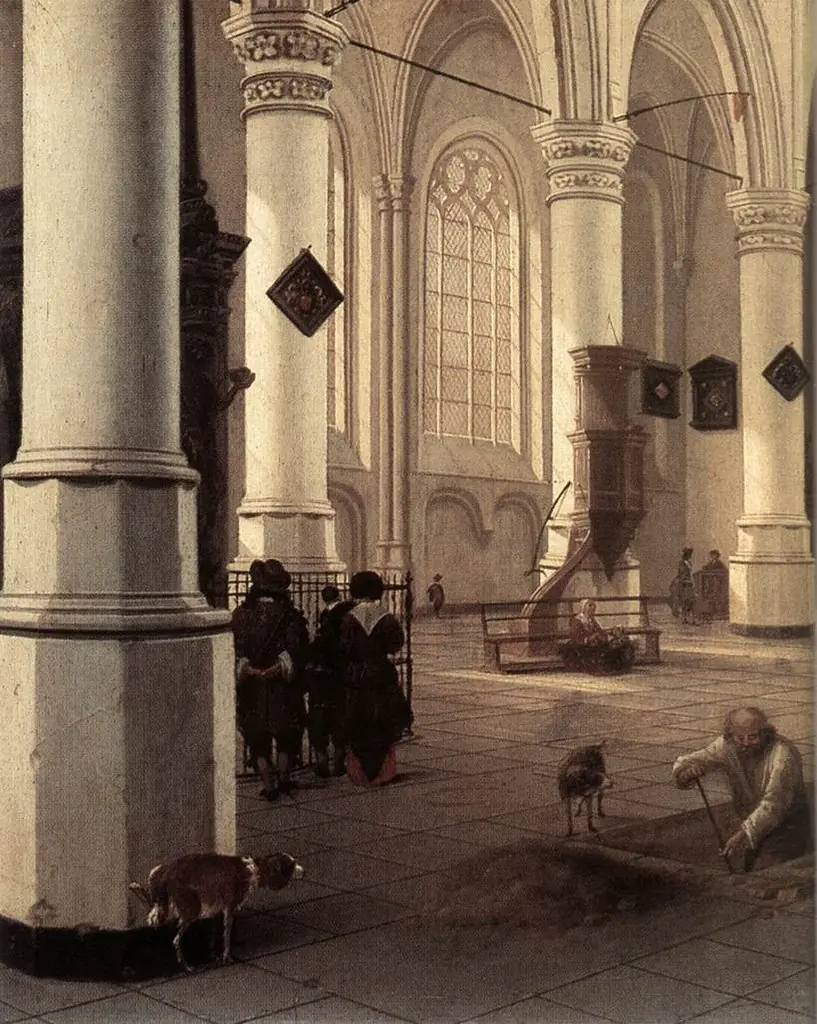 Interior of the New Church of Delft with a man digging a grave
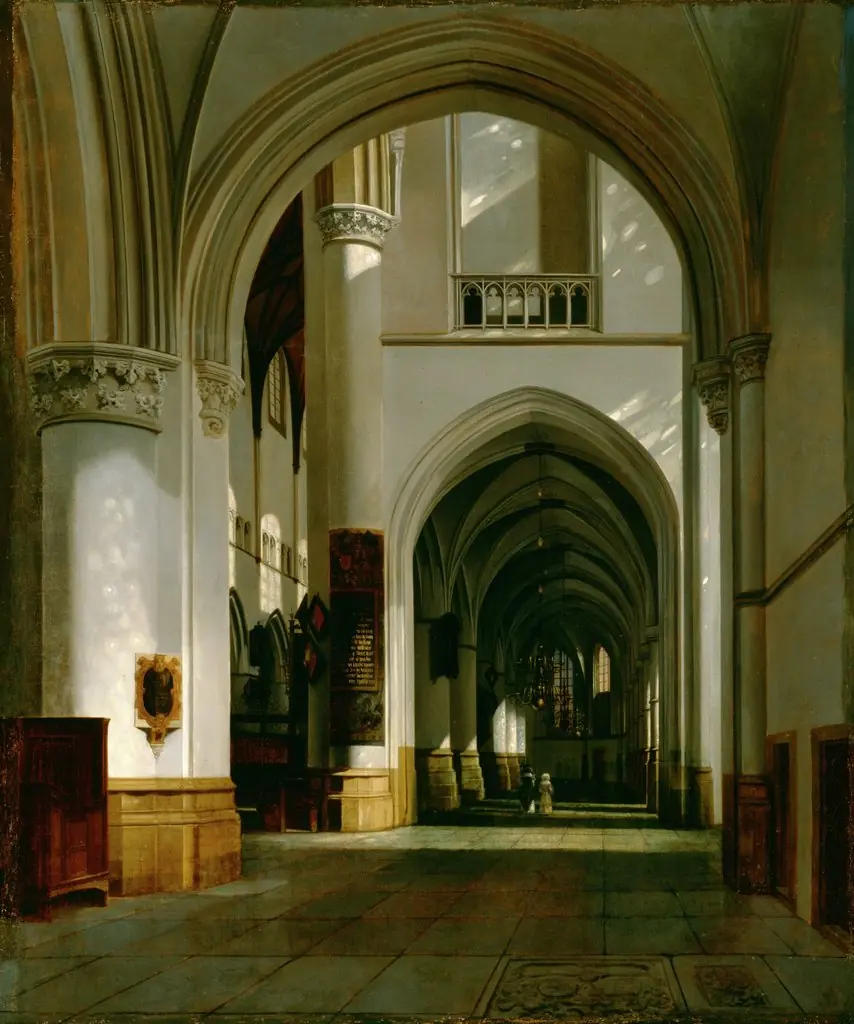 Interior of the Grote Kerk, Haarlem
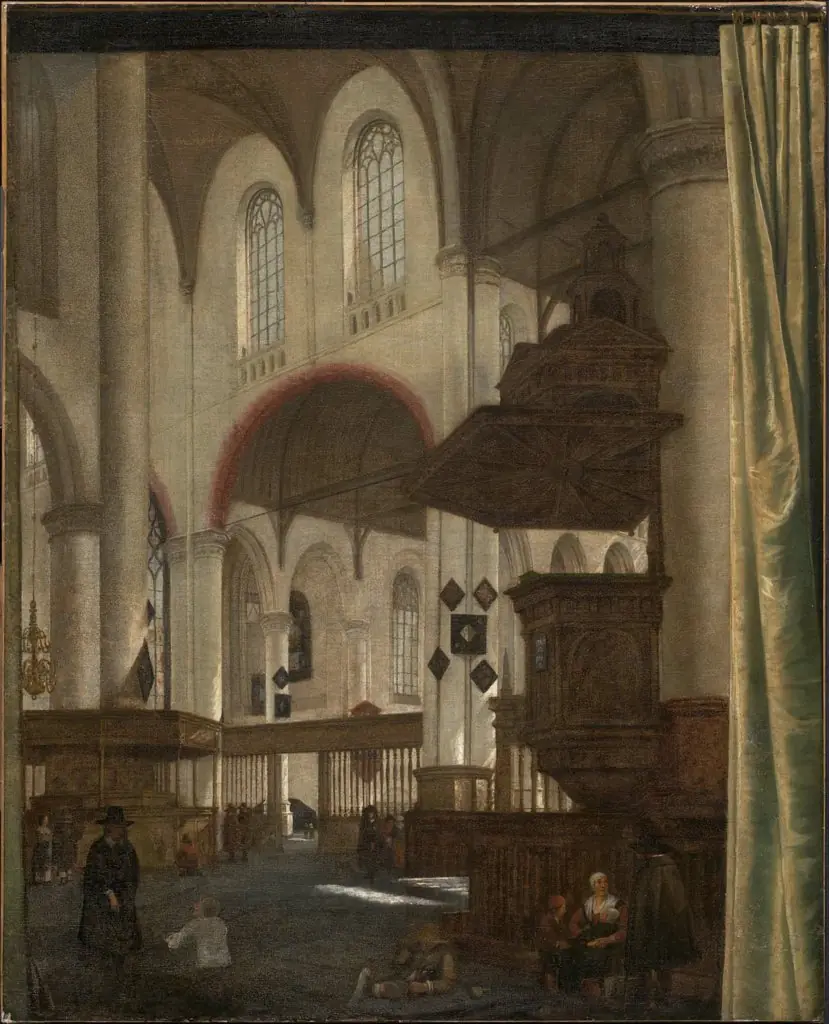 Interior of the Oude Kerk, Delft
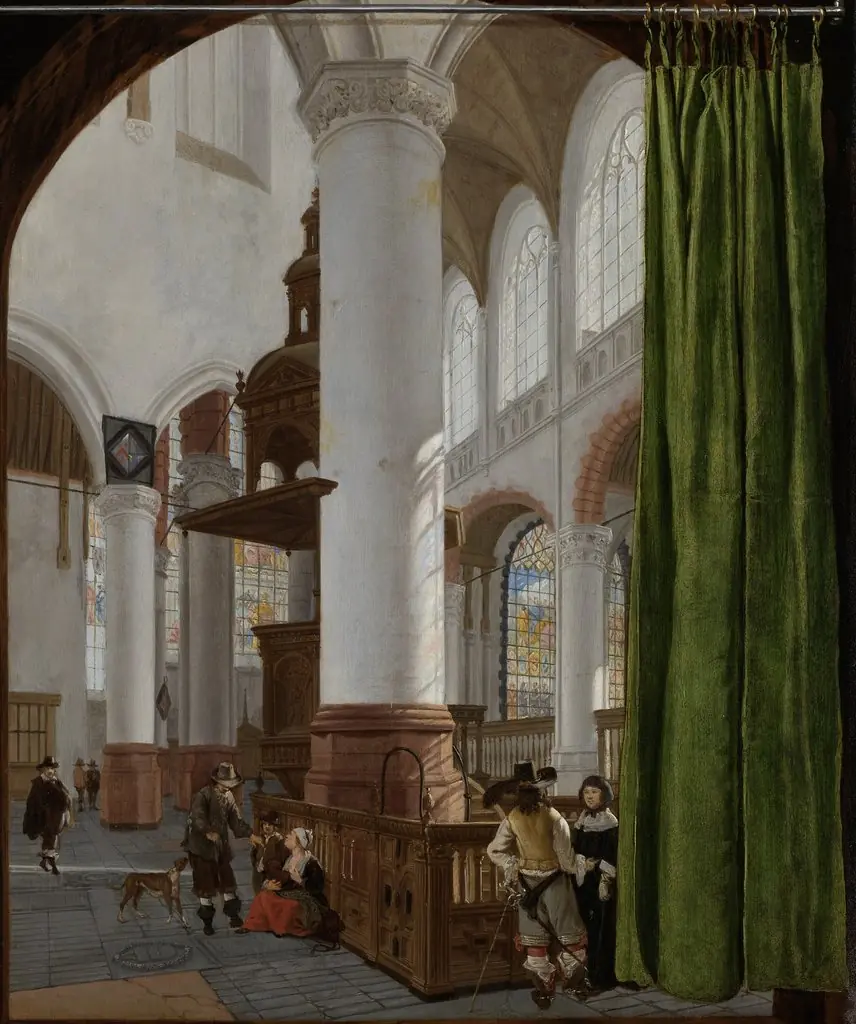 Interior of the Old Church in Delft
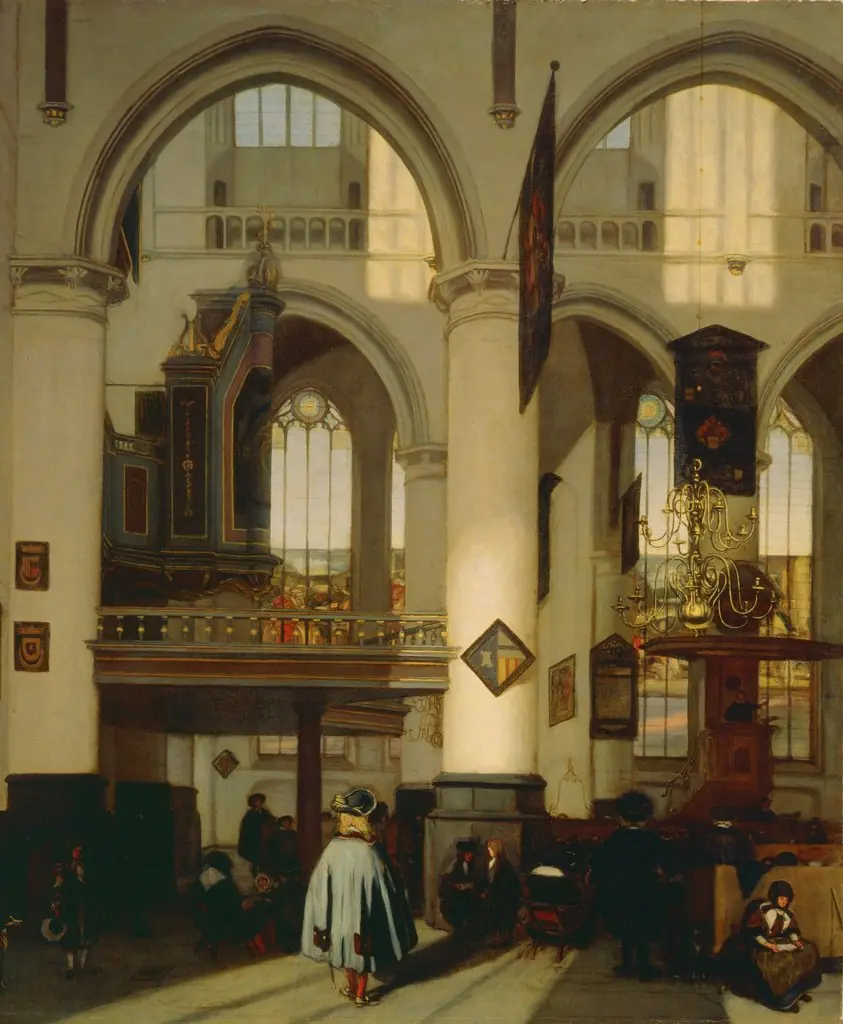 Interior of the Oude Kerk in Amsterdam
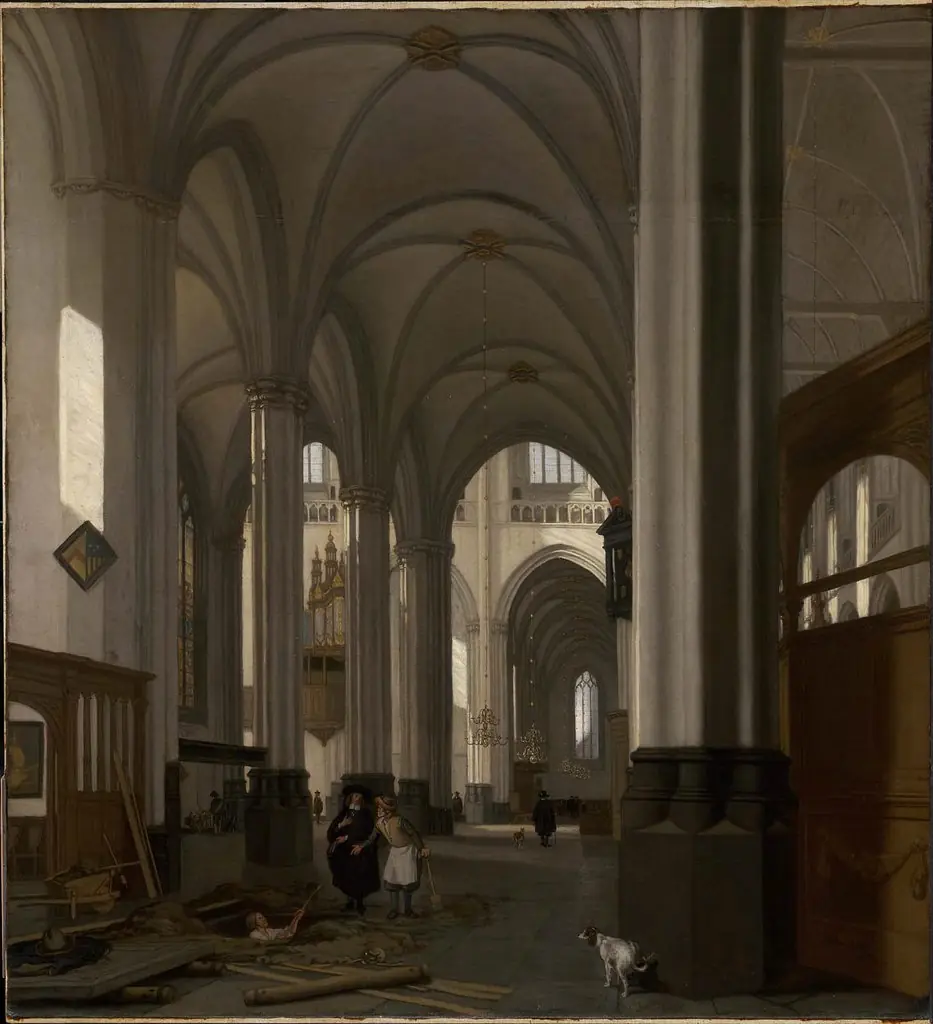 Interior of the Nieuwe Kerk, Amsterdam
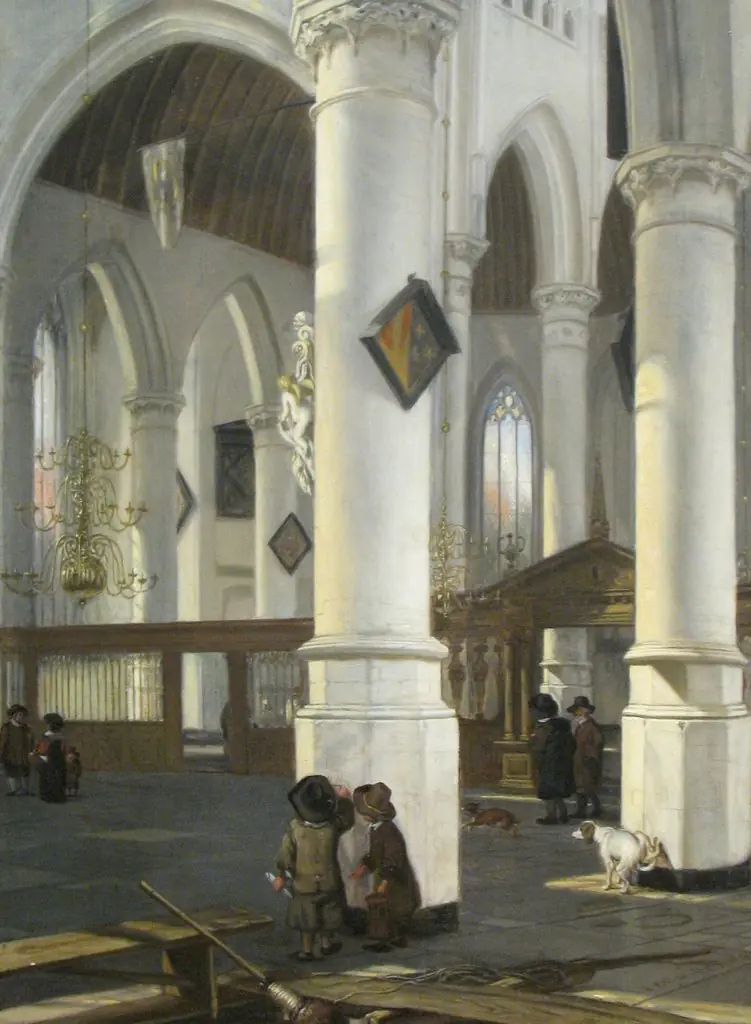 Interior of the Oude Kerk, Delft
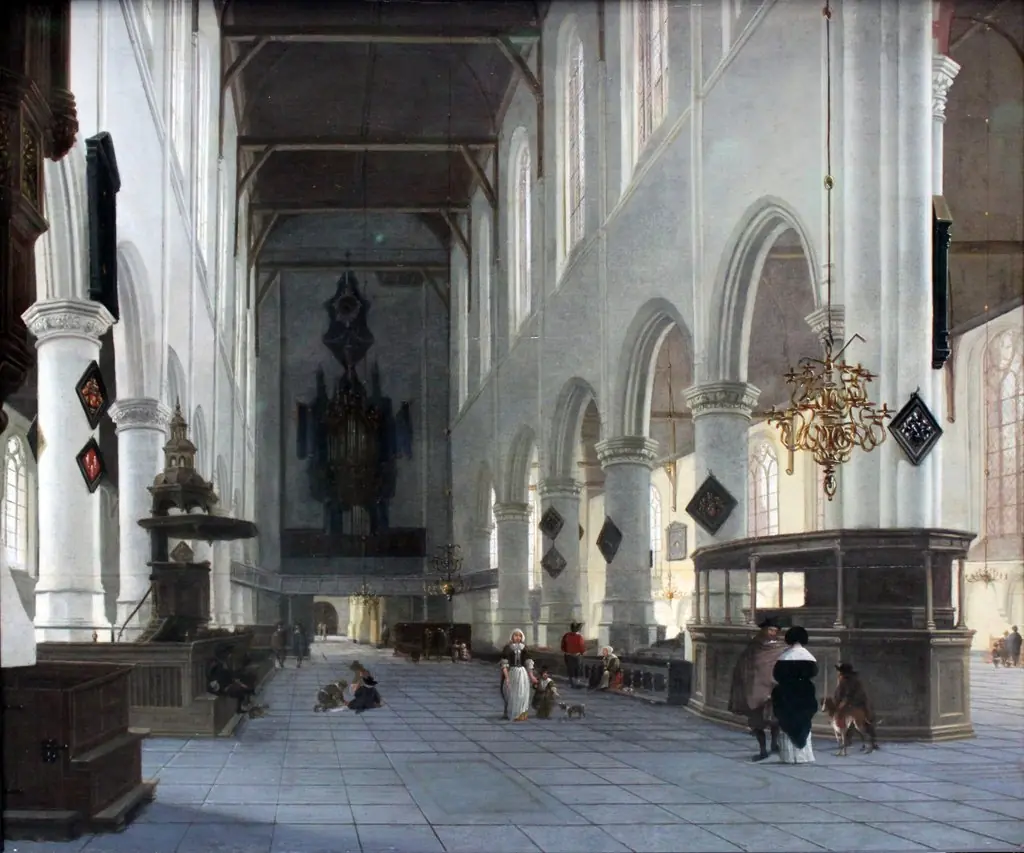 The Interior of the Oude Kerk in Delft
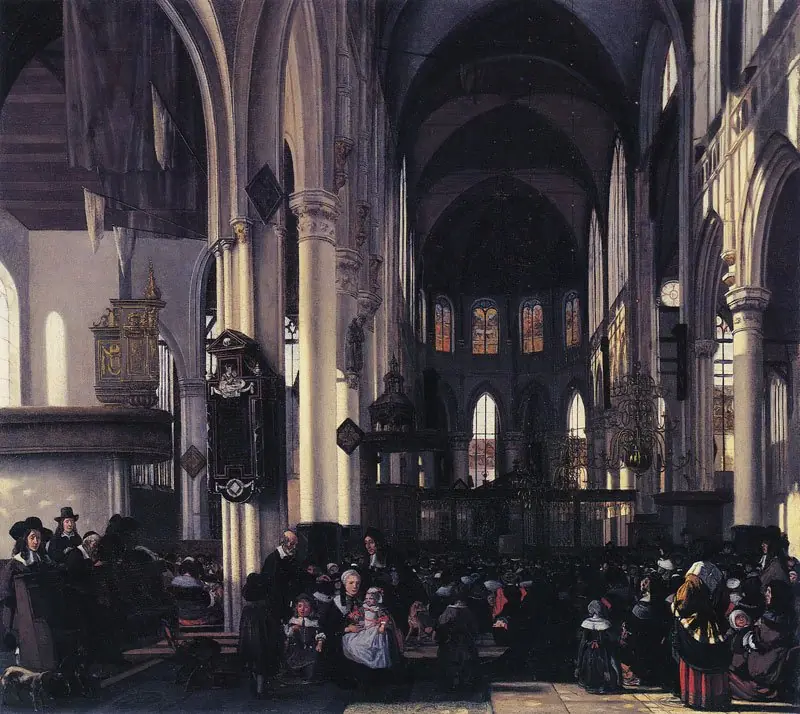 Interior of the Oude Kerk in Amsterrdam
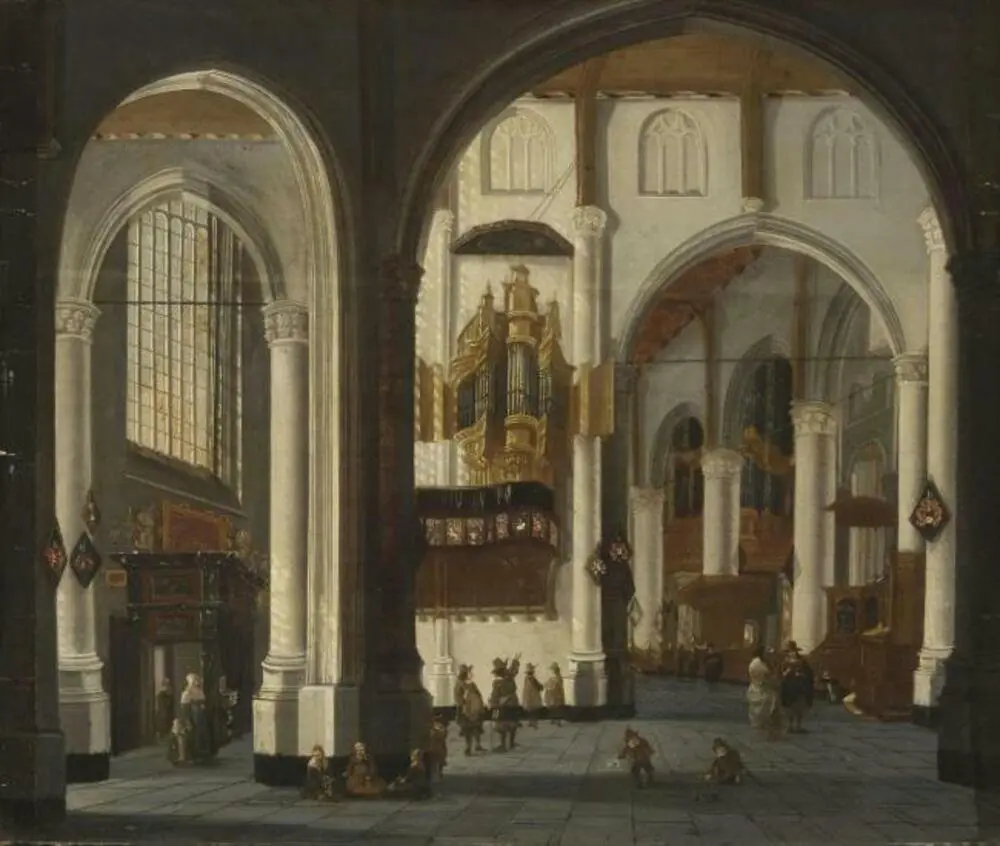 Interior of the St. Laurenskerk, Rotterdam
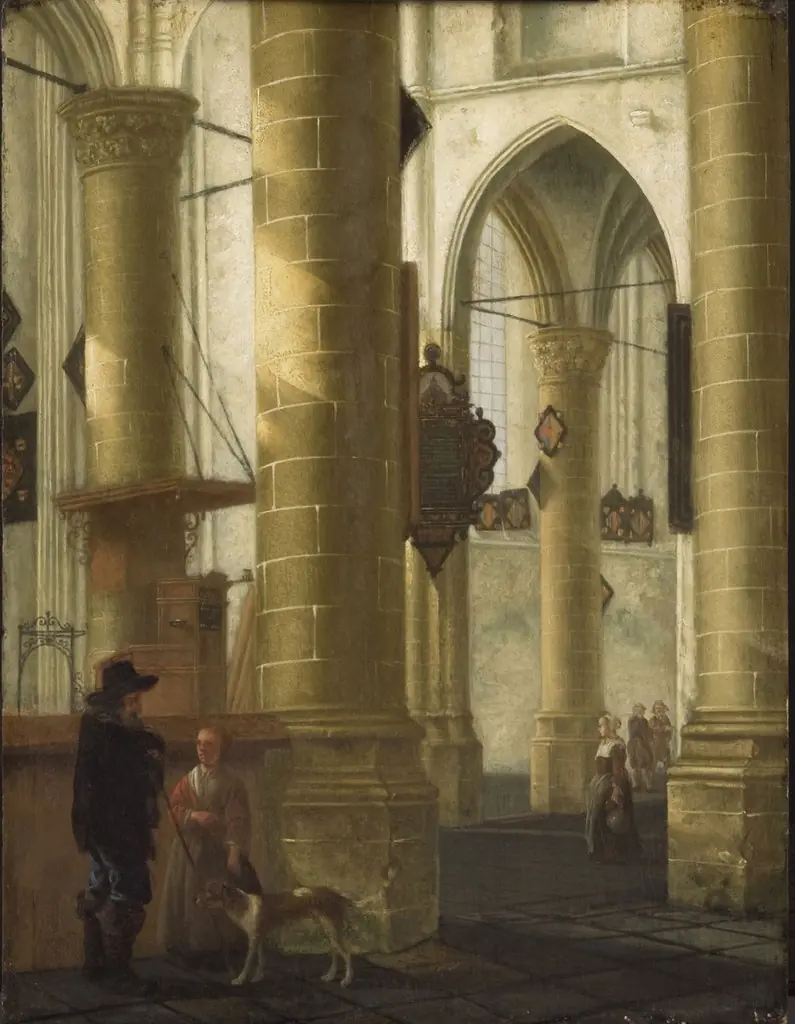 Interior of the Groote Kerk, Dordrecht
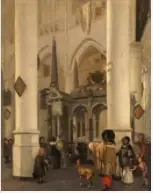 The Nieuwe Kerk in Delft with the Tomb of William the Silent
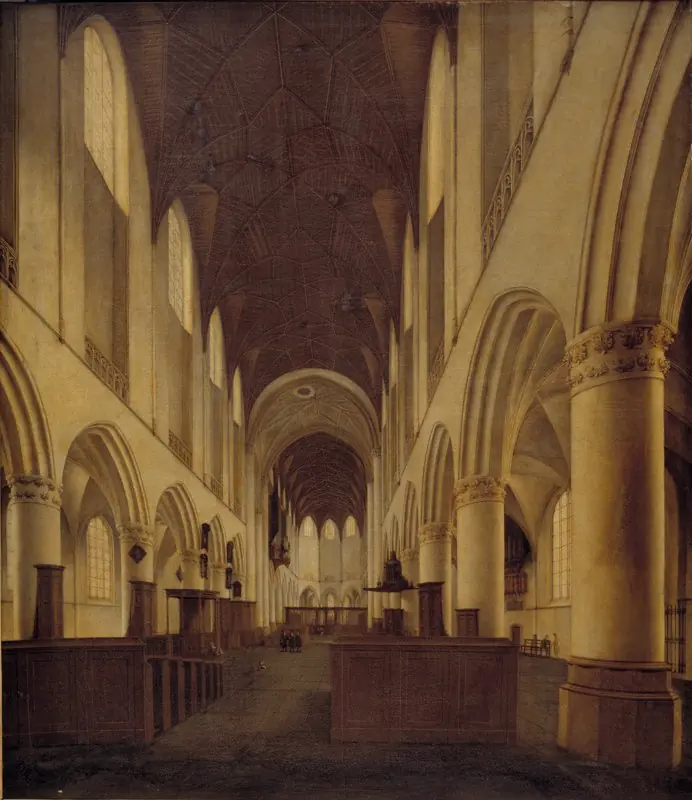 Interior of St Bavo Church in Haarlem. View from the Nave towards the Choir
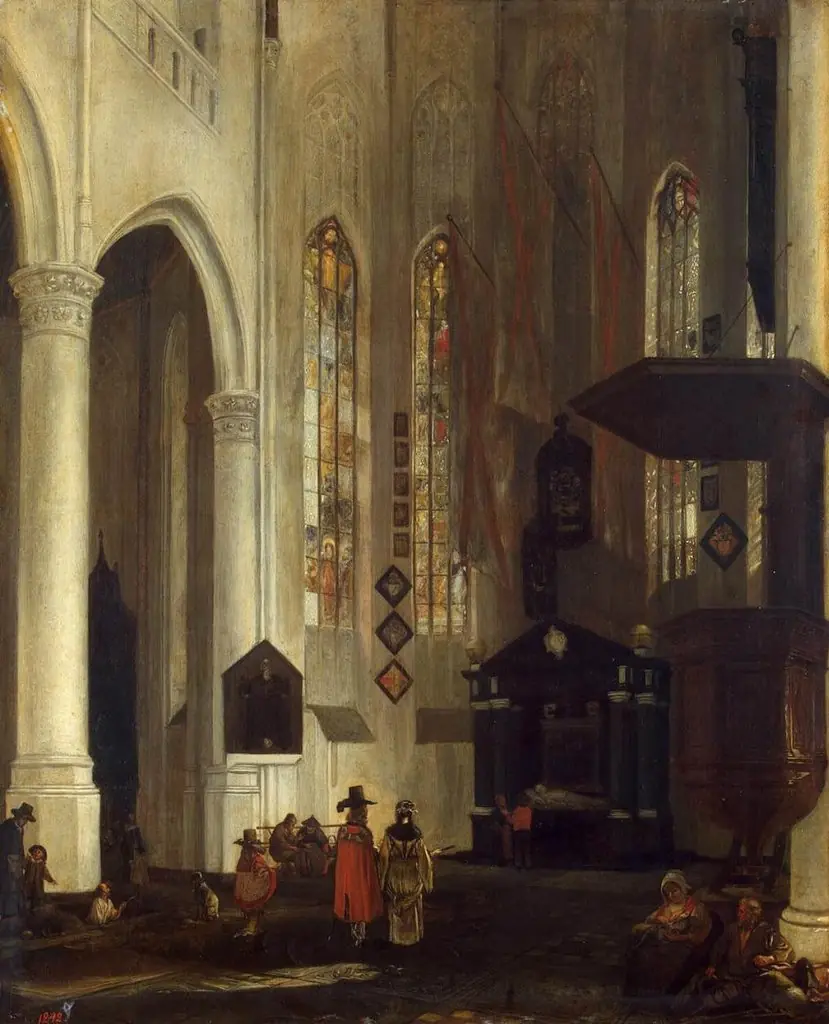 Old Church (Oudekerk) in Delft with the Tomb of Admiral Pieter Pieterszoon Hein (Heyn)
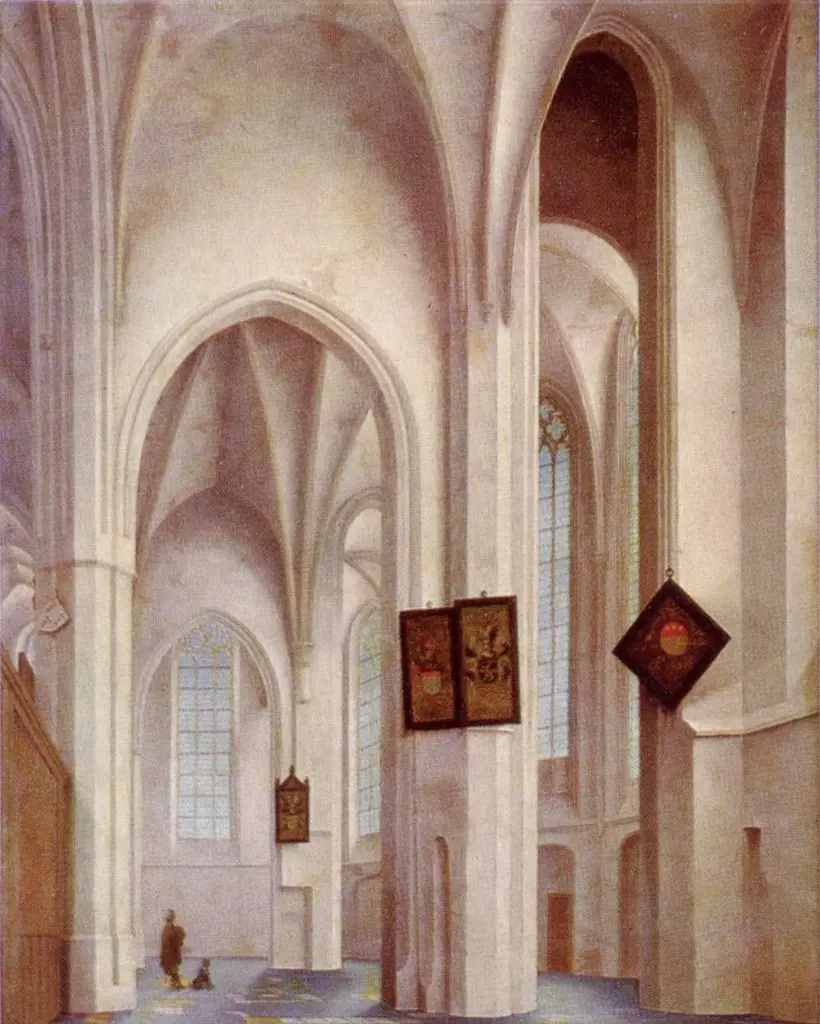 interior view of the church St. Jacobs in Utrecht
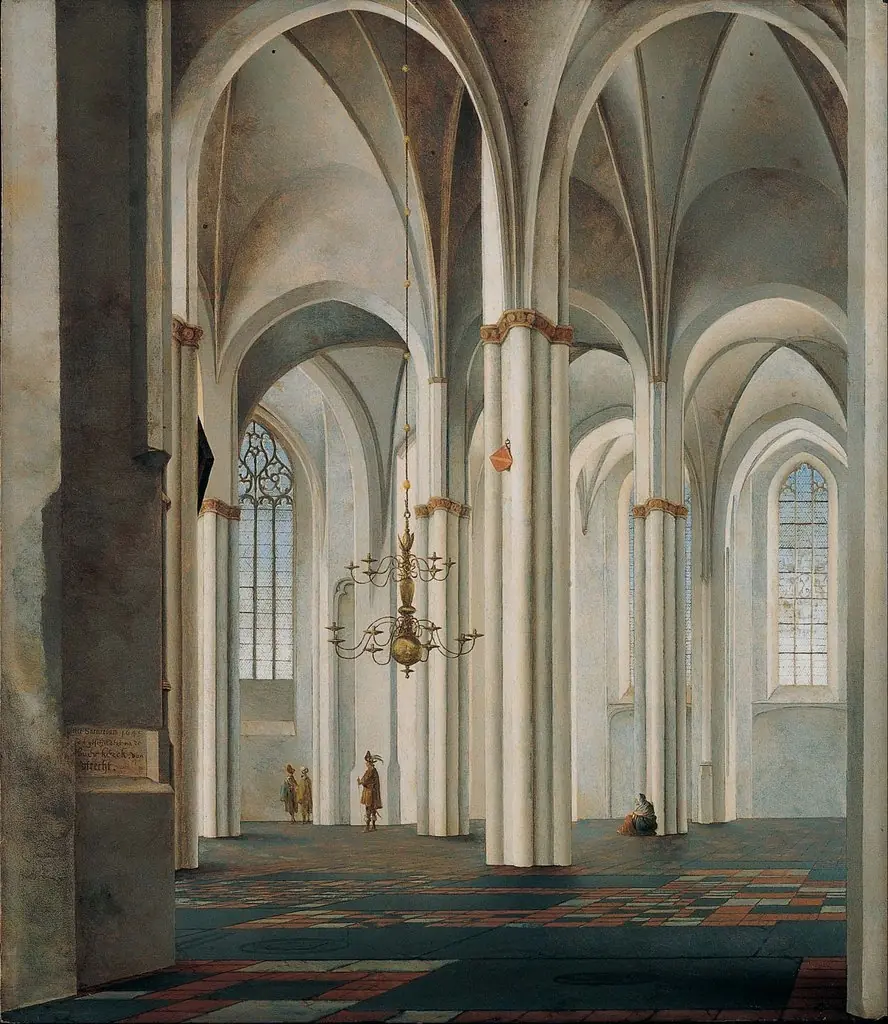 Interior of the Buurkerk, Utrecht
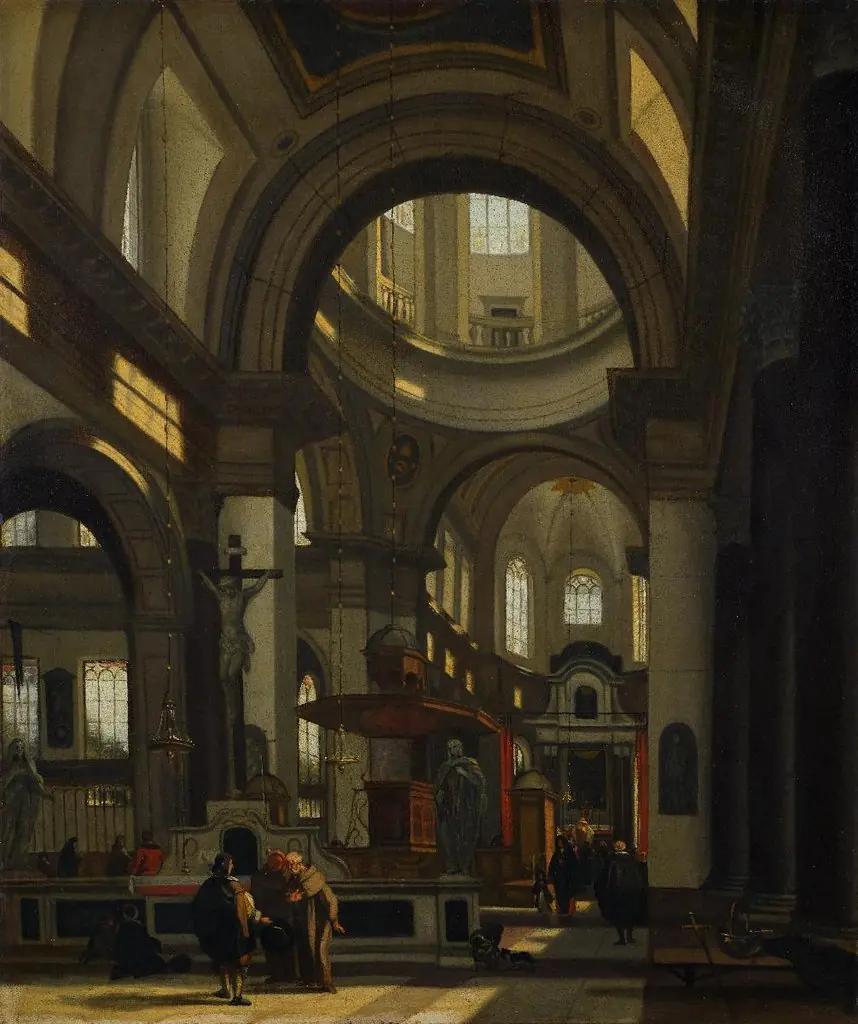 Innenansicht einer barocken Kirche
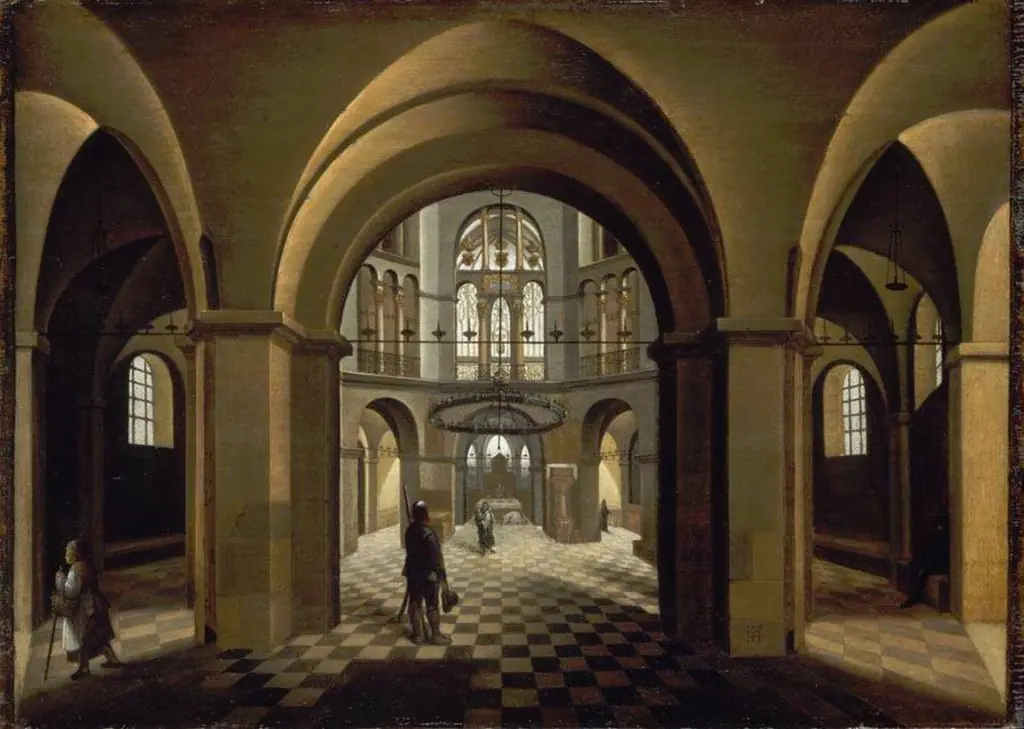 Interior of the Palatine Chapel in the Cathedral of Aachen
 Kirken i St. Sablon i Bruxelles
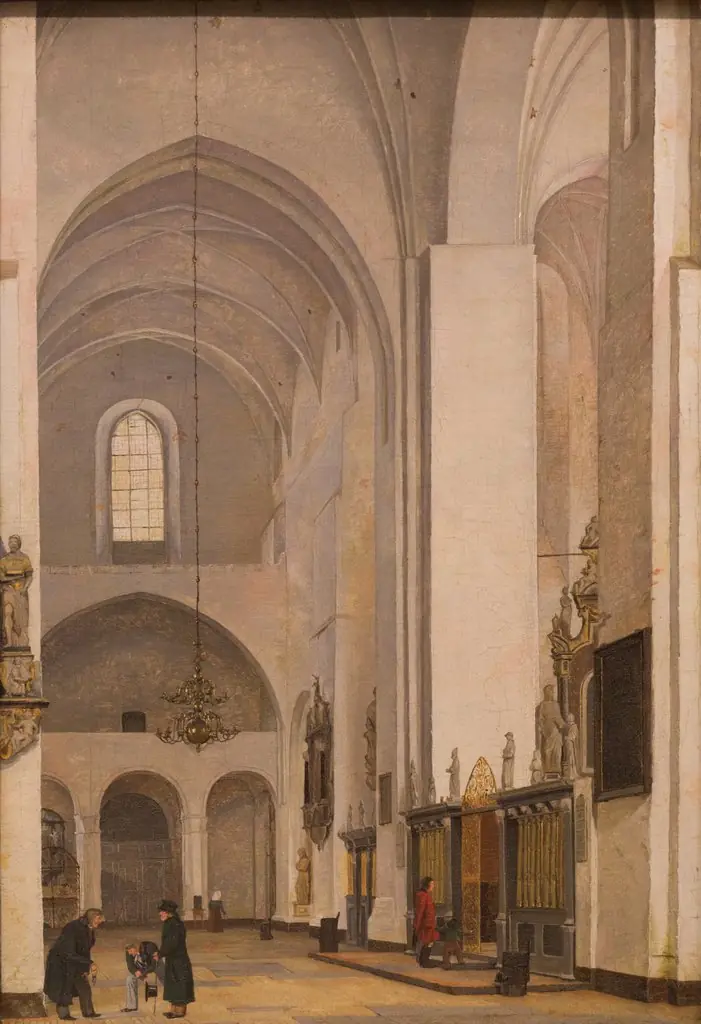 The Transept of Århus Cathedral
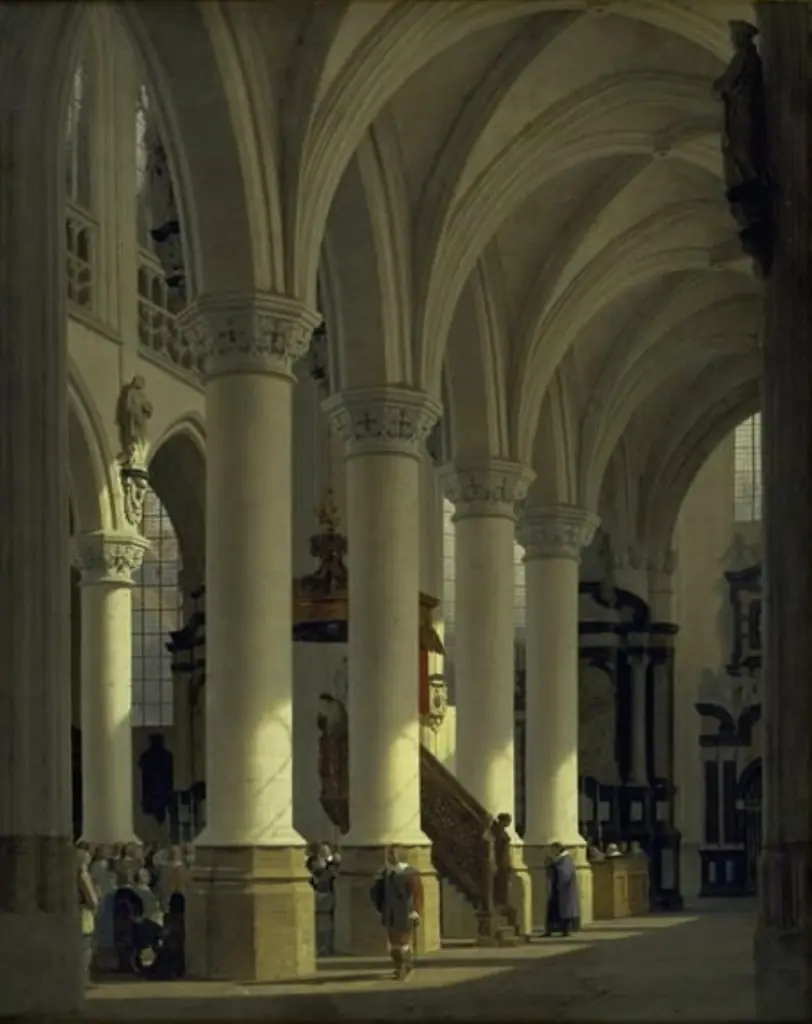 Kirken i St. Sablon i Bruxelles