Artwork
Portrait of Elizabeth Petrovna on Horseback Accompanied by a Negro Servant (copy)
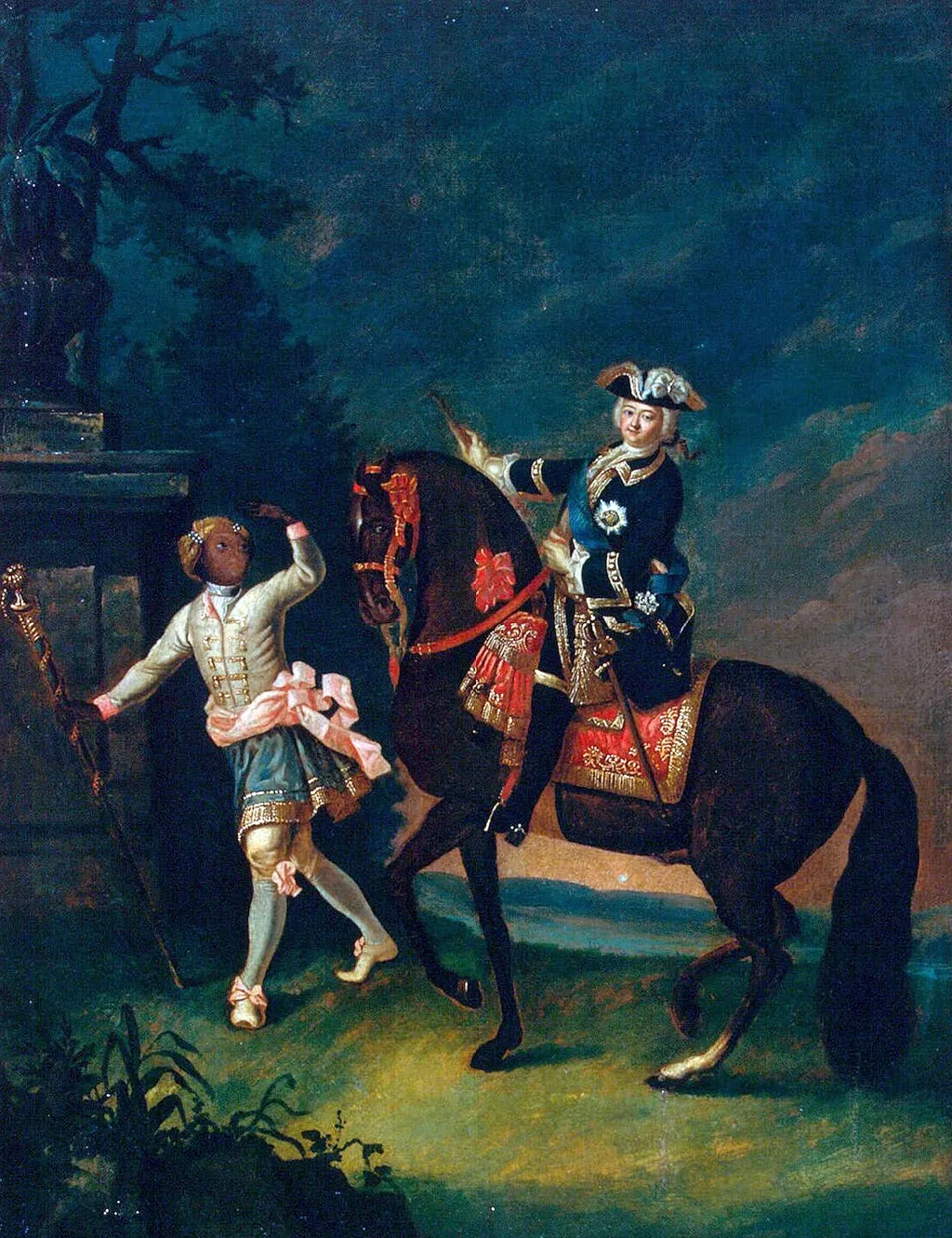
Portrait of Elizabeth Petrovna on Horseback Accompanied by a Negro Servant (copy) is an oil painting by Unknown. It dates from 1743 and is held in the collection of the Hermitage Museum. The oil painting portrays a noblewoman astride a black horse, flanked by a male attendant walking beside her.
About this work
Overview
The oil painting portrays a noblewoman astride a black horse, flanked by a male attendant walking beside her. She wears a richly detailed dark blue costume accented with gold, while the attendant is dressed in a white shirt and blue breeches. The horse is equipped with a red and gold saddle, and the composition is set against a dimly lit backdrop that includes a few trees on the left.
Subject & Meaning
The central figure is identified as Elizabeth Petrovna, later Empress of Russia, shown in an equestrian pose that emphasizes her status and authority. The presence of the attendant, described in contemporary records as a Negro servant, underscores the hierarchical and multicultural aspects of the Russian court in the early eighteenth century.
Technique & Style
The artist employs strong chiaroscuro, contrasting illuminated figures with a shadowy landscape to create depth and drama. Thick impasto layers give the clothing and horse’s tack a tactile quality, while glazing over the darker areas enhances luminosity and the richness of the blue and gold hues.
History & Provenance
The work is a copy of an earlier portrait, likely produced to disseminate the image of the future empress across the empire. Its exact origin and the identity of the copyist remain uncertain, though it entered a private collection in the late nineteenth century before being acquired by the museum.
Context
Equestrian portraits were a common means of asserting royal power in Europe, and this image aligns with the Western European artistic conventions that Peter the Great encouraged at his court. The inclusion of a Black servant reflects the presence of African individuals in Russian aristocratic households during this period.
Legacy
While not an original work by a renowned master, the painting serves as a visual document of early eighteenth‑century Russian court attire, equestrian representation, and the multicultural dimensions of the imperial household, informing both art historical scholarship and public understanding of the era.
Artist & collection

 Domestic Scene
 Giacomo and Cardinal Marco, investing Andrea, Abbot of San Zeno, with his Benefice
 The Nymph of Fontainebleau
 Portrait of a Woman
 Madonna and Child with Saints in the Enclosed Garden
 Venus and Minerva
 Family Group of Four on Sofa
 Wall painting from Room H of the Villa of P. Fannius Synistor at Boscoreale
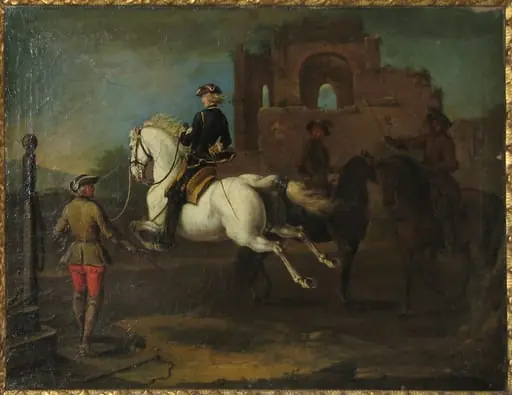 Manej
Manej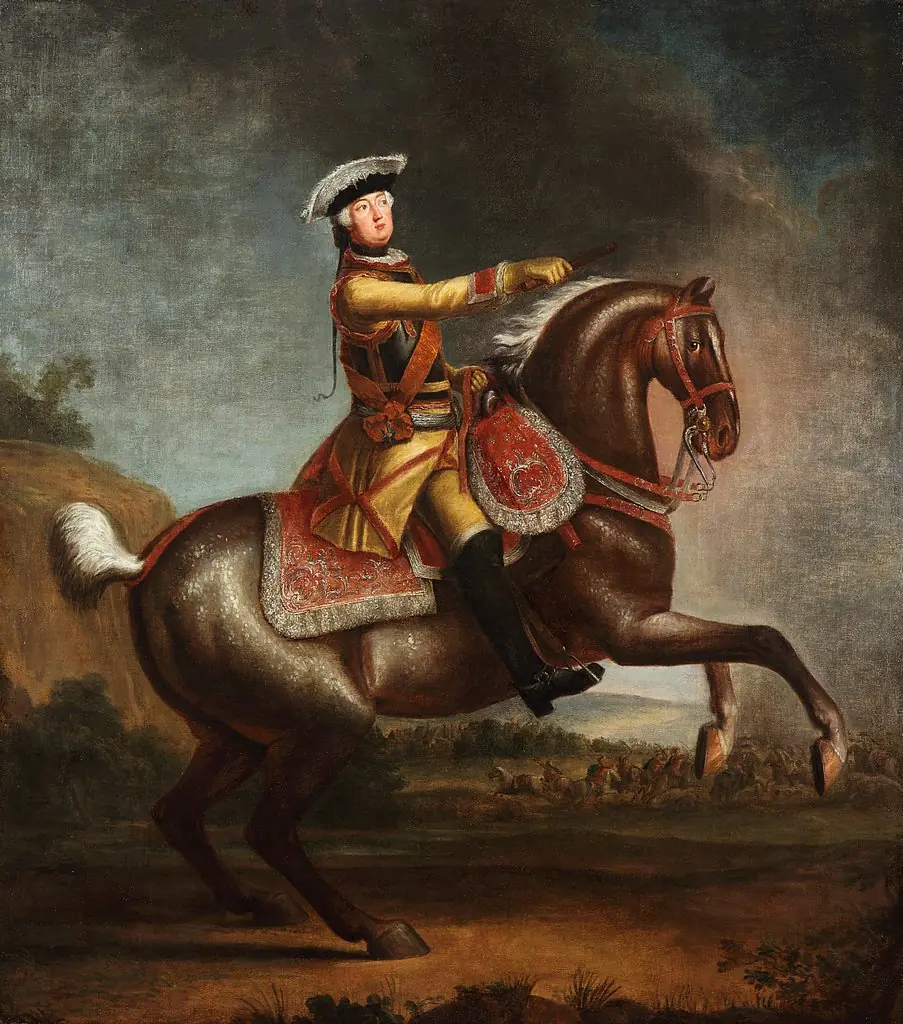 Equestrian Portrait of August Wilhelm, Prince of Prussia
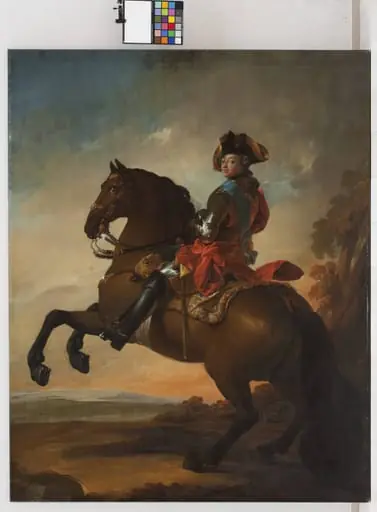 Frederik V on Horseback
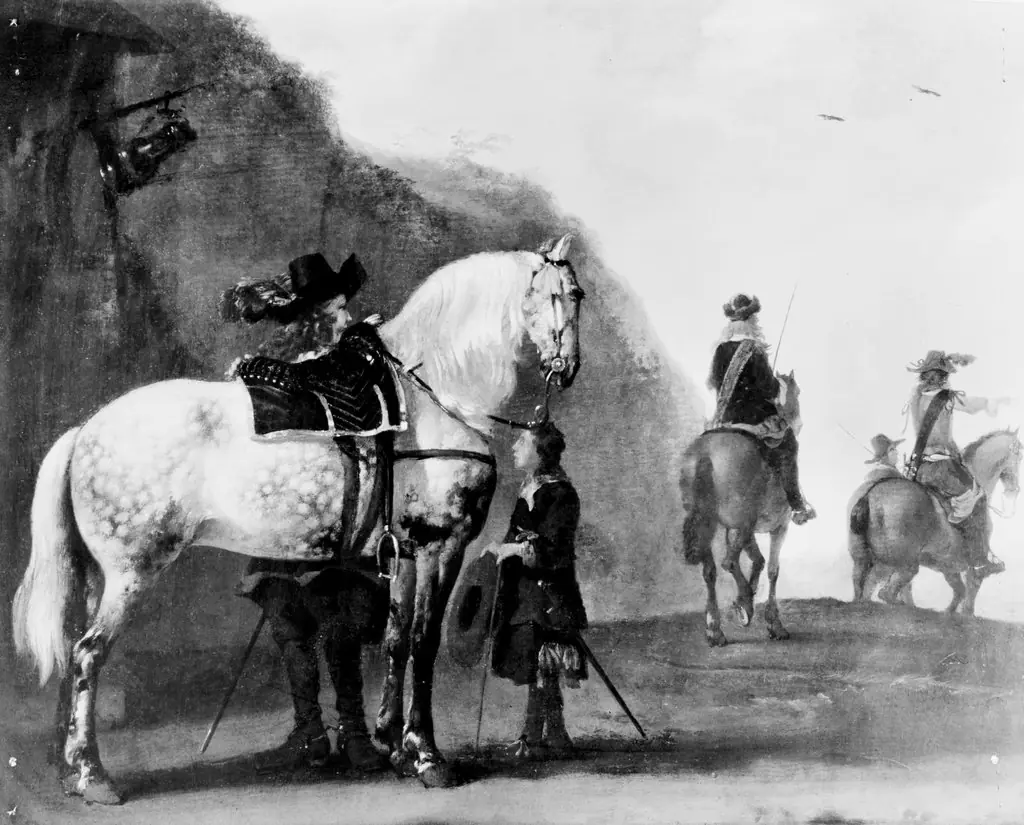 Travellers in a Landscape
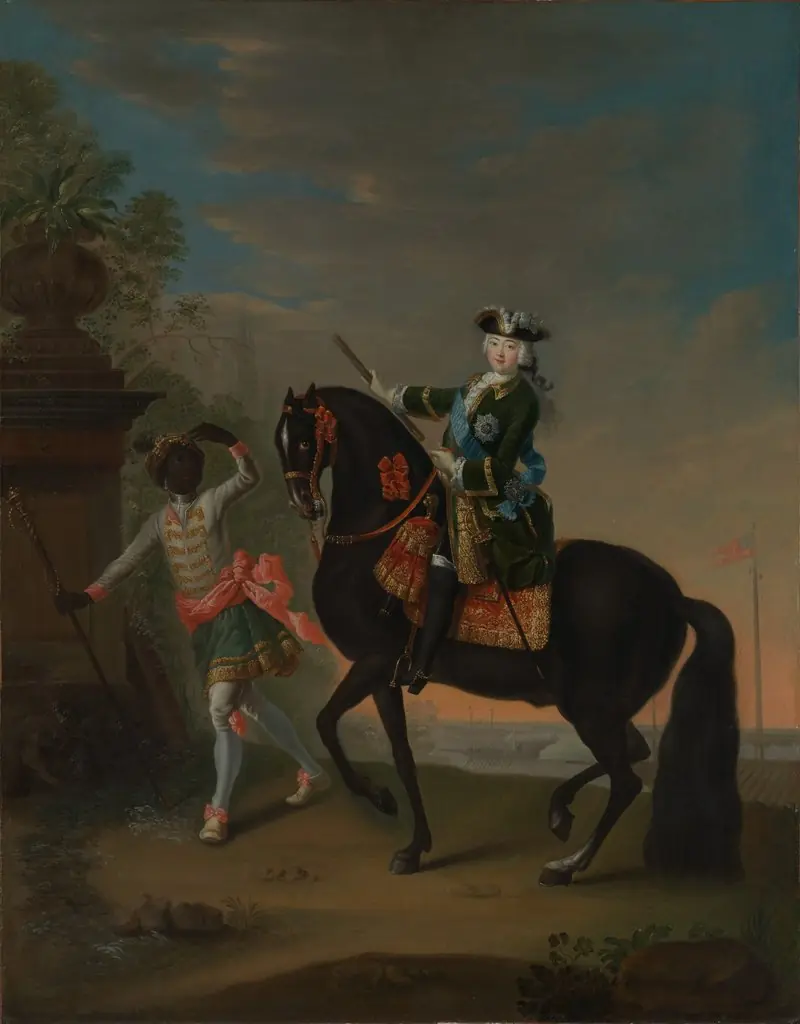 The Empress Elizabeth of Russia (1709–1762) on Horseback, Attended by a Page
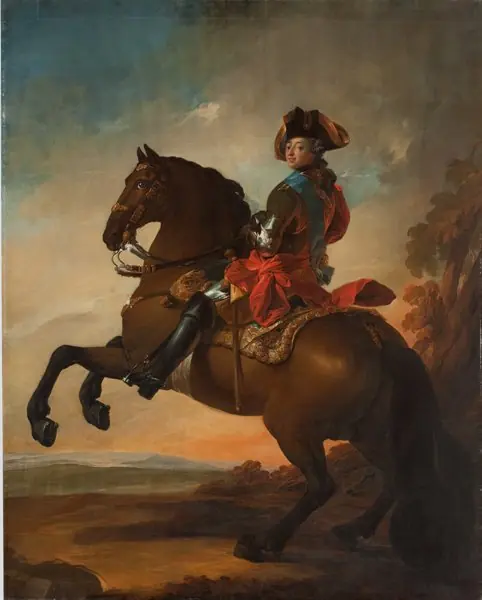 Frederik V on Horseback
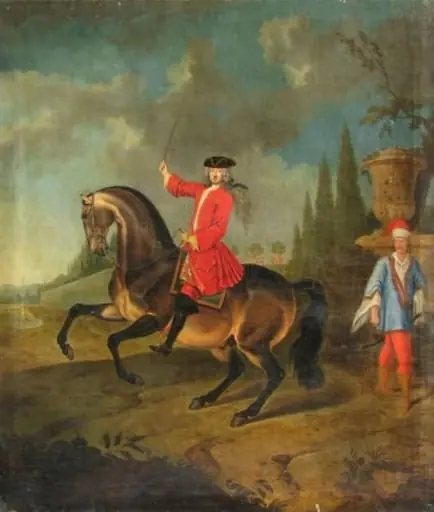 Călăreț cu cravașa ridicată
 Portrait of Thomas Congreve (1714-1777)
 Portrait of Grand Duke Pavel Petrovich
 Equestrian Portrait of a Hussar Officer