Artwork
Equestrian Portrait of a Hussar Officer
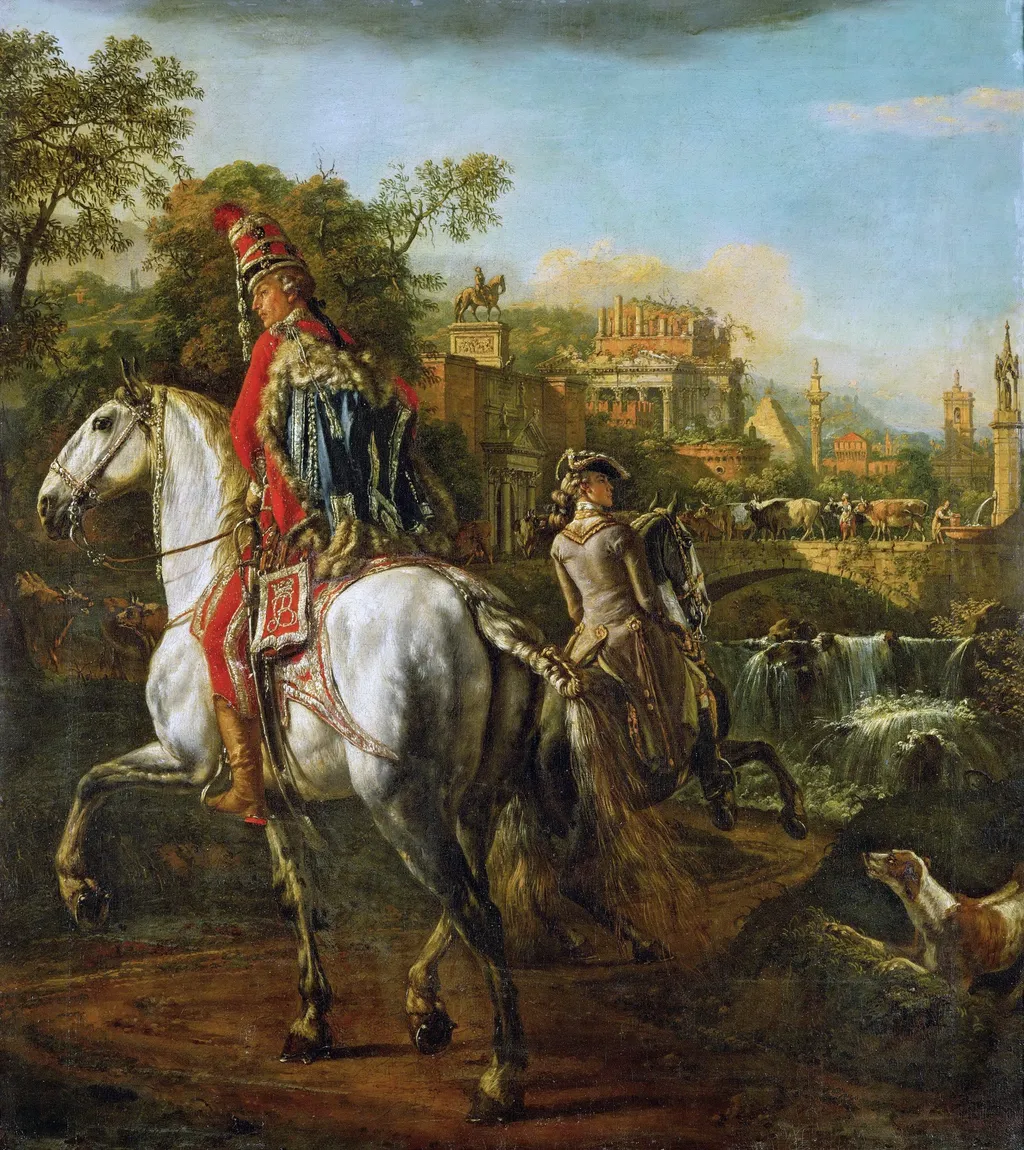
Equestrian Portrait of a Hussar Officer is an oil painting by the Rococo painting artist Bernardo Bellotto. It dates from 1773 and is held in the collection of the Kunsthistorisches Museum.
About this work
Overview
Bernardo Bellotto’s Equestrian Portrait of a Hussar Officer, executed in oil in 1773, is part of the collection of the Kunsthistorisches Museum in Vienna. The work presents a cavalry officer mounted on a white horse, accompanied by a second rider and horse, set against a landscaped park scene.
Subject & Meaning
The central figure is a hussar officer dressed in a vivid red coat trimmed with gold buttons and a tall, plumed hat, emphasizing his rank and the flamboyance of 18th‑century light cavalry. A secondary rider in dark armor leads a second horse, suggesting a military escort or a hunting party, while the inclusion of dogs and a waterfall reinforces themes of leisure and aristocratic sport.
Technique & Style
Bellotto renders the scene with meticulous attention to texture: the sheen of the officer’s coat, the gleam of the armor, and the fine fur trim are depicted with precise brushwork. The horse’s saddle bears an ornamental crest, and the surrounding foliage and architecture are rendered with the clear, detailed perspective characteristic of Bellotto’s vedute tradition.
History & Provenance
Created in 1773, the portrait entered the holdings of the Kunsthistorisches Museum, where it remains on display. Its acquisition reflects the museum’s broader collection of 18th‑century European portraiture and military imagery.
Context
Bellotto, known primarily for his cityscapes, applied his skill in architectural rendering to this equestrian portrait, integrating a carefully composed park landscape with architectural elements such as distant statues and buildings. The work exemplifies the period’s interest in combining portraiture with idealized natural settings.
Own this work as a print
Artist & collection
Artist
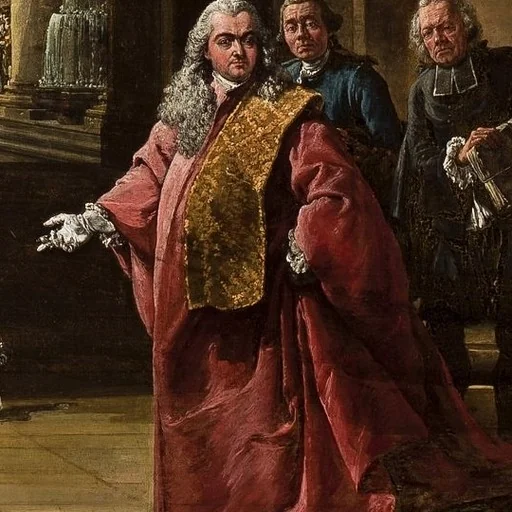
Bernardo Bellotto, was an Italian urban landscape painter or vedutista, and printmaker in etching famous for his vedute of European cities – Dresden, Vienna, Turin, and Warsaw.

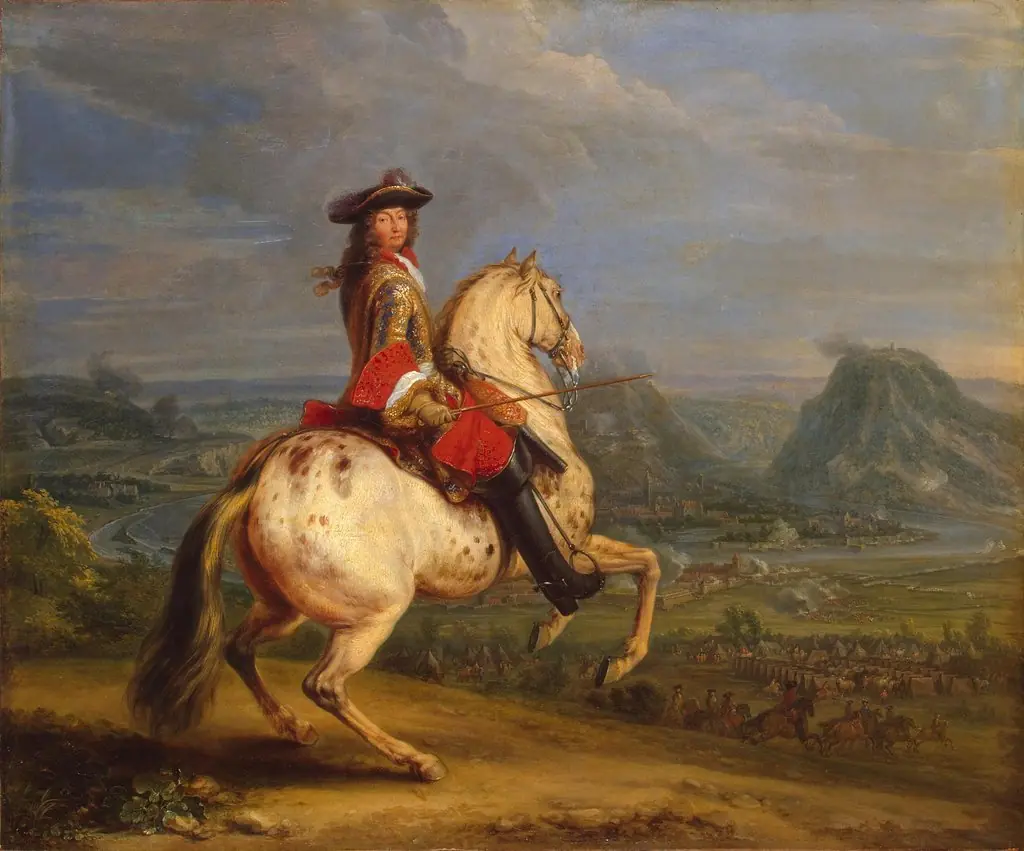 Louis XIV at the Taking of Besancon
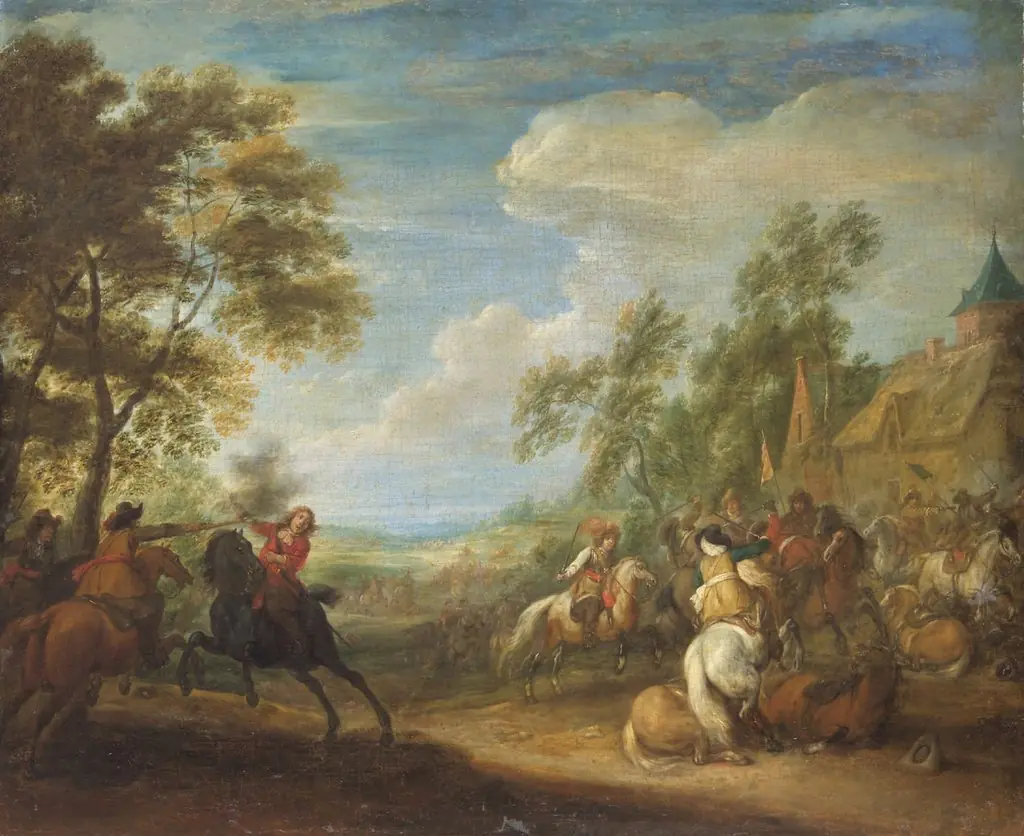 Reitergefecht
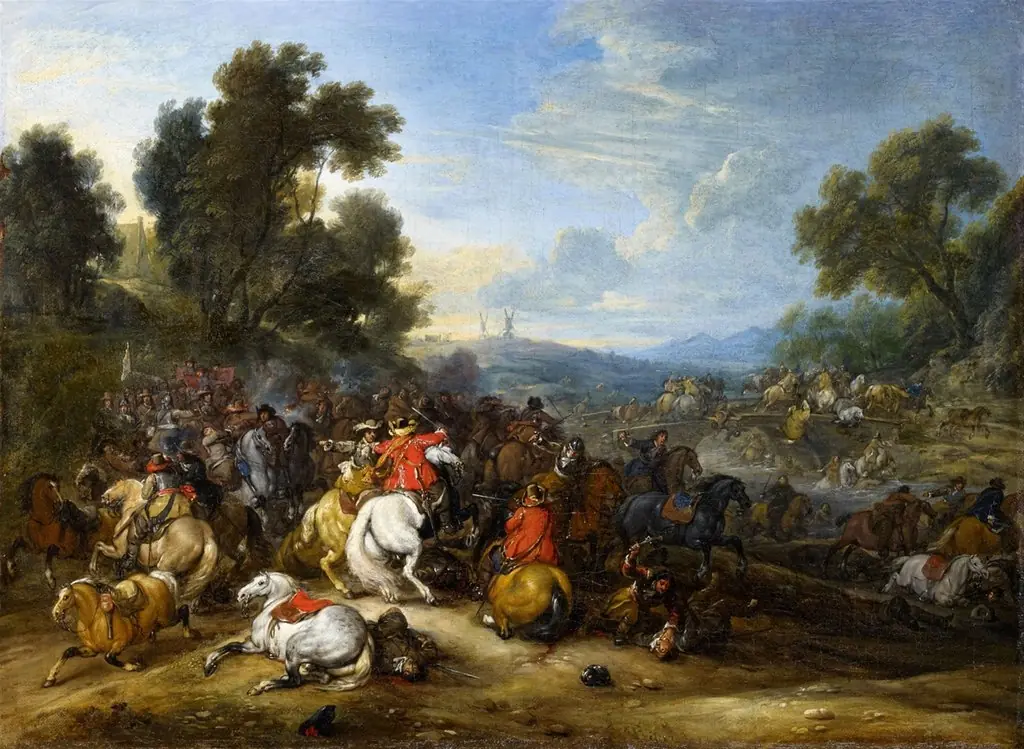 Cavalry engagement
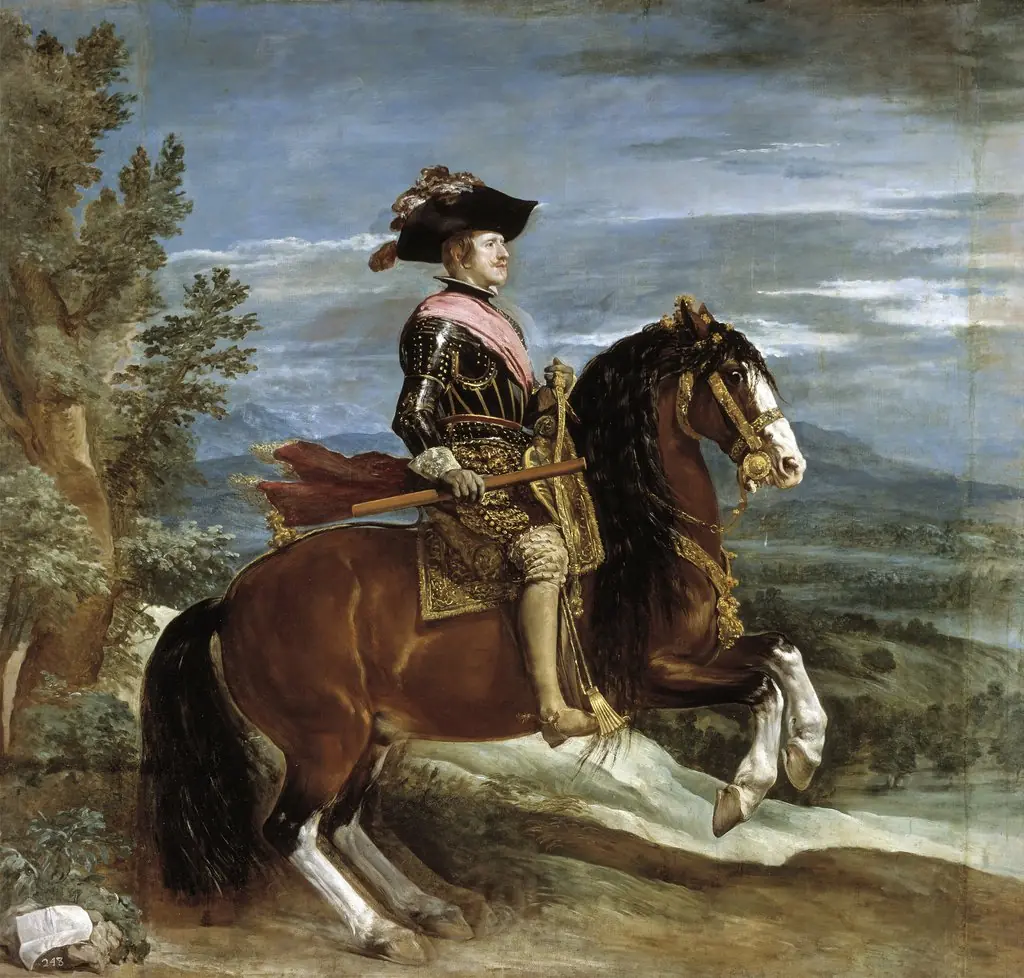 Equestrian Portrait of Philip IV
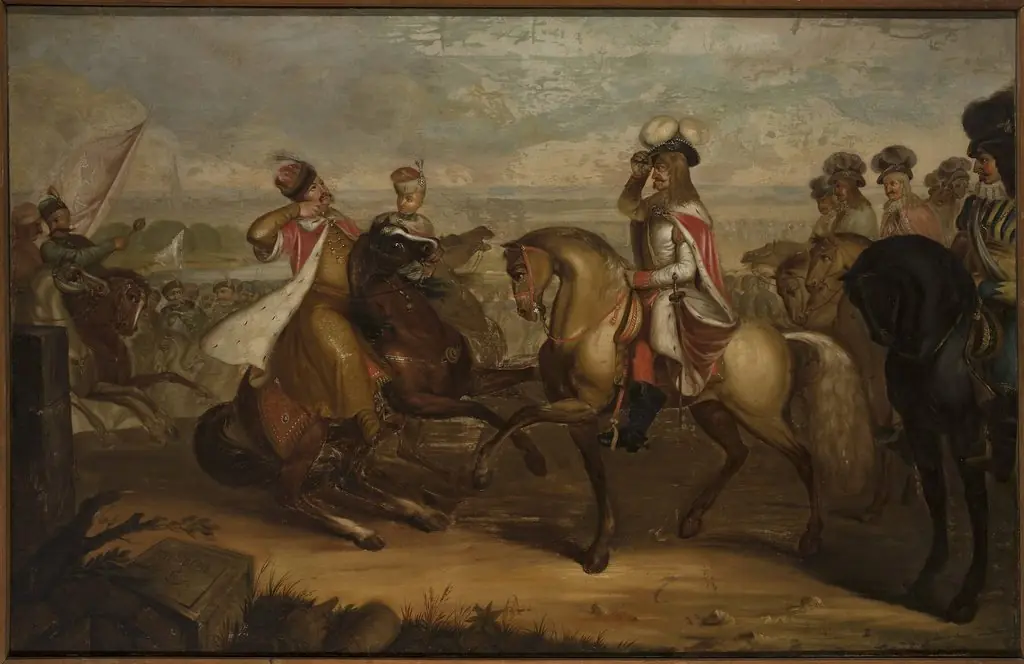 King John III Sobieski meets emperor Leopold at Vienna, replica
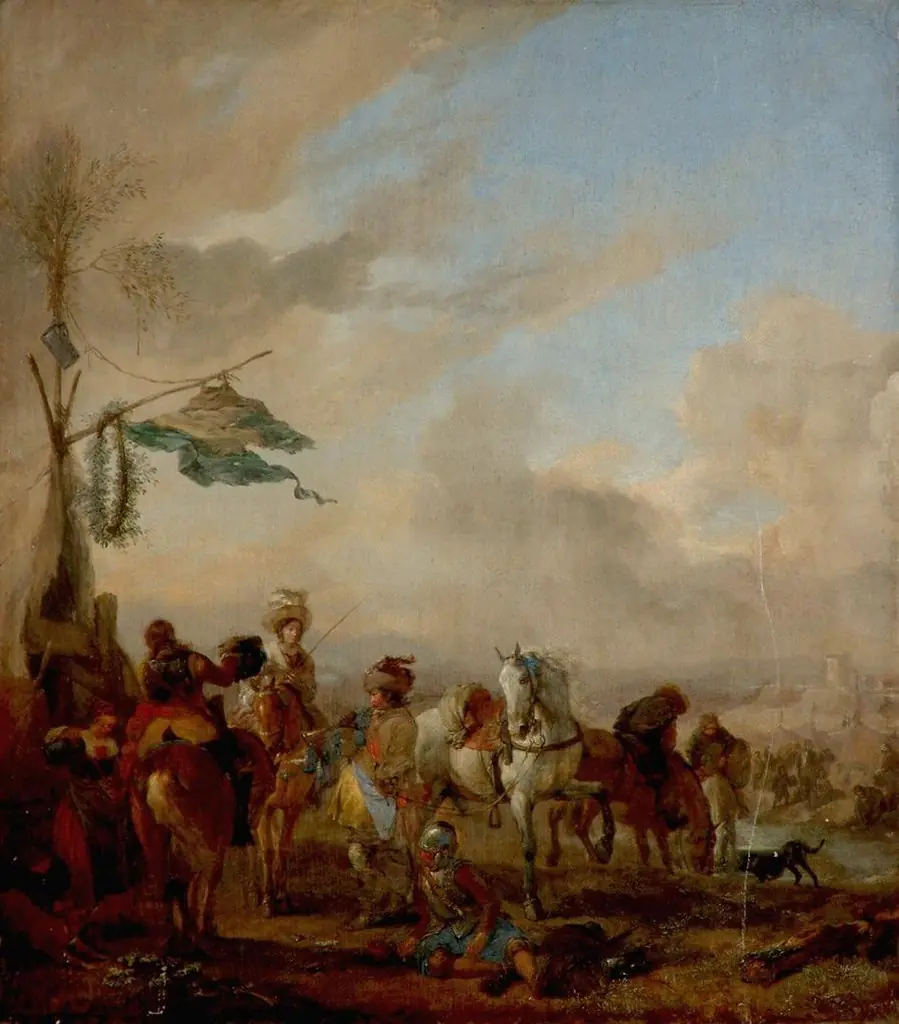 Trumpeters at the Camp
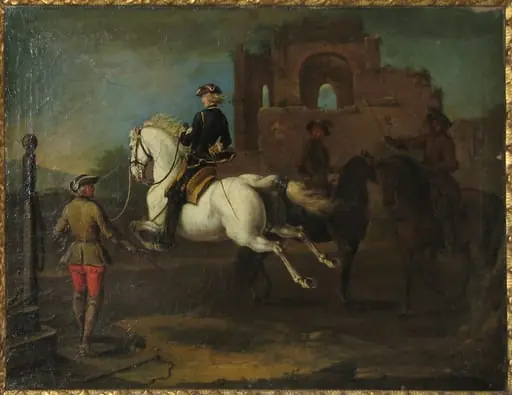 Manej
Manej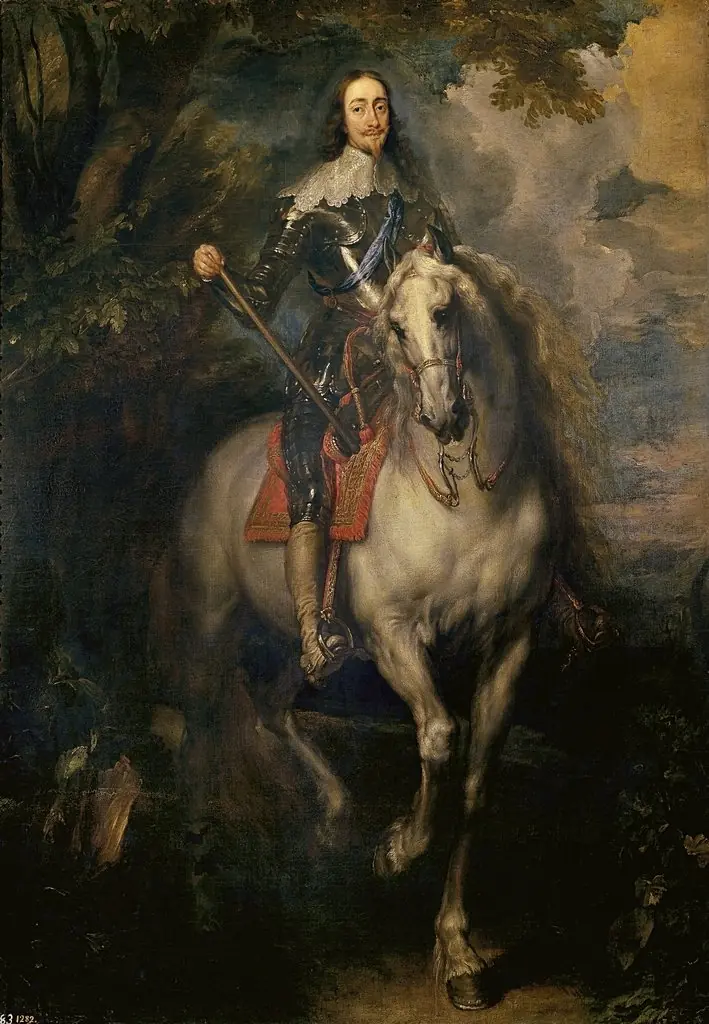 Equestrian portrait of Charles I of England
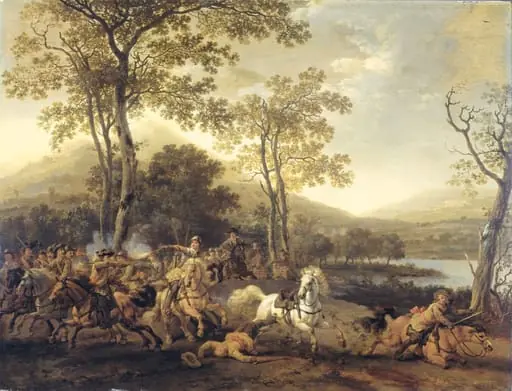 Cavalry Skirmish
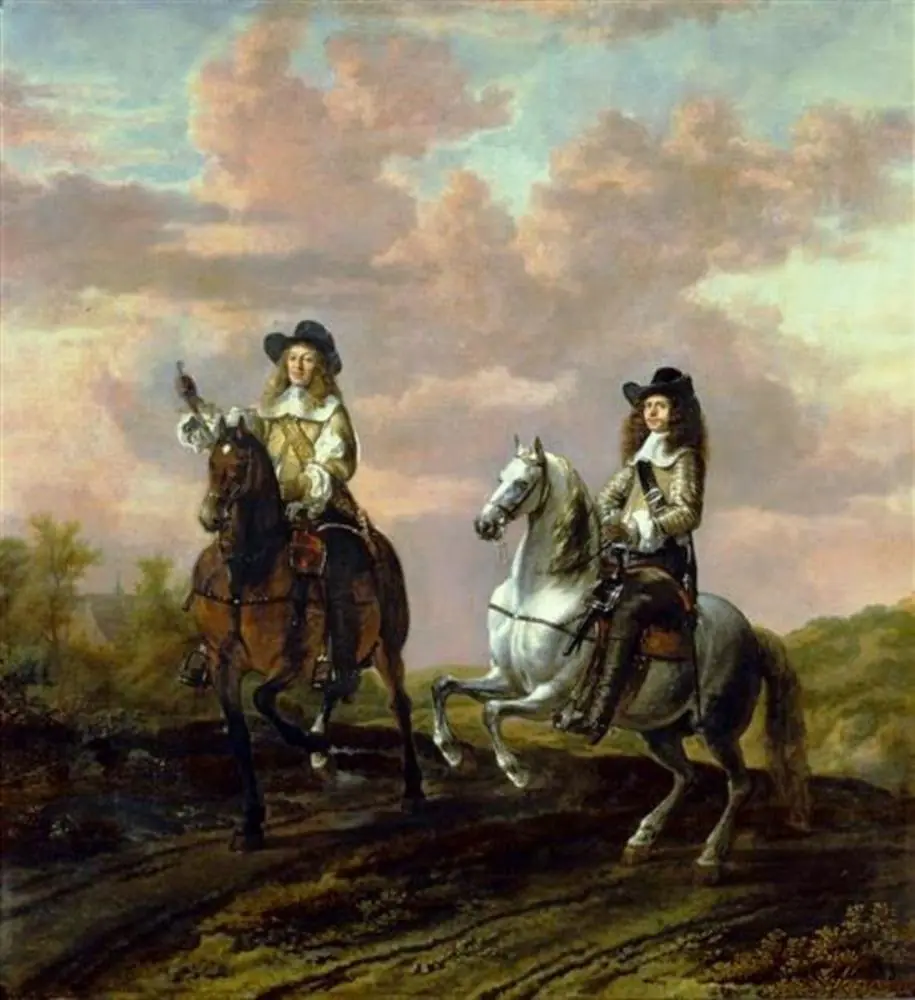 Portrait of two unknown man on horseback
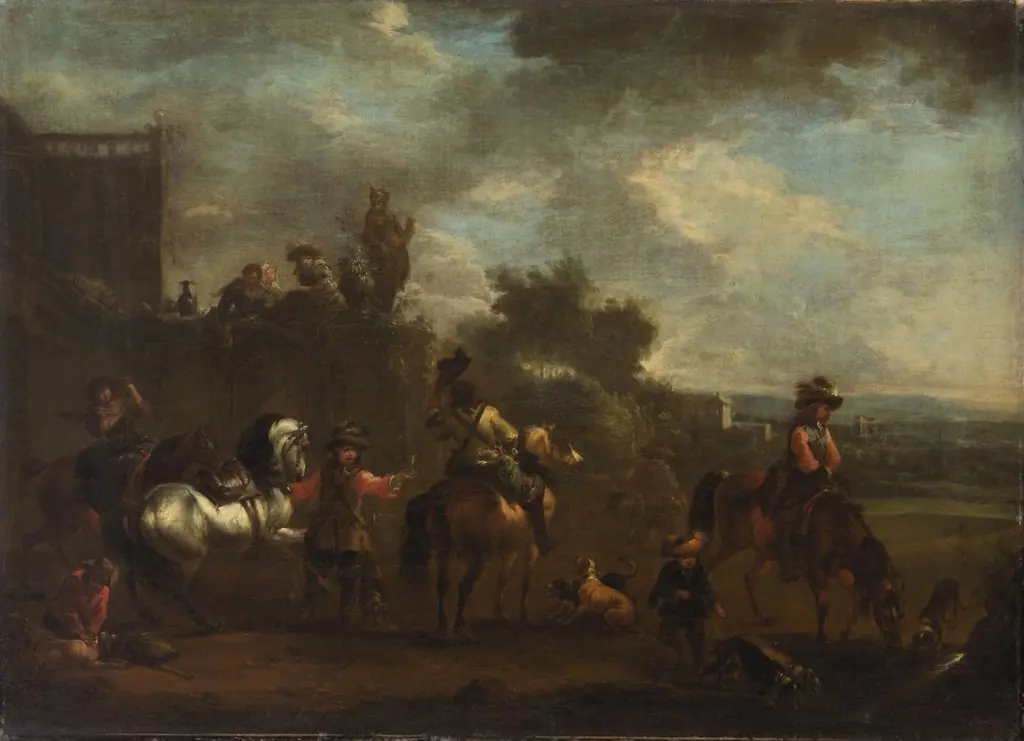 Ausritt zur Jagd
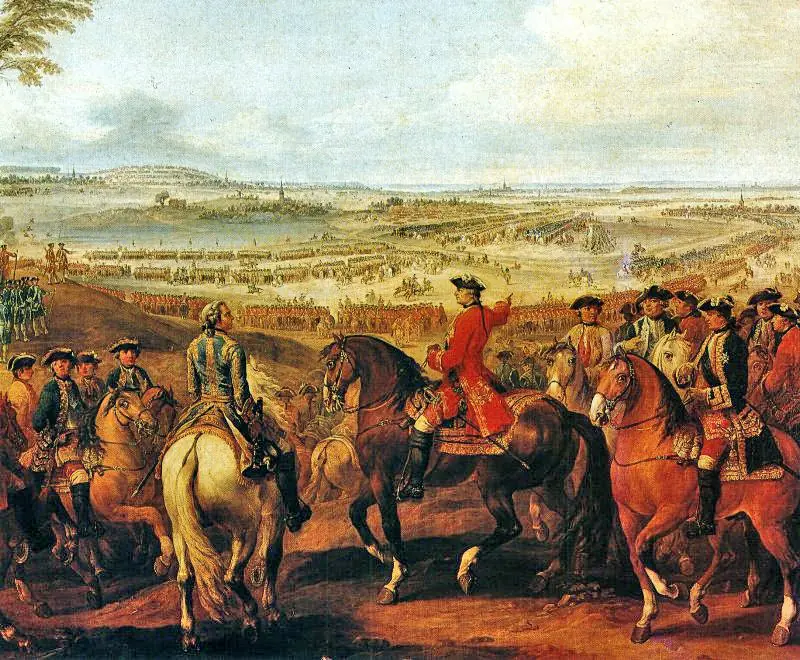 The Battle of Lauffeldt