Artwork
Manej
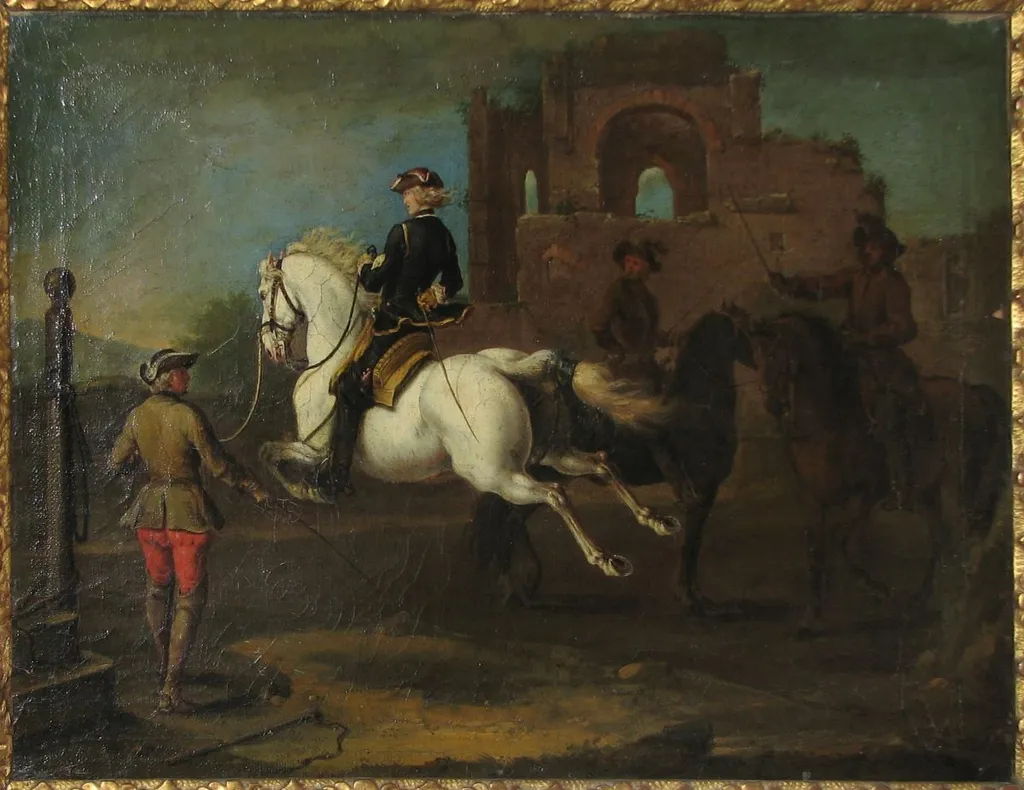
Manej is a print by the Baroque artist Johann Elias Ridinger. It dates from 1742 and is held in the collection of the Brukenthal National Museum.
About this work
Overview
Johann Elias Ridinger produced this ink-on-paper engraving around 1742, capturing a horse and rider in mid-leap. As a German artist renowned for animal subjects, he specialized in precise, detailed prints for aristocratic audiences. The work exemplifies his technical command of line and tone, achieved through meticulous engraving rather than brushwork.
Subject & Meaning
The scene depicts a noble equestrian maneuver, likely part of a training or display routine. The horse’s dynamic pose and the rider’s poised posture suggest controlled athleticism, reflecting the cultivated horsemanship valued among European elites. No narrative or mythological context is present—focus remains on the animal’s form and movement.
Technique & Style
Ridinger used fine, controlled engraving lines to define muscle structure and motion. Cross-hatching builds subtle shadows beneath the horse’s belly, creating a sense of lift without softening edges. The mane and tail are rendered with minimal, sharp strokes, emphasizing economy of line. The effect is crisp, tonal, and anatomically precise.
History & Provenance
Ridinger produced hundreds of animal prints during his career, often commissioned by hunters and nobility. His works circulated widely, sometimes adapted for Meissen porcelain designs. This print likely originated as part of a series documenting equestrian skills, intended for private collections rather than public display.
Context
In mid-18th-century Europe, detailed animal imagery served both aesthetic and documentary purposes. Ridinger’s prints aligned with growing interest in natural observation and equestrian science. His style contrasted with more decorative traditions, favoring accuracy over ornamentation, placing him alongside contemporaries like Stefano della Bella in the printmaking tradition.
Legacy
Ridinger’s influence endured through his technical precision and subject focus. His engravings became reference models for later animal artists and porcelain designers. While not widely exhibited today, his works remain studied for their disciplined draftsmanship and contribution to the visual documentation of animals in motion.
Artist & collection
Artist
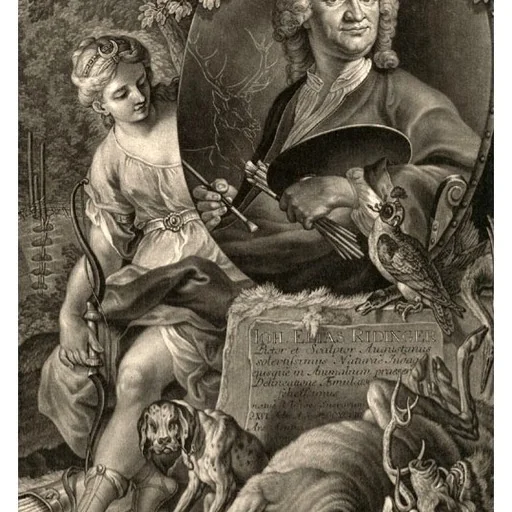
Johann Elias Ridinger (16 February 1698 in Ulm – 10 April 1767 in Augsburg) was a German painter, engraver, draughtsman and publisher.

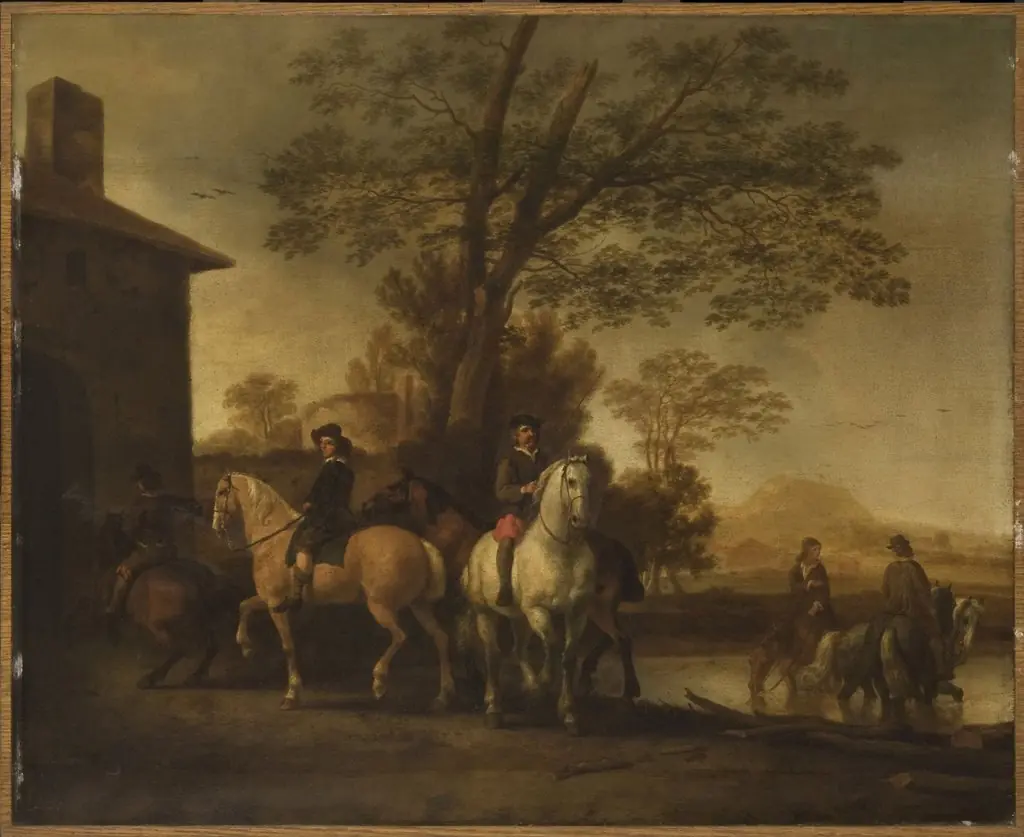 Horsemen Watering Their Horses
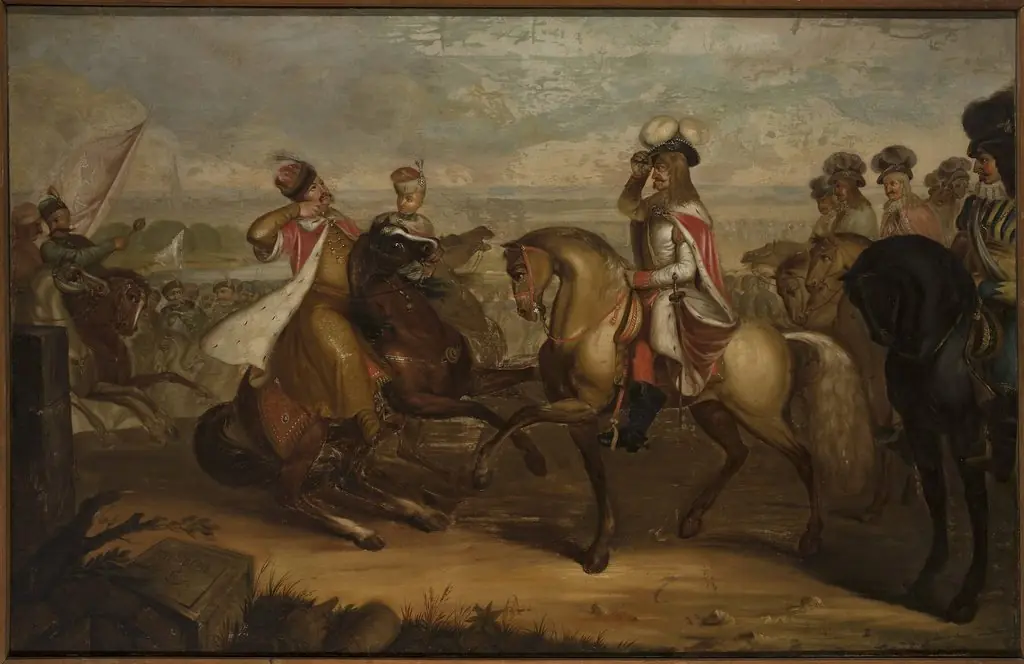 King John III Sobieski meets emperor Leopold at Vienna, replica
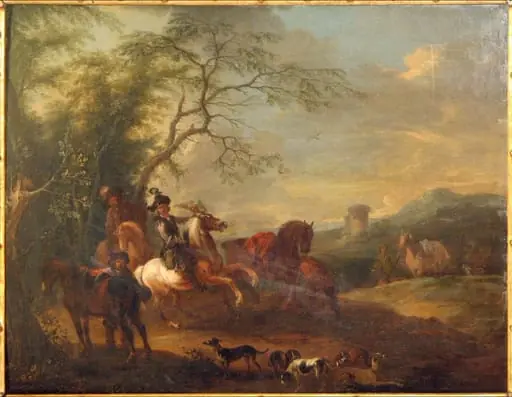 Plecarea la vânătoare; pandant: Întoarcerea de la vânătoare
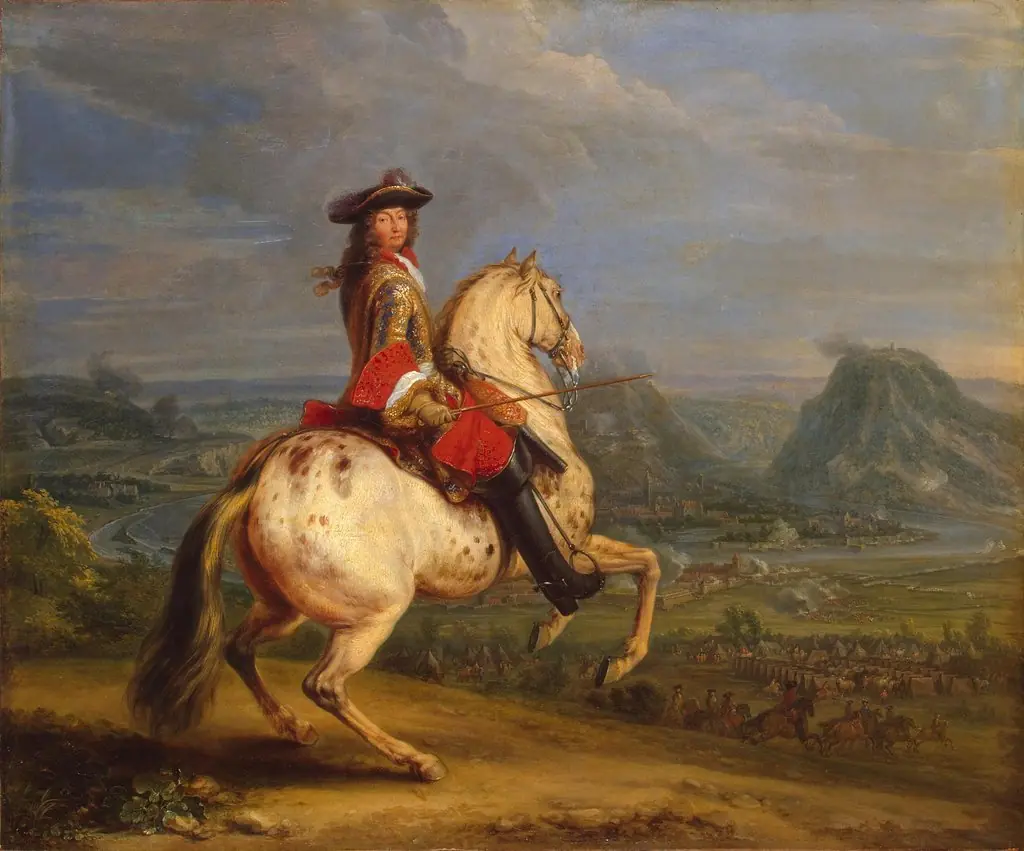 Louis XIV at the Taking of Besancon
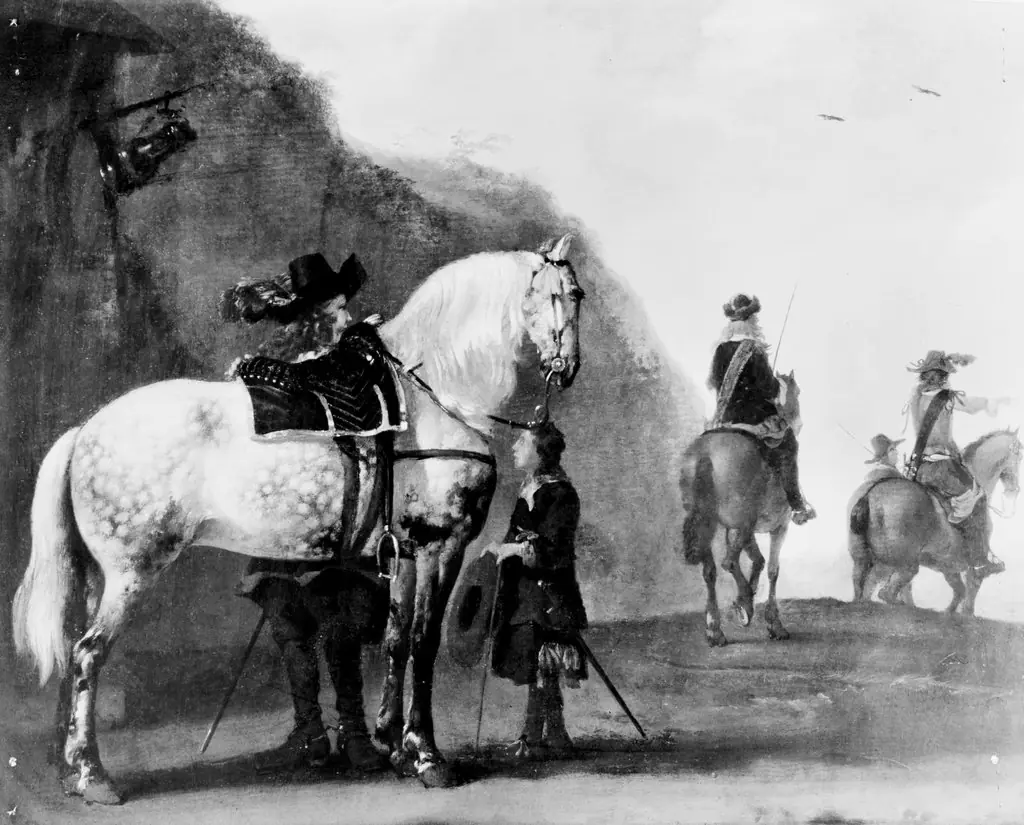 Travellers in a Landscape
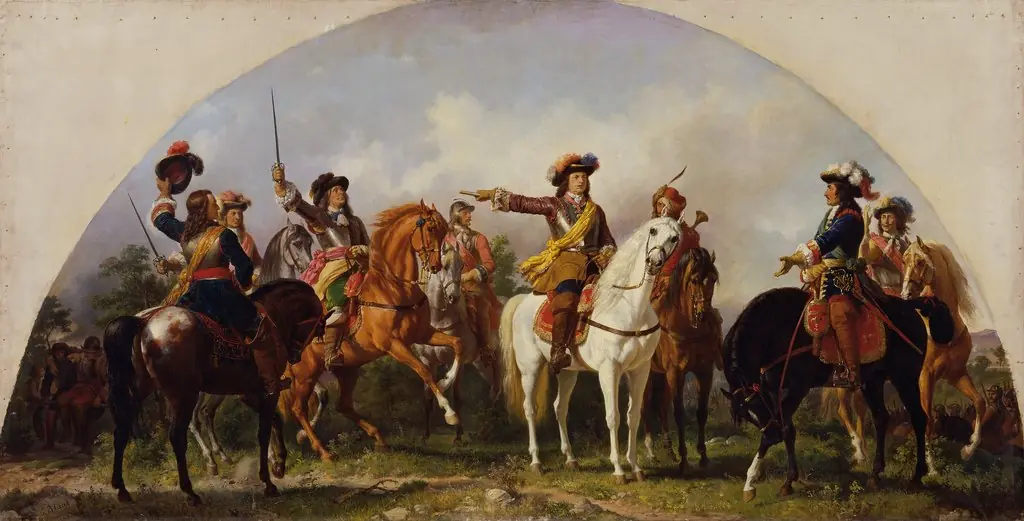 The Battle of St. Gotthard 1664
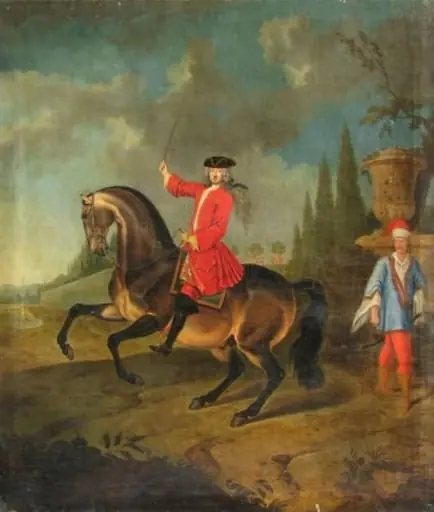 Călăreț cu cravașa ridicată
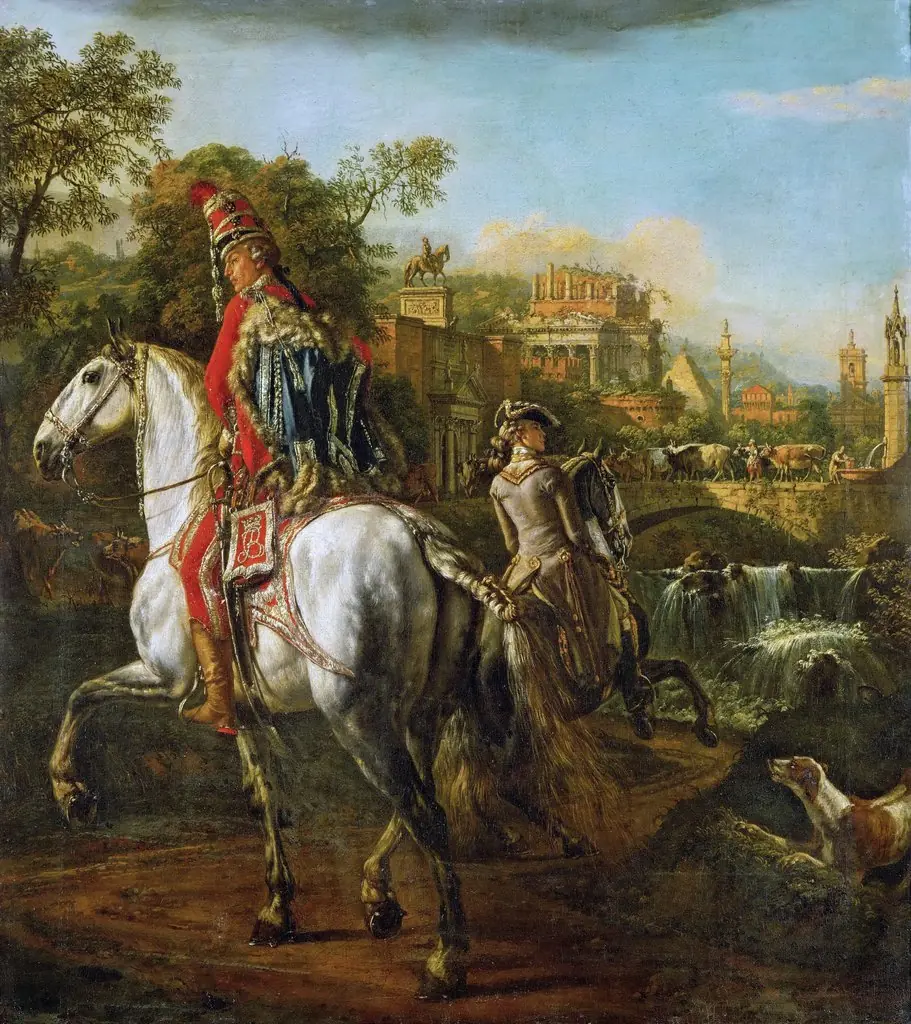 Equestrian Portrait of a Hussar Officer
 A Mounted Cavalier
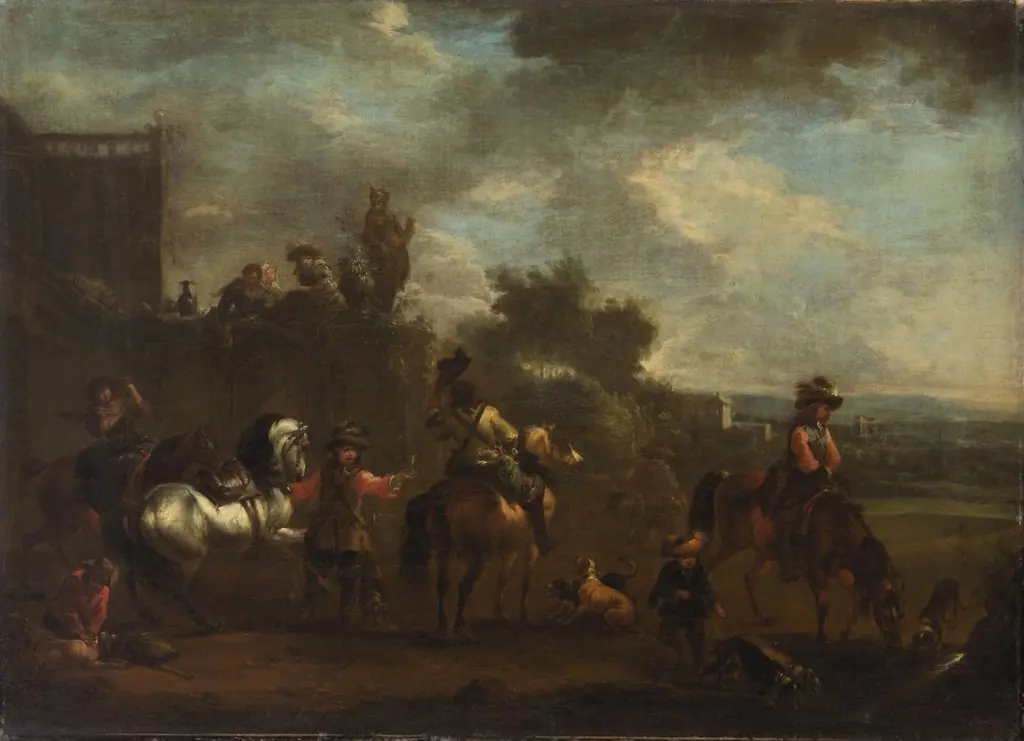 Ausritt zur Jagd
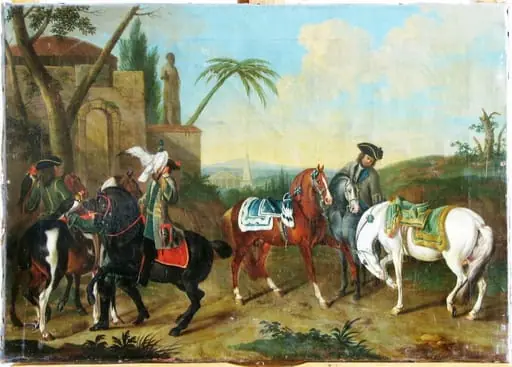 Plecare la vânătoare cu șoimi; pandant: Plecare la vânătoare cu câini
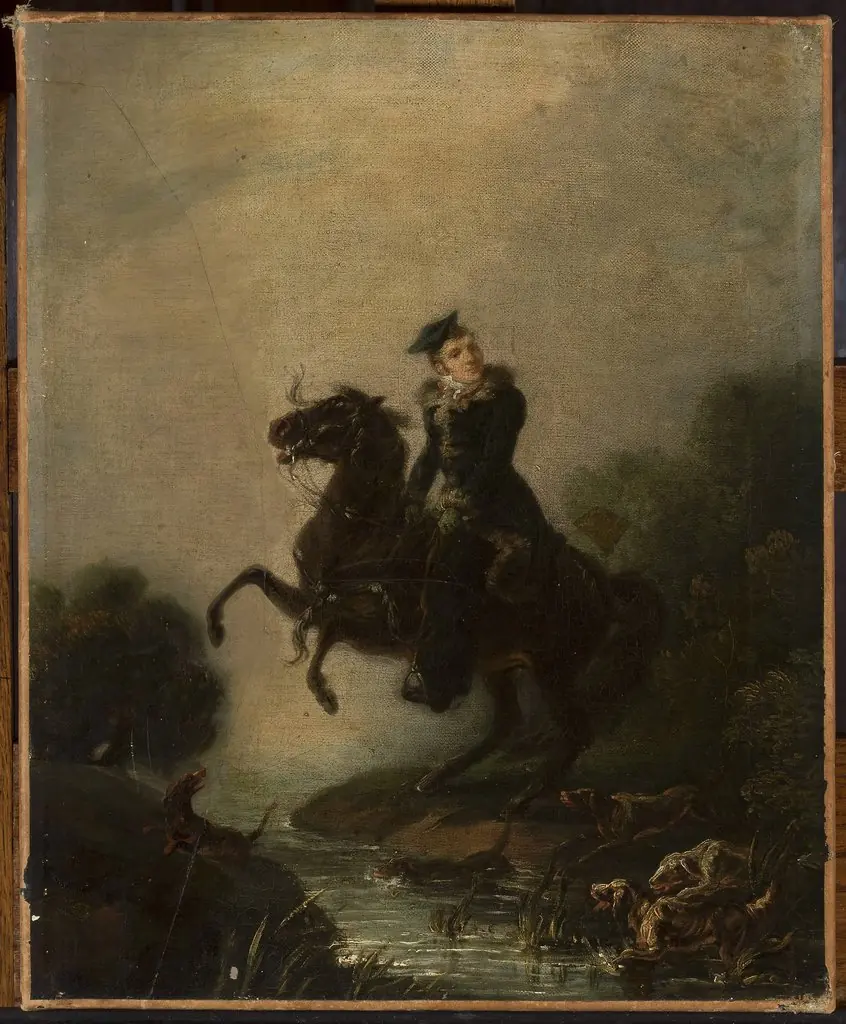 Portrait of Ignacy Konarski on horseback