Artwork
The pious man’s son presents the slain dragon to the king, from a Tuti-nama (Tales of a Parrot): Fifty-second Night
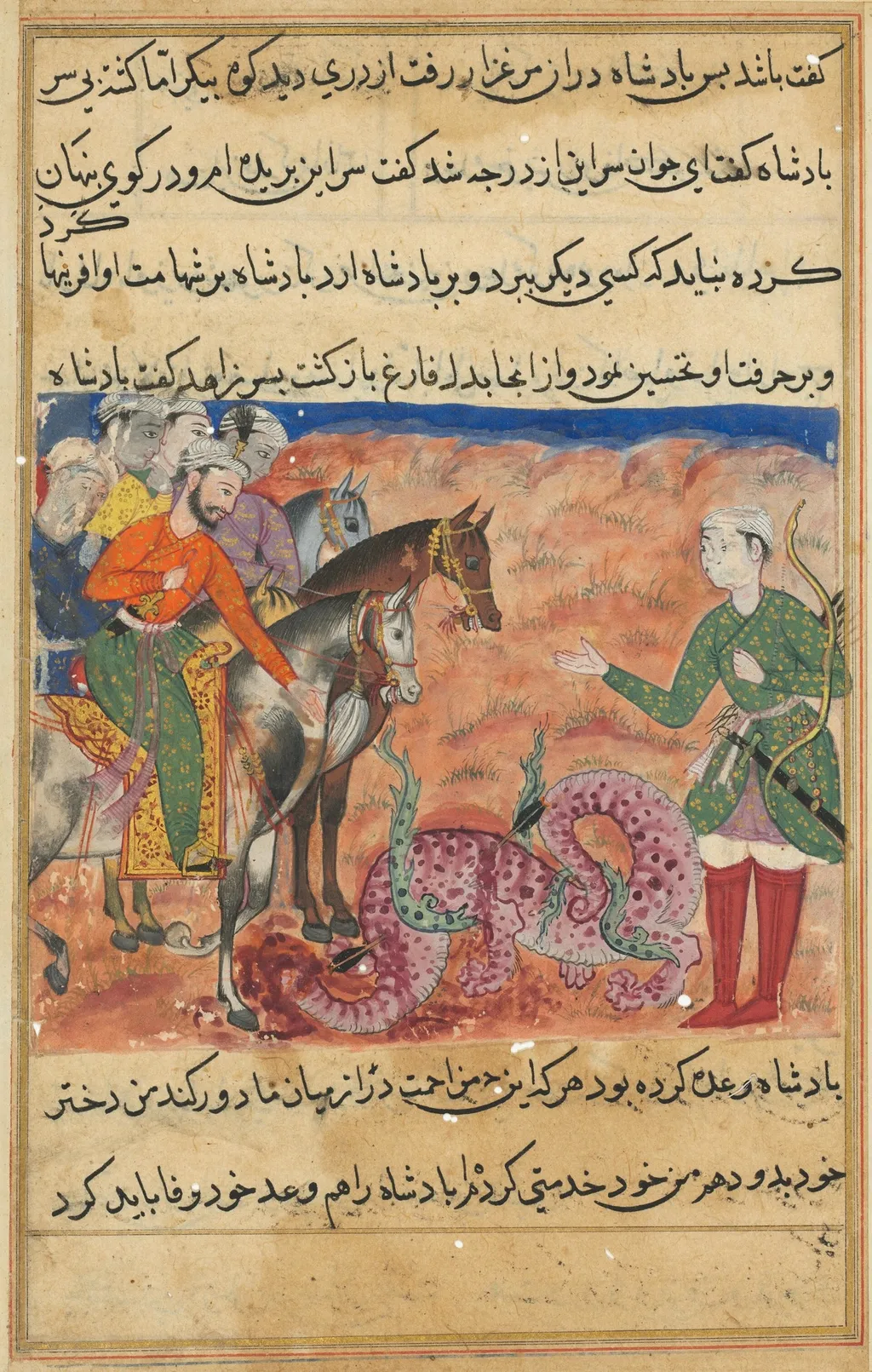
The pious man’s son presents the slain dragon to the king, from a Tuti-nama (Tales of a Parrot): Fifty-second Night is an unspecified painting. It dates from 1560 and is held in the collection of the Cleveland Museum of Art. This painting illustrates a narrative scene from a Tuti-nama (Tales of a Parrot), specifically the Fifty-second Night.
About this work
Overview
This painting illustrates a narrative scene from a Tuti-nama (Tales of a Parrot), specifically the Fifty-second Night. A figure in green presents a slain dragon to a monarch, set against a natural outdoor backdrop.
Subject & Meaning
The subject is a triumphant moment where the pious man’s son offers the conquered dragon to the king. The scene conveys themes of victory, honor, and possibly the moral lessons characteristic of Tuti-nama tales.
Technique & Style
The work features vibrant, distinctive attire (notably green and orange) and a detailed, coiled dragon. A serene, grassy hillside and blue sky compose the outdoor setting, with figures on horseback adding depth.
History & Provenance
Originates from a Tuti-nama manuscript, Fifty-second Night. Specific historical context or ownership history not provided in available facts.
Context
Part of a broader tradition of illustrated manuscripts in the Tuti-nama collection, which combines storytelling with visual art to convey moral and entertaining narratives.
Legacy
As part of the Tuti-nama, it contributes to the preserved heritage of medieval storytelling and artistic practices, though its individual impact or influence is not detailed in the provided information.
Artist & collection

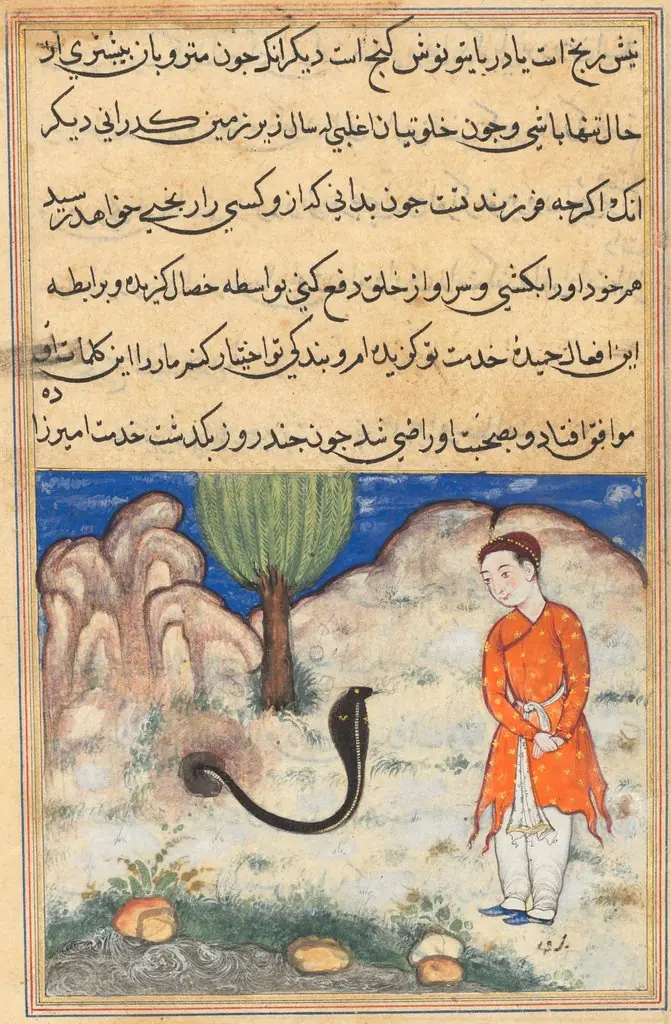 The prince, a son of the ruler of Sistan, enters the service of a snake, from a Tuti-nama (Tales of a Parrot): Thirty-seventh Night
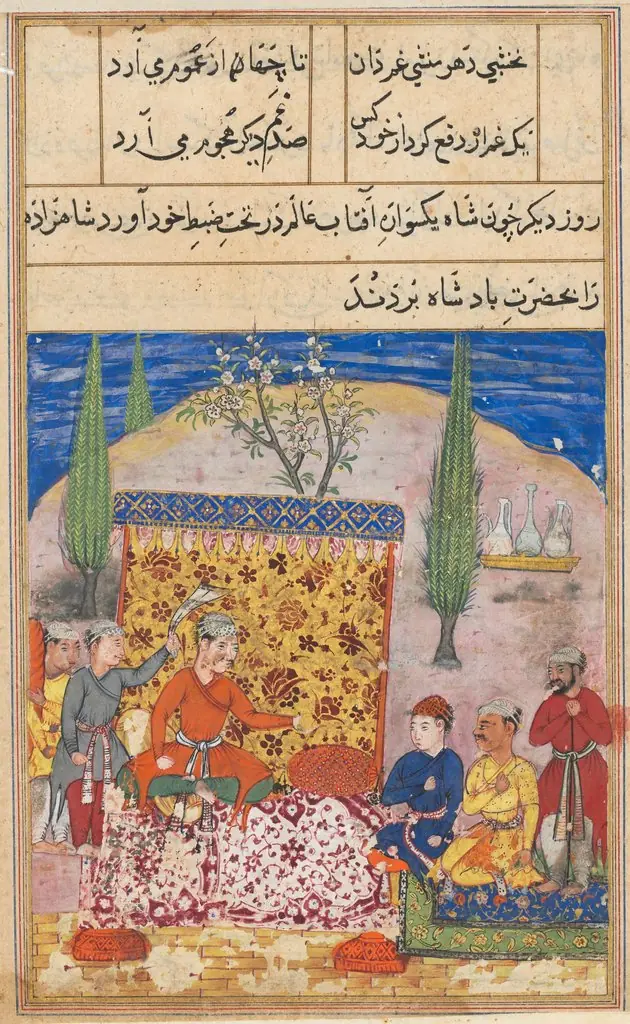 The young prince is presented to the king, his father, by his teacher, but refuses to speak, from a Tuti-nama (Tales of a Parrot): Eighth Night
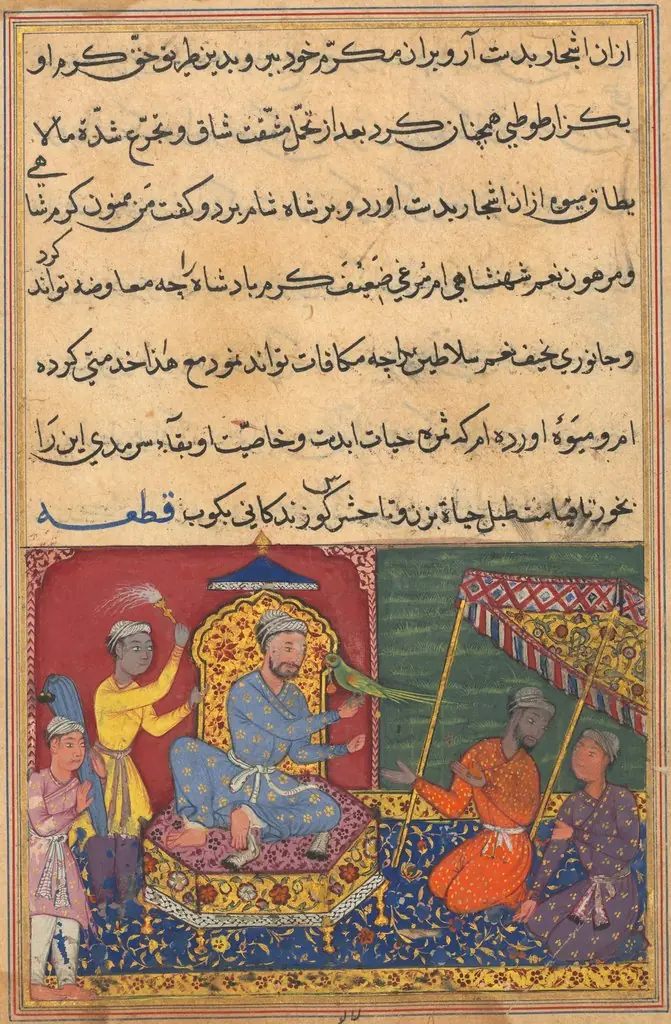 The parrot brings a fruit from the Tree of Life to the king of Syria, from a Tuti-nama (Tales of a Parrot): Ninth Night
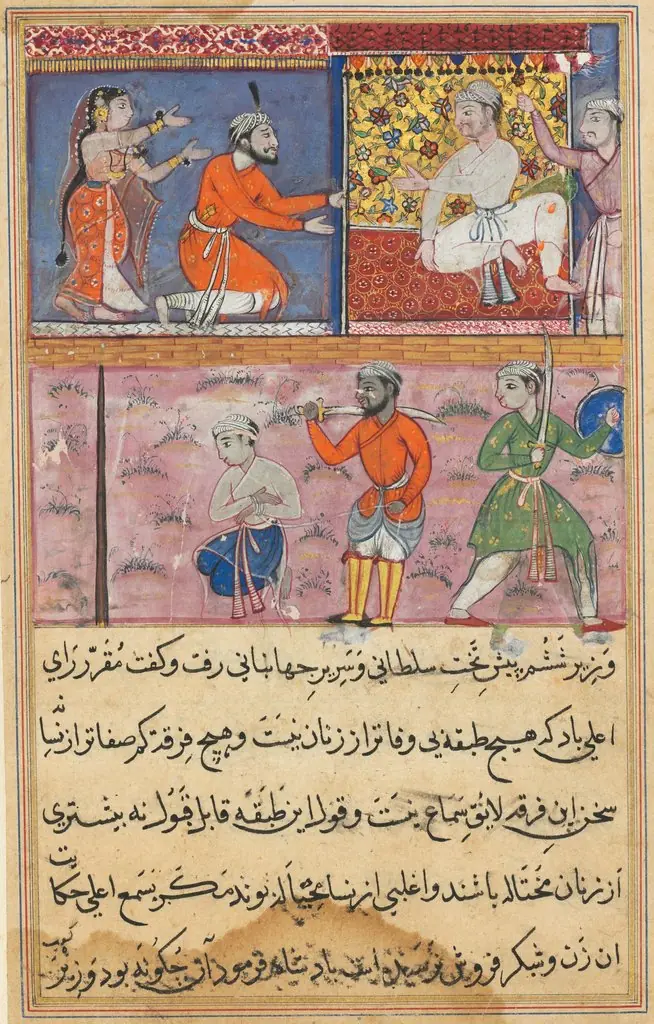 The prince sent back to the place of execution for the sixth time, from a Tuti-nama (Tales of a Parrot): Eighth Night
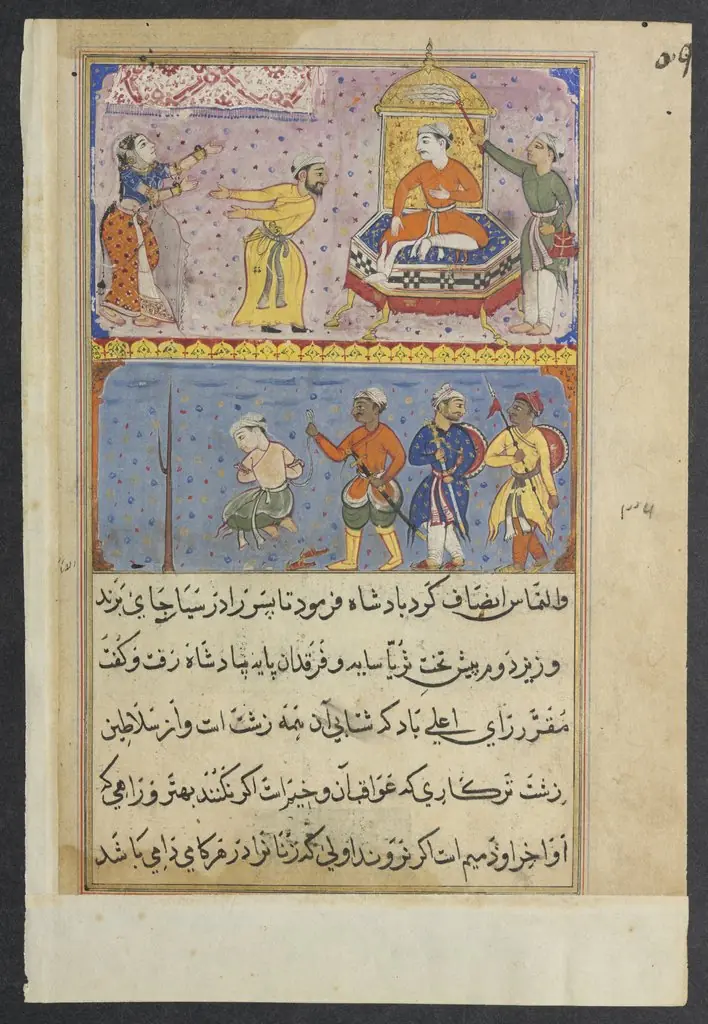 The prince, once reprieved, is returned to the palace of execution a second time on the plea of the king’s handmaiden, from a Tuti-nama (Tales of a Parrot): Eighth Night