Artwork
The young prince is presented to the king, his father, by his teacher, but refuses to speak, from a Tuti-nama (Tales of a Parrot): Eighth Night
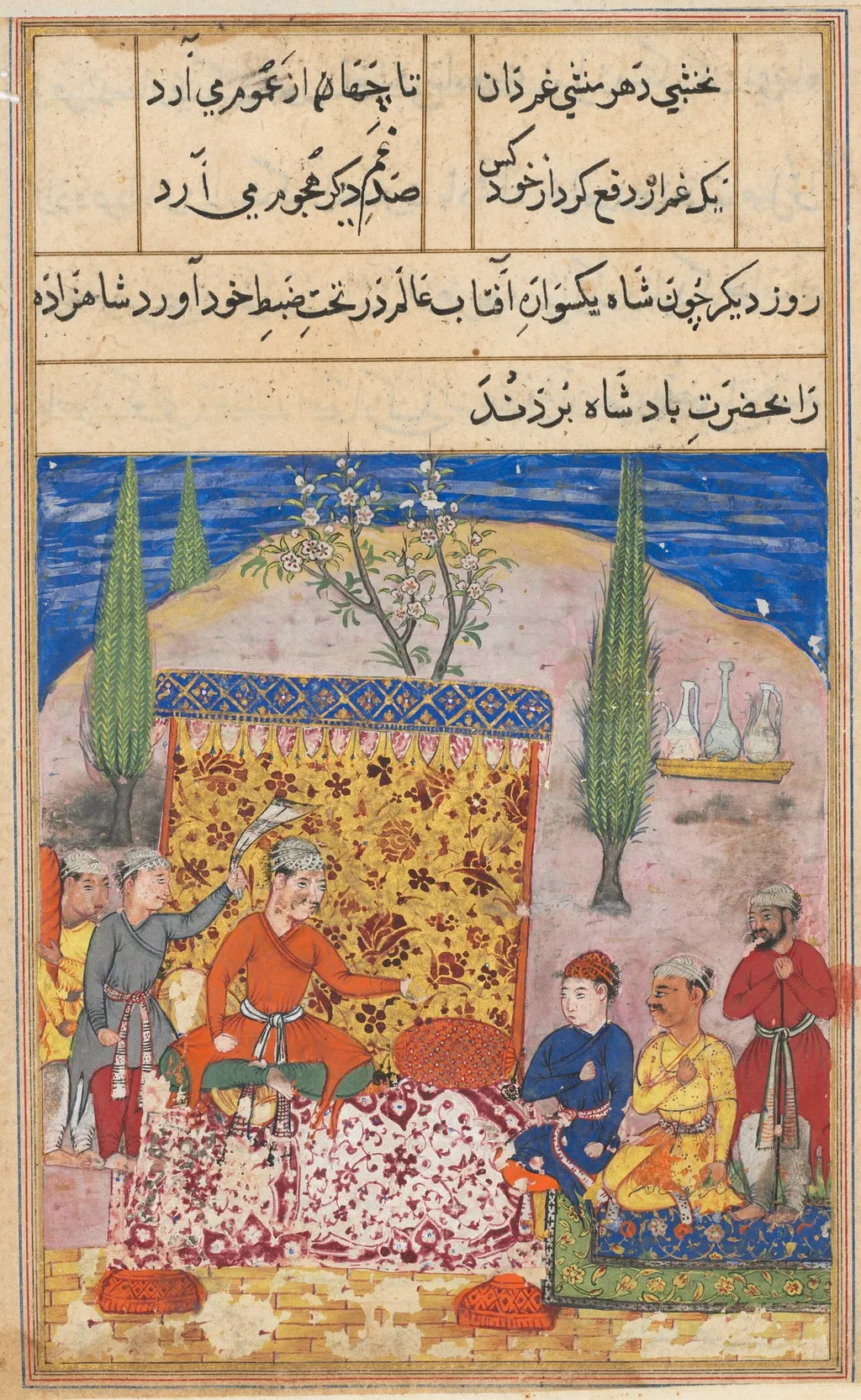
The young prince is presented to the king, his father, by his teacher, but refuses to speak, from a Tuti-nama (Tales of a Parrot): Eighth Night is an unspecified painting. It dates from 1560 and is held in the collection of the Cleveland Museum of Art. The work illustrates a ceremonial introduction in which a young prince is brought before his father, the king, by his teacher.
About this work
Overview
The work illustrates a ceremonial introduction in which a young prince is brought before his father, the king, by his teacher. The prince sits on an elaborately patterned rug, while the monarch occupies a throne‑like seat draped in yellow and blue fabric. The scene is populated by the teacher and additional attendants, set against a blue sky dotted with trees and a modest table bearing vases.
Subject & Meaning
The narrative derives from the eighth night of the Tuti‑nama, a collection of parrot tales, and captures the moment of deference and silence as the prince, despite the formal presentation, refuses to speak. This gesture underscores themes of obedience, authority, and the educational role of the teacher within the royal court.
Technique & Style
The painter employs a vivid palette of red, yellow, blue, and green, creating a lively visual rhythm. Intricate patterns on textiles and rugs are rendered with fine brushwork, adding texture and depth. The composition balances figures and landscape, using a clear, decorative style characteristic of manuscript illustration adapted to a standalone painting.
History & Provenance
The piece originates from the illustrated tradition of the Tuti‑nama, a Persian literary work that circulated widely in the Islamic world. Though specific details of its creation and ownership are not recorded, it reflects the artistic conventions of courtly manuscript painting that were later transferred to panel formats.
Artist & collection

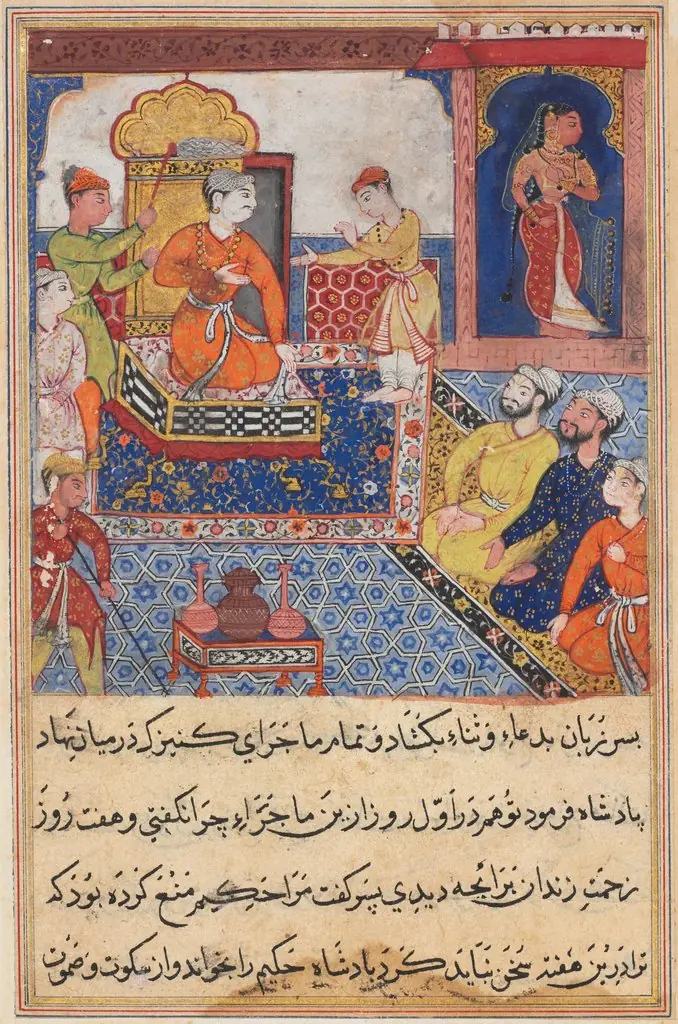 The young prince recounts his experiences to his father, the king, from a Tuti-nama (Tales of a Parrot): Eighth Night
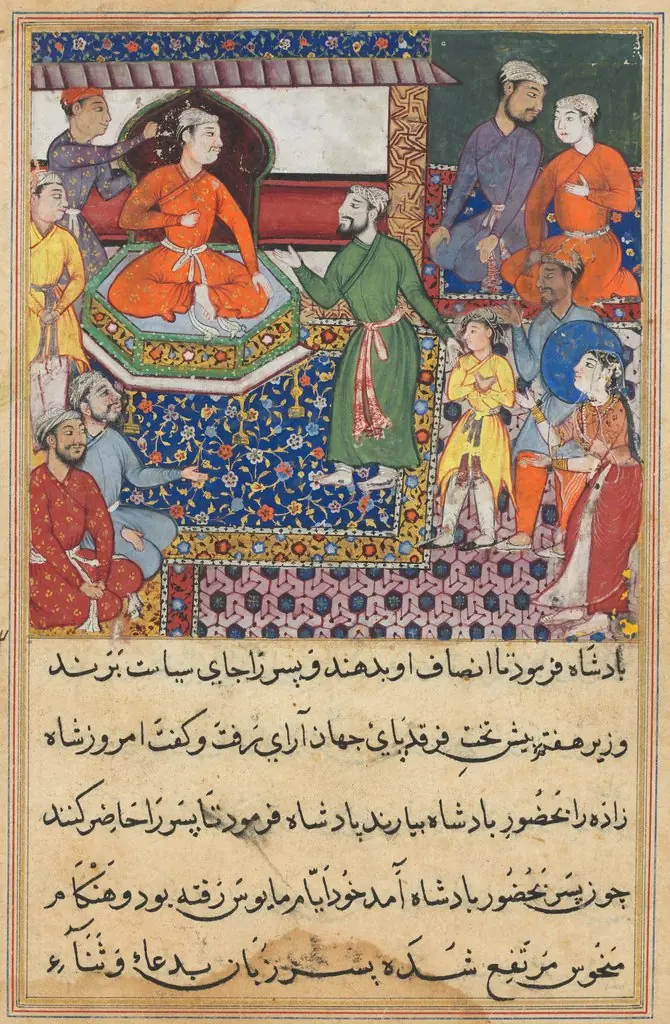 The handmaiden again pleads for the death of the prince, from a Tuti-nama (Tales of a Parrot): Eighth Night
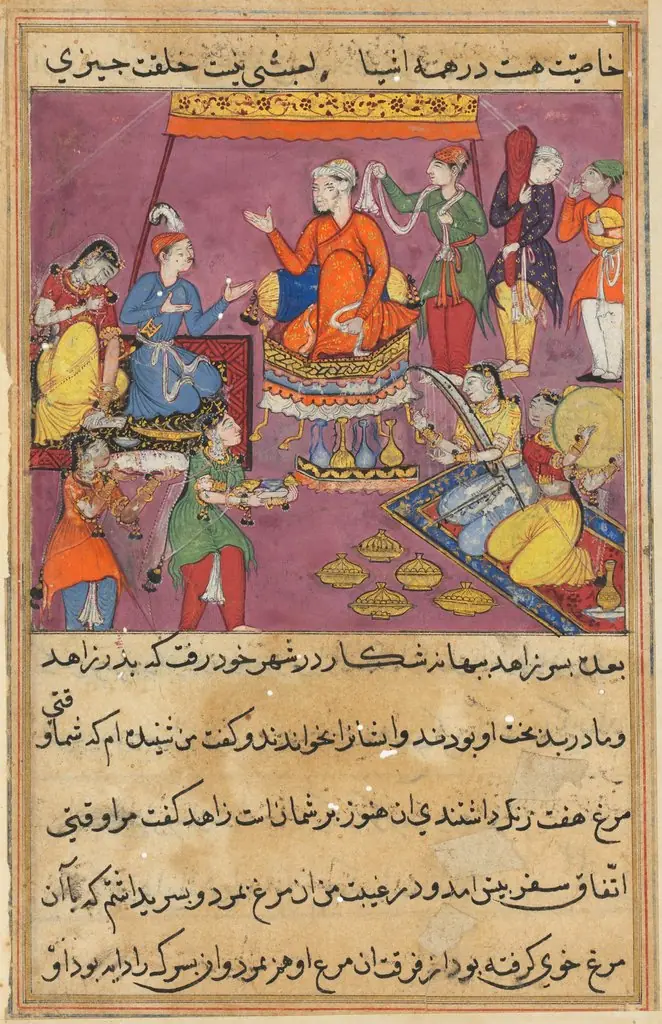 The king gives his daughter in marriage to the pious man’s son, from a Tuti-nama (Tales of a Parrot): Fifty-second Night
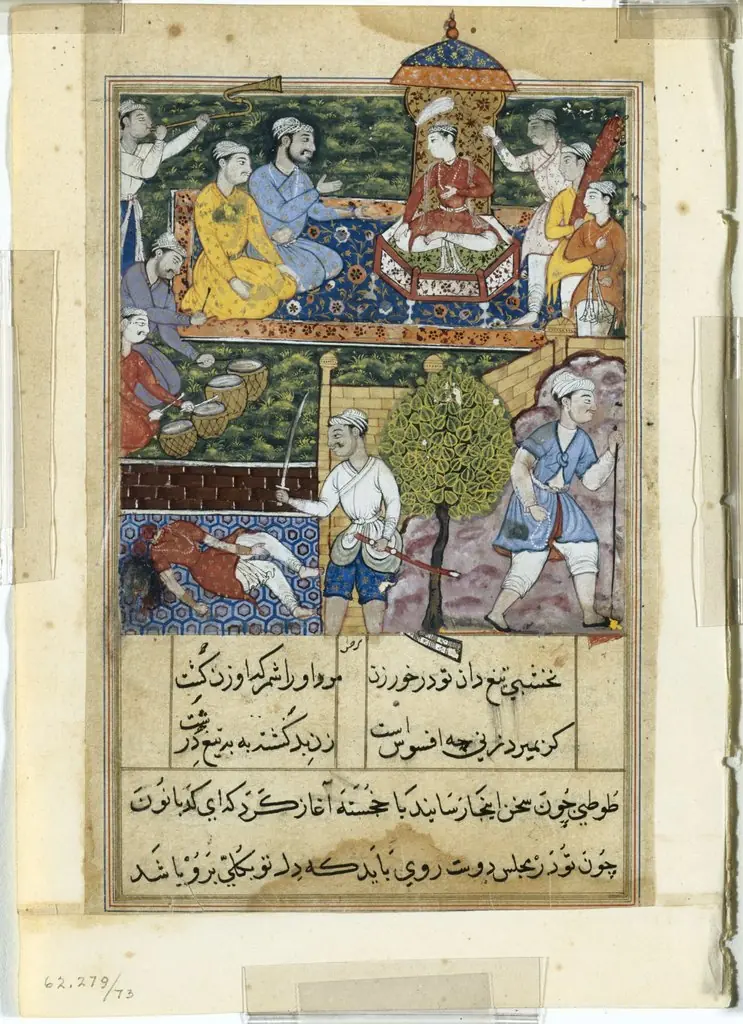 The young prince is crowned and the wicked handmaiden is executed, from a Tuti-nama (Tales of a Parrot): Eighth Night
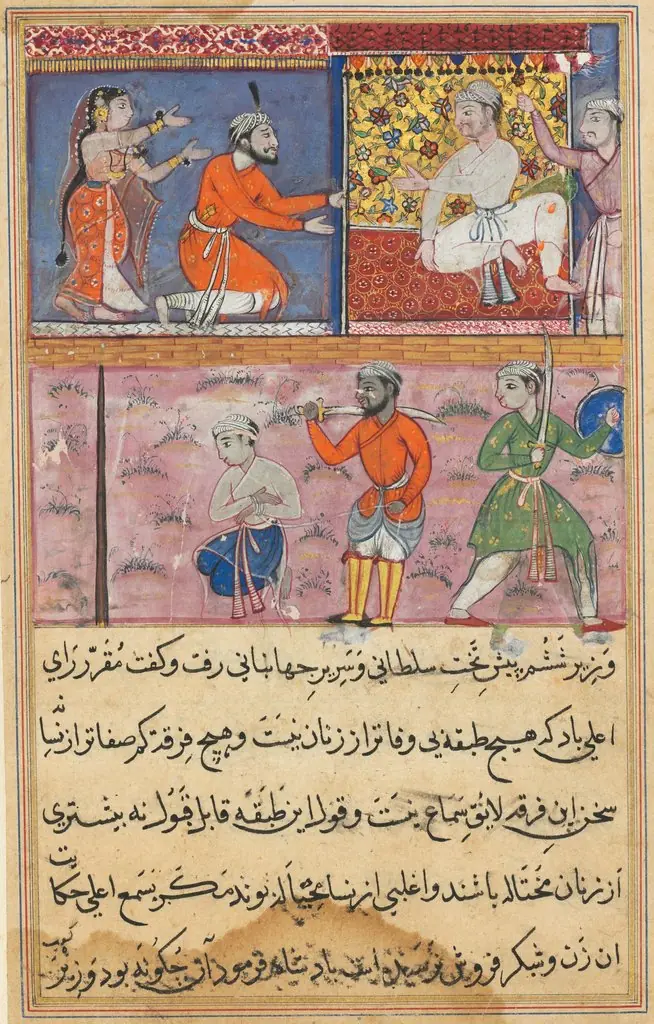 The prince sent back to the place of execution for the sixth time, from a Tuti-nama (Tales of a Parrot): Eighth Night
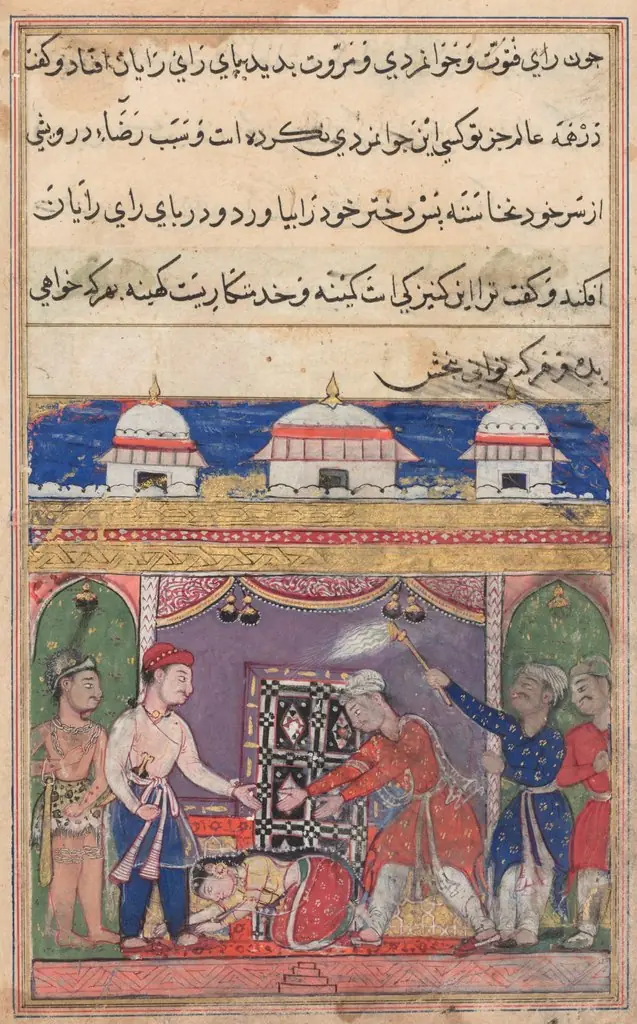 The king of Bahilistan offers his daughter to the King of Kings, from a Tuti-nama (Tales of a Parrot): Seventh Night
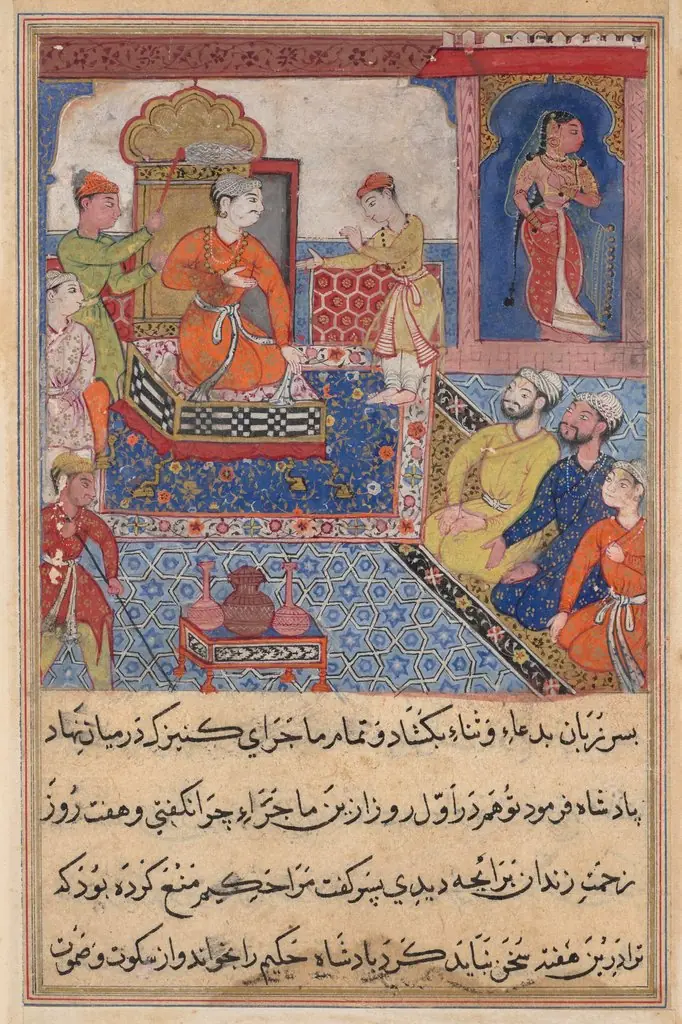 Page from Tales of a Parrot (Tuti-nama): text page
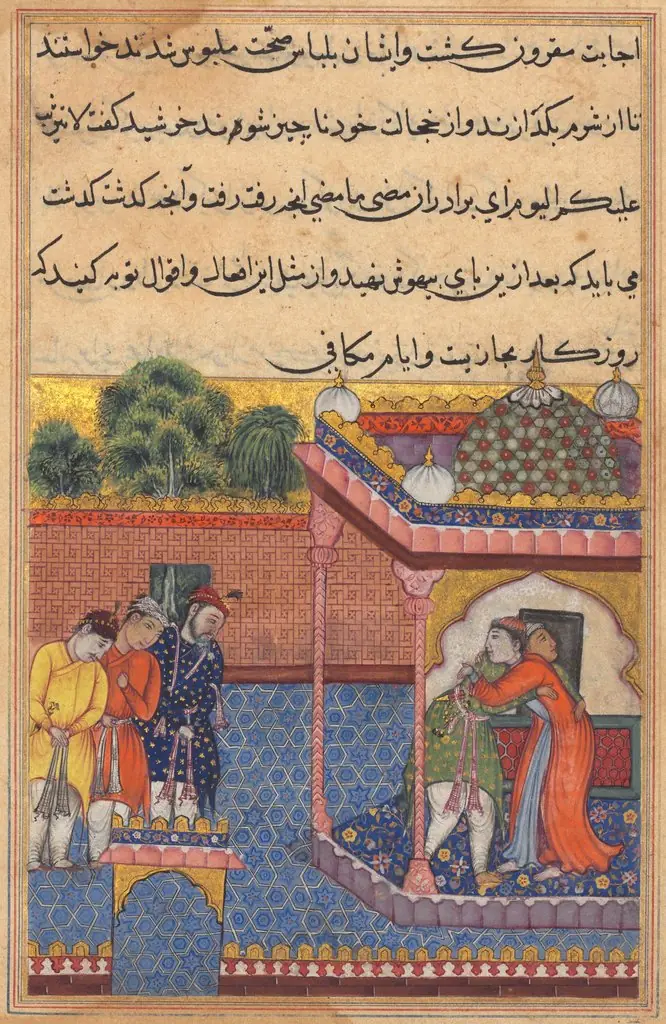 Khurshid reunited with her husband Utarid, from a Tuti-nama (Tales of a Parrot): Thirty-second Night
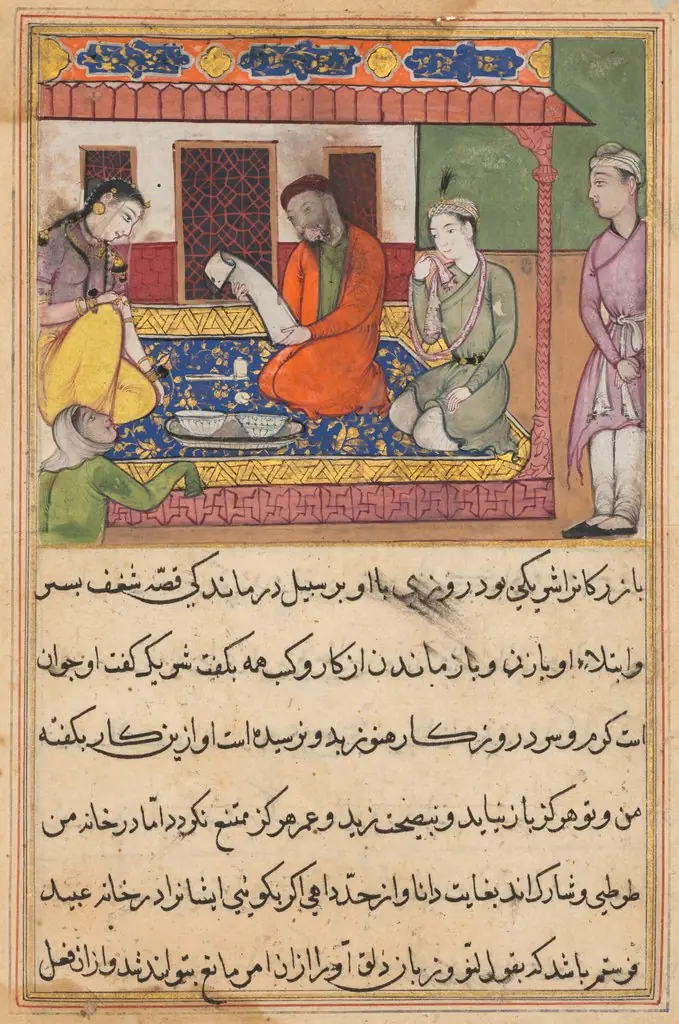 The marriage of ‘Ubaid, son of a merchant of Tirmiz, from a Tuti-nama (Tales of a Parrot): Forty-second Night
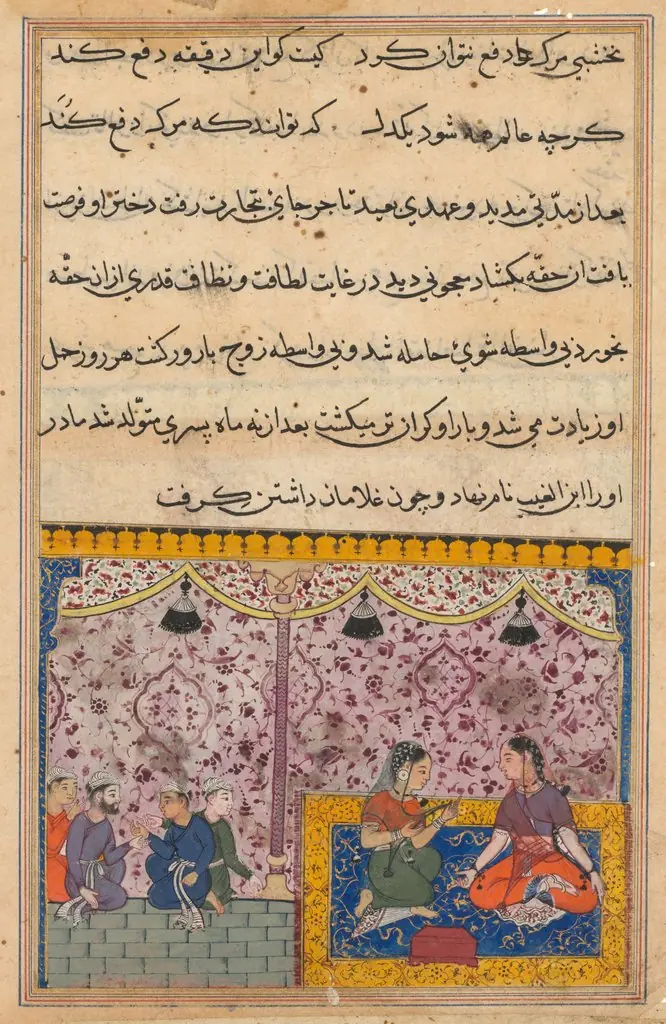 The merchant’s daughter gives birth to a son as a result of eating out of the box. The clever child recognizes the false gems from true, from a Tuti-nama (Tales of a Parrot): Twenty-third Night
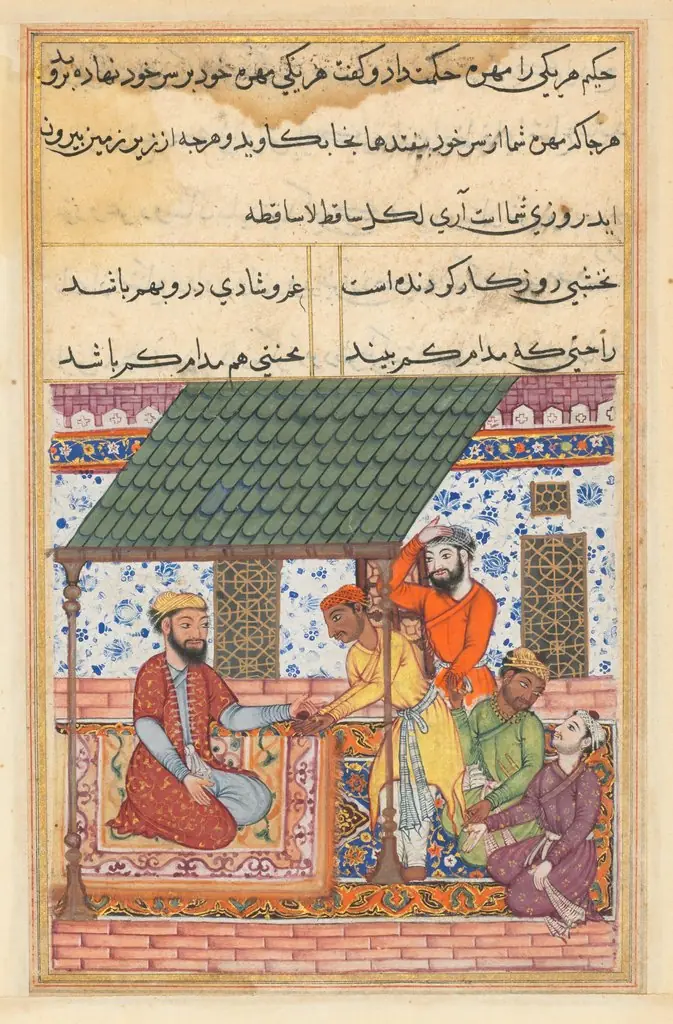 The four destitute friends go to a wise man who gives each one of them a magic shell to be placed on top of the turban, from a Tuti-nama (Tales of a Parrot): Forty-seventh Night