Artwork
The prince, a son of the ruler of Sistan, enters the service of a snake, from a Tuti-nama (Tales of a Parrot): Thirty-seventh Night
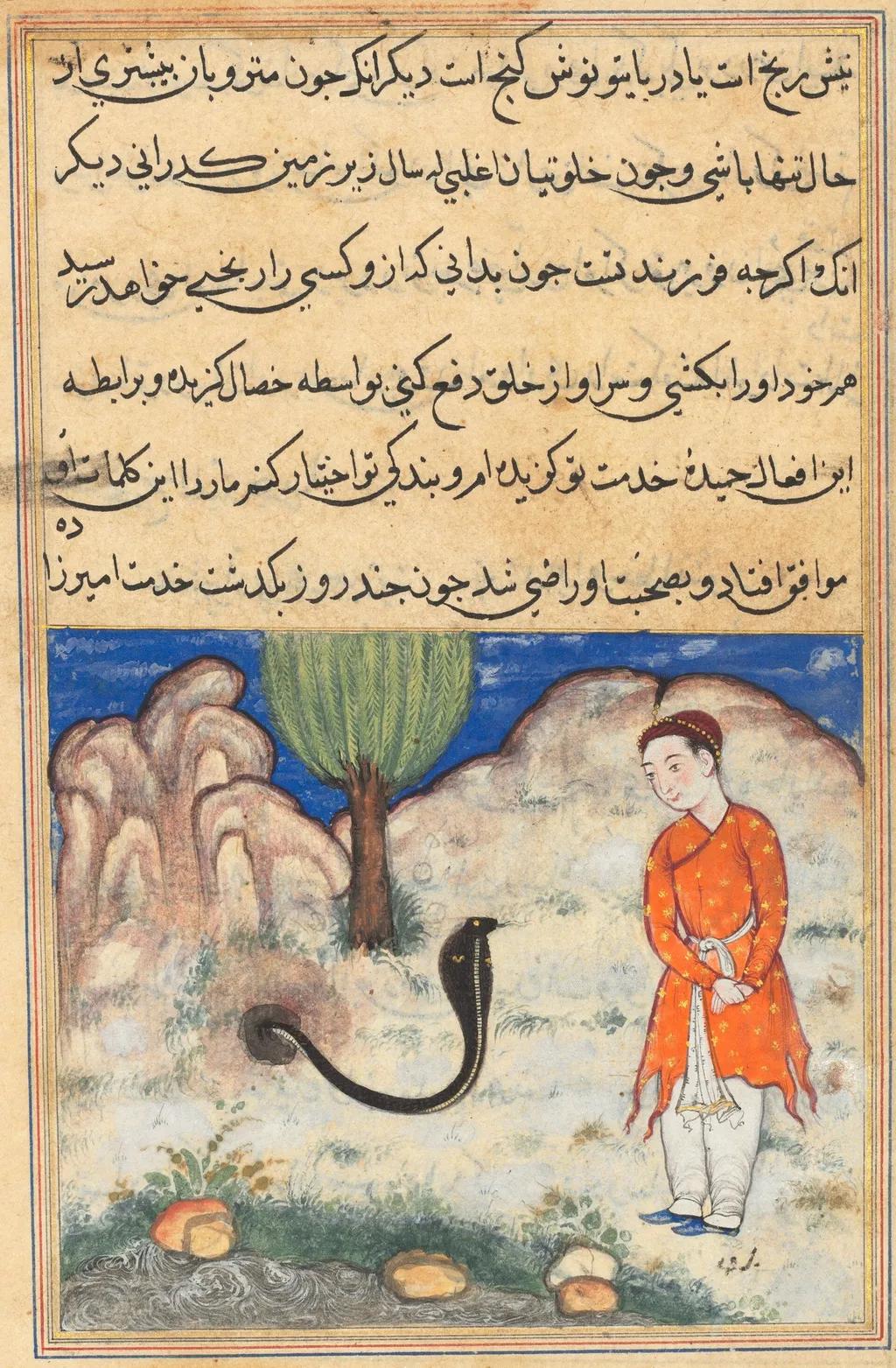
The prince, a son of the ruler of Sistan, enters the service of a snake, from a Tuti-nama (Tales of a Parrot): Thirty-seventh Night is an unspecified painting. It dates from 1560 and is held in the collection of the Cleveland Museum of Art.
About this work
Overview
The work depicts a young prince, son of the ruler of Sistan, as he begins his service to a snake, a scene taken from the thirty‑seventh night of the Persian illustrated manuscript known as the Tuti‑nama, or “Tales of a Parrot.” The composition is rendered as a painted illustration, typical of manuscript art that combines narrative and decorative elements.
Subject & Meaning
In the image the prince, dressed in an orange robe, white trousers and blue shoes, stands calmly before a coiled snake.
In the image the prince, dressed in an orange robe, white trousers and blue shoes, stands calmly before a coiled snake. His hands are clasped in a gesture of reverence, and his gaze is directed downward toward the animal. The encounter suggests a symbolic initiation, where the prince’s humility and obedience are emphasized through his service to a creature traditionally associated with wisdom and danger.
Technique & Style
The painting employs a flat, linear style characteristic of Persian miniature illustration, with bright, saturated colors and minimal shading. Details such as the red headband, the surrounding rocks, foliage, and a distant tree are rendered in fine brushwork, while the blue sky provides a simple atmospheric backdrop that frames the central figures without depth illusion.
Context
The Tuti‑nama is a collection of moral tales illustrated for elite patrons in the Safavid period, often used to convey ethical lessons. This particular episode, featuring a prince’s service to a snake, reflects the broader cultural motif of humility before higher powers, a theme recurrent in Persian literary and visual traditions.
Legacy
As an example of manuscript illustration, the painting illustrates the integration of narrative storytelling with decorative art that defined Persian courtly culture. Its preservation offers insight into the visual conventions and didactic purposes of Safavid-era illustrated books, informing contemporary understandings of Persian artistic heritage.
Artist & collection

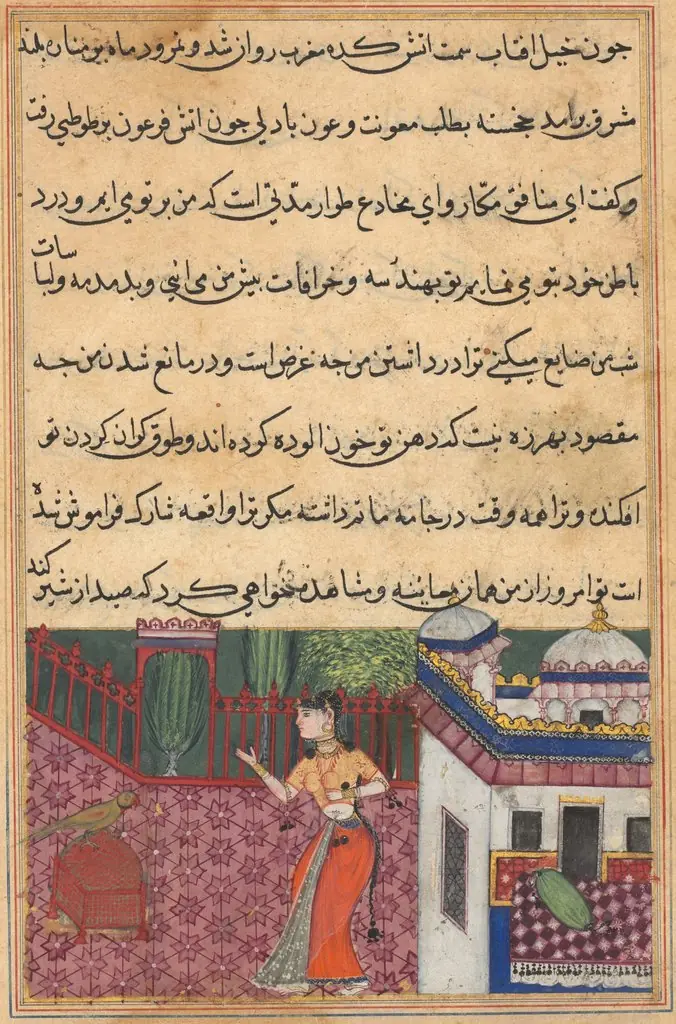 The parrot addresses Khujasta at the beginning of the thirty-third night, from a Tuti-nama (Tales of a Parrot)
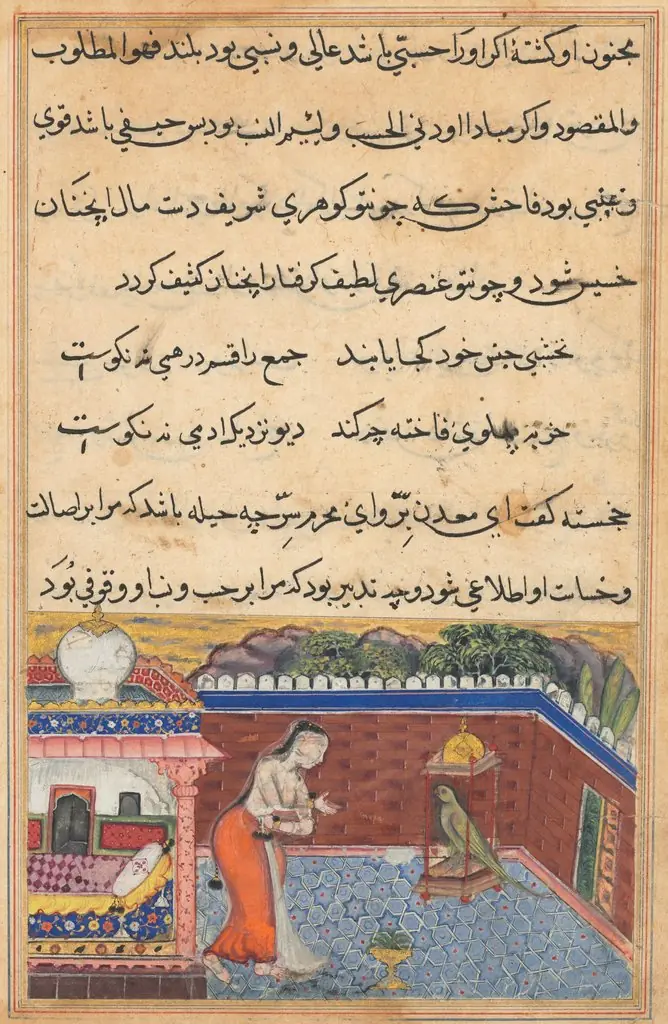 The parrot addresses Khujasta at the beginning of the thirty-first night, from a Tuti-nama (Tales of a Parrot)
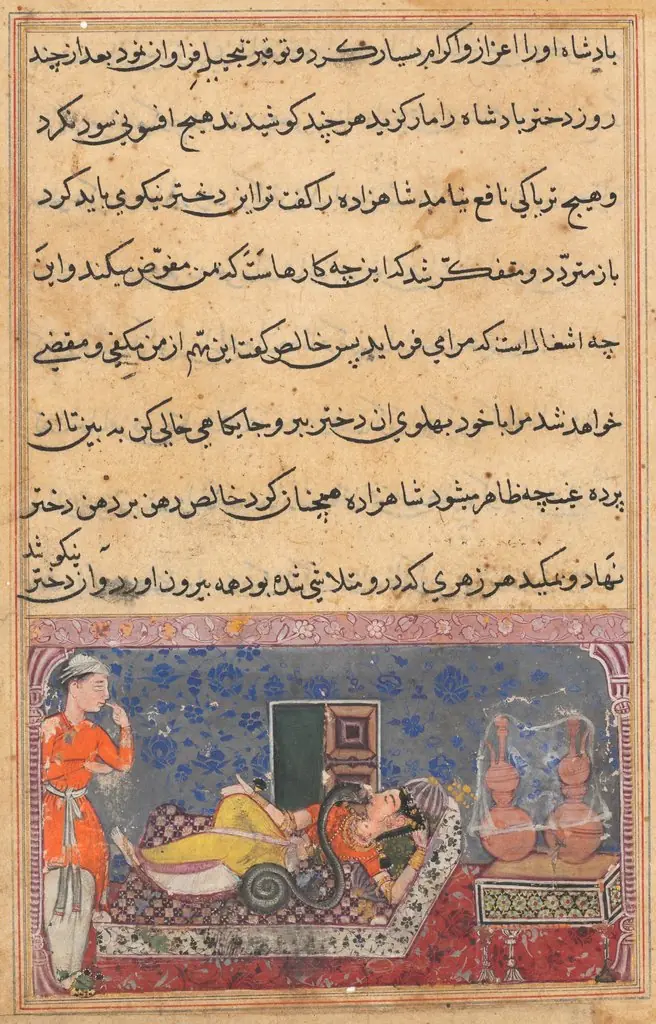 Khalis repays the prince for his kindness by changing into a snake and sucking the poison from the king’s daughter, from a Tuti-nama (Tales of a Parrot): Eighteenth Night
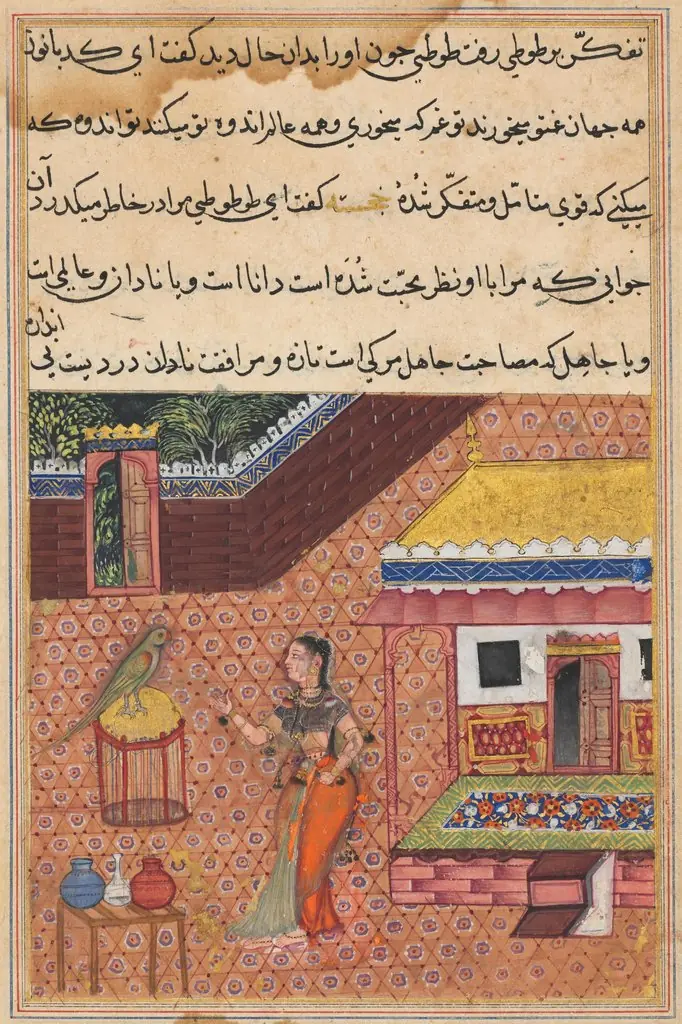 The parrot addresses Khujasta at the beginning of the thirty-fourth night, from a Tuti-nama (Tales of a Parrot)
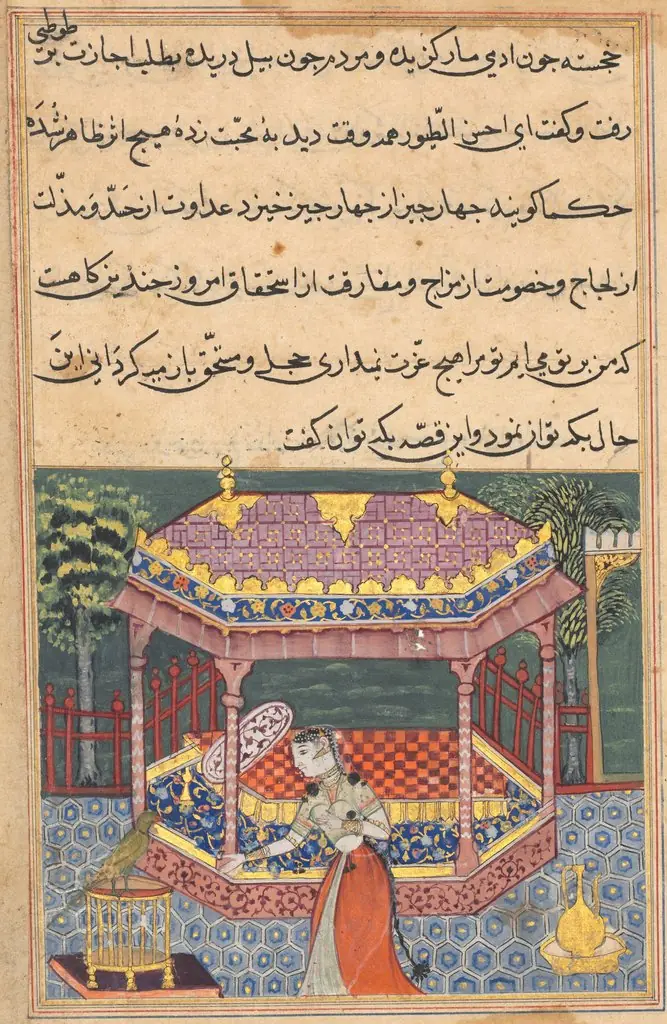 The parrot addresses Khujasta at the beginning of the thirty-seventh night, from a Tuti-nama (Tales of a Parrot)
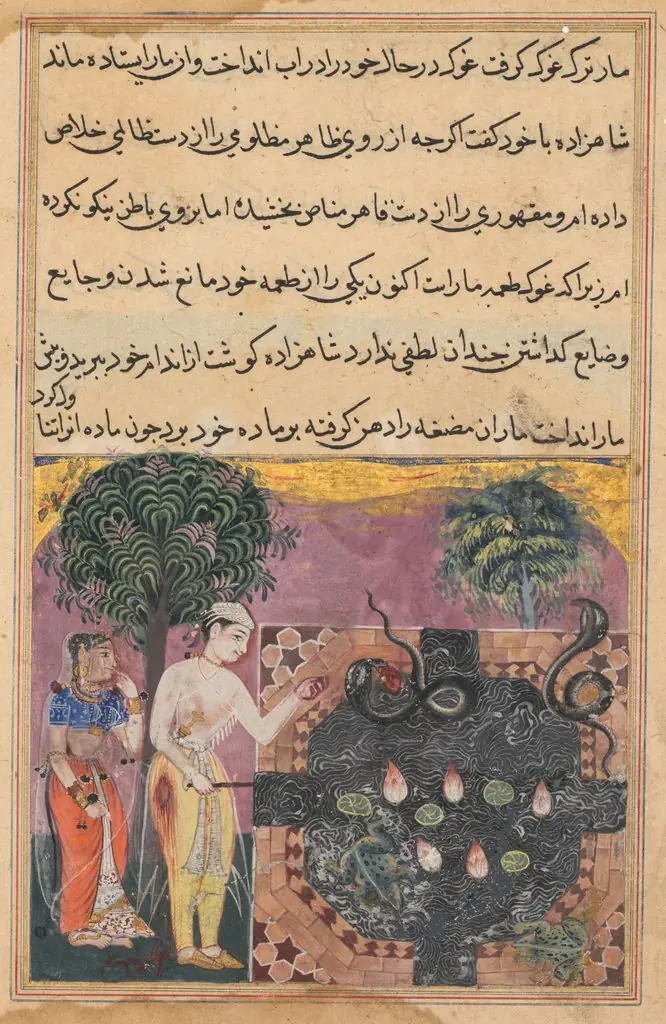 The prince, having deprived the snake of its natural food, a frog, feeds it with a piece of his own flesh, from a Tuti-nama (Tales of a Parrot): Eighteenth Night
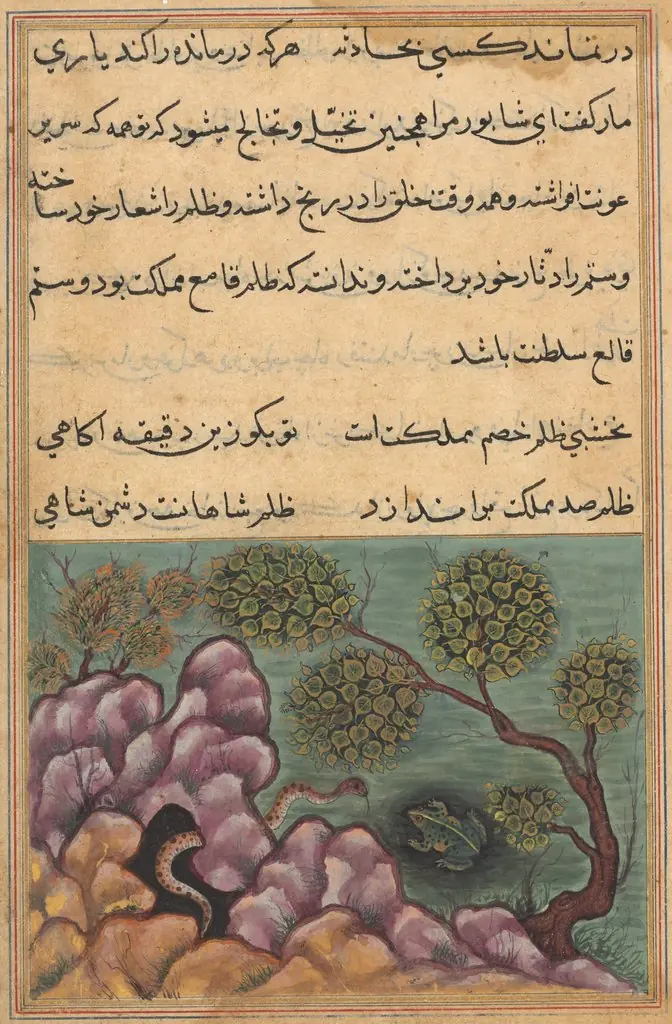 The dethroned frog Shapur seeks the help of the serpent, from a Tuti-nama (Tales of a Parrot): Twenth-sixth Night
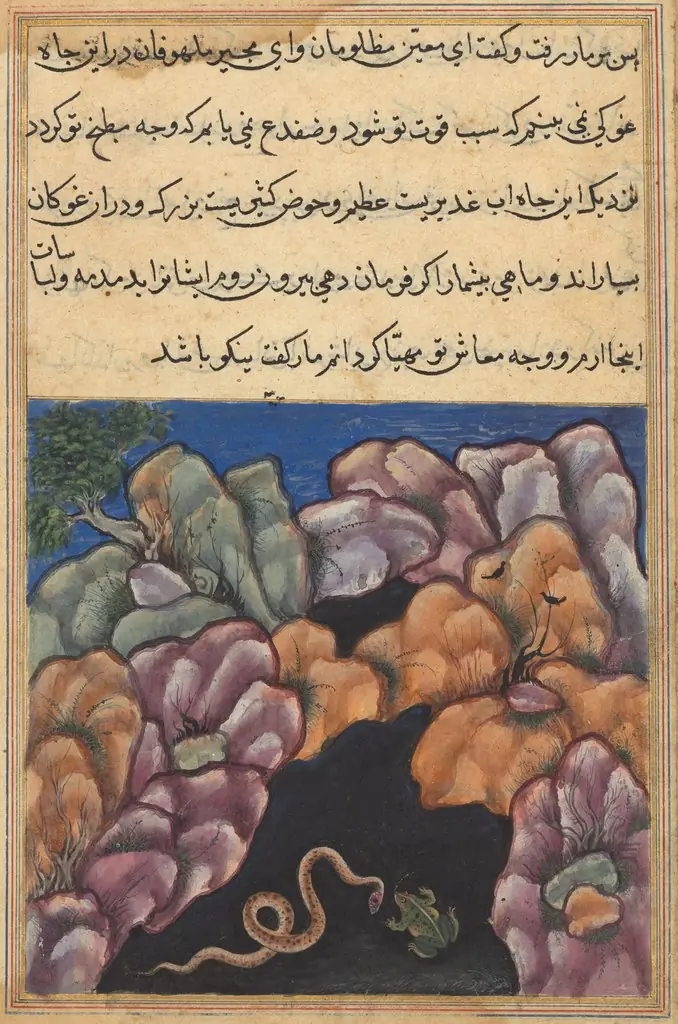 The snake enters into an argument with the frog, from a Tuti-nama (Tales of a Parrot): Twenty-sixth Night
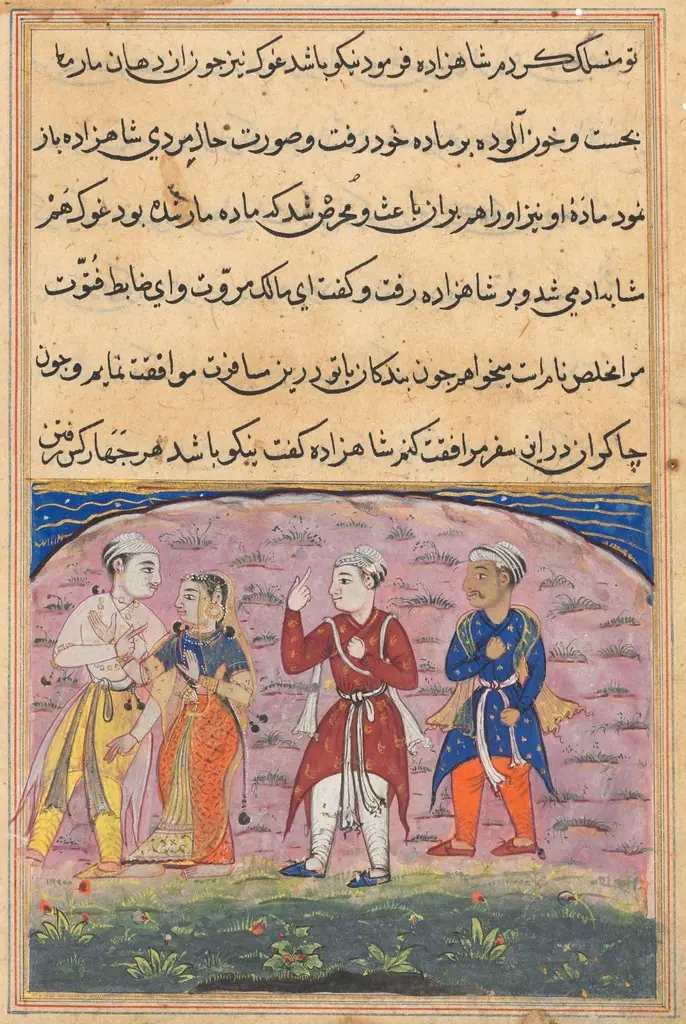 The prince and Nikfal are joined by Khalis and the Mukhlis who are the grateful snake and frog in human form, from a Tuti-nama (Tales of a Parrot): Eighteenth Night