Artwork
The Crucifixion with Moses, David, Saint Paul and Saint John the Baptist
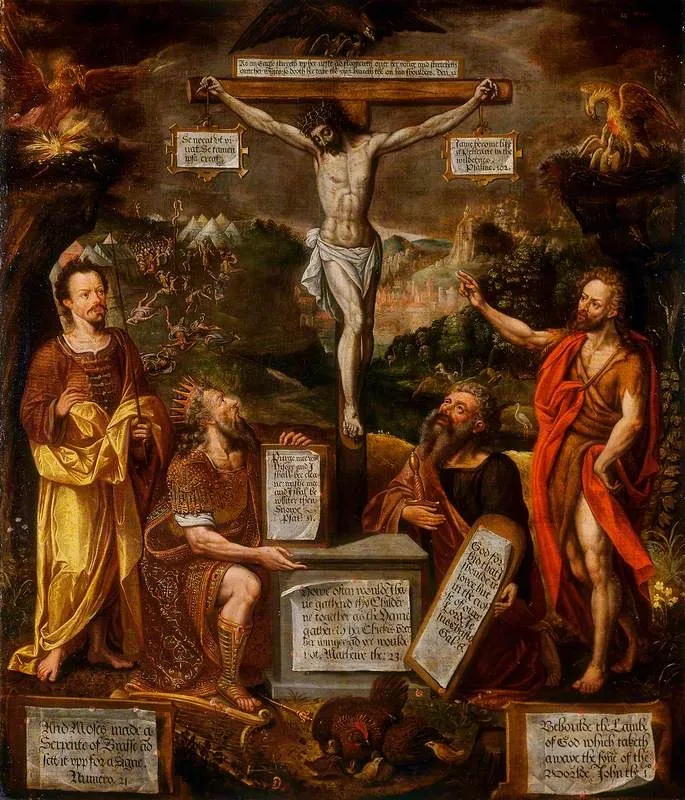
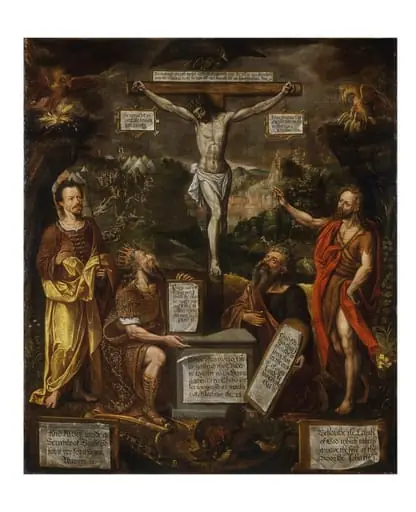
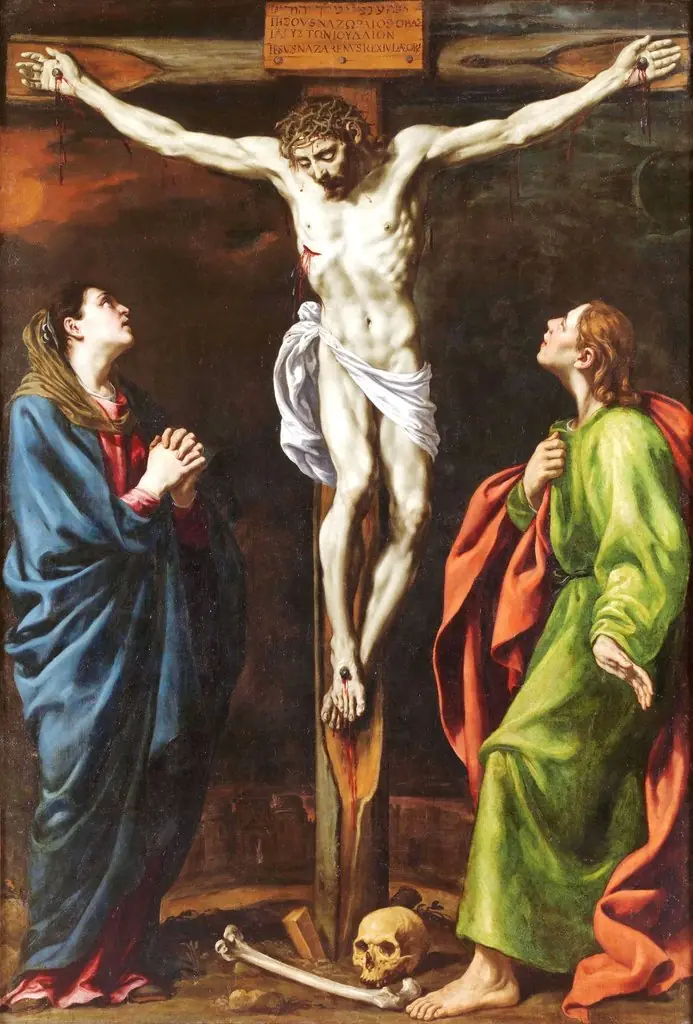
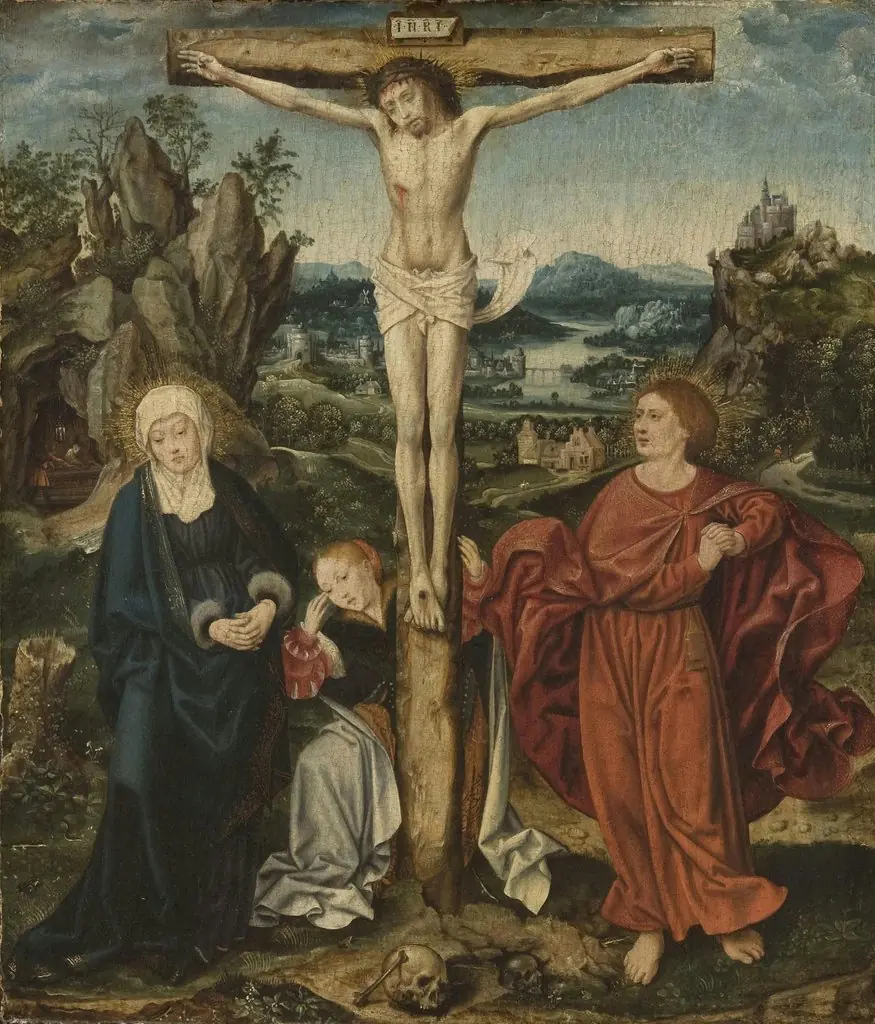
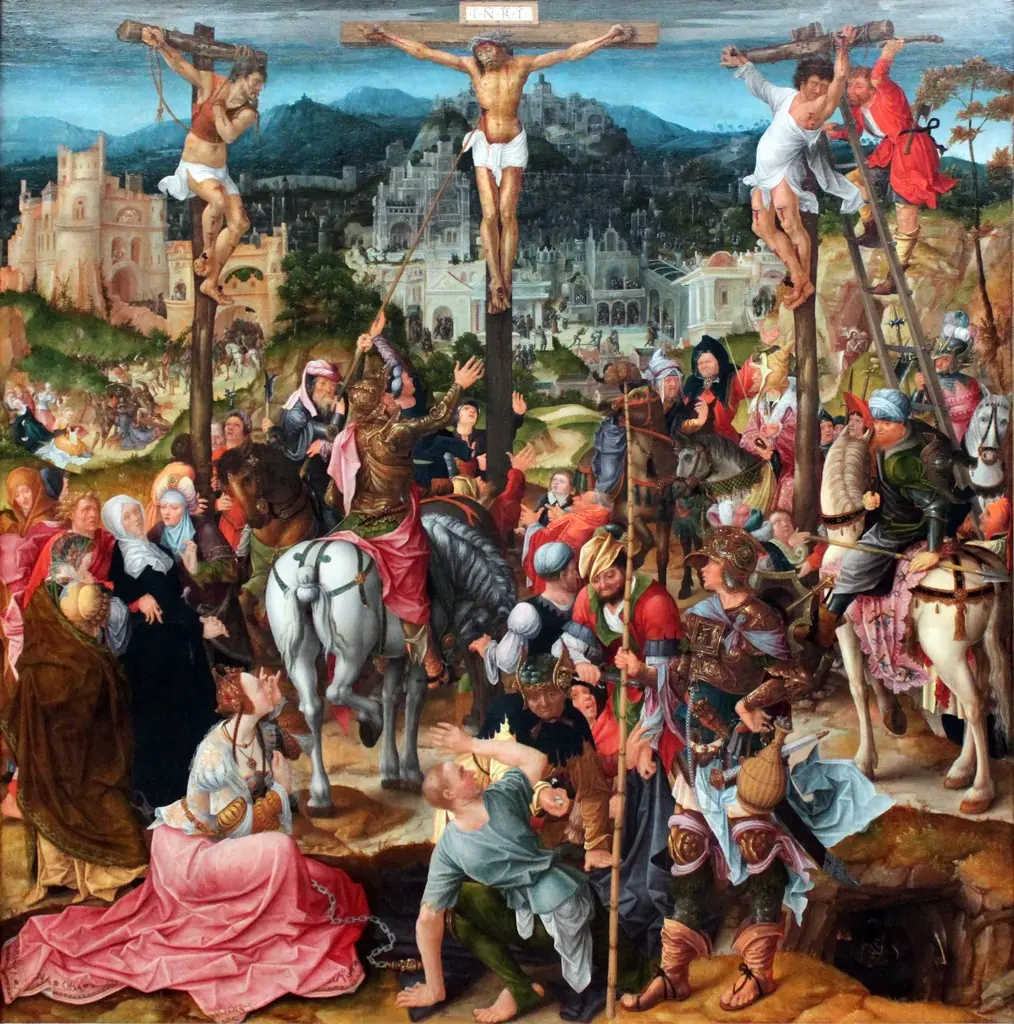
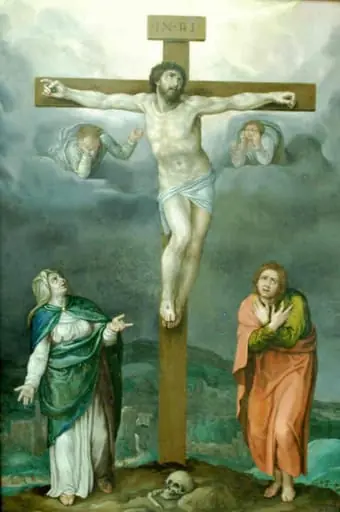
The Crucifixion with Moses, David, Saint Paul and Saint John the Baptist is an oil painting by the Early Baroque Italian artist Unknown. It dates from 1600 and is held in the collection of the Victoria and Albert Museum. This oil painting depicts the crucifixion of Jesus, framed by four biblical figures positioned around the cross.
About this work
Overview
The central figure is shown with outstretched arms and a modest white loincloth, surrounded by individuals distinguished by varied attire and headgear.
This oil painting depicts the crucifixion of Jesus, framed by four biblical figures positioned around the cross. The central figure is shown with outstretched arms and a modest white loincloth, surrounded by individuals distinguished by varied attire and headgear. The background features a softly rendered landscape of trees and overcast skies, contributing to a quiet, solemn atmosphere that emphasizes spiritual reflection rather than dramatic intensity.
Subject & Meaning
The four figures flanking Christ are identified as Moses, David, Saint Paul, and Saint John the Baptist—representatives of the Old Testament and early Christian tradition. Their presence signifies the fulfillment of prophecy through Christ’s sacrifice. Each figure is rendered with individualized features and garments, suggesting their distinct roles in sacred history and reinforcing the theological continuity between covenant and redemption.
Technique & Style
The artist employs oil paint to achieve subtle gradations of light and texture, particularly in the fabric folds and skin tones. The figures are arranged symmetrically around the cross, creating a balanced composition. Background elements like trees and clouds are rendered with loose brushwork, providing depth without distracting from the central narrative. The palette is restrained, favoring earth tones and muted reds to sustain a contemplative mood.
History & Provenance
The painting’s origin and early ownership remain undocumented in available records. Its style suggests a late medieval or early Renaissance European workshop, possibly from Italy or the Low Countries, where devotional scenes with multiple biblical figures were common. No documented commission or collector is known prior to its modern institutional acquisition.
Context
During the period when this work was likely created, crucifixion scenes often included Old Testament prophets and New Testament saints to illustrate typological connections. The inclusion of Moses and David, as lawgiver and king, alongside John the Baptist and Paul, as forerunner and apostle, reflects a theological framework common in liturgical art of the time, designed to instruct the faithful through visual symbolism.
Legacy
Though not widely reproduced or cited in major art historical texts, the painting exemplifies a devotional tradition that persisted in regional workshops well into the Renaissance. Its quiet composition and emphasis on symbolic presence rather than emotional spectacle offer insight into lesser-known approaches to sacred imagery, distinct from the more dramatic treatments of the High Renaissance.
Artist & collection

 Domestic Scene
 Giacomo and Cardinal Marco, investing Andrea, Abbot of San Zeno, with his Benefice
 The Nymph of Fontainebleau
 Portrait of a Woman
 Madonna and Child with Saints in the Enclosed Garden
 Venus and Minerva
 Family Group of Four on Sofa
 Wall painting from Room H of the Villa of P. Fannius Synistor at Boscoreale