Artwork
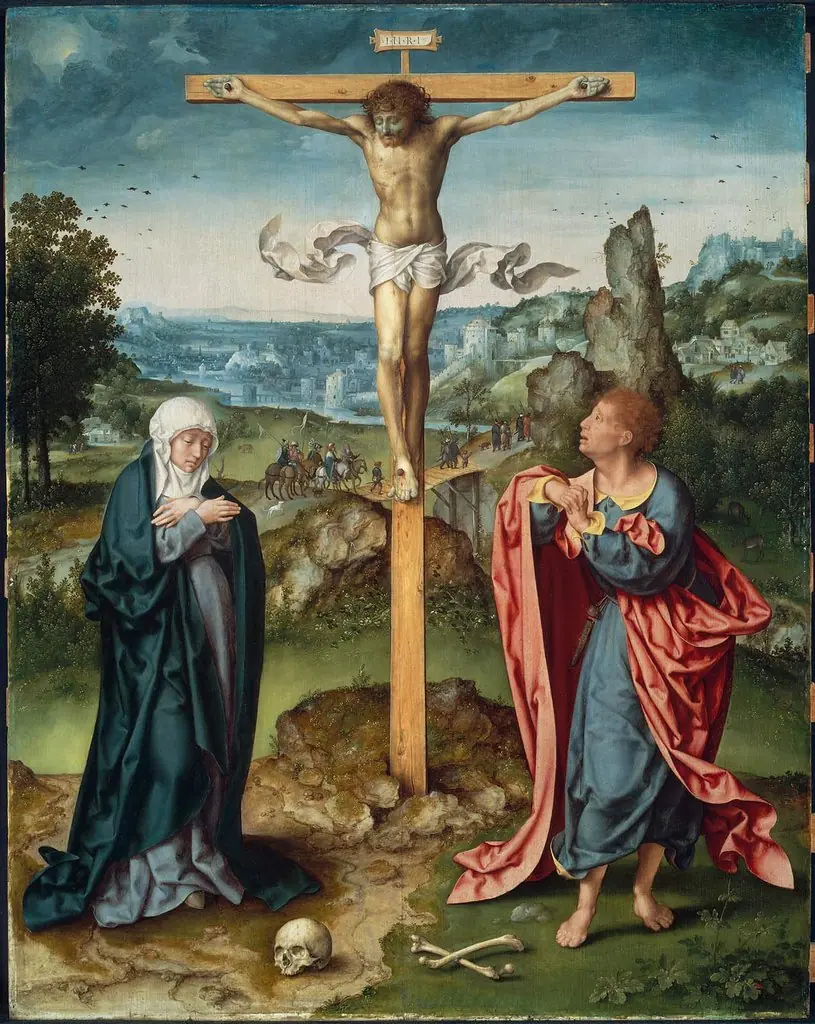
Christ pe cruce
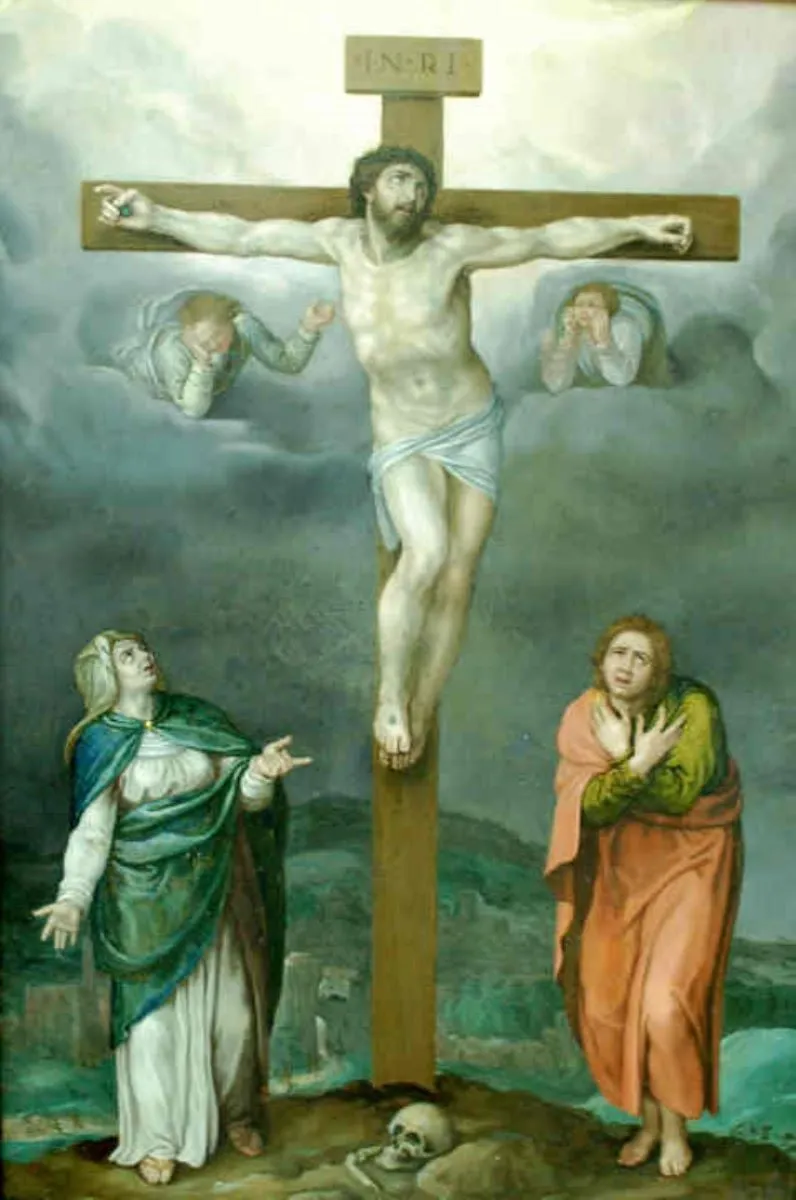
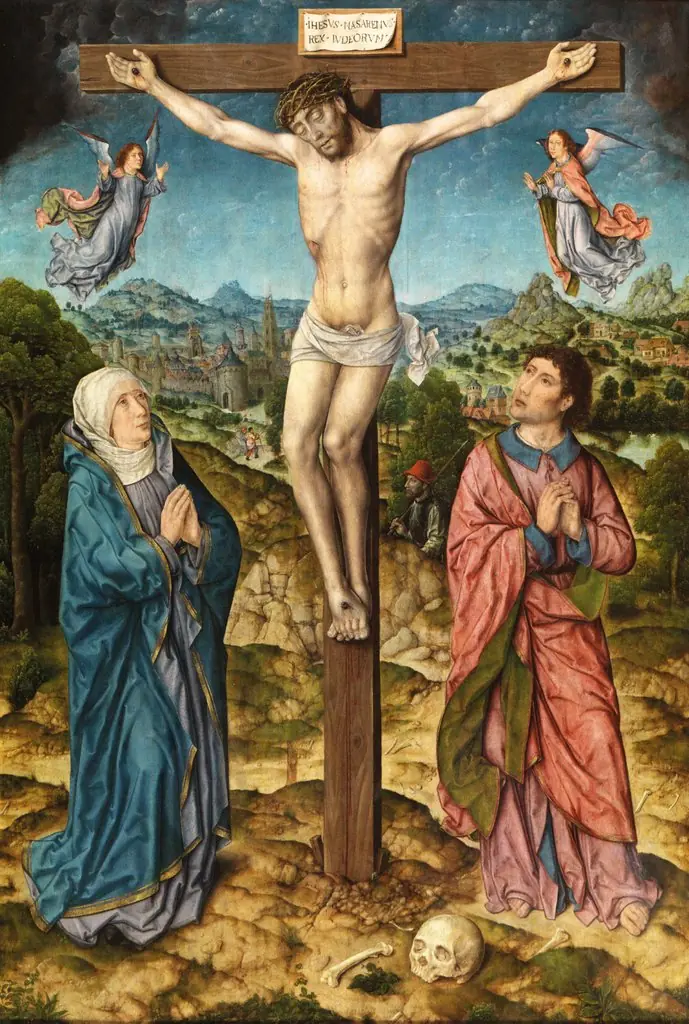
Christ pe cruce is an unspecified painting by the Northern Renaissance artist Gillis Mostaert. It is held in the collection of the Art museum of Craiova.
About this work
Overview
It depicts the crucifixion of Christ in a quiet, contemplative manner, emphasizing spiritual solemnity over dramatic intensity.
Christ pe cruce is a devotional painting attributed to Gillis Mostaert, dated around 1650. It depicts the crucifixion of Christ in a quiet, contemplative manner, emphasizing spiritual solemnity over dramatic intensity. The work is part of the collection at the Museum of Ethnography, where it is preserved as an example of early modern Flemish religious imagery, though its exact provenance before institutional acquisition remains unclear.
Subject & Meaning
The painting presents Christ on the cross, his body rendered with quiet vulnerability, surrounded by symbolic elements: the skull at his feet alludes to Golgotha, the place of Adam’s burial, and the INRI inscription confirms his identity as King of the Jews. Two figures below— one gesturing toward heaven, the other in prayer—represent human responses to divine sacrifice. The hovering forms above may signify divine presence or angels, reinforcing the theological weight of the moment.
Technique & Style
Mostaert employs subtle chiaroscuro to model the figures against a dim, atmospheric background, giving Christ’s pale skin and draped cloth a faint luminosity. The palette is restrained, dominated by muted earth tones and soft blues, with only the robes and flesh catching minimal light. This restrained use of color and shadow directs focus to the central figure without theatricality, reflecting a devotional aesthetic rooted in Northern Renaissance traditions.
History & Provenance
The painting’s early history is undocumented; it entered the Museum of Ethnography’s collection in the 20th century, likely through private donation or acquisition. Its attribution to Gillis Mostaert is based on stylistic comparison with other works from his circle, though no signed or dated counterparts are known. The work’s survival suggests it was once privately owned, possibly in a domestic or chapel setting in the Southern Netherlands.
Context
Created in the mid-17th century, the painting reflects the persistence of Catholic devotional imagery in regions affected by the Reformation. While Protestant areas favored simpler religious expression, Catholic communities in the Southern Netherlands continued to commission intimate, emotionally restrained scenes of Christ’s Passion. This work aligns with a broader trend of quiet, meditative religious art meant for personal contemplation rather than public display.
Legacy
Though not widely exhibited or studied, Christ pe cruce contributes to the understanding of regional religious art in the post-Reformation Low Countries. Its modest scale and subdued tone distinguish it from grander Baroque altarpieces, offering insight into how faith was privately sustained through understated visual language. The painting remains a quiet testament to the endurance of devotional practice in a changing religious landscape.
Artist & collection
Artist
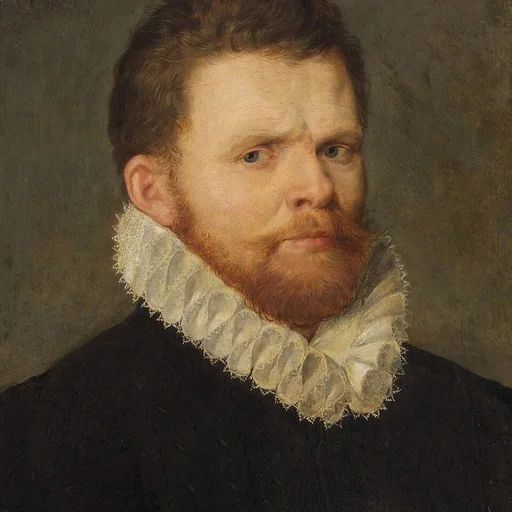
Gillis Mostaert the Elder (27 or 28 November 1528 – 28 December 1598) was a Flemish Renaissance painter and draughtsman active in Antwerp in the second half of the 16th century.

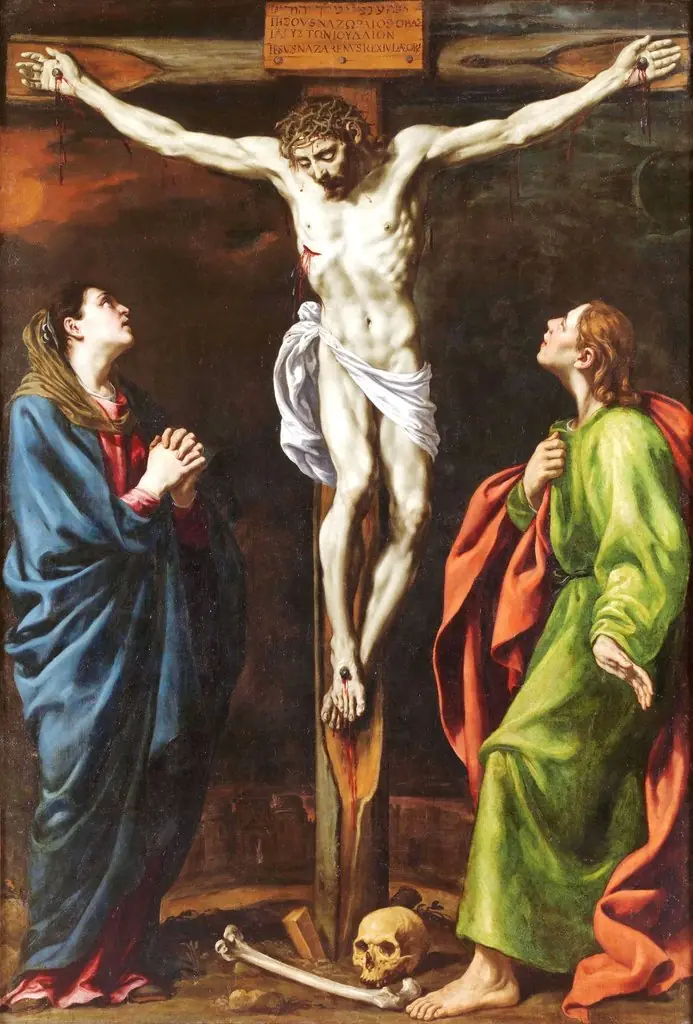 The Crucifixion
 The Crucifixion
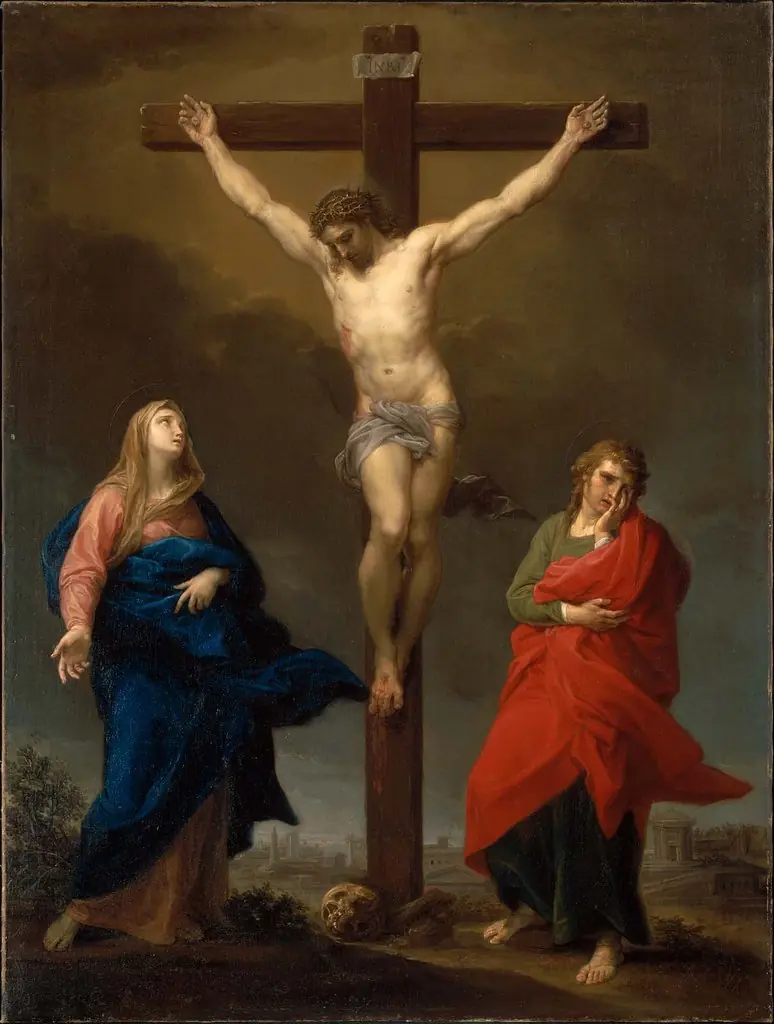 The Crucifixion
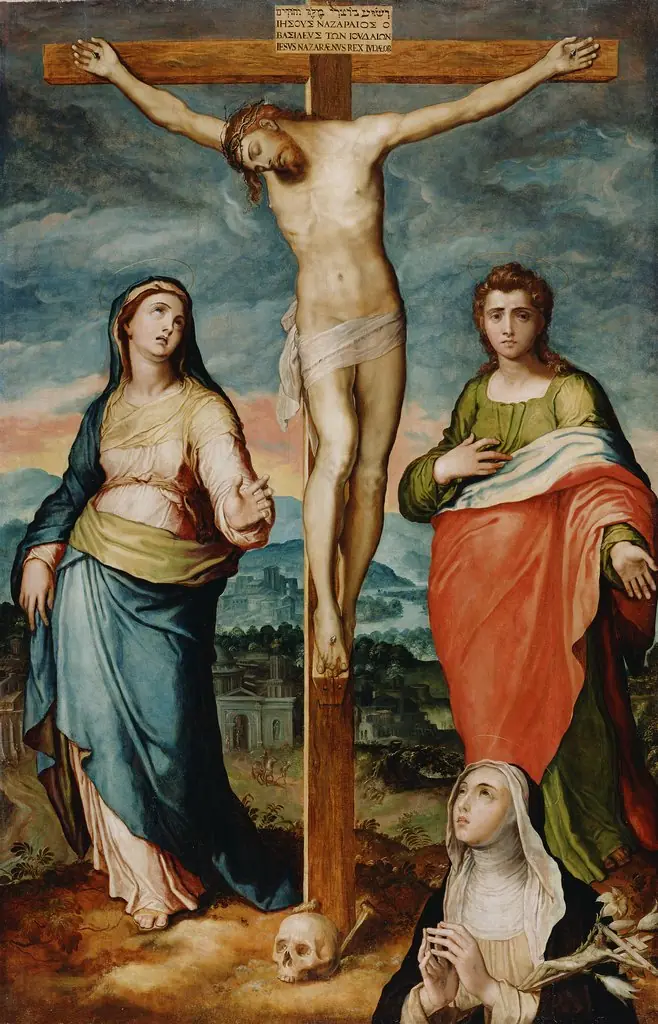 Christ on the Cross with Saints Mary, John the Evangelist and Catherine of Siena
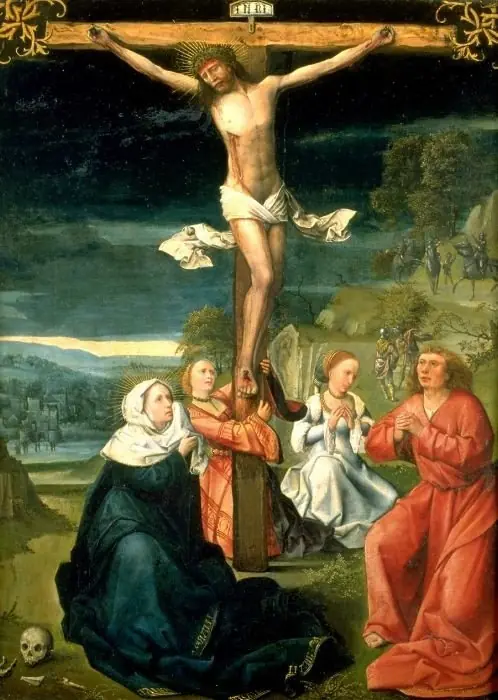 Christus am Kreuz
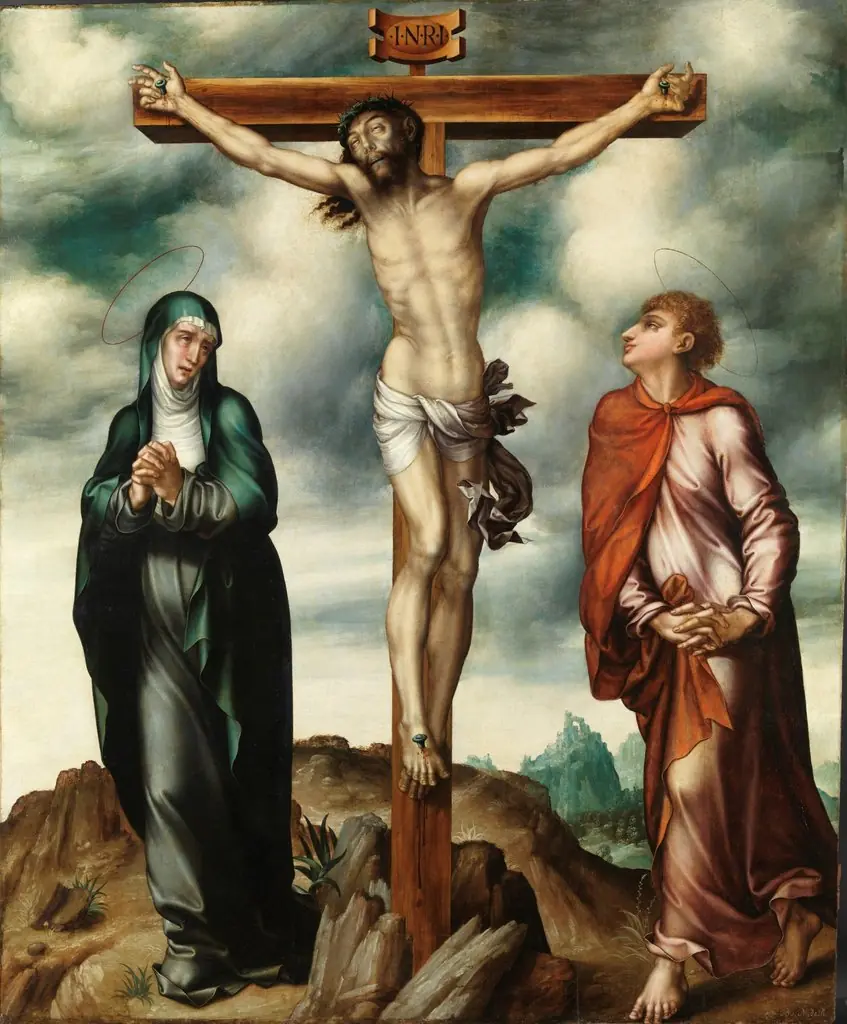 The Crucifixion
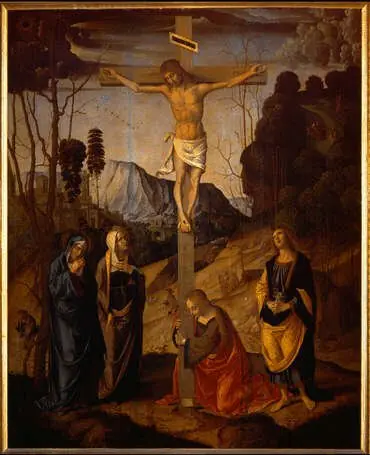 Crucifixion
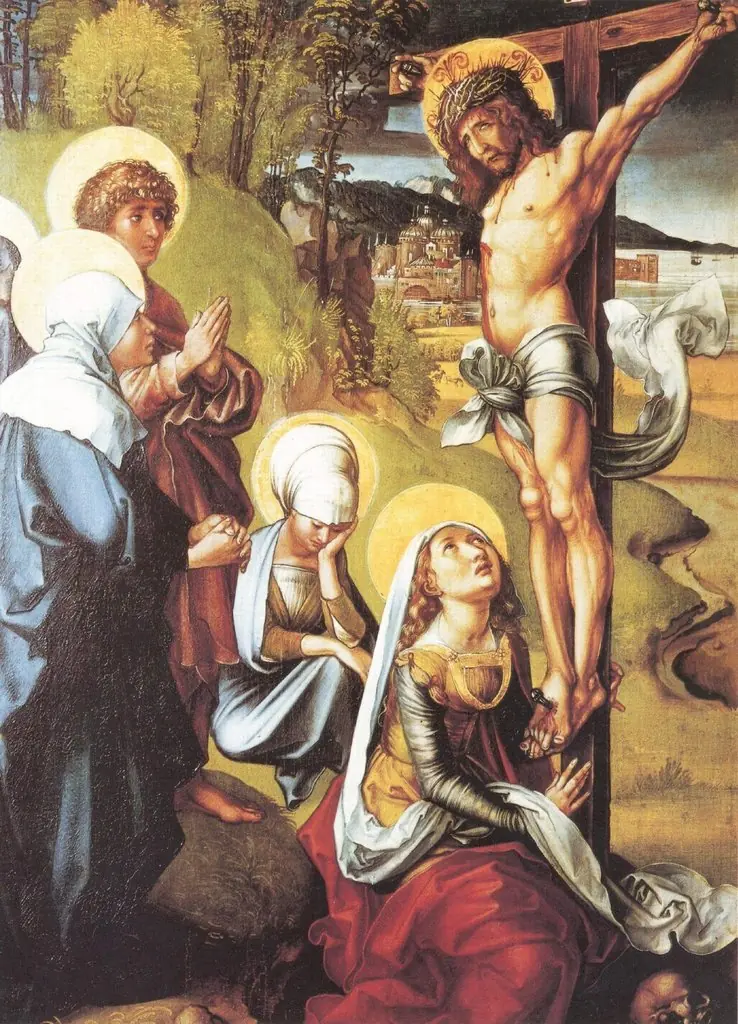 Crucifixion
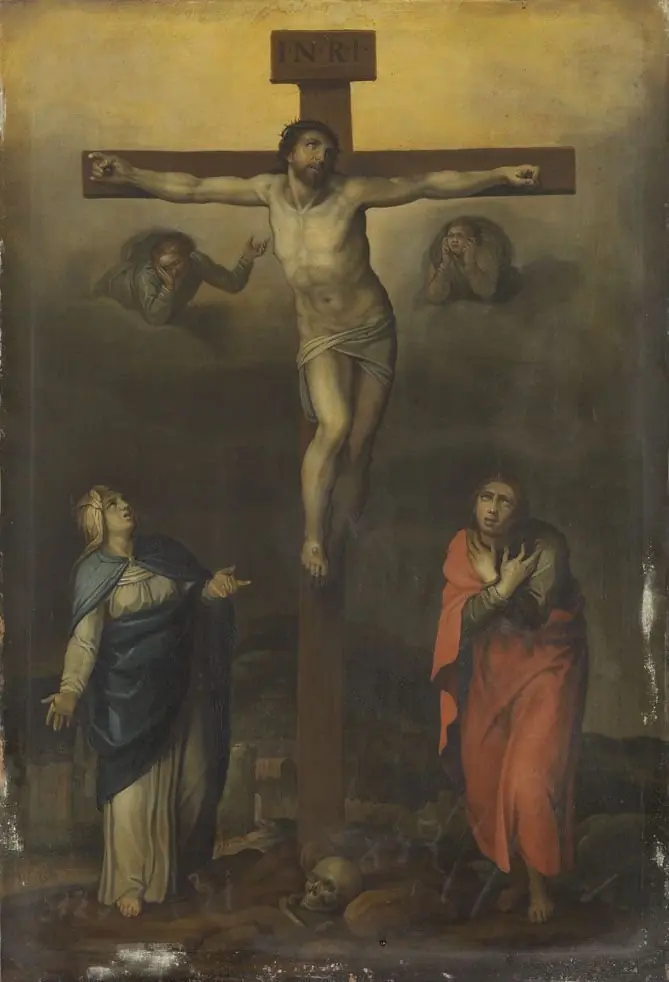 Christus am Kreuz
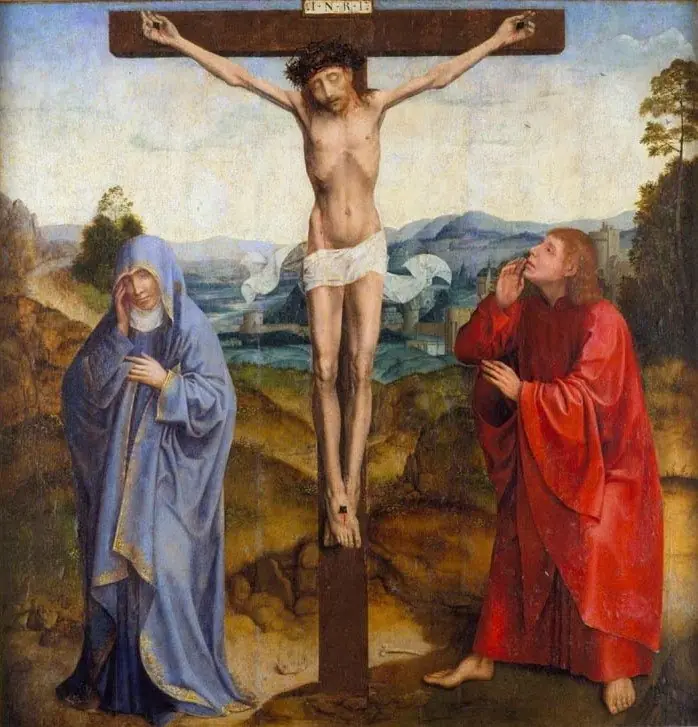 Calvary
 The Crucifixion
![The Crucifixion with the Virgin, Saint John, Saint Jerome, and Saint Mary Magdalene [middle panel], by Pietro Perugino](https://artifactworldgallery.com/img/pietro-perugino--the-crucifixion-with-the-virgin-saint-john-saint-jerome-and--a9b4c312771e3f71-w320.webp) The Crucifixion with the Virgin, Saint John, Saint Jerome, and Saint Mary Magdalene [middle panel]
The Crucifixion with the Virgin, Saint John, Saint Jerome, and Saint Mary Magdalene [middle panel]