Artwork
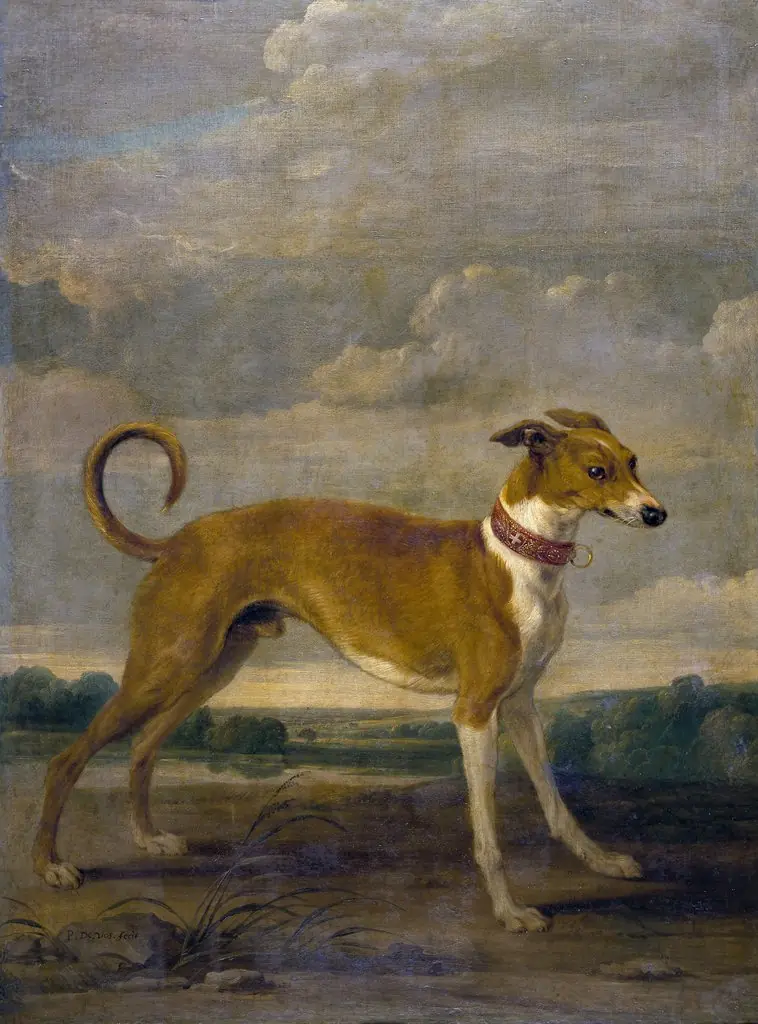
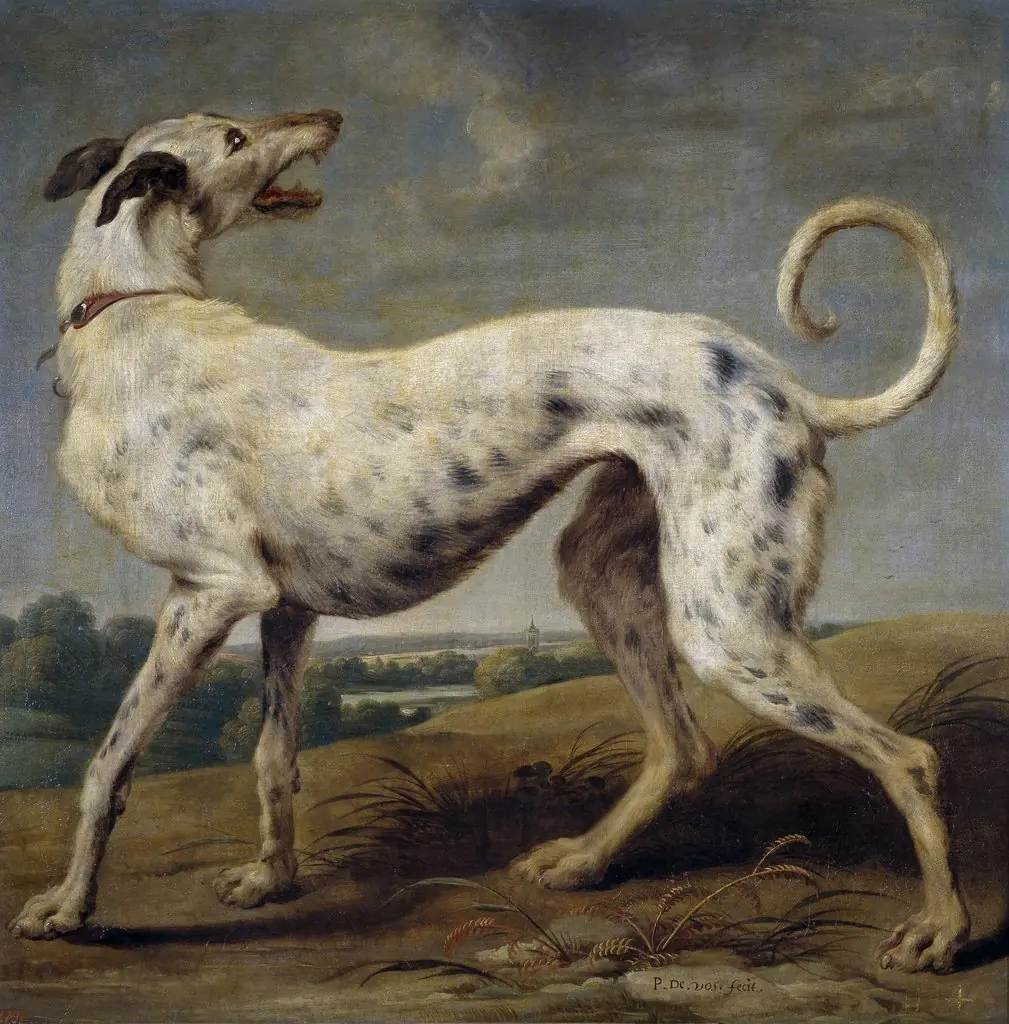
A greyhound on the prowl
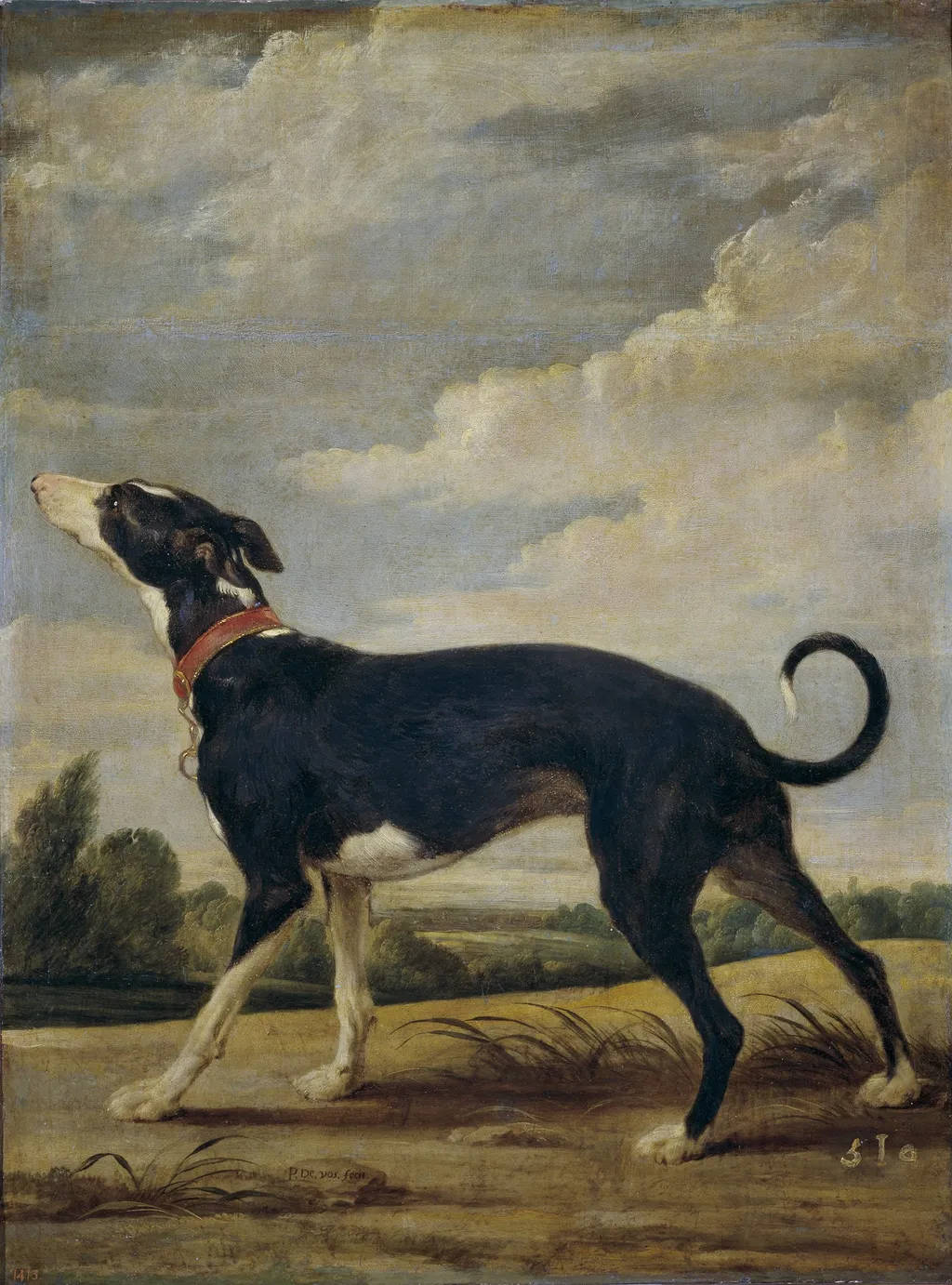
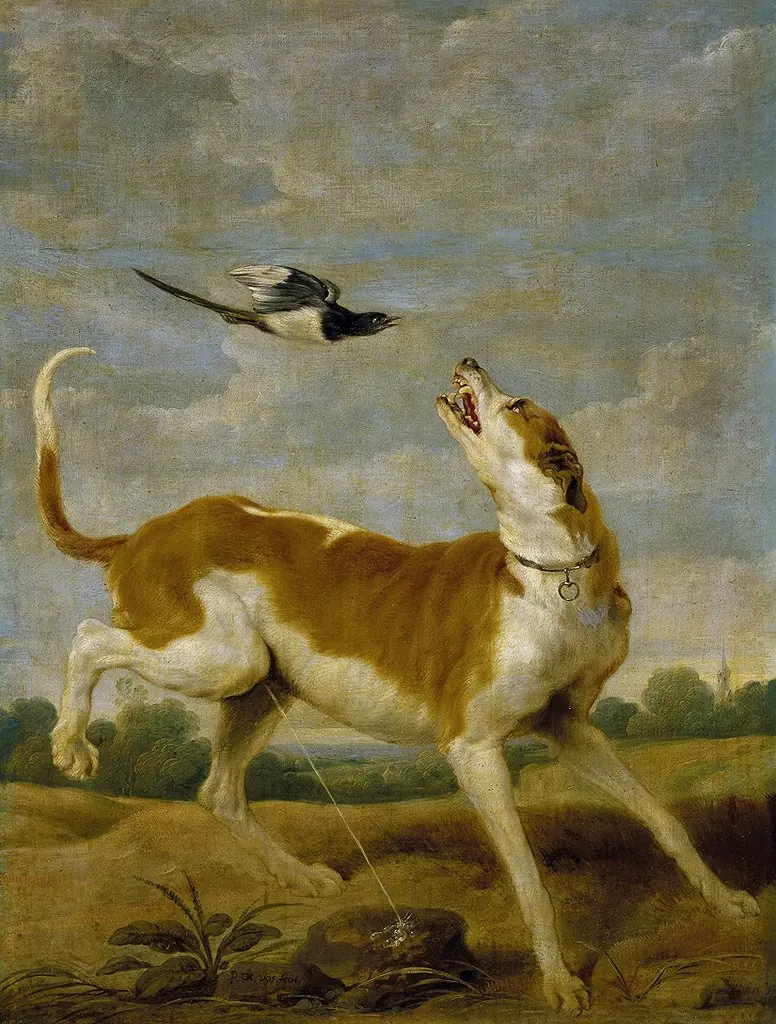
A greyhound on the prowl is an oil painting by the Flemish Baroque painting artist Paul de Vos. It dates from 1636 and is held in the collection of the Museo del Prado.
About this work
Overview
De Vos, a Flemish artist active in Antwerp, specialized in animal subjects and hunting scenes, often commissioned by aristocratic patrons.
Painted in 1636 by Paul de Vos, this oil-on-canvas work depicts a greyhound in a moment of alert stillness. De Vos, a Flemish artist active in Antwerp, specialized in animal subjects and hunting scenes, often commissioned by aristocratic patrons. The painting is part of the Flemish Baroque tradition and resides today in the Museo del Prado, Madrid, where it reflects the period’s fascination with naturalism and elite pastimes.
Subject & Meaning
The greyhound, rendered with precise anatomical detail, stands poised in an open landscape, head raised as if tracking scent or sound. Its black coat with white accents and red collar suggest it is a valued hunting companion, not a wild animal. The stillness of the figure implies anticipation rather than action, evoking the quiet tension of the hunt. The composition emphasizes the dog’s alertness, aligning with contemporary ideals of nobility, discipline, and control over nature.
Technique & Style
De Vos employed oil paint to capture fine textures—the sheen of fur, the softness of the collar, the atmospheric haze of the distant trees. Brushwork is controlled yet expressive, modeling the dog’s form with subtle gradations of light. The cloudy sky and sparse background avoid distraction, focusing attention on the animal’s posture and presence. This restrained composition reflects the Flemish Baroque emphasis on realism and observational accuracy.
History & Provenance
Created during de Vos’s mature period, the painting likely originated in Antwerp’s thriving artistic economy, where specialists like him often worked alongside major figures such as Rubens and van Dyck. It entered the Spanish royal collection in the 17th or early 18th century and was later transferred to the Museo del Prado, where it remains today. Its survival in royal hands suggests it was valued as both artistic and symbolic of aristocratic leisure.
Context
In 17th-century Flanders, hunting was not merely sport but a display of status and mastery over the natural world. Paintings of dogs, hawks, and game were common in elite households, serving as symbols of power and refinement. De Vos’s focus on the greyhound—a breed prized for speed and loyalty—aligns with this cultural context, offering a quiet tribute to the animal’s role in aristocratic life.
Legacy
Though less celebrated than his contemporaries, de Vos contributed significantly to the development of animal painting in Northern Europe. His works, including this one, helped establish a visual language for depicting domesticated hunting dogs with dignity and psychological presence. The painting endures as a quiet example of how specialized genres could convey broader social values through careful observation and technical skill.
Own this work as a print
Artist & collection
Artist
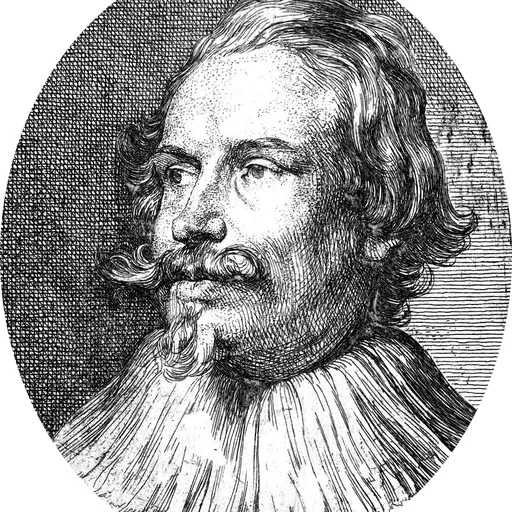
Paul de Vos (1591/92, or 1595 in Hulst – 30 June 1678 in Antwerp) was a Flemish Baroque painter who specialized in mainly in compositions of animals, hunting scenes and still lifes.