Artwork
Portrait of Lady Raleigh (née Elizabeth Throckmorten) (1565-1647)
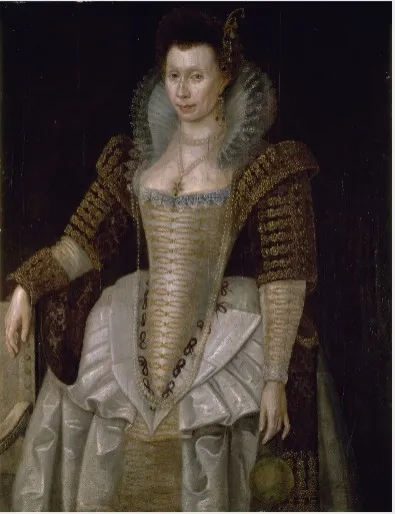
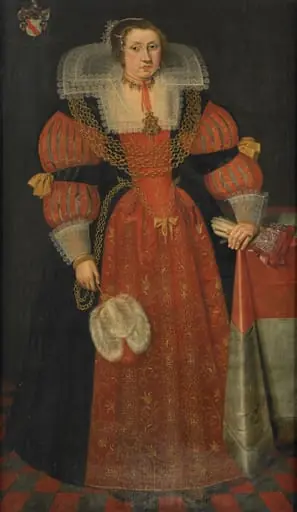
Portrait of Lady Raleigh (née Elizabeth Throckmorten) (1565-1647) is an oil painting by the Early Baroque Italian artist Unknown. It dates from 1603 and is held in the collection of the National Gallery of Ireland. This oil painting portrays Elizabeth Throckmorton, later Lady Raleigh, rendered with careful attention to textile detail and formal bearing.
About this work
Overview
This oil painting portrays Elizabeth Throckmorton, later Lady Raleigh, rendered with careful attention to textile detail and formal bearing.
This oil painting portrays Elizabeth Throckmorton, later Lady Raleigh, rendered with careful attention to textile detail and formal bearing. The composition centers on her poised stance and direct gaze, emphasizing dignity over emotional expression. The use of oil paint allows for subtle gradations in light and texture, particularly in the fabric of her attire, suggesting a work of high craftsmanship from the late 16th or early 17th century.
Subject & Meaning
Elizabeth Throckmorton, wife of Sir Walter Raleigh, is depicted not as a passive figure but as a woman of status and composure. Her neutral expression and steady gaze reflect the expected decorum of aristocratic women in Elizabethan England. The elaborate clothing and jewelry serve as markers of her social position, reinforcing her identity within the courtly elite rather than conveying personal sentiment.
Technique & Style
The artist employed oil paint to achieve fine detail in the lace collar, woven patterns of the jacket, and the sheen of the necklace. Brushwork is precise, with soft transitions in skin tones and crisp definition in fabric folds. The lighting is even, avoiding dramatic contrasts, which aligns with the restrained aesthetic of English portraiture of the period, prioritizing clarity and social representation over theatricality.
History & Provenance
Painted during or shortly after Elizabeth’s marriage to Sir Walter Raleigh in 1591, the portrait likely originated in the courtly circles of Elizabeth I’s reign. It remained within the Raleigh family for generations before entering public collections. Its survival through centuries of political upheaval underscores its significance as a personal and historical artifact of the Tudor-Stuart elite.
Context
In late 16th-century England, portraiture functioned as a tool of social assertion, especially for women connected to powerful men. Elizabeth’s attire—rich fabrics, layered textures, and ornate jewelry—aligns with the fashion of the Tudor court, where dress was a coded language of rank. Her portrait reflects the era’s emphasis on lineage, loyalty, and visible status amid shifting political tides.
Legacy
The portrait endures as a representative example of aristocratic female portraiture in early modern England. It contributes to the visual record of women who navigated power through marriage and courtly presence. While not attributed to a named artist, its technical quality and historical association ensure its place in studies of Tudor and Jacobean visual culture.
Artist & collection

 Domestic Scene
 Giacomo and Cardinal Marco, investing Andrea, Abbot of San Zeno, with his Benefice
 The Nymph of Fontainebleau
 Portrait of a Woman
 Madonna and Child with Saints in the Enclosed Garden
 Venus and Minerva
 Family Group of Four on Sofa
 Wall painting from Room H of the Villa of P. Fannius Synistor at Boscoreale
 Portrait of a Lady
 Portrait of a Lady
 Portrait of a Lady
 Portret van Marie van de Wouwer, echtgenote van Jean Charles della Faille
 Portrait of Anna Fredericx, wife of Jan Roose
 Portrait of a woman
 Elisabeth von Bourbon (1602-1644)
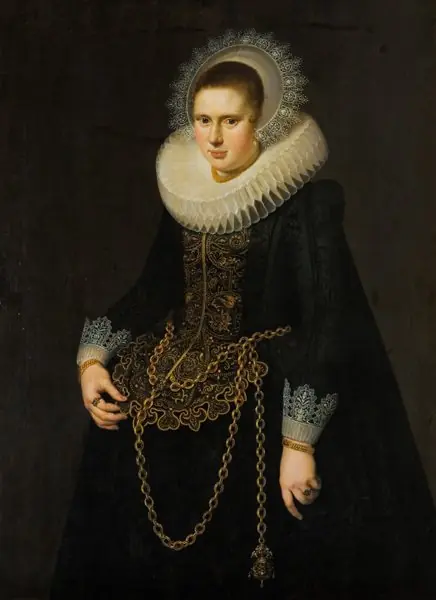 Portrait of a 22-Year-Old Woman
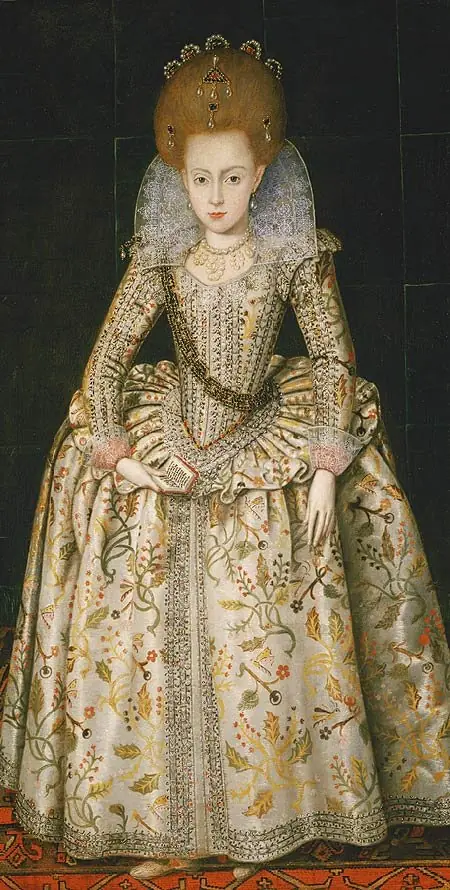 Princess Elizabeth (1596–1662), Later Queen of Bohemia
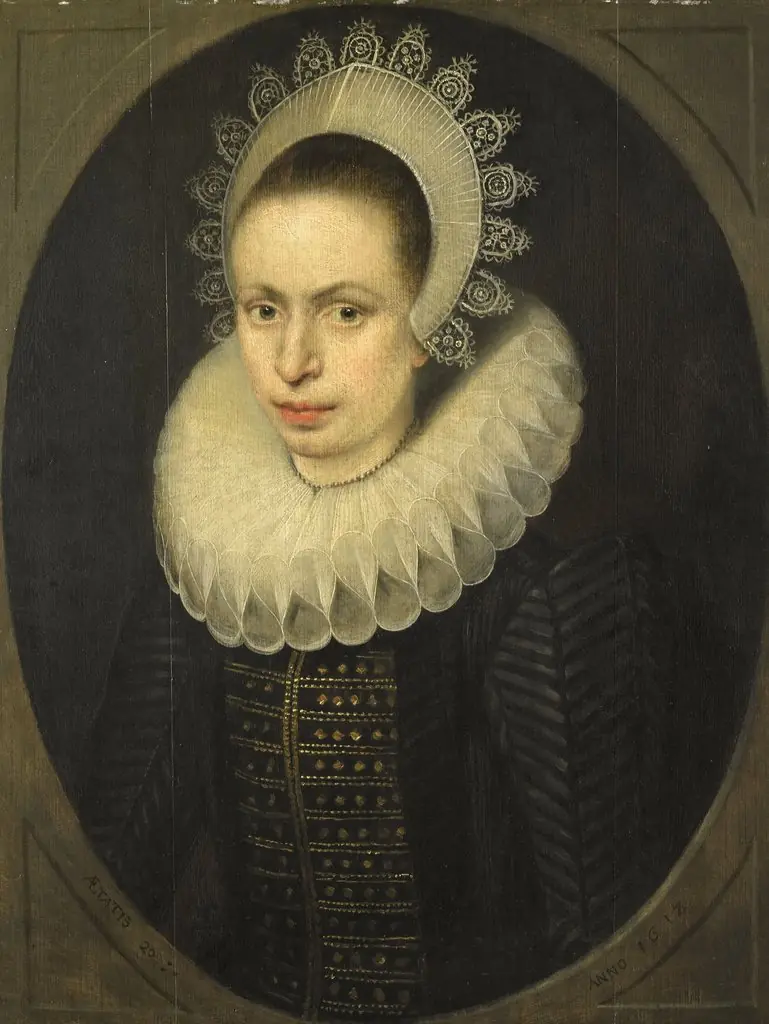 Portrait of Antoinette Walleran (1598-?)
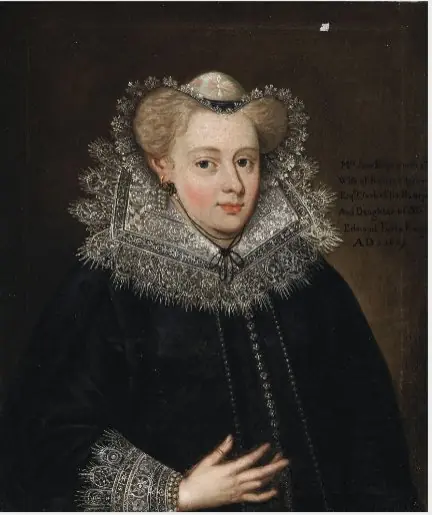 Portrait of Jane Tuite, Wife of Francis Edgeworth
 Untitled