Artwork
Nativity, Annunciatory Angel, Adoration of the Magi, Resurrection, Death of the Virgin, The Annunciate, Saints Peter and Lucy, Virgin Mary, Resurrected Christ, Saints John and Barbara
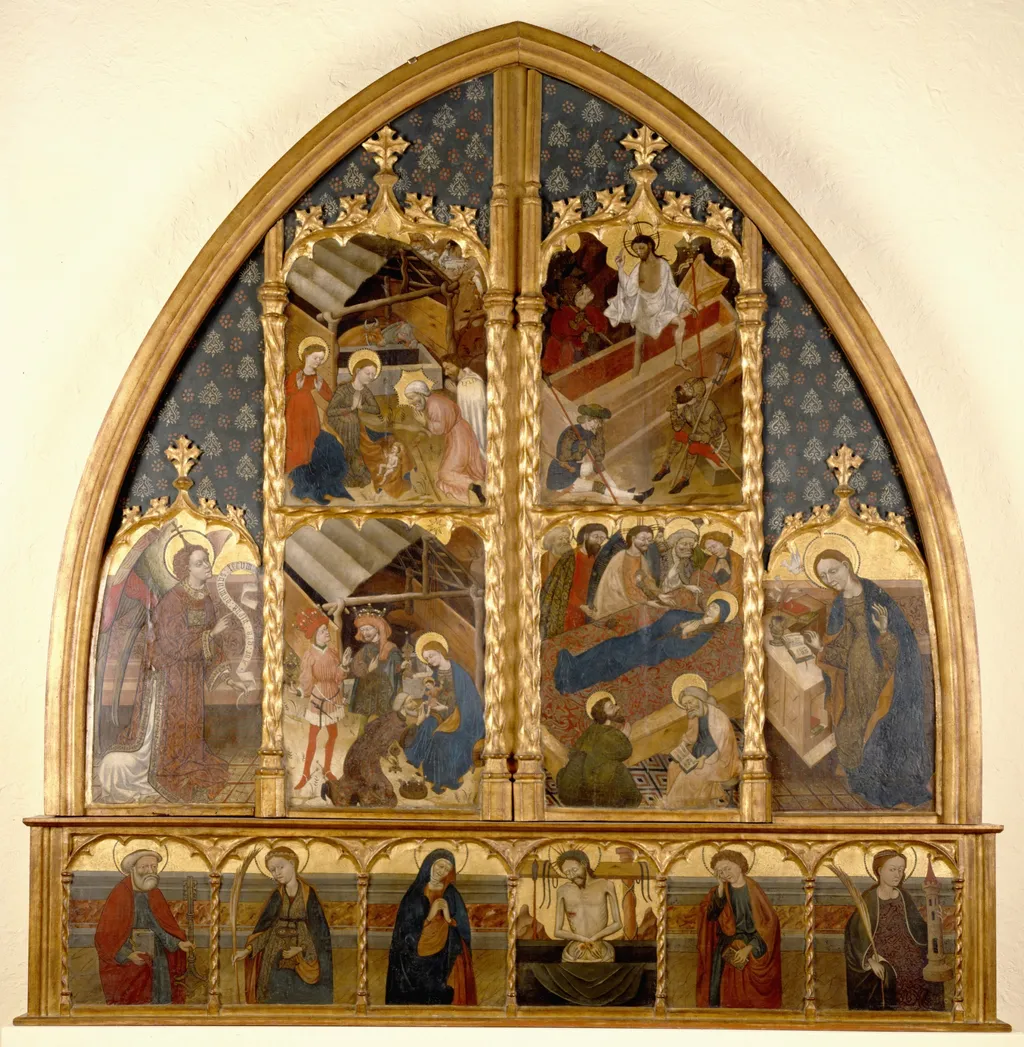
Nativity, Annunciatory Angel, Adoration of the Magi, Resurrection, Death of the Virgin, The Annunciate, Saints Peter and Lucy, Virgin Mary, Resurrected Christ, Saints John and Barbara is an oil painting by the Early Renaissance artist Unknown. It dates from 1450 and is held in the collection of the Detroit Institute of Arts.
About this work
Overview
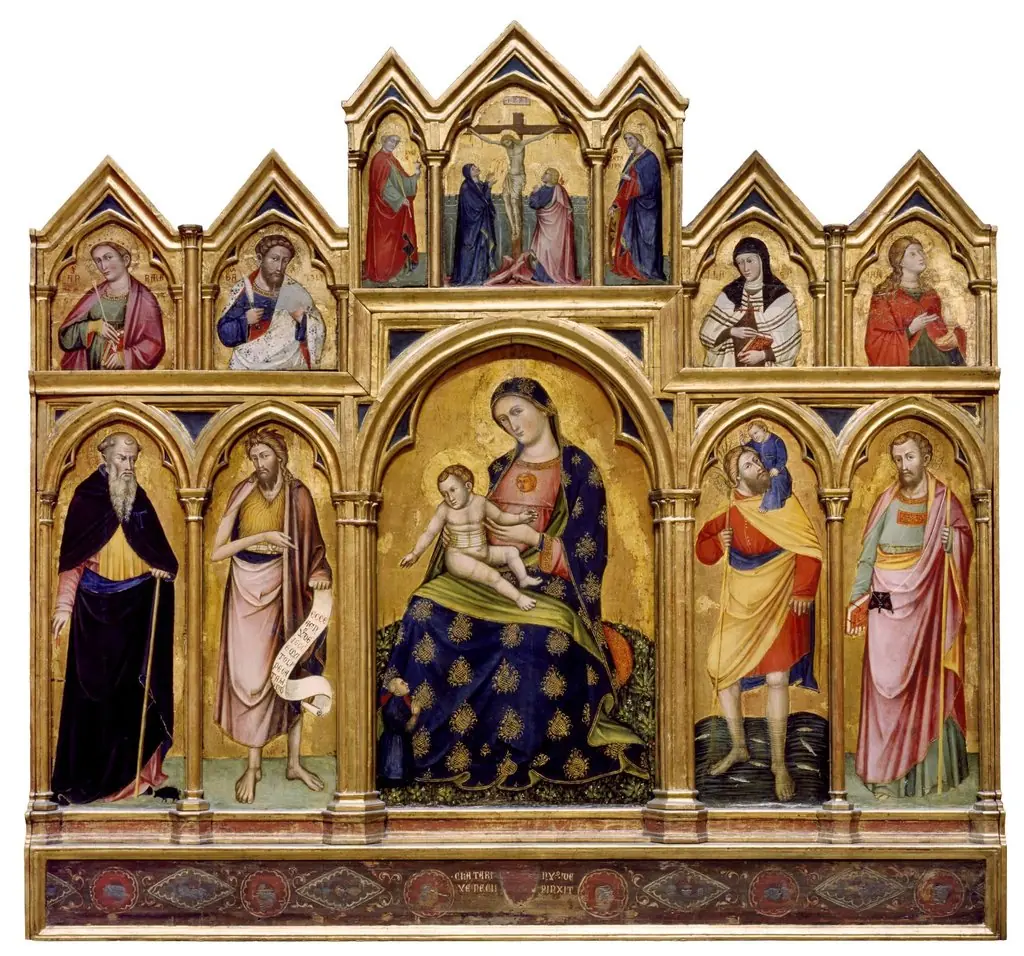
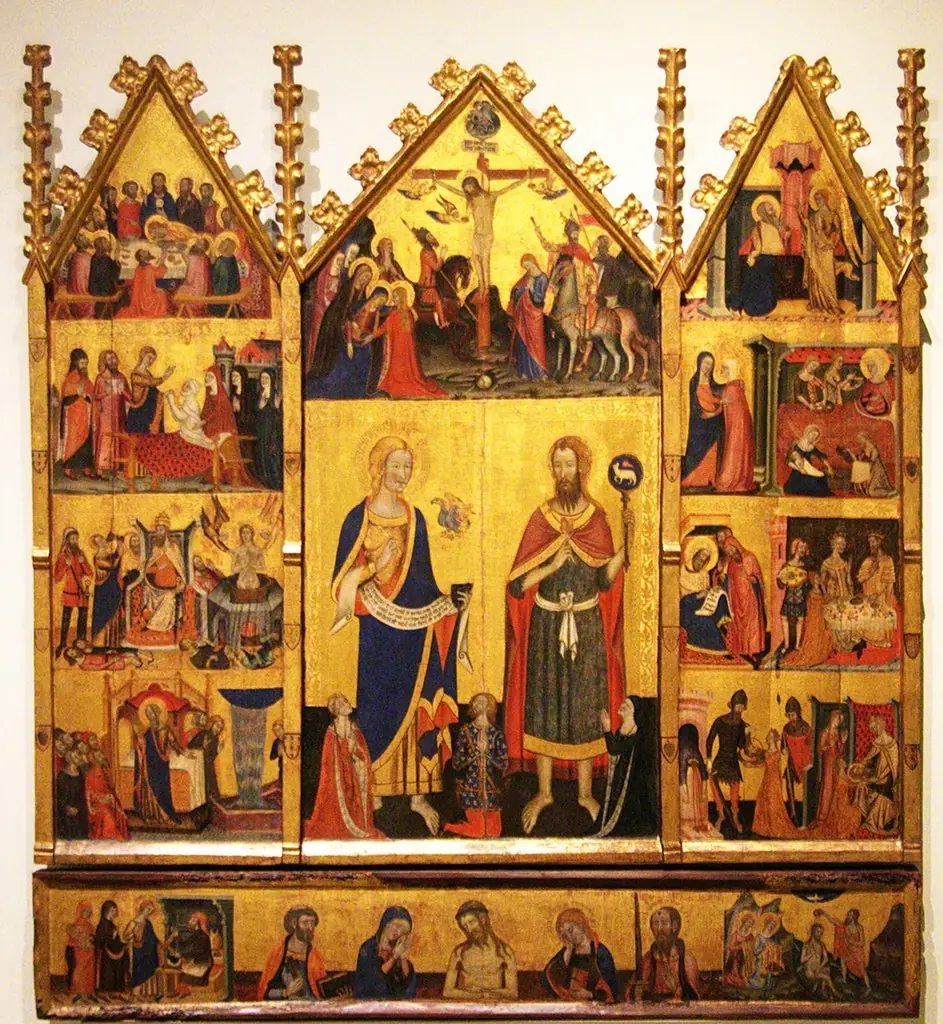
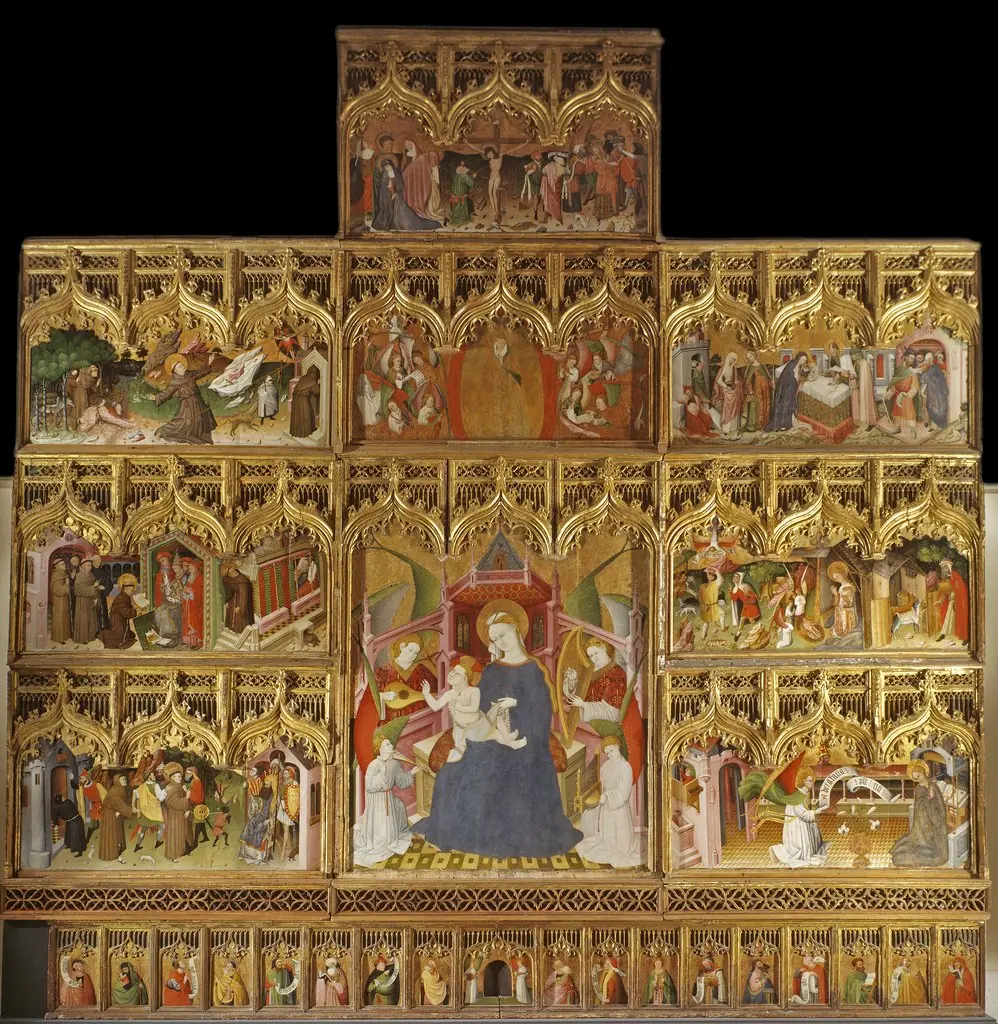
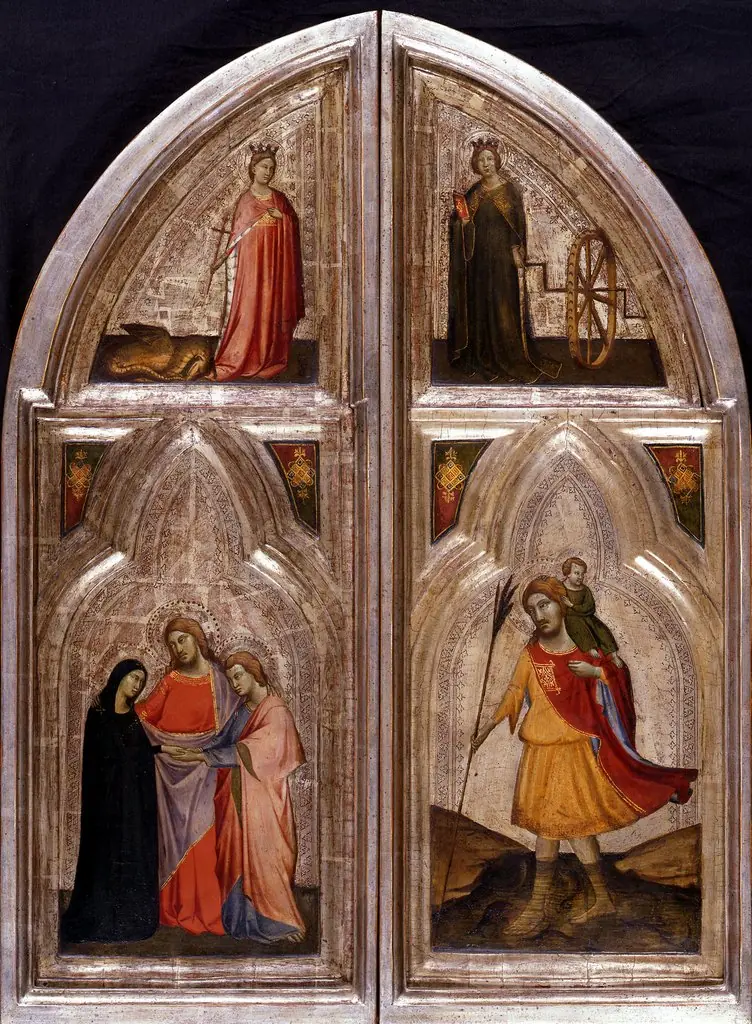
This oil painting presents a series of biblical scenes and saints, including the Nativity, the Annunciation, the Adoration of the Magi, the Resurrection, the Death of the Virgin, and the Annunciate. Figures such as the Virgin Mary, the resurrected Christ, Saints Peter, Lucy, John, and Barbara are depicted within a single composition, linking multiple moments of Christian narrative.
Subject & Meaning
The work juxtaposes key events from the life of Christ and the Virgin Mary, creating a visual meditation on salvation history. By placing the Annunciatory Angel alongside the Magi and the resurrected Christ, the artist emphasizes the continuity between the Incarnation and the Resurrection, while the inclusion of saints underscores intercessory devotion.
Technique & Style
Executed in oil on canvas, the painting employs the medium’s capacity for layered color and subtle modeling to render both intimate figures and larger crowd scenes. The handling of light suggests a chiaroscuro approach, allowing the central holy figures to emerge from a more subdued background.
History & Provenance
Specific details about the painting’s date, creator, and ownership history are not recorded in the available information. The work is identified primarily by its subject matter and medium, indicating it may have served a devotional or liturgical function within a church or private chapel.
Context
The inclusion of multiple episodes from the New Testament reflects a medieval and early Renaissance tradition of polyptych-like narratives consolidated into a single panel. Such compositions were intended to guide viewers through the chronology of salvation, often used for teaching or contemplation.
Artist & collection

 Domestic Scene
 Giacomo and Cardinal Marco, investing Andrea, Abbot of San Zeno, with his Benefice
 The Nymph of Fontainebleau
 Portrait of a Woman
 Madonna and Child with Saints in the Enclosed Garden
 Venus and Minerva
 Family Group of Four on Sofa
 Wall painting from Room H of the Villa of P. Fannius Synistor at Boscoreale