Artwork
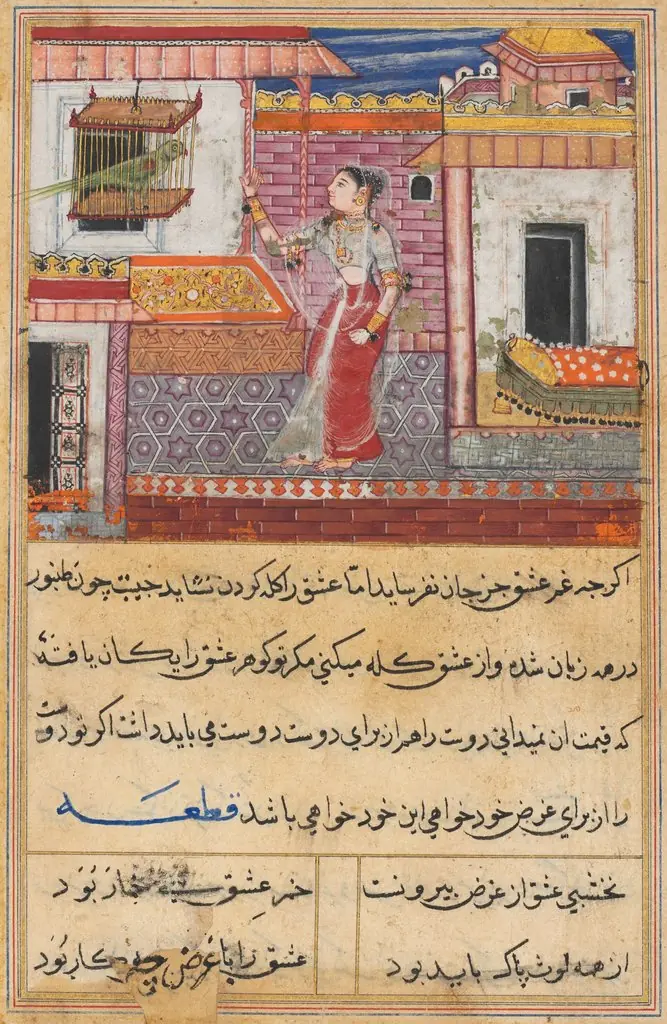
The parrot addresses Khujasta at the beginning of the thirty-first night, from a Tuti-nama (Tales of a Parrot)
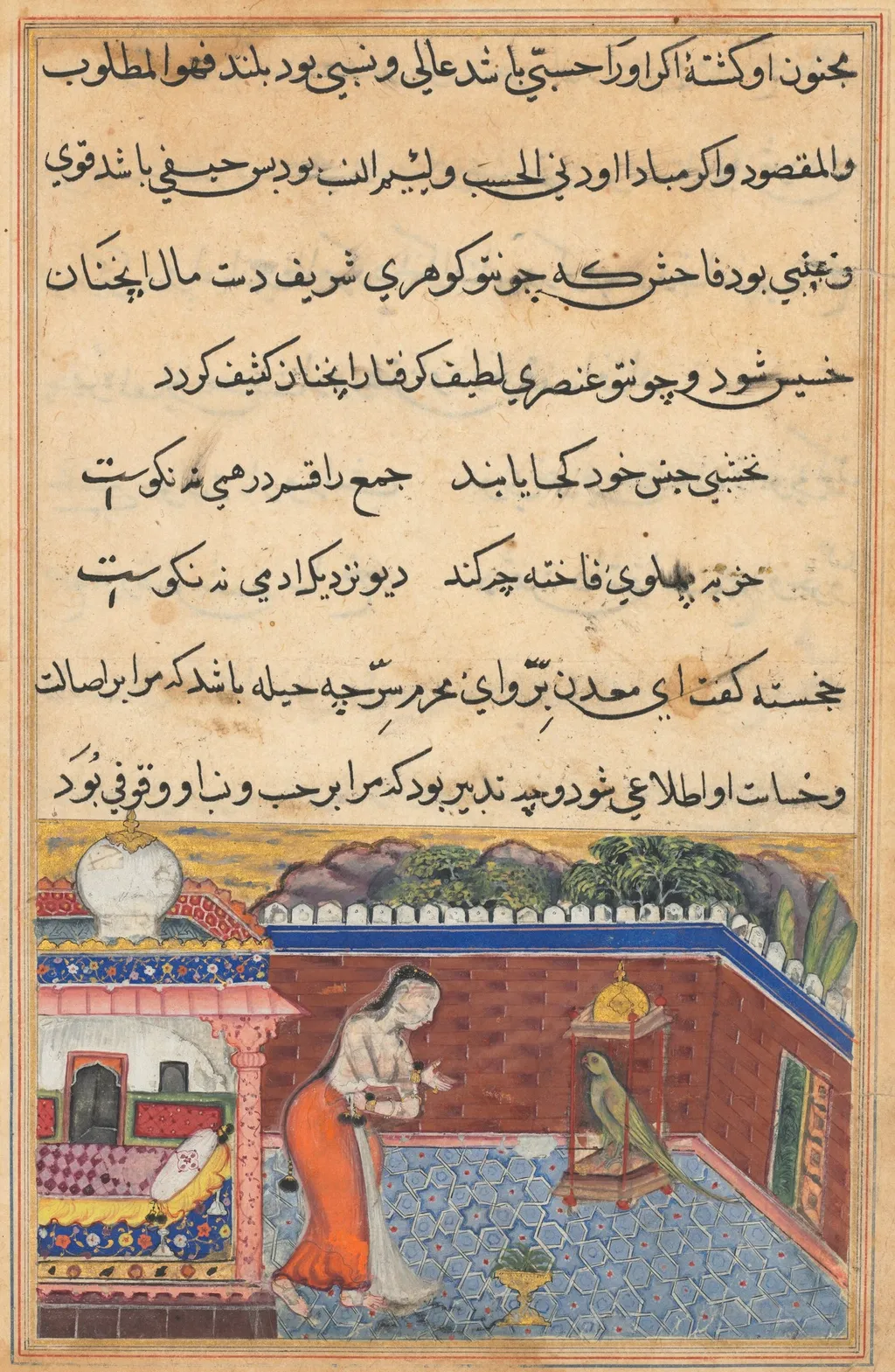
The parrot addresses Khujasta at the beginning of the thirty-first night, from a Tuti-nama (Tales of a Parrot) is an unspecified painting. It dates from 1560 and is held in the collection of the Cleveland Museum of Art. The work depicts a woman dressed in a vivid red garment, kneeling on a patterned floor within an interior space.
About this work
Overview
The work depicts a woman dressed in a vivid red garment, kneeling on a patterned floor within an interior space. A tiled wall frames the scene, and a small balcony opens to a ledge where a green parrot perches. Above the figures, Arabic calligraphy intertwines with a decorative border rendered in gold and red.
Subject & Meaning
The composition illustrates a moment from the Tuti‑nama, a collection of stories in which a parrot narrates tales to a woman named Khujasta. The bird’s poised stance and apparent speech suggest its role as a storyteller, while the woman's attentive posture emphasizes the act of listening and the exchange between human and animal interlocutors.
Technique & Style
Executed with bold chromatic choices, the painting employs saturated reds, deep blues, and luminous golds that enliven the interior. The patterned floor and tiled wall are rendered with precise linear decoration, while the ornamental border combines geometric motifs with flowing Arabic script, reflecting a synthesis of narrative illustration and decorative art.
Context
The piece belongs to a tradition of Persian miniature illustration that visualizes literary texts, particularly the Tuti‑nama, a medieval anthology of fables. Such works often integrate text and image, using vivid coloration and intricate borders to enhance the storytelling function within a manuscript context.
Artist & collection

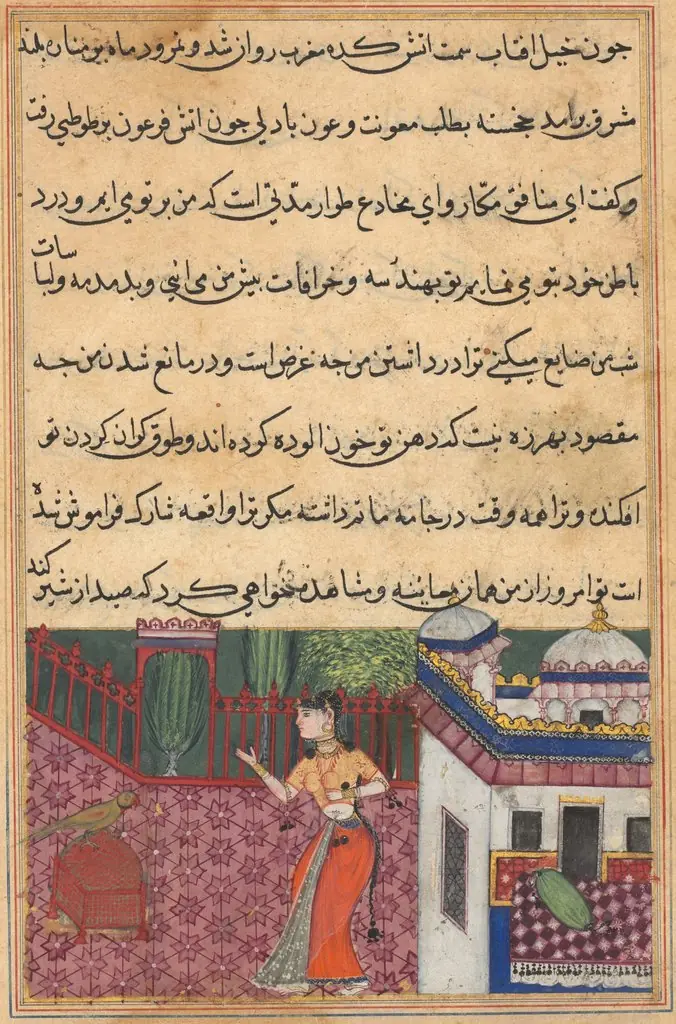 The parrot addresses Khujasta at the beginning of the thirty-third night, from a Tuti-nama (Tales of a Parrot)
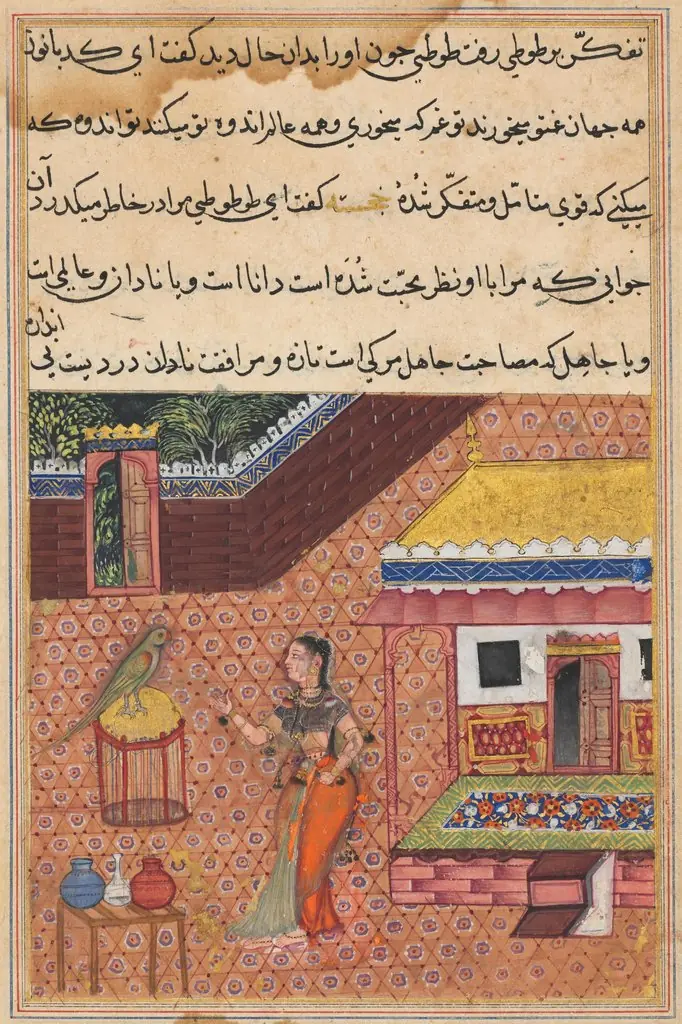 The parrot addresses Khujasta at the beginning of the thirty-fourth night, from a Tuti-nama (Tales of a Parrot)
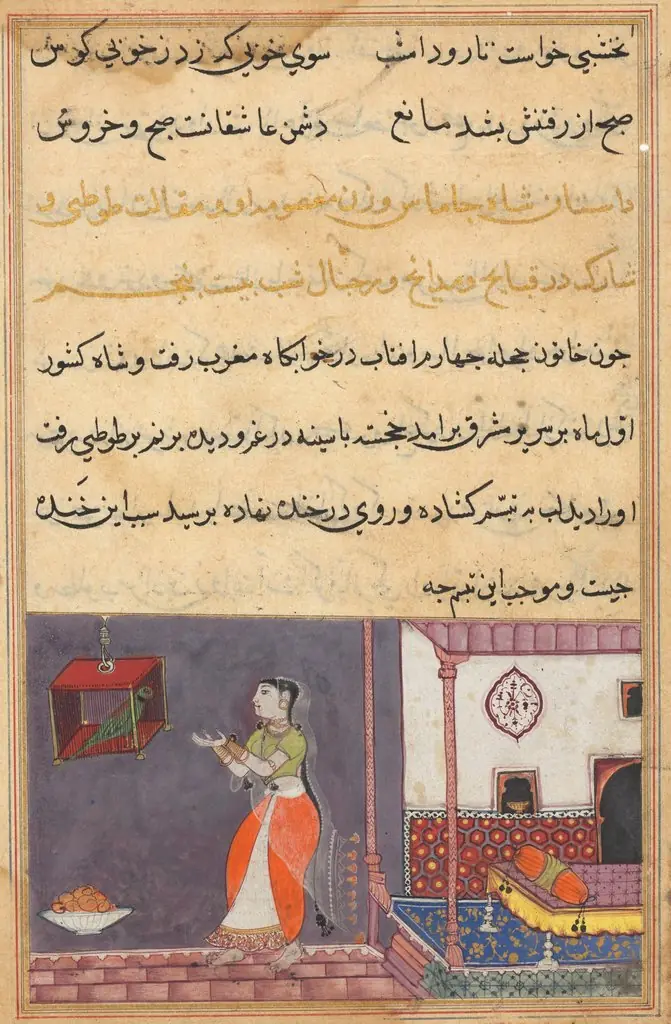 The Parrot Addresses Khujasta at the Beginning of the Twenty-fifth Night, from a Tuti-nama (Tales of a Parrot)
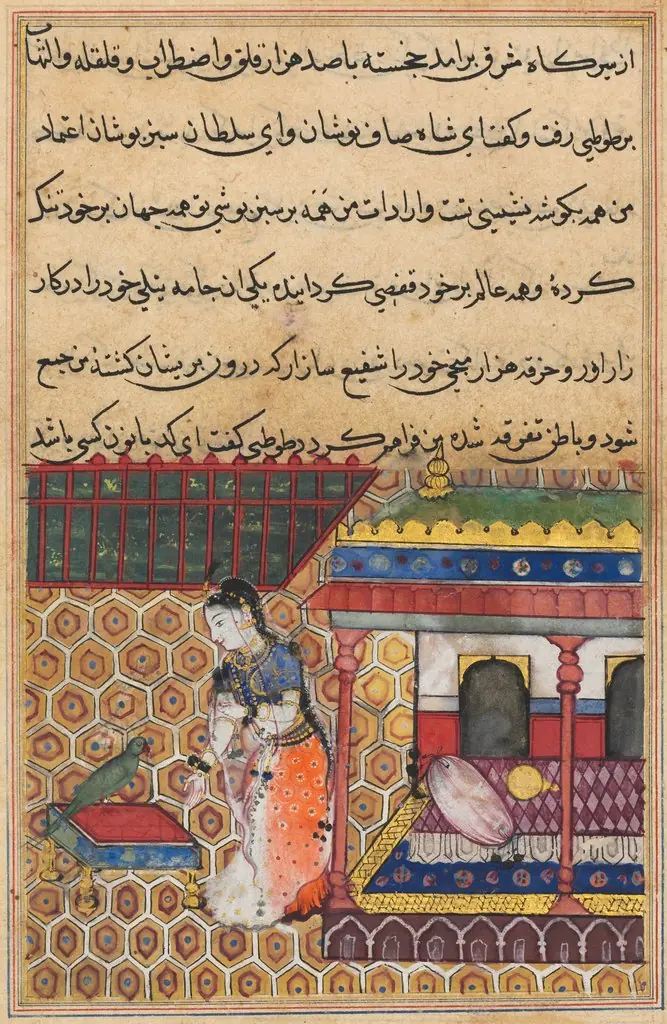 The parrot addresses Khujasta at the beginning of the thirty-eighth night, from a Tuti-nama (Tales of a Parrot)
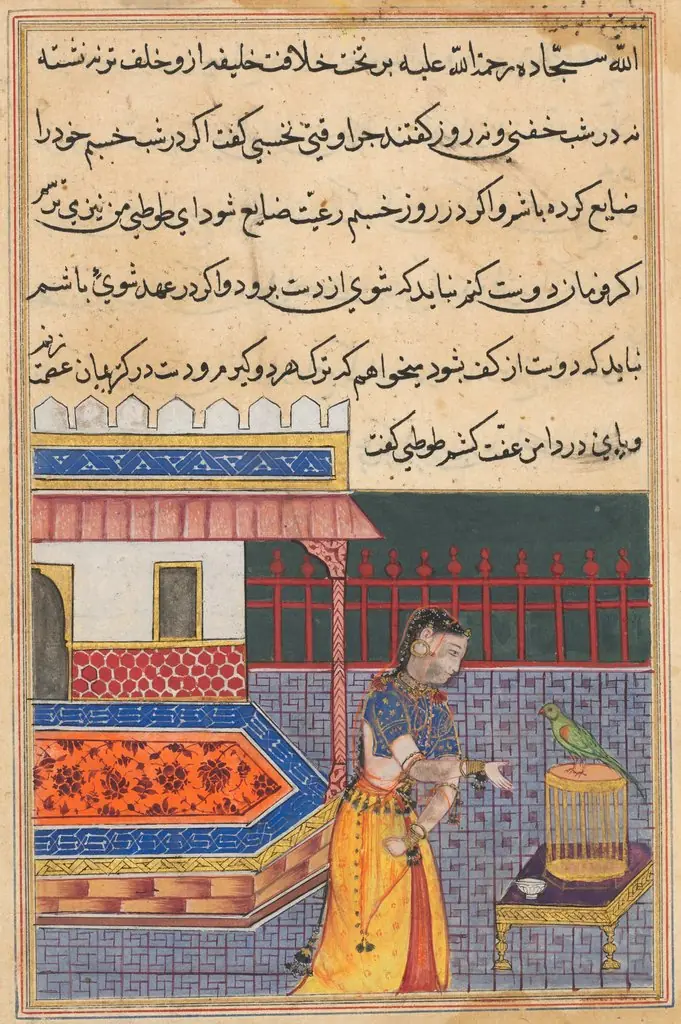 The parrot addresses Khujasta at the beginning of the forty-first night, from a Tuti-nama (Tales of a Parrot): Forty-first Night
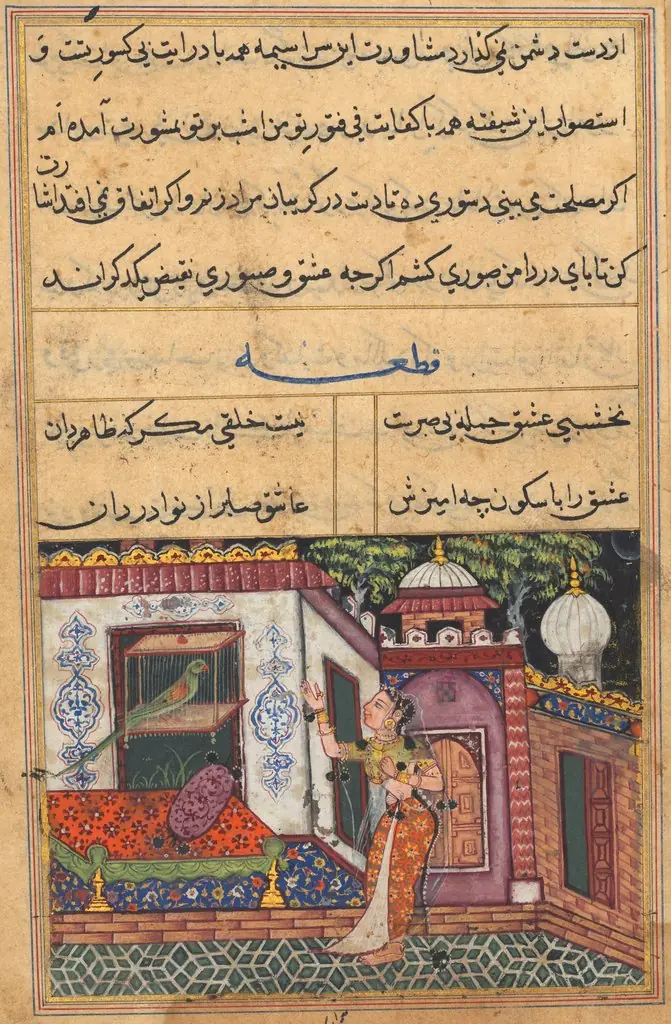 The Parrot Addresses Khujasta at the Beginning of the Eleventh Night, from a Tuti-nama (Tales of a Parrot)
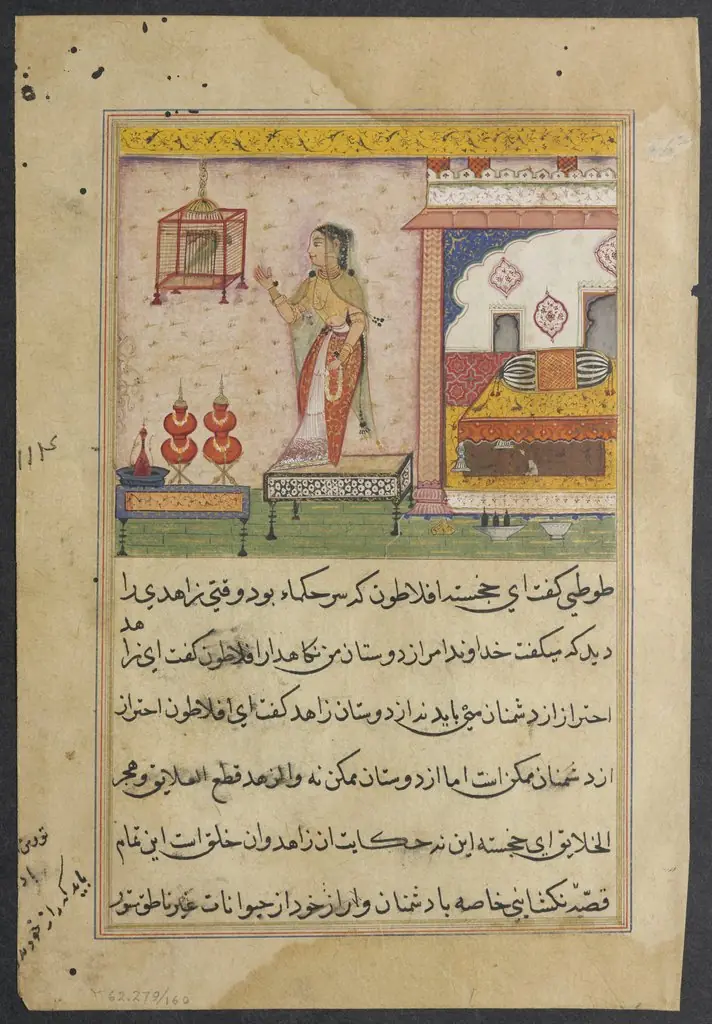 The Parrot Addresses Khujasta at the Beginning of the Twenty-third Night, from a Tuti-nama (Tales of a Parrot)
 The Parrot Addresses Khujasta at the Beginning of the Thirteenth Night, from a Tuti-nama (Tales of a Parrot)