Artwork
The Parrot Addresses Khujasta at the Beginning of the Eleventh Night, from a Tuti-nama (Tales of a Parrot)
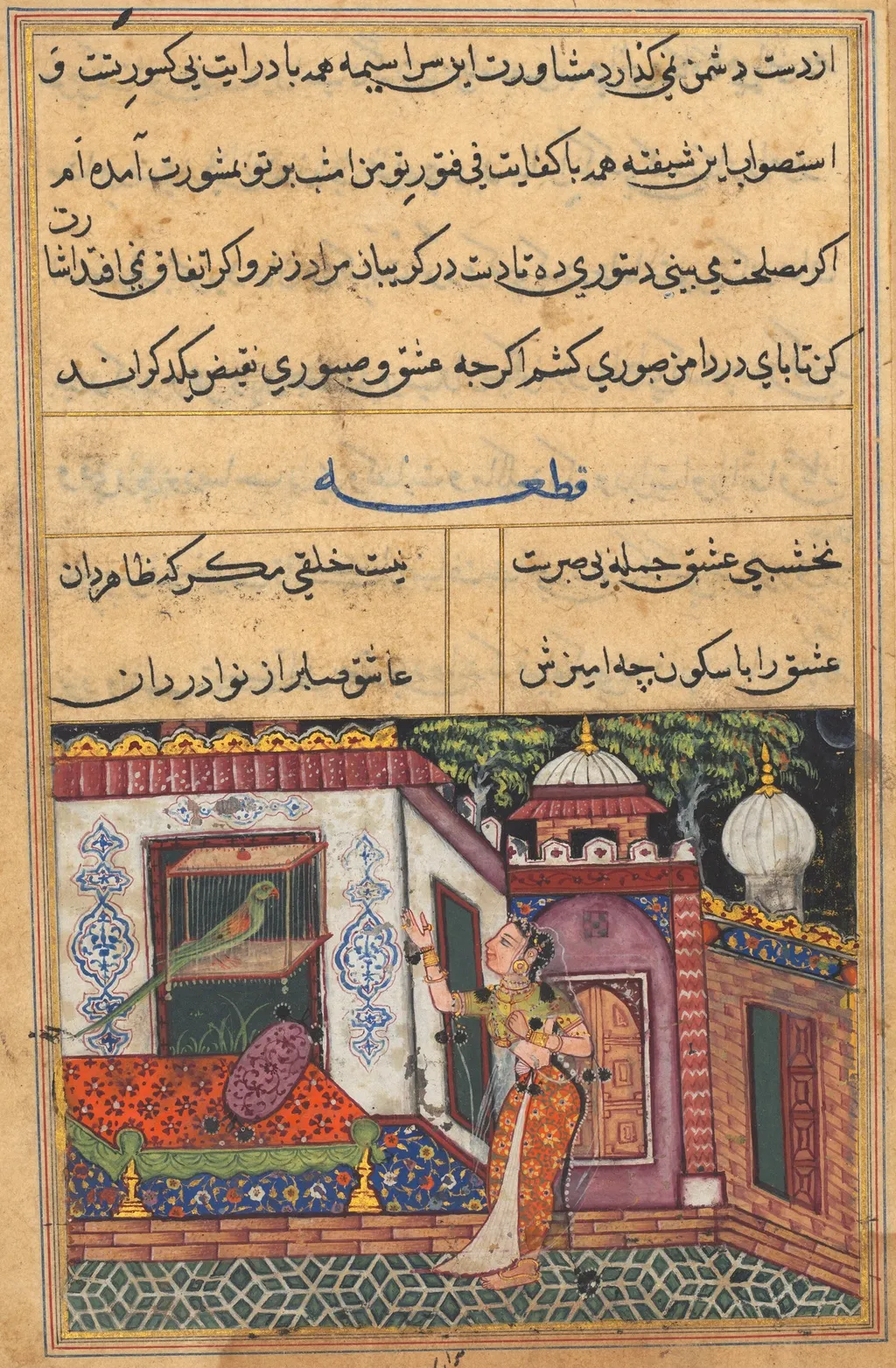
The Parrot Addresses Khujasta at the Beginning of the Eleventh Night, from a Tuti-nama (Tales of a Parrot) is an unspecified painting. It dates from 1560 and is held in the collection of the Cleveland Museum of Art. The work depicts a richly dressed woman standing beside an elaborately decorated structure.
About this work
Overview
The work depicts a richly dressed woman standing beside an elaborately decorated structure. She holds a fan and gazes at a caged green parrot perched on a red and gold couch adorned with plush pillows. Beyond the interior, a small pavilion with domed roofs and a solitary tree is visible in the landscape.
Subject & Meaning
The scene illustrates a moment from the narrative "The Parrot Addresses Khujasta at the Beginning of the Eleventh Night," part of a Tuti-nama, or "Tales of a Parrot." The parrot, central to the story, is presented as a speaking figure, while the woman's attentive posture suggests a dialogue or revelation within the tale.
Technique & Style
The painting employs vivid, patterned coloration—prominent reds, golds, and blues—to emphasize the opulence of the setting. Decorative motifs on the cage and the woman's garments are rendered in fine detail, while the architectural elements feature intricate arabesques that reflect a stylized, narrative-driven aesthetic.
History & Provenance
The piece is part of the Cleveland Museum of Art's collection, where it is displayed alongside other works that explore similar narrative and decorative traditions. Its acquisition details and earlier ownership remain documented within the museum's records.
Artist & collection

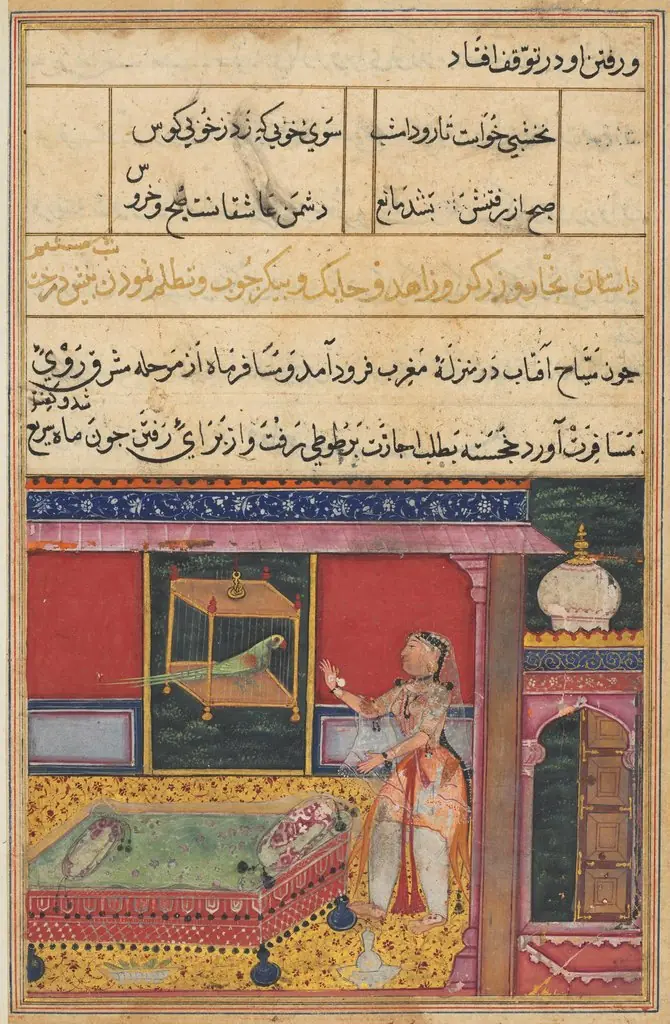 The Parrot Addresses Khujasta at the Beginning of the Sixth Night, from a Tuti-nama (Tales of a Parrot)
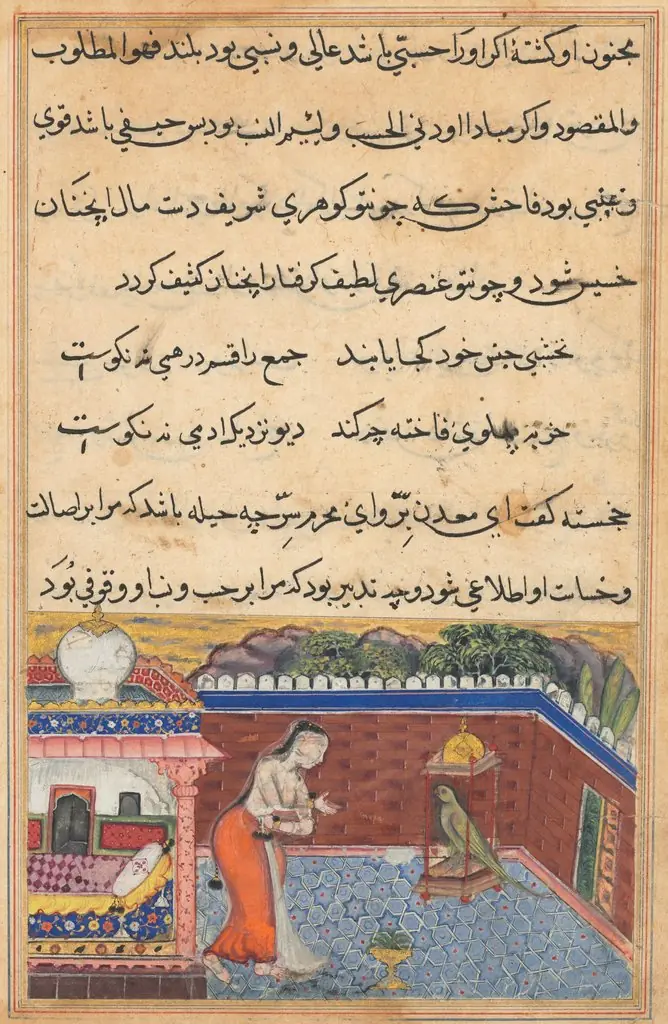 The parrot addresses Khujasta at the beginning of the thirty-first night, from a Tuti-nama (Tales of a Parrot)
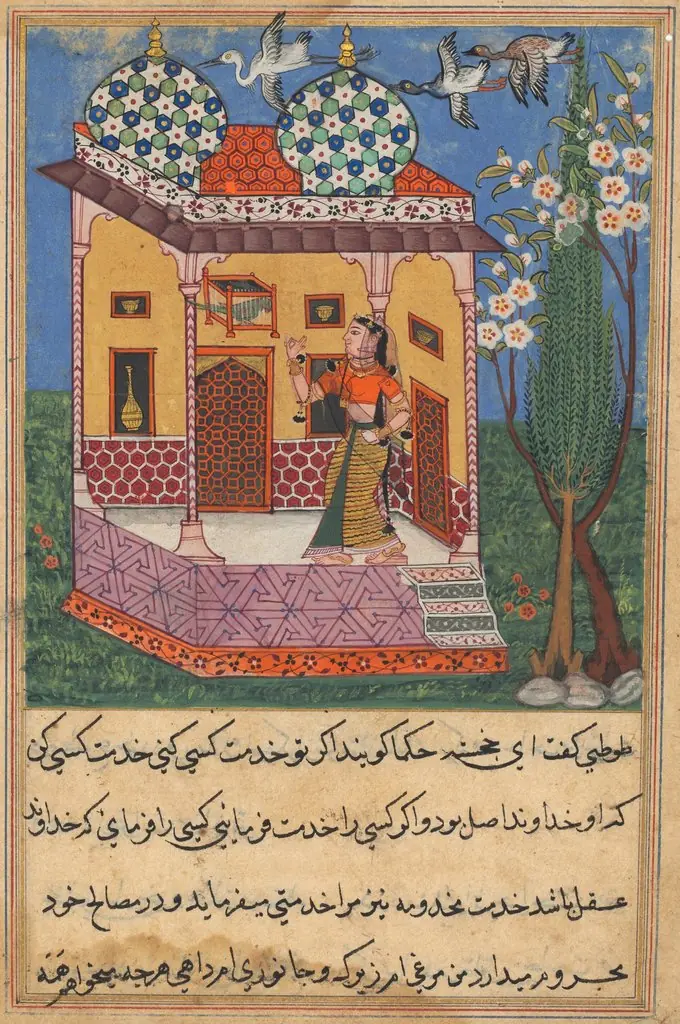 The Parrot Addresses Khujasta at the Beginning of the Twenty-sixth Night, from a Tuti-nama (Tales of a Parrot)
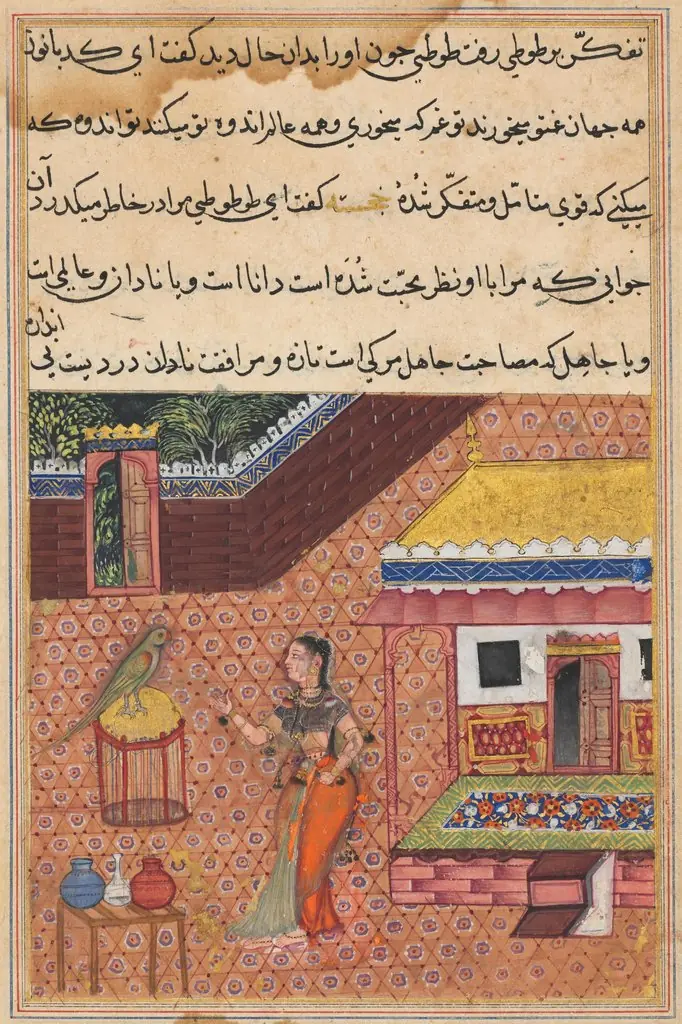 The parrot addresses Khujasta at the beginning of the thirty-fourth night, from a Tuti-nama (Tales of a Parrot)
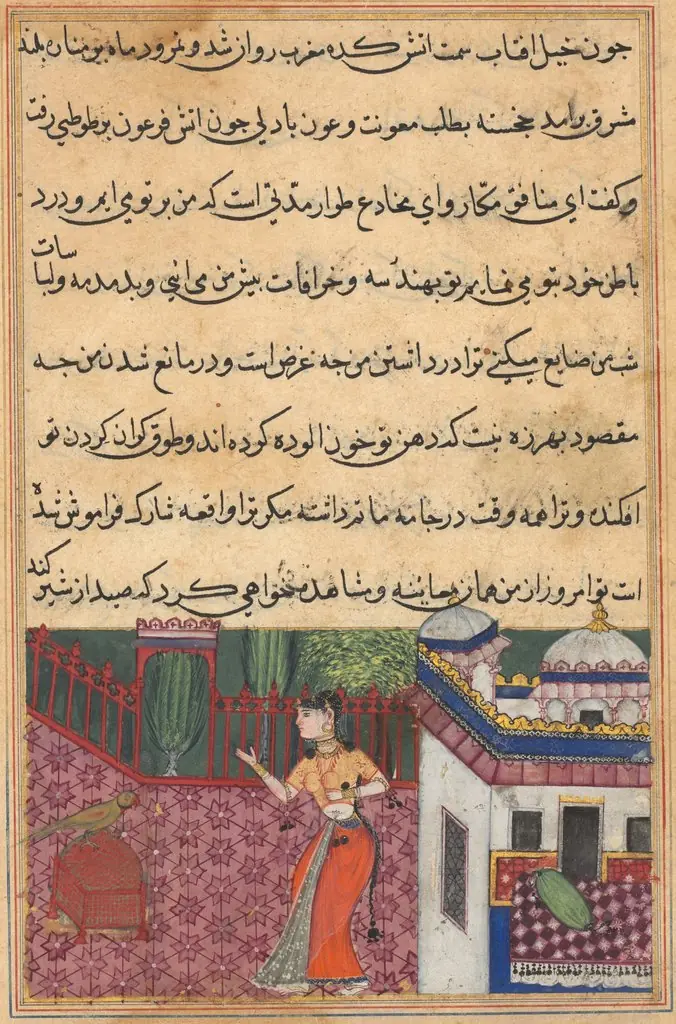 The parrot addresses Khujasta at the beginning of the thirty-third night, from a Tuti-nama (Tales of a Parrot)
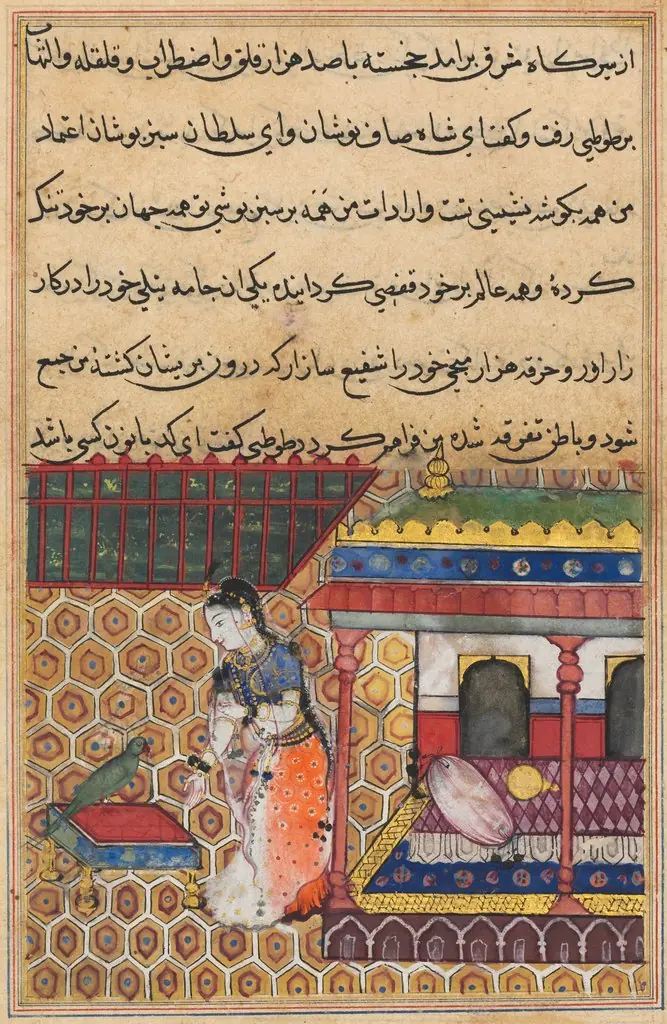 The parrot addresses Khujasta at the beginning of the thirty-eighth night, from a Tuti-nama (Tales of a Parrot)
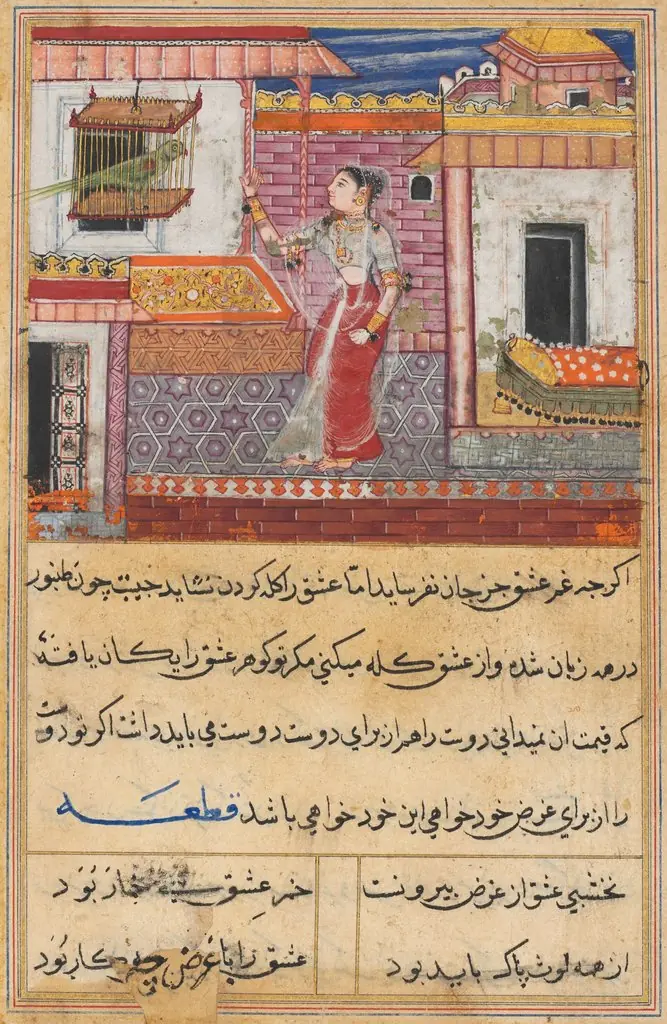 The Parrot Addresses Khujasta at the Beginning of the Thirteenth Night, from a Tuti-nama (Tales of a Parrot)
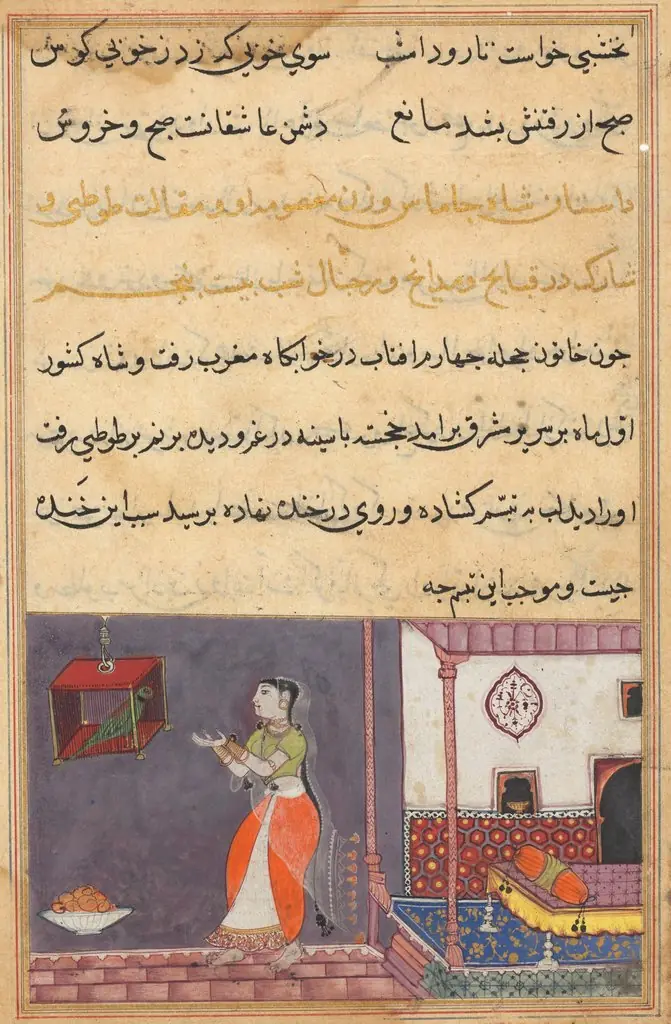 The Parrot Addresses Khujasta at the Beginning of the Twenty-fifth Night, from a Tuti-nama (Tales of a Parrot)
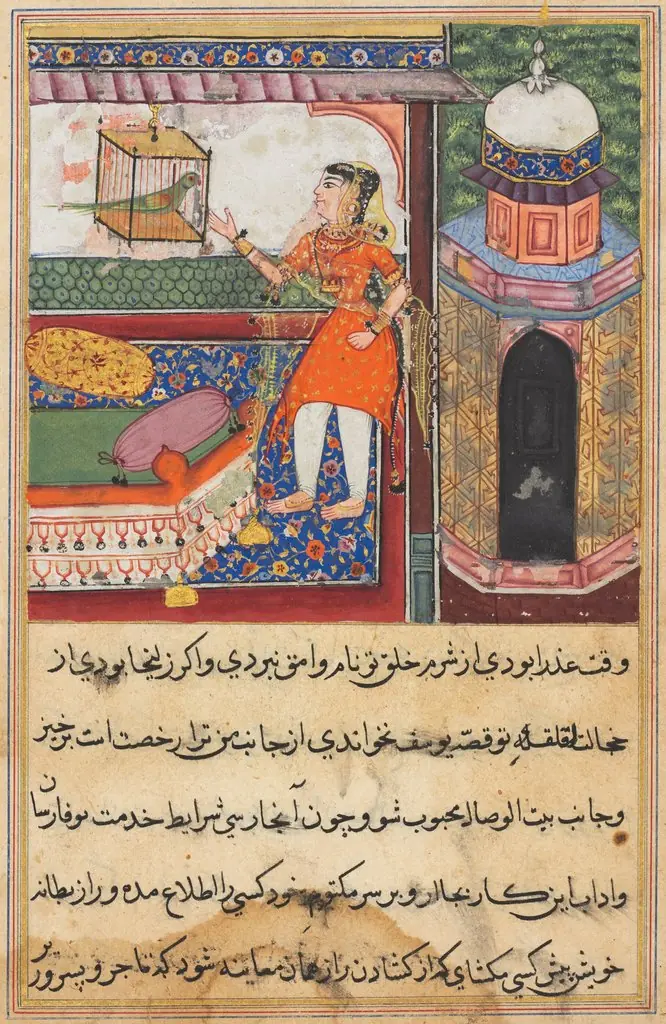 The Parrot Addresses Khujasta at the Beginning of the Tenth Night, from a Tuti-nama (Tales of a Parrot)