Artwork
Portrait of Harriet Clark Ferrell
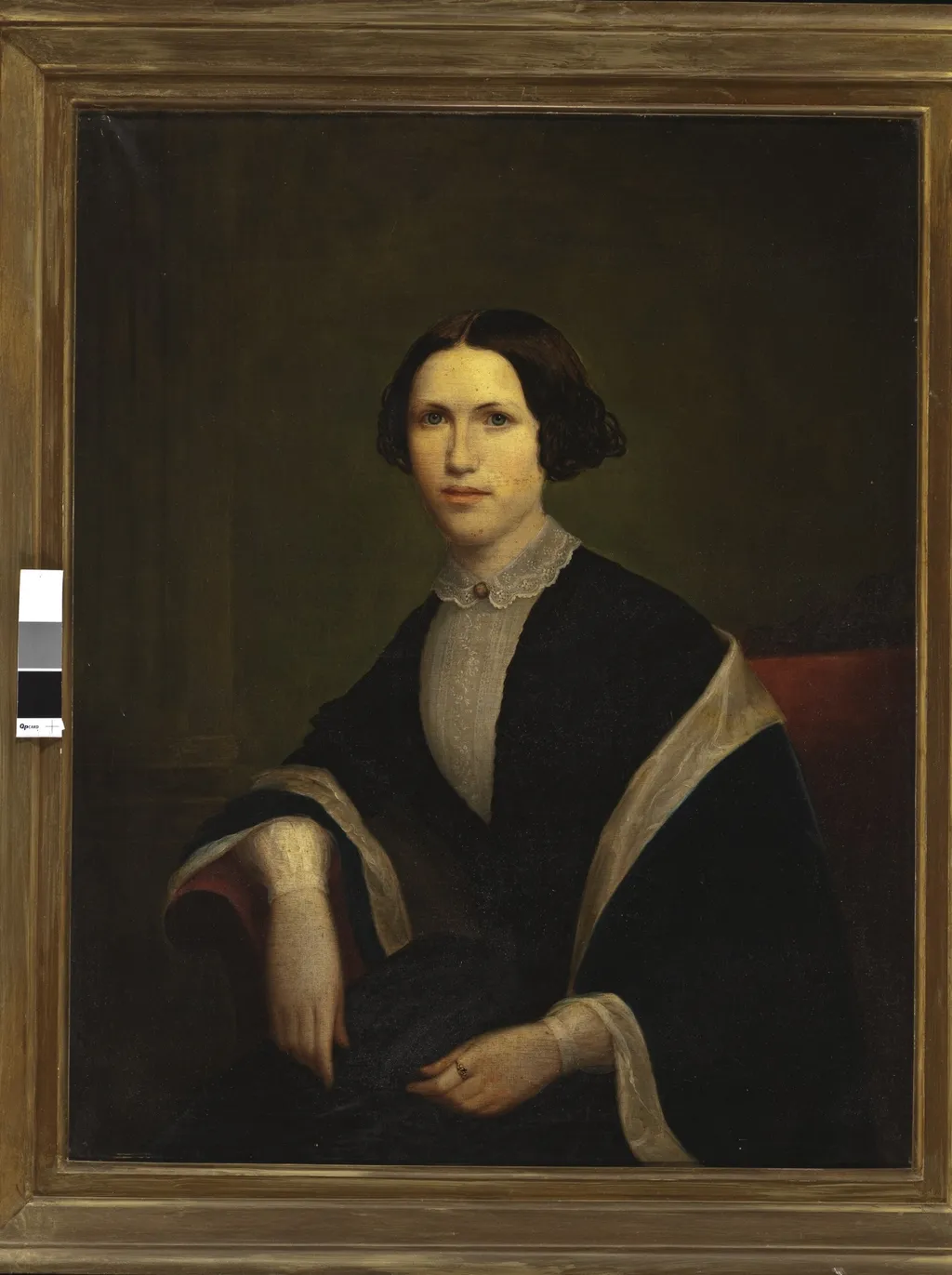
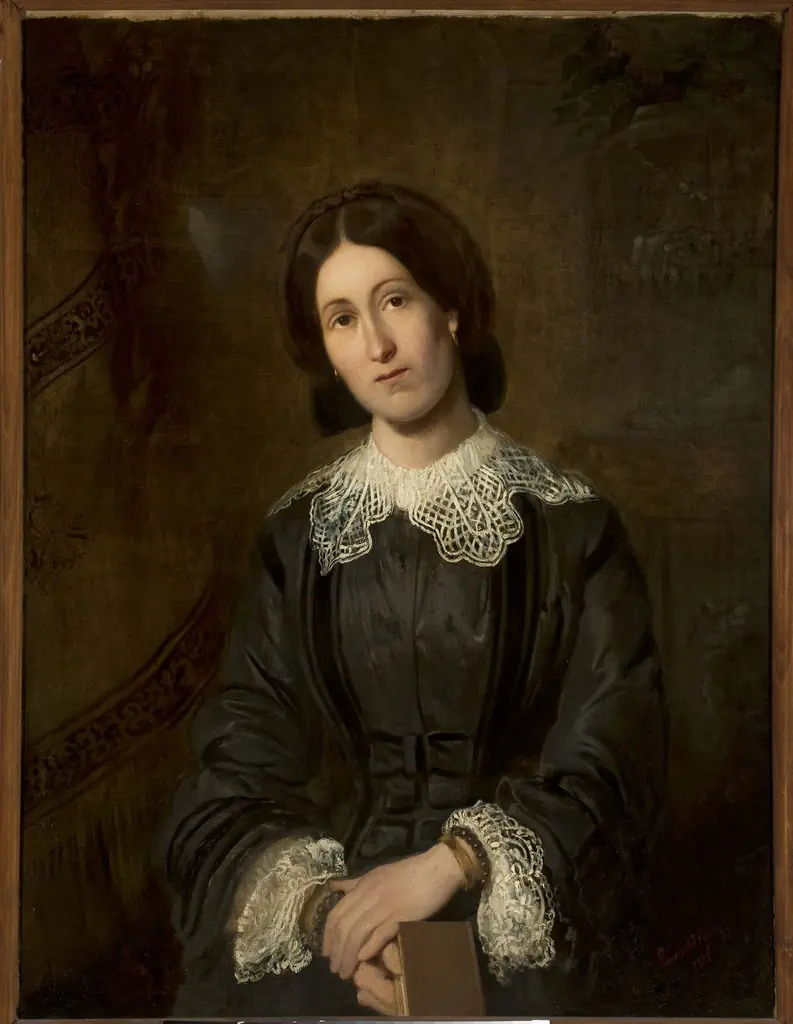
Portrait of Harriet Clark Ferrell is an unspecified painting by Unknown. It dates from 1853 and is held in the collection of the Los Angeles County Museum of Art. This oil painting presents a seated woman, Harriet Clark Ferrell, rendered with quiet precision.
About this work
Overview
This oil painting presents a seated woman, Harriet Clark Ferrell, rendered with quiet precision. She is dressed in a dark gown edged with white trim, adorned with a lace collar, and her hands rest gently in her lap. The background is deep and muted, with a faint green tone on the left suggesting ambient light. Her gaze is lowered, contributing to an atmosphere of stillness and inward reflection.
Subject & Meaning
Harriet Clark Ferrell is portrayed not as a figure of public display but as a private individual in a moment of contemplation. Her serious expression and downward gaze suggest introspection rather than performance. The absence of decorative elements or symbolic objects directs focus to her demeanor, implying a preference for personal dignity over external ornamentation.
Technique & Style
The artist employs restrained brushwork and a limited palette dominated by dark tones, with subtle contrasts in the white lace and fabric edges. Light falls softly on the face and hands, modeling form without drama. The dark background isolates the figure, enhancing the sense of solitude. The composition is balanced and deliberate, avoiding theatricality in favor of psychological depth.
History & Provenance
The painting was created in the mid-19th century, likely during a period when portraiture emphasized moral seriousness and domestic virtue. It remained in the possession of the Ferrell family for generations before entering a public collection. Documentation confirms the sitter’s identity and the work’s early ownership, though the artist’s name remains unverified in archival records.
Context
In the antebellum United States, portraits of women often conveyed ideals of piety and restraint. This work aligns with that tradition, reflecting cultural values that associated quiet demeanor with moral strength. Unlike grander commissioned portraits, this image lacks indicators of wealth or status, suggesting it was intended for private, familial rather than public display.
Legacy
The painting endures as an example of intimate 19th-century portraiture that prioritizes emotional nuance over social display. Its preservation offers insight into how women of the period were visually represented in domestic contexts. Though not widely exhibited, it continues to be studied for its understated composition and psychological resonance.
Artist & collection

 Domestic Scene
 Giacomo and Cardinal Marco, investing Andrea, Abbot of San Zeno, with his Benefice
 The Nymph of Fontainebleau
 Portrait of a Woman
 Madonna and Child with Saints in the Enclosed Garden
 Venus and Minerva
 Family Group of Four on Sofa
 Wall painting from Room H of the Villa of P. Fannius Synistor at Boscoreale
 Portrait of a Woman
 Anna Helena Lovisa Jägerhorn
 Portrait of Leokadia Krupska, sister of Bonifacy
 Mrs. William Washington Russell (Lucy Channing)
 Portrait of a Lady
 Portrait of a woman (Elizabeth Collins)
 Portrait of Marcelina Czartoryska née Radziwiłł
 Mrs Eugenie Maria Wynne (Crowe)
 Portrait of a woman
 Bildnis der Emilie Feuerbach
 Maria Clarissa Leavitt
 Portrait of Lucyna Łuszczkiewicz, artist’s sister