Artwork
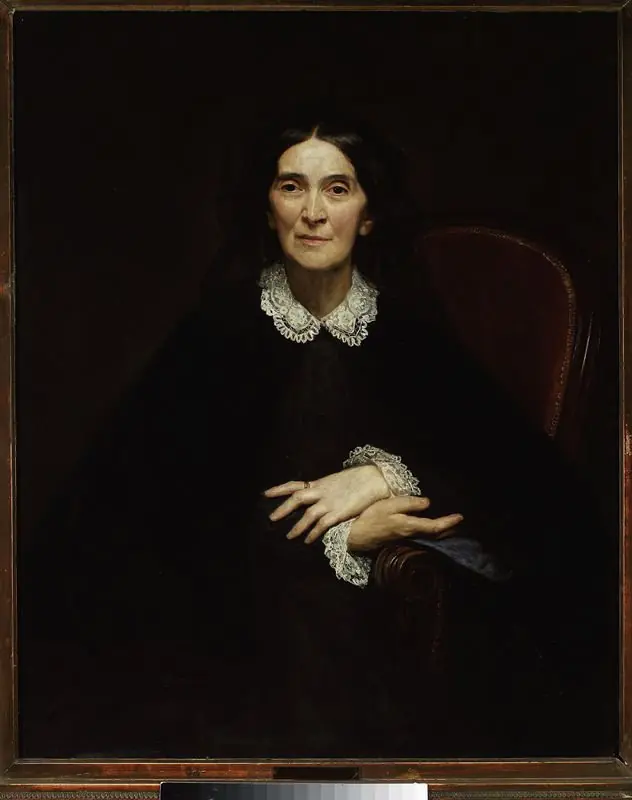
Portrait of Lucyna Łuszczkiewicz, artist’s sister
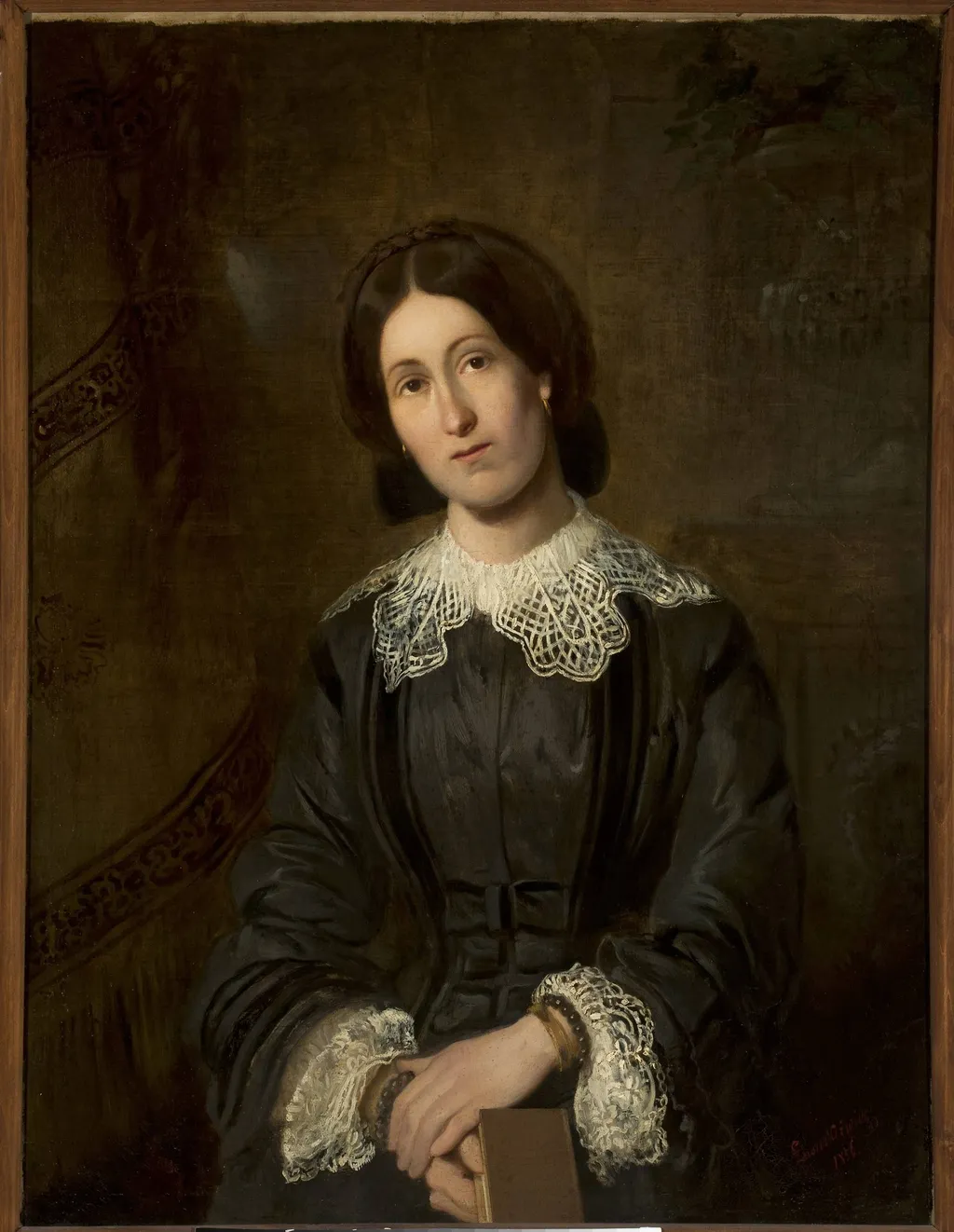
Portrait of Lucyna Łuszczkiewicz, artist’s sister is an oil painting by the Realist artist Władysław Łuszczkiewicz. It dates from 1856 and is held in the collection of the National Museum in Warsaw.
About this work
Overview
Created during a period of Polish territorial division, the work reflects the artist’s commitment to intimate, psychologically grounded representation.
Painted in 1856 by Władysław Łuszczkiewicz, this oil portrait depicts his sister, Lucyna Łuszczkiewicz. Created during a period of Polish territorial division, the work reflects the artist’s commitment to intimate, psychologically grounded representation. It resides today in the National Museum in Warsaw, where it is recognized as a quiet example of 19th-century Polish portraiture rooted in realism rather than idealization.
Subject & Meaning
Lucyna is portrayed in formal attire—a dark dress adorned with lace at the collar and cuffs—seated with hands gently clasped. Her direct gaze and composed expression suggest introspection rather than performative poise. The absence of symbolic props or elaborate setting shifts focus to her presence alone, emphasizing personal dignity and emotional stillness. The portrait avoids narrative, instead conveying a sense of inner life through subtle facial nuance and posture.
Technique & Style
Łuszczkiewicz employs restrained chiaroscuro to model the figure against a deep, neutral background, enhancing the three-dimensionality of the face and hands. Brushwork is precise yet unobtrusive, favoring smooth transitions over visible texture. The dark dress and muted tones unify the composition, while the lace details are rendered with delicate attention, suggesting both social standing and tactile realism without ornamental excess.
History & Provenance
The painting remained within the artist’s family until entering the National Museum in Warsaw’s collection. Władysław Łuszczkiewicz, a professor and later principal of the Kraków Academy of Fine Arts, was known for his scholarly approach to art and history. This portrait, made early in his career, aligns with his broader interest in documenting Polish identity through personal and historical subjects during a time of political fragmentation.
Context
Created under foreign partitions that suppressed Polish national institutions, the portrait reflects a cultural effort to preserve individual and familial dignity through art. While Romanticism dominated public art, Łuszczkiewicz’s focus on quiet realism offered an alternative—emphasizing inner character over dramatic gesture. His role as an educator further positioned him as a quiet steward of national artistic values during a constrained era.
Legacy
Though not widely exhibited outside Poland, the portrait remains a significant example of domestic portraiture from the mid-19th century. It illustrates how artists under political pressure turned inward, using the private sphere to assert cultural continuity. The work’s enduring presence in the National Museum underscores its value as a record of personal and artistic integrity during a period of national uncertainty.
Own this work as a print
Artist & collection
Artist
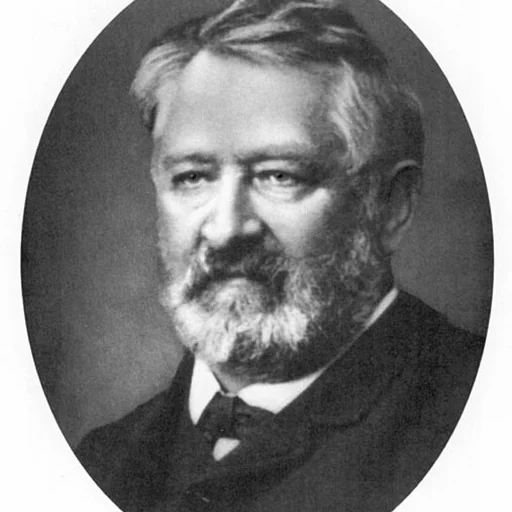
Władysław Łuszczkiewicz (3 September 1828 – 23 May 1900) was a Polish historian and painter of the late Romantic era from Kraków, active in the period of the foreign partitions of Poland.

 Portrait of artist’s mother
 Portrait of Emilia Mielżyńska née Bnińska
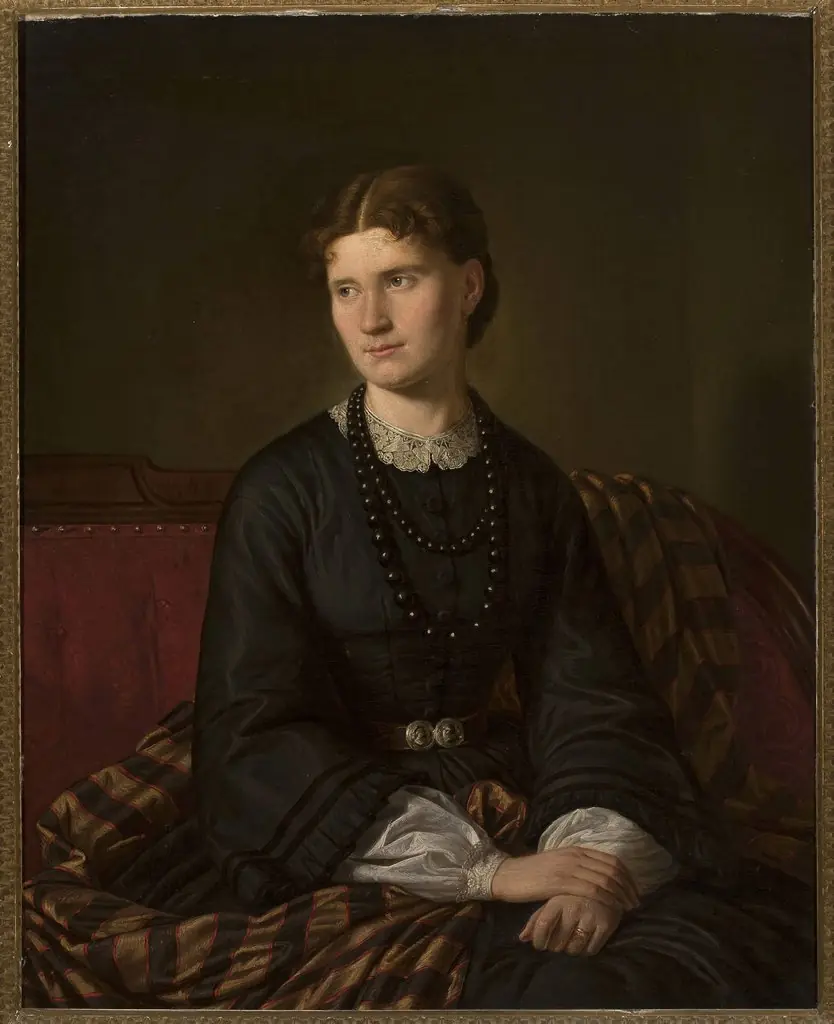 Portrait of Julia née Bergson, artist’s wife
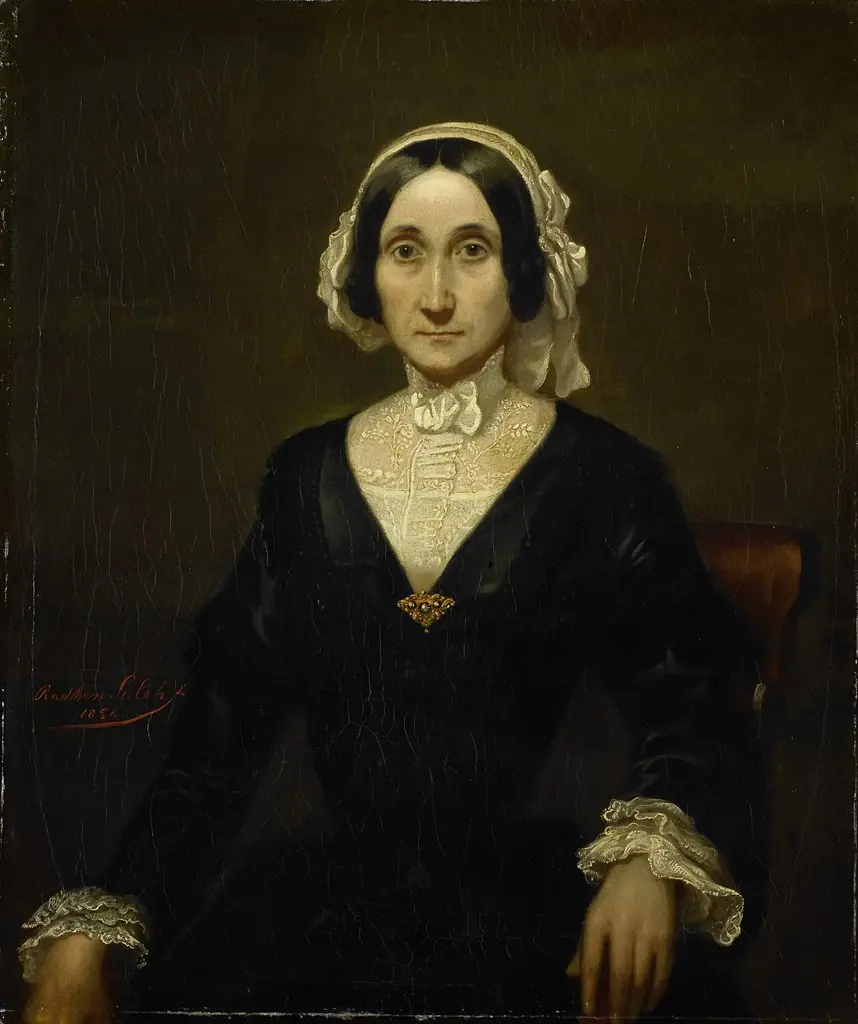 Portrait of Mrs. W.J.S. van Alphen, baroness of Reede van Oudtshoorn
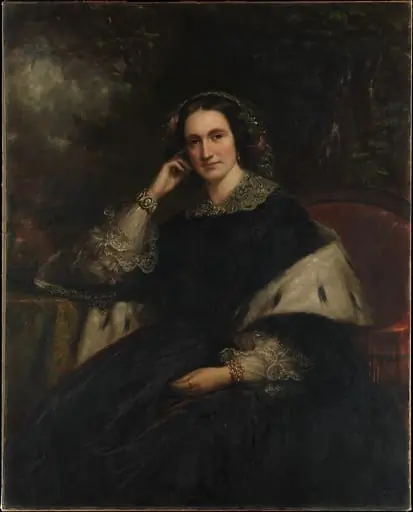 Anna Watson Stuart
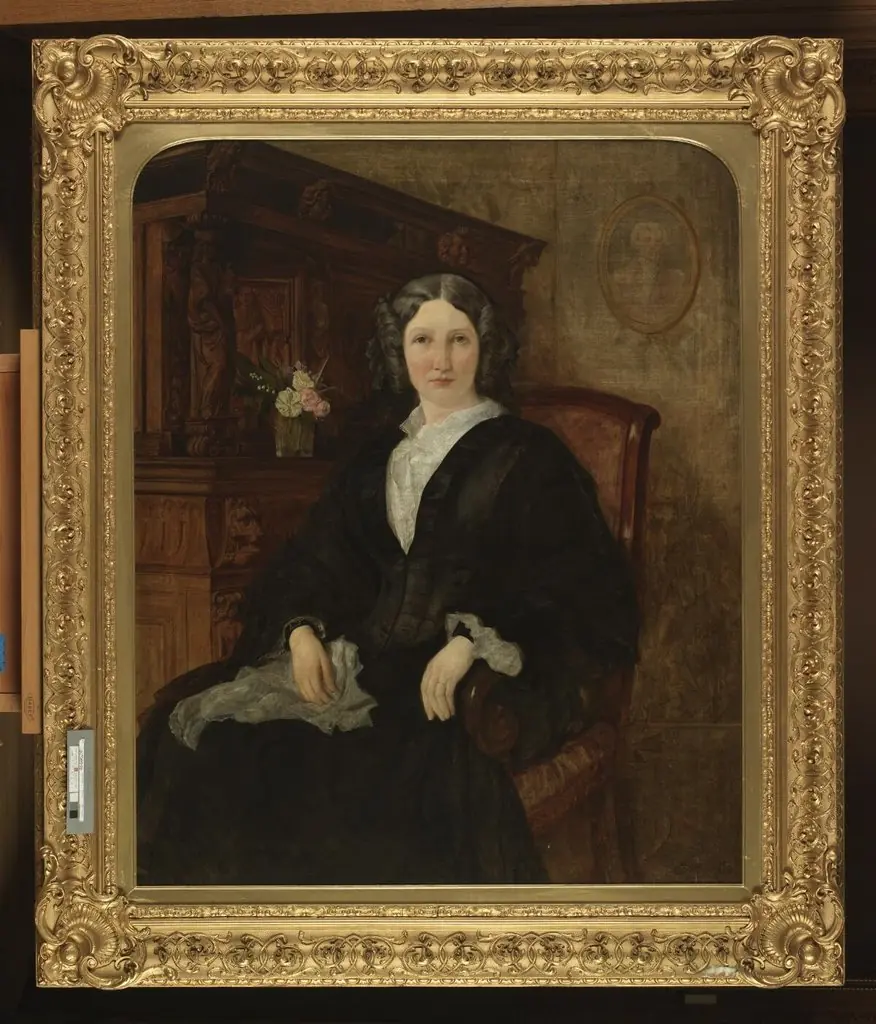 Mrs Eugenie Maria Wynne (Crowe)
 Forfatterinden Emma Kraft
 Lovice Corbett Whittemore (Mrs. Thomas Whittemore)
 Portrait of Harriet Clark Ferrell
 Retrato de la Señora Adela Eastman de Barros