Artwork
The Parrot Addresses Khujasta at the Beginning of the Tenth Night, from a Tuti-nama (Tales of a Parrot)
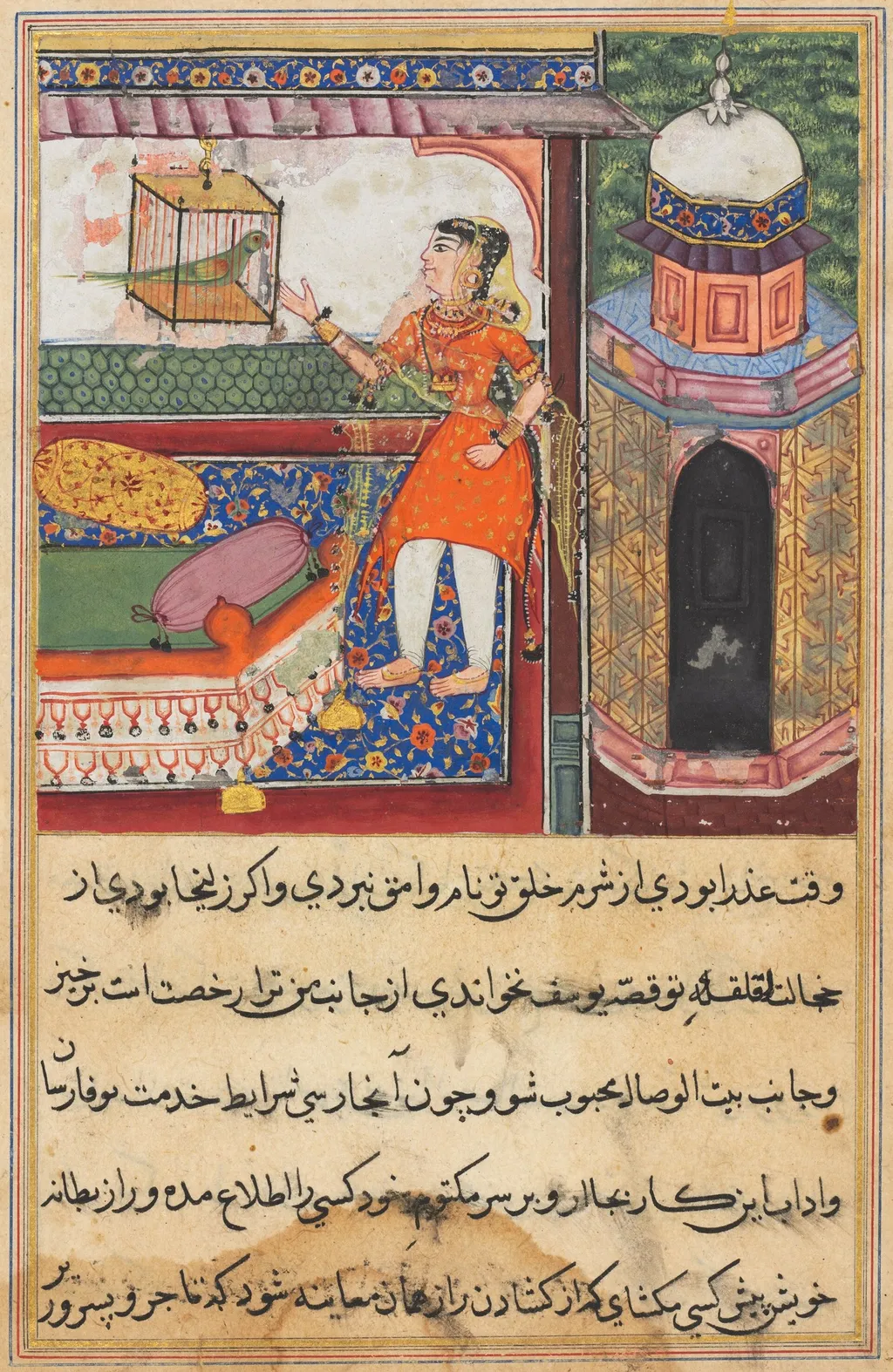
The Parrot Addresses Khujasta at the Beginning of the Tenth Night, from a Tuti-nama (Tales of a Parrot) is an unspecified painting. It dates from 1560 and is held in the collection of the Cleveland Museum of Art.
About this work
Overview
The work depicts a seated woman in vivid orange and blue garments, perched on a red carpet while cradling a small cage that holds a green parrot.
The work depicts a seated woman in vivid orange and blue garments, perched on a red carpet while cradling a small cage that holds a green parrot. Behind her a darkened doorway opens onto a structure crowned with a white dome and blue trim. The floor is covered by a patterned rug featuring gold and floral motifs, and a pink pillow rests nearby. The composition relies on bold, flat areas of red, blue and gold, delineated by precise lines.
Subject & Meaning
The scene illustrates a moment from the Persian narrative collection *Tuti‑nama* (Tales of a Parrot), in which the parrot addresses King Khujasta at the start of the tenth night. The bird’s prominent placement suggests its role as storyteller, while the woman’s attentive posture implies a listening audience within the domestic interior.
Technique & Style
Executed with flat, decorative shapes and a limited palette, the painting employs clear outlines and a lack of chiaroscuro, characteristic of manuscript illustration traditions. The use of vivid primary colors and ornamental patterning on the rug and pillow reflects a stylized, narrative-driven aesthetic rather than naturalistic representation.
History & Provenance
The image originates from a illustrated copy of the *Tuti‑nama*, a literary work popular in the Islamic world from the 13th to 16th centuries. The particular folio has been preserved in a museum collection, having passed through private hands before entering the current institution’s holdings.
Context
*Tuti‑nama* combines moral instruction with entertainment, using the parrot’s speeches to convey stories to the king. Such illustrated manuscripts were often produced for elite patrons, serving both as objects of devotion and as displays of artistic skill within courtly culture.
Legacy
The painting exemplifies the visual language of Persian narrative art, influencing later manuscript illustration and informing contemporary understandings of storytelling in pre‑modern Islamic societies.
Artist & collection

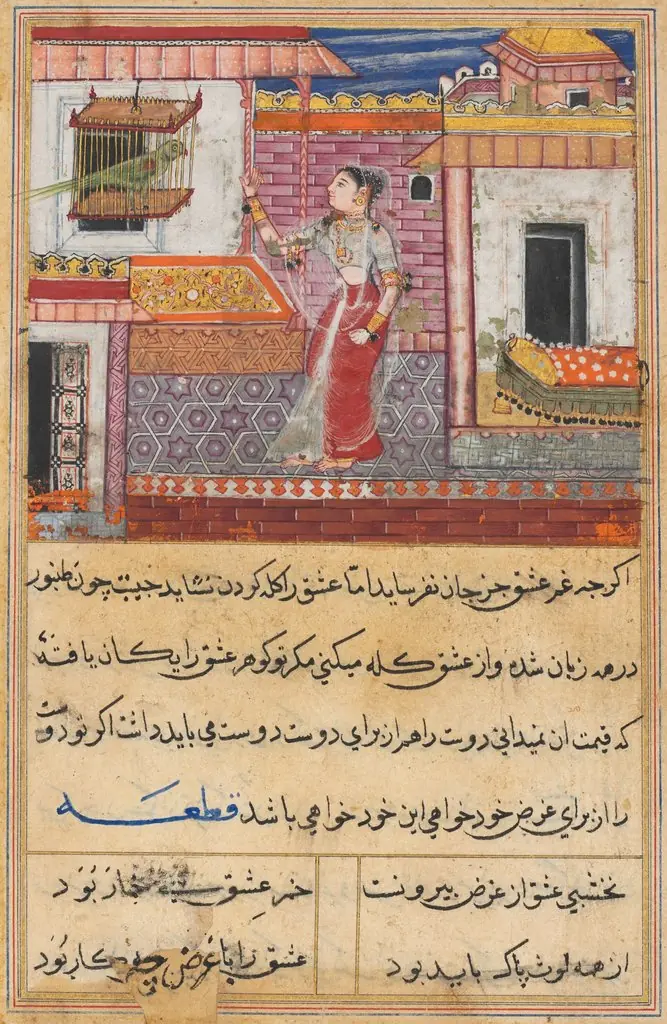 The Parrot Addresses Khujasta at the Beginning of the Thirteenth Night, from a Tuti-nama (Tales of a Parrot)
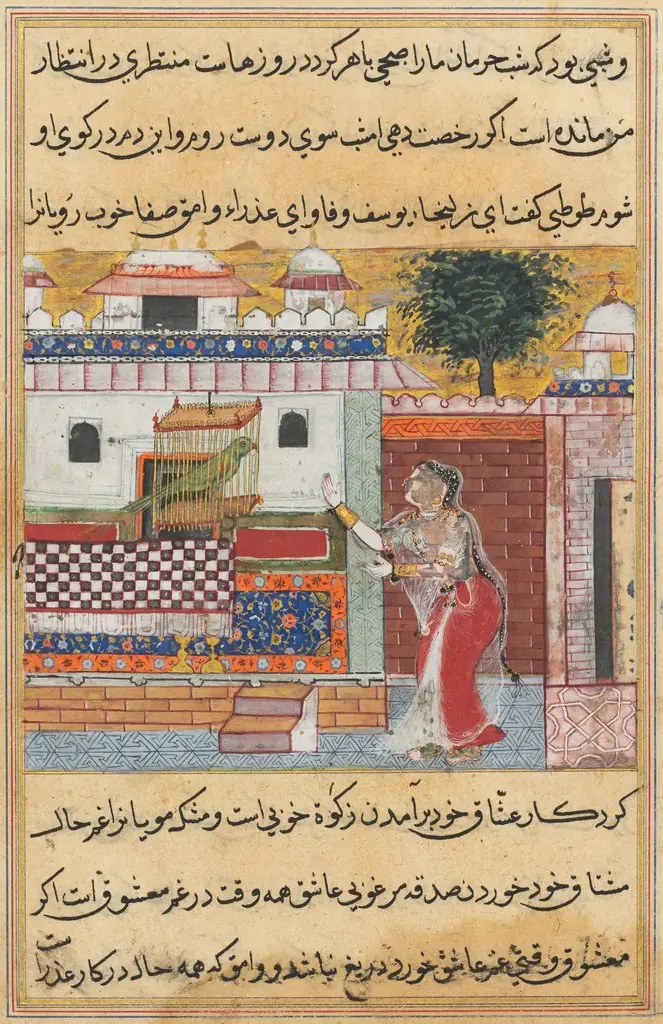 The Parrot Addresses Khujasta at the Beginning of the Twelfth Night, from a Tuti-nama (Tales of a Parrot)
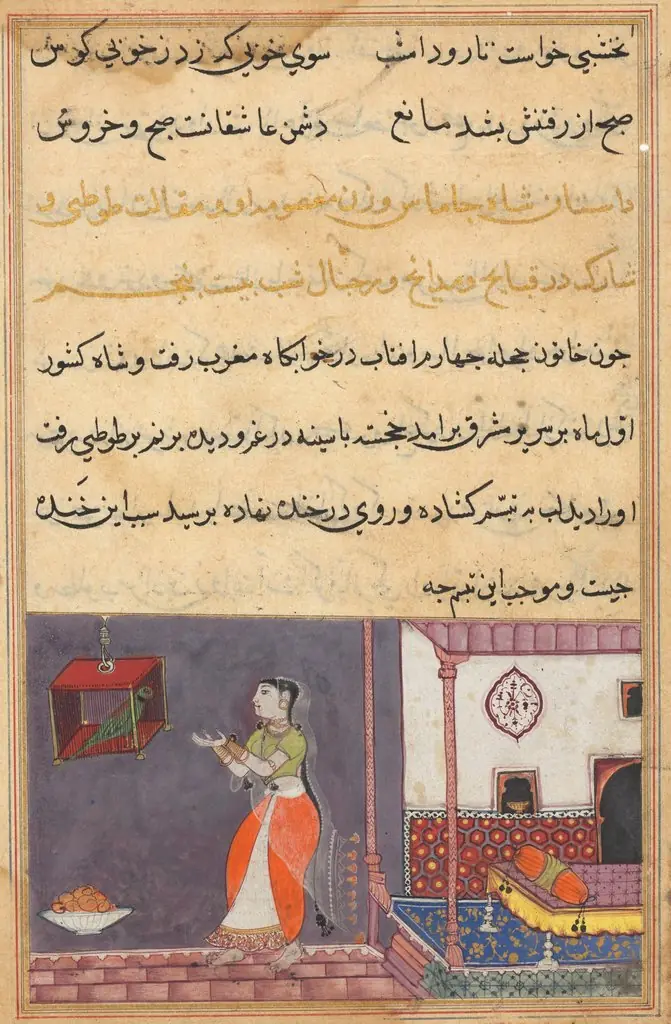 The Parrot Addresses Khujasta at the Beginning of the Twenty-fifth Night, from a Tuti-nama (Tales of a Parrot)
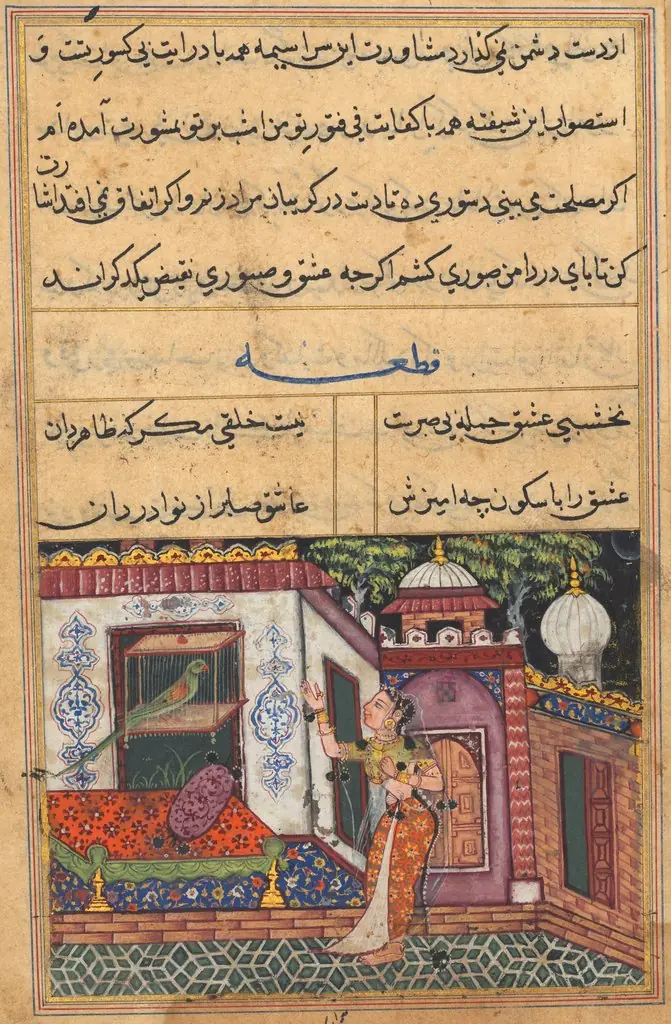 The Parrot Addresses Khujasta at the Beginning of the Eleventh Night, from a Tuti-nama (Tales of a Parrot)
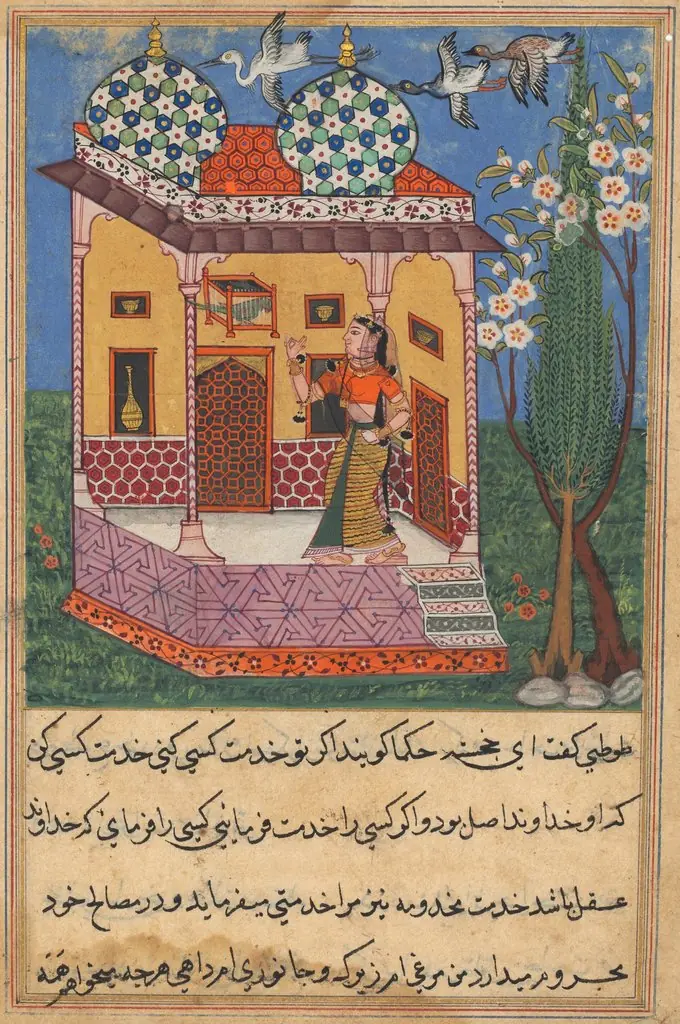 The Parrot Addresses Khujasta at the Beginning of the Twenty-sixth Night, from a Tuti-nama (Tales of a Parrot)
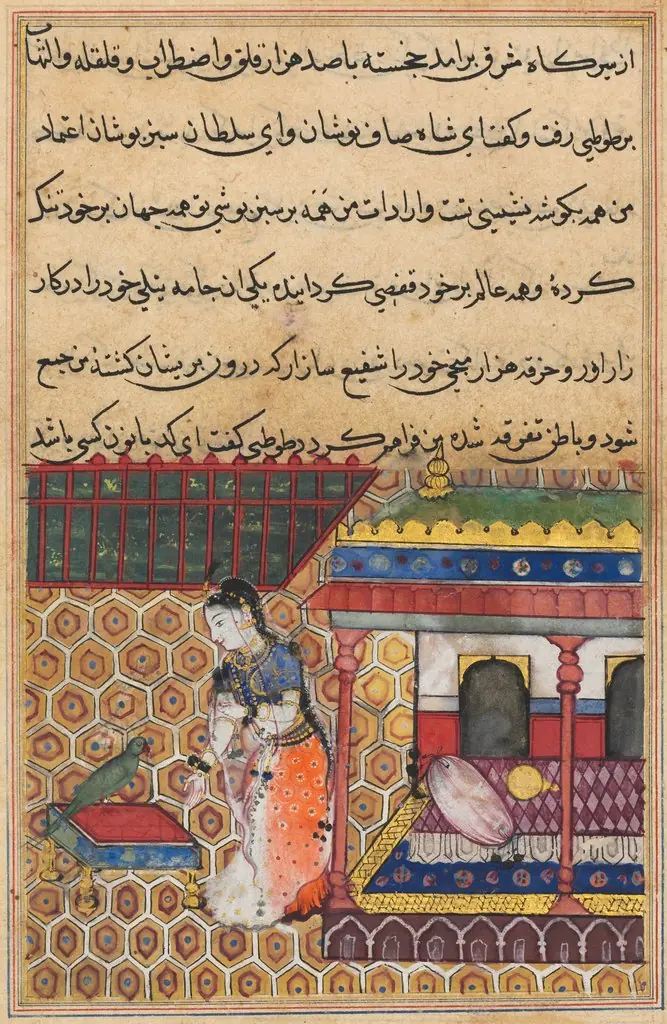 The parrot addresses Khujasta at the beginning of the thirty-eighth night, from a Tuti-nama (Tales of a Parrot)
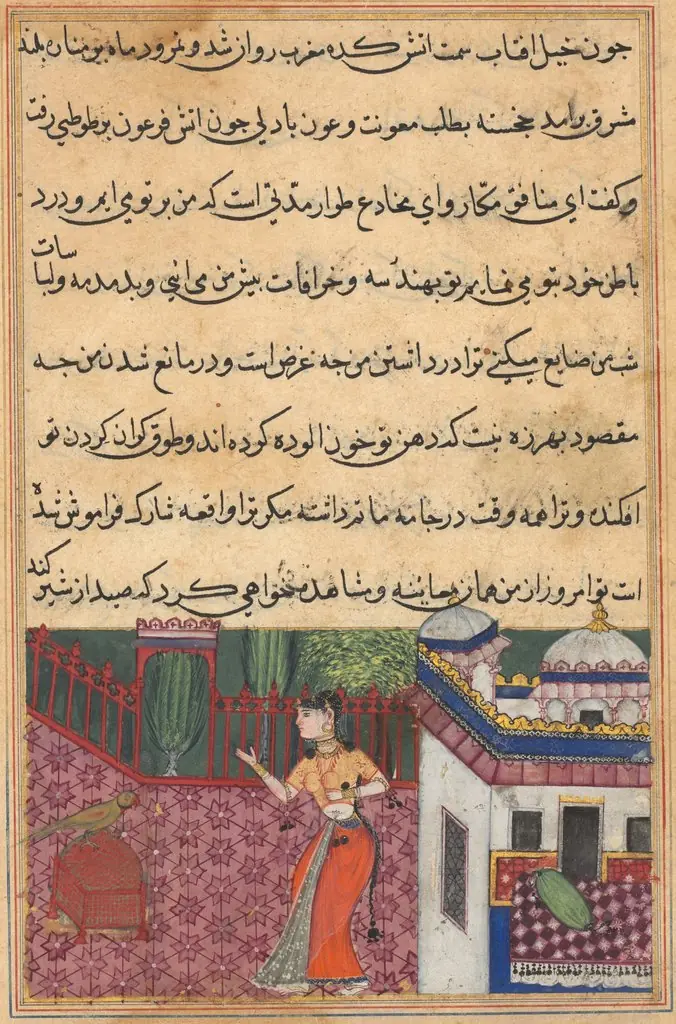 The parrot addresses Khujasta at the beginning of the thirty-third night, from a Tuti-nama (Tales of a Parrot)
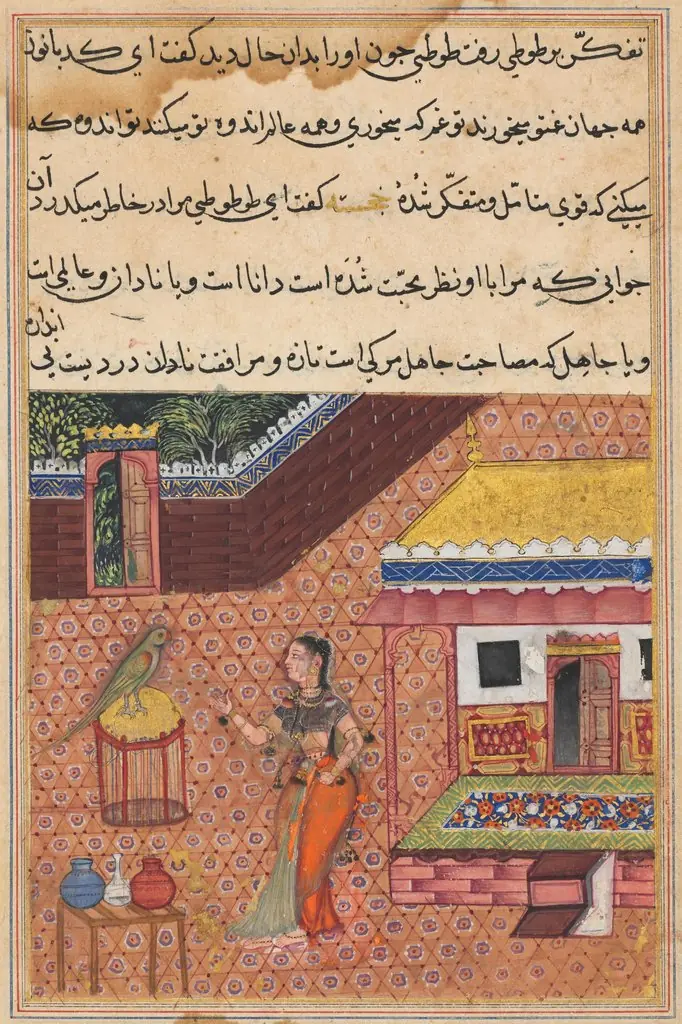 The parrot addresses Khujasta at the beginning of the thirty-fourth night, from a Tuti-nama (Tales of a Parrot)
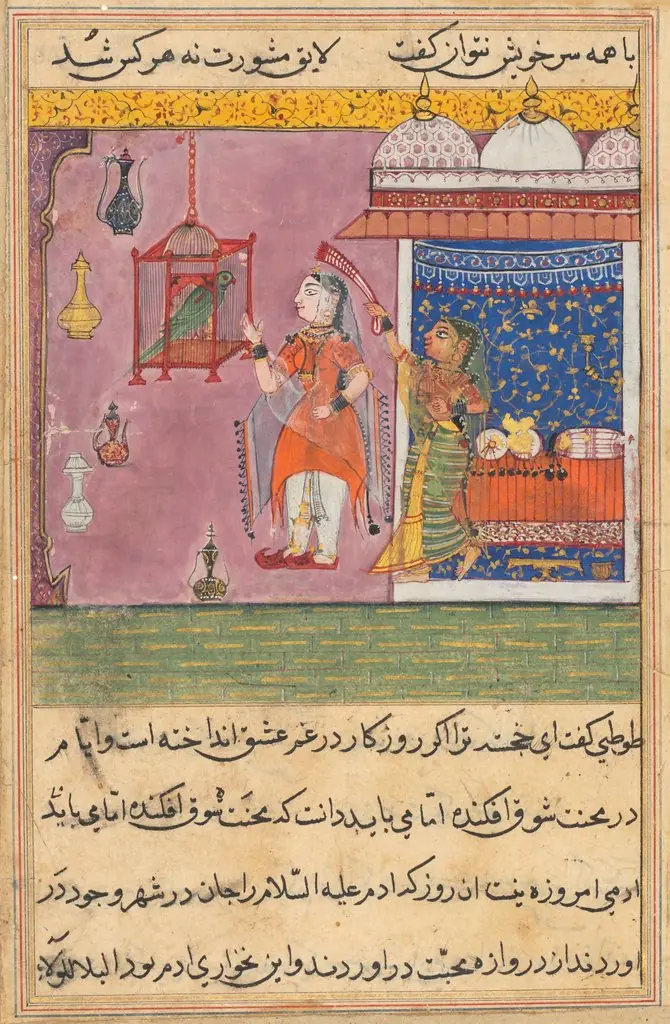 The Parrot Addresses Khujasta at the Beginning of the Nineteenth Night, from a Tuti-nama (Tales of a Parrot)