Artwork
Page from Tales of a Parrot (Tuti-nama): text page
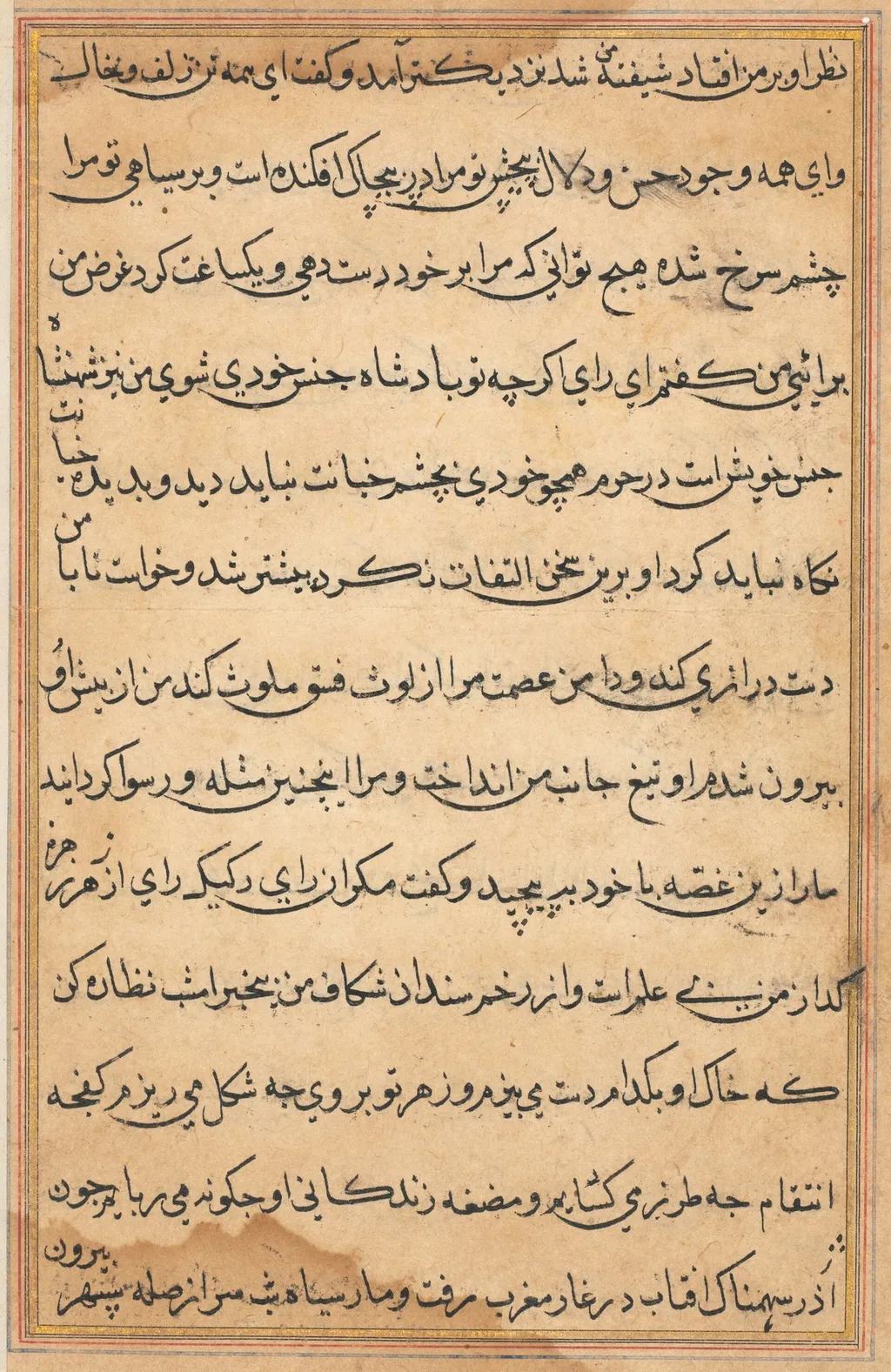
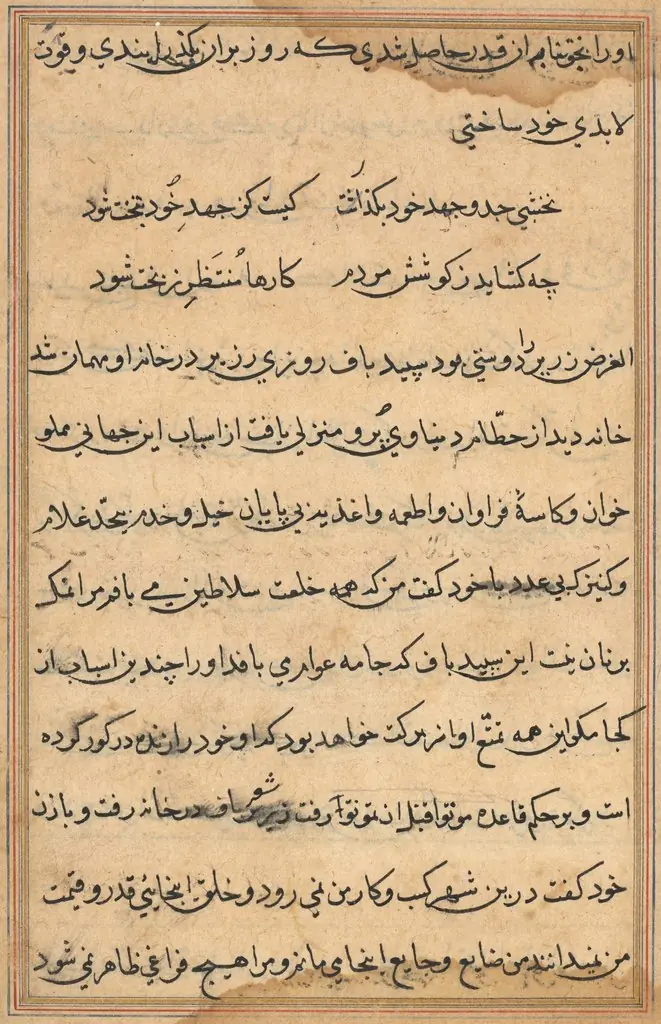
Page from Tales of a Parrot (Tuti-nama): text page is an unspecified painting. It dates from 1560 and is held in the collection of the Cleveland Museum of Art. This illuminated page originates from the Persian manuscript known as *Tales of a Parrot* (Tuti‑nama).
About this work
Overview
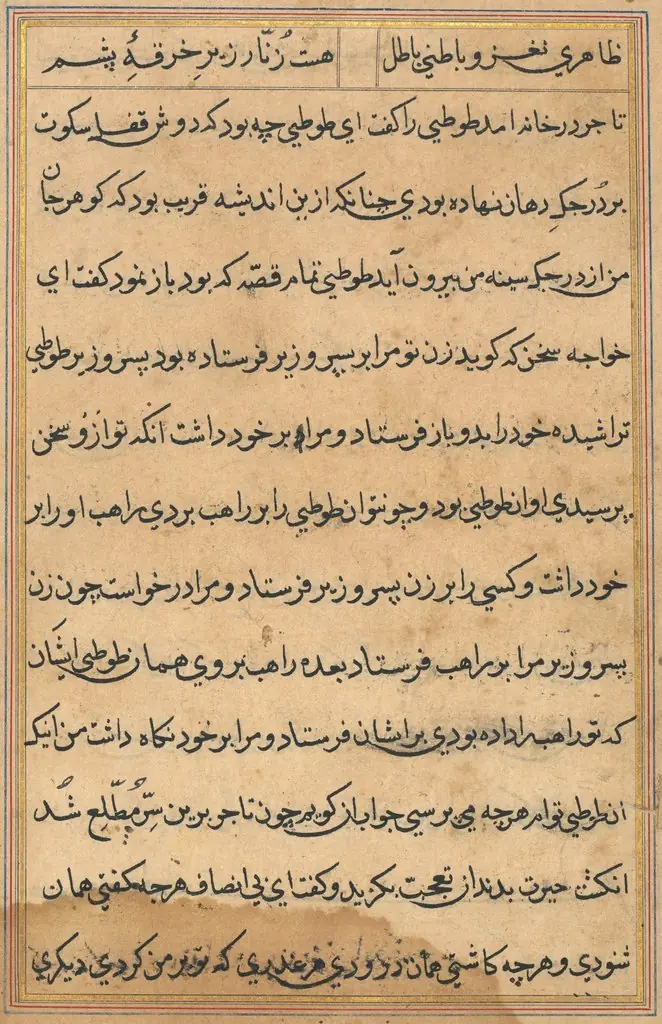
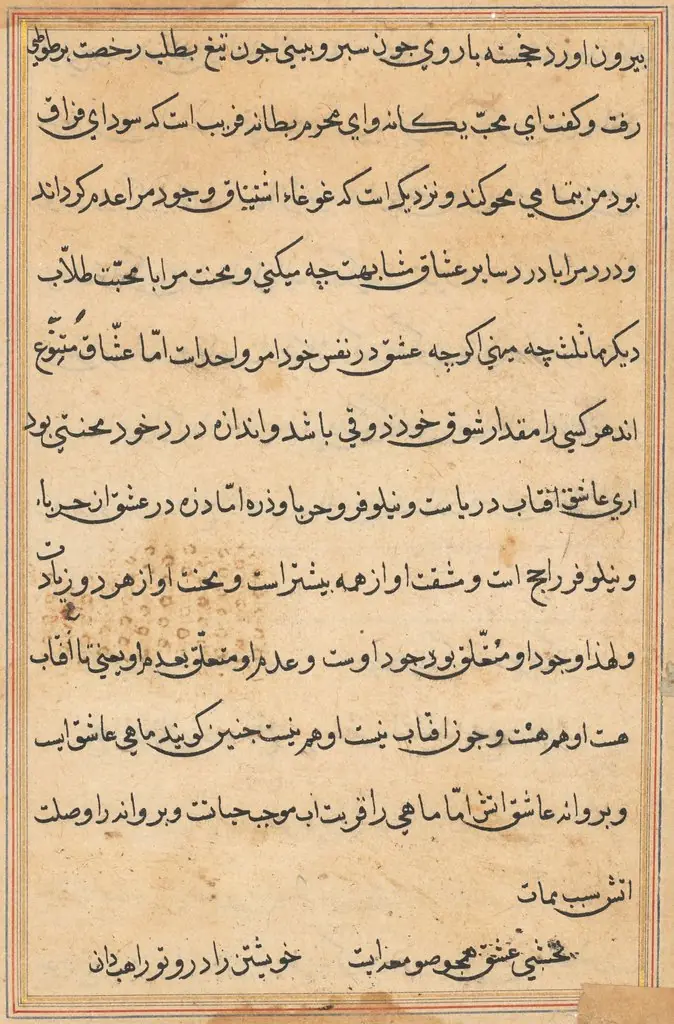
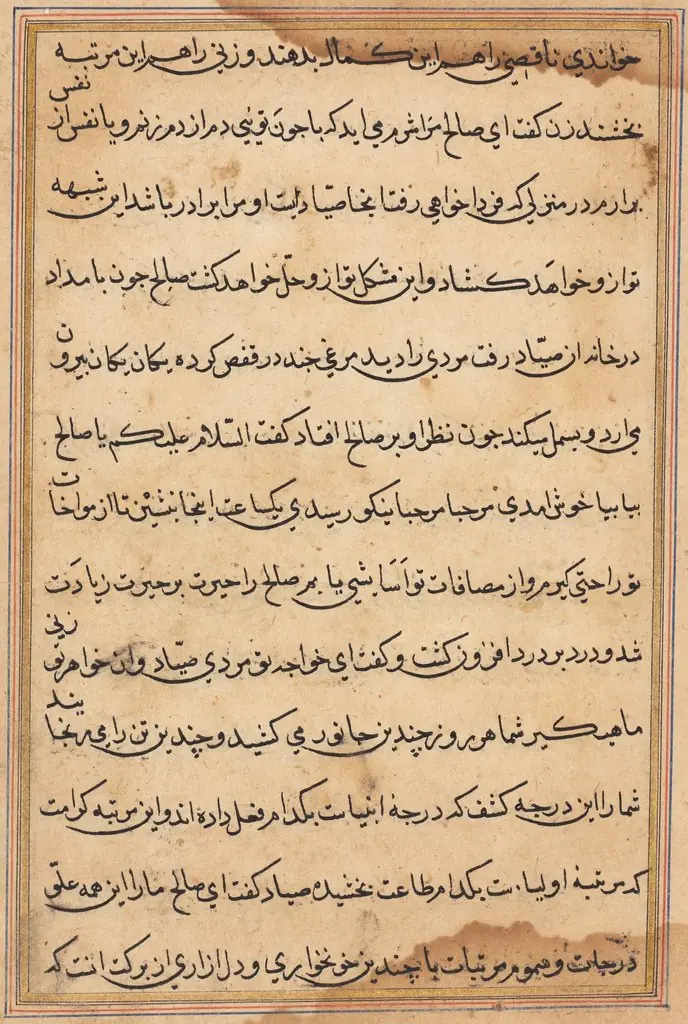
This illuminated page originates from the Persian manuscript known as *Tales of a Parrot* (Tuti‑nama). Executed as a painted sheet, it features dense black calligraphy arranged in orderly rows on a light‑brown parchment, its margins accented by a slender red border that frames the text.
Subject & Meaning
The page contains narrative verses from the *Tuti‑nama*, a collection of moral stories traditionally used for instruction and entertainment in royal courts. The Persian script reflects the linguistic preferences of Mughal elites, conveying ethical teachings through allegorical tales involving a parrot narrator.
Technique & Style
Calligraphic work is rendered in a deliberate hand, with a mixture of connected and isolated letters that demonstrate the refined penmanship of a court scribe. The red border, painted with a thin brush, provides a subtle decorative contrast to the monochrome text, characteristic of Mughal manuscript aesthetics.
History & Provenance
Commissioned for Prince Salim, the future Emperor Jahangir (r. 1605‑1627), the page exemplifies the patronage of literary arts within the Mughal imperial household. It later entered the collection of the Cleveland Museum of Art, where it is displayed alongside other pages from the same manuscript.
Context
During the early 17th century, Mughal rulers cultivated Persian literary culture, integrating it into courtly education and entertainment. Manuscripts such as the *Tuti‑nama* were produced in workshops attached to the imperial atelier, reflecting the synthesis of Persian textual tradition with Indian artistic sensibilities.
Artist & collection

 Page from Tales of a Parrot (Tuti-nama): text page
 Page from Tales of a Parrot (Tuti-nama): text page
 Page from Tales of a Parrot (Tuti-nama): text page
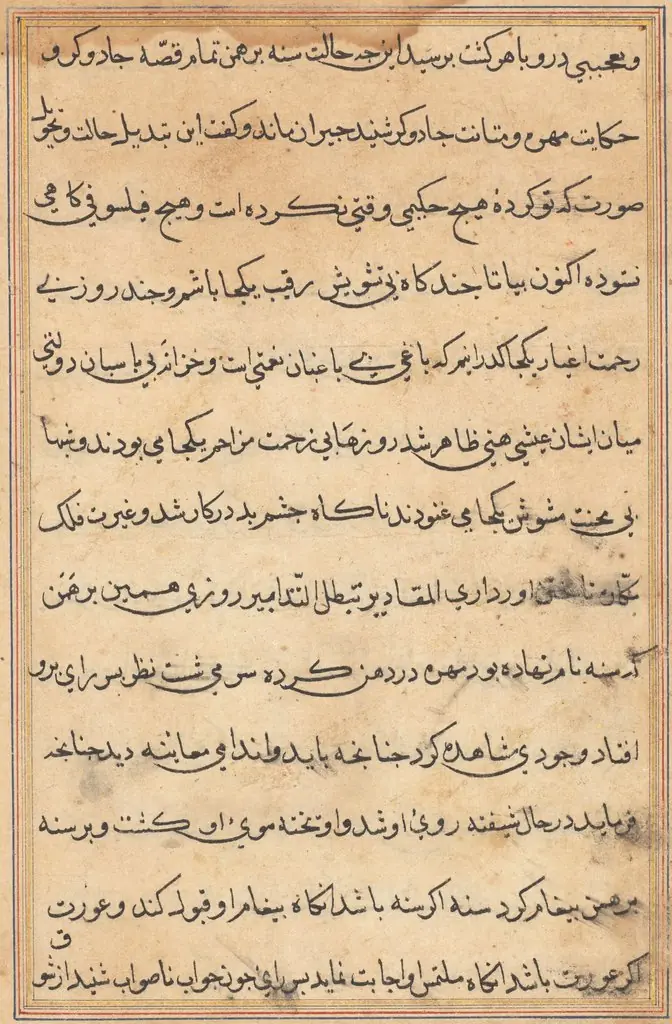 Page from Tales of a Parrot (Tuti-nama): text page
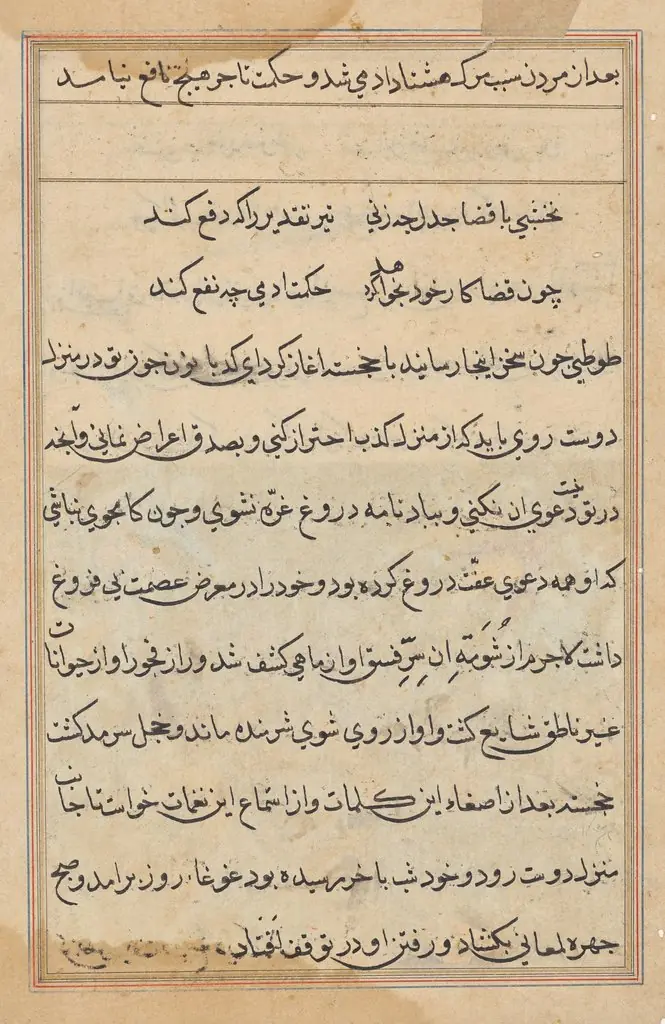 Page from Tales of a Parrot (Tuti-nama): text page
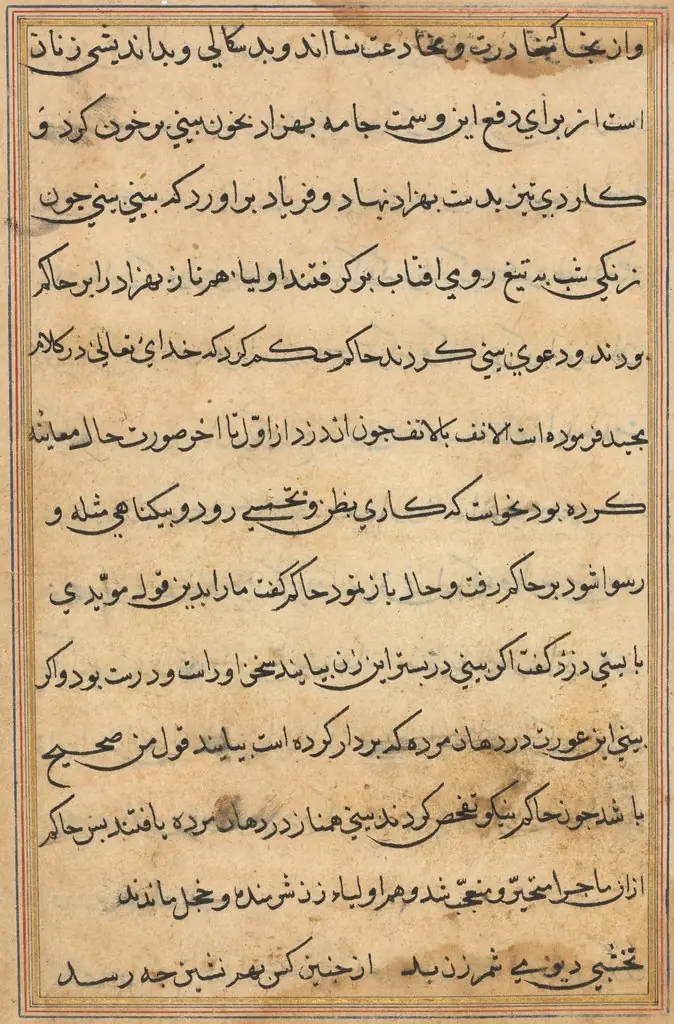 Page from Tales of a Parrot (Tuti-nama): text page
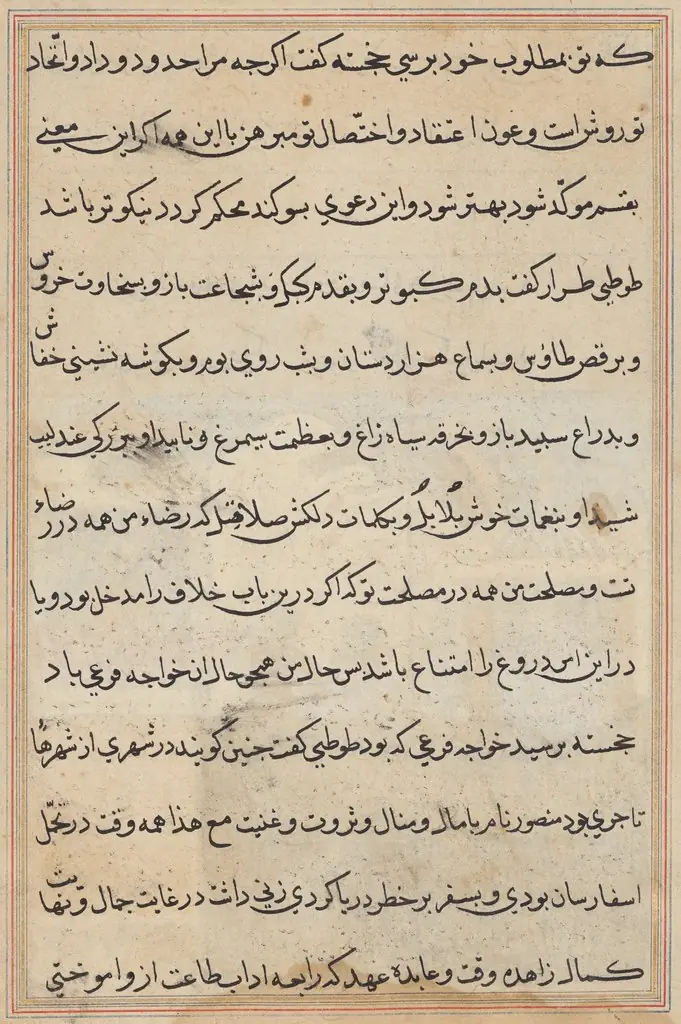 Page from Tales of a Parrot (Tuti-nama): text page
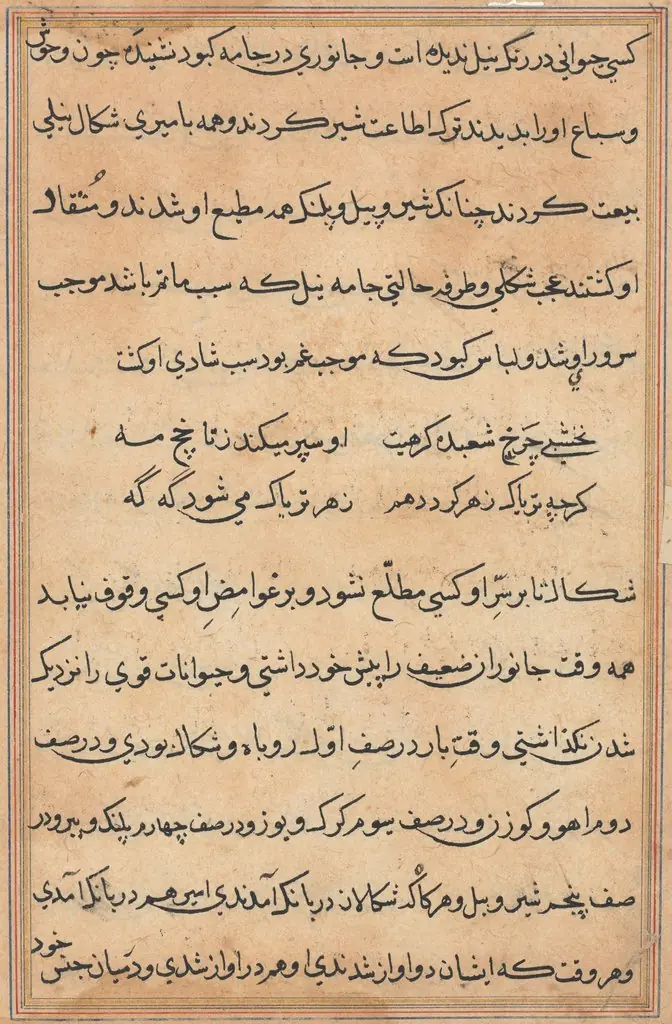 Page from Tales of a Parrot (Tuti-nama): text page
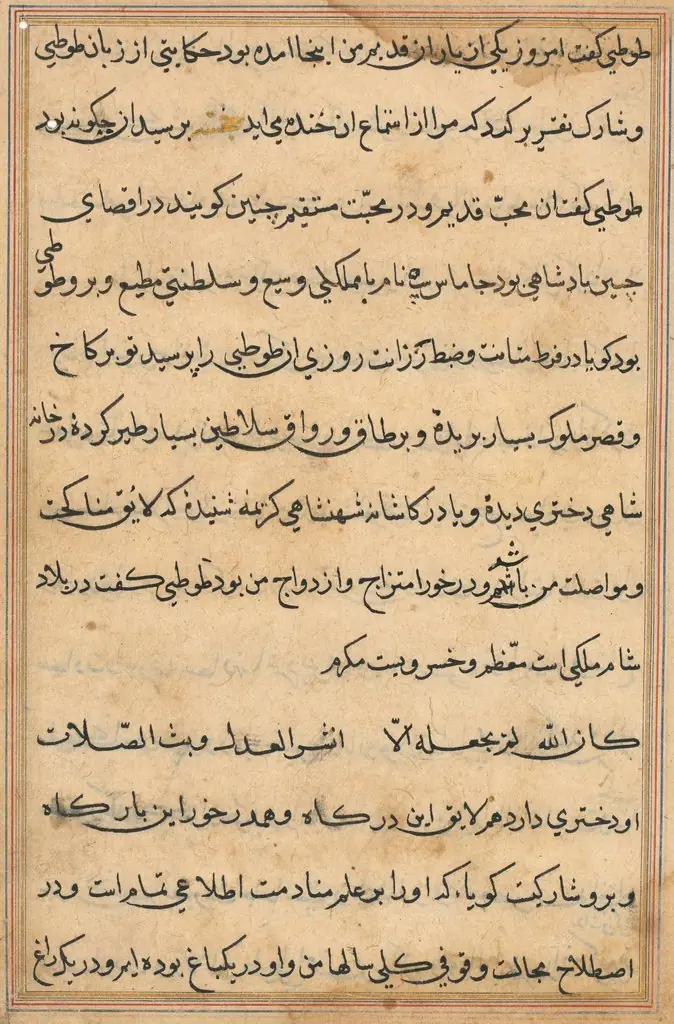 Page from Tales of a Parrot (Tuti-nama): text page
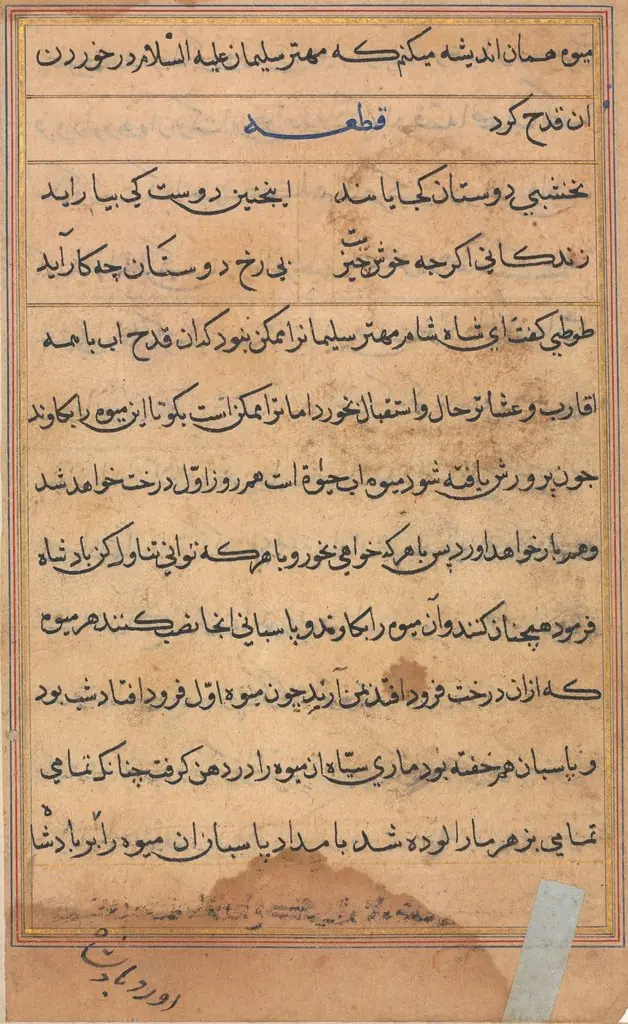 Page from Tales of a Parrot (Tuti-nama): text page
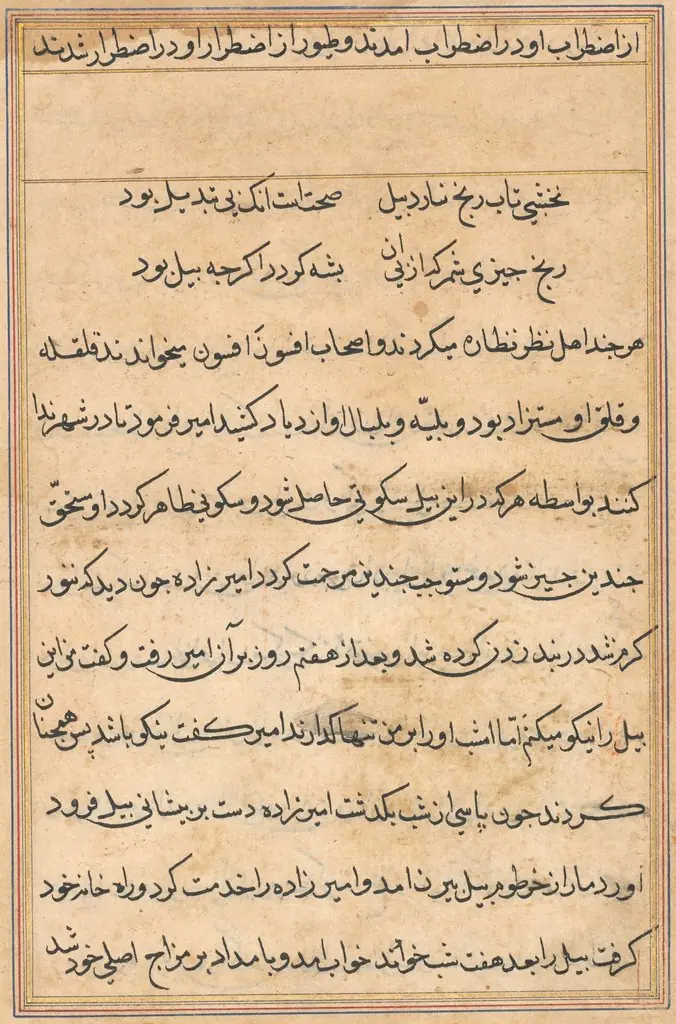 Page from Tales of a Parrot (Tuti-nama): text page
 Page from Tales of a Parrot (Tuti-nama): text page