Artwork
Page from Tales of a Parrot (Tuti-nama): text page
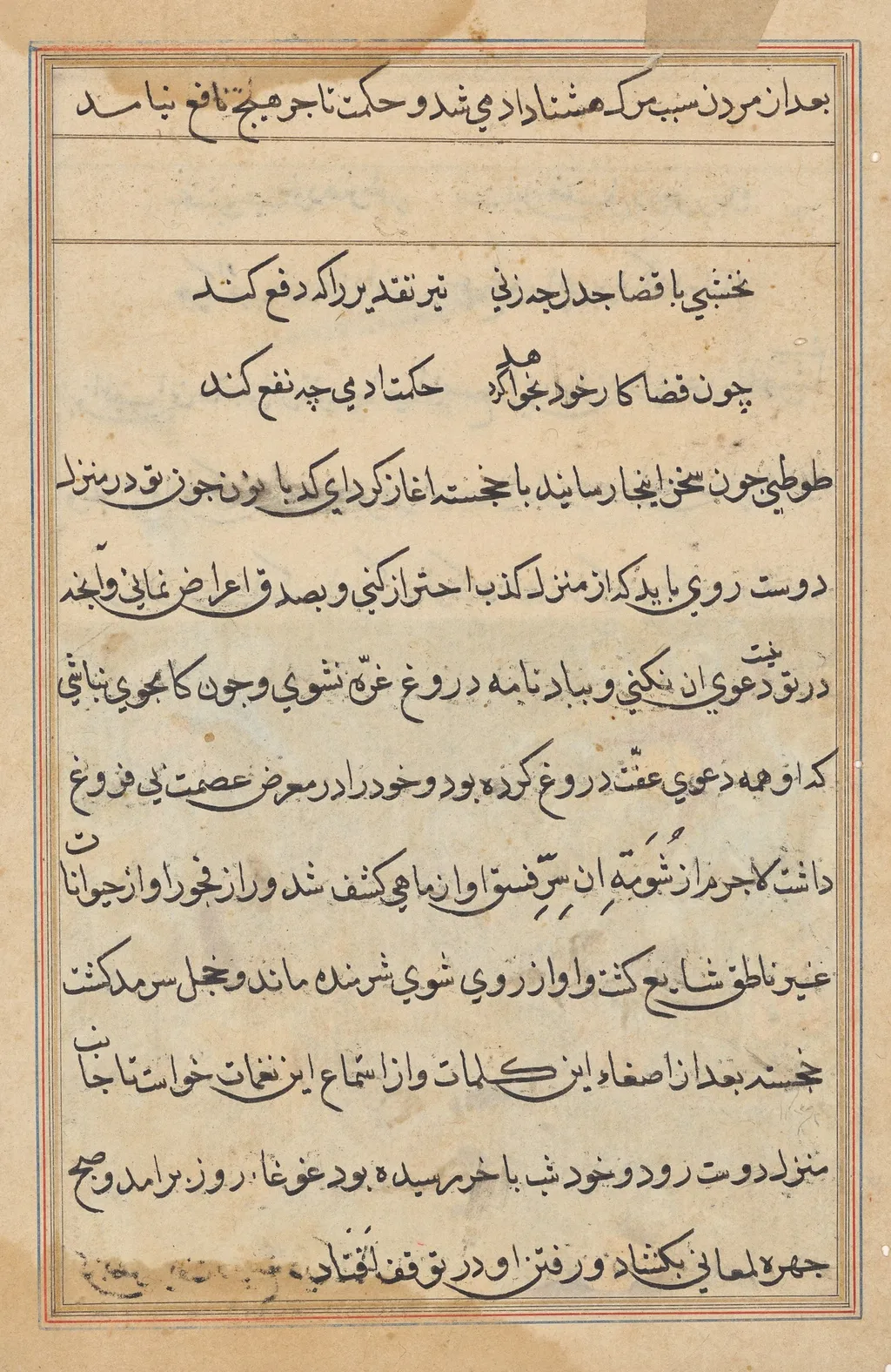
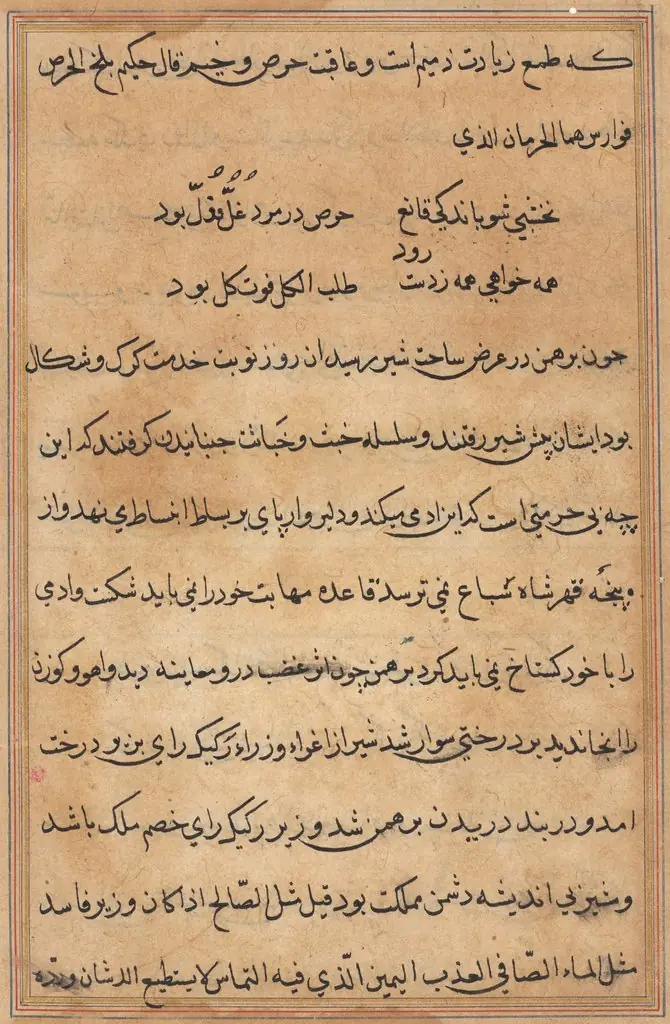
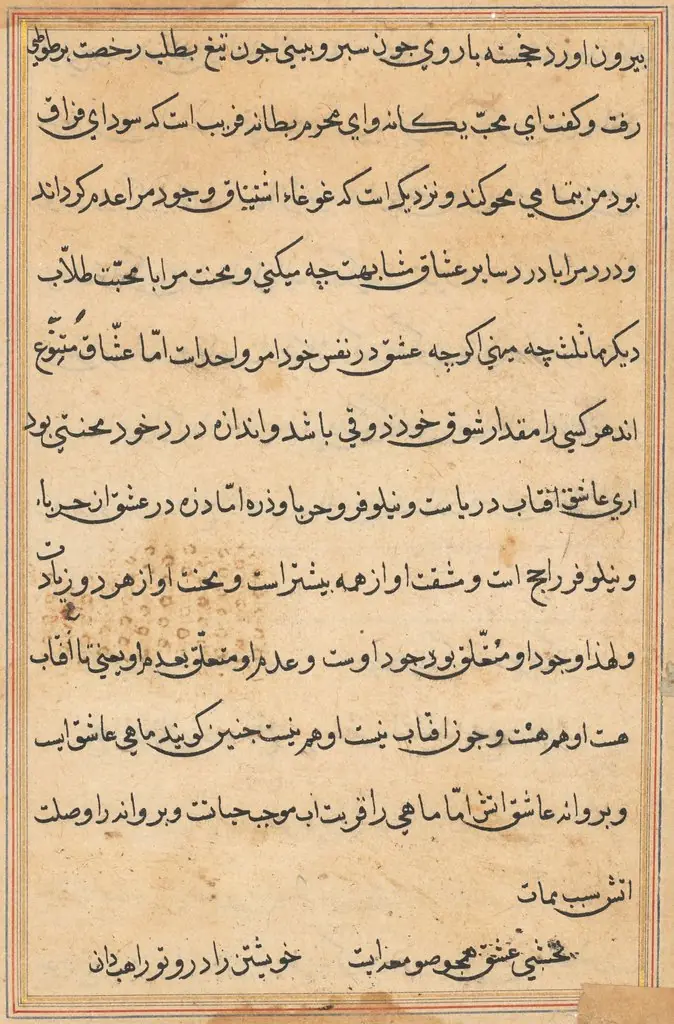
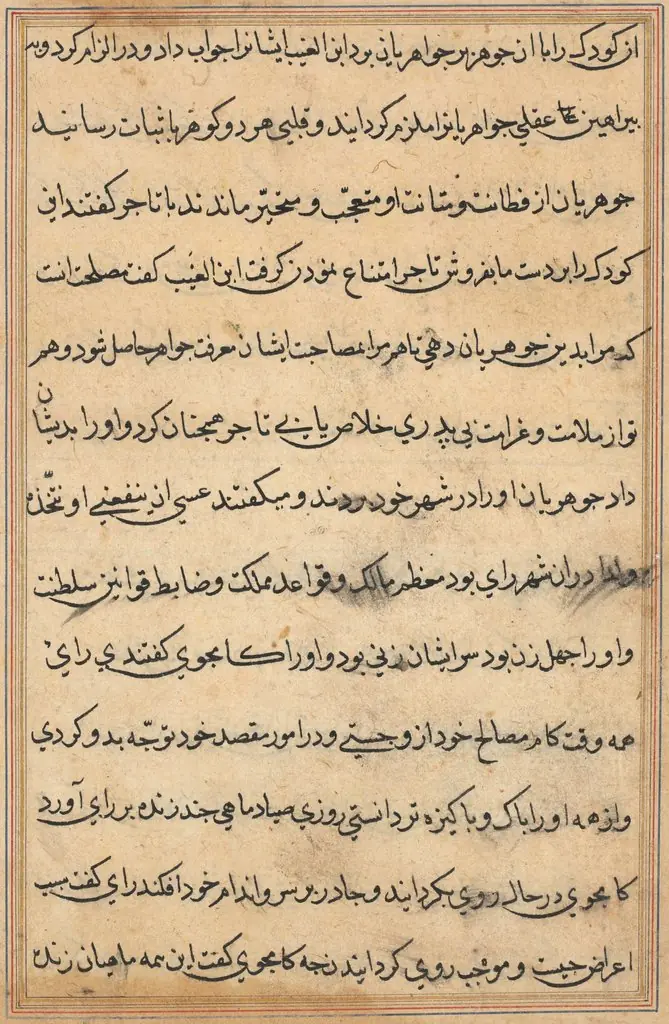
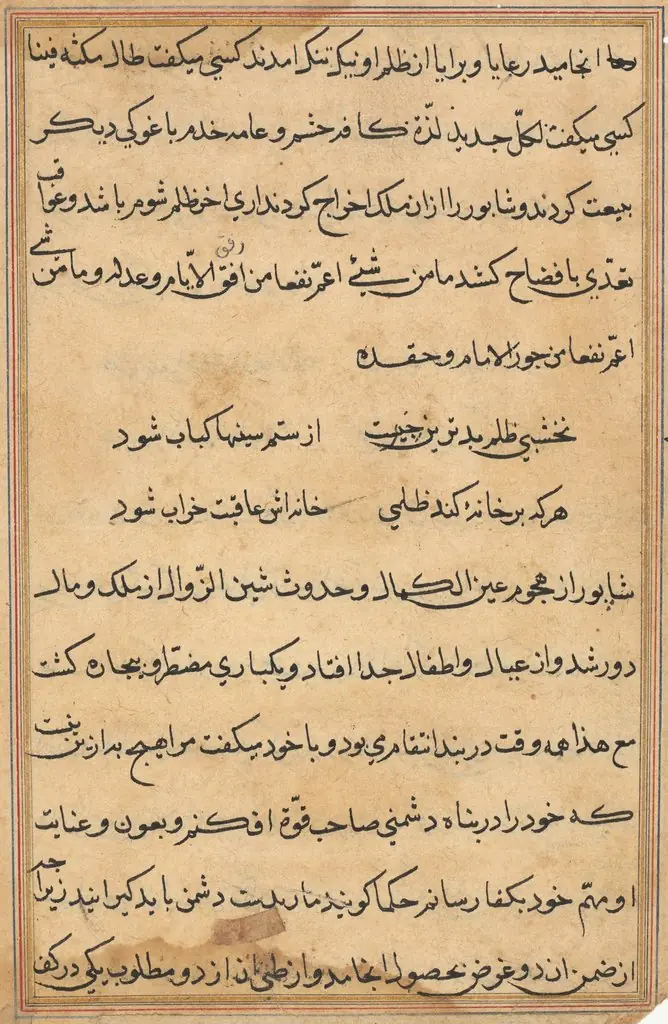
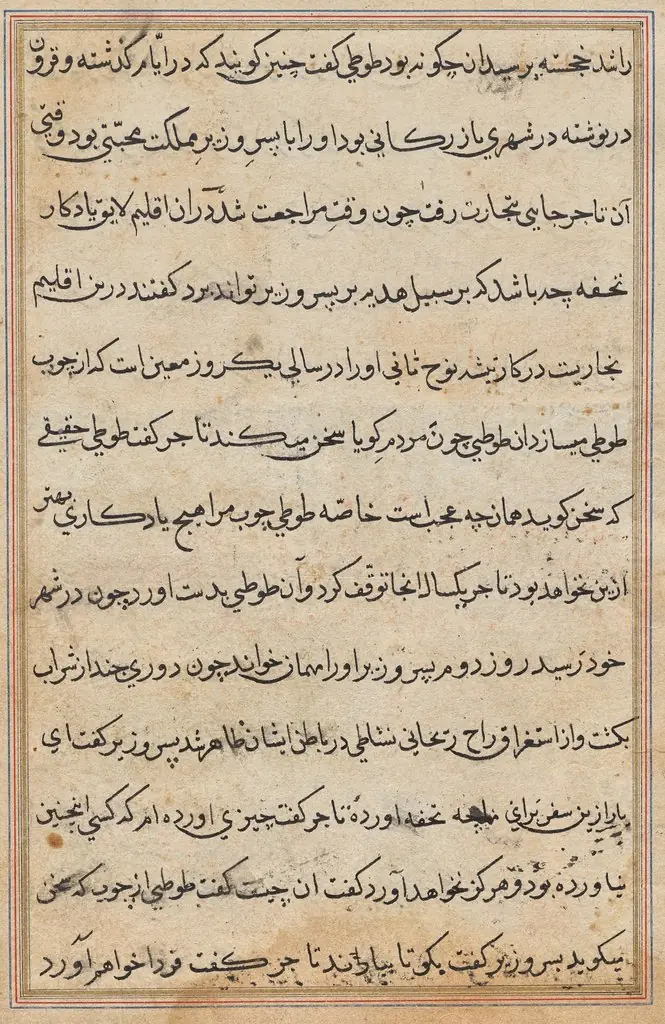
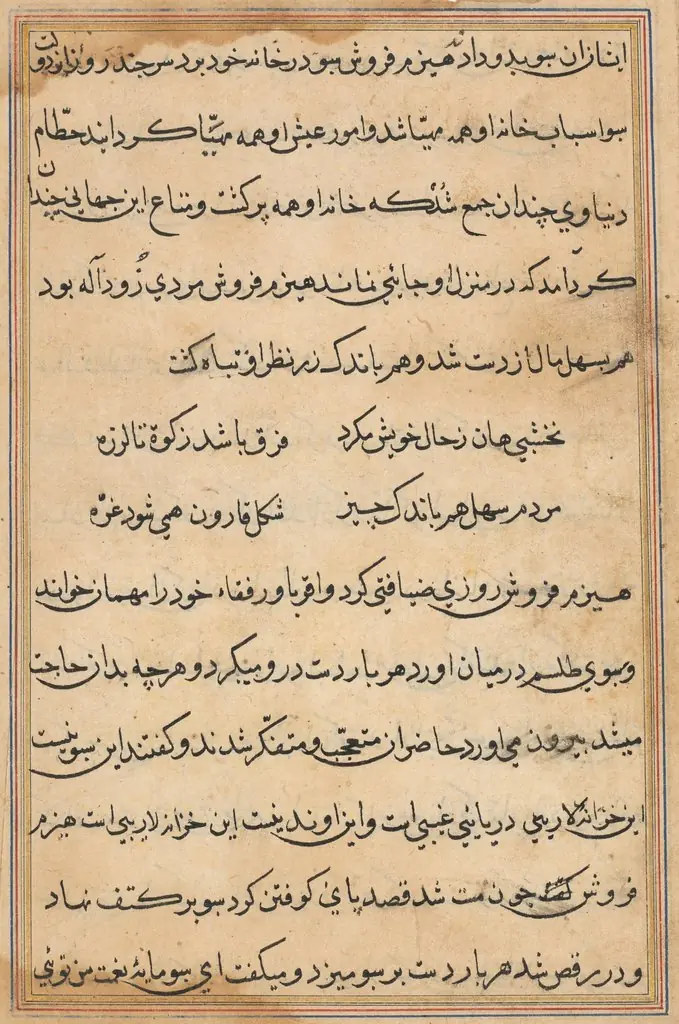
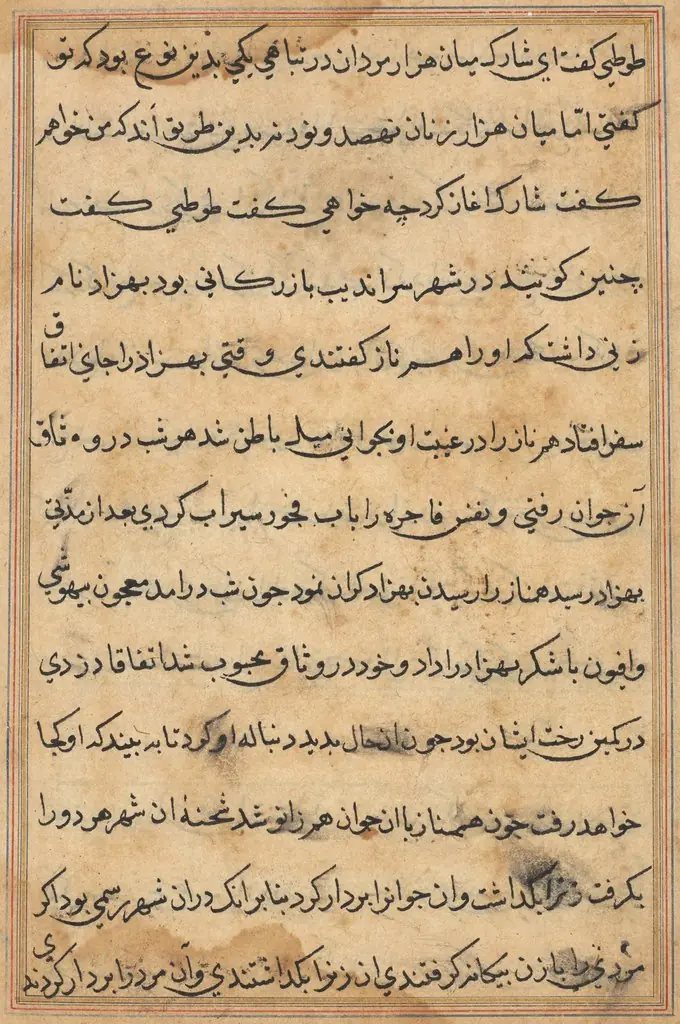
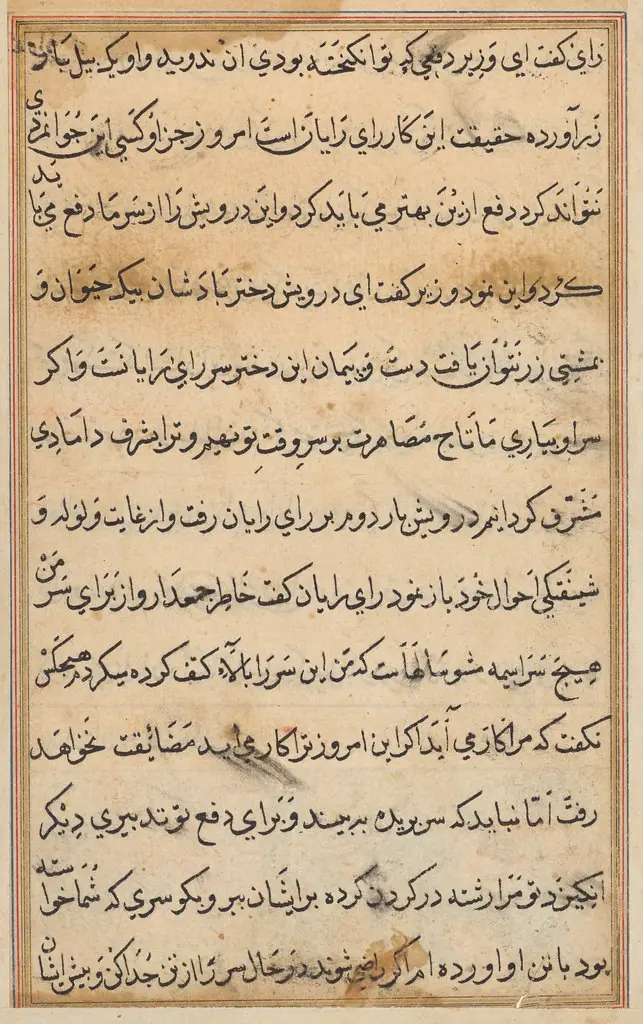
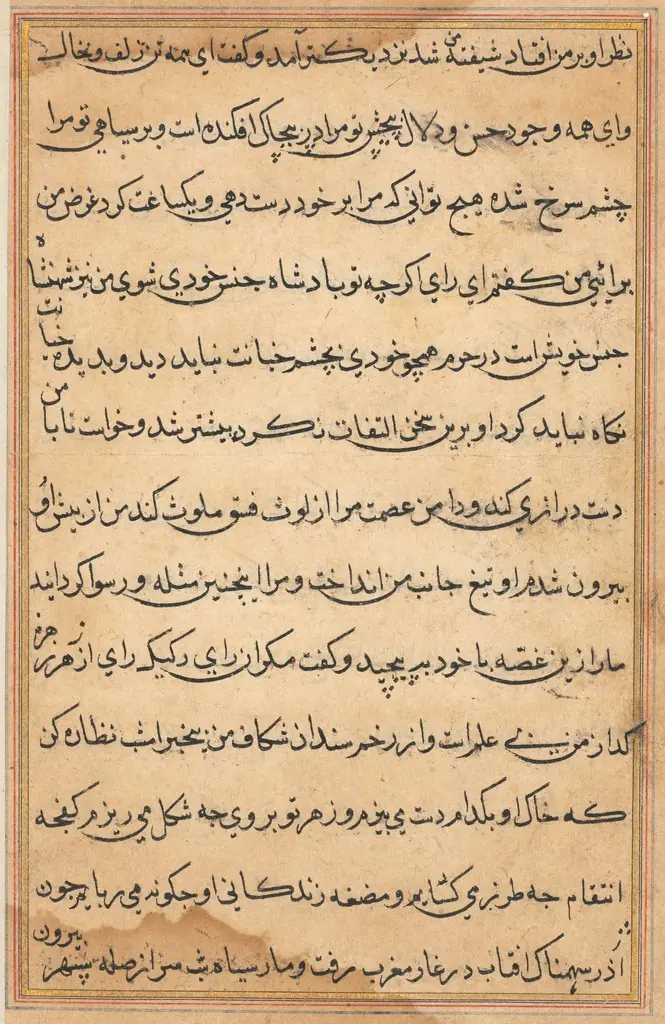
Page from Tales of a Parrot (Tuti-nama): text page is an unspecified painting. It dates from 1560 and is held in the collection of the Cleveland Museum of Art. This illuminated page originates from the Persian manuscript known as the Tales of a Parrot (Tuti‑nama).
About this work
Overview
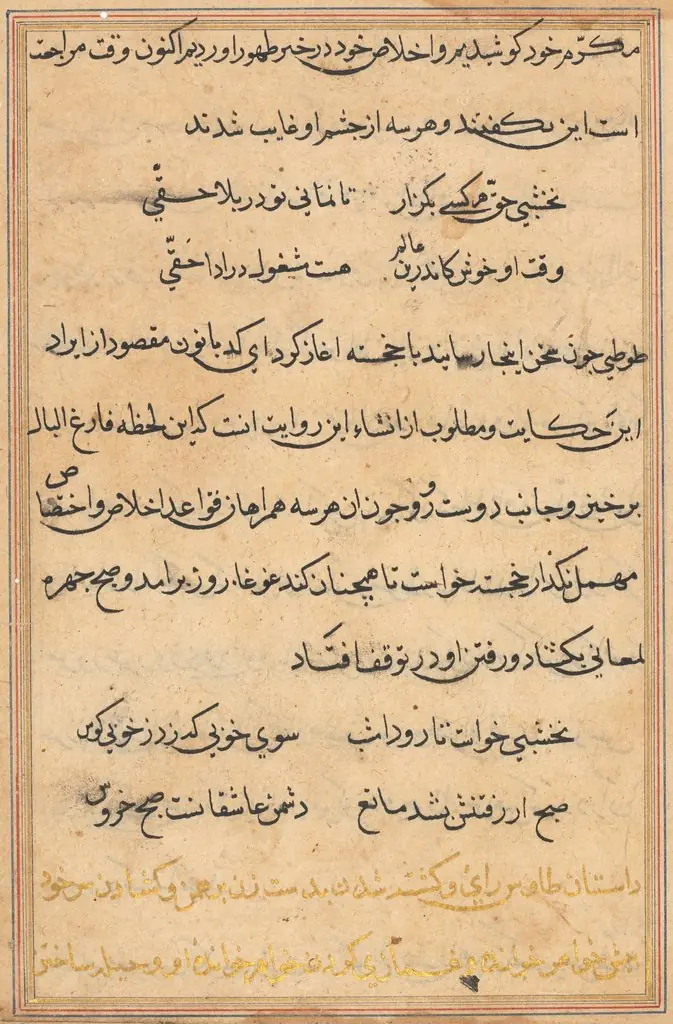
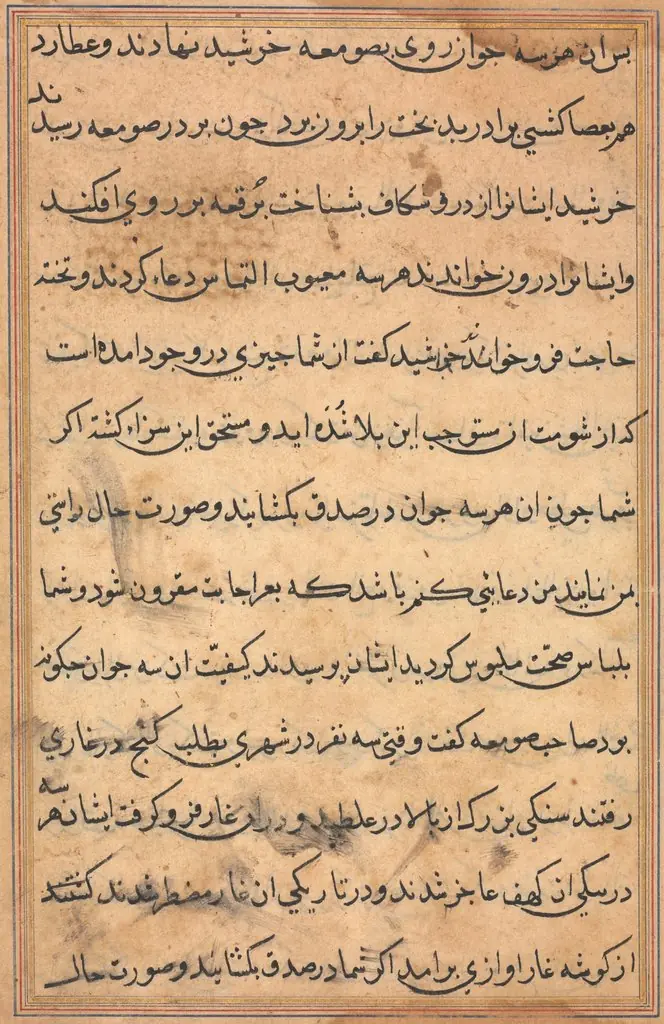
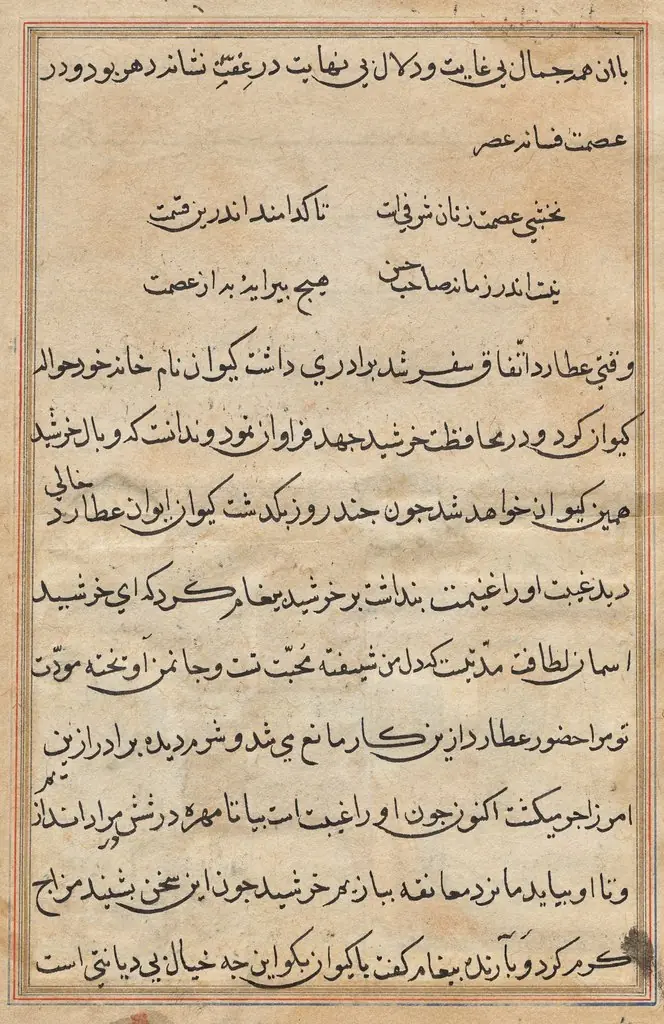
This illuminated page originates from the Persian manuscript known as the Tales of a Parrot (Tuti‑nama). Executed in the early sixteenth century, the sheet is a painted work that functions as a textual illustration, intended for a princely patron.
Subject & Meaning
The page contains a narrative passage written in a flowing, deliberate hand, suggesting a story meant to be read with contemplation. Its dedication to Prince Salim indicates a courtly audience and a purpose of literary enjoyment or moral instruction.
Technique & Style
The text is rendered in black ink with tight, precise lettering arranged in orderly rows across a light, slightly yellowed paper. A slender red border frames the composition, and subtle variations in the ink convey a graceful, elegant script characteristic of Persian book arts.
History & Provenance
Created in the 1500s for Prince Salim, a member of the Mughal elite, the page later entered collections of Persian manuscripts. It is now held by the Cleveland Museum of Art, where it is displayed among other examples of handwritten decorative art.
Context
The Tuti‑nama was a popular moral tale in the Persian literary tradition, often copied for royal patrons. The manuscript’s production reflects the high value placed on calligraphic excellence and the integration of text and visual design in courtly culture.
Artist & collection

 Page from Tales of a Parrot (Tuti-nama): text page
 Page from Tales of a Parrot (Tuti-nama): text page
 Page from Tales of a Parrot (Tuti-nama): text page
 Page from Tales of a Parrot (Tuti-nama): text page
 Page from Tales of a Parrot (Tuti-nama): text page
 Page from Tales of a Parrot (Tuti-nama): text page
 Page from Tales of a Parrot (Tuti-nama): text page
 Page from Tales of a Parrot (Tuti-nama): text page
 Page from Tales of a Parrot (Tuti-nama): text page
 Page from Tales of a Parrot (Tuti-nama): text page
 Page from Tales of a Parrot (Tuti-nama): text page
 Page from Tales of a Parrot (Tuti-nama): text page