Artwork
Painted Banner (Thangka) of Amitayus Buddha Surrounded by One Hundred Buddhas
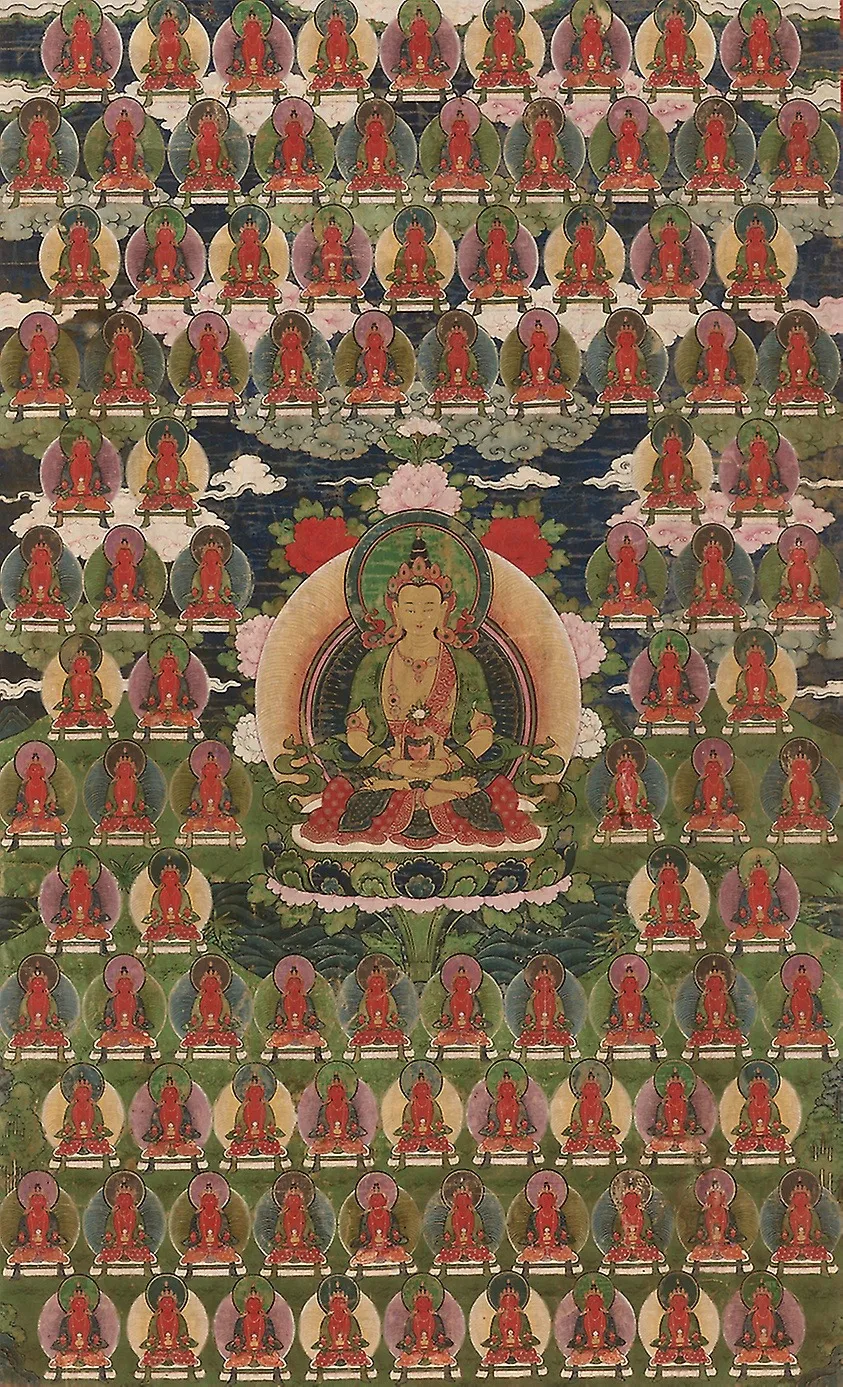
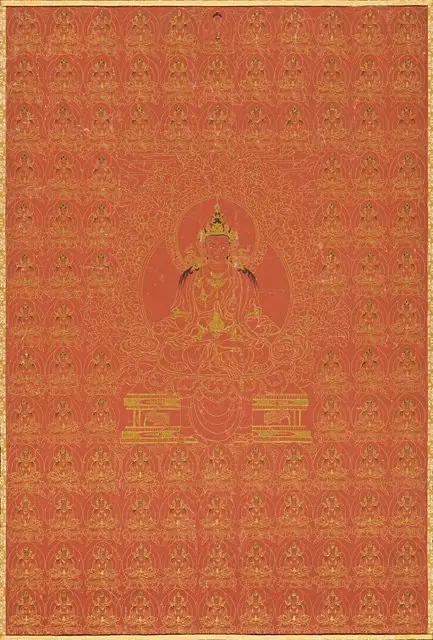
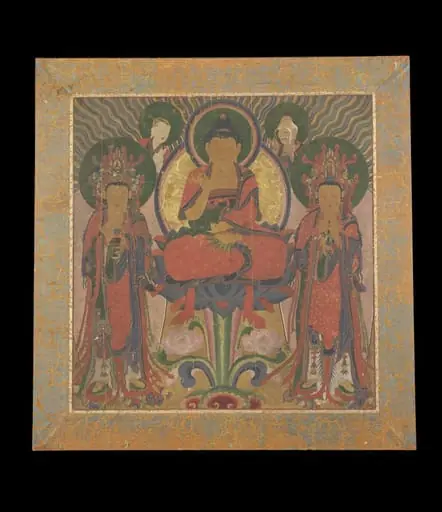
Painted Banner (Thangka) of Amitayus Buddha Surrounded by One Hundred Buddhas is an unspecified painting by Unknown. It dates from 1850 and is held in the collection of the Art Institute of Chicago. The work is a thangka painting that presents Amitayus Buddha at its centre, encircled by a multitude of identical miniature figures.
About this work
Overview
The work is a thangka painting that presents Amitayus Buddha at its centre, encircled by a multitude of identical miniature figures. The central deity sits in the classic lotus posture, hands placed in the lap, clothed in a green robe with a red sash, and surrounded by a radiant halo. The surrounding figures are arranged in orderly rows, each mirroring the central pose and attire.
Subject & Meaning
Amitayus, the Buddha of Infinite Life, is the focal point, symbolising longevity and spiritual vitality. The surrounding hundred Buddhas reinforce the concept of a vast, interconnected lineage of enlightened beings, reflecting Buddhist teachings on the pervasive presence of the Buddha nature throughout the cosmos.
Technique & Style
Executed in the traditional thangka format, the painting employs vivid pigments on a fabric support, with a deep blue background that suggests a celestial sky. Cloud motifs and stylised foliage frame the composition, while the repetitive arrangement of figures demonstrates the meticulous, repetitive brushwork characteristic of Tibetan religious art.
History & Provenance
The piece is catalogued as a painted banner, a format commonly used for devotional display in monastic settings. Specific details of its creation date, artist, or ownership history are not recorded in the available documentation.
Context
Thangka banners such as this serve both as objects of veneration and as visual aids for meditation, illustrating doctrinal concepts through iconographic precision. The inclusion of a hundred subsidiary Buddhas aligns with ritual practices that invoke the collective presence of enlightened beings during ceremonies.
Artist & collection

 Domestic Scene
 Giacomo and Cardinal Marco, investing Andrea, Abbot of San Zeno, with his Benefice
 The Nymph of Fontainebleau
 Portrait of a Woman
 Madonna and Child with Saints in the Enclosed Garden
 Venus and Minerva
 Family Group of Four on Sofa
 Wall painting from Room H of the Villa of P. Fannius Synistor at Boscoreale
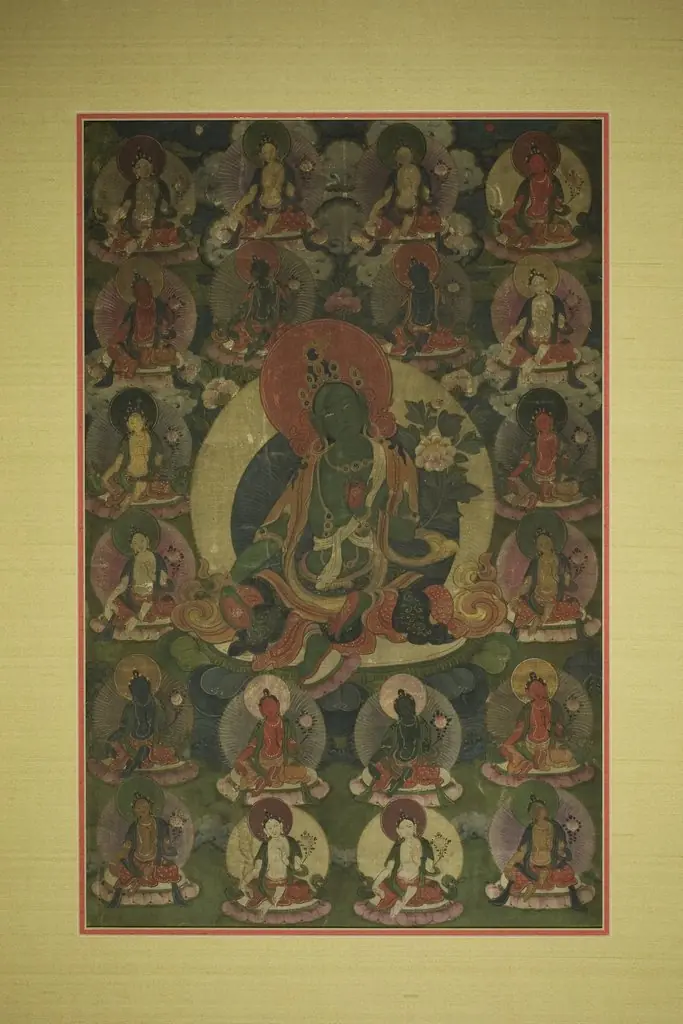 Painted Banner (Thangka) of Green Tara Surrounded by Twenty Manifestations
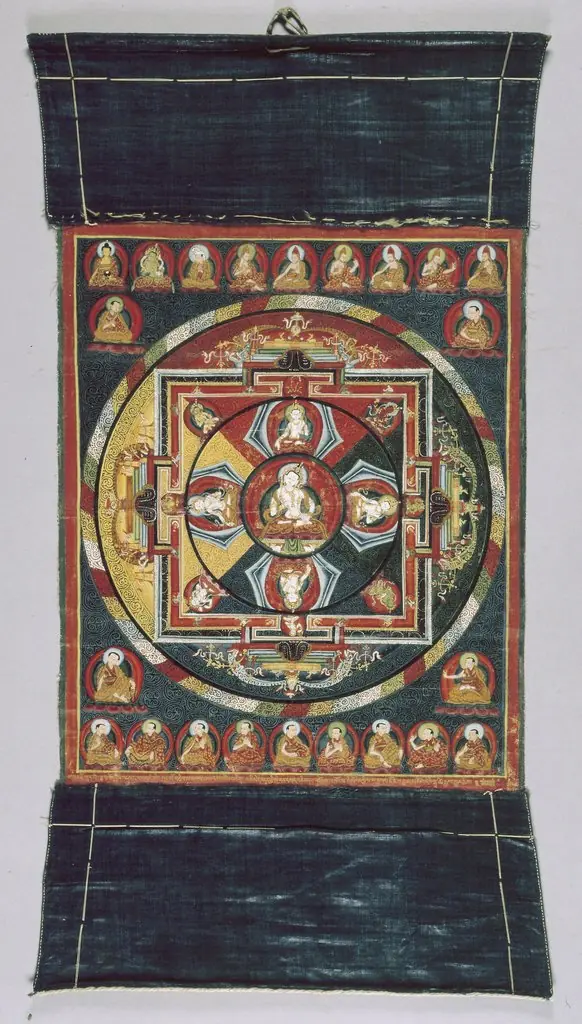 Painted Banner (Thangka) of Vajrasattva Mandala
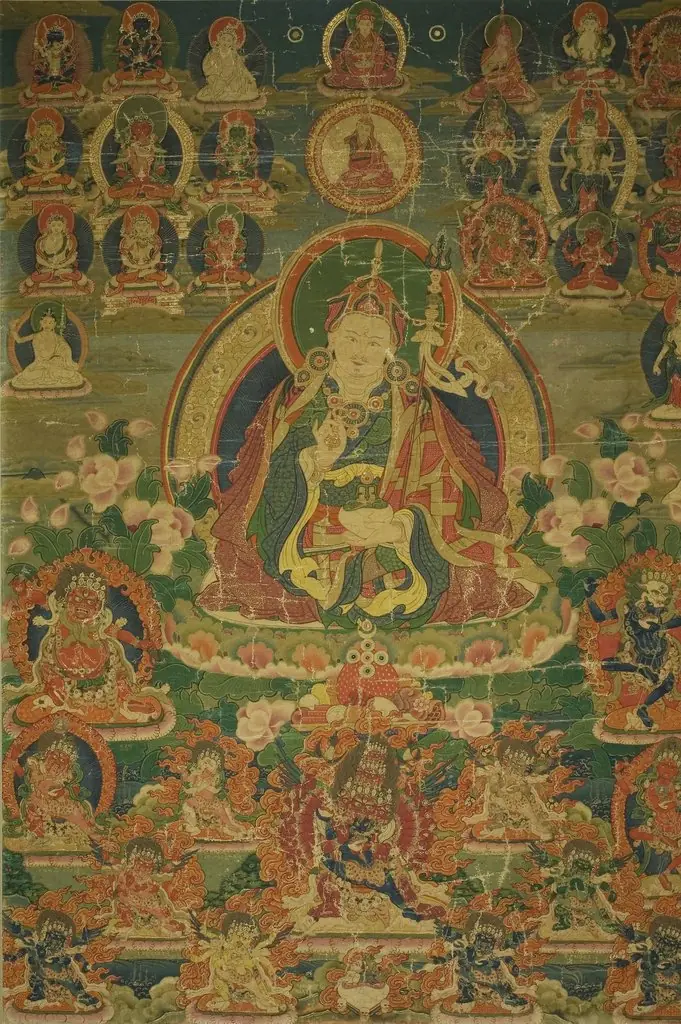 Painted Banner (Thangka) of Sage Guru Padmasambhava Seated Holding a Thunderbolt (Vajra) and Skull Cup (Kapala)
 Painted Banner (Thangka) with the Medicine Buddha (Bhaishajyaguru)
 Myriad Amitayus, the Buddha of Eternal Life
 Painted Banner (Thangka) of Bodhisattva Maitreya Surrounded by his Retinue
 Painted Banner (Thangka) with the Medicine Buddha (Bhaishajyaguru)
 Amitabha